
EAAs: The Complete Supplement Guide
On this page
Quick Reference Card
Attribute
Common Name
- Detail
- Essential Amino Acids (EAAs)
Attribute
Other Names / Aliases
- Detail
- EAA complex, essential aminos, free-form amino acids, indispensable amino acids
Attribute
Category
- Detail
- Amino Acid Complex
Attribute
Primary Forms & Variants
- Detail
- Free-form powder (most common, fastest absorption), capsules/tablets (convenient but often underdosed), flavored drink mixes, gel-based formulations, combination EAA + electrolyte products. Leucine-enriched formulations (40%+ leucine) are increasingly common.
Attribute
Typical Dose Range
- Detail
- 3-15 g per serving; MPS stimulation begins at 1.5-3 g and plateaus around 15-18 g [1]
Attribute
RDA / AI / UL
- Detail
- No single RDA for the EAA complex; individual amino acid daily requirements range from 4 mg/kg/day (tryptophan) to 39 mg/kg/day (leucine) per WHO guidelines [2]. No formal UL established for the EAA complex.
Attribute
Common Delivery Forms
- Detail
- Powder (unflavored or flavored), capsules, tablets, gel, ready-to-drink beverages
Attribute
Best Taken With / Without Food
- Detail
- Can be taken with or without food. Free-form EAAs do not require digestion, so they can be consumed on an empty stomach. Taking with a small amount of carbohydrate may enhance the insulin response and further support MPS [1].
Attribute
Key Cofactors
- Detail
- Resistance exercise (synergistic with EAA for MPS), adequate caloric intake, vitamin B6 (amino acid metabolism cofactor), adequate hydration
Attribute
Storage Notes
- Detail
- Store powder in a cool, dry place. Hygroscopic (absorbs moisture easily), so keep containers tightly sealed. Capsules and tablets are more stable. No refrigeration required.
Overview
The Basics
Essential amino acids, commonly abbreviated as EAAs, are the nine amino acids your body cannot produce on its own. You must get them from food or supplements. They are histidine, isoleucine, leucine, lysine, methionine, phenylalanine, threonine, tryptophan, and valine. Three of these (leucine, isoleucine, and valine) are the branched-chain amino acids (BCAAs) that you may already be familiar with, but they are only part of the full EAA picture [2].
Every protein in your body, from the contractile fibers in your muscles to the enzymes that run your metabolism, is built from amino acids strung together in specific sequences. If even one of the nine essential amino acids is missing or in short supply, your body cannot complete the construction of those proteins. Think of it like building a house: if you have plenty of bricks but no mortar, the wall doesn't go up. Each EAA is a critical ingredient, and running low on any single one can slow the whole operation [3].
For most people eating a varied diet with adequate protein (especially from animal sources like meat, fish, eggs, and dairy), EAA intake is not a concern. Animal proteins are "complete" proteins, meaning they contain all nine EAAs in sufficient proportions. Plant proteins are typically "incomplete" and may be low in one or more EAAs, which is why combining different plant protein sources throughout the day matters for vegans and vegetarians [2][4].
EAA supplements have gained attention primarily in the fitness and sports nutrition world, where they are used to stimulate muscle protein synthesis (the process of building new muscle) with minimal calories. Free-form EAA supplements are absorbed rapidly because they do not need to be digested like whole proteins. Research has shown that as little as 3 grams of free-form EAAs can trigger muscle protein synthesis, with the response plateauing around 15 grams [1][5].
The Science
Essential amino acids (EAAs) comprise nine proteinogenic amino acids that cannot be synthesized de novo by human metabolic pathways and must therefore be obtained exogenously: histidine, isoleucine, leucine, lysine, methionine, phenylalanine, threonine, tryptophan, and valine. Arginine is additionally classified as conditionally essential, as endogenous production may be insufficient during periods of growth, illness, or physiological stress [2][3].
The concept of dietary amino acid essentiality was established through nitrogen balance studies conducted throughout the early and mid-20th century, with accepted daily requirements for each EAA codified by the WHO/FAO/UNU Joint Expert Consultation and the Institute of Medicine (IOM) [2]. Current WHO recommendations express requirements as mg/kg body weight/day, ranging from 4 mg/kg/day for tryptophan to 39 mg/kg/day for leucine [2].
Protein quality assessment methodologies, including the Protein Digestibility-Corrected Amino Acid Score (PDCAAS) and the more recent Digestible Indispensable Amino Acid Score (DIAAS), evaluate dietary proteins based on their EAA composition relative to human requirements and their digestibility [6]. Animal-derived proteins (whey, casein, egg, meat) consistently score highest due to their complete EAA profiles and high digestibility, while most plant proteins score lower due to limiting amino acids (lysine in cereals, methionine in legumes) [7].
The biological rationale for EAA supplementation extends beyond simple nutrient provision. Free-form EAA compositions bypass the proteolytic digestion required for protein-bound amino acids, producing a more rapid and pronounced aminoacidemia. A comparative study demonstrated that 15 g of free-form EAA produced greater peak plasma EAA concentrations than 70 g of lean beef protein, despite the latter providing substantially more total amino acids [1][8]. This rapid peripheral EAA spike is a key stimulus for the activation of the mTORC1 signaling cascade that initiates muscle protein synthesis [1].
Chemical & Nutritional Identity
The nine essential amino acids and their key properties:
Amino Acid
Histidine
- Molecular Formula
- C₆H₉N₃O₂
- Molecular Weight (g/mol)
- 155.16
- CAS Number
- 71-00-1
- WHO Requirement (mg/kg/day)
- 10
Amino Acid
Isoleucine
- Molecular Formula
- C₆H₁₃NO₂
- Molecular Weight (g/mol)
- 131.17
- CAS Number
- 73-32-5
- WHO Requirement (mg/kg/day)
- 20
Amino Acid
Leucine
- Molecular Formula
- C₆H₁₃NO₂
- Molecular Weight (g/mol)
- 131.17
- CAS Number
- 61-90-5
- WHO Requirement (mg/kg/day)
- 39
Amino Acid
Lysine
- Molecular Formula
- C₆H₁₄N₂O₂
- Molecular Weight (g/mol)
- 146.19
- CAS Number
- 56-87-1
- WHO Requirement (mg/kg/day)
- 30
Amino Acid
Methionine
- Molecular Formula
- C₅H₁₁NO₂S
- Molecular Weight (g/mol)
- 149.21
- CAS Number
- 63-68-3
- WHO Requirement (mg/kg/day)
- 10 (+ cysteine: 15)
Amino Acid
Phenylalanine
- Molecular Formula
- C₉H₁₁NO₂
- Molecular Weight (g/mol)
- 165.19
- CAS Number
- 63-91-2
- WHO Requirement (mg/kg/day)
- 25 (+ tyrosine)
Amino Acid
Threonine
- Molecular Formula
- C₄H₉NO₃
- Molecular Weight (g/mol)
- 119.12
- CAS Number
- 72-19-5
- WHO Requirement (mg/kg/day)
- 15
Amino Acid
Tryptophan
- Molecular Formula
- C₁₁H₁₂N₂O₂
- Molecular Weight (g/mol)
- 204.23
- CAS Number
- 73-22-3
- WHO Requirement (mg/kg/day)
- 4
Amino Acid
Valine
- Molecular Formula
- C₅H₁₁NO₂
- Molecular Weight (g/mol)
- 117.15
- CAS Number
- 72-18-4
- WHO Requirement (mg/kg/day)
- 26
All nine EAAs are L-form alpha-amino acids. The three branched-chain amino acids (leucine, isoleucine, valine) are distinguished by their aliphatic side chains and their unique capacity to be oxidized directly in skeletal muscle mitochondria rather than requiring hepatic metabolism first [1][9].
EAA supplement compositions vary widely between products. A typical formulation provides all nine EAAs with leucine as the predominant amino acid (often 25-40% of total EAA content), reflecting its central role in mTORC1 activation and MPS stimulation [1]. Most complete proteins contain approximately 40% EAAs by weight, so a meal with 25 g of total protein provides roughly 10 g of EAAs [9].
The EAA content of common protein sources (mg per gram of protein):
EAA
Leucine
- Whey
- 116
- Milk
- 97
- Soy
- 80
- Pea
- 97
- Rice
- 88
EAA
Isoleucine
- Whey
- 59
- Milk
- 50
- Soy
- 43
- Pea
- 54
- Rice
- 40
EAA
Valine
- Whey
- 58
- Milk
- 58
- Soy
- 44
- Pea
- 81
- Rice
- 55
EAA
Lysine
- Whey
- 102
- Milk
- 80
- Soy
- 60
- Pea
- 83
- Rice
- 33
EAA
Methionine
- Whey
- 23
- Milk
- 27
- Soy
- 10
- Pea
- 5
- Rice
- 29
EAA
Threonine
- Whey
- 76
- Milk
- 47
- Soy
- 37
- Pea
- 43
- Rice
- 38
EAA
Histidine
- Whey
- 21
- Milk
- 30
- Soy
- 26
- Pea
- 17
- Rice
- 24
EAA
Tryptophan
- Whey
- 20
- Milk
- 13
- Soy
- 13
- Pea
- 11
- Rice
- 14
EAA
Phenylalanine + Tyrosine
- Whey
- 66
- Milk
- 99
- Soy
- 90
- Pea
- 94
- Rice
- 111
Data from WHO 2007 [2], Kalman 2014 [7], and Gorissen et al. 2018 [10].
Mechanism of Action
The Basics
When you consume essential amino acids, they act as both the building blocks and the trigger signal for making new muscle protein. This dual role is what makes EAAs unique compared to non-essential amino acids, which can serve as building blocks but do not activate the building process in the same way [1].
Here is how it works in simple terms: your muscles are constantly in a cycle of breaking down old proteins and building new ones. This process is called protein turnover. After a meal, the EAAs from your food signal your muscle cells to ramp up the building side. Between meals, the breakdown side dominates slightly to release amino acids for other tissues that need them. If the building side consistently exceeds the breakdown side (with the help of exercise and adequate EAA intake), your muscles grow. If the reverse happens (during starvation, prolonged bed rest, or aging), your muscles shrink [1][8].
Leucine, one of the nine EAAs, is particularly important as a signaling molecule. It acts like a master switch that flips on the cellular machinery responsible for protein construction. The other EAAs are needed as the actual construction materials. Without all nine present, the building process stalls even if leucine has turned on the switch. This is why BCAA supplements (which contain only leucine, isoleucine, and valine) are less effective than complete EAA supplements. They hit the switch but don't provide all the bricks [1][5].
The Science
The primary mechanism through which EAAs influence skeletal muscle metabolism is the stimulation of muscle protein synthesis (MPS) via the mechanistic target of rapamycin complex 1 (mTORC1) signaling pathway. mTORC1 is a serine/threonine kinase that serves as a central integrator of nutritional, hormonal, and mechanical signals to regulate translational initiation and protein synthesis [1][11].
EAA-mediated mTORC1 activation occurs through several convergent pathways. Leucine, histidine, valine, threonine, isoleucine, and methionine act to promote phosphorylation of Rag A/B GTPases, while EAAs generally stimulate FNIP1/FLCN to promote dephosphorylation of Rag C/D. This dual modulation of Rag GTPases recruits mTORC1 to the lysosomal surface for activation [1][11]. Downstream targets of mTORC1 include p70S6 kinase 1 (S6K1) and eukaryotic initiation factor 4E-binding protein 1 (4E-BP1), both of which promote ribosomal assembly and translational initiation [1].
Beyond translational initiation, EAA availability directly affects translational elongation. Each amino acid must be bound to its corresponding transfer RNA (tRNA) to form charged tRNA molecules that sequentially deliver amino acids to the ribosome for peptide chain extension. A relative deficiency of any single EAA results in uncharged tRNAs that terminate translation before the polypeptide is complete, making that amino acid rate-limiting for the entire process [1][3].
Free-form EAA supplementation produces a rapid and pronounced aminoacidemia that is more potent per gram than equivalent amounts of intact protein. Church et al. (2020) demonstrated that maximum plasma EAA concentration (EAACmax) was the strongest predictor of postprandial fractional synthesis rate (FSR; R² = 0.524), and that a 100% increase in peripheral EAA concentrations increased FSR by approximately 34% [8]. This explains why 15 g of free-form EAAs elicits a greater MPS response than 70 g of lean beef protein: the rate and magnitude of peripheral aminoacidemia, not total amino acid quantity, drives the acute anabolic signal [1][8].
EAAs also modulate muscle protein breakdown (MPB). While the primary anabolic effect is through MPS stimulation, EAA ingestion has been shown to suppress myostatin expression and reduce markers of protein degradation, contributing to a net positive protein balance [12]. The interaction between EAA supplementation and resistance exercise is additive or potentially synergistic, with combined EAA + exercise producing greater net muscle protein balance than either stimulus alone [1][13].
Absorption & Bioavailability
The Basics
One of the main selling points of free-form EAA supplements is their speed of absorption. Because the amino acids are already in their individual, unbound form, your digestive system does not need to break down protein chains before absorbing them. This means they hit your bloodstream faster than the amino acids from a chicken breast, a scoop of whey protein, or any other whole-food protein source [1][8].
How much faster? In research comparing 15 g of free-form EAAs to 70 g of lean beef, the free-form EAAs reached peak blood levels significantly earlier and at higher concentrations. The beef eventually delivered more total amino acids, but the rapid spike from free-form EAAs is what drives the strongest signal for muscle building [1][8].
The form of EAA supplement matters for practical absorption. Powders dissolved in water are absorbed faster than capsules or tablets because the amino acids are already in solution by the time they reach your stomach. Gel-based formulations have also been shown to produce effective aminoacidemia [14]. Capsules need to dissolve first, which adds a small delay but is generally not clinically significant for most users.
Taking EAAs on an empty stomach produces the fastest absorption and highest peak blood levels. However, consuming them with a small amount of carbohydrate can enhance the insulin response, which may further support the uptake of amino acids into muscle cells. There is no evidence that food significantly blocks or reduces EAA absorption [1].
The Science
Free-form amino acids are absorbed primarily in the small intestine via sodium-dependent active transport systems (Systems B0,+, ASC, and y+L) and sodium-independent transport systems (System L for large neutral amino acids including the BCAAs and aromatic amino acids) located on the brush border membrane of enterocytes [15].
The kinetic advantage of free-form EAAs over protein-bound amino acids is attributable to the elimination of the proteolytic cascade required for intact protein digestion. Protein-bound EAAs require gastric pepsin activity (optimum pH 1.5-2.5), pancreatic protease activity (trypsin, chymotrypsin, elastase), and brush border peptidase activity before individual amino acids or di/tripeptides can be absorbed. This process typically requires 1-4 hours depending on the protein source, its physical matrix, and the presence of other macronutrients [15].
Church et al. (2020) compiled data from four studies using primed, constant infusions of L-(ring-²H₅)-phenylalanine and L-(1-¹³C)-leucine tracers to quantify the relationship between peripheral EAA concentrations and protein synthetic rates. Stepwise regression demonstrated that EAACmax (R² = 0.524, p < 0.001) was the strongest predictor of postprandial FSR, while ΔEAA concentration (R = 0.345, p < 0.001) was the strongest predictor of whole-body protein synthesis change [8].
The BCAAs (leucine, isoleucine, valine) are unique among the EAAs in that they can be directly oxidized in skeletal muscle mitochondria via branched-chain alpha-ketoacid dehydrogenase (BCKDH), rather than requiring hepatic first-pass metabolism. This enables skeletal muscle to utilize BCAAs as an energy substrate during exercise, particularly during prolonged or glycogen-depleting activity. The remaining six EAAs are primarily metabolized hepatically [1][9].
Research & Clinical Evidence
The Basics
The research on EAA supplementation spans several decades and has produced a reasonably clear picture, particularly for muscle-related outcomes. The International Society of Sports Nutrition (ISSN) published a comprehensive position stand in 2023 reviewing the accumulated evidence [1].
The strongest evidence supports EAAs for stimulating muscle protein synthesis. This effect has been demonstrated repeatedly in controlled laboratory studies using isotope tracer methods. As little as 1.5-3 g of EAAs can measurably increase MPS at rest, and the effect scales with dose up to about 15-18 g, after which additional EAAs produce diminishing returns [1][5].
For older adults, the evidence is particularly interesting. Aging creates a condition called "anabolic resistance," where muscles become less responsive to the normal protein signals that trigger rebuilding. Research has shown that EAA supplementation, especially with leucine-enriched formulations, can help overcome this resistance and maintain muscle function even without exercise [1][14]. A 24-week randomized controlled trial in healthy older adults (average age 72) found that combining EAA supplementation with aerobic exercise increased muscle strength, while aerobic exercise alone did not [16].
For athletes and active individuals who are already consuming adequate protein, the additional benefit of EAA supplements appears modest. The ISSN acknowledges that EAAs are most beneficial when protein intake is suboptimal or when caloric restriction makes adequate protein consumption challenging [1].
The Science
The evidence base for EAA supplementation can be organized into several distinct research domains:
Acute MPS stimulation: Multiple studies using stable isotope tracer methodology have established a dose-response relationship between free-form EAA ingestion and MPS. Ferrando et al. (2023) in the ISSN position stand confirmed that MPS stimulation by EAAs occurs at low doses (1.5-3.0 g) and plateaus at approximately 15-18 g. Critically, the MPS response to free-form EAAs does not require co-ingestion of non-essential amino acids, indicating that EAAs alone provide both the regulatory signal (primarily through leucine/mTORC1 activation) and the substrate for de novo protein synthesis [1].
Comparative anabolism: Church et al. (2020) demonstrated through compiled isotope tracer data that the magnitude and rate of peripheral EAA increase (EAACmax) is the strongest predictor of acute MPS (R² = 0.524). Free-form EAA compositions produce higher EAACmax per gram than intact protein sources, explaining their superior acute anabolic potency [8].
Aging and anabolic resistance: Lees et al. (2020) demonstrated in a proof-of-concept trial that a leucine-enriched EAA gel (15 g total EAA, 40% leucine) produced aminoacidemia and enhanced anabolic signaling (approximately 8-fold increase in rpS6 phosphorylation) in both younger (28 +/- 4 years) and older (71 +/- 3 years) adults following resistance exercise, with no significant age-group differences in the anabolic response [14].
Chronic supplementation outcomes: Timmerman et al. (2019) conducted a Phase 1, double-blind, placebo-controlled RCT in 50 older adults (72 +/- 1 years) using a 2x2 factorial design (15 g EAA or placebo x aerobic exercise or habitual activity) over 24 weeks. Muscle strength increased only in the EAA + aerobic exercise group (p < 0.05). EAA supplementation acutely increased MPS from basal both before and after the intervention, with a larger increase in the combined group after the intervention period [16].
Exercise performance and recovery: Jang et al. (2024) demonstrated in a mouse model that EAA + resistance exercise training increased muscle mass by 10%, strength by 6%, and endurance capacity by 26% more than resistance exercise alone, mediated through enhanced MPS (19% increase), mTORC1-DRP1 axis activation, and improved mitochondrial dynamics [12]. Jeong et al. (2024) found in a human RCT (n=34) that resistance exercise combined with EAA supplementation improved muscle quality, increased irisin, and decreased myostatin and TNF-alpha more effectively than either intervention alone [13].
Evidence & Effectiveness Matrix
Category
Muscle Growth
- Evidence Strength
- 7/10
- Reported Effectiveness
- 5/10
- Summary
- Strong RCT evidence for MPS stimulation from acute EAA doses. Community reports are mixed because most users already consume adequate protein, reducing marginal benefit.
Category
Physical Performance
- Evidence Strength
- 5/10
- Reported Effectiveness
- 5/10
- Summary
- Moderate animal and limited human data for combined EAA + exercise improvements. Community reports range from "waste of money" to "night and day difference."
Category
Recovery & Healing
- Evidence Strength
- 6/10
- Reported Effectiveness
- 6/10
- Summary
- Supported by MPS and anti-catabolic mechanisms. Multiple community reports of meaningful DOMS reduction.
Category
Energy Levels
- Evidence Strength
- 3/10
- Reported Effectiveness
- 4/10
- Summary
- BCAAs can serve as muscle energy substrates during exercise, but limited direct evidence for EAA-specific energy effects.
Category
Weight Management
- Evidence Strength
- 4/10
- Reported Effectiveness
- 4/10
- Summary
- Potential for muscle preservation during caloric deficit is supported by ISSN position. Community uses EAAs during cuts primarily for low-calorie protein delivery.
Category
Side Effect Burden
- Evidence Strength
- 8/10
- Reported Effectiveness
- 7/10
- Summary
- Extensive safety data with very high safe upper limits. Community reports minimal side effects.
Categories scored: 6
Categories with community data: 6
Categories not scored (insufficient data): Fat Loss, Appetite & Satiety, Food Noise, Sleep Quality, Focus & Mental Clarity, Memory & Cognition, Mood & Wellbeing, Anxiety, Stress Tolerance, Motivation & Drive, Emotional Aliveness, Emotional Regulation, Libido, Sexual Function, Joint Health, Inflammation, Pain Management, Gut Health, Digestive Comfort, Nausea & GI Tolerance, Skin Health, Hair Health, Heart Health, Blood Pressure, Heart Rate & Palpitations, Hormonal Symptoms, Temperature Regulation, Fluid Retention, Body Image, Immune Function, Bone Health, Longevity & Neuroprotection, Cravings & Impulse Control, Social Connection, Treatment Adherence, Withdrawal Symptoms, Daily Functioning
Benefits & Potential Effects
The Basics
The primary benefit of EAA supplementation is supporting muscle protein synthesis, the process by which your body builds and maintains muscle tissue. This makes EAAs most relevant for people who are physically active, aging, recovering from injury or surgery, or struggling to get enough protein from their diet [1].
For active individuals, EAAs may help with recovery after training sessions, particularly when consumed around exercise. Some users report reduced muscle soreness in the days following intense workouts. The rapid absorption of free-form EAAs means they reach your muscles quickly, which is why many people take them before, during, or immediately after training [1][13].
For older adults, the benefits may extend beyond muscle building. Age-related anabolic resistance means that aging muscles need a stronger signal to maintain themselves. EAA supplementation, especially with leucine-enriched formulations, can help overcome this resistance. Research has shown functional improvements in strength when EAAs are combined with regular exercise in older populations [1][14][16].
For vegans and vegetarians, EAA supplements can fill gaps in amino acid profiles that may exist when plant-based protein sources are the primary dietary protein. While combining different plant proteins throughout the day can theoretically provide all EAAs, supplementation offers insurance against any shortfalls [2][4].
EAAs are also gaining interest in clinical settings, including post-surgical recovery, burn care, cancer cachexia, and other conditions where protein breakdown accelerates and protein needs increase substantially [1].
The Science
The evidence-supported benefits of EAA supplementation can be categorized by evidence quality:
Well-supported (RCT data available):
- Acute stimulation of MPS in a dose-dependent manner (1.5-18 g range), with free-form EAAs producing greater MPS per gram than intact protein [1][8]
- Overcoming age-related anabolic resistance when leucine content is enriched (typically 40% leucine by weight) [1][14]
- Preservation of lean mass during caloric restriction when whole-body EAA requirements are met [1]
- Synergistic effects with both resistance and aerobic exercise on MPS and functional outcomes [12][13][16]
- Reduction in markers of muscle inflammation (decreased TNF-alpha and myostatin) when combined with resistance exercise [13]
Mechanistically supported (preclinical or mechanistic data):
- Enhanced mitochondrial protein synthesis and dynamics via mTORC1-DRP1 axis activation, potentially supporting endurance capacity [12]
- Improved neuromuscular junction stability with combined EAA + exercise [12]
- Support during clinical conditions involving accelerated catabolism (burns, surgery, bed rest, trauma) [1]
- Enhanced whole-body protein turnover, which contributes to replacement of damaged or degraded proteins across all tissues [1]
Preliminary or insufficient evidence:
- Independent cognitive or mood effects (the tryptophan component is a serotonin precursor, but EAA supplement doses are typically insufficient for meaningful serotonergic effects)
- Direct fat loss effects independent of calorie-restricted protocols
- Immune function enhancement
When your stack includes several supplements, each with its own dose, form, and timing requirements, the logistics alone can derail consistency. Doserly consolidates all of it into one protocol view, so every dose across your entire routine is accounted for without spreadsheets or guesswork.
The app also tracks cumulative intake for nutrients that appear in multiple products. If your multivitamin, standalone supplement, and fortified protein shake all contain the same nutrient, Doserly adds them up and shows you the total alongside recommended and upper limits. Managing a thoughtful supplement protocol shouldn't require a degree in nutrition science. The app handles the complexity so you can focus on staying consistent.
Capture changes while they are still fresh.
Log symptoms, energy, sleep, mood, and other observations alongside protocol events so patterns do not live only in memory.
Trend view
Symptom timeline
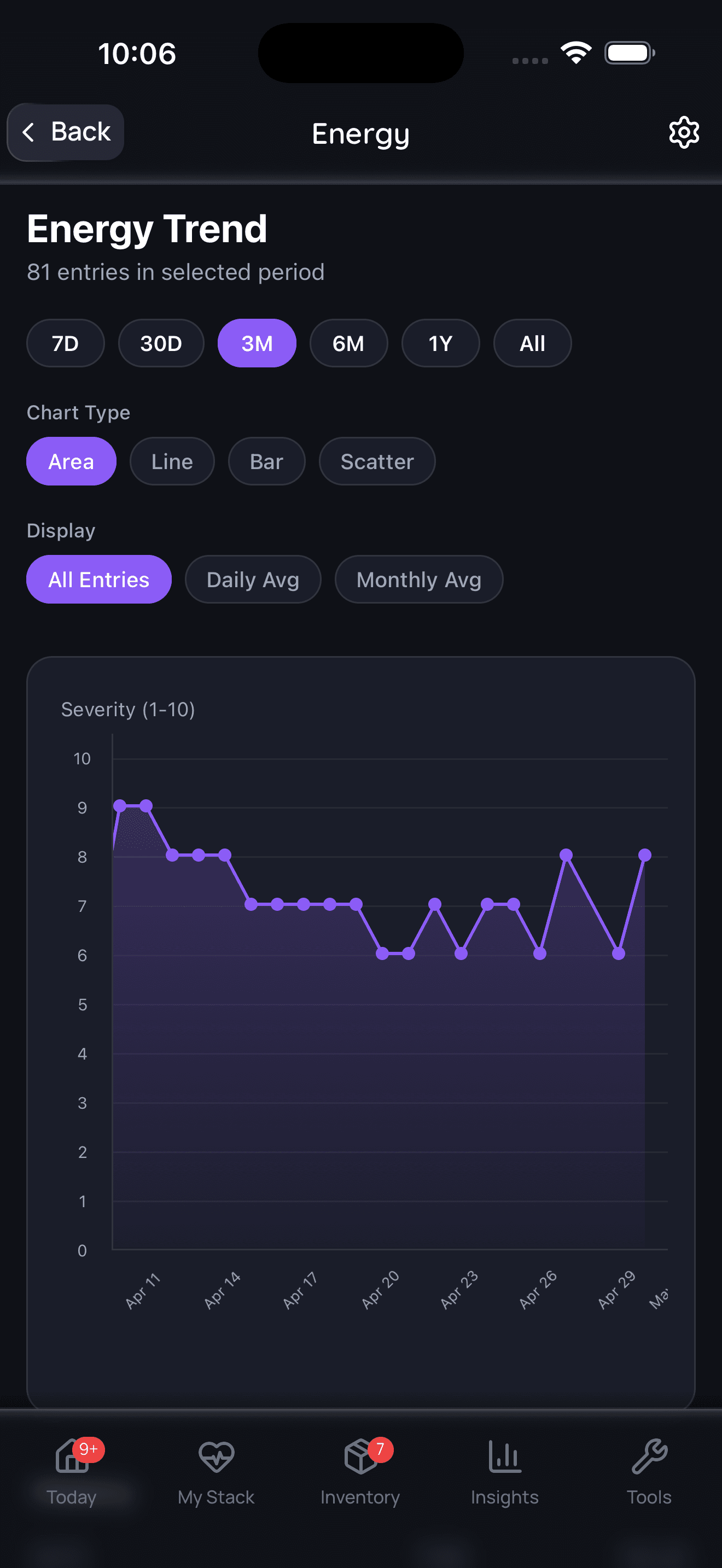
Symptom tracking is informational and should be interpreted with a qualified clinician.
Side Effects & Safety
The Basics
EAA supplements have an excellent safety profile. The safe upper limits for individual amino acids are high enough that typical supplemental doses (3-15 g per serving) represent a fraction of what has been studied without adverse effects. The ISSN position stand notes that over 100 g of supplemental EAAs per day can be safely consumed by an adult already eating a normal diet, though there is no reason most people would take doses anywhere near that level [1].
Common reports from users include the following: Free-form EAA powders often have a bitter taste, particularly unflavored versions, which some people find unpleasant. This is not a side effect but rather an inherent characteristic of free amino acids. GI discomfort is occasionally reported, particularly with large doses taken on an empty stomach, but this is uncommon at standard doses [1].
Methionine has the lowest safe upper limit among the EAAs at approximately 5 g per day above habitual intake. Most EAA supplements contain relatively small amounts of methionine (typically 50-150 mg per serving), so this is not a practical concern at normal supplemental doses [1].
People with inborn errors of amino acid metabolism (such as phenylketonuria, maple syrup urine disease, or homocystinuria) must avoid or carefully manage intake of specific amino acids and should not take EAA supplements without medical supervision [9].
The Science
The ISSN position stand (2023) compiled safe upper limits for individual EAAs consumed above habitual dietary intake, based on available toxicological and clinical data [1]:
Essential Amino Acid
Leucine
- Safe Upper Limit (above habitual intake/day)
- 35 g
Essential Amino Acid
Isoleucine
- Safe Upper Limit (above habitual intake/day)
- 20 g
Essential Amino Acid
Valine
- Safe Upper Limit (above habitual intake/day)
- 20 g
Essential Amino Acid
Lysine
- Safe Upper Limit (above habitual intake/day)
- 20 g
Essential Amino Acid
Methionine
- Safe Upper Limit (above habitual intake/day)
- 5 g
Essential Amino Acid
Phenylalanine
- Safe Upper Limit (above habitual intake/day)
- 8 g
Essential Amino Acid
Threonine
- Safe Upper Limit (above habitual intake/day)
- Not formally established
Essential Amino Acid
Tryptophan
- Safe Upper Limit (above habitual intake/day)
- 5 g
Essential Amino Acid
Histidine
- Safe Upper Limit (above habitual intake/day)
- 8 g
Given that the average American habitual dietary EAA intake is approximately 40 g/day and a typical EAA supplement serving contains 6-15 g, supplemental doses remain well within established safety margins [1].
The primary contraindications for EAA supplementation include:
- Phenylketonuria (PKU): Inability to metabolize phenylalanine; EAA supplements contain phenylalanine [9]
- Maple Syrup Urine Disease (MSUD): Defective BCKDH enzyme complex; inability to metabolize BCAAs [9]
- Severe hepatic impairment: Compromised amino acid metabolism may lead to ammonia accumulation [9]
- Severe renal impairment: Reduced ability to clear amino acid metabolites (consultation with nephrologist recommended)
At standard supplemental doses (3-15 g/serving, 1-3 times daily), no significant adverse effects have been documented in healthy adults in clinical trials of up to 24 weeks duration [1][16].
Dosing & Usage Protocols
The Basics
The research suggests that EAA supplementation follows a clear dose-response pattern. You can start seeing effects on muscle protein synthesis at surprisingly small amounts (as little as 1.5-3 g), and the response keeps increasing up to about 15-18 g, after which taking more does not produce additional benefit [1].
For most people using EAAs as a supplement alongside normal meals, doses in the range of 6-15 g per serving are most commonly studied and recommended by sports nutrition professionals. The ISSN notes that a reasonable supplemental dose does not exceed 15 g, and even taking 15 g three times per day (45 g total) is in line with normal daily EAA consumption through dietary protein [1].
When choosing between different dosing approaches, consider your goals and dietary context. If you are already eating sufficient protein (around 0.7-1 g per pound of body weight daily), the marginal benefit of additional EAA supplements is likely small. EAAs are most impactful when dietary protein is limited, such as during a calorie-restricted diet, when training fasted, or when following a plant-based diet where amino acid profiles may be incomplete [1][4].
Leucine content matters. Formulations with higher leucine proportions (around 40% leucine) appear to be more effective at stimulating MPS, especially for older adults who may have anabolic resistance [1][14].
The Science
The dose-response relationship for EAA-stimulated MPS has been characterized through multiple stable isotope tracer studies [1][8]:
Minimal effective dose: 1.5-3.0 g free-form EAAs stimulate measurable increases in MPS at rest.
Dose-response range: MPS increases linearly with EAA dose up to approximately 15-18 g, beyond which the response plateaus. This ceiling likely reflects saturation of amino acid transport systems and mTORC1-mediated translational machinery.
Recommended supplemental range: 6-15 g per serving, based on the ISSN position stand.
Frequency: Repeated EAA-induced MPS stimulation throughout the day does not diminish the anabolic effect of subsequent meal intake. This means EAA supplementation between meals can provide additional anabolic windows without "wasting" the MPS response from regular meals [1].
Dosing by context:
Context
General supplementation
- Suggested Range
- 6-10 g, 1-2 times daily
- Notes
- Between meals or peri-workout
Context
Fasted training
- Suggested Range
- 6-15 g pre-workout
- Notes
- Provides MPS stimulus without full meal
Context
Caloric deficit / cutting
- Suggested Range
- 6-15 g, 2-3 times daily
- Notes
- Helps meet EAA requirements at reduced caloric intake
Context
Older adults (anabolic resistance)
- Suggested Range
- 10-15 g, leucine-enriched (40%), 2-3 times daily
- Notes
- Higher leucine proportion to overcome blunted mTORC1 response
Context
Vegan / vegetarian supplement
- Suggested Range
- 6-10 g daily
- Notes
- Fills potential gaps in amino acid profile from plant proteins
When your stack includes several supplements, each with its own dose, form, and timing requirements, the logistics alone can derail consistency. Doserly consolidates all of it into one protocol view, so every dose across your entire routine is accounted for without spreadsheets or guesswork.
The app also tracks cumulative intake for nutrients that appear in multiple products. If your multivitamin, standalone supplement, and fortified protein shake all contain the same nutrient, Doserly adds them up and shows you the total alongside recommended and upper limits. Managing a thoughtful supplement protocol shouldn't require a degree in nutrition science. The app handles the complexity so you can focus on staying consistent.
Track injection timing, draw notes, and site rotation.
Doserly helps keep syringe-related notes, injection site history, reminders, and reconstitution context together for easier review.
Injection log
Site rotation
Injection logs support record-keeping; follow clinician instructions for administration.
What to Expect (Timeline)
Weeks 1-2: If taking EAAs around workouts, some users report reduced muscle soreness and a subjective sense of improved recovery within the first week. Free-form EAAs produce measurable increases in plasma amino acid levels within 15-30 minutes of ingestion, but any outward changes in body composition or strength are not expected this early. You may notice the taste of EAA powder (often bitter, especially unflavored products) and need to experiment with mixing strategies [1][8].
Weeks 3-4: If training consistently and consuming EAAs regularly, some individuals begin to notice modest improvements in workout recovery. This is the period when repeated MPS stimulation, combined with exercise, begins to accumulate toward measurable protein accretion. Do not expect visible changes in muscle mass or body composition at this point. The effects are occurring at the cellular level and take time to manifest outwardly [1].
Weeks 5-8: For individuals with suboptimal protein intake, those in caloric deficit, or older adults with anabolic resistance, this is the window where functional improvements may begin to emerge. The 24-week RCT by Timmerman et al. (2019) demonstrated that meaningful strength improvements required the full study period, but early trends in MPS accretion begin in this range [16].
Weeks 8-12+: Chronic effects on muscle strength, functional capacity, and potentially lean mass may become detectable with consistent use, adequate training, and appropriate dietary context. The Timmerman et al. (2019) trial showed strength improvements (in the EAA + exercise group) at 24 weeks. Benefits accumulate slowly because muscle protein turnover is a gradual process, and net protein accretion (muscle growth) requires sustained positive protein balance over months [16].
Important context: If you are already eating adequate protein (0.7-1 g per pound of body weight daily) and following a structured training program, EAA supplements may produce minimal additional benefit beyond what your diet already provides. The timeline above reflects outcomes in populations where EAA supplementation fills a genuine gap in amino acid availability.
One of the hardest parts of any supplement routine is knowing whether it's working when results unfold gradually over weeks or months. Without a record, it's easy to abandon something too early or keep taking something that isn't delivering. Doserly solves that by giving you a visual timeline of your entire supplementation history mapped against the outcomes you care about.
When everything is in one view, you can compare how different supplements in your stack are performing over the same period. You can see whether adding this supplement coincided with the improvement you've noticed, or whether the timing points to something else entirely. That kind of clarity turns patience into a strategy rather than a gamble.
Connect protocol changes to labs and health markers.
Doserly can keep lab results, biomarkers, symptoms, and dose history close together so follow-up conversations have better context.
Insights
Labs and trends
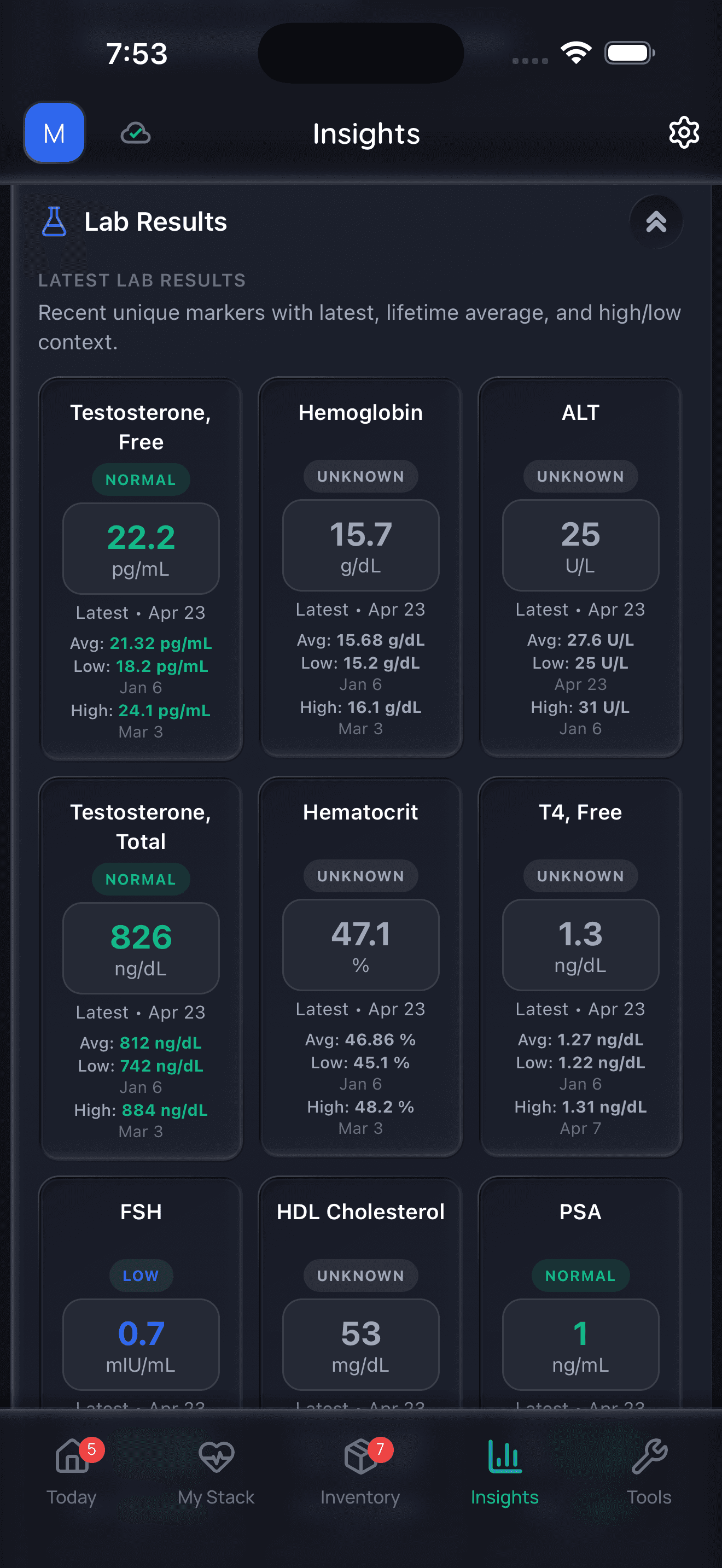
Doserly organizes data; it does not diagnose or interpret labs for you.
Interactions & Compatibility
Synergistic
- Creatine Monohydrate: Both support muscle building through complementary mechanisms. Creatine enhances cellular energy availability (ATP-PC system) while EAAs provide the substrate and signal for MPS. Commonly stacked together for training support.
- Vitamin D3: Adequate vitamin D status supports muscle function and may enhance the anabolic response to protein/amino acid intake. Deficiency is common and can impair muscle protein synthesis.
- Vitamin B6: Pyridoxal-5-phosphate (active form of B6) is a cofactor for aminotransferases involved in amino acid metabolism. Adequate B6 status supports efficient utilization of supplemental amino acids.
- Magnesium: Cofactor for ATP-dependent reactions including those involved in protein synthesis. Magnesium deficiency can impair MPS responses.
- Zinc: Essential for protein synthesis and cell division. Supports anabolic hormone function. Commonly depleted in athletes through sweat losses.
- BCAAs: EAA supplements already contain all three BCAAs. Co-supplementation provides redundant BCAA content. If taking EAAs, additional BCAA supplementation is unnecessary.
- Whey Protein: Complementary approach. Whey provides complete protein with all EAAs plus non-essential amino acids, while free-form EAAs offer faster absorption. Can be used at different times of day for different purposes.
- Beta-Alanine: Supports exercise performance through carnosine synthesis. Works through a different mechanism (buffering hydrogen ions) than EAAs (MPS stimulation), making them complementary for athletes.
Caution / Avoid
- Levodopa (L-DOPA): Large doses of amino acids, particularly aromatic amino acids (phenylalanine, tryptophan), may compete with levodopa for transport across the blood-brain barrier via the large neutral amino acid transporter (LAT1). This can reduce levodopa efficacy in Parkinson's disease patients. Consult a healthcare provider before combining EAA supplements with levodopa.
- MAO Inhibitors: Tryptophan, one of the nine EAAs, is a precursor to serotonin. Combined use with MAO inhibitors could theoretically increase serotonin levels, though the tryptophan content in typical EAA supplement doses is low (typically 20-100 mg per serving). Caution is still warranted.
- Iron: Some amino acids (particularly histidine and cysteine) can chelate iron. While this interaction is unlikely to be clinically significant at normal EAA supplement doses, it may be worth separating high-dose EAA and iron supplements by 1-2 hours.
- Other amino acid supplements: Taking additional standalone amino acid supplements (L-leucine, L-glutamine, L-tryptophan) on top of an EAA complex may lead to amino acid imbalances. If combining, account for the amino acid content of the EAA supplement to avoid excessive intake of any single amino acid.
How to Take / Administration Guide
Recommended forms: Free-form powder is the most studied and most rapidly absorbed form. Capsules and tablets offer convenience but are frequently underdosed (each capsule typically contains only 500 mg to 1 g, requiring 6-15 capsules to reach an effective dose). Gel formulations have also demonstrated efficacy in clinical studies [14].
Timing considerations:
- Pre-workout (15-30 minutes before): Provides amino acid availability during exercise for MPS support
- Intra-workout (sipped during training): Popular approach that provides continuous amino acid delivery without the heaviness of a meal or protein shake
- Post-workout (within 30 minutes after): Supports the elevated MPS response that follows resistance exercise
- Between meals: Provides additional MPS stimulation windows between protein-containing meals without reducing the anabolic response to the subsequent meal [1]
- First thing in the morning (fasted trainers): Breaks the overnight fast's catabolic state with minimal caloric load
Mixing guidance for powders: Dissolve in 8-16 oz (240-480 ml) of cold water. Unflavored EAA powder has a characteristically bitter taste. Flavored versions or mixing with a flavored electrolyte drink can improve palatability. Avoid mixing with hot liquids, as heat can degrade some amino acids. EAA powder dissolves best with vigorous shaking or blending rather than stirring.
Stacking guidance: EAAs and protein powder serve overlapping purposes. If using both, they are best taken at different times. For example, EAAs intra-workout and a protein shake post-workout, or EAAs between meals and protein with meals. There is no need to take both simultaneously [1].
Cycling guidance: No cycling or breaks are required for EAA supplementation. EAAs are nutrients, not pharmacological agents with tolerance or desensitization effects. Consistent daily use is appropriate as long as supplementation is desired [1].
Choosing a Quality Product
Third-party certifications: Look for products tested by NSF International (particularly NSF Certified for Sport for athletes), USP Verified, Informed Sport, or ConsumerLab approved. These certifications verify that the product contains what the label claims and is free from contaminants and banned substances.
Leucine content: Look for products where leucine represents approximately 25-40% of the total EAA content. This reflects the ratio used in most clinical research. Products with very low leucine content (below 20%) may be less effective at triggering MPS [1][14].
Complete profile: A quality EAA supplement should list all nine essential amino acids with their individual amounts per serving. Products that use "proprietary blends" hiding individual amino acid quantities are a red flag, as they may be loaded with the cheapest amino acids (like leucine alone) while providing inadequate amounts of others like methionine or tryptophan.
Form and dosing: Powder products allow precise dosing and provide effective amounts (6-15 g per serving) in a single scoop. Capsule products often require 6-15 capsules to reach an equivalent dose, which is impractical and more expensive. Check the per-serving amino acid content, not just the total serving weight (which may include flavoring, sweeteners, and other ingredients).
Red flags:
- "Proprietary blend" without individual amino acid amounts disclosed
- Fewer than all 9 EAAs listed (some products only contain BCAAs plus one or two others)
- Extremely low-dose capsules (under 2 g total amino acids per serving)
- Claims of therapeutic effects (disease treatment or cure)
- Mega-dosing individual amino acids far beyond the ratios used in research
- Added stimulants (caffeine, synephrine) that are irrelevant to EAA function
Excipient considerations: Free-form amino acids are hygroscopic (absorb moisture). Quality products use appropriate anti-caking agents (silicon dioxide is common). Unflavored products have fewer additives. Flavored products may contain artificial sweeteners (sucralose, acesulfame potassium) or natural sweeteners (stevia, monk fruit). Choose based on personal preference and tolerance.
Storage & Handling
Store EAA powder in a cool, dry place away from direct sunlight and moisture. Keep the container tightly sealed between uses, as free-form amino acids are highly hygroscopic and will clump or degrade if exposed to humidity. A silica gel desiccant packet inside the container can help maintain dryness.
Capsules and tablets are less moisture-sensitive than powder but should still be stored in their original sealed container. No refrigeration is required for any form.
Shelf life is typically 18-24 months from the manufacturing date when stored properly. Discard product if it develops an unusual odor, significant discoloration, or has hardened into a solid mass (indicating moisture contamination).
If pre-mixing EAA powder in water for later consumption (such as filling a gym water bottle the night before), consume within 12-24 hours. Amino acids in solution can undergo oxidation and microbial growth, particularly in warm environments. Do not prepare more than one day's supply in advance.
Lifestyle & Supporting Factors
Dietary protein: EAA supplements are most effective when they complement rather than replace dietary protein. Individuals consuming adequate protein from varied sources (0.7-1 g per pound of body weight daily, with emphasis on complete protein sources) receive most EAAs from their diet. EAA supplements fill gaps most effectively for those with restricted caloric intake, plant-based diets, or compromised food intake [1][4][9].
Resistance exercise: The combination of EAA supplementation with resistance exercise produces additive or synergistic effects on MPS and functional outcomes. Exercise sensitizes muscle to the anabolic effects of amino acids by enhancing amino acid transport into muscle cells and prolonging the MPS response. Without exercise, the benefits of EAA supplementation are more limited (except in populations with anabolic resistance) [1][13][16].
Meal timing: Distributing protein intake across 3-5 meals per day (each containing 20-40 g protein or approximately 8-16 g EAAs from food) optimizes daily MPS stimulation. EAA supplements can add additional MPS windows between meals, which is particularly useful for individuals who have long gaps between meals or who skip meals [1].
Sleep and recovery: Adequate sleep (7-9 hours) supports growth hormone release and the recovery processes during which MPS contributes to muscle repair. EAA supplementation cannot compensate for chronic sleep deprivation.
Hydration: Amino acid metabolism produces nitrogenous waste (urea, ammonia) that requires renal excretion. Maintaining adequate hydration supports efficient clearance of these metabolites, especially at higher supplemental doses.
Signs of inadequate EAA intake: Persistent fatigue, unexplained muscle loss, slow recovery from exercise or illness, poor wound healing, weakened immune function, and brittle hair or nails can indicate insufficient protein or EAA intake. These symptoms have many potential causes and warrant evaluation by a healthcare provider rather than self-diagnosis.
Regulatory Status & Standards
United States (FDA): EAA supplements are regulated as dietary supplements under DSHEA (1994). Individual amino acids are permitted dietary supplement ingredients. The FDA does not pre-approve dietary supplements for safety or efficacy but can take enforcement action against products that are adulterated or misbranded. No Novel Dietary Ingredient (NDI) notification is required for individual amino acids that were marketed prior to 1994 [9].
Canada (Health Canada): Amino acid supplements are regulated as Natural Health Products (NHPs) and require a Natural Product Number (NPN) before sale. Health Canada has published monographs for individual amino acids with permitted health claims and dosage ranges.
European Union (EFSA): Amino acids are permitted as food supplements under Directive 2002/46/EC. EFSA has evaluated several amino acid-related health claims. Maximum permitted levels for amino acids in food supplements vary by member state.
Australia (TGA): Amino acids are listed in the Australian Register of Therapeutic Goods as complementary medicines. Products must comply with TGA requirements for composition, labeling, and permitted indications.
Athlete & Sports Regulatory Status:
- WADA: Essential amino acids are NOT on the WADA Prohibited List. They are considered normal dietary constituents and are permitted at all times, both in and out of competition.
- National Anti-Doping Agencies (USADA, UKAD, Sport Integrity Canada, Sport Integrity Australia): No specific advisories against EAA supplements. However, all agencies warn athletes about the general risk of contamination in dietary supplements.
- NCAA: EAAs are not banned by the NCAA. However, the NCAA prohibits athletic departments from providing amino acid supplements to student-athletes unless they are NSF Certified for Sport or Informed Sport certified.
- Professional Sports Leagues (NFL, NBA, MLB, NHL): No league-specific restrictions on EAA supplements. Leagues generally follow WADA or their own collective bargaining agreement substance policies, none of which prohibit amino acids.
- Athlete Certification Programs: NSF Certified for Sport and Informed Sport certified EAA products are available from several manufacturers. Athletes should verify third-party certification before using any supplement. Cologne List (koelnerliste.com) and BSCG (bscg.org) also provide testing programs relevant to amino acid products.
- GlobalDRO: Athletes can verify the status of specific EAA products at globaldro.com.
Regulatory status and prohibited substance classifications change frequently. Athletes should always verify the current status of any supplement with their sport's governing body, their national anti-doping agency, and a qualified sports medicine professional before use. Third-party certification (Informed Sport, NSF Certified for Sport) reduces but does not eliminate the risk of contamination with prohibited substances.
Frequently Asked Questions
What is the difference between EAAs and BCAAs?
EAAs (essential amino acids) include all nine amino acids your body cannot make, while BCAAs (branched-chain amino acids) are a subset of just three: leucine, isoleucine, and valine. Every EAA supplement contains all three BCAAs plus six additional essential amino acids. Research indicates that complete EAA formulations are more effective at stimulating muscle protein synthesis than BCAAs alone because the non-BCAA essential amino acids are needed as building blocks for new protein. If you are choosing between the two, available evidence suggests EAAs are the more complete option [1][5].
Do I need EAA supplements if I eat enough protein?
Based on available data, individuals who consistently consume adequate high-quality protein (approximately 0.7-1 g per pound of body weight per day from varied sources) are likely meeting their EAA requirements through diet alone. The marginal benefit of additional EAA supplementation in this context appears to be small. Sports nutrition experts generally suggest that EAAs are most useful when dietary protein intake is suboptimal, during caloric restriction, or for populations with anabolic resistance such as older adults [1][9].
When is the best time to take EAAs?
Research has not identified a single optimal timing strategy. Common approaches include consuming EAAs 15-30 minutes before exercise, sipping them during training, or taking them between protein-containing meals to create additional muscle protein synthesis windows. One notable finding is that repeated EAA doses throughout the day do not diminish the anabolic response to subsequent meals, so between-meal supplementation does not "waste" the MPS stimulus from regular meals [1].
How much EAA should I take per serving?
Available sources report that MPS stimulation begins at 1.5-3 g and plateaus around 15-18 g. Most commonly studied and cited supplemental ranges are 6-15 g per serving. The ISSN notes that even three 15 g servings per day is within safe daily amino acid intake ranges. Individuals should consult a healthcare professional to determine appropriate dosing based on their specific dietary context and health goals [1].
Are EAAs safe for long-term use?
Based on current evidence, EAA supplements appear to have a strong safety profile for healthy adults. The ISSN position stand reports that safe upper limits for supplemental EAAs exceed 100 g per day for individuals without inborn amino acid metabolism disorders. Clinical trials of up to 24 weeks have not reported significant adverse effects at standard supplemental doses (6-15 g/day). People with conditions such as PKU, maple syrup urine disease, or severe liver or kidney disease should consult a healthcare provider before use [1][16].
Are EAAs better than whey protein?
Available data suggests that gram for gram, free-form EAAs produce a faster and higher spike in blood amino acid levels, which is a stronger stimulus for muscle protein synthesis. However, whey protein provides a more complete nutritional profile (including non-essential amino acids, small amounts of fat, minerals, and immunoglobulins) at a lower cost per serving. For most people, whey protein or other complete protein sources are a more practical and cost-effective choice. EAAs may offer advantages in specific situations: fasted training, caloric restriction, or when a very low-calorie protein source is desired [1][8].
Can vegans use EAA supplements?
Yes. EAA supplements are commonly produced through bacterial fermentation, not derived from animal sources. However, individuals should verify specific product sourcing, as some amino acids may be derived from animal keratin or other animal-based raw materials. Products labeled as vegan-certified or plant-fermented are available [4].
Do EAAs break a fast?
EAA supplements contain calories (approximately 4 calories per gram of amino acids, similar to protein). A typical 10 g serving provides roughly 40 calories. More importantly for fasting protocols, amino acids, particularly leucine, stimulate insulin secretion and activate mTORC1, which are both markers of a "fed" state from a metabolic standpoint. Whether this "breaks a fast" depends on the specific goals of the fasting protocol. For autophagy-focused fasting, EAAs would likely interfere. For calorie-restricted time-limited eating, the caloric impact is minimal [1].
Why do EAA powders taste so bad?
Free-form amino acids, particularly leucine and the other BCAAs, have an inherently bitter and astringent taste. This bitterness is an intrinsic chemical property of the amino acids themselves, not a manufacturing defect. Flavored products use sweeteners and flavorings to mask this bitterness with varying degrees of success. Capsule and tablet forms avoid the taste issue but require consuming many units to reach an effective dose.
Myth vs. Fact
Myth: EAA supplements are essential for anyone who exercises.
Fact: The nine essential amino acids are indeed essential for human health, but most people get more than enough from their regular diet. A single serving of chicken breast, a scoop of whey protein, or a combination of beans and rice provides all nine EAAs. Research suggests EAA supplements offer meaningful additional benefit primarily when dietary protein intake is inadequate, during caloric restriction, or for older adults with anabolic resistance [1][9].
Myth: BCAAs are just as effective as EAAs for building muscle.
Fact: Research consistently shows that BCAAs alone (leucine, isoleucine, valine) are less effective at stimulating muscle protein synthesis than complete EAA formulations. BCAAs can trigger the mTORC1 signaling cascade (the "switch"), but without the other six EAAs available as substrates (the "building materials"), the actual construction of new muscle protein is limited. The ISSN position stand specifically notes that the MPS stimulation by EAAs does not require non-essential amino acids, but it does require all nine EAAs [1][5].
Myth: You need to take EAAs immediately after your workout or you'll lose your "anabolic window."
Fact: The post-exercise elevation in muscle protein synthesis lasts for 24-48 hours, not just 30-60 minutes. While nutrient timing around exercise can optimize the acute MPS response, the most important factor is total daily protein and EAA intake, not precise timing. Research has shown that repeated EAA doses throughout the day do not diminish the anabolic effect of meal intake, meaning there is flexibility in when EAAs are consumed [1].
Myth: More EAAs always means more muscle growth.
Fact: The MPS response to EAAs follows a dose-response curve that plateaus at approximately 15-18 g per serving. Taking 30 g in a single dose does not produce twice the muscle-building signal of 15 g. Beyond the plateau, additional amino acids are simply oxidized for energy or excreted. This is why the ISSN notes that "reasonable dosage does not exceed 15 g" per serving [1][8].
Myth: EAA supplements are dangerous because they can overload your kidneys.
Fact: In healthy individuals with normal kidney function, EAA supplementation at recommended doses (6-15 g per serving) does not pose a kidney risk. The safe upper limits for individual amino acids are very high (over 100 g total supplemental EAAs per day). The concern about protein and kidney health applies primarily to individuals with pre-existing kidney disease, not to healthy people consuming normal supplemental amounts. As with any supplement, individuals with kidney conditions should consult a healthcare provider [1].
Myth: EAA supplements are the same as eating protein, just in a different form.
Fact: While EAAs and protein both provide amino acids, the kinetics are fundamentally different. Free-form EAAs produce a significantly faster and higher peak in blood amino acid levels compared to intact protein. This pharmacokinetic difference translates to a stronger acute MPS signal per gram. However, intact protein provides additional nutritional value (non-essential amino acids, micronutrients, food matrix effects) and is typically more cost-effective per serving [1][8].
Sources & References
Clinical Trials & RCTs
[1] Ferrando AA, Wolfe RR, Hirsch KR, et al. International Society of Sports Nutrition Position Stand: Effects of essential amino acid supplementation on exercise and performance. J Int Soc Sports Nutr. 2023;20(1):2263409. doi:10.1080/15502783.2023.2263409. https://pubmed.ncbi.nlm.nih.gov/37800468/
[5] Wolfe RR. Regulation of muscle protein by amino acids. J Nutr. 2002;132(10):3219S-3224S. doi:10.1093/jn/131.10.3219S.
[8] Church DD, Hirsch KR, Park S, Kim IY, Gwin JA, Pasiakos SM, Wolfe RR. Essential Amino Acids and Protein Synthesis: Insights into Maximizing the Muscle and Whole-Body Protein Anabolic Response. Nutrients. 2020;12(12):3717. doi:10.3390/nu12123717. https://pubmed.ncbi.nlm.nih.gov/33276485/
[12] Jang J, et al. Free essential amino acid feeding improves endurance during resistance training via DRP1-dependent mitochondrial dynamics. J Cachexia Sarcopenia Muscle. 2024;15(4):1378-1393. doi:10.1002/jcsm.13501. https://pubmed.ncbi.nlm.nih.gov/38881251/
[13] Jeong D, et al. Effects of Resistance Exercise and Essential Amino Acid Intake on Muscle Quality, Myokine, and Inflammation Factors in Young Adult Males. Life (Basel). 2024;14(6):700. doi:10.3390/life14060700. https://pubmed.ncbi.nlm.nih.gov/38892621/
[14] Lees MJ, et al. Novel Essential Amino Acid Supplements Following Resistance Exercise Induce Aminoacidemia and Enhance Anabolic Signaling Irrespective of Age. Nutrients. 2020;12(7):2067. doi:10.3390/nu12072067. https://pubmed.ncbi.nlm.nih.gov/32664648/
[16] Timmerman KL, et al. Effect of Aerobic Exercise Training and Essential Amino Acid Supplementation for 24 Weeks on Physical Function, Body Composition, and Muscle Metabolism in Healthy, Independent Older Adults. J Gerontol A Biol Sci Med Sci. 2019;74(10):1598-1604. doi:10.1093/gerona/gly109. https://pubmed.ncbi.nlm.nih.gov/29750251/
Systematic Reviews & Meta-Analyses
[11] D'Antona G, et al. Essential Amino Acids (EAA) Mixture Supplementation: Effects of an Acute Administration Protocol on Myoelectric Manifestations of Fatigue in the Biceps Brachii After Resistance Exercise. Int J Environ Res Public Health. 2018;15(8):1700. https://pubmed.ncbi.nlm.nih.gov/30096965/
Government / Institutional Sources
[2] Joint WHO/FAO/UNU Expert Consultation. Protein and Amino Acid Requirements in Human Nutrition. World Health Organ Tech Rep Ser. 2007;(935):1-265. https://apps.who.int/iris/handle/10665/43411
[3] Institute of Medicine. Dietary Reference Intakes for Energy, Carbohydrate, Fiber, Fat, Fatty Acids, Cholesterol, Protein, and Amino Acids (Macronutrients). Washington, DC: National Academies Press; 2005. https://nap.nationalacademies.org/catalog/10490
[4] Dietary Guidelines for Americans, 2020-2025. USDA and HHS. https://www.dietaryguidelines.gov/
[6] Food and Agriculture Organization of the United Nations. Dietary Protein Quality Evaluation in Human Nutrition. FAO Food and Nutrition Paper 92. Rome: FAO; 2013.
[9] National Institutes of Health, Office of Dietary Supplements. Dietary Supplements for Exercise and Athletic Performance. Fact Sheet for Health Professionals. https://ods.od.nih.gov/factsheets/ExerciseAndAthleticPerformance-HealthProfessional/
[15] Hall JE, Hall ME. Protein metabolism. In: Guyton and Hall Textbook of Medical Physiology. 14th ed. Philadelphia, PA: Elsevier; 2021:chap 70.
Observational Studies
[7] Kalman DS. Amino Acid Composition of an Organic Brown Rice Protein Concentrate and Isolate Compared to Soy and Whey Concentrates and Isolates. Foods. 2014;3(3):394-402. doi:10.3390/foods3030394.
[10] Gorissen SHM, et al. Protein Content and Amino Acid Composition of Commercially Available Plant-Based Protein Isolates. Amino Acids. 2018;50(12):1685-1695. doi:10.1007/s00726-018-2640-5. https://pubmed.ncbi.nlm.nih.gov/30167963/
Related Supplement Guides
Same Category
- BCAAs - The three branched-chain amino acids (leucine, isoleucine, valine) that are a subset of EAAs
- L-Leucine - The key mTORC1-activating amino acid within the EAA complex
- L-Isoleucine - BCAA component involved in energy metabolism during exercise
- L-Valine - BCAA component supporting muscle metabolism
Common Stacks / Pairings
- Creatine Monohydrate - Most commonly stacked with amino acid supplements for muscle and strength support
- Beta-Alanine - Often combined with EAAs in pre-workout formulations
- Electrolyte Powders - Frequently combined with EAAs in intra-workout drinks
- Whey Protein - Complementary whole-protein source
Related Health Goal
- Vitamin D3 - Supports muscle function and anabolic response
- Magnesium - Cofactor for protein synthesis and muscle function
- Zinc - Essential for protein synthesis and anabolic hormone support
- Vitamin B6 - Cofactor for amino acid metabolism
- Iron - Supports oxygen delivery to working muscles