
Whey Protein: The Complete Supplement Guide
On this page
Quick Reference Card
Attribute
Common Name
- Detail
- Whey Protein
Attribute
Other Names / Aliases
- Detail
- Whey, whey powder, whey concentrate, whey isolate, whey hydrolysate, milk serum protein
Attribute
Category
- Detail
- Sports performance protein, dairy-derived protein supplement
Attribute
Primary Forms & Variants
- Detail
- Whey concentrate, whey isolate, whey hydrolysate, native whey. Concentrate is usually less processed and contains more lactose and fat. Isolate is filtered for higher protein percentage and lower lactose. Hydrolysate is partially pre-digested and may appear faster in blood amino acid curves.
Attribute
Typical Dose Range
- Detail
- Common serving sizes are 20-40 g protein per serving. Athlete total daily protein intake is often discussed in the 1.2-2.0 g/kg/day range, with post-exercise intakes around 0.3 g/kg body weight used in sports nutrition guidance.
Attribute
RDA / AI / UL
- Detail
- Protein RDA for healthy adults is 0.8 g/kg/day. No UL has been established for protein in healthy adults.
Attribute
Common Delivery Forms
- Detail
- Powder, ready-to-drink shake, bar, blended meal replacement, capsule blends are uncommon
Attribute
Best Taken With / Without Food
- Detail
- Can be taken with or without food. Many users prefer it after training, between meals, or as part of a meal when the goal is to raise total daily protein. Pre-meal use is common in satiety and glucose studies.
Attribute
Key Cofactors
- Detail
- Resistance training, adequate total calories, sufficient total dietary protein, leucine-rich meal pattern, hydration
Attribute
Storage Notes
- Detail
- Keep sealed, cool, and dry. Avoid moisture and heat. Mixed shakes should not sit at room temperature for long periods.
Overview
The Basics
Whey protein is the fast-digesting protein fraction that is separated from milk during cheese making or dairy processing. People usually reach for it because it is a convenient way to add high-quality protein without cooking another full meal. That makes it especially common in gym routines, weight-loss plans, and busy schedules where protein targets are hard to hit from food alone [1].
It is not magic. Whey is useful because it is complete, meaning it contains all essential amino acids, and because it is rich in leucine, one of the amino acids that helps switch on muscle-building machinery. In plain terms, it gives your body a quick amino acid pulse when you need one [1][2].
Most interest in whey comes from three use cases: supporting muscle growth with resistance training, making it easier to stay on a higher-protein diet, and helping people tolerate a protein-heavy plan when appetite or meal timing is messy [1][6].
The Science
Whey is the soluble protein fraction of milk that remains after casein coagulates. Official sports-nutrition guidance describes whey as one of the complete proteins isolated from milk, and notes that it digests faster than casein, which is why whey produces a faster circulating amino acid response than slower dairy proteins [1][13].
Mechanistically, whey is attractive because it delivers a dense essential amino acid payload, including leucine, in a short time window. That amino acid signal is one reason whey repeatedly performs well in muscle protein synthesis and lean-mass studies when total protein intake and training stimulus are both adequate [2][3][5].
Chemical & Nutritional Identity
Property
Chemical Name(s)
- Value
- Not a single chemical entity. Whey protein is a mixture of milk proteins and peptides.
Property
Primary Fractions
- Value
- Beta-lactoglobulin, alpha-lactalbumin, bovine serum albumin, lactoferrin, immunoglobulins, glycomacropeptide
Property
Molecular Formula
- Value
- Not applicable as a single molecule
Property
Molecular Weight
- Value
- Not applicable as a single molecule
Property
CAS Number
- Value
- Not applicable as a single molecule
Property
PubChem CID
- Value
- Not applicable as a single molecule
Property
Category
- Value
- Dairy-derived complete protein; sports nutrition protein
Property
Established Daily Values
- Value
- Protein RDA: 0.8 g/kg/day for healthy adults. No protein UL established for healthy adults [1].
Property
Common Supplement Forms
- Value
- Concentrate, isolate, hydrolysate, native whey
Property
Form Notes
- Value
- Concentrate typically has more lactose and fat. Isolate is more filtered and usually higher in protein percentage. Hydrolysate is enzymatically broken down and may produce faster amino acid appearance.
Property
Stereochemistry / Isomer Notes
- Value
- Not applicable as a single small molecule. Quality issues are more about amino acid profile, protein percentage, and contamination than chirality.
Whey is best understood as a protein system, not a single ingredient. Its practical value comes from the amino acid profile, especially its leucine content, and from how quickly those amino acids appear in circulation after ingestion [1][5][13].
Mechanism of Action
The Basics
Whey works like a fast, protein-rich signal. After digestion, it floods the blood with essential amino acids, which the body can then use for muscle repair, recovery, and maintenance. Because whey is rich in leucine, it is especially good at triggering the muscle-building response after exercise [1][2][5].
That is why whey shows up so often in gym discussions. It is not the only protein that works, but it is one of the easiest proteins to use when you want a quick dose of complete amino acids without a lot of prep [1].
The Science
Whey protein stimulates muscle protein synthesis through rapid delivery of essential amino acids, with leucine acting as a key anabolic trigger that activates mTOR-related signaling and downstream translational processes [1][5]. In practice, the physiology is simple: once amino acid availability rises, skeletal muscle can shift from a net breakdown state toward a more favorable synthesis state when training stimulus is present [2][4].
Hydrolyzed whey can accelerate the amino acid appearance curve even further. In a controlled human study, post-exercise whey protein hydrolysate increased muscle protein synthesis more than the constituent amino acid content alone, suggesting that peptide form and digestion kinetics can matter in addition to total protein dose [5].
Pathway
Whey follows a short route from shake to tissue effect. It is swallowed, mixed with gastric fluid, broken down in the small intestine, absorbed as peptides and amino acids, and then distributed through the bloodstream to tissues that need repair and remodeling. The practical reason people care about this route is that whey tends to move through that pathway faster than casein, so the amino acid spike happens sooner [1][13].
For a lifter, the useful endpoint is not "protein in a bag". It is the leucine and essential amino acid pulse that reaches muscle cells quickly enough to support recovery, especially when the total daily protein target is already being met [2][5].
Absorption & Bioavailability
The Basics
Whey is one of the fastest protein sources people commonly supplement with. That speed is part of its appeal. A shake is usually easier to absorb than a heavy meal, and isolate or hydrolysate can be easier to tolerate when lactose is an issue [1][13].
The main form differences are simple: concentrate is cheaper but heavier on lactose and fat, isolate is cleaner and usually gentler, and hydrolysate is the most processed form. Faster is not automatically better for every goal, but it can be useful when the goal is convenience, post-training recovery, or a protein pulse before a meal [1][5][13].
The Science
Whey's faster kinetics are tied to its solubility, digestion rate, and gastric emptying pattern. Compared with casein, whey generally empties from the stomach more quickly and produces a faster rise in circulating amino acids [1][13]. That makes it a strong candidate for acute muscle protein synthesis experiments and pre-meal protein studies [5][6][7].
Bioavailability also depends on processing. Isolate removes more lactose and fat, while hydrolysis partially cleaves peptide bonds before ingestion. Those changes can improve tolerance or speed amino acid appearance, but they do not guarantee better real-world body-composition outcomes across all populations [4][5][14].
Research & Clinical Evidence
Muscle Growth and Lean Mass
The Basics
This is where whey has its best reputation. In healthy adults who train, whey tends to help with lean mass and strength, especially when it is used to help people reach enough total protein [2][3][11].
That said, the older-adult literature is more mixed than the general gym literature. Some older adults benefit, but some reviews find that whey-specific results are smaller or less consistent than milk-protein or mixed-protein strategies [4][12].
The Science
A meta-analysis of resistance-trained individuals found whey protein alone or as part of a multi-ingredient formula improved lean body mass, fat-free mass, and upper and lower body strength compared with isocaloric carbohydrate or non-whey protein controls [2]. Another meta-analysis found whey protein during resistance training increased body mass and muscular strength, although the effect sizes were modest and depended on study design and training status [3].
In older adults, the signal is less uniform. A meta-analysis in sarcopenic older people suggested whey supplementation combined with age-appropriate exercise might help muscle mass and lower-limb function, but the overall pooled effect was not consistently positive across all outcomes [4]. A separate meta-analysis of milk protein in adults aged 60+ found milk protein superior to whey for lean-mass gains, which suggests that age, dose, and protein matrix matter [12].
Appetite, Satiety, and Glucose Control
The Basics
Whey can help some people feel fuller, but the effect is not automatic. A small pre-meal dose can blunt hunger for some users, while others still get hungry quickly because whey digests fast [6][7].
The community and the trial literature both point to the same idea: whey is most useful for appetite when it helps structure a meal plan, not when it is expected to overpower hunger all by itself [6][7].
The Science
In a randomized trial among resistance-training athletes, increasing the whey dose above 20 g did not produce a measurable additional increase in satiety or reduction in food intake [6]. In a separate type 2 diabetes trial, a whey pre-load reduced postprandial glucose exposure and increased incretin and insulin responses over the 180-minute period after the meal [7].
These studies suggest whey can affect appetite and glycemia acutely, but the effect is context-dependent. Meal composition, baseline diet, and the specific outcome being measured matter more than marketing labels about "fast absorption" or "anabolic windows" [6][7].
Cardiometabolic Effects
The Basics
Whey is not a blood-pressure supplement first, but there is a modest cardiometabolic signal in the literature. Some trials show lower blood pressure and better endothelial function, while others show only small changes or subgroup-specific effects [8][9][10][11].
The practical takeaway is that whey may be a quiet helper when it replaces lower-quality calories or supports a more protein-forward diet, but it is not a stand-alone cardiovascular therapy [8][9][11].
The Science
The Whey2Go randomized crossover trial found 56 g/day of intact milk proteins lowered 24-hour ambulatory blood pressure and improved endothelial and lipid markers, with whey outperforming the control condition for systolic and diastolic reductions [8]. Another randomized trial found 30 g/day whey lowered systolic blood pressure in overweight and obese participants with prehypertension or mild hypertension, with the strongest effect in the subgroup carrying excess body fat [9].
A 2023 dose-response meta-analysis of 18 RCTs found whey protein modestly reduced systolic blood pressure overall, while diastolic effects were more apparent at doses above 30 g/day and in isolate powder studies [10]. A newer meta-analysis of high-quality protein in metabolic disease found small improvements in blood pressure, triglycerides, and fasting insulin, but not a dramatic cardiometabolic transformation [11].
Tolerance and Gut Effects
The Basics
The downside side of whey is usually digestive, not dangerous. Bloating, gas, burping, and nausea show up more often than any serious adverse effect, especially if the person is sensitive to lactose or using a concentrate [1][13][14].
That does not mean whey is bad. It means the form matters, the serving size matters, and the rest of the diet matters [1][13].
The Science
A randomized trial found whey did not mitigate exercise-induced gut permeability in healthy adults when used at the tested dose and timing [14]. Another study found whey can delay gastric emptying relative to other proteins, which helps explain why some people feel fuller after a shake but others feel heaviness or GI discomfort [13].
Clinical trials in older adults also suggest generally good tolerability, with the main practical issues being GI comfort rather than renal or skeletal harm in healthy participants [12][15].
Evidence & Effectiveness Matrix
Category
Muscle Growth
- Evidence Strength
- 8/10
- Reported Effectiveness
- 8/10
- Summary
- Multiple meta-analyses and RCTs support lean-mass support when whey is paired with training and adequate total protein. Community sentiment is strongly positive.
Category
Physical Performance
- Evidence Strength
- 6/10
- Reported Effectiveness
- 6/10
- Summary
- Evidence is modest and mostly indirect. Users report better training support and easier recovery, but whey is not a direct stimulant-style ergogenic aid.
Category
Recovery & Healing
- Evidence Strength
- 7/10
- Reported Effectiveness
- 7/10
- Summary
- Muscle protein synthesis data and post-exercise studies support a recovery role, though much of the evidence is training-context dependent.
Category
Weight Management
- Evidence Strength
- 5/10
- Reported Effectiveness
- 6/10
- Summary
- Whey can help people hit protein targets during calorie restriction, but it is not a fat-loss driver by itself. Community sentiment is positive but practical.
Category
Appetite & Satiety
- Evidence Strength
- 6/10
- Reported Effectiveness
- 5/10
- Summary
- Pre-meal studies show acute satiety and glucose effects, but the dose-response is inconsistent and many users find whey too fast-digesting to be very filling.
Category
Digestive Comfort
- Evidence Strength
- 4/10
- Reported Effectiveness
- 3/10
- Summary
- Lactose and form differences make tolerance variable. Community reports are negative more often than positive when users choose concentrate or large servings.
Category
Nausea & GI Tolerance
- Evidence Strength
- 4/10
- Reported Effectiveness
- 3/10
- Summary
- GI discomfort is the most common complaint in the community corpus, although it is usually manageable by switching form or lowering the serving size.
Category
Side Effect Burden
- Evidence Strength
- 4/10
- Reported Effectiveness
- 4/10
- Summary
- Most users tolerate whey well, but the minority with GI issues experience enough discomfort to discontinue it.
Categories not scored: all categories not listed above lacked meaningful combined evidence and community discussion for this supplement.
Benefits & Potential Effects
The Basics
Whey's main benefit is convenience with a performance angle. It helps people get enough complete protein, which matters when they are lifting weights, cutting calories, or just trying to eat more consistently [1][2][3].
It can also be useful when meals are inconvenient. A shake is easier to carry, easier to count, and easier to use right after training than a full meal [1][6].
The Science
The strongest supported benefits are lean-mass support, modest strength support, and easier protein adherence in training contexts [2][3][4]. Secondary effects include acute satiety, postprandial glycemic blunting, and small blood-pressure improvements in some populations [6][7][8][9][10][11].
Most of the benefit disappears if whey is treated as a replacement for training, sleep, or total protein adequacy. The literature consistently suggests that whey is a tool for improving the quality and timing of protein intake, not a substitute for the rest of the program [1][2][3].
When you're comparing several supplements, it is easy to lose track of what is actually moving the needle. Doserly keeps the intake history and outcomes tied together, so you can see whether a shake, a form change, or a timing shift lines up with the result you care about.
The same log also helps you see whether whey is doing what you thought it was doing, or whether the real change came from training volume, calorie intake, or a different supplement in the stack. That context is what turns a guess into something you can actually evaluate.
Capture changes while they are still fresh.
Log symptoms, energy, sleep, mood, and other observations alongside protocol events so patterns do not live only in memory.
Trend view
Symptom timeline
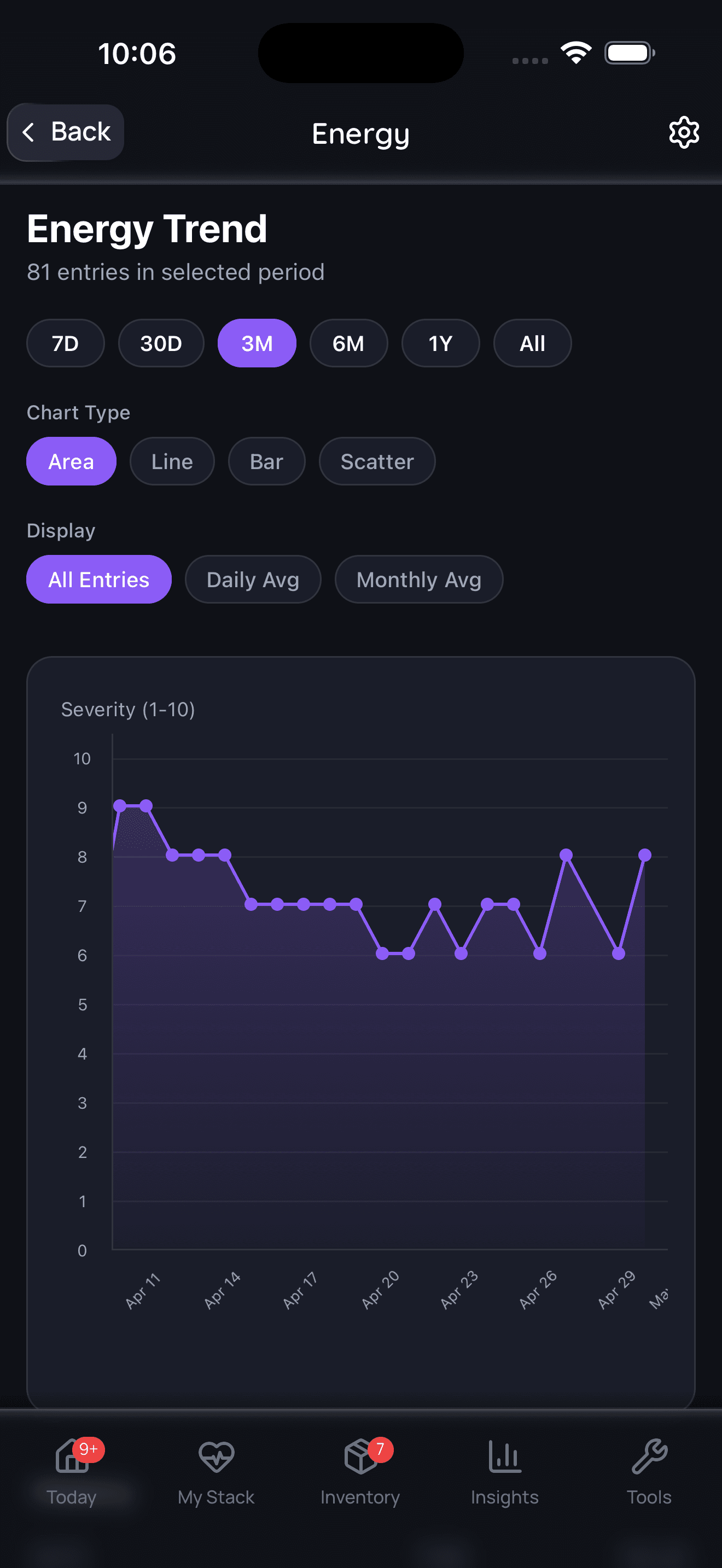
Symptom tracking is informational and should be interpreted with a qualified clinician.
Side Effects & Safety
The Basics
Whey is generally well tolerated, but it is not universal. The most common complaints are bloating, gas, heaviness, nausea, and trouble with certain flavors or brands [13][14][15].
The biggest safety issue is not the protein itself. It is whether the person has a milk allergy, whether the formula is heavy on lactose, and whether the product is actually what the label says it is [1][15][17].
The Science
Healthy-adult trials do not show a dramatic renal safety signal from whey at studied intakes, and one long-term RCT in older adults found no adverse eGFR difference between whey and control [12][15]. That does not erase caution for people with chronic kidney disease, protein-restricted diets, or other medical reasons to limit protein, but it does matter for otherwise healthy adults.
The tolerability profile changes by form. Concentrates tend to carry more lactose, which can worsen symptoms in lactose-sensitive users. Isolates and hydrolysates often improve comfort, but they do not remove the milk-protein issue for people with true dairy allergy [1][13].
Dosing & Usage Protocols
The Basics
There is no single "correct" whey dose. Common serving sizes cluster around 20-40 g, while total daily protein targets in athletic circles often land near 1.2-2.0 g/kg/day [1][2][3].
For appetite or glucose studies, smaller pre-meal doses around 10-15 g have been used, while post-exercise guidance often centers on about 0.3 g/kg body weight per meal or shake [1][6][7].
The Science
Official sports-nutrition guidance notes that about 0.3 g/kg body weight of high-quality protein within 0-2 hours after exercise, then every 3-5 hours, is a common recommendation from professional organizations [1]. But a meta-analysis of randomized clinical trials found that ingesting protein within an hour before or after exercise does not necessarily outperform other timing when total daily intake is already adequate [1][2][3].
For older adults, the literature is more nuanced. Some studies use higher protein doses to offset anabolic resistance, but the older-adult meta-analyses do not support assuming that a standard whey serving will produce the same effect seen in younger lifters [4][12][15].
When a stack includes multiple products, the logistics matter as much as the dose. Doserly consolidates all of it into one protocol view, so every dose across your routine is accounted for without spreadsheets or guesswork.
The app also tracks cumulative intake for nutrients that appear in multiple products. If your multivitamin, standalone supplement, and fortified protein shake all contain the same nutrient, Doserly adds them up and shows you the total alongside recommended and upper limits. Managing a thoughtful supplement protocol should not require a degree in nutrition science. The app handles the complexity so you can focus on staying consistent.
Track injection timing, draw notes, and site rotation.
Doserly helps keep syringe-related notes, injection site history, reminders, and reconstitution context together for easier review.
Injection log
Site rotation
Injection logs support record-keeping; follow clinician instructions for administration.
What to Expect (Timeline)
Week 1 to 2
People usually notice convenience first. Whey makes it easier to hit a protein target, and some users notice less hunger or a better recovery routine quickly [6][7]. GI tolerance issues, if they occur, also tend to show up early [13][14].
Week 3 to 4
If whey is part of a consistent training and diet plan, this is when adherence starts to matter more than novelty. The user either keeps the habit because it is easy, or stops because the flavor, digestion, or expense is annoying [2][3][6].
Week 5 to 8
This is a common window for noticing training-related differences, especially if the supplement helps total protein stay high enough during a cut or a hard lifting block [2][3][4]. Blood pressure and satiety studies also tend to show their practical effects over this kind of timescale [8][9][10].
8 to 12 Weeks and Beyond
Body-composition changes, if they appear, usually depend on the whole program, not the powder alone. The most realistic expectation is that whey supports the plan you are already running, rather than creating a dramatic standalone effect [2][3][4][11][12].
Interactions & Compatibility
SYNERGISTIC
- Creatine, especially in resistance training contexts, because the two are often used together for body-composition and performance goals. See /supplements/creatine.
- Casein protein, when a slower overnight or between-meal protein source is useful. See /supplements/casein-protein.
- Plant-based protein, when dairy avoidance is important but total protein still needs to stay high. See /supplements/plant-based-protein.
- EAAs, when a quick essential amino acid pulse is needed and total food intake is low. See /supplements/eaas.
- HMB, in sarcopenia or older-adult support stacks where protein plus downstream muscle-preservation tools are discussed. See /supplements/hmb.
CAUTION / AVOID
- Milk allergy. Whey is milk-derived and is not an appropriate choice for true dairy allergy.
- Lactose intolerance, especially with concentrate-heavy products or very large servings.
- Chronic kidney disease or protein-restricted medical diets, where a clinician should guide total protein targets.
- Unverified bodybuilding blends that use the whey label as cover for an unclear formula or contamination risk.
- Extremely high total protein intake from multiple products, if it causes GI issues or crowds out food quality.
How to Take / Administration Guide
The Basics
Whey is flexible. People mix it with water, milk, yogurt, oats, coffee, or smoothies, depending on whether they want speed, creaminess, or more calories. The best form depends on the goal. Isolate is usually the cleaner option for people who react badly to lactose. Hydrolysate is more specialized and usually more expensive [1][13].
Timing is practical rather than mystical. Many users take whey after training, between meals, or as a pre-meal protein pulse when appetite control is the main goal [1][6][7].
The Science
If the goal is rapid amino acid appearance, whey is among the strongest choices because it empties from the stomach faster than casein and produces a quicker amino acid rise [1][13]. If the goal is satiety, that same speed can be a drawback, because fast proteins do not always hold hunger down for long [6].
Cycling is not a standard requirement for whey. The more relevant question is whether the current form, serving size, and total daily protein intake still fit the person's training, digestion, and calorie needs [1][2][3].
Supplements work best when the routine is easy enough to repeat. Doserly keeps the schedule visible, tracks what is actually being taken, and makes it easier to spot when a timing habit stops matching the plan.
Keep multi-step protocols organized from start to finish.
Use Doserly to map compounds, timing, cycle windows, notes, and review points so complex protocols stay readable in one place.
Plan view
Protocol schedule
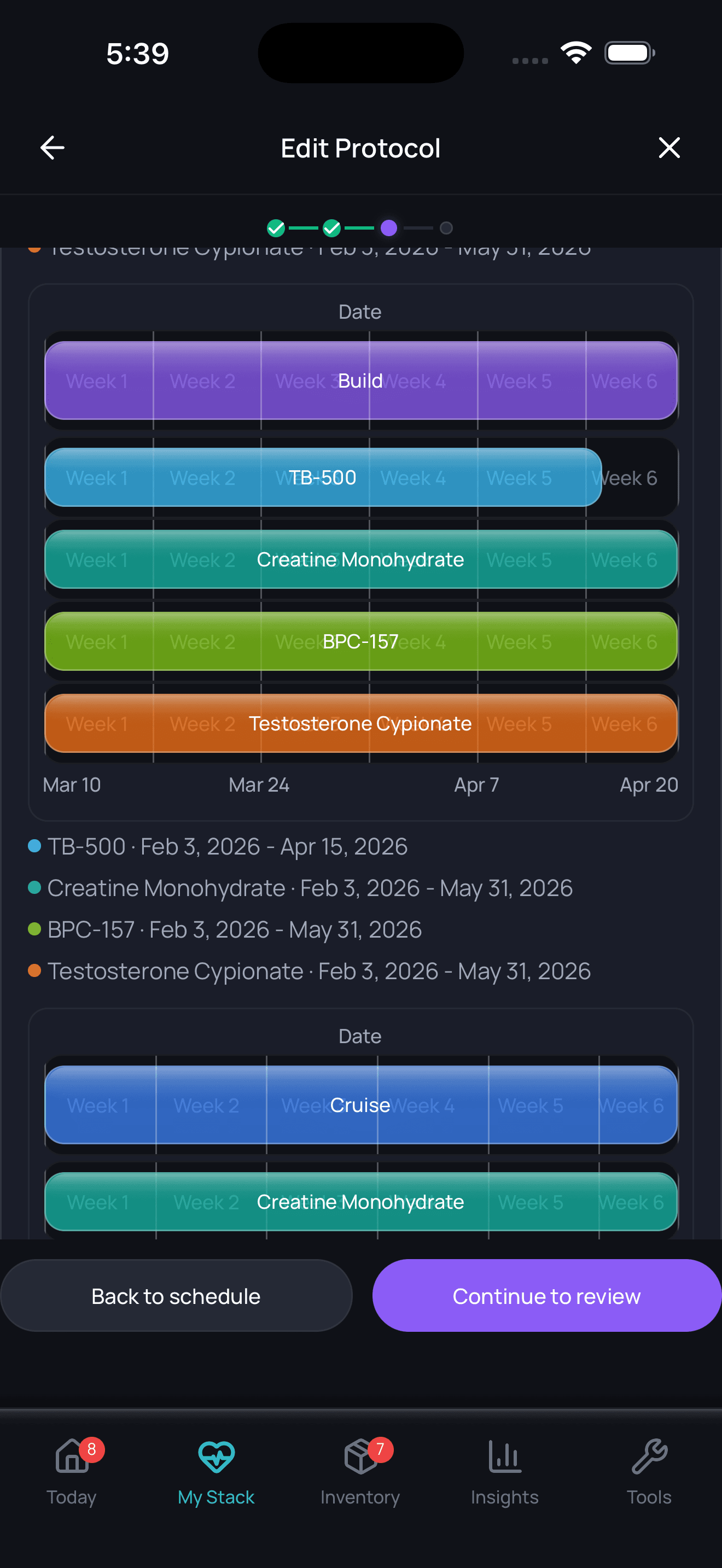
Planning views are organizational and should be aligned with professional guidance.
Choosing a Quality Product
The best whey products are usually boring in the right way. They list the protein source clearly, show protein percentage, disclose the amino acid profile or third-party testing when possible, and do not hide behind proprietary blends [1][15][17].
Useful quality markers include:
- NSF Certified for Sport, Informed Sport, or BSCG certification for athletes [1][17]
- Transparent ingredient lists
- No amino-spiking tricks or vague "protein matrix" language
- Clearly labeled isolate, concentrate, or hydrolysate, rather than a fuzzy blend
- Published COAs or batch testing when the brand provides them
- Lower lactose if the buyer is sensitive to dairy, which usually points toward isolate or hydrolysate
Red flags include:
- Unusually cheap protein with inflated claims
- Proprietary blends that hide the real dose
- Marketing that promises steroid-like changes
- Unclear sourcing, especially in bodybuilding-focused products
- Heavy sweetener, filler, or gum load if the user already knows they bloat easily
Storage & Handling
Whey powder should be kept sealed, dry, and out of heat. Moisture is the main enemy because it causes clumping and shortens shelf quality. A clean scoop and a closed lid matter more than most people realize.
Prepared shakes are less stable than dry powder. If one is mixed and not consumed right away, it should be handled like a perishable food, not like pantry powder.
Lifestyle & Supporting Factors
Whey works best when it fills a gap in an otherwise coherent plan. Resistance training, enough calories, sleep, and a reasonable overall protein intake all matter more than the brand of shake [1][2][3][4].
If someone already gets enough protein from meat, eggs, dairy, soy, legumes, or fish, whey mainly offers convenience. If they are short on protein, busy, dieting, or struggling with appetite, it can be a practical bridge rather than a luxury add-on [1][6][7].
Food sources still matter. Dairy, eggs, fish, poultry, soy foods, beans, and other complete or complementary proteins remain the foundation. A shake should not crowd out the rest of the diet if the goal is health, performance, and satiety rather than just hitting a number.
Regulatory Status & Standards
In the United States, whey protein supplements sit under the dietary supplement framework. That means they are regulated as foods under DSHEA rather than as preapproved drugs, and FDA does not review them for efficacy before sale [1][16].
For athletes, the key issue is contamination and batch quality. Based on the current WADA and USADA guidance reviewed, whey protein itself is not identified as a prohibited substance. That is an inference from the sources reviewed, not a guarantee that every product on the market is clean [1][17].
Useful athlete and quality programs include NSF Certified for Sport, Informed Sport, BSCG, and GlobalDRO as a checking resource for sport-specific status [1][17].
Regulatory status and prohibited-substance classifications change frequently. Athletes should always verify the current status of any supplement with their sport's governing body, their national anti-doping agency, and a qualified sports medicine professional before use. Third-party certification reduces but does not eliminate the risk of contamination with prohibited substances [1][17].
FAQ
What is whey protein?
Whey protein is the fast-digesting protein fraction separated from milk during dairy processing. It is used mainly to raise total protein intake and support muscle-building or recovery goals [1][2].
Is whey protein better than casein?
The literature suggests they do different jobs. Whey tends to digest faster and raise amino acids sooner, while casein is slower and may feel more filling. Which is "better" depends on the goal [1][13].
How much whey protein do people usually take?
Common serving sizes are often in the 20-40 g range, but total daily protein needs vary by body size, age, training volume, and diet quality. The evidence does not support a single universal dose [1][2][3][4].
Can whey protein help with muscle gain?
Yes, the evidence is strongest there, especially when whey is paired with resistance training and enough total protein. The magnitude of the effect is usually modest, not dramatic [2][3][4][5].
Can whey protein help with weight loss?
It can help some people stay consistent with a calorie-controlled plan because it is easy to count and convenient to use. It is not a fat-loss drug, and the effect depends on the rest of the diet [6][11].
Does whey protein cause bloating?
Some users report bloating, gas, or heaviness, especially with concentrate or large servings. Isolate and hydrolysate are often better tolerated, but individual response varies [13][14][15].
Is whey protein safe for kidneys?
In healthy adults, the available trial data do not show the kind of kidney harm that internet rumors sometimes claim. People with chronic kidney disease or other renal concerns are a different case and should get individualized medical guidance [12][15].
Can lactose-intolerant people use whey protein?
Many can tolerate isolate better than concentrate because isolate usually contains less lactose. That said, tolerance is individual, and true milk allergy is a separate issue [1][13].
When is the best time to take whey protein?
The evidence favors total daily protein adequacy over timing obsession. Post-exercise use is common, but pre-meal and between-meal use can also make sense depending on the goal [1][2][6][7].
Is whey protein necessary if I already eat enough protein?
Probably not. In that case, whey is mostly a convenience tool. Its value is highest when it closes a protein gap or makes adherence easier [1][2][3].
Myth vs. Fact
Myth: Whey protein is only for bodybuilders.
Fact: The strongest evidence is in resistance training, but whey is also used by older adults, dieters, and people who need an easy way to meet protein goals [1][4][12].
Myth: More whey always means more muscle.
Fact: The literature supports adequate protein plus training, not endless scooping. Larger servings do not always add extra satiety or extra body-composition benefit [2][3][6].
Myth: Whey isolate and whey concentrate are basically the same.
Fact: They are related but not identical. Isolate is usually lower in lactose and fat and is often easier to digest, while concentrate is cheaper and less filtered [1][13].
Myth: Whey works even if you do not train.
Fact: The biggest lean-mass signal appears when whey is paired with resistance training or a protein gap that needs closing. Training context matters [2][3][4].
Myth: Whey is bad for healthy kidneys.
Fact: In healthy adults, trial data have not shown meaningful renal harm at studied intakes. That does not override caution in people with kidney disease or protein restrictions [1][12][15].
Myth: All protein powders are equally clean.
Fact: Quality control varies. Certification, transparent labeling, and contamination testing matter, especially for athletes [1][16][17].
Sources & References
Clinical Trials & RCTs
- Dietary Supplements for Exercise and Athletic Performance - Health Professional Fact Sheet. NIH Office of Dietary Supplements. https://ods.od.nih.gov/factsheets/ExerciseAndAthleticPerformance-HealthProfessional/ . Official overview of protein timing, protein quality, safety, and athlete certification guidance.
- Effects of Whey Protein Alone or as Part of a Multi-ingredient Formulation on Strength, Fat-Free Mass, or Lean Body Mass in Resistance-Trained Individuals: A Meta-analysis. PubMed. https://pubmed.ncbi.nlm.nih.gov/26403469/ . Resistance-trained adults, lean mass, and strength outcomes.
- Effect of whey protein supplementation during resistance training sessions on body mass and muscular strength: a meta-analysis. PubMed. https://pubmed.ncbi.nlm.nih.gov/31041966/ . Body mass and strength effects during resistance training.
- The Impact of Whey Protein Supplementation on Sarcopenia Progression among the Elderly: A Systematic Review and Meta-Analysis. PubMed. https://pubmed.ncbi.nlm.nih.gov/37432157/ . Older-adult sarcopenia outcomes.
- Post-exercise whey protein hydrolysate supplementation induces a greater increase in muscle protein synthesis than its constituent amino acid content. PubMed. https://pubmed.ncbi.nlm.nih.gov/23388415/ . Acute muscle protein synthesis study.
- The effect of a whey protein supplement dose on satiety and food intake in resistance training athletes. PubMed. https://pubmed.ncbi.nlm.nih.gov/25979566/ . Satiety and food-intake trial.
- Incretin, insulinotropic and glucose-lowering effects of whey protein pre-load in type 2 diabetes: a randomised clinical trial. PubMed. https://pubmed.ncbi.nlm.nih.gov/25005331/ . Pre-load glycemic control trial.
- Whey protein lowers blood pressure and improves endothelial function and lipid biomarkers in adults with prehypertension and mild hypertension: results from the chronic Whey2Go randomized controlled trial. PubMed. https://pubmed.ncbi.nlm.nih.gov/27797709/ . Blood pressure and endothelial outcomes.
- Effect of whey protein on blood pressure in pre- and mildly hypertensive adults: A randomized controlled study. PubMed. https://pubmed.ncbi.nlm.nih.gov/31139400/ . Blood pressure and body-fat subgroup effects.
- The effects of whey protein on blood pressure: A systematic review and dose-response meta-analysis of randomized controlled trials. PubMed. https://pubmed.ncbi.nlm.nih.gov/37419751/ . Dose-response synthesis.
Systematic Reviews & Meta-Analyses
- The effects of whey protein supplementation on indices of cardiometabolic health: A systematic review and meta-analysis of randomized controlled trials. PubMed. https://pubmed.ncbi.nlm.nih.gov/39647241/ . Cardiometabolic summary.
- The Effect of a Whey Protein Supplement on Bone Mass in Older Caucasian Adults. PubMed. https://pubmed.ncbi.nlm.nih.gov/25844619/ . Long-term older-adult safety and body composition.
- Whey protein delays gastric emptying and suppresses plasma fatty acids and their metabolites compared to casein, gluten, and fish protein. PubMed. https://pubmed.ncbi.nlm.nih.gov/24708224/ . Digestion and gastric-emptying comparison.
- Effects of bovine whey protein on exercise-induced gut permeability in healthy adults: a randomised controlled trial. PubMed. https://pubmed.ncbi.nlm.nih.gov/38386104/ . Gut permeability and tolerance.
Observational / Other Human Studies
- Whey Protein Supplementation in Older Adults With Type 2 Diabetes Undergoing a Resistance Training Program: A Double-Blind Randomized Controlled Trial. PubMed. https://pubmed.ncbi.nlm.nih.gov/39214521/ . Safety and urea findings in older adults.
Government / Institutional Sources
- FDA dietary supplement regulation summary. U.S. Food and Drug Administration. https://www.fda.gov/files/food/published/CP7321.008-DietarySupplements-09182024.pdf . Regulatory framework for supplement manufacturing and labeling.
- Unintentional Doping Research Project background paper. World Anti-Doping Agency. https://www.wada-ama.org/sites/default/files/2025-04/UDP%20-%20Call%20for%20Contributions%20-%20Background%20%28ENG%29_0.pdf . Contamination and supplement-risk context for athletes.