
In this guide
What is methylene blue?
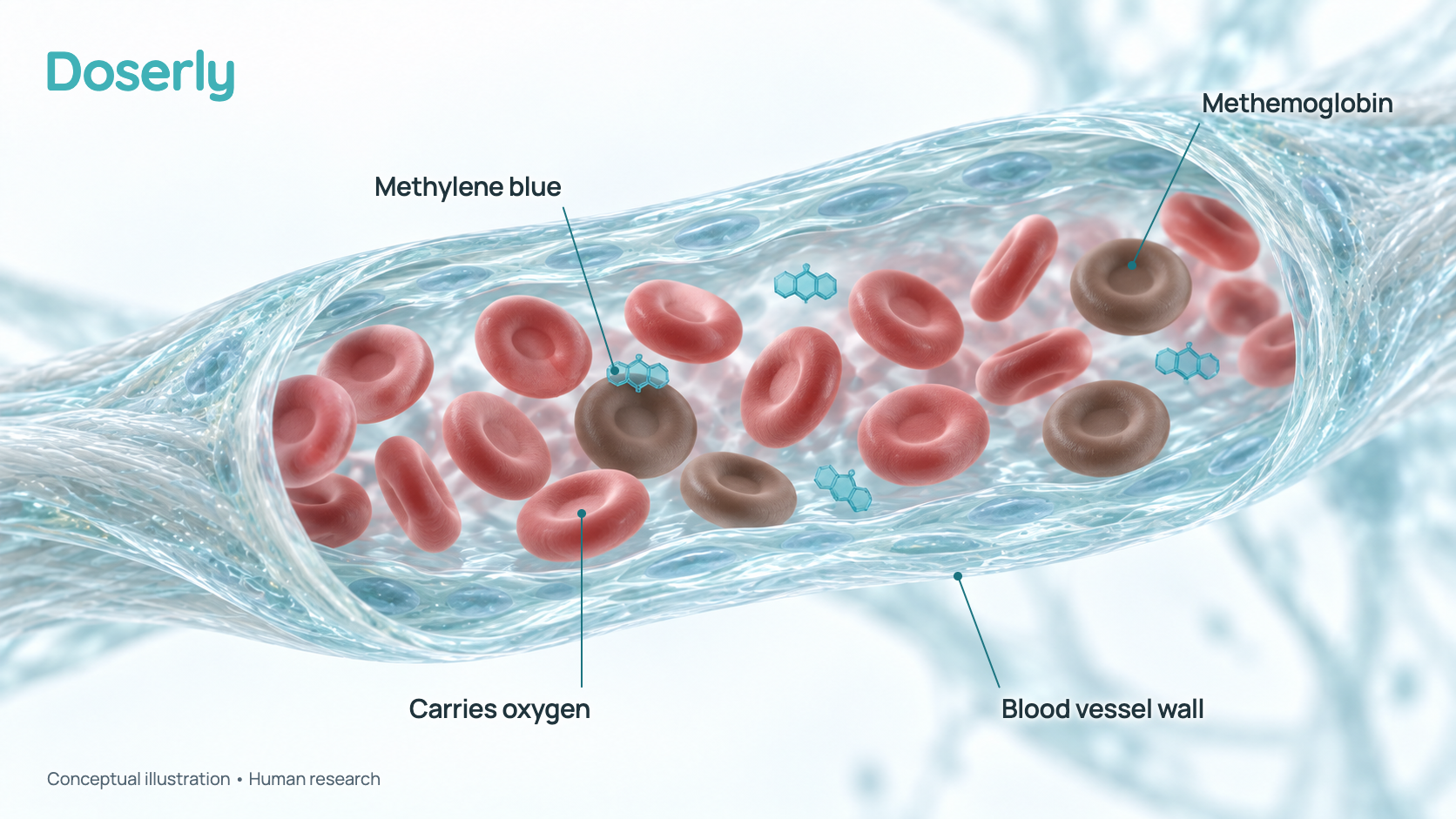
Methylene blue is a man-made blue dye that doubles as a hospital medicine. Doctors give it into a vein to treat methemoglobinemia, a condition in which some of the blood's hemoglobin changes form and stops carrying oxygen. It is also sold online as drops and capsules that people take for energy, focus, mood and "brain health". [1], [2]
It is a small molecule, not a peptide or a nutrient. Chemists call it a thiazine dye, and its international medicine name is methylthioninium chloride. It was first made for dyeing cloth in the 1870s, and by 1891 doctors were using it against malaria. [13], [14]
Its status depends on the product. As an injection it is an approved prescription medicine in the United States, Europe, the United Kingdom, Canada and Australia. The drops, capsules and lozenges (troches) sold for wellness are not FDA-approved, and their strength and purity vary. How they are regulated differs by country; the legal-status summary has the details. [11], [10], [15], [2], [16]
| Product | What it is | Form and route | Approved use |
|---|---|---|---|
| PROVAYBLUE and generic methylene blue injection (US) | Prescription medicine | 5 mg/mL (0.5%) solution for IV infusion; a 10 mg/mL (1%) generic was approved in March 2026 | Acquired methemoglobinemia in adults and children |
| Methylthioninium chloride Proveblue (EU and UK) | Prescription medicine | 5 mg/mL solution for IV injection | Methemoglobinemia caused by medicines or chemicals |
| Lumeblue (EU) | Prescription medicine | 25 mg prolonged-release tablets, swallowed | A dye that helps doctors spot polyps during colonoscopy |
| Urinary combination tablets (US) | Unapproved drug products | Tablets or capsules with 10–10.8 mg methylene blue plus other ingredients | None; marketed for urinary discomfort |
| Wellness drops, capsules and troches | Consumer products | Liquids (often 1%, sometimes 0.5% or 2%), capsules of 2.5–100 mg and 16–50 mg troches, swallowed or held in the mouth | None |
[1], [17], [10], [18], [19], [20], [21], [22], [23]
The Alzheimer's drug candidates LMTM and HMTM are related but different molecules; their results and doses do not transfer to methylene blue. [24], [25]
Typical Methylene Blue Protocols
| Product and use | Amount each time | How often | Total | Course |
|---|---|---|---|---|
| US: PROVAYBLUE and generic injections · acquired methemoglobinemia, adults and children | 1 mg/kg by IV infusion over 5–30 minutes | Once; a second dose of up to 1 mg/kg after 1 hour if methemoglobin stays above 30% or symptoms continue | 1–2 mg/kg (at most two doses) | One treatment episode Moderate or severe kidney disease: a single 1 mg/kg dose |
| EU and UK: Methylthioninium chloride Proveblue · adults and children over 3 months | 1–2 mg/kg by IV injection over 5 minutes | Repeat 1–2 mg/kg after 1 hour if needed | Up to 7 mg/kg in total (4 mg/kg after aniline or dapsone poisoning) | Usually no longer than one day Babies 3 months old or younger: 0.3–0.5 mg/kg |
| EU: Lumeblue · dye to help spot polyps during colonoscopy | 25 mg prolonged-release tablets, oral (swallowed): 3 tablets, then 3, then 2 | Three times during bowel preparation | 200 mg | One procedure |
The approved dose is an emergency hospital treatment: 1 mg/kg by IV infusion in the United States (1–2 mg/kg in Europe), repeated at most once or twice under blood monitoring. No regulator has approved a daily oral dose for energy, memory or mood. [1], [10], [11]
What oral amounts do dosing sources describe?
Most people who search for a methylene blue dose mean a small daily amount by mouth. These rows are the three complete schedules one dosing site publishes, from its lowest to its highest band.
| Example | Amount each time | Frequency | Total per day | Duration |
|---|---|---|---|---|
| Low | 2–8 mg | Daily | 2–8 mg | Ongoing; described as not needing breaks The source's "microdose" band |
| Mid | 5–15 mg | Once daily, in the morning | 5–15 mg | Ongoing; described as not needing breaks Where the source says most adults of 70–80 kg settle |
| High | About 7.5–15 mg (the day's amount split in two) | Twice daily: morning and before 2 p.m. | 15–30 mg | 4–8 weeks, then a few weeks at the low amount A short "targeted" course |
The most common oral pattern in the reviewed dosing sources is about 5–15 mg once a day, swallowed in the morning, with no fixed end date. Among the four pages that state one daily amount rather than a range, the middle value is 10 mg a day. [3], [26], [4], [5], [27], [28] Community education groups most often describe 5–10 mg three to five times a week.
What oral amounts were used in human studies?
These are the amounts researchers gave in specific trials, under medical screening; they are not wellness schedules.
| Study | Amount each time | Frequency | Total per day | Duration |
|---|---|---|---|---|
| Used in studies | ||||
| Severe depression, 1987 (placebo-controlled) | Not stated | Daily | 15 mg | 3 weeks Improved more than placebo in a short trial |
| Bipolar disorder, on lamotrigine, 2017 (crossover) | 65 mg (5 mg in the comparison period) | 3 times a day | 195 mg (15 mg) | 3 months per period Depression and anxiety improved; memory and thinking did not |
| Healthy older adults and mild memory problems (MB2 trial) | 94 mg with each meal | 3 times a day | 282 mg | 2 weeks, extendable to 12 Results posted without statistical tests; urinary side effects were common |
| Healthy adults, brain-scan study, 2016 | 280 mg | Once | 280 mg | A single dose About 7% more correct answers than before the dose on one memory task; not significantly different from placebo |
- Titration Changing the amount in steps
- The labels and trials use a fixed dose; the US label says lower or higher doses than 1 mg/kg are not recommended. [1], [31] Dosing pages start low: one at 2.5–5 mg, stepping up every 3–5 days to settle at 5–15 mg a day; another at 5 mg a day for a week, then 10 mg as its target, with 20 mg as a routine ceiling. [3], [4] Community education groups teach a slower weekly ladder: 5 mg once a week, then 5–10 mg twice a week, then three times a week.
- Breaks and cycles
- Not applicable to the one-off label treatment. [1] Dosing pages disagree: one says daily low-dose use needs no breaks and runs higher amounts in 4–8-week cycles; another lists 5 days on and 2 off, or 8 weeks on and 2 off, and calls both convention rather than evidence. [3], [4] No study has compared continuous use with breaks.
Read the units: oral amounts are milligrams (mg) of methylene blue per dose, and the daily total adds up the day's doses. Hospital doses are milligrams per kilogram of body weight (mg/kg), so 1 mg/kg is 70 mg for a 70 kg adult. A 1% solution holds 10 mg in each milliliter (mL). Drops are not a unit: how many drops make 1 mL depends on the dropper. Amounts of the Alzheimer's drug candidates LMTM and HMTM are not methylene blue amounts. [1], [20], [24]
Low, mid and high are alternatives, not steps to move through. Only the label rows are approved treatments, and they are one-off hospital doses. The oral dosing-page schedules have not been tested in a clinical trial, and the study rows describe what researchers gave to specific groups of patients. The cited references give the full details.
Cautions for every schedule above. Methylene blue strongly blocks MAO-A, an enzyme that breaks down serotonin, and the US label's boxed warning is for serotonin syndrome, which can be fatal, with SSRI, SNRI or MAOI antidepressants, opioids and several other medicines. The label sets no dose below which that combination is safe, and it asks for 72 hours after the last dose before taking serotonergic drugs. [1] Stopping or changing a prescribed antidepressant to make room for methylene blue is a decision for the prescriber, because stopping suddenly causes its own withdrawal symptoms. [32] It must not be used by people with G6PD deficiency, in whom it can destroy red blood cells; the label also warns of possible harm to an unborn baby, asks for breastfeeding to stop for up to 8 days, and reduces the dose for kidney disease. [1] Skin can react to strong light after a dose. [1], [10] Drop counts are not doses: strengths vary, and one product labeled 1% measured 0.82%. [20], [33] None of the oral schedules has been tested for safety over months of use, and none has been studied in people under 18. Read the risks section.
Where protocols differ: mg or mg/kg, drops, daily or a few times a week, and stopping ↓
Where these numbers come from
Label table. The US row comes from the current PROVAYBLUE prescribing information on DailyMed (label effective May 2025; boxed warning revised November 2023). Generic US injections share the same labeled dose; the 10 mg/mL (1%) generic from Zydus was added to FDA's Orange Book on March 31, 2026. The EU and UK row comes from the Methylthioninium chloride Proveblue product information, and the Lumeblue row from its European Medicines Agency record. [1], [17], [10], [18]
Oral table. All three rows are the complete low, standard and short-course bands published by NooBlue, a seller of methylene blue products. Cross-checks: Methylene Blue Ultra (start 5 mg, target 10 mg, ceiling 20 mg a day), Nutricel (1–2.5 mg a day for the first week, then 5–12 mg), RxPepsDirect (a 10 mg capsule each morning), Empower Pharmacy (5–20 mg a day) and a poison center bulletin noting that online products usually suggest 1–20 mg a day. We compared 31 dosing statements from 30 pages and grouped them into 10 families that copy each other; only four pages state a single daily amount (5, 10, 10 and 30 mg), which is where the middle value of 10 mg comes from. [3], [4], [26], [5], [27], [28]
Study table. The rows are the published schedules of a 3-week placebo-controlled depression trial, a 6-month crossover trial in bipolar disorder that compared 195 mg with 15 mg a day, the MB2 registered trial (94 mg three times a day with meals), and a single-dose brain-scan trial, whose registry record lists 36 people enrolled while the published analysis included 26. [29], [30], [31], [7], [34]
Left out. Weight-based oral ranges of 0.5–4 mg/kg a day, because they come from rat research rather than human studies (see the next section); a page whose drop chart equates 30 drops of a 1% solution with 15 mg (the arithmetic gives about 10 mg per mL); a weight chart on another page from the same publisher as the oral rows, which is off by a factor of ten; wellness IV sessions of 10–100 mg, which omit body weight; and troche and capsule menus that list strengths without a schedule. [35], [36], [37], [38], [39]
What is methylene blue commonly used for?
Outside hospitals, people usually try methylene blue because they want more mental energy: less "brain fog", better focus, a sharper memory or a lift in mood. Others take it for long COVID or chronic fatigue, or as part of a longevity or "mitochondrial" routine alongside NAD+, SS-31 or MOTS-c. Regulators in Australia describe the same pattern: oral products promoted on social media for thinking and anti-aging. [2], [16]
Inside hospitals the uses are different and better tested: treating methemoglobinemia, raising dangerously low blood pressure after heart surgery or in septic shock (vasoplegia), reducing confusion after surgery, and staining tissue so doctors can see it. [1], [40], [41], [42], [18] Those results come from IV doses in sick patients, so they do not show what a few milligrams of drops a day will do for a healthy adult. See the hospital evidence.
Chart of the largest human study for each use of methylene blue. Hospital uses by IV have randomized trials of up to about 300 people; wellness uses have small, short studies at high doses, and long COVID and longevity have no trial.
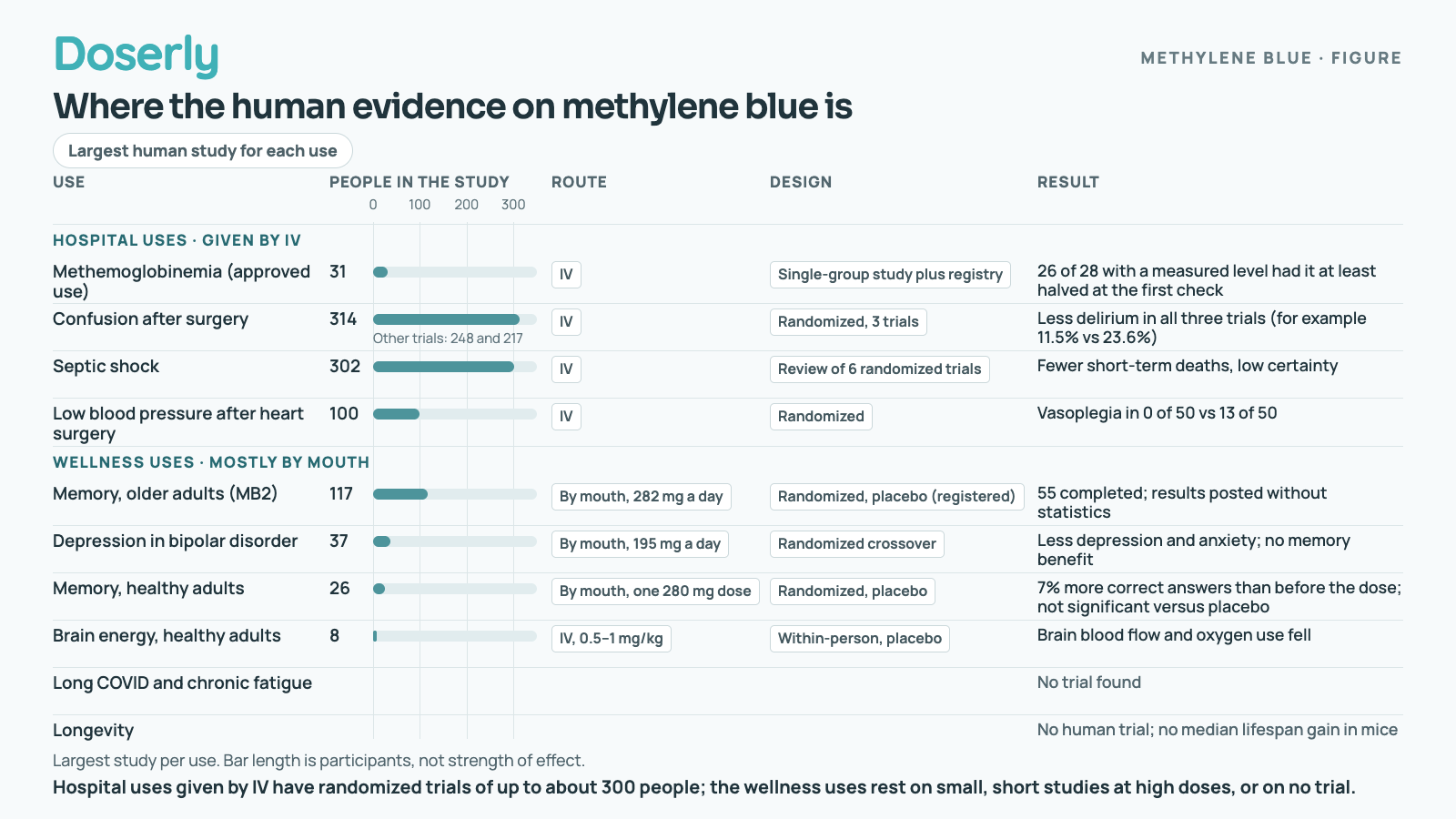
Where the human evidence on methylene blue is
Largest human study for each use
Hospital uses
- Methemoglobinemia (approved use)
- People in the study31RouteIVDesignSingle-group study plus registryResult26 of 28 with a measured level had it at least halved at the first check
- Confusion after surgery
- People in the study314Other trials: 248 and 217RouteIVDesignRandomized, 3 trialsResultLess delirium in all three trials (for example 11.5% vs 23.6%)
- Septic shock
- People in the study302RouteIVDesignReview of 6 randomized trialsResultFewer short-term deaths, low certainty
- Low blood pressure after heart surgery
- People in the study100RouteIVDesignRandomizedResultVasoplegia in 0 of 50 vs 13 of 50
Wellness uses
- Memory, older adults (MB2)
- People in the study117RouteBy mouth, 282 mg a dayDesignRandomized, placebo (registered)Result55 completed; results posted without statistics
- Depression in bipolar disorder
- People in the study37RouteBy mouth, 195 mg a dayDesignRandomized crossoverResultLess depression and anxiety; no memory benefit
- Memory, healthy adults
- People in the study26RouteBy mouth, one 280 mg doseDesignRandomized, placeboResult7% more correct answers than before the dose; not significant versus placebo
- Brain energy, healthy adults
- People in the study8RouteIV, 0.5–1 mg/kgDesignWithin-person, placeboResultBrain blood flow and oxygen use fell
- Long COVID and chronic fatigue
- No trial found
- Longevity
- No human trial; no median lifespan gain in mice
Hospital uses given by IV have randomized trials of up to about 300 people; the wellness uses rest on small, short studies at high doses, or on no trial.
Energy, focus and memory
This is the main reason people buy methylene blue drops. The best-known study gave 26 screened healthy adults one 280 mg dose, many times what dosing pages describe, and found about 7% more correct answers on a memory task an hour later than before the dose, although the difference from the placebo group was not statistically significant. [7] A 12-week trial of 282 mg a day in older adults posted results without statistical tests, with similar memory scores on methylene blue and placebo. No trial has tested whether 5–15 mg a day improves energy or focus. [31] See the human studies.
Mood and depression
Small psychiatric trials from the 1980s and 2017 reported less depression at 15 to 300 mg a day in people with severe depression or bipolar disorder. [43], [29], [30] Those people were treated under medical supervision. The larger practical issue is that many people interested in methylene blue for mood already take antidepressants, and that combination is the label's most serious warning. [1] Read about serotonin syndrome.
Long COVID, chronic fatigue and "brain fog"
Public forums contain many accounts from people with long COVID or chronic fatigue syndrome, some describing more energy and others describing headaches, crashes or no change. [44], [45], [46] We found no published controlled trial of methylene blue for either condition. The COVID-19 trials that exist tested people who were in hospital with the infection, often with other treatments added. [47], [48]
Longevity and "mitochondrial support"
The longevity interest comes from cell and animal research suggesting methylene blue can pass electrons inside mitochondria, the parts of cells that make energy. In a large US program that tests compounds for lifespan in mice, methylene blue did not change median lifespan in males or females. No human study has measured aging outcomes. [49], [50], [51] See how it might work.
Hospital uses
Methemoglobinemia is the approved use. Doctors also use IV methylene blue for vasoplegia and septic shock, and trials have tested it against confusion after surgery. As a dye, Lumeblue tablets stain the bowel lining during colonoscopy; in the main trial, adenomas or cancers were found in 56% of people versus 48% with placebo. [1], [41], [42], [18], [52] The hospital evidence has the trial details.
Where do methylene blue protocols differ?
The sources agree on little beyond "start low". Here is what their differences mean when you read a protocol.
Is the number per dose, per day or per kilogram?
Oral dosing pages mostly give a flat amount, such as 10 mg a day. Hospital labels give milligrams per kilogram of body weight, such as 1 mg/kg once. For a 70 kg adult, 1 mg/kg is 70 mg in one infusion, which is seven times a typical 10 mg oral dose. [1], [4]
A third family of pages gives an oral range of 0.5–4 mg/kg a day, which for a 70 kg adult is 35–280 mg a day, far above the flat amounts. [53], [54], [55] That range traces back to rat research: a 2012 paper's introduction called 0.5–4 mg/kg a "low dose" band, citing rodent experiments, not a human dose-finding study. The 2016 human brain-scan study used the same wording for its single dose of about 4 mg/kg. [35], [7]
How many milligrams are in a drop?
It depends on the strength of the liquid and on the dropper, so a drop count copied from someone else can be wrong several times over. A 1% solution contains 10 mg of methylene blue per mL. Most pages assume 20 drops make 1 mL, which gives 0.5 mg per drop, but droppers differ. [20], [56]
Bar chart: 10 drops hold about 0.5 mg of a 0.1% solution, 2.5 mg of 0.5%, 5 mg of 1% and 10 mg of 2%, assuming 20 drops per mL. Callouts note that droppers vary, a '1%' product tested at 0.82%, and one page's drop arithmetic is wrong.
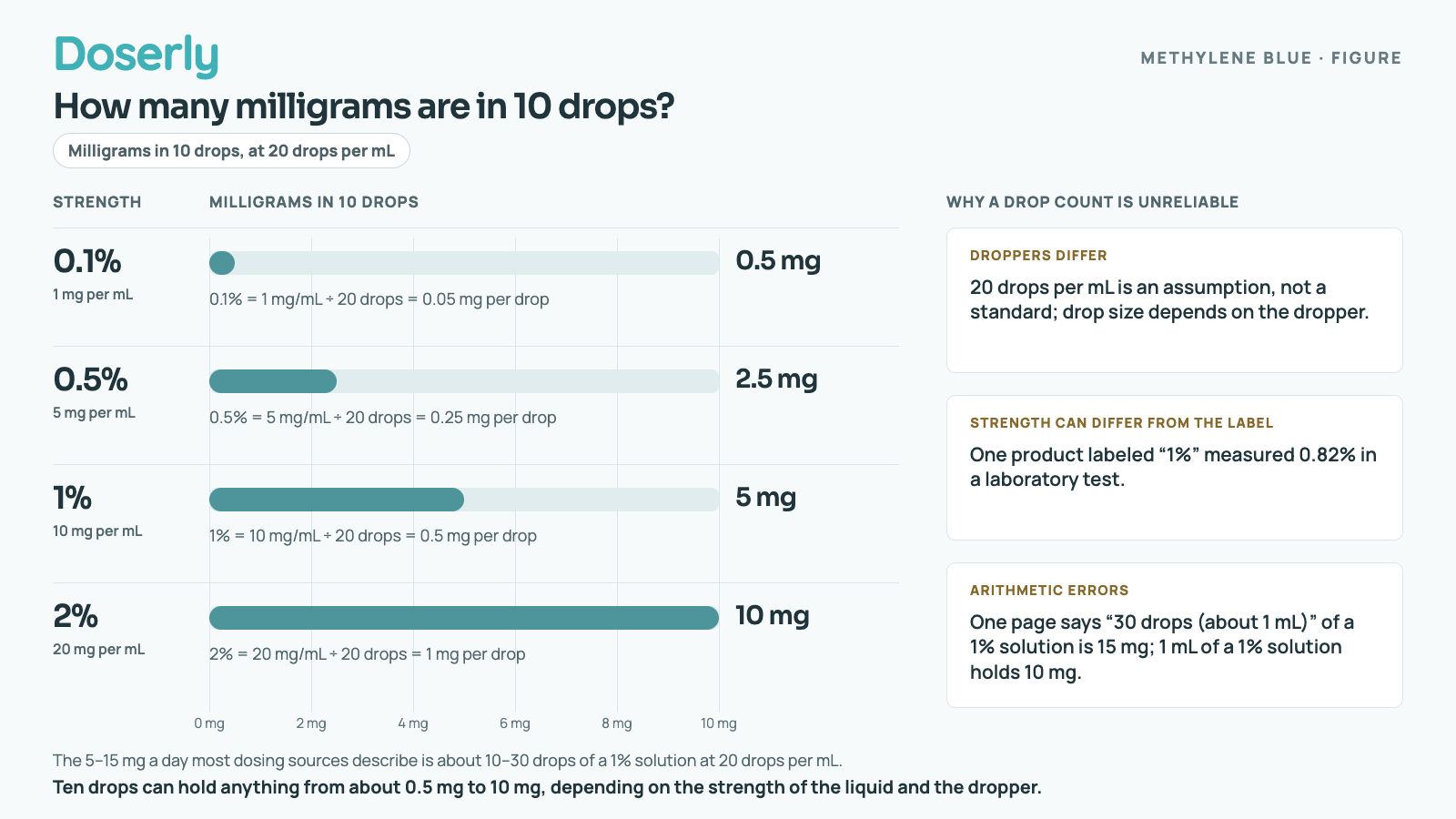
How many milligrams are in 10 drops?
Milligrams in 10 drops, at 20 drops per mL
- 0.1% solution (1 mg per mL)
- 10 drops0.5 mgOne drop1 mg/mL ÷ 20 drops = 0.05 mg
- 0.5% solution (5 mg per mL)
- 10 drops2.5 mgOne drop5 mg/mL ÷ 20 drops = 0.25 mg
- 1% solution (10 mg per mL)
- 10 drops5 mgOne drop10 mg/mL ÷ 20 drops = 0.5 mg
- 2% solution (20 mg per mL)
- 10 drops10 mgOne drop20 mg/mL ÷ 20 drops = 1 mg
- Droppers differ20 drops per mL is an assumption, not a standard; drop size depends on the dropper.
- Strength can differ from the labelOne product labeled “1%” measured 0.82% in a laboratory test.
- Arithmetic errorsOne page says “30 drops (about 1 mL)” of a 1% solution is 15 mg; 1 mL of a 1% solution holds 10 mg.
Ten drops can hold anything from about 0.5 mg to 10 mg, depending on the strength of the liquid and the dropper.
The strength itself varies. Liquids are sold at 0.1%, 0.5%, 1% and 2%, so 10 drops can hold anything from about 0.5 mg to 10 mg. [20], [4] Some pages get their own arithmetic wrong: one says 30 drops (about 1 mL) of a 1% solution is 15 mg, when 1 mL holds 10 mg, and a weight chart on another page is off by a factor of ten. [36], [37] A laboratory test of one product labeled "1% USP grade" measured 0.82%. [33]
Every day, or a few times a week?
Most dosing pages describe a daily morning dose. Some add 5 days on and 2 days off, and one names 8 weeks on and 2 weeks off, while saying both patterns are convention rather than evidence. [3], [4], [37] Community education groups most often teach 5–10 mg three to five times a week, reaching that pace through a weekly ladder. Members of the same groups more often describe taking it every day.
With a half-life of about 24 hours, roughly half of one day's dose is still in the body the next day, so a daily schedule and a three-times-a-week schedule give different exposure. No study has compared the two patterns for any outcome. [1]
Start low, or start at the target?
The pages that step up disagree on how fast. One raises the dose every 3–5 days; another holds 5 mg for at least a week, then moves to 10 mg and stops there; a third starts at 1–2.5 mg for the first week. [3], [4], [26] Some troche pages suggest starting with a quarter of a 16 mg lozenge (4 mg). [22], [57] Wellness users in public forums often start with a drop count they cannot convert to milligrams. [58], [59]
There is no evidence that a person who notices nothing at one step will notice something at the next.
Does taking more work better?
Dosing pages often describe an "inverted U": benefits at low doses and the opposite at high ones. [3] That idea comes from rat research (see how it might work) and has never been mapped onto a human oral dose. [60], [4]
The human data do not show "more is better" either. The studies that found a mood or memory signal used 195–300 mg a day or a single 280 mg dose, while two IV studies found that brain blood flow and oxygen use went down, not up, after 0.5–1 mg/kg. [30], [43], [7], [8], [9] In a phobia trial, 260 mg after a therapy session helped people whose fear had dropped by the end of the session, but tended to make things worse for people whose session went badly. [61]
What about troches and IV drips at wellness clinics?
These are separate products. Troches hold 16 or 50 mg and are often cut into quarters; no study has compared how much reaches the blood from a troche with a swallowed dose. [22], [23], [57] Some clinics sell wellness IV sessions of 10–100 mg, flat amounts that ignore body weight and serve no approved purpose; the labeled IV dose treats a disease, under monitoring. [38], [39], [1]
Where do the sources disagree most?
- The unit: flat daily milligrams, milligrams per kilogram, or a drop count with no stated strength. [3], [53], [20]
- The daily amount: single-number statements run from 5 to 30 mg a day, and some pages list daily maximums of 40–64 mg. [4], [62], [63], [22]
- The schedule: daily without end, 5 days on and 2 off, or courses of 4–8 weeks. [3], [4]
- Mixing with antidepressants: some pages say "never", while forum posts and community education groups sometimes treat the warning as applying only to high doses. The label does not set any safe low dose. [3], [1] See why.
What happens when you stop methylene blue?
This has barely been studied. No trial has followed people after stopping regular oral use to look for withdrawal effects or a rebound. The repeated-dose MB2 trial did not report outcomes after stopping, and the two bipolar trials compared a higher dose with a low 15 mg dose, with no drug-free period. [31], [43], [30] The one small study that measured symptoms after stopping, in 8 people with schizophrenia taking methylene blue alongside antipsychotics, found that symptoms worsened again in the week after it was withdrawn; it could not tell a return of the illness from a rebound. [64]
What is known comes from the drug's chemistry and the label:
- It lingers for days. With a half-life of about 24 hours, levels fall by roughly half each day after the last dose. The US label also tells people not to take serotonergic drugs for 72 hours after the last dose, and to stop breastfeeding for up to 8 days. [1]
- Blue urine fades. The color is an expected effect, but no label or study gives a dependable time for it to clear. [1], [10]
- Mild side effects usually settle. A poison center bulletin says mild symptoms usually resolve after stopping, while serious reactions need medical assessment. [28]
Timeline of the eight days after a last dose of methylene blue: a conceptual curve halves each day, with markers for the label's 72-hour gap before serotonergic drugs and its pause in breastfeeding for up to 8 days.
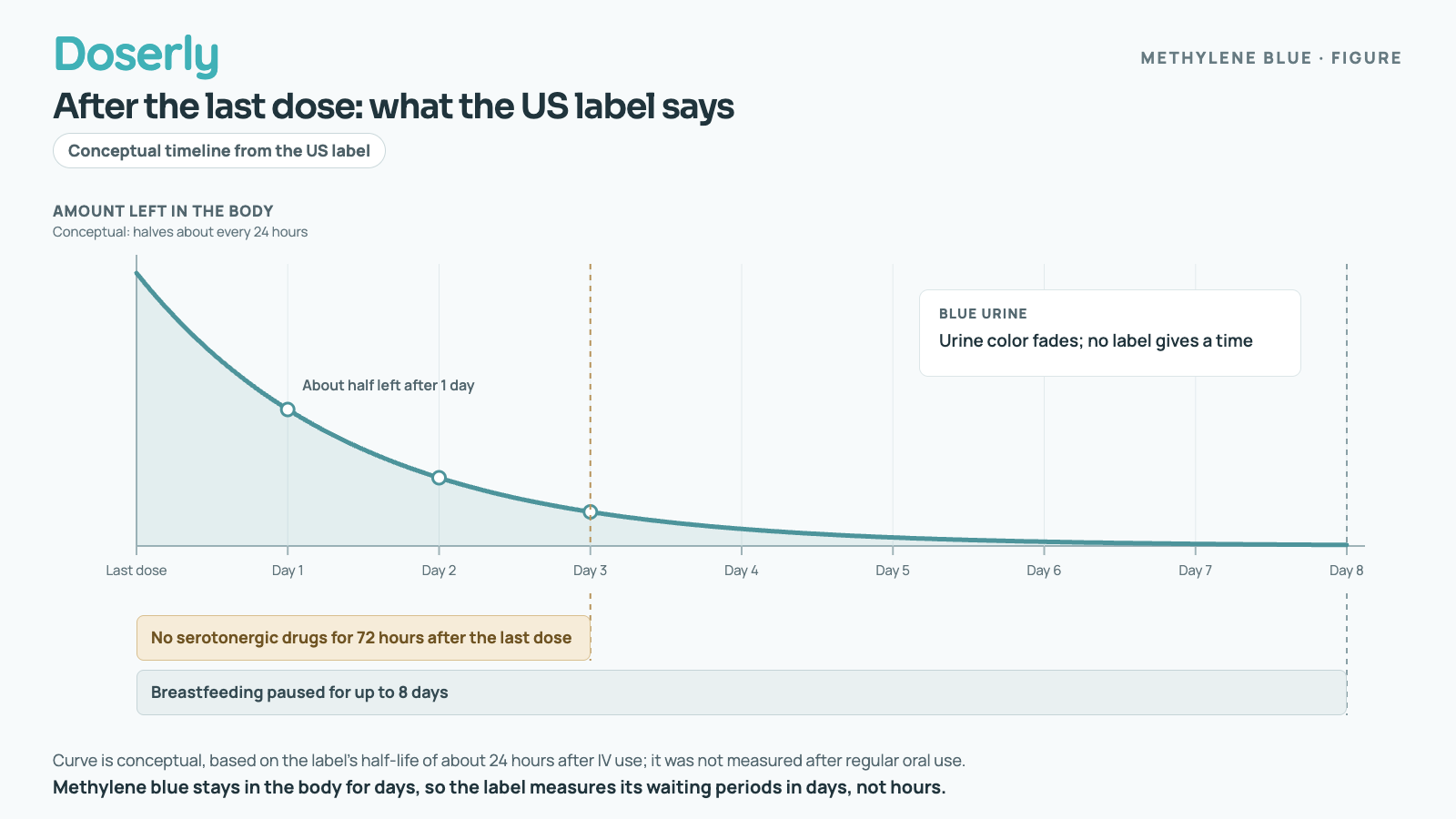
After the last dose: what the US label says
Conceptual timeline from the US label
- Amount left (conceptual)
- Falls by about half each day: the label gives a half-life of about 24 hours after IV use.
- Days 0–3
- No serotonergic drugs for 72 hours after the last dose.
- Days 0–8
- Breastfeeding paused for up to 8 days.
- Blue urine
- Urine color fades; no label gives a time.
Methylene blue stays in the body for days, so the label measures its waiting periods in days, not hours.
Public accounts point in different directions: headaches and light sensitivity that cleared but brain fog that returned, a benefit that ended, and a few days of feeling unwell during a planned break. [65], [66], [67] Single reports cannot show whether stopping caused a change or the original problem returned.
Do drops, capsules and injections behave the same way?
Not exactly, but swallowed methylene blue is absorbed much better than most people expect. An intravenous (IV) infusion puts the whole dose straight into the bloodstream. An oral dose has to pass through the gut and liver first, and how much gets through depends on the product.
How much of a swallowed dose is absorbed?
In a 2009 study of 16 healthy volunteers, a 500 mg dose in water reached the blood almost as well as an IV dose: the bioavailability (the share that reaches the bloodstream) was about 72% on average, with wide differences between people. [6] An older study of 7 volunteers measured much lower whole-blood levels after 100 mg by mouth than after the same amount by IV; its authors put the gap down to where the drug goes in the body, and differences in product form and measuring method make these studies hard to compare. [68] A 1972 study found that 53–97% of a single 10 mg capsule came out in the urine over five days, mostly in its colorless reduced form, leucomethylene blue. [69]
None of these studies tested a few drops a day, a troche or a modern capsule, and none measured how much reaches the brain in people.
How long does it stay in the body?
This is a question of pharmacokinetics, how the body absorbs, moves and clears a drug. The US label gives a half-life of about 24 hours, and the EU label about 25 hours on average (24.7 hours, with wide variation). That means levels fall by about half each day, and it takes several days to clear. [1], [10] One older study estimated a shorter half-life, about 5 hours, from whole-blood samples after IV use; different measuring methods explain part of the gap, and the label figures are the current reference. [68]
The body clears methylene blue mainly through the kidneys and liver. About 40% leaves in the urine unchanged, and people with kidney disease had much higher blood levels after the same dose, which is why the label reduces the dose for moderate or severe kidney disease. [1] Community education groups sometimes describe one dose as lasting 4–8 hours; that describes a felt effect, not how long the drug stays in the body.
Are troches or drops under the tongue better than swallowing?
Nobody has measured it. Some pages claim that a capsule needs 25–30% more milligrams than drops held under the tongue (sublingual), but they cite no study, and a swallowed liquid is already well absorbed. [3], [6]
What are "leuco" or colorless methylene blue products?
Leucomethylene blue is the reduced, colorless form. The body makes it from methylene blue, and it is the form that actually converts methemoglobin back to working hemoglobin. [1] Some products are sold in this form, such as gummies, and some people add vitamin C to their drops to take the color away, because vitamin C turns methylene blue colorless in the bottle. [3], [70] No study has measured whether either approach changes how much reaches the blood or how it acts.
Is pharmaceutical-grade methylene blue different from aquarium or lab grade?
Yes, in how it is made and tested, but a label claim is not a test result. USP means the product claims to meet the United States Pharmacopeia's standard. A US poison center points out that products sold online as supplements are not held to FDA's drug standards or testing, so strength and purity can vary a lot; methylene blue is also sold as a textile dye and aquarium treatment. [28], [2] A community-funded laboratory test of a product labeled "1% USP grade" found 0.82% methylene blue plus measurable cadmium and mercury, and another product's test found high bacterial counts. These are single samples, not a market survey. [33], [71]
How should methylene blue be stored, and how long does it last?
Only the injections have tested storage instructions. There is no published stability study of consumer drops after opening, so their storage advice is the seller's claim. [1], [10]
- The injection (label). Store at 20–25 °C (brief ranges of 15–30 °C are allowed), do not refrigerate or freeze, and keep the ampule or vial in its box to protect it from light. Each container is single use; unused liquid is thrown away. [1] The EU product has a shelf life of 4 years unopened and must be used immediately once opened or diluted. [10]
- Mixing for IV use. The US label says to dilute only in 5% dextrose (a sugar solution), because salt water (sodium chloride) makes methylene blue less soluble, and to use it straight away. [1]
- Drops, capsules and troches. Sellers say to keep drops in a cool, dark place and compounded capsules in a tightly closed, light-resistant container at room temperature; one telehealth pharmacy gives its capsules a 180-day use-by period. None of these claims comes with published stability data. [72], [27], [5]
The WHO's international standard for the substance also calls for a tightly closed container, protected from light, at no more than 30 °C. [73] This guide does not cover measuring or handling liquids; the Academy note below points to the practical basics.
What do we actually know about methylene blue in people?
More than for most wellness products, because methylene blue has been a hospital medicine for decades. But almost all of that research used IV doses in sick patients or single large oral doses. The routine most people follow at home, a few milligrams by mouth every day for months, has never been tested in a trial.
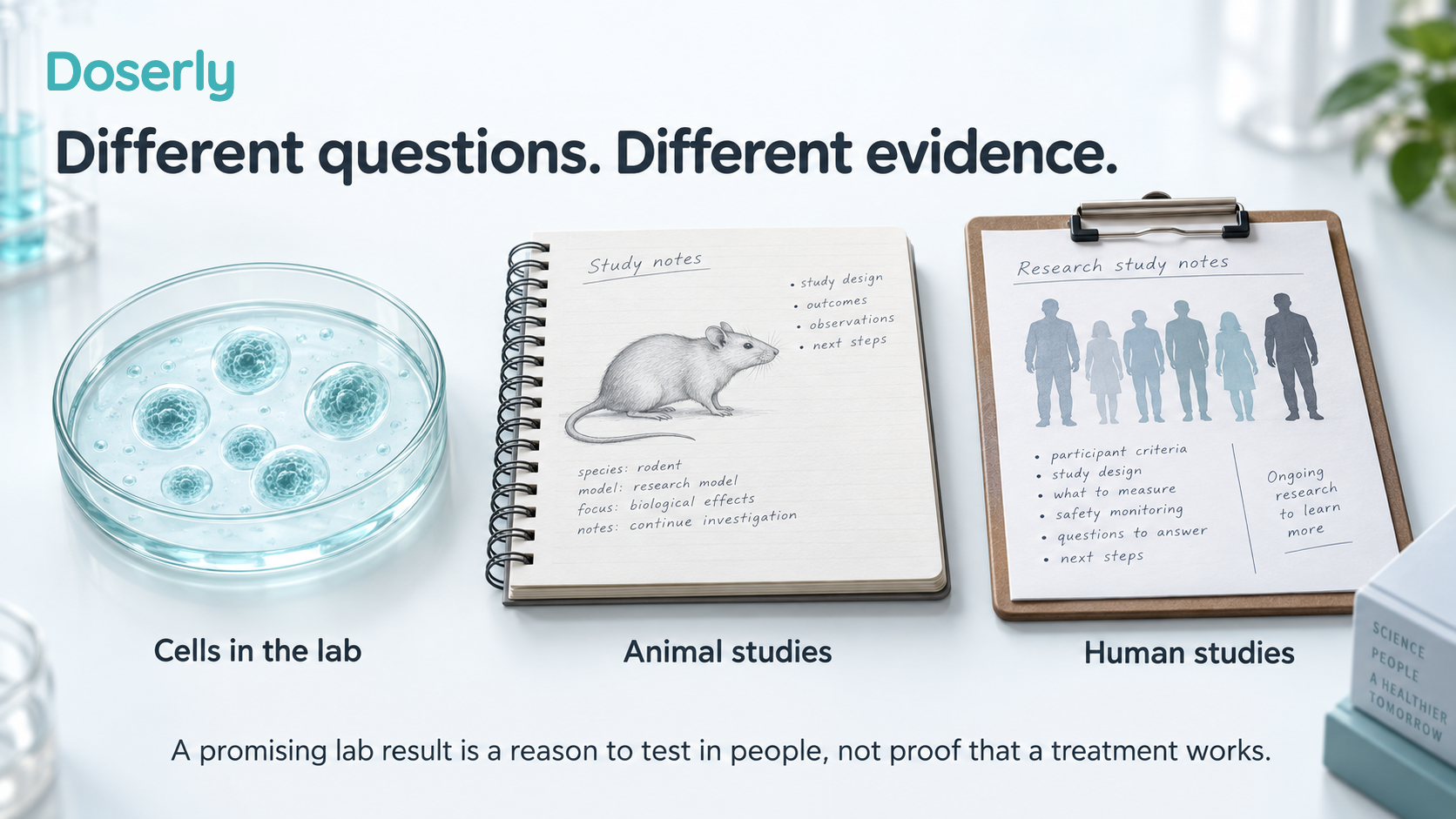
Does methylene blue improve memory in healthy people?
One small controlled trial found a short-term gain on one memory task that did not clearly beat placebo; nothing shows lasting benefit from daily use.
| Study | What researchers did | What they found | What it cannot tell us |
|---|---|---|---|
| Brain-scan trial, 2016 | 26 healthy adults randomly given one 280 mg oral dose or a blue dye placebo, then scanned with fMRI (brain scans that track blood flow during tasks) an hour later | About 7% more correct answers on a short-term memory task than before the dose (the difference from placebo was not statistically significant), and more brain activity during attention and memory tasks | Whether daily low doses help or effects last. Anyone on a psychiatric medicine in the previous 5 weeks, or with G6PD deficiency, was excluded. [7] |
| MB2 trial (results posted 2024) | Older adults, healthy or with memory problems, took 94 mg three times a day or a blue dye placebo for 2 to 12 weeks; both groups also took phenazopyridine, a urinary pain reliever that masks urine color | 117 enrolled, 55 completed. Healthy older adults' 12-week memory scores: 15.58 on methylene blue, 15.93 on placebo. No statistical comparison posted | Whether methylene blue helped memory; too many dropped out. [31] |
| IV brain-blood-flow study, 2023 | 8 healthy women received 0.5 and 1 mg/kg IV methylene blue and a placebo in separate sessions | Blood flow and oxygen use across the whole brain went down after both doses, the opposite of what the researchers expected | How oral doses behave, or whether lower brain oxygen use is good or bad. [8] |
| IV study in bipolar disorder, 2024 | 15 people with bipolar disorder and 15 matched controls received 0.5 mg/kg IV or placebo | Whole-brain blood flow and oxygen use fell in both groups; some frontal areas responded differently in the bipolar group | Anything about treatment benefit. [9] |
A second paper from the 2016 trial analyzed brain connectivity in the same volunteers, so it is not an independent confirmation. [74]
The two IV studies test the idea behind many wellness claims, that methylene blue "boosts brain energy": measured brain oxygen use went down, not up. One reading after one dose does not show harm or benefit, but it does not fit the simple story. [8], [9]
Has it been tested for depression and other mental health conditions?
Yes, in small trials, mostly at doses far above what dosing pages suggest.
- Severe depression, 1987. 15 mg a day for three weeks beat placebo; only the abstract could be reviewed, so the size of the effect is unclear. [29]
- Bipolar disorder, 1986 and 2017. In 31 people on lithium, a two-year crossover found less depression during the year on 300 mg a day than on 15 mg (17 completed). In 37 people on lamotrigine, depression and anxiety scores improved on 195 mg a day compared with 15 mg; memory and thinking did not. [43], [30]
- Phobia and PTSD. Two trials gave 260 mg after therapy sessions to help the learning in therapy stick. In the phobia trial, it helped only people whose fear had come down by the end of a session and tended to backfire when a session went badly. In the PTSD trial of 42 people, both groups improved a lot, and methylene blue added a modest edge over placebo in evaluator-rated response and quality of life. [61], [75]
- Schizophrenia, 1997. A small study of 8 people added methylene blue to antipsychotic treatment and reported modest improvement during use and worsening after it was withdrawn, without a placebo group. [64]
These were supervised trials in people with diagnosed conditions. Both bipolar trials compared a higher dose with a low 15 mg dose of methylene blue itself, and the 1986 researchers noted that their low dose may not have been inactive. [43], [30]
What about Alzheimer's disease?
The research here mostly tested related drugs, not methylene blue itself. An early trial by the company TauRx tested its own methylene blue formulation (Rember) at 69, 138 and 228 mg a day in 321 people; some subgroup results looked promising, but the highest dose had absorption problems and the trial was exploratory. [76]
The company then moved to chemically different molecules. A phase 3 trial of LMTM in 891 people missed its main goals, and the 2026 LUCIDITY trial of HMTM in 598 people found no difference on either main measure at 52 weeks. [24], [25] Its comparison group took methylene blue itself, 4 mg twice a week, intended only to color urine so the groups looked alike; the researchers attribute the lack of difference to an effect in that group, which the trial had no true placebo group to test. [25] Those molecules are not methylene blue drops, and their doses do not convert.
How well does it work in hospitals?
- Methemoglobinemia. In the 31 adults whose data support the US label, 26 of 28 with a measured starting level had at least a halving of methemoglobin at the first check after treatment. [1] Expert recommendations from 2021 start treatment at 1–2 mg/kg IV and list vitamin C (ascorbic acid) or exchange transfusion as alternatives in some situations. [77]
- Low blood pressure after heart surgery. In a 2004 trial of 56 people with vasoplegia, none of 28 given 1.5 mg/kg died, versus 6 of 28 on placebo; in a 2005 trial, 2 mg/kg before surgery was followed by vasoplegia in none of 50 high-risk patients, versus 13 of 50. [40], [78]
- Septic shock. A 2023 trial of 91 people found that 100 mg IV daily for three days shortened the time on blood-pressure drugs (69 versus 94 hours). A 2024 review of six trials with 302 patients found a lower risk of death in the short term (risk ratio 0.66), with low certainty. [79], [41]
- Confusion after surgery. In older adults having major surgery, 2 mg/kg during the operation cut delirium from 24.2% to 7.3% in one trial (which was not blinded) and from 20.4% to 8.3% in a joint-replacement trial, though fever after surgery was more common with methylene blue in the second. A third trial in pancreatic surgery found 11.5% versus 23.6%. [42], [80], [81]
- Chemotherapy-related confusion and malaria. Case series report its use for brain toxicity from the cancer drug ifosfamide, without comparison groups; in one series of children, a benefit was clear in only 1 of 5. In a 2018 malaria trial, 15 mg/kg a day for three days, added to standard treatment, nearly stopped infected males with normal G6PD from passing the parasite to mosquitoes. [82], [83], [84]
Does a better score on a test mean a better life?
Not necessarily. The 2016 trial measured correct answers on one task an hour after a single dose; it did not measure work performance, energy through the day or how people felt a month later. [7] Personal experiments are hard to read for the same reason: focus, energy, sleep and mood change for many reasons, and a change in one does not confirm the others.
How does methylene blue work?
Methylene blue does several different things, and the evidence for each is different. Its effect on blood is established human pharmacology. Its effects on blood vessels and on the enzyme MAO-A are well documented in people. The mitochondrial "energy" effect that wellness marketing focuses on comes mainly from cell and animal studies, which are preclinical research.
Turning methemoglobin back into working hemoglobin
Hemoglobin carries oxygen using iron. In methemoglobinemia, some of that iron is in the wrong chemical state and cannot hold oxygen, often after exposure to certain medicines or chemicals. Inside red blood cells, an enzyme system converts methylene blue into its colorless form, leucomethylene blue, which then turns the iron back into its working state. [1]
That conversion needs a helper molecule (NADPH) that red blood cells make with an enzyme called G6PD, which some people lack because of an inherited condition. Without enough of it, methylene blue may not work and can damage red blood cells instead, which is why the label forbids its use in G6PD deficiency. At very high doses, methylene blue can itself cause mild methemoglobinemia. [1], [77]
Tightening blood vessels in shock
In vasoplegia and septic shock, blood vessels relax too much and blood pressure falls. Methylene blue blocks nitric-oxide signaling, a chemical pathway that relaxes blood vessels, which helps raise blood pressure. This is why intensive-care teams use it when standard blood-pressure drugs are not enough. [28], [40]
Blocking MAO-A
In laboratory tests on human enzymes, methylene blue is a potent, reversible blocker of monoamine oxidase A (MAO-A), the enzyme that breaks down the brain chemical serotonin; it blocks a related enzyme, MAO-B, only at much higher concentrations. [85] That is the same action as a class of antidepressants called MAO inhibitors, and it explains the label's warning: combined with medicines that raise serotonin, blocking its breakdown can push levels high enough to cause serotonin syndrome. [1], [85]
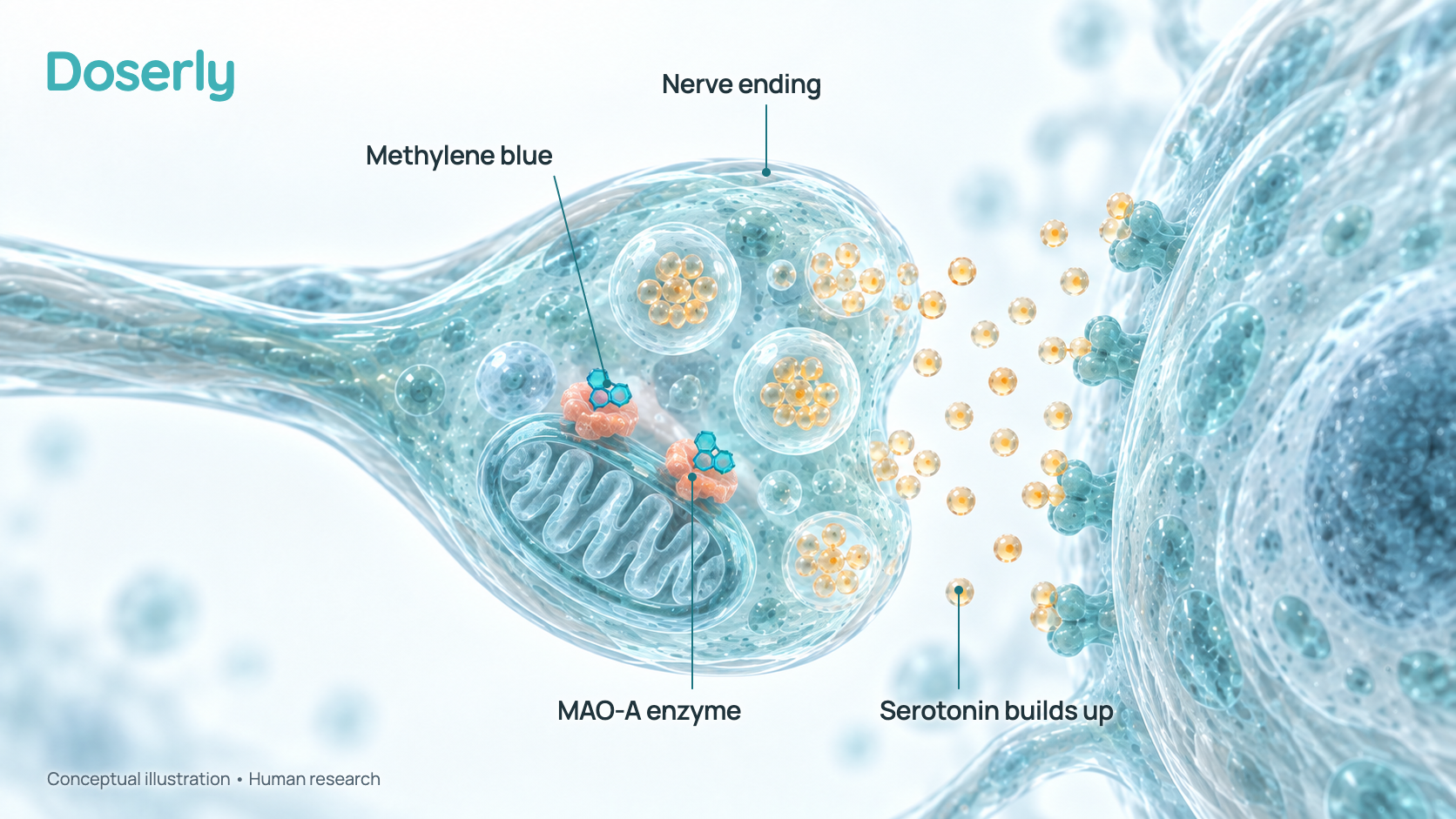
The mitochondrial "electron shuttle"
Mitochondria make energy by passing electrons along a chain of proteins. In cell experiments, methylene blue can accept electrons and hand them to a later step (cytochrome c), bypassing steps that have been blocked with poisons. That raised oxygen use in cultured nerve cells and protected them against several toxins. [49]
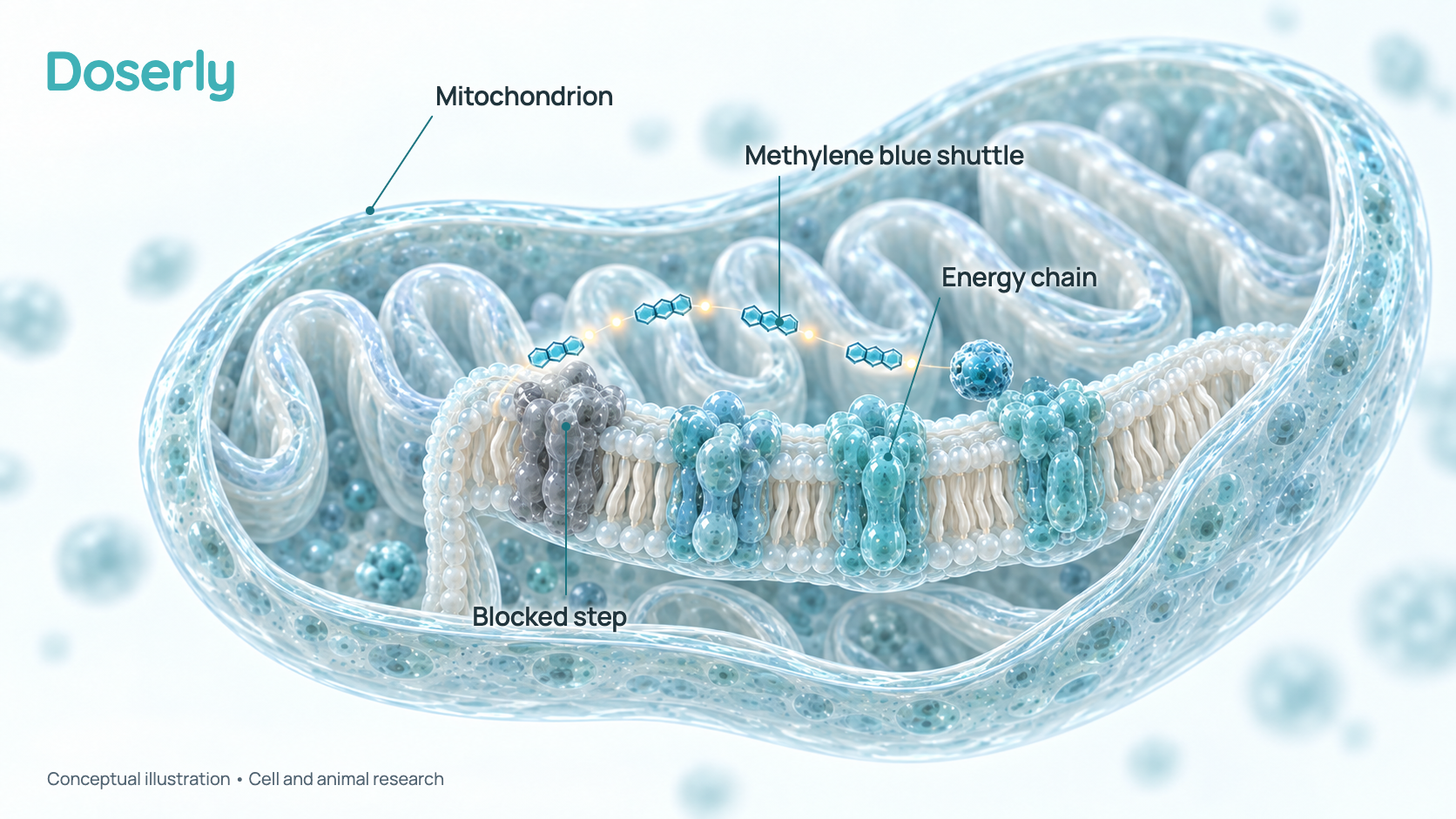
In human fibroblasts (connective-tissue cells) grown in a dish, very low concentrations delayed the cells' aging and raised the activity of one energy enzyme (complex IV) by 30% and oxygen use by 37–70%. [50] In rats, small doses improved memory in several learning tasks, and in rats whose mitochondria were partly blocked by a poison, 1 mg/kg after training restored spatial memory. [86], [87], [60], [88]
Those are cell and animal findings; in the human brain after IV doses, blood flow and oxygen use went down rather than up. [8], [9]
Does a low dose really do the opposite of a high dose?
The research group behind much of the rat work describes a hormetic dose response: low and high doses have opposite effects. [89] In one rat study, 4 mg/kg improved object memory, while 50–100 mg/kg reduced activity. [60] In another, a single injection into the bloodstream of anesthetized rats caused widespread nerve-cell death. [90] No study has mapped where a "low" oral dose ends in people, so rat milligrams per kilogram cannot be turned into a human "sweet spot".
Light: why it is used in photodynamic treatments
Methylene blue absorbs red light strongly, which is why it looks blue. [91], [70] Light can pass that energy on to oxygen and create reactive molecules that damage nearby cells, which researchers use on purpose in photodynamic treatments. [92], [93] In fruit flies kept under normal lighting, methylene blue in the food cut median lifespan by 49%. [94] See the light sensitivity section.
Tau and Alzheimer's biology
In brain-tissue cultures and some mouse models, methylene blue lowered levels of tau, a protein that forms tangles in Alzheimer's disease, partly by helping cells clear it, and in other mice it reduced amyloid, the protein in Alzheimer's plaques. [95], [96], [97] The results are inconsistent: it did not remove existing tangles in one mouse model, failed to protect zebrafish, and in another mouse study protected memory only when started before symptoms. [98], [99], [100] In people, the related TauRx drugs missed their main goals. [24], [25] See the research library.
What are the risks and unanswered questions?
Is methylene blue safe?
It depends on the dose, the person and, above all, what else they take. As a one-off hospital treatment it is an established medicine with serious, well-described warnings; taken by mouth every day for months, its safety has not been studied.
The US label's safety data come from 31 adults treated for methemoglobinemia: one (3.2%) had a serious reaction, a seizure-like episode. [1] In the MB2 trial of 282 mg a day, no serious adverse events were posted, but urinary and stomach complaints were common. [31] Australia's adverse-event database held 49 reports for products containing methylene blue up to December 11, 2025, including 30 where it was the only suspected medicine and 6 reports of deaths associated with its use. Those are spontaneous reports: they do not prove that methylene blue caused the events, and there is no count of how many people used it. [2]
Poison centers in Australia and the US report more calls about oral methylene blue, with nausea, diarrhea, dizziness, pain when passing urine, skin discoloration and irritability among the problems. [2], [28]
What is serotonin syndrome, and why does the label warn about it?
Serotonin syndrome is a dangerous excess of serotonin activity in the nervous system, and the label's most serious warning is that methylene blue can cause it, sometimes fatally, when combined with medicines that raise serotonin or with opioids. [1]
The reason is that methylene blue strongly blocks MAO-A, the enzyme that breaks serotonin down, so adding a medicine that raises serotonin, such as an SSRI antidepressant, lets it build up. [85] The label lists the warning signs: agitation, confusion or hallucinations; a fast heart rate, swinging blood pressure, sweating, flushing and fever; tremor, stiffness, muscle jerks and poor coordination; seizures; and nausea, vomiting or diarrhea. [1]
A 2018 review found 50 published cases, all after injected methylene blue in people taking serotonergic antidepressants; one person died. The authors added a case involving an oral urinary product containing methylene blue plus several serotonergic drugs, and a 2026 report described a similar case in a 95-year-old woman given the anti-nausea drug ondansetron. [101], [102]
Does it only happen at high doses? Community education groups and forum posts sometimes say so, calling methylene blue a "weak" MAO inhibitor. The labels do not support that. The US label sets no dose below which the combination is safe, and it tells people not to take serotonergic drugs for 72 hours after the last dose. [1] The antidepressant bupropion's label says the risk of combining it with oral methylene blue, or with IV doses much lower than 1 mg/kg, is "unclear", which is not the same as safe. [103] We found no published case of serotonin syndrome from consumer wellness drops, but the absence of a report cannot show that a small dose is safe alongside an SSRI. [101]
Should you stop an antidepressant to take methylene blue? That decision belongs with the prescriber. Stopping an SSRI suddenly can cause its own withdrawal symptoms, such as dizziness, "electric shock" sensations, anxiety and low mood, and the sertraline label advises reducing the dose gradually. [32] Antidepressant labels also set waiting periods around MAO inhibitors; bupropion's, for example, asks for at least 14 days between stopping it and starting an MAO inhibitor antidepressant. [103]
Which medicines and supplements are the concern?
The US methylene blue label names these groups and medicines: [1]
- Antidepressants: SSRIs (for example sertraline, fluoxetine and escitalopram), SNRIs (for example venlafaxine and duloxetine), MAO inhibitors, clomipramine (a tricyclic antidepressant), mirtazapine and bupropion.
- Opioids (for example tramadol), and dextromethorphan, a cough suppressant in many cold medicines.
- Buspirone (an anxiety medicine) and linezolid (an antibiotic that is itself an MAO inhibitor).
Other medicines' labels say the same from their side: sertraline, bupropion, tramadol and the ADHD medicine Adderall XR all warn against combining them with "intravenous methylene blue" as an MAO inhibitor. For amphetamine stimulants and bupropion the concern is a dangerous rise in blood pressure rather than serotonin syndrome. Migraine medicines called triptans, such as sumatriptan, are not to be used with MAO-A inhibitors. [32], [103], [104], [105], [106]
Some combinations people ask about are not on any label but raise the same concern:
- L-tryptophan and 5-HTP. Tryptophan combined with an MAO inhibitor is a documented cause of serotonin syndrome. [107] 5-HTP is the next step in the body's route from tryptophan to serotonin; no study has tested it with methylene blue.
- Tesofensine, an experimental weight-loss drug, blocks the reuptake of serotonin, noradrenaline and dopamine. [108] That is the same kind of action as the antidepressants on the label, and no study has tested it with methylene blue. It is not an approved medicine; its developer's partner was still seeking approval in Mexico in August 2026. [109]
- Parkinson's medicines. Rasagiline and selegiline are MAO-B inhibitors. [110] Methylene blue blocks MAO-B only weakly, but the combination has not been studied. [85]
This list is not complete; a pharmacist can check everything you take.
What side effects have been reported?
- Expected: blue or green urine, and blue staining of the skin, tongue and mouth. [1], [10]
- Common in hospital use: dizziness, tingling, a changed sense of taste, nausea, sweating and pain in the arms or legs; less often, stomach pain, chest pain, headache, anxiety and vomiting (EU label). The US label adds low potassium and magnesium, diarrhea, muscle jerks and seizure-like events. [10], [1]
- In the oral MB2 trial (282 mg a day): urinary frequency or urgency in 12 of 22 healthy older adults on methylene blue versus 2 of 21 on placebo, and bladder irritation in 7 of 22 versus 0 of 21; nausea or vomiting and leg cramps were also more common. [31]
- Allergic reactions: severe allergic reactions, including anaphylaxis, have been reported with methylene blue products. Anyone who has had a severe reaction to it or to a related dye must not use it. [1]
- Thinking and driving: the labels warn of confusion, dizziness and vision problems that affect driving. [1], [10]
- Too much: the US label describes low blood pressure, wheezing and low oxygen after single IV doses of 3 mg/kg or more; nausea, chest pain, tremor, confusion and mild methemoglobinemia after 7 mg/kg or more in total; and severe red blood cell destruction and death after single doses of 20 mg/kg or more. [1]
Does methylene blue make you sensitive to light?
Yes. Both the US and EU labels warn that methylene blue can make the skin react to light (phototoxicity), and tell patients to protect themselves from light exposure after treatment. The EU label says the reaction happens with strong light sources, such as phototherapy lamps, operating-room lights or the light of a finger pulse oximeter. [1], [10]
Doctors have published cases from surgery, where methylene blue is given by IV to help find the parathyroid glands: a sunburn-like rash on the neck under the operating lights, and blisters or burns on fingers under pulse-oximeter probes. [111], [112], [93] Methylene blue absorbs red light most strongly, peaking at about 665 nanometers. [91], [70]
Some sellers and users deliberately combine methylene blue with red light, near-infrared light or sunlight. [113], [114], [115] Community education groups sometimes promote shining light into the eyes after a dose. One public account described light sensitivity and headaches that cleared after stopping. [65] We found no human study that tested oral methylene blue with red or near-infrared light for energy or thinking; the one published pilot that combined them, using 660-nanometer red light, treated COVID-19 in 8 people. [92] The safety of shining strong light on skin or eyes after a dose has not been studied.
Why does G6PD deficiency matter?
G6PD deficiency is an inherited condition in which red blood cells are short of an enzyme that protects them from chemical stress. In people with it, methylene blue may not work and can cause severe breakdown of red blood cells (hemolysis) and anemia, so the label forbids its use. [1] The anemia can appear a day or more later. [1] A blood test can check for the condition; expert recommendations advise testing before treatment where possible, and a US poison center advises asking about personal or family history before any use outside medical care. [77], [28] The human memory trials excluded people with G6PD deficiency. [7], [31]
Can methylene blue affect medical tests?
Yes. While it is in the blood, a finger pulse oximeter can show a falsely low oxygen reading. It can also affect urine dipstick tests that rely on a blue color, and a brain monitor used during anesthesia. [1] If you have taken methylene blue and need surgery or a hospital test, tell the team.
Is it safe in pregnancy or while breastfeeding?
No safety has been established, and the label warns of possible harm to an unborn baby. When methylene blue was injected into the fluid around the baby during amniocentesis (a prenatal test) in the second trimester, babies developed bowel blockages (intestinal atresia) and some pregnancies were lost. In one twin series, 17 of 89 pregnancies had this problem, and in every case where it could be traced, it was the twin exposed to the dye. [1], [116] In rats and rabbits, oral doses at least 16–32 times the human IV dose harmed development. [1] Australia classes methylene blue as pregnancy category D, and the Lumeblue tablets must not be used in pregnancy or while breastfeeding. [2], [18]
The US label says to stop breastfeeding during treatment and for up to 8 days afterward, because of the potential for serious harm, including damage to genes. [1] In the laboratory it also slowed the movement of human sperm; fertility has not been studied. [1]
Does methylene blue cause cancer?
Nobody knows for people, and the animal evidence is read differently by two official sources. [1], [117]
- The US label summarizes two-year oral studies: methylene blue caused pancreatic tumors in male rats, and there were "no drug-related neoplastic findings in mice". [1]
- The US National Toxicology Program's own report on those studies found "some evidence" of cancer-causing activity in male rats (pancreatic tumors) and in male mice (small-intestine tumors), and "equivocal evidence" in female mice. [117]
Both report that methylene blue caused genetic mutations in bacterial tests; the label adds positive results in laboratory cell tests and a negative test in live mice. [1], [117] No study has measured cancer risk in people who use it.
Could product quality change the risk?
Yes. Real strength, purity and contamination can differ from the label, and Australia's regulator warns that imported products have not been assessed for quality, safety or effectiveness. [16] See the laboratory tests.
Is methylene blue legal? Is it FDA-approved?
Checked September 24, 2026. Rules differ by country and change quickly.
United States. The injection is an FDA-approved prescription medicine; wellness products are not.
- July 2011. FDA warned of serious nervous-system reactions when methylene blue is given to people taking serotonergic psychiatric medicines. [118]
- April 8, 2016. FDA approved PROVAYBLUE, the first approved methylene blue injection, for acquired methemoglobinemia. Generic injections followed. [11], [119]
- March 31, 2026. FDA approved a 1% (10 mg/mL) generic injection; earlier US injections were 0.5%. [17]
- Oral products. Urinary combination tablets are listed as unapproved drugs. [19] Wellness products are sold as supplements, which a US poison center notes are not held to FDA's drug standards or testing. [28] We found no FDA warning specific to methylene blue supplements from 2024 to September 2026.
Canada. Methylene blue injections are prescription medicines. Health Canada's drug database also lists one marketed non-prescription 1% oral liquid. [15] In September 2025, Health Canada recalled a 10 mg/mL methylene blue solution sold by a compounding laboratory without market authorization. [120]
Australia. Methylene blue injections are prescription-only (Schedule 4), with 7 registered products; there is no approved oral product, and it is not allowed in low-risk "listed" medicines. In September 2025 the TGA warned about imported, unassessed products. A March 2026 proposal would make every preparation taken internally prescription-only; no decision had been published by September 23, 2026. [2], [16]
European Union and United Kingdom. The Proveblue injection is a prescription medicine, and the Lumeblue tablets are approved in the EU only as a colonoscopy dye. [10], [18] In the UK, the medicines regulator decides case by case whether a product counts as a medicine, based on its claims and how it is presented. [121]
New Zealand. Methylene blue can be sold generally, except injections, which are prescription-only. [2]
A label such as "for research" or "aquarium use only" does not make a product legal to sell for people, and it does not make it safe to take.
Is methylene blue banned in sport?
No. The World Anti-Doping Agency's (WADA) 2026 list does not name methylene blue, and its catch-all ban on unapproved substances does not apply because the injection is an approved medicine. That does not cover other ingredients in a blend, or products contaminated with banned substances. [12]
Who should be especially cautious?
These groups have specific warnings or no safety data. That is a reason for caution, not proof of harm.
- Anyone taking antidepressants, opioids, stimulants, triptans, dextromethorphan, linezolid or MAO inhibitors (see the lists above). [1]
- People with G6PD deficiency, or who do not know their status. [1], [77]
- Pregnancy, trying to conceive and breastfeeding. [1], [116]
- Kidney or liver disease, and older adults. Blood levels rise with kidney disease, the label reduces the dose, and it advises longer monitoring with liver disease and the fewest doses in older adults. [1]
- People with psychiatric conditions, because many psychiatric medicines are on the interaction list. [1]
- Anyone having surgery or strong light treatment. Tell the team, because of oximeter readings and skin reactions to operating lights. [10]
- Under 18. It is approved for children only as a hospital treatment; wellness use has not been studied in young people. This guide is written for adults.
Has methylene blue been tested alongside other medicines?
Only a little. In a formal study, a single 2 mg/kg IV dose did not change blood levels of midazolam, caffeine, warfarin or dextromethorphan, four medicines used to test the liver's main drug-processing enzymes. In laboratory tests, methylene blue blocked several of those enzymes and a drug-transport protein, which has not been studied with repeated dosing in people. [1] Bring a complete list of everything you take, including supplements, to a pharmacist or doctor before starting.
What should be monitored while using methylene blue?
The official monitoring rules cover hospital IV treatment; no regulator has written a plan for daily oral use, because none has approved it. What follows can help you prepare questions for a clinician; it is not a personal testing plan. [1], [10], [28]
What do the labels require during hospital treatment?
- Methemoglobin level and symptoms. Doctors confirm the treatment worked by measuring methemoglobin with a blood test (co-oximetry), because the problem can come back, especially after poisoning with aniline dyes or the antibiotic dapsone. [1], [77]
- Signs of red blood cell damage. Hemolysis can start a day or more after treatment; blood tests may show fragments of damaged hemoglobin, higher bilirubin and low haptoglobin. [1]
- Oxygen, measured the right way. A finger pulse oximeter can read falsely low while methylene blue is in the blood, so the label advises an arterial blood test if an accurate reading is needed. [1]
- Heart rhythm and blood pressure. The EU and UK label asks for an electrocardiogram (ECG) and blood pressure checks during and after treatment. [10]
What did the oral studies and poison centers check?
The MB2 trial tracked memory tests and side effects, including urinary symptoms, over 12 weeks, and the 2016 brain-scan trial screened out G6PD deficiency before anyone took a dose. [31], [7]
A US poison center bulletin suggests that, after larger ingestions or significant symptoms, doctors may check a complete blood count (for red blood cell damage), a metabolic panel (for salts, acid balance and liver enzymes) and methemoglobin by co-oximetry. It also recommends asking about a personal or family history of G6PD deficiency before anyone uses methylene blue outside medical care. [28] Expert recommendations advise testing G6PD before treatment where possible. [77]
Which signals matter, and why?
| Why it matters | What labels, trials or poison centers check | Tracking category |
|---|---|---|
| Red blood cell damage (hemolysis) | Hemoglobin and blood count, bilirubin, haptoglobin; G6PD status before starting | Blood work |
| Serotonin syndrome | Agitation, confusion, fast heart rate, sweating, fever, tremor, muscle jerks, diarrhea | Anxiety; Heart Rate & Palpitations; Temperature Regulation; Side Effect Burden |
| Urinary and bladder irritation | Frequency, urgency and pain on passing urine (common in MB2) | Side Effect Burden |
| Stomach upset | Nausea, vomiting and diarrhea | Nausea & GI Tolerance |
| Light sensitivity | Skin redness or burning after strong light | Skin Health |
| Heart and circulation | Heart rhythm and blood pressure (EU hospital label) | Blood Pressure; Heart Rate & Palpitations |
| Liver and kidney function | Metabolic panel; the label adjusts the dose for kidney disease | Blood work |
| The reason you started | Focus, memory, energy, mood or sleep | Focus & Mental Clarity; Memory & Cognition; Energy Levels; Mood & Wellbeing; Sleep Quality |
These are what labels and studies track, not proof that problems will happen. Blue urine shows only that the dye is present, not the dose or the product's purity. [1]
What do people in public communities report?
Public forums contain enthusiastic reports, "it did nothing" posts and people who stopped because of headaches, anxiety or insomnia. Most involve drops of unknown strength and several other supplements at once. They show what people try and notice, not how often methylene blue helps. [65], [58], [45]
What do the positive reports look like?
The most common positive theme is less brain fog and steadier energy. One person with chronic fatigue syndrome who mixed their own solution from powder described a clear rise in energy and less brain fog within five days, while their body and joint pain did not change; they noticed little difference between 5 and 15 drops. [46] A person with long COVID taking 2–3 drops on some days said they felt about 80% functional, and that they slipped back during five days without it. [44]
Others describe a caffeine-like buzz at a few drops, or good energy and focus at 12 to 30 mg a day. [122], [58] These accounts rarely stand alone: the chronic fatigue account also involved supplement and diet changes, and the long COVID account changes to sleep medicines. [46], [44] In community education groups, most people who describe a clear benefit also take other "mitochondrial" compounds, such as MOTS-c, SS-31 or NAD+, and often caffeine or nicotine.
How long did the changes last?
Often not long. One person said the effect disappeared after three days and never came back; another felt great for two days before the brain fog returned; a third said methylene blue stopped having the same effect after six weeks. [123], [124], [58] A long COVID account described feeling nearly well at first, then needing to keep raising the dose and settling at 30 mg. [45]
These stories cannot give an average time to benefit: the people posting used different products and amounts.
Does everyone notice something?
No. "Nothing" is one of the most common reports. One person took it daily for six months without benefit; another felt no difference after five to six weeks apart from an afternoon crash; another tried 1–4 mg several times and said it did them no good. [45], [58], [125] In community education groups, feeling nothing is common, including among some people who teach about methylene blue.
People who feel nothing usually blame the product or raise the dose. Blue urine does not settle the question; it shows only that the dye is present. [1]
What unwanted effects do people describe?
- Headache. Several people describe headaches that started with methylene blue, persisted at a lower dose and eased after they skipped it. [126], [45], [65]
- Anxiety, panic and restlessness. Reports include a panic-like feeling, chest discomfort and near-fainting after a few drops, and jitteriness on consecutive days. [127], [44]
- Sleep. Insomnia after morning doses on two days running, or sleep problems at the start. [127], [45]
- Thinking and mood. Feeling "much less witty" or struggling to find words, and irritability and a spaced-out feeling at 30 mg that eased at 15 mg. [125], [128]
- Stomach and urinary symptoms. Nausea in the first days. [122] In community education groups, members describe bladder or prostate discomfort at higher daily amounts and a flare of a painful bladder condition, which fits the urinary effects seen in the MB2 trial. [31]
- Allergic-type reactions. One person reported tooth pain, a migraine-like headache and facial swelling after a quarter of a troche (4 mg); they also had facial fillers, which complicates the picture. [129] In community education groups, a member describes a widespread itchy rash with stomach cramps that came back when the same dose was restarted after a break. The label warns of severe allergic reactions. [1]
What about antidepressants and other medicines?
Forum threads show several people combining methylene blue with medicines or supplements that raise the same concerns: 30 mg with high-dose bupropion, 5 mg with Adderall, doses alongside the antidepressant trazodone, and tryptophan tablets during antidepressant withdrawal, followed by coughing and a sudden feeling of heat. [130], [131], [132], [133] One person felt very dizzy and faint after 10 drops taken with over-the-counter cold medicine. [134]
In community education groups, members describe tapering off SSRIs on their own to make room for methylene blue, and combining it with tesofensine or 5-HTP. An absence of problems in one person's story does not make a combination safe; the interactions section explains why.
What about red light and sunlight?
Some people pair a dose with red-light panels before exercise or for chronic fatigue, and describe better workouts or less brain fog, while admitting it might be coincidence. [114], [115] Community education groups sometimes recommend sunlight or red light to the eyes after a dose. The groups that promote this do not mention that methylene blue can make skin sensitive to strong light. See the light sensitivity section.
How can you judge a methylene blue story?
Useful questions: How strong was the product, and how many milligrams was the dose? What else was the person taking, including antidepressants, stimulants, caffeine and nicotine? Were they also recovering from an illness, losing weight or changing their sleep? What happened weeks later, and after stopping?
Commercial interest matters too. Some of the most confident advice comes from people who sell methylene blue or earn a commission on it, including affiliate links in education groups and sellers' own dosing pages. [3], [113]
These selected discussions show what people try and what research should test. They are not a survey of all users or a substitute for controlled studies.
How does methylene blue compare with NAD+, SS-31 and MOTS-c?
These are the compounds most often taken alongside methylene blue in "mitochondrial" or energy routines. The table compares what each one is and how much human evidence exists; it does not rank them.
| Compound | What it is | Route and schedule | Human evidence | Approval status |
|---|---|---|---|---|
| Methylene blue (this guide) | A lab-made dye and hospital medicine; blocks MAO-A [1], [85] | IV 1 mg/kg once for methemoglobinemia (label); dosing sources describe 5–15 mg a day by mouth [1], [3] | Hospital trials; for memory, one small single-dose trial and one repeated-dose trial without posted statistics [7], [31] | Injection approved in the US, EU, UK, Canada and Australia; oral wellness products are not FDA-approved [11], [10], [2] |
| NAD+ | A coenzyme that every cell uses to make energy; not a peptide [135] | IV drips and injections; a pilot study infused about 750 mg over six hours [136] | One randomized trial in 180 people with heart failure: 10 mg a day IV for 7 days slightly improved heart pumping at one month, with no clear difference in events at six months [135] | Not FDA-approved; under FDA evaluation for pharmacy compounding [137] |
| SS-31 (elamipretide) | A four-amino-acid peptide that targets the inner membrane of mitochondria [138] | Subcutaneous injection; the label dose is 40 mg once daily for people weighing at least 30 kg [138] | Placebo-controlled trials; a 218-person trial in mitochondrial muscle disease missed its main goals [139] | FDA accelerated approval on September 19, 2025, for Barth syndrome only [140] |
| MOTS-c | A 16-amino-acid peptide encoded by a gene in mitochondrial DNA [141] | Injections in animal studies; no tested human schedule for MOTS-c itself [142] | FDA found no published human studies of MOTS-c itself; a related company drug was tested in a small trial [142], [143] | Not approved; an FDA advisory committee discussed it in July 2026, with no final decision posted [144] |
The real differences are in identity and evidence. Methylene blue is usually swallowed while the others are usually injected, and it is the only one with a boxed interaction warning and decades of hospital use. No study has compared or combined them, so the table cannot say which works better. [1], [142]
Common questions about methylene blue
Why does methylene blue turn urine blue or green?
Because it is a dye, and about 40% of a dose leaves the body unchanged in the urine. [1] Blue or green urine, and blue staining of the skin and mouth, are expected effects listed on the labels. The color shows that the dye is present, not how much was taken or whether it is working, and it can upset urine dipstick tests. [1], [10] See what happens when you stop.
Can you take methylene blue with an antidepressant?
Not without a doctor's involvement: the US label warns against combining it with SSRI, SNRI or MAOI antidepressants and several other medicines, because the combination can cause serotonin syndrome, which can be fatal. [1] The label sets no safe low dose, and it asks for 72 hours after the last dose of methylene blue before taking serotonergic drugs. Stopping an antidepressant to make room for methylene blue has its own risks and should be planned with the prescriber. [1], [32] See the full interaction list.
How long does methylene blue stay in your system?
Several days. Its half-life is about 24 hours, so about half is gone after a day and most after several days; people with kidney disease clear it more slowly. [1], [10] The US label sets a 72-hour gap before serotonergic drugs and an 8-day gap before breastfeeding. [1] See how long it stays in the body.
How many drops of methylene blue should you take?
It depends on the product's strength and the dropper, which is why drop counts are unreliable. A 1% solution holds 10 mg per mL, and most pages assume about 0.5 mg per drop, so the 5–15 mg a day that dosing sources most often describe is roughly 10–30 drops of a 1% solution. [3], [20] No trial has tested that routine, and a laboratory test found a "1%" product at 0.82%. [33] See how drops convert to milligrams.
Does methylene blue improve memory or work as a nootropic?
The evidence is thin. One trial in 26 healthy adults found about 7% more correct answers on a short-term memory task an hour after a single 280 mg dose, compared with before the dose; the difference from placebo was not statistically significant. [7] A 12-week trial of 282 mg a day posted results without statistical tests, and two small IV studies found lower brain blood flow and oxygen use. [31], [8], [9] No trial has tested low daily doses for memory or focus. See the human studies.
Is methylene blue legal to buy?
It depends on the country and the product. The injection is a prescription medicine in the US, Europe, the UK, Canada and Australia. Oral wellness products are not FDA-approved in the US, Canada lists one non-prescription oral liquid, and Australia is considering making every swallowed form prescription-only. [11], [15], [2] It is not on the World Anti-Doping Agency's banned list. [12] See the dated legal-status summary.
Glossary
Plain explanations of the route, dosing and research terms used in this guide. Underlined terms in the text link here.
- Adverse event
- A harmful or unwanted medical event reported after someone used a treatment. A report alone does not prove the treatment caused it.
- Animal study
- Research in animals such as rats or mice. It shows what a substance does in a living body, but results in people can differ.
- Bioavailability
- How much of a dose reaches the bloodstream in a usable form. For methylene blue swallowed in water, one study measured about 72%.
- Boxed warning
- The most serious warning on a US prescription label, printed in a box at the top. Methylene blue's boxed warning is about serotonin syndrome.
- Cell study (in vitro)
- Research on cells grown in a dish. It gives early clues about biology, but it is far from proof of benefit in people.
- Co-oximetry
- A blood test that measures the different forms of hemoglobin, including methemoglobin. A finger pulse oximeter cannot do this.
- Compounding
- When a pharmacy prepares a customized medicine, such as a capsule of a chosen strength, from individual ingredients. Compounded products are not FDA-approved.
- Controlled trial
- A study that compares people who receive a treatment with a similar group who do not, often receiving a placebo instead. Randomly assigning people to each group makes the comparison fairer.
- Course and cycle
- A course is the period of repeated use, such as eight weeks. A cycle is a course plus a planned break before any further use.
- Crossover trial
- A study in which each participant receives both treatments being compared, one after the other, so each person acts as their own comparison.
- Daily total
- All the amounts taken in one day, added together. For example, 7.5 mg twice daily is a 15 mg daily total.
- Delirium
- A sudden state of confusion and poor attention, common in older adults after surgery. It usually passes but is linked to slower recovery.
- Dose (amount each time)
- The amount taken on one occasion. A protocol lists both the dose and how often it is taken.
- Fibroblast
- A common type of cell that builds and maintains connective tissue. Fibroblasts grown in a dish are often used to study cell aging.
- fMRI
- Functional magnetic resonance imaging: a brain scan that tracks changes in blood flow while a person does a task, as a sign of which brain areas are working harder.
- G6PD deficiency
- An inherited condition in which red blood cells lack enough of the enzyme G6PD, which protects them from chemical stress. Methylene blue must not be used by people with it because it can destroy red blood cells.
- Half-life
- The time it takes for the level of a substance in the blood to fall by half. Methylene blue's is about 24 hours. It is not the same as how long an effect lasts.
- Hemolysis
- The breakdown of red blood cells. Severe hemolysis causes anemia and can be dangerous; it can start a day or more after methylene blue in people at risk.
- Hormesis
- A pattern in which a low dose and a high dose of the same substance have opposite effects. For methylene blue it has been described in rats, not mapped in people.
- Intravenous (IV)
- Given directly into a vein, so it enters the bloodstream immediately. Approved methylene blue treatment is given this way.
- Leucomethylene blue
- The colorless, chemically reduced form of methylene blue. The body makes it from methylene blue, and it is the form that restores methemoglobin to working hemoglobin.
- MAO inhibitor (MAOI)
- A medicine that blocks monoamine oxidase enzymes. Some antidepressants are MAO inhibitors; methylene blue and the antibiotic linezolid also act this way.
- MAO-A (monoamine oxidase A)
- An enzyme that breaks down serotonin and related brain chemicals. Methylene blue blocks it strongly, which is why it interacts with antidepressants and some other medicines.
- Methemoglobinemia
- A condition in which too much of the blood's hemoglobin is in a form (methemoglobin) that cannot carry oxygen, often caused by certain medicines or chemicals. Methylene blue is the approved treatment.
- mg and mg/kg
- Milligrams, and milligrams per kilogram of body weight. Oral methylene blue is usually described in mg; hospital doses are in mg/kg, so 1 mg/kg is 70 mg for a 70 kg adult.
- Oral
- Taken by mouth and swallowed, as drops, a liquid, capsules or tablets.
- Pharmacokinetics
- How the body absorbs, moves, breaks down and removes a substance.
- Phototoxicity (light sensitivity)
- A skin reaction, like a sunburn, that happens when a substance in the skin absorbs light. Methylene blue labels warn about it with strong light.
- Placebo
- A dummy treatment with no active ingredient, used as a comparison in studies. Methylene blue trials often used another blue dye so that urine color would not give the treatment away.
- Preclinical research
- Studies done before research in people: cell studies and animal studies.
- Prescription-only (Schedule 4)
- A medicine that can be supplied only with a prescription. In Australia this is Schedule 4; methylene blue injections are listed there.
- Serotonin syndrome
- A potentially fatal reaction caused by too much serotonin activity, often from combining medicines. Signs include agitation, confusion, fever, sweating, a fast heart rate, tremor and muscle jerks.
- SSRI and SNRI
- Two common groups of antidepressants that raise serotonin (SSRIs) or serotonin and noradrenaline (SNRIs). Both are named in methylene blue's boxed warning.
- Subcutaneous (SC)
- Injected into the fatty layer just under the skin.
- Sublingual and buccal
- Held under the tongue (sublingual) or against the cheek (buccal) to dissolve, rather than swallowed straight away.
- Titration
- Adjusting a dose in steps, usually starting lower and increasing if needed.
- Troche
- A small lozenge that dissolves slowly in the mouth. Methylene blue troches are often made by compounding pharmacies.
- USP
- Short for United States Pharmacopeia, the organization that sets quality standards for medicines. "USP" on a label is a claim to meet that standard, not a test result.
- Vasoplegia
- Dangerously low blood pressure caused by blood vessels relaxing too much, for example after heart surgery or in septic shock.
- WADA
- The World Anti-Doping Agency, which publishes the list of substances banned in sport.
- Withdrawal and rebound
- Withdrawal effects are symptoms caused by stopping a substance. A rebound is a problem returning worse than before after stopping. Neither has been studied directly for methylene blue.
Explore more of the research
Go deeper into the cell and animal experiments behind the claims.
Across this guide, the citations include 75 original scientific papers: 38 human studies and case reports, 36 cell, animal and laboratory studies and 1 chemistry study. The optional library below summarizes 31 of the cell and animal papers, grouped by the question they address. Official labels, registry records, reviews, websites and personal accounts are counted separately.
In the route details, "injection into the abdomen" means an injection into the abdominal cavity (intraperitoneal), a route used in animals, not people. Most of these experiments come from a small number of research groups, so paper counts are not counts of independent confirmations.
Memory and brain energy in rats · 6 papers
Does a low dose change brain energy and memory in normal rats?
Model: Rats trained in a maze, with brain tissue tested in the lab.
Finding: A low dose (1 mg/kg) raised the activity of a brain energy enzyme 24 hours after injection, and treated rats remembered the maze better (66% versus 31% of visits to the right holes).
Limit: Low but not high concentrations raised enzyme activity in the lab. Rat maze memory is not human memory.
Study details and access
Methylene blue improves brain oxidative metabolism and memory retention in rats.
2004 · Original abstract reviewed.
Route context: Injection into the abdomen after each training day.
Can it restore memory when mitochondria are blocked?
Model: Rats given a poison that blocks cytochrome oxidase, a mitochondrial enzyme.
Finding: 1 mg/kg after training restored the rats' spatial memory.
Limit: A poisoned-rat model, not a model of normal aging or everyday fatigue.
Study details and access
Methylene blue restores spatial memory retention impaired by an inhibitor of cytochrome oxidase in rats.
2002 · Original abstract reviewed.
Route context: Injection after training.
Does it help unlearn fear?
Model: Rats trained to fear a tone, then trained to stop fearing it.
Finding: 4 mg/kg for five days after the unlearning training reduced fear responses, with higher brain energy-enzyme activity.
Limit: An animal fear model; human phobia and PTSD trials gave mixed results.
Study details and access
Extinction memory improvement by the metabolic enhancer methylene blue.
2004 · Original abstract reviewed.
Route context: Injection into the abdomen.
Which doses help and which do not?
Model: Rats tested for movement, feeding and object memory at different doses.
Finding: 4 mg/kg improved object memory; 50–100 mg/kg reduced running-wheel activity; 1–10 mg/kg did not change movement or feeding.
Limit: Rat milligrams per kilogram do not convert to a human oral dose.
Study details and access
Memory facilitation by methylene blue: dose-dependent effect on behavior and brain oxygen consumption.
2005 · Original abstract reviewed.
Route context: Single doses by injection.
Does it help more complex learning?
Model: Rats learning to tell rewarded from unrewarded trials in a maze.
Finding: Daily 1 mg/kg after training helped the rats discriminate between the two; untreated rats did not over the same days.
Limit: A short rat learning task.
Study details and access
The brain metabolic enhancer methylene blue improves discrimination learning in rats.
2007 · Original abstract reviewed.
Route context: Daily injection after training.
Does it change brain blood flow in rats?
Model: Anesthetized rats scanned with MRI during paw stimulation, with and without low oxygen.
Finding: 0.5 mg/kg IV strengthened the brain's blood-flow and oxygen-use responses to stimulation, more so under low oxygen.
Limit: Rats under anesthesia; in healthy people, IV methylene blue lowered whole-brain blood flow and oxygen use.
Study details and access
Methylene blue potentiates stimulus-evoked fMRI responses and cerebral oxygen consumption during normoxia and hypoxia.
2013 · Original abstract reviewed.
Route context: Single IV dose.
Brain injury, stroke and nerve damage in animals · 7 papers
Does it limit stroke damage?
Model: Rats with a blocked brain artery for 60 minutes, then restored blood flow.
Finding: Treated rats had 30% smaller areas of dead brain tissue after two days.
Limit: A rat stroke model; no human stroke trial of methylene blue was found.
Study details and access
Neuroprotective efficacy of methylene blue in ischemic stroke: an MRI study.
2013 · Original abstract reviewed.
Route context: Given after blood flow was restored.
What about a stroke where blood flow is not restored?
Model: Rats with a permanently blocked brain artery.
Finding: It delayed the spread of damage and slightly raised blood flow in at-risk tissue, but the final size of the damaged area did not change.
Limit: A partial, time-limited effect in rats.
Study details and access
Methylene blue treatment delays progression of perfusion-diffusion mismatch to infarct in permanent ischemic stroke.
2014 · Original abstract reviewed.
Route context: 1 or 3 mg/kg.
Does it help after a brain injury, even when delayed?
Model: Rats with an impact injury to one area of the brain.
Finding: Treatment started 24 hours after injury still reduced the injured area and improved limb-placement tests.
Limit: Small animal study; function tests are not human recovery.
Study details and access
Delayed Methylene Blue Improves Lesion Volume, Multi-Parametric Quantitative Magnetic Resonance Imaging Measurements, and Behavioral Outcome after Traumatic Brain Injury.
2016 · Original abstract reviewed.
Route context: Injection after injury.
Does it reduce inflammation after brain injury?
Model: Mice with a diffuse brain injury.
Finding: IV treatment soon after injury reduced brain swelling and inflammatory signals, but did not prevent weight loss or loss of coordination in the first week.
Limit: Mixed results in a mouse model.
Study details and access
Methylene blue attenuates traumatic brain injury-associated neuroinflammation and acute depressive-like behavior in mice.
2015 · Original abstract reviewed.
Route context: IV infusion 15–30 minutes after injury.
Do effects last months?
Model: Rats with brain trauma followed for 180 days.
Finding: One IV dose of 1 mg/kg reduced limb problems for months; monthly doses worked best. MRI at 180 days did not show a significantly smaller injury.
Limit: Behavior improved without a clear change in injury size.
Study details and access
The Delayed Neuroprotective Effect of Methylene Blue in Experimental Rat Brain Trauma.
2020 · Original abstract reviewed.
Route context: IV 30 minutes after injury, with or without monthly repeats.
Can it protect the retina from a mitochondrial poison?
Model: Mice given rotenone, a pesticide that blocks mitochondria, injected into one eye.
Finding: Methylene blue injected with the poison prevented loss of retinal nerve cells, more at higher doses.
Limit: Direct eye injection in mice, not a treatment for human eye disease.
Study details and access
Methylene blue prevents neurodegeneration caused by rotenone in the retina.
2006 · Original abstract reviewed.
Route context: Injection into the eye.
What about a crushed optic nerve?
Model: Rats with the optic nerve crushed behind one eye.
Finding: Five injections of 2 mg/kg in the first 24 hours reduced loss of retinal nerve cells and preserved some retinal electrical responses.
Limit: An injury model in rats.
Study details and access
Neuroprotective Effect of Methylene Blue in a Rat Model of Traumatic Optic Neuropathy.
2025 · Original abstract reviewed.
Route context: Injections into the abdomen.
Alzheimer's disease, tau and other protein diseases · 12 papers
How might it lower tau?
Model: Brain-tissue cultures, cells and mice that make abnormal tau.
Finding: Very low concentrations lowered tau levels and switched on autophagy, a cell's clean-up system; results were repeated in mice given it by mouth for two weeks.
Limit: Mouse and cell models of a human disease.
Study details and access
Methylthioninium chloride (methylene blue) induces autophagy and attenuates tauopathy in vitro and in vivo.
2012 · Original abstract reviewed.
Route context: In culture medium and by mouth in mice.
Does it reduce tau clumps in mice?
Model: Mice carrying a human tau mutation.
Finding: Five months of oral methylene blue reduced insoluble, chemically tagged tau in the brain.
Limit: Protein measures only; memory was not reported in the abstract.
Study details and access
Methylene blue reduced abnormal tau accumulation in P301L tau transgenic mice.
2013 · Original abstract reviewed.
Route context: By mouth.
Can it clear tangles that have already formed?
Model: Old mice with established tau tangles.
Finding: Six weeks of treatment lowered soluble tau but did not remove existing tangles.
Limit: Suggests it is unlikely to reverse advanced disease quickly.
Study details and access
Methylene blue does not reverse existing neurofibrillary tangle pathology in the rTg4510 mouse model of tauopathy.
2014 · Original abstract reviewed.
Route context: In drinking water.
Does timing matter?
Model: Two mouse models of tau disease, treated before or after memory problems began.
Finding: It failed in one model whether started early or late; in the other it preserved memory only when started before problems appeared.
Limit: Mouse models; human trials of the related drugs missed their main goals.
Study details and access
Preventive methylene blue treatment preserves cognition in mice expressing full-length pro-aggregant human Tau.
2015 · Original abstract reviewed.
Route context: By mouth.
Is protecting nerve cells enough?
Model: Mice with a human tau mutation.
Finding: Protecting nerve cells alone did not rescue memory; memory improved only at a very high concentration that also lowered soluble tau.
Limit: High-concentration mouse findings.
Study details and access
Phenothiazine-mediated rescue of cognition in tau transgenic mice requires neuroprotection and reduced soluble tau burden.
2010 · Original abstract reviewed.
Route context: By mouth.
What about amyloid?
Model: Mice that develop both amyloid and tau.
Finding: Dietary methylene blue lowered amyloid and improved learning and memory, apparently by boosting the cell's protein-disposal system.
Limit: A mouse model.
Study details and access
Methylene blue reduces aβ levels and rescues early cognitive deficit by increasing proteasome activity.
2011 · Original abstract reviewed.
Route context: In food.
Does it reverse amyloid plaques in older mice?
Model: Aged mice that build amyloid plaques, treated for three months.
Finding: 3 mg/kg daily prevented several memory problems and reduced amyloid deposits.
Limit: Mouse findings; did not change normal mice.
Study details and access
Methylene blue modulates β-secretase, reverses cerebral amyloidosis, and improves cognition in transgenic mice.
2014 · Selected original full-text sections reviewed.
Route context: By mouth (gavage) once daily.
Can it rescue memory in aged mice?
Model: Aged mice making a damaging enzyme (caspase-6) in memory areas.
Finding: One month in drinking water restored two kinds of memory and reduced brain inflammation.
Limit: An engineered mouse model.
Study details and access
Methylene blue inhibits Caspase-6 activity, and reverses Caspase-6-induced cognitive impairment and neuroinflammation in aged mice.
2019 · Original abstract reviewed.
Route context: In drinking water.
Does it protect fish from tau damage?
Model: Zebrafish larvae making a human tau mutation.
Finding: Methylene blue did not prevent tau changes, nerve-cell loss or swimming problems, although it did reduce a different protein's clumping.
Limit: A negative result in a simple animal model.
Study details and access
Methylene blue fails to inhibit Tau and polyglutamine protein dependent toxicity in zebrafish.
2010 · Original abstract reviewed.
Route context: In the water.
Does it help in a mouse model of ALS?
Model: Mice with an inherited form of motor neurone disease (ALS).
Finding: 25 mg/kg a day did not change disease onset or survival; female mice had a small delay in onset.
Limit: A negative result in one ALS model.
Study details and access
Lack of effect of methylene blue in the SOD1 G93A mouse model of amyotrophic lateral sclerosis.
2011 · Original abstract reviewed.
Route context: By mouth.
What about other protein diseases?
Model: Worms and zebrafish making mutant human proteins linked to ALS.
Finding: Methylene blue reduced nerve-cell problems and paralysis.
Limit: Very simple animal models.
Study details and access
Methylene blue protects against TDP-43 and FUS neuronal toxicity in C. elegans and D. rerio.
2012 · Selected original full-text sections reviewed.
Route context: In the growth medium or water.
And Huntington's disease?
Model: Cells, fruit flies and mice with the Huntington's gene mutation.
Finding: It reduced protein clumping, improved nerve-cell survival and reduced disease signs in mice.
Limit: Animal and cell findings only.
Study details and access
Methylene blue modulates huntingtin aggregation intermediates and is protective in Huntington's disease models.
2012 · Selected original full-text sections reviewed.
Route context: Varied by model.
Aging, lifespan, light and safety · 6 papers
Does it make mice live longer?
Model: Genetically mixed mice at three US test sites, in a program that tests compounds for lifespan.
Finding: Median lifespan did not change in males or females; the oldest females lived about 6% longer.
Limit: A large, careful test with a mostly negative result.
Study details and access
Acarbose, 17-α-estradiol, and nordihydroguaiaretic acid extend mouse lifespan preferentially in males.
2014 · Original abstract reviewed.
Route context: In food.
Does it slow bone loss with age?
Model: Aged female mice and genetically mixed mice treated for up to 15 months.
Finding: Long-term treatment did not change age-related bone loss, although some effects appeared in cells in the lab.
Limit: A negative result in mice.
Study details and access
Targeting mitochondrial dysfunction using methylene blue or mitoquinone to improve skeletal aging.
2024 · Original abstract reviewed.
Route context: By mouth over months.
Does it slow cell aging in a dish?
Model: Human fibroblasts grown in the lab.
Finding: Very low concentrations extended the cells' lifespan in culture by more than 20 population doublings and raised oxygen use by 37–70%.
Limit: Cells in a dish; not a measure of human aging.
Study details and access
Methylene blue delays cellular senescence and enhances key mitochondrial biochemical pathways.
2008 · Original abstract reviewed.
Route context: In culture medium.
What about skin cells?
Model: Human skin fibroblasts, including cells from people with a premature-aging disease, and a lab-grown skin model.
Finding: Methylene blue reduced reactive oxygen, delayed cell aging and improved measures in the skin model without irritation.
Limit: Lab models; no human skin trial.
Study details and access
Anti-Aging Potentials of Methylene Blue for Human Skin Longevity.
2017 · Original abstract reviewed.
Route context: Applied to cells and a 3D skin model.
Does light change its effects?
Model: Fruit flies fed methylene blue under a normal light-dark cycle.
Finding: Median lifespan fell by 49%; riboflavin, another light-sensitive compound, did not shorten it.
Limit: A fly study, but consistent with methylene blue's light sensitivity.
Study details and access
Influence of photosensitizers and light on the life span of Drosophila.
1993 · Original abstract reviewed.
Route context: In food.
Can high doses harm nerve cells?
Model: Anesthetized rats given a single injection, plus brain-tissue and nerve-cell cultures.
Finding: The injection caused widespread nerve-cell death; in culture, even non-lethal concentrations shrank nerve-cell branches.
Limit: Raised questions about high doses during surgery; not tested at oral doses.
Study details and access
Adverse effects of methylene blue on the central nervous system.
2008 · Original abstract reviewed.
Route context: Single injection into the bloodstream; culture exposure.
How this guide was researched
This guide is built from a thorough review of the sources cited throughout it: official medicine labels, published scientific studies, registered clinical trials, regulatory documents and published protocol descriptions. We also reviewed public online forums and community education groups where people describe their own experiences with methylene blue.
The guide cites 161 sources, including 75 original scientific papers. Each type of source answers a different question. Labels show how the approved medicine is used. Studies show what researchers measured. Protocol descriptions show how methylene blue is typically used outside medicine. Personal accounts show what individual people experienced. Every numbered citation links to its entry below, labeled by source type.
How this guide was made
Research and drafting were AI-assisted. Every cited source was checked against the original, and the guide was reviewed and edited by Doserly before publication. It has not had an independent clinical review, and Doserly does not currently have medical reviewers. Doserly makes a medication and health-tracking app and runs Doserly Academy, both of which are promoted in this guide. Read our editorial policy for how guides are researched, updated and corrected.
This guide is for educational purposes. It summarizes what the reviewed sources report so the research is easier to understand; it is not medical advice. For a deeper dive, or to check any point for yourself, go straight to the cited sources.
Explore the sources
These are the documents cited in this guide. Labels, studies, website advice and personal accounts answer different questions. A source being listed does not mean every statement on its page is endorsed.
Showing 161 sources
- 01
PROVAYBLUE (methylene blue) injection, for intravenous use: prescribing information ↗
Official label
Official label reviewed in full.
- 02
Proposed amendments to the Poisons Standard: ACMS #49, ACCS #42 and Joint ACMS-ACCS #43, March 2026 (section 3.1, methylene blue) ↗
Regulatory source
Official consultation document reviewed (methylene blue section).
- 03
Methylene Blue Dosage: The Complete 2026 Guide (Charts, Drops, mg & Safety) ↗
Dosing website
Selected page sections reviewed; protocol-source claim, not a tested dose.
- 04
How to Take Methylene Blue: Drops vs Capsules, Timing, Cycling ↗
Dosing website
Selected page sections reviewed; protocol-source claim, not a tested dose.
- 05
Methylene Blue 10mg ↗
Dosing website
Selected page sections reviewed; protocol-source claim, not a tested dose.
- 06
High absolute bioavailability of methylene blue given as an aqueous oral formulation. ↗
Human study
Original abstract reviewed.
- 07
Multimodal Randomized Functional MR Imaging of the Effects of Methylene Blue in the Human Brain. ↗
Human study
Selected original full-text sections reviewed.
- 08
The effects of acute Methylene Blue administration on cerebral blood flow and metabolism in humans and rats. ↗
Human study
Selected original full-text sections reviewed.
- 09
Altered oxidative neurometabolic response to methylene blue in bipolar disorder revealed by quantitative neuroimaging ↗
Human study
Original abstract reviewed; full-text details checked by a verification assistant.
- 10
Methylthioninium chloride Proveblue: EPAR and product information (summary of product characteristics) ↗
Regulatory source
Official EU product information reviewed in full.
- 11
- 12
World Anti-Doping Code International Standard: Prohibited List 2026 ↗
Regulatory source
Official document reviewed by a verification assistant.
- 13
Improvement in the production of dye-stuffs from methyl-aniline (US patent 204,796) ↗
Historical record
Selected original full-text sections reviewed by a verification assistant.
- 14
Efficacy and safety of methylene blue in the treatment of malaria: a systematic review. ↗
Review (systematic)
Open full text reviewed (Europe PMC, PMC5979000): its study tables include Guttmann and Ehrlich's 1891 report of two people with malaria treated with methylene blue. Added at QC for the history sentence.
- 15
Drug Product Database: methylene blue products, including METHYLENE BLEU LIQ 1% (DIN 00050466) ↗
Regulatory source
Indexed database record reviewed by a verification assistant; the database page itself could not be opened.
- 16
Imported unregistered methylene blue products ↗
Regulatory source
Official document reviewed by a verification assistant.
- 17
Orange Book Cumulative Supplement 8, August 2026 ↗
Regulatory source
Official supplement reviewed (methylene blue entries).
- 18
Lumeblue (methylthioninium chloride) prolonged-release tablets: EPAR ↗
Regulatory source
Official document reviewed.
- 19
URELLE (methenamine, sodium phosphate monobasic, phenyl salicylate, methylene blue, hyoscyamine sulfate) tablets: label ↗
Official label
Official document reviewed by a verification assistant.
- 20
Methylene blue dosage dropper: complete guide ↗
Dosing website
Selected page sections reviewed; protocol-source claim, not a tested dose.
- 21
Methylene Blue Capsules ↗
Dosing website
Selected page sections reviewed; protocol-source claim, not a tested dose.
- 22
Methylene blue troche: the complete guide ↗
Dosing website
Selected page sections reviewed; protocol-source claim, not a tested dose.
- 23
Tro+ Blue™ ↗
Dosing website
Selected page sections reviewed; protocol-source claim, not a tested dose.
- 24
Efficacy and safety of tau-aggregation inhibitor therapy in patients with mild or moderate Alzheimer's disease: a randomised, controlled, double-blind, parallel-arm, phase 3 trial. ↗
Human trial (related drug LMTM)
Original abstract reviewed.
- 25
Clinical, imaging and blood biomarker outcomes in a Phase 3 clinical trial of tau aggregation inhibitor hydromethylthionine mesylate (LUCIDITY) ↗
Human trial (related drug HMTM)
Original abstract reviewed.
- 26
How Many Drops of Methylene Blue? (Chart) ↗
Dosing website
Selected page sections reviewed; protocol-source claim, not a tested dose.
- 27
Compounded Methylene Blue Capsules ↗
Dosing website
Selected page sections reviewed; protocol-source claim, not a tested dose.
- 28
- 29
A controlled trial of methylene blue in severe depressive illness. ↗
Human study
Original abstract reviewed.
- 30
Methylene blue treatment for residual symptoms of bipolar disorder: randomised crossover study. ↗
Human study
Selected original full-text sections reviewed.
- 31
Cognitive and Functional Connectivity Effects of Methylene Blue in Healthy Aging, Mild Cognitive Impairment and Alzheimer's Disease (MB2), NCT02380573 ↗
Registered trial with posted results
Registry record, posted results and protocol reviewed.
- 32
ZOLOFT (sertraline hydrochloride) tablets and oral solution: prescribing information ↗
Official label
Official label reviewed: contraindications (section 4), serotonin syndrome and discontinuation sections.
- 33
Analytical results report: a methylene blue product labeled "1% USP Grade" (sample received June 2025) ↗
Laboratory test report
Laboratory report reviewed; a single sample, not a market survey.
- 34
- 35
Methylene blue as a cerebral metabolic and hemodynamic enhancer. ↗
Animal study
Selected original full-text sections reviewed.
- 36
Methylene Blue 1% drops: product page ↗
Dosing website
Selected page sections reviewed by a verification assistant; protocol-source claim, not a tested dose.
- 37
How Many mg of Methylene Blue Per Day Should I Take? ↗
Dosing website
Selected page sections reviewed; protocol-source claim, not a tested dose.
- 38
Methylene Blue IV Therapy ↗
Dosing website
Selected page sections reviewed; protocol-source claim, not a tested dose.
- 39
Cash Fees DT ↗
Dosing website
Selected page sections reviewed; protocol-source claim, not a tested dose.
- 40
Methylene blue reduces mortality and morbidity in vasoplegic patients after cardiac surgery. ↗
Human study
Original abstract reviewed.
- 41
Methylene Blue in Septic Shock: A Systematic Review and Meta-Analysis. ↗
Review (meta-analysis)
Original abstract reviewed.
- 42
- 43
A two-year double-blind crossover trial of the prophylactic effect of methylene blue in manic-depressive psychosis. ↗
Human study
Original abstract reviewed.
- 44
Follow up on methylene Blue usage ↗
Community account
Public thread reviewed; usernames and identifying details omitted.
- 45
Anyone else tried or used methylene blue for LC/CFS? ↗
Community account
Public thread reviewed; usernames and identifying details omitted.
- 46
Methylene Blue -- The "Perfect Supplement" For ME/CFS (?) - Page 3 ↗
Community account
Public thread reviewed; usernames and identifying details omitted.
- 47
METHYLENE BLUE FOR TREATMENT OF HOSPITALIZED COVID-19 PATIENTS: A RANDOMIZED, CONTROLLED, OPEN-LABEL CLINICAL TRIAL, PHASE 2. ↗
Human study
Original abstract reviewed.
- 48
Methylene blue for COVID-19 ARDS: insights from a randomized Clinical Trial. ↗
Human study
Original abstract reviewed.
- 49
Alternative mitochondrial electron transfer as a novel strategy for neuroprotection. ↗
Cell study
Original abstract reviewed.
- 50
Methylene blue delays cellular senescence and enhances key mitochondrial biochemical pathways. ↗
Cell study
Original abstract reviewed.
- 51
Acarbose, 17-α-estradiol, and nordihydroguaiaretic acid extend mouse lifespan preferentially in males. ↗
Animal study
Original abstract reviewed.
- 52
Efficacy of Per-oral Methylene Blue Formulation for Screening Colonoscopy. ↗
Human study
Original abstract reviewed.
- 53
Methylene Blue ↗
Dosing website
Selected page sections reviewed; protocol-source claim, not a tested dose.
- 54
Methylene Blue - Dosage, Half-Life, Research ↗
Dosing website
Selected page sections reviewed; protocol-source claim, not a tested dose.
- 55
Methylene Blue: Benefits, Dosage, Safety, and Where to Buy in 2026 ↗
Dosing website
Selected page sections reviewed; protocol-source claim, not a tested dose.
- 56
Methylene Blue Dosage Calculator (mg, mL & Drops) ↗
Dosing website
Selected page sections reviewed; protocol-source claim, not a tested dose.
- 57
NCP Methylene Blue ↗
Dosing website
Selected page sections reviewed; protocol-source claim, not a tested dose.
- 58
Lethargy after dosing ↗
Community account
Public thread reviewed; usernames and identifying details omitted.
- 59
Side effects I experienced immediately ↗
Community account
Public thread reviewed; usernames and identifying details omitted.
- 60
Memory facilitation by methylene blue: dose-dependent effect on behavior and brain oxygen consumption. ↗
Animal study
Original abstract reviewed.
- 61
Effects of post-session administration of methylene blue on fear extinction and contextual memory in adults with claustrophobia. ↗
Human study
Original abstract reviewed.
- 62
Methylenblau ↗
Dosing website
Selected page sections reviewed; protocol-source claim, not a tested dose.
- 63
Conseils d'utilisation du Bleu de Méthylène USP - Guide Complet ↗
Dosing website
Selected page sections reviewed; protocol-source claim, not a tested dose.
- 64
- 65
Experience with Methylene blue. ↗
Community account
Public thread reviewed; usernames and identifying details omitted.
- 66
- 67
Are there any withdrawals after you stop taking (title taken from the thread's web address) ↗
Community account
Public thread reviewed; usernames and identifying details omitted.
- 68
Pharmacokinetics and organ distribution of intravenous and oral methylene blue. ↗
Human study
Original abstract reviewed.
- 69
Pharmacokinetics of highly ionized drugs. II. Methylene blue--absorption, metabolism, and excretion in man and dog after oral administration. ↗
Human study
Original abstract reviewed.
- 70
A study on the oxidation kinetics of ascorbic acid mediated by methylene blue ↗
Laboratory study
Original abstract reviewed: ascorbic acid reduces blue methylene blue to colorless leucomethylene blue; methylene blue absorbs at 664 nm.
- 71
Analytical results report: a methylene blue product labeled "USP Grade" (sample 0008551) ↗
Laboratory test report
Laboratory report reviewed by a verification assistant; a single sample.
- 72
Methylene Blue Dosage Guide: How to Take 1% vs 2% Solutions ↗
Dosing website
Selected page sections reviewed; protocol-source claim, not a tested dose.
- 73
Methylthioninium chloride: The International Pharmacopoeia ↗
Pharmacopoeia
Reviewed by a verification assistant: storage in a tightly closed container, protected from light, at no more than 30 °C.
- 74
Methylene blue modulates functional connectivity in the human brain. ↗
Human study
Selected original full-text sections reviewed.
- 75
Enhancing Extinction Learning in Posttraumatic Stress Disorder With Brief Daily Imaginal Exposure and Methylene Blue: A Randomized Controlled Trial. ↗
Human study
Original abstract reviewed.
- 76
Tau aggregation inhibitor therapy: an exploratory phase 2 study in mild or moderate Alzheimer's disease. ↗
Human trial
Original abstract reviewed.
- 77
Recommendations for diagnosis and treatment of methemoglobinemia. ↗
Guideline
Selected original full-text sections reviewed.
- 78
Preoperative methylene blue administration in patients at high risk for vasoplegic syndrome during cardiac surgery. ↗
Human study
Original abstract reviewed.
- 79
Early adjunctive methylene blue in patients with septic shock: a randomized controlled trial. ↗
Human study
Selected original full-text sections reviewed.
- 80
Effect of intraoperative methylene blue on postoperative delirium in elderly patients undergoing joint replacement: a randomized controlled trial. ↗
Human study
Original abstract reviewed.
- 81
- 82
Methylene blue in the treatment and prevention of ifosfamide-induced encephalopathy: report of 12 cases and a review of the literature. ↗
Human study
Original abstract reviewed.
- 83
- 84
- 85
Methylene blue and serotonin toxicity: inhibition of monoamine oxidase A (MAO A) confirms a theoretical prediction. ↗
Laboratory study (human enzyme)
Original abstract reviewed.
- 86
Methylene blue improves brain oxidative metabolism and memory retention in rats. ↗
Animal study
Original abstract reviewed.
- 87
Extinction memory improvement by the metabolic enhancer methylene blue. ↗
Animal study
Original abstract reviewed.
- 88
Methylene blue restores spatial memory retention impaired by an inhibitor of cytochrome oxidase in rats. ↗
Animal study
Original abstract reviewed.
- 89
Neurometabolic mechanisms for memory enhancement and neuroprotection of methylene blue. ↗
Review
Original abstract reviewed.
- 90
Adverse effects of methylene blue on the central nervous system. ↗
Cell study
Original abstract reviewed.
- 91
Molecular properties of methylene blue, a common probe in sorption and degradation studies: a review ↗
Review (chemistry)
Reviewed by a verification assistant: gives the absorption peak of dissolved methylene blue as 665 nm.
- 92
A Novel Approach of Combining Methylene Blue Photodynamic Inactivation, Photobiomodulation and Oral Ingested Methylene Blue in COVID-19 Management: A Pilot Clinical Study with 12-Month Follow-Up. ↗
Human report (pilot)
Original abstract reviewed: 8 people with COVID-19; no control group; 660 nm red light; authors hold a related patent.
- 93
Histological Features of Methylene Blue-Induced Phototoxicity Administered in the Context of Parathyroid Surgery. ↗
Human report (case series)
Original abstract reviewed: two cases of rash under surgical lights after IV methylene blue; one blister at an oxygen-probe site.
- 94
Influence of photosensitizers and light on the life span of Drosophila. ↗
Animal study
Original abstract reviewed.
- 95
Methylthioninium chloride (methylene blue) induces autophagy and attenuates tauopathy in vitro and in vivo. ↗
Cell study
Original abstract reviewed.
- 96
Methylene blue reduces aβ levels and rescues early cognitive deficit by increasing proteasome activity. ↗
Animal study
Original abstract reviewed.
- 97
Methylene blue modulates β-secretase, reverses cerebral amyloidosis, and improves cognition in transgenic mice. ↗
Animal study
Selected original full-text sections reviewed.
- 98
Methylene blue does not reverse existing neurofibrillary tangle pathology in the rTg4510 mouse model of tauopathy. ↗
Animal study
Original abstract reviewed.
- 99
Methylene blue fails to inhibit Tau and polyglutamine protein dependent toxicity in zebrafish. ↗
Animal study
Original abstract reviewed.
- 100
Preventive methylene blue treatment preserves cognition in mice expressing full-length pro-aggregant human Tau. ↗
Animal study
Original abstract reviewed.
- 101
Serotonin Toxicity and Urinary Analgesics: A Case Report and Systematic Literature Review of Methylene Blue-Induced Serotonin Syndrome. ↗
Review (meta-analysis)
Original abstract reviewed.
- 102
The Blue Delirium: Serotonin and Anticholinergic Toxicity in a 95-Year-Old Woman ↗
Human report
Identity checked; case details reviewed by a verification assistant.
- 103
WELLBUTRIN XL (bupropion hydrochloride extended-release) tablets: prescribing information ↗
Official label
Official label reviewed: section 2.9 (reversible MAO inhibitors such as linezolid or intravenous methylene blue) and contraindications.
- 104
Tramadol hydrochloride tablets: prescribing information ↗
Official label
Official label reviewed: section 5.9, serotonin syndrome risk.
- 105
ADDERALL XR (mixed salts of a single-entity amphetamine product) capsules: prescribing information ↗
Official label
Official label reviewed: contraindications (section 4), including MAO inhibitors such as intravenous methylene blue.
- 106
IMITREX (sumatriptan) tablets: prescribing information ↗
Official label
Label wording checked by a verification assistant: contraindicated with an MAO-A inhibitor or within 2 weeks of one.
- 107
The serotonin syndrome. Implicated drugs, pathophysiology and management. ↗
Review
Original abstract reviewed: lists MAO inhibitors with tryptophan among the combinations that cause serotonin syndrome.
- 108
Tesofensine, a novel triple monoamine re-uptake inhibitor with anti-obesity effects: dopamine transporter occupancy as measured by PET. ↗
Human study (tesofensine)
Original abstract reviewed; describes tesofensine's action, not a combination with methylene blue.
- 109
Interim report for Saniona AB (publ), January–June 2026 ↗
Company report
Company report reviewed: its partner Medix had applied for, and was still pursuing, approval of tesofensine for obesity in Mexico.
- 110
AZILECT (rasagiline) tablets: prescribing information ↗
Official label
Label wording checked by a verification assistant: identifies rasagiline as an MAO-B inhibitor.
- 111
Phototoxic reaction after parathyroid surgery: case report and review of the literature. ↗
Human report (case)
Original abstract reviewed: sunburn-like reaction limited to the light-exposed operation field after methylene-blue-assisted surgery.
- 112
Methylene blue and parathyroid adenoma localization: Three new cases of a rare cutaneous complication. ↗
Human report (case series)
Original abstract reviewed: three pulse-oximeter-site skin injuries after high-dose intraoperative methylene blue.
- 113
Methylene Blue and Red Light Therapy: Stacking Protocol (2026 Guide) ↗
Dosing website
Selected page sections reviewed; protocol-source claim, not a tested dose.
- 114
Methylene blue + red light ↗
Community account
Public thread reviewed; usernames and identifying details omitted.
- 115
Methylene blue and red light therapy ↗
Community account
Public thread reviewed; usernames and identifying details omitted.
- 116
Jejunal atresia related to the use of methylene blue in genetic amniocentesis in twins. ↗
Human study
Original abstract reviewed.
- 117
Toxicology and Carcinogenesis Studies of Methylene Blue Trihydrate (TR-540) ↗
Animal study (toxicology)
Official report conclusions reviewed.
- 118
FDA Drug Safety Communication: Serious CNS reactions possible when methylene blue is given to patients taking certain psychiatric medications ↗
Regulatory source
Archived copy of the official page reviewed; FDA has since removed the original page.
- 119
Approved Drug Products with Therapeutic Equivalence Evaluations (Orange Book), 46th edition ↗
Regulatory source
Official list reviewed (methylene blue entries).
- 120
Skycare Compounding Laboratories products recall (no market authorization) ↗
Regulatory source
Official document reviewed by a verification assistant.
- 121
Borderline products: how to tell if your product is a medicine ↗
Regulatory source
Official document reviewed by a verification assistant.
- 122
Tracking methylene blue side effects daily for 8 weeks, figured i'd share ↗
Community account
Public thread reviewed; usernames and identifying details omitted.
- 123
Methylene Blue. The Ultimate Nootropic. ↗
Community account
Public thread reviewed; usernames and identifying details omitted.
- 124
Methylene Blue - wow ↗
Community account
Public thread reviewed; usernames and identifying details omitted.
- 125
Methylene Blue made me more stupid? ↗
Community account
Public thread reviewed; usernames and identifying details omitted.
- 126
Does anyone else get headaches from mb (title taken from the thread's web address) ↗
Community account
Public thread reviewed; usernames and identifying details omitted.
- 127
MB Side Effects ↗
Community account
Public thread reviewed; usernames and identifying details omitted.
- 128
Feeling weird irritable at 05mgkg (title taken from the thread's web address) ↗
Community account
Public thread reviewed; usernames and identifying details omitted.
- 129
METHYLENE BLUE: HOW TO BE SAFE ↗
Community account
Public thread reviewed; usernames and identifying details omitted.
- 130
Misc methylene blue experiences? ↗
Community account
Public thread reviewed; usernames and identifying details omitted.
- 131
Methylene Blue users - how has it helped? ↗
Community account
Public thread reviewed; usernames and identifying details omitted.
- 132
Worried about serotonin syndrome (title taken from the thread's web address) ↗
Community account
Public thread reviewed; usernames and identifying details omitted.
- 133
Does mb cause anhedonia emotional numbness (title taken from the thread's web address) ↗
Community account
Public thread reviewed; usernames and identifying details omitted.
- 134
Serious drug interactions with Methylene Blue ↗
Community account
Public thread reviewed; usernames and identifying details omitted.
- 135
Effect of Nicotinamide Adenine Dinucleotide on Heart Failure Caused by Ischemic Cardiomyopathy: A Randomized, Placebo-Controlled Trial. ↗
Human trial (NAD+)
Original abstract reviewed: 180 adults; IV NAD+ 10 mg a day for 7 days; ejection fraction 45.44% versus 42.44% at one month.
- 136
A Pilot Study Investigating Changes in the Human Plasma and Urine NAD+ Metabolome During a 6 Hour Intravenous Infusion of NAD. ↗
Human report (NAD+)
Original abstract reviewed; the dose in milligrams comes from the full text as checked for the Doserly glutathione guide.
- 137
Bulk Drug Substances Nominated for Use in Compounding Under Section 503A ↗
Regulatory source (NAD+)
Reviewed by a verification assistant: nicotinamide adenine dinucleotide (NAD) in Category 1, under evaluation.
- 138
FORZINITY (elamipretide) injection, US prescribing information ↗
Official label (SS-31)
Reviewed: 40 mg subcutaneously once daily for patients weighing at least 30 kg.
- 139
Efficacy and Safety of Elamipretide in Individuals With Primary Mitochondrial Myopathy: The MMPOWER-3 Randomized Clinical Trial. ↗
Human trial (SS-31)
Original abstract reviewed: 218 participants; primary end points not met.
- 140
FDA grants accelerated approval to first treatment for Barth syndrome ↗
Regulator (SS-31)
Reviewed; accelerated approval of Forzinity (elamipretide) for Barth syndrome in patients weighing at least 30 kg.
- 141
The mitochondrial-derived peptide MOTS-c promotes metabolic homeostasis and reduces obesity and insulin resistance. ↗
Animal study (MOTS-c)
Abstract reviewed for the Doserly humanin guide.
- 142
FDA Briefing Document for MOTS-c-Related Bulk Drug Substances ↗
Regulator (MOTS-c)
Reviewed for the Doserly humanin guide: FDA found no published human studies of MOTS-c itself.
- 143
CohBar Reports Positive Topline Results from CB4211 Phase 1a/1b Clinical Study ↗
Company statement (MOTS-c analogue)
Reviewed for the Doserly humanin guide: a MOTS-c-based company drug, not MOTS-c itself.
- 144
July 23–24, 2026 Meeting of the Pharmacy Compounding Advisory Committee ↗
Regulator (MOTS-c)
Reviewed by a verification assistant: MOTS-c listed for discussion; no final listing decision posted.
- 145
The brain metabolic enhancer methylene blue improves discrimination learning in rats. ↗
Animal study
Original abstract reviewed.
- 146
Methylene blue potentiates stimulus-evoked fMRI responses and cerebral oxygen consumption during normoxia and hypoxia. ↗
Animal study
Original abstract reviewed.
- 147
Neuroprotective efficacy of methylene blue in ischemic stroke: an MRI study. ↗
Animal study
Original abstract reviewed.
- 148
Methylene blue treatment delays progression of perfusion-diffusion mismatch to infarct in permanent ischemic stroke. ↗
Animal study
Original abstract reviewed.
- 149
- 150
Methylene blue attenuates traumatic brain injury-associated neuroinflammation and acute depressive-like behavior in mice. ↗
Animal study
Original abstract reviewed.
- 151
The Delayed Neuroprotective Effect of Methylene Blue in Experimental Rat Brain Trauma. ↗
Animal study
Original abstract reviewed.
- 152
Methylene blue prevents neurodegeneration caused by rotenone in the retina. ↗
Animal study
Original abstract reviewed.
- 153
Neuroprotective Effect of Methylene Blue in a Rat Model of Traumatic Optic Neuropathy. ↗
Animal study
Original abstract reviewed.
- 154
Methylene blue reduced abnormal tau accumulation in P301L tau transgenic mice. ↗
Animal study
Original abstract reviewed.
- 155
Phenothiazine-mediated rescue of cognition in tau transgenic mice requires neuroprotection and reduced soluble tau burden. ↗
Animal study
Original abstract reviewed.
- 156
Methylene blue inhibits Caspase-6 activity, and reverses Caspase-6-induced cognitive impairment and neuroinflammation in aged mice. ↗
Animal study
Original abstract reviewed.
- 157
Lack of effect of methylene blue in the SOD1 G93A mouse model of amyotrophic lateral sclerosis. ↗
Animal study
Original abstract reviewed.
- 158
Methylene blue protects against TDP-43 and FUS neuronal toxicity in C. elegans and D. rerio. ↗
Animal study
Selected original full-text sections reviewed.
- 159
Methylene blue modulates huntingtin aggregation intermediates and is protective in Huntington's disease models. ↗
Animal study
Selected original full-text sections reviewed.
- 160
Targeting mitochondrial dysfunction using methylene blue or mitoquinone to improve skeletal aging. ↗
Animal study
Original abstract reviewed.
- 161
Anti-Aging Potentials of Methylene Blue for Human Skin Longevity. ↗
Cell study
Original abstract reviewed.
No matching sources
Try a different term or show the full list.
Updates and corrections
Updated September 26, 2026. Corrected the description of the 2016 memory trial: its 7% gain was a before-and-after change that did not differ significantly from placebo. Added the one small study that measured symptoms after stopping, and fixed smaller wording and citation details.
Updated September 24, 2026. This version replaces the earlier Doserly methylene blue page. It adds the US and EU label doses, the 1% generic injection approved in March 2026, separate tables for oral dosing-source schedules and the amounts used in human studies, a fuller explanation of the serotonin syndrome warning with the other medicines' labels that name methylene blue, light sensitivity, G6PD deficiency, the conflicting animal cancer findings, Australia's adverse-event reports and scheduling proposal, sections on storage, stopping, monitoring and comparison with related compounds, and answers to common questions. It corrects the earlier page on two points: the 2016 brain-scan trial excluded anyone on any psychiatric medicine in the previous five weeks, not only antidepressants; and the current label's boxed warning names SSRIs, SNRIs, MAO inhibitors and opioids, with dextromethorphan and other medicines listed elsewhere on the label. The date describes this revision, not a fresh check of every source.
Found an error or a relevant study we missed? Report a correction with the guide title, the specific passage and a supporting source if available. Please leave out personal health records. See our editorial policy for how we handle attribution, evidence limits and corrections.