
Pregnenolone: The Complete Supplement Guide
On this page
Quick Reference Card
Attribute
Common Name
- Detail
- Pregnenolone
Attribute
Other Names / Aliases
- Detail
- 3beta-hydroxypregn-5-en-20-one, PREG, "mother hormone"
Attribute
Category
- Detail
- Steroid hormone precursor / neurosteroid
Attribute
Primary Forms & Variants
- Detail
- Oral capsules, sublingual tablets, compounded creams, topical creams
Attribute
Typical Dose Range
- Detail
- Retail and review usage spans roughly 5-250 mg/day; published clinical trials range from 15 mg/day to 500 mg/day depending on indication [2][4][5][6][7][8]
Attribute
RDA / AI / UL
- Detail
- No established RDA, AI, or UL
Attribute
Common Delivery Forms
- Detail
- Capsule, tablet, sublingual tablet, topical cream, compounded preparation
Attribute
Best Taken With / Without Food
- Detail
- No universal rule established; many users take morning doses, while bedtime use can be too stimulating or unusually sedating depending on the person [2][6]
Attribute
Key Cofactors
- Detail
- None established; clinician-guided hormone monitoring matters more than classic nutrient cofactors
Attribute
Storage Notes
- Detail
- Follow label instructions exactly. Current sources do not establish one universal storage standard for all pregnenolone products.
Overview
The Basics
Pregnenolone is not a vitamin, mineral, or plant extract. It is a steroid your body already makes from cholesterol and then uses as raw material for other hormones such as progesterone, DHEA, cortisol, testosterone, and estrogen [1][3]. That upstream position is why it is often marketed as a "mother hormone."
People usually become interested in pregnenolone for one of three reasons. The first is hormone-adjacent wellness language: better energy, sharper thinking, improved libido, or "anti-aging" support. The second is clinician-guided hormone replacement or compounded care, where pregnenolone may be measured and supplemented as part of a broader endocrine picture. The third is a more niche neurosteroid conversation around mood, stress response, addiction medicine, or chronic pain research [2][4][5][7][8][9].
The Science
Pregnenolone is a C21 steroid found in steroid-producing tissues and classified as a 3beta-hydroxy-Delta(5) 20-oxo steroid [1]. Biochemically, it sits high in steroidogenesis. Enzymes can convert it downstream toward glucocorticoids, mineralocorticoids, and sex-steroid pathways. It also has relevance as a neuroactive steroid, meaning it may influence brain signaling in ways that are not fully captured by simple "testosterone precursor" marketing [1][6].
That scientific background matters because the supplement is often sold with broad promises that outpace the evidence. The most credible human data do not show pregnenolone as a universally proven energy or anti-aging supplement. Instead, the better studies cluster around specific settings such as bipolar depression, schizophrenia-related negative symptoms, cocaine cue reactivity, and chronic low back pain [4][5][7][8]. In other words, pregnenolone is biologically active, but the leap from "active" to "broadly useful" is not yet justified.
Chemical & Nutritional Identity
Property
Molecular Formula
- Detail
- C21H32O2 [1]
Property
Molecular Weight
- Detail
- 316.5 g/mol [1]
Property
CAS Number
- Detail
- 145-13-1 [1]
Property
PubChem CID
- Detail
- 8955 [1]
Property
Chemical Name
- Detail
- 3beta-Hydroxypregn-5-en-20-one [1]
Property
Core Class
- Detail
- C21 steroid, 20-oxo steroid, steroid hormone precursor [1]
Property
Biological Origin
- Detail
- Derived from cholesterol in steroid-producing tissues [1][3]
Property
Nutrient Class
- Detail
- Not a nutrient; no vitamin, mineral, or amino-acid classification applies
Property
Food Sources
- Detail
- No practical food-source guidance for pregnenolone supplementation is established in current sources
Property
Common Supplement Forms
- Detail
- Capsules, tablets, sublingual products, creams, compounded topical preparations [2]
Pregnenolone belongs in a different conceptual bucket than a standard supplement such as magnesium or vitamin D. It is a hormone precursor with pharmacologic and endocrine implications, not a foundational nutrient with established intake targets. That alone explains why dosing, safety, and response variability feel much less settled than with most mainstream supplements.
Mechanism of Action
The Basics
The easiest way to understand pregnenolone is to picture it as a branch point. Your body can take pregnenolone and route it into several hormone pathways. That does not mean taking more pregnenolone guarantees more of any one hormone. It means the body now has more upstream substrate to work with, and what happens next depends on your enzymes, tissues, baseline hormone state, sex, age, medications, and health conditions [1][3].
Pregnenolone also appears to act like more than just spare hormonal raw material. Human and preclinical work suggest it may influence neurosteroid signaling and change how certain brain circuits respond to stress, sedation, mood symptoms, and craving [5][6][7][8].
The Science
PubChem identifies pregnenolone as a cholesterol-derived precursor for gonadal steroid hormones and adrenal corticosteroids [1]. MedlinePlus genetics material on steroidogenesis also places pregnenolone upstream of 17-hydroxypregnenolone and DHEA in CYP17A1-dependent pathways, reinforcing its central role in steroid hormone synthesis. From a mechanistic perspective, this means supplemental pregnenolone may alter downstream steroid pools, but not in a simple one-direction manner.
The neurosteroid literature adds another layer. The healthy-volunteer study by Meieran et al. found that chronic pregnenolone pretreatment attenuated diazepam-induced sedation, which fits with proposed effects at or around GABAergic signaling rather than a purely endocrine model [6]. Clinical trials in bipolar depression, schizophrenia-spectrum disorders, chronic pain, and cocaine-use disorder further suggest that pregnenolone may alter stress reactivity, negative symptoms, pain perception, and neuroactive steroid balance under specific conditions [4][5][7][8]. Those findings are intriguing, but they are not the same thing as having a broadly mapped consumer mechanism.
Pathway
Pregnenolone typically enters the body story in this sequence:
- Cholesterol is converted into pregnenolone in steroid-producing tissues [1][3].
- Pregnenolone can then be directed toward progesterone, DHEA, cortisol, testosterone, estrogen, or related downstream steroids depending on tissue-specific enzyme activity [1][3].
- Some pregnenolone-related effects may also arise through neuroactive steroid signaling in the brain rather than through large changes in standard lab hormones alone [5][6][7][8].
- Because the pathway branches, symptoms such as energy, sleep, libido, anxiety, and mood do not move in the same direction for everyone.
- That branching pattern is why community feedback repeatedly sounds contradictory: one person feels calm and clear, another gets insomnia and agitation, and a third notices very little.
Absorption & Bioavailability
The Basics
Pregnenolone does not have the clean, well-known absorption profile that a mainstream nutrient might have. The practical reality is that consumers encounter pregnenolone in several forms: capsules, sublingual products, compounded creams, and topical preparations. Community reports treat those forms as meaningfully different, especially when it comes to how fast the effects are felt and whether the response is energizing, calming, or too much.
The important takeaway is not a single percentage. It is that product form, dose size, and timing appear to matter a lot, and that the same labeled ingredient may behave differently across preparations.
The Science
The current pregnenolone KB does not include a definitive human pharmacokinetic review for standard supplement formulations. However, recent pilot work in individuals with cocaine use disorder showed that chronic oral dosing at 300 mg/day and 500 mg/day achieved stable and measurably elevated plasma pregnenolone levels over repeated sampling, which argues against the idea that oral pregnenolone is automatically too poorly absorbed to matter [7]. That said, those were supervised high-dose clinical conditions, not ordinary retail use.
Real-world reports complicate the picture further. Some users strongly prefer creams and describe capsule responses as weak or erratic, while others feel clear oral effects even at low doses. Because the current evidence base does not establish a universal best form, the safer conclusion is that pregnenolone is bioactive by mouth, but consumer response remains highly preparation-dependent [2][7].
When a supplement can feel stimulating at one dose and sedating at another, tracking matters. Doserly helps you compare morning versus evening use, capsule versus cream, and whether a change in form lines up with a change in sleep, mood, or daily function.
The app also makes it easier to spot patterns you would otherwise miss, like whether insomnia only shows up after consecutive evening doses or whether a lower dose actually gives you a cleaner response than a higher one.
Research & Clinical Evidence
Chronic Low Back Pain
The Basics
The strongest pain-related signal in the current KB comes from a randomized clinical trial in military veterans with chronic low back pain. In that study, pregnenolone outperformed placebo on pain ratings and on how much pain interfered with activity and work [4]. That does not make pregnenolone a general pain supplement, but it does mean the compound has at least one respectable human pain signal.
The Science
Naylor et al. randomized veterans with chronic low back pain to escalating pregnenolone or placebo for four weeks, using 100 mg for one week, 300 mg for one week, and 500 mg for two weeks [4]. Compared with placebo, the pregnenolone group showed statistically significant improvements in daily pain ratings, recalled pain, and selected pain-interference domains. Pregnenolone was also reported as well tolerated. The practical limit is obvious: the population was specific, the duration was short, and the dose was high compared with many supplement labels.
Bipolar Depression
The Basics
Pregnenolone has also been studied as an add-on treatment for bipolar depression. The results are encouraging enough to show research interest, but not clean enough to justify a consumer claim that it reliably improves depression.
The Science
In a 12-week randomized placebo-controlled add-on trial, adults with bipolar depression received pregnenolone titrated to 500 mg/day or placebo [5]. One depression scale showed a significant treatment-by-time effect, and remission rates were higher in the pregnenolone group on one self-report measure. Pregnenolone was well tolerated. The limitation is that not every outcome measure moved the same way, so the study supports a possible antidepressant signal rather than a settled conclusion [5].
Schizophrenia-Spectrum Negative Symptoms
The Basics
Pregnenolone has also been tested in schizophrenia-spectrum illness, particularly for negative symptoms such as blunted affect, avolition, and anhedonia. This is a very specific clinical use case, but it supports the idea that pregnenolone has more than a marketing-only neuropsychiatric profile.
The Science
Ritsner et al. studied pregnenolone 50 mg/day as an add-on to antipsychotic therapy in recent-onset schizophrenia or schizoaffective disorder [8]. Compared with placebo, pregnenolone significantly improved negative symptom scores and specifically helped domains such as blunted affect and avolition. Other symptoms and functioning were not significantly changed. This makes pregnenolone clinically interesting, but still far from a mainstream cognition or mood supplement [8].
Stress Reactivity, Craving, and Addiction Research
The Basics
One of the more modern research lanes for pregnenolone involves stress biology and addiction medicine. That is not the same thing as saying pregnenolone is a general anti-stress supplement, but it does suggest the compound may influence cue reactivity and autonomic response in carefully studied settings.
The Science
Milivojevic et al. randomized treatment-seeking adults with cocaine use disorder to placebo, 300 mg/day pregnenolone, or 500 mg/day pregnenolone for eight weeks [7]. Both active doses raised circulating pregnenolone levels and reduced stress- and cocaine-cue-induced craving, while the 500 mg/day arm also reduced anxiety and stress-induced cardiovascular arousal [7]. Yale Medicine is still listing an active Phase II trial of pregnenolone for alcohol use disorder as of February 1, 2026, which confirms that this research pathway remains open rather than settled [9].
Healthy Volunteers and Real-World Expectations
The Basics
People often hope pregnenolone will sharpen thinking, improve mood, and improve sleep in otherwise healthy users. The healthy-volunteer literature does not strongly support that kind of simple promise.
The Science
In a small double-blind crossover study, healthy volunteers taking 15-30 mg/day pregnenolone for four weeks did not show significant mood, memory, sleep-quality, or general well-being improvements compared with placebo [6]. The one notable mechanistic finding was reduced diazepam-related sedation after pregnenolone pretreatment [6]. That is useful for interaction awareness, but it should lower expectations that pregnenolone automatically acts like a nootropic or sleep aid in healthy people.
Evidence & Effectiveness Matrix
Category
Energy Levels
- Evidence Strength
- 3/10
- Reported Effectiveness
- 6/10
- Summary
- Community users often describe better energy, but controlled evidence in healthy volunteers does not support a dependable energy effect [2][6].
Category
Focus & Mental Clarity
- Evidence Strength
- 4/10
- Reported Effectiveness
- 6/10
- Summary
- Brain-fog and concentration gains are common in reviews, yet the strongest formal support remains indirect and condition-specific rather than broad nootropic evidence [2][5][8].
Category
Mood & Wellbeing
- Evidence Strength
- 5/10
- Reported Effectiveness
- 5/10
- Summary
- Mood-related trials show some promise in bipolar depression and negative symptoms, but outcomes remain narrow and mixed [5][8].
Category
Anxiety
- Evidence Strength
- 4/10
- Reported Effectiveness
- 4/10
- Summary
- Addiction-related and neurosteroid data suggest an anxiety signal in some high-dose settings, while consumer experience is split between calm and overstimulation [2][6][7].
Category
Sleep Quality
- Evidence Strength
- 3/10
- Reported Effectiveness
- 4/10
- Summary
- Sleep responses are highly inconsistent in community data, and healthy-volunteer data did not show a clear sleep benefit [2][6].
Category
Libido
- Evidence Strength
- 2/10
- Reported Effectiveness
- 5/10
- Summary
- Libido appears frequently in anecdotal reporting, but the current KB does not contain strong direct clinical evidence for routine libido enhancement [2].
Category
Hormonal Symptoms
- Evidence Strength
- 3/10
- Reported Effectiveness
- 4/10
- Summary
- Pregnenolone is hormonally upstream, yet community reports and consumer guidance show highly variable symptom responses without a standardized benefit pattern [1][2][3].
Category
Side Effect Burden
- Evidence Strength
- 5/10
- Reported Effectiveness
- 4/10
- Summary
- Short-term trials describe pregnenolone as well tolerated, but reviews repeatedly flag insomnia, agitation, acne, and emotional volatility [2][4][5][7][8].
Category
Treatment Adherence
- Evidence Strength
- 3/10
- Reported Effectiveness
- 4/10
- Summary
- The need for careful titration, form experimentation, and side-effect management makes long-term adherence less straightforward than with routine nutrients [2].
Categories scored: 9Categories with community data: 9Categories not scored (insufficient data): Fat Loss, Muscle Growth, Weight Management, Appetite & Satiety, Food Noise, Memory & Cognition, Stress Tolerance, Motivation & Drive, Emotional Aliveness, Emotional Regulation, Sexual Function, Joint Health, Inflammation, Pain Management, Recovery & Healing, Physical Performance, Gut Health, Digestive Comfort, Nausea & GI Tolerance, Skin Health, Hair Health, Heart Health, Blood Pressure, Heart Rate & Palpitations, Temperature Regulation, Fluid Retention, Body Image, Immune Function, Bone Health, Longevity & Neuroprotection, Cravings & Impulse Control, Social Connection, Withdrawal Symptoms, Daily Functioning, Other
Benefits & Potential Effects
The Basics
Pregnenolone's plausible benefits fall into two very different buckets. One is the research bucket, where the compound has shown targeted signals in chronic low back pain, bipolar depression, schizophrenia-related negative symptoms, and addiction-related stress reactivity. The other is the consumer bucket, where people chase energy, mental clarity, libido, and hormone balance. Those two buckets overlap less than marketing usually suggests.
If you look strictly at the current KB, the most defensible statement is that pregnenolone may help in specific neuropsychiatric or pain contexts under clinical supervision, but the evidence for general wellness use is still patchy.
The Science
Pain reduction in chronic low back pain is one of the strongest direct benefit signals in the KB, with clinically meaningful improvement over placebo in a randomized trial [4]. Pregnenolone also showed potentially meaningful effects in bipolar depression and schizophrenia-related negative symptoms, though those data remain condition-specific and not universally positive across endpoints [5][8]. Addiction-focused research adds another possible benefit domain around stress- and cue-induced craving, again at relatively high doses in specialized populations [7][9].
The benefit story becomes much weaker once you move into broad consumer claims such as "more youthful hormones" or "natural testosterone optimization." Those claims are plausible in pathway language but not strongly established by the available public research. Community reports do contain recurring positive themes around energy, clarity, libido, and well-being, yet those are counterbalanced by insomnia, agitation, emotional dysregulation, and non-response [2]. That mismatch is exactly why pregnenolone deserves cautious framing rather than hype.
When you're taking multiple supplements, it's hard to know which one is doing the heavy lifting. The benefits described above may overlap with effects from other items in your stack, lifestyle changes, or seasonal variation. Doserly helps you untangle that by keeping everything in one place, with timestamps, doses, and outcomes logged together.
Over time, this builds something more valuable than any product review: your personal evidence record. You can see exactly when you started this supplement, what else was in your routine at the time, and how your tracked health markers responded. That clarity makes the difference between guessing and knowing, whether you're talking to a healthcare provider or simply deciding if it's worth reordering.
Connect protocol changes to labs and health markers.
Doserly can keep lab results, biomarkers, symptoms, and dose history close together so follow-up conversations have better context.
Insights
Labs and trends
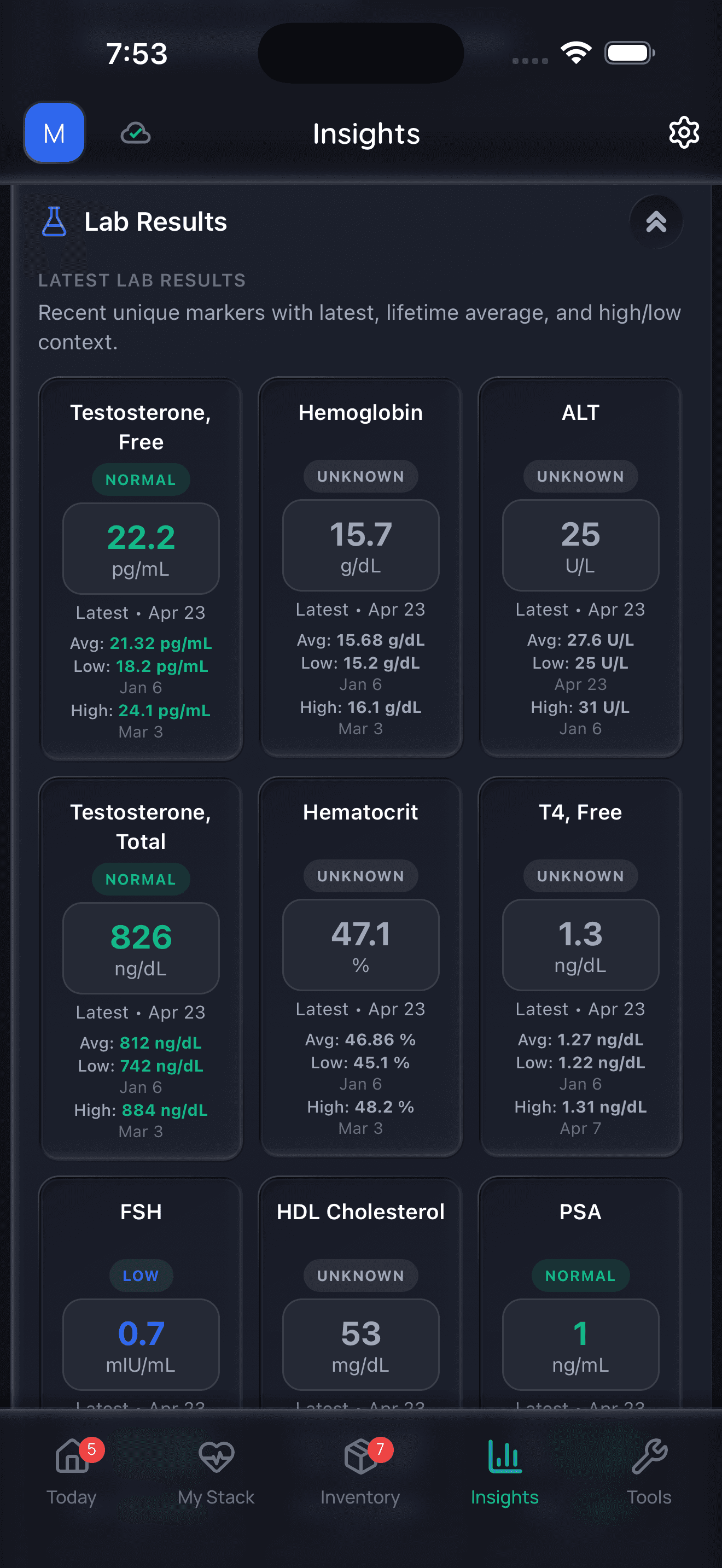
Doserly organizes data; it does not diagnose or interpret labs for you.
Side Effects & Safety
The Basics
Pregnenolone is often described as "well tolerated," but that phrase can mislead consumers. In short clinical trials, many participants did fine. In real-world use, the more common problem is not catastrophic toxicity; it is getting a response that feels hormonally wrong for you. That can look like insomnia, agitation, acne, mood swings, feeling too revved up, or simply feeling worse than before.
The biggest safety rule is to stop treating pregnenolone like a harmless foundational supplement. It is a hormone precursor with downstream consequences that may be difficult to predict.
The Science
WebMD lists acne, agitation, diarrhea, drowsiness, excitement, hair loss, skin rashes, sweating, and tremor among reported side effects, and notes that long-term safety beyond about 12 weeks is not well established [2]. It also advises against use in pregnancy, breastfeeding, and hormone-sensitive conditions because pregnenolone can be converted into estrogenic pathways [2].
Short-term clinical trials in chronic pain, bipolar depression, cocaine use disorder, and schizophrenia generally describe pregnenolone as well tolerated [4][5][7][8]. That matters, but it does not eliminate practical risk. Clinical settings use screening, exclusion criteria, structured dosing, and monitoring. Community reporting shows that once pregnenolone moves into self-experiment territory, side-effect burden becomes much noisier. Insomnia, anxiety, irritability, racing-heart sensations, acne, and emotional volatility recur often enough to matter [2].
Special caution is warranted for anyone with:
- hormone-sensitive cancers or precancerous conditions
- endometriosis or fibroid-related concern
- pregnancy or breastfeeding
- concurrent hormone therapy
- benzodiazepine use
- a history of severe mood instability triggered by hormone changes
Knowing the possible side effects is the first step. Catching them early in your own experience is what keeps a supplement routine safe. Doserly lets you log any symptoms as they arise, tagging them with severity, timing relative to your dose, and whether they resolve on their own or persist.
The app's interaction checker cross-references everything in your stack, supplements and medications alike, flagging known interactions before they become a problem. It also monitors your total intake against established upper limits when those exist. For hormone-adjacent supplements like pregnenolone, the value is less about a single UL and more about spotting patterns before they snowball.
Capture changes while they are still fresh.
Log symptoms, energy, sleep, mood, and other observations alongside protocol events so patterns do not live only in memory.
Trend view
Symptom timeline
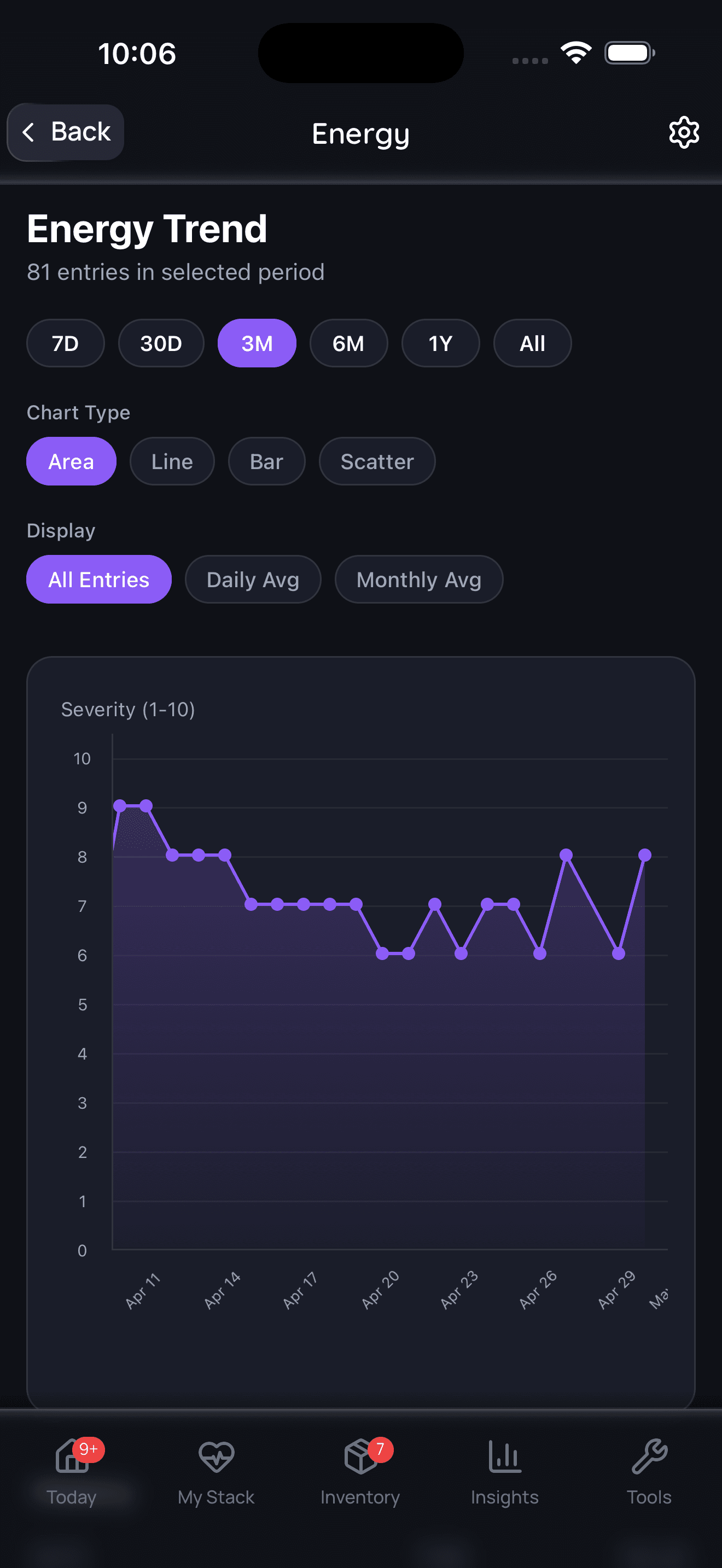
Symptom tracking is informational and should be interpreted with a qualified clinician.
Dosing & Usage Protocols
The Basics
There is no universally accepted pregnenolone dose for general wellness use. That is not a minor technicality. It is one of the central facts of the ingredient. Consumer guidance, review-platform behavior, and clinical trials all use very different dose ranges. That makes pregnenolone a poor candidate for casual megadosing.
The lowest-risk practical approach is usually to start low, observe carefully, and only escalate with a specific reason and a monitoring plan.
The Science
Current public consumer guidance reports that adults have "most often" used pregnenolone in the range of 50-250 mg twice daily for up to 12 weeks [2]. But that number is not a standardized best-practice recommendation. Clinical trials vary dramatically: healthy volunteers received 15-30 mg/day [6], schizophrenia add-on therapy used 50 mg/day [8], low back pain escalated from 100 mg to 500 mg/day [4], and bipolar or addiction-related studies have gone as high as 500 mg/day [5][7].
That spread means the word "dose" has to be tied to context:
- Low-dose exploratory use: often 5-30 mg/day in community practice, especially when the goal is tolerance testing rather than aggressive symptom chasing.
- Moderate consumer range: often 25-100 mg/day, where many anecdotal reports cluster.
- High clinical-study range: 100-500 mg/day in supervised trials for specific conditions [4][5][7][8].
Practical titration principles:
- Start with the lowest credible dose, especially if you are sensitive to hormones or stimulatory supplements.
- Take it in the morning first if insomnia is a known concern.
- Hold the dose long enough to judge tolerance before escalating.
- Reassess rather than pushing through if acne, anxiety, insomnia, irritability, or a "too much" feeling appears.
- Avoid treating high-dose clinical trial protocols as retail self-care templates.
Getting the dose right matters more than most people realize. Too little may be ineffective, too much wastes money or introduces risk, and inconsistency undermines both. Doserly tracks every dose you take, across every form, giving you a clear record of what you're actually consuming versus what you planned.
For pregnenolone, that matters because the research doses and the real-world tolerated doses are often not the same thing. Tracking lets you see whether 10 mg is actually better for you than 30 mg, or whether a cream behaves differently than a capsule over the course of a week.
Track injection timing, draw notes, and site rotation.
Doserly helps keep syringe-related notes, injection site history, reminders, and reconstitution context together for easier review.
Injection log
Site rotation
Injection logs support record-keeping; follow clinician instructions for administration.
What to Expect (Timeline)
The pregnenolone timeline is not as clean as the timelines for everyday nutrients.
- First few doses: Some people feel nothing. Others feel noticeably more awake, clearer, calmer, or more emotionally activated within days [2].
- Week 1 to 2: If pregnenolone is going to cause obvious overstimulation, insomnia, agitation, or acne, this is often when the signal starts to show up [2].
- Weeks 2 to 4: Condition-specific clinical trials begin to show separations from placebo in some contexts, especially at higher doses and under supervision [4][7][8].
- Weeks 4 to 12: Psychiatric and pain-related studies report the most structured changes in this range [4][5][8].
- Beyond 12 weeks: Community users sometimes describe stable benefit, but long-term safety and durability are not well established in the current KB [2].
The most realistic expectation is not "I will definitely feel better in a week." It is "this compound may feel subjectively active fairly quickly, but whether that activity is helpful, neutral, or destabilizing is highly individual."
Interactions & Compatibility
Synergistic
- Melatonin: Not a direct biochemical partner, but melatonin may be part of a conservative sleep-support plan if pregnenolone is otherwise useful but activating. This should not be used to justify pushing through severe insomnia.
- Magnesium: Magnesium does not make pregnenolone safer or more effective in a proven way, but it can support sleep hygiene and stress management while other variables are being monitored.
Caution / Avoid
- DHEA: Commonly stacked in hormone-oriented self-experiments, but combining upstream steroid precursors makes symptom attribution and hormone drift harder to interpret.
- Estrogens, progesterone, and testosterone: WebMD flags these as moderate interactions because pregnenolone can increase downstream hormone exposure [2].
- Benzodiazepines: Pregnenolone may reduce sedative effect, which matters for anyone relying on diazepam-like drugs for sleep or anxiety [2][6].
- Hormone-sensitive conditions: Avoid unsupervised use if you have breast, uterine, ovarian, or other estrogen-sensitive conditions [2].
- Pregnancy / breastfeeding: Avoid because reliable safety data are lacking [2].
How to Take / Administration Guide
Pregnenolone works best when the administration plan is boring and deliberate.
- Start with the smallest practical dose rather than the biggest capsule you can buy.
- Prefer morning or early-day use for your first trial if you are concerned about stimulation.
- Be cautious with bedtime use unless you already know that pregnenolone feels sedating rather than activating for you.
- Avoid stacking with multiple new hormone-related supplements at once.
- If you are using a cream, follow the exact compounding or product instructions instead of assuming it behaves like an oral capsule.
- Reassess quickly if you develop insomnia, acne, racing thoughts, or new emotional lability.
The most useful administration skill is not perfect timing. It is being able to tell whether pregnenolone is helping at all without five other variables changing at the same time.
Choosing a Quality Product
Quality matters more with pregnenolone than with ordinary nutrient tablets because the ingredient is both hormone-adjacent and often sold in niche or compounded channels.
What to look for:
- clearly stated amount per serving
- clear dosage form, such as oral capsule or topical cream
- third-party testing or at least transparent batch information
- conservative labeling rather than "hormone reset" hype
- athlete-oriented testing if sports risk matters
Red flags:
- very high retail doses without context
- vague "glandular" or "anti-aging miracle" language
- no mention of testing, lot control, or form
- pressure to combine with multiple hormone boosters immediately
For athletes, third-party certification matters even though pregnenolone itself is not currently prohibited by WADA according to USADA [3]. Contamination and mislabeling risk remain real.
Storage & Handling
Current KB sources do not provide a detailed universal storage protocol for pregnenolone products.
In practical terms:
- follow the label exactly
- protect capsules and tablets from heat, moisture, and direct light unless the manufacturer states otherwise
- keep creams tightly sealed and do not use past expiry
- avoid storing hormone-adjacent products in a car, gym bag, or humid bathroom for long periods
If your product is compounded, use the pharmacist's instructions rather than generic supplement rules.
Lifestyle & Supporting Factors
Pregnenolone is a poor substitute for foundational work. If the real problem is sleep debt, major stress load, under-fueling, mood disorder, or uncontrolled endocrine disease, adding pregnenolone may only make the picture harder to read.
Lifestyle priorities that matter more than the supplement itself:
- consistent sleep schedule
- resistance training without chronic overreaching
- adequate dietary intake and body-weight stability
- measured follow-up rather than symptom guessing
- clinician review when the supplement is being used alongside hormone therapy
If labs are part of the plan, discuss which ones actually matter for your use case instead of checking isolated hormones without context. Upstream hormone supplements are easy to overinterpret.
Regulatory Status & Standards
Pregnenolone occupies an awkward regulatory position.
Under general US supplement law, products sold as dietary supplements fall under DSHEA rather than drug-style preapproval. But USADA notes that pregnenolone's status in dietary supplements has not been cleanly settled by FDA in every context, and cites FDA language treating pregnenolone as an unapproved new drug in at least one compounding-related setting [3]. That is not the kind of regulatory clarity you see with a standard vitamin.
For sport:
- USADA says pregnenolone is not on the WADA prohibited list at present [3].
- USADA also says athletes should re-check status regularly because the list updates over time [3].
- Hormone-oriented supplements remain high risk for contamination and mislabeling even when the named ingredient is not currently prohibited [3].
Practical athlete takeaway: pregnenolone is not automatically a doping violation, but it is still a supplement-risk problem. Products should be checked against current anti-doping guidance and, when possible, sourced through programs such as NSF Certified for Sport or Informed Sport.
FAQ
Is pregnenolone the same thing as progesterone?
No. Pregnenolone is upstream of progesterone and several other steroid hormones. It is a precursor, not the same hormone [1][3].
Does pregnenolone definitely raise testosterone?
Not in a predictable consumer-grade way. Because pregnenolone sits upstream in steroidogenesis, people often assume it will reliably boost testosterone, but the current KB does not support that as a dependable general-use outcome [1][2][3].
Is pregnenolone proven for anti-aging?
No. It is marketed that way, but the current evidence base is much stronger for narrow clinical questions than for broad anti-aging claims [2][3].
Can pregnenolone help mood?
Possibly in some specific psychiatric settings, but the evidence is narrow and mixed. It is not a validated general mood supplement for everyone [5][8].
Can pregnenolone help pain?
There is one useful randomized trial in chronic low back pain showing benefit over placebo, which makes pain one of the better-supported domains in the current KB [4].
Why do some people say pregnenolone helps sleep while others say it causes insomnia?
That split is one of the clearest real-world patterns. Community reporting suggests the response is highly individual and dose-sensitive, and the healthy-volunteer literature does not show a dependable sleep benefit [2][6].
Should I use cream or capsules?
There is no universal winner in the current KB. Some users strongly prefer creams, while others use oral products. The form that feels best to one person may not translate to another [2].
Can I take pregnenolone with DHEA?
Some people do, but stacking hormone precursors makes the outcome much harder to interpret. If you combine them, do it with a clear reason and preferably with clinical oversight [2].
Is pregnenolone safe to take long term?
Long-term safety is not well established in the current public consumer sources. Most short-term guidance clusters around roughly 8-12 weeks, while community reports beyond that are anecdotal [2].
Is pregnenolone allowed in sport?
USADA says pregnenolone is not currently prohibited by WADA, but that does not remove supplement contamination risk or future rule-change risk [3].
Myth vs. Fact
Myth: Pregnenolone is just a gentler version of testosterone support.
Fact: Pregnenolone sits far upstream in steroidogenesis, so its downstream effects are broader and less predictable than a simple testosterone narrative suggests [1][3].
Myth: Because the body already makes pregnenolone, extra pregnenolone is automatically safe.
Fact: Endogenous origin does not guarantee supplement safety. Community reports repeatedly describe insomnia, agitation, acne, and emotional volatility, especially when dosing is too aggressive [2].
Myth: More pregnenolone always works better.
Fact: Clinical trials have used high doses in specific settings, but review-platform users often report that lower doses are more tolerable than 50-100 mg starting points [2][4][5][7][8].
Myth: Pregnenolone is proven for memory, mood, libido, and anti-aging all at once.
Fact: The current evidence does not support that kind of broad promise. The best-supported areas are narrower and more clinical, such as chronic low back pain and selected psychiatric research settings [4][5][8].
Myth: If pregnenolone gives me side effects, I should just wait for my body to adjust.
Fact: Some side effects may fade, but severe insomnia, anxiety, acne, or emotional destabilization are good reasons to stop and reassess rather than forcing adherence [2].
Myth: If pregnenolone is not banned by WADA, any pregnenolone supplement is safe for athletes.
Fact: Anti-doping status and product purity are separate questions. USADA explicitly warns that hormone-boosting supplements remain risky because of contamination and labeling problems [3].
Sources & References
Government / Institutional Sources
[1] PubChem. Pregnenolone; CID 8955. National Library of Medicine. https://pubchem.ncbi.nlm.nih.gov/compound/8955
[3] USADA. Pregnenolone: What You Need to Know. Updated 2019. https://www.usada.org/spirit-of-sport/education/pregnenolone/
[9] Yale Medicine. Pregnenolone for Alcohol Use Disorder. Clinical trial listing, updated February 1, 2026. https://www.yalemedicine.org/clinical-trials/pregnenolone-for-aud
Reviews & Consumer Medical Sources
[2] WebMD. Pregnenolone: Overview, Uses, Side Effects, Precautions, Interactions, Dosing and Reviews. https://www.webmd.com/vitamins/ai/ingredientmono-98/pregnenolone
Clinical Trials & RCTs
[4] Naylor JC, Kilts JD, Shampine LJ, et al. Effect of Pregnenolone vs Placebo on Self-reported Chronic Low Back Pain Among US Military Veterans: A Randomized Clinical Trial. JAMA Netw Open. 2020;3(3):e200287. https://pubmed.ncbi.nlm.nih.gov/32119096/
[5] Brown ES, Park J, Marx CE, et al. A randomized, double-blind, placebo-controlled trial of pregnenolone for bipolar depression. Neuropsychopharmacology. 2014;39(12):2867-2873. https://pubmed.ncbi.nlm.nih.gov/24917198/
[6] Meieran SE, Reus VI, Webster R, Shafton R, Wolkowitz OM. Chronic pregnenolone effects in normal humans: attenuation of benzodiazepine-induced sedation. Psychoneuroendocrinology. 2004;29(4):486-500. https://pubmed.ncbi.nlm.nih.gov/14749094/
[7] Milivojevic V, Charron L, Fogelman N, Hermes G, Sinha R. Pregnenolone Reduces Stress-Induced Craving, Anxiety, and Autonomic Arousal in Individuals with Cocaine Use Disorder. Biomolecules. 2022;12(11):1593. https://pubmed.ncbi.nlm.nih.gov/36358943/
[8] Ritsner MS, Bawakny H, Kreinin A. Pregnenolone treatment reduces severity of negative symptoms in recent-onset schizophrenia: an 8-week, double-blind, randomized add-on two-center trial. Psychiatry Clin Neurosci. 2014;68(6):432-440. https://pubmed.ncbi.nlm.nih.gov/24548129/
Related Supplement Guides
Same Category
- DHEA - Another steroid-hormone precursor often discussed in the same hormone-support conversations.
- Cistanche - A hormone-adjacent supplement often stacked in libido and vitality protocols.
Common Stacks / Pairings
- Magnesium - Commonly paired in broader sleep and stress-management routines.
- Melatonin - Sometimes used to offset sleep disruption when pregnenolone feels activating.
Related Health Goal
- Ashwagandha - Another supplement people consider when the target is stress tolerance, mood, or endocrine-adjacent wellness rather than direct nutrient replacement.