
TRT
October 18, 2026
High hematocrit on TRT: blood counts, clotting risk and the blood donation debate
On this page
A blood test comes back with hematocrit marked high. You feel better on testosterone than you did before treatment, so the result can be confusing. Is your blood dangerously thick? Does it mean you should donate blood? Or is it simply the expected effect of testosterone helping your body make more red blood cells?
The honest answer starts with separating those questions. Testosterone really can increase red-cell production. A higher count can be useful when someone is anemic. But an elevated hematocrit can also deserve investigation and a change in treatment. At the same time, regularly removing blood is not a proven, risk-free solution for everyone on TRT.
That is why the discussion has become so polarized. One explanation focuses on viscosity and clots. Another points out that TRT-related erythrocytosis is different from a bone-marrow disease, that hydration affects the result, and that repeated donations can deplete iron. There is useful science on both sides. The mistake is turning any one of those observations into a rule that applies to every patient.
This guide brings the questions together: what the numbers measure, why testosterone changes them, what human studies actually report about stroke and other clots, and where the blood-donation debate remains unresolved. For the broader treatment context, explore our TRT guides.
Start with three different blood-count measurements
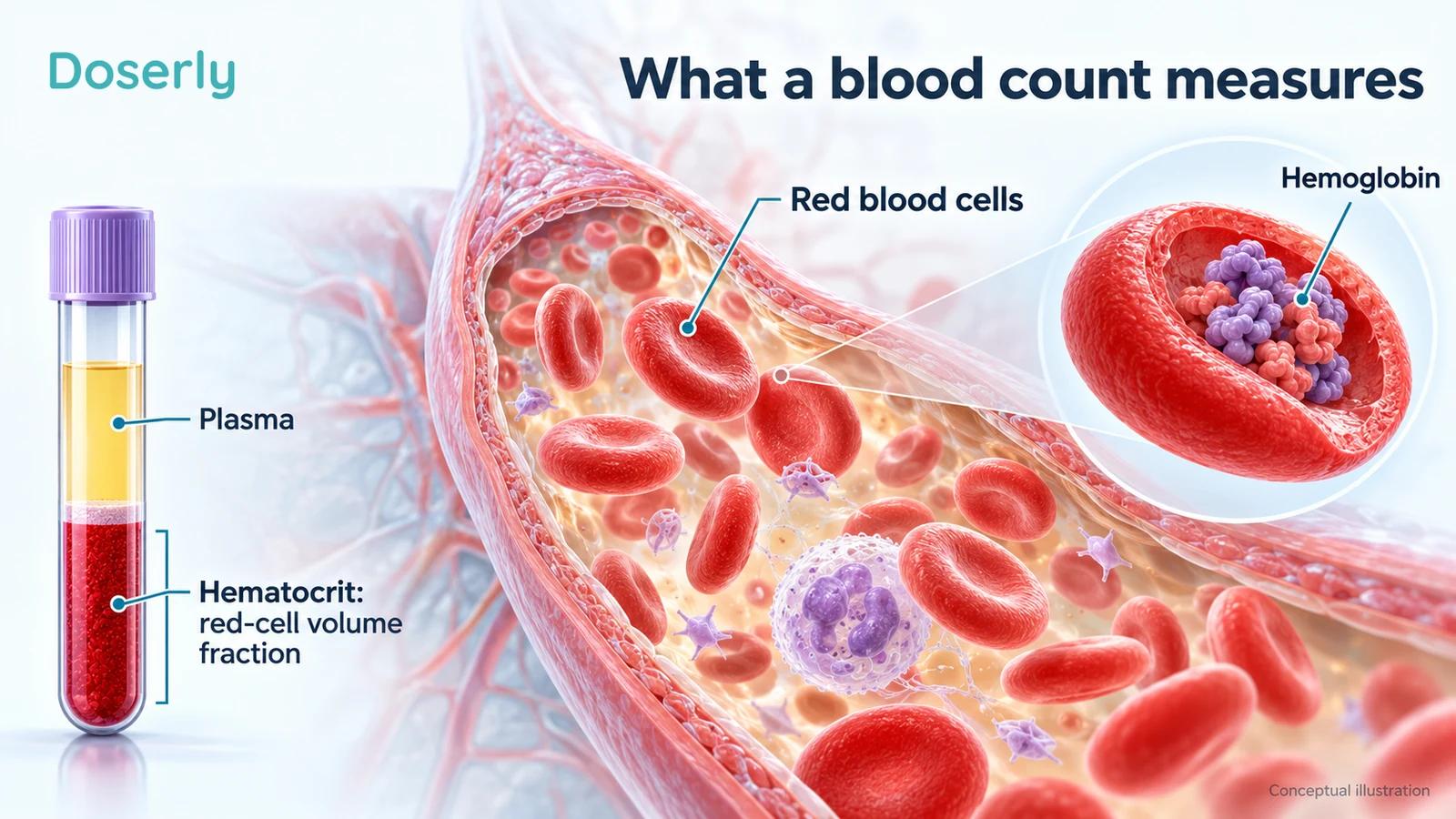
Hematocrit, usually written Hct or HCT, is the fraction of blood volume occupied by red blood cells. A result of 50% means roughly half the sampled volume is red cells. It is a proportion, not a direct measurement of all the red cells in your entire circulation. Plasma, the liquid portion, is part of the denominator. MedlinePlus: hematocrit
Hemoglobin, usually Hb or Hgb, is the oxygen-carrying protein inside red cells. The laboratory normally reports its concentration, often in grams per deciliter. A hemoglobin of 17 g/dL and a hematocrit of 51% are different measurements with different units. The familiar shortcut of multiplying hemoglobin by three is only an approximation, not a substitute for the actual CBC. MedlinePlus: hemoglobin
RBC count reports the number of red cells in a given blood volume. It does not tell you their size. Two people can have similar RBC counts but different hematocrits if their average cell volumes differ. This is one reason a clinician reads the whole complete blood count, rather than looking only at the red flag beside one result. MedlinePlus: RBC count
The average size is called mean corpuscular volume, or MCV. Small red cells can accompany iron deficiency, although there are other causes. A high RBC count with a relatively modest hematocrit is not automatically reassuring or alarming; the cell-size pattern and clinical history matter. MCV is useful for understanding the pattern, not for diagnosing the cause by itself. MedlinePlus: MCV
Why testosterone encourages the body to make red cells
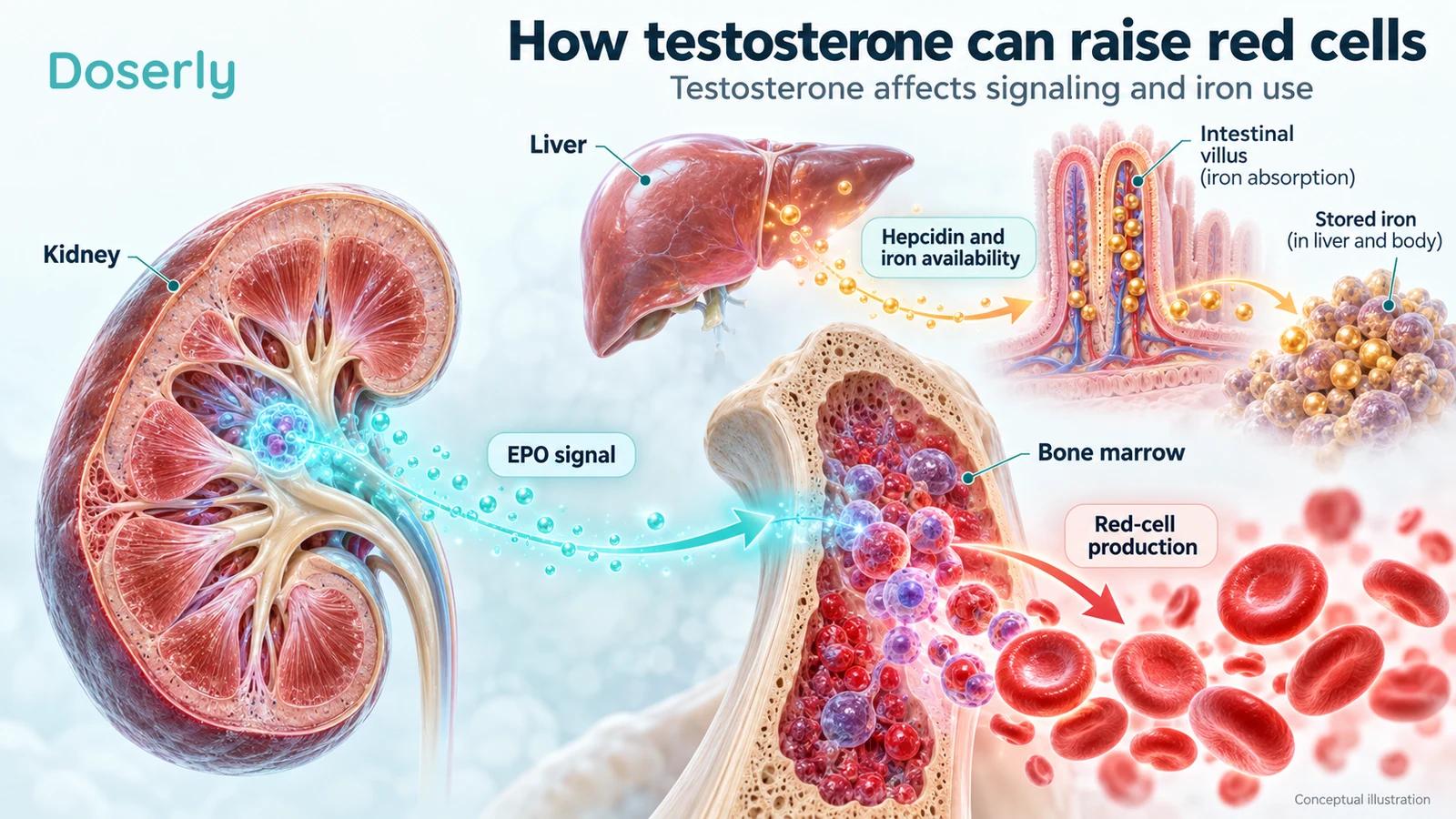
Red blood cells are made in bone marrow. Their production is regulated partly by erythropoietin, or EPO, a hormone produced mainly by the kidneys. EPO helps the marrow respond to the body's oxygen needs. Testosterone can change that signaling system and the availability of the iron needed to build hemoglobin.
A randomized human study by Bachman and colleagues found that testosterone treatment increased EPO early in treatment while reducing hepcidin and ferritin. EPO later moved toward its starting concentration even though hemoglobin remained higher. The researchers described a changed EPO–hemoglobin relationship, sometimes called a new set point. A normal-looking EPO concentration therefore does not necessarily mean the red-cell stimulus has disappeared. The study involved older men with mobility limitations, so its effect sizes should not be assumed for every TRT patient. Human EPO and hepcidin study
Hepcidin is a liver-produced regulator of iron availability. Lower hepcidin can allow more iron to enter circulation from absorption and storage. An earlier dose-response study found testosterone suppressed hepcidin, with age-related differences in that response. This helps explain why the same prescribed testosterone exposure does not produce the same blood-count change in every person. It does not mean that suppressing hepcidin is itself a treatment goal. Human testosterone dose-response study
There is a practical consequence: removing red cells does not necessarily stop the hormonal signal that produced them. If the underlying stimulus continues, the marrow can keep making replacement cells. The next CBC might look better while the reason for the original rise remains.
A useful increase is different from an unlimited benefit
The red-cell effect is not inherently a bad thing. In the TRAVERSE anemia substudy, anemia corrected at six months in 41.0% of testosterone-treated men versus 27.5% receiving placebo. Participants had hypogonadism, and the study compared supervised testosterone gel with placebo. That is evidence for a benefit in a defined clinical situation. It is not evidence that pushing an already adequate hemoglobin higher keeps improving health or exercise performance. TRAVERSE anemia trial
Think about the starting problem. Restoring an inadequate oxygen-carrying capacity addresses a deficit. Raising a concentration that is already sufficient asks a different question: does the extra capacity improve delivery enough to outweigh other effects? The answer cannot be borrowed from an anemia trial.
Our TRT and anemia article explains why a low hemoglobin also needs an investigation of its own. Testosterone deficiency should not become a convenient explanation for every abnormal blood count.
A high hematocrit can mean more cells, less plasma, or both
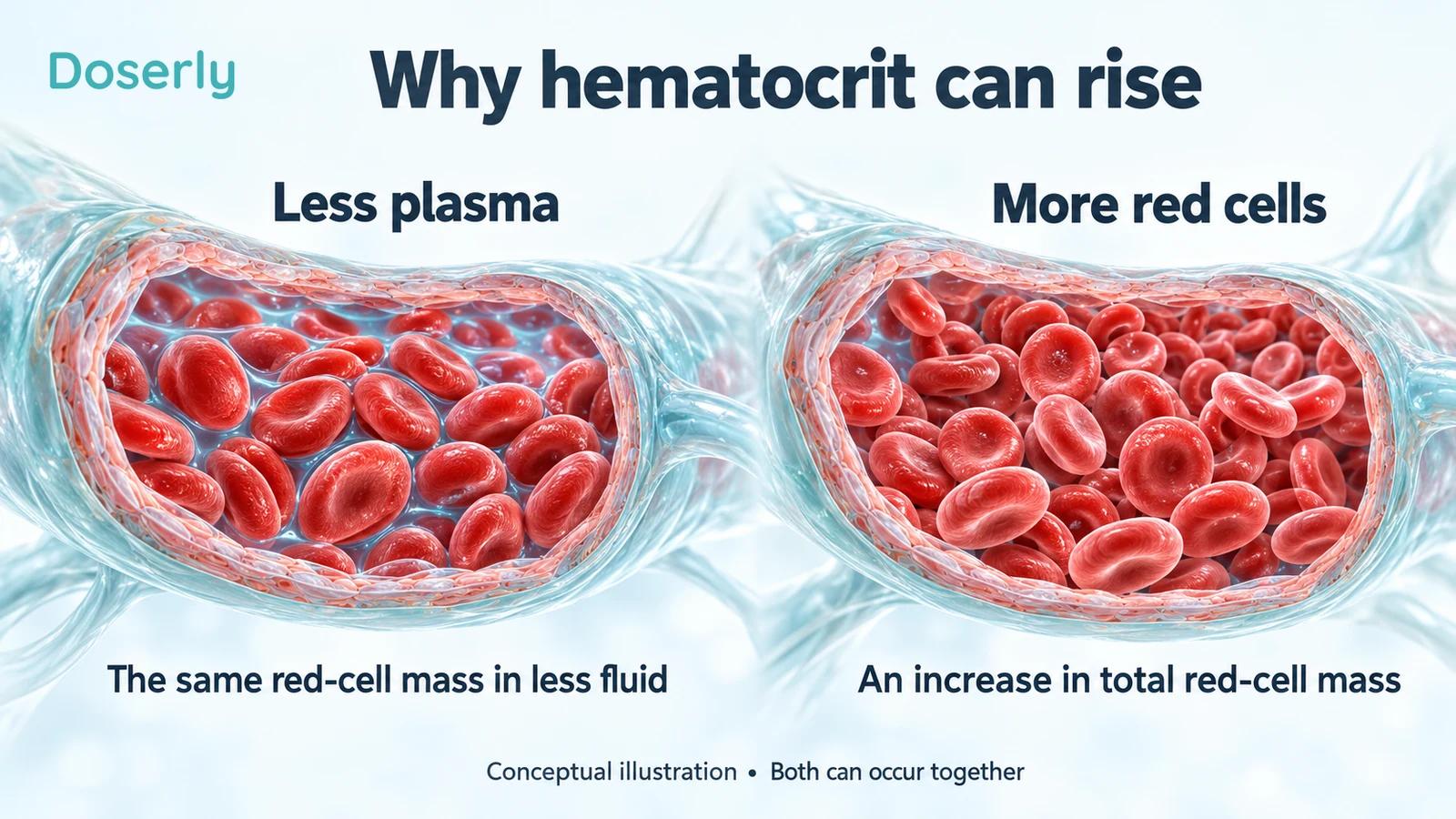
Imagine two identical containers, each holding the same amount of red cells. Remove some liquid from one container and the red-cell fraction rises, even though you have not added a single cell. That is the basic reason dehydration can increase hematocrit.
Now consider a second situation: plasma volume stays similar, but the marrow produces more red cells. The fraction rises again, this time because the numerator has increased. In real life, both processes can occur together. Someone on TRT can have a genuine increase in red-cell mass and also arrive for testing after fluid loss.
This distinction is often described as relative erythrocytosis, caused by reduced plasma volume, versus absolute erythrocytosis, involving increased red-cell mass. Clinical evaluation considers medications, fluid losses, breathing conditions and other causes. The CBC alone does not provide a complete measurement of circulating blood volume. Investigation and management of erythrocytosis
Hydration should improve the accuracy of the test, not disguise it
A repeat result after ordinary hydration can be informative, particularly when the first sample was taken during vomiting, diarrhea or substantial heat-related fluid loss. Dehydration is a clinical condition with several possible causes, rather than a universal explanation for an abnormal CBC. MedlinePlus: dehydration
The goal is a representative measurement. Deliberately drinking an extreme amount of water, arranging an IV infusion, or withholding a prescribed diuretic to produce a lower result does not establish that the treatment is safe. It can also create a different medical problem. Follow the laboratory's instructions and your clinician's fluid advice, especially if heart or kidney disease affects how much you should drink.
A useful message to the prescribing team includes the result, your previous counts, recent illness or fluid losses, treatment changes, altitude exposure and any symptoms. “Could this be concentrated because I was dehydrated?” is a reasonable question. “It must be dehydration, so I can ignore it” is a conclusion the test has not established.
Erythrocytosis on TRT is not the same diagnosis as polycythemia vera
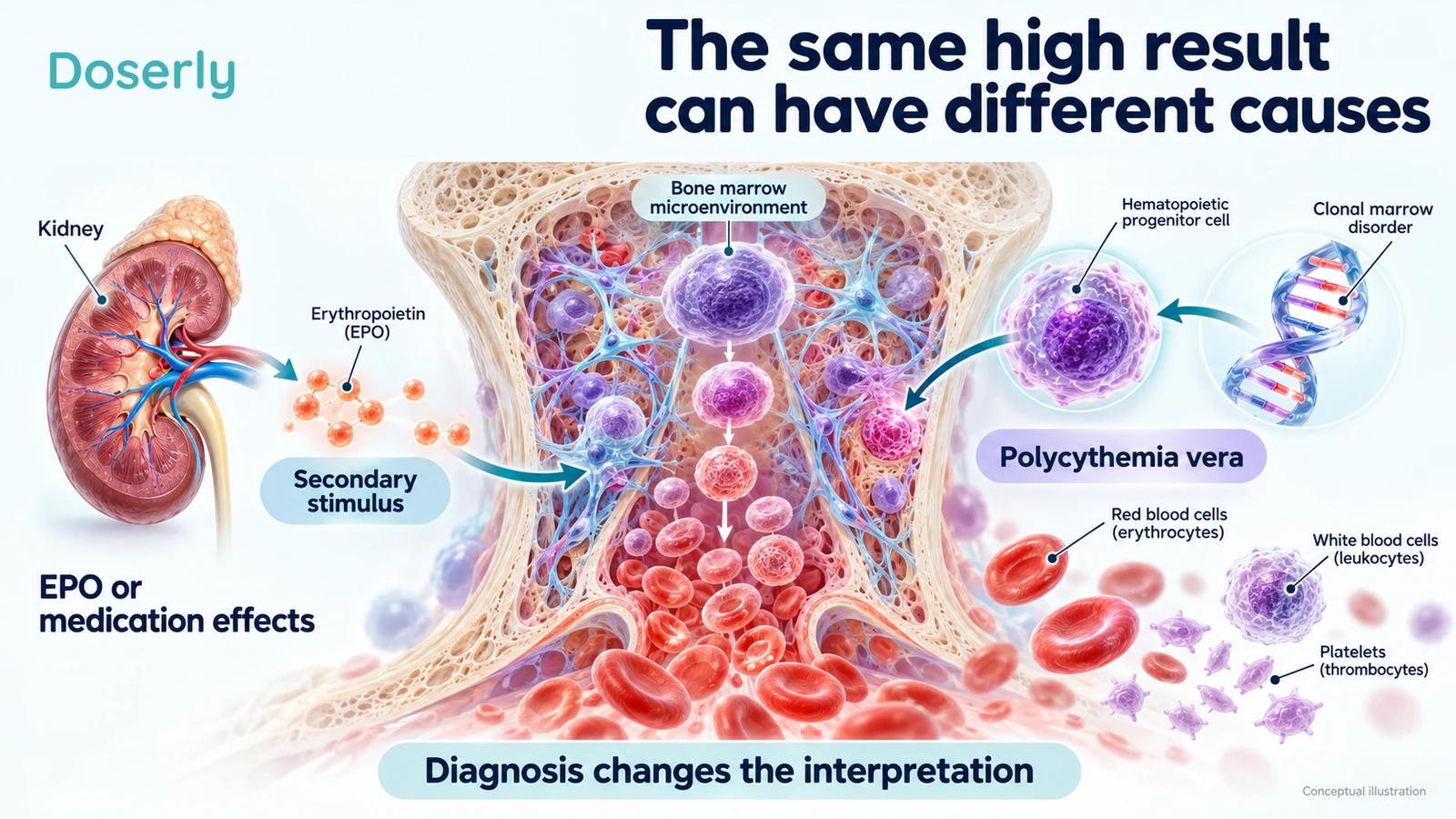
Polycythemia vera, or PV, is a clonal marrow disorder, meaning an abnormal population of blood-forming cells drives production. TRT-related erythrocytosis usually arises from an external stimulus. Their causes and management are different.
This matters because some of the strongest evidence for reducing hematocrit comes from PV. In the randomized CYTO-PV trial, 365 patients were assigned to a target below 45% or to 45–50%. Cardiovascular death or major thrombosis occurred in 2.7% versus 9.8%, respectively. That supports the lower target in PV. It does not establish that a TRT patient with hematocrit of 47% needs blood removal. CYTO-PV primary trial
The reverse inference is equally weak. Knowing that TRT is not PV does not prove that any TRT-associated hematocrit is harmless. Different causes can share some consequences without sharing every risk or treatment target.
Normal platelets do not, on their own, rule out PV. Nor does a history of TRT make further investigation unnecessary. Persistent elevation that predates treatment, an unusual blood-count pattern, symptoms or other clinical findings can lead to EPO measurement, JAK2 testing or hematology assessment. Those investigations are selected for the person, not ordered automatically for every slightly high result. Clinical evaluation of secondary erythrocytosis
What do the studies actually show about clots and stroke?
First, separate three questions:
- Does testosterone treatment change cardiovascular risk overall?
- Within testosterone users, is developing erythrocytosis associated with greater risk?
- Does lowering hematocrit by blood removal prevent events?
A study answering one does not necessarily answer the other two. Much online disagreement comes from using an answer to the first question as though it settles the second and third.
The most directly relevant TRT cohort found an association
Ory and colleagues matched 5,842 testosterone users who developed hematocrit of at least 52% with 5,842 who did not. In the first year, the combined cardiovascular/VTE outcome occurred in 5.15% versus 3.87%. That is an absolute difference of 1.28 percentage points, with an odds ratio of 1.35. The association was stronger for heart attack and venous thromboembolism; stroke alone was not significantly increased, with an odds ratio of 0.91 and a 95% confidence interval of 0.64–1.29.
In this database analysis, the combined outcome included all-cause death, heart attack, coded stroke/TIA and venous thromboembolism. Its definition therefore differs from TRAVERSE's primary cardiovascular composite.
This was a retrospective database study, not random assignment to hematocrit targets. Baseline hematocrit differed substantially between groups, and the authors could not match it or analyze hematocrit continuously. Residual confounding remains possible. The results therefore support concern, but do not prove that hematocrit alone caused the excess events or that donation prevents them. Ory study, full text
Yes, stroke has been studied, but the population matters
The Kailuan cohort examined 93,299 people and found an adjusted association between the highest hematocrit group and subsequent stroke: hazard ratio 1.17, with a 95% confidence interval of 1.04–1.31, compared with the lowest group. The association was seen for ischemic stroke, not clearly for intracerebral hemorrhage. This was a general-population observational study in China, not a TRT trial. It cannot provide an individual's stroke probability at a particular TRT blood count. Kailuan prospective study
So it would be inaccurate to say there has never been evidence connecting higher hematocrit with stroke. It would also be inaccurate to say the TRT cohort proved that crossing 52% causes stroke. The type of event, population, comparison and uncertainty all belong in the explanation.
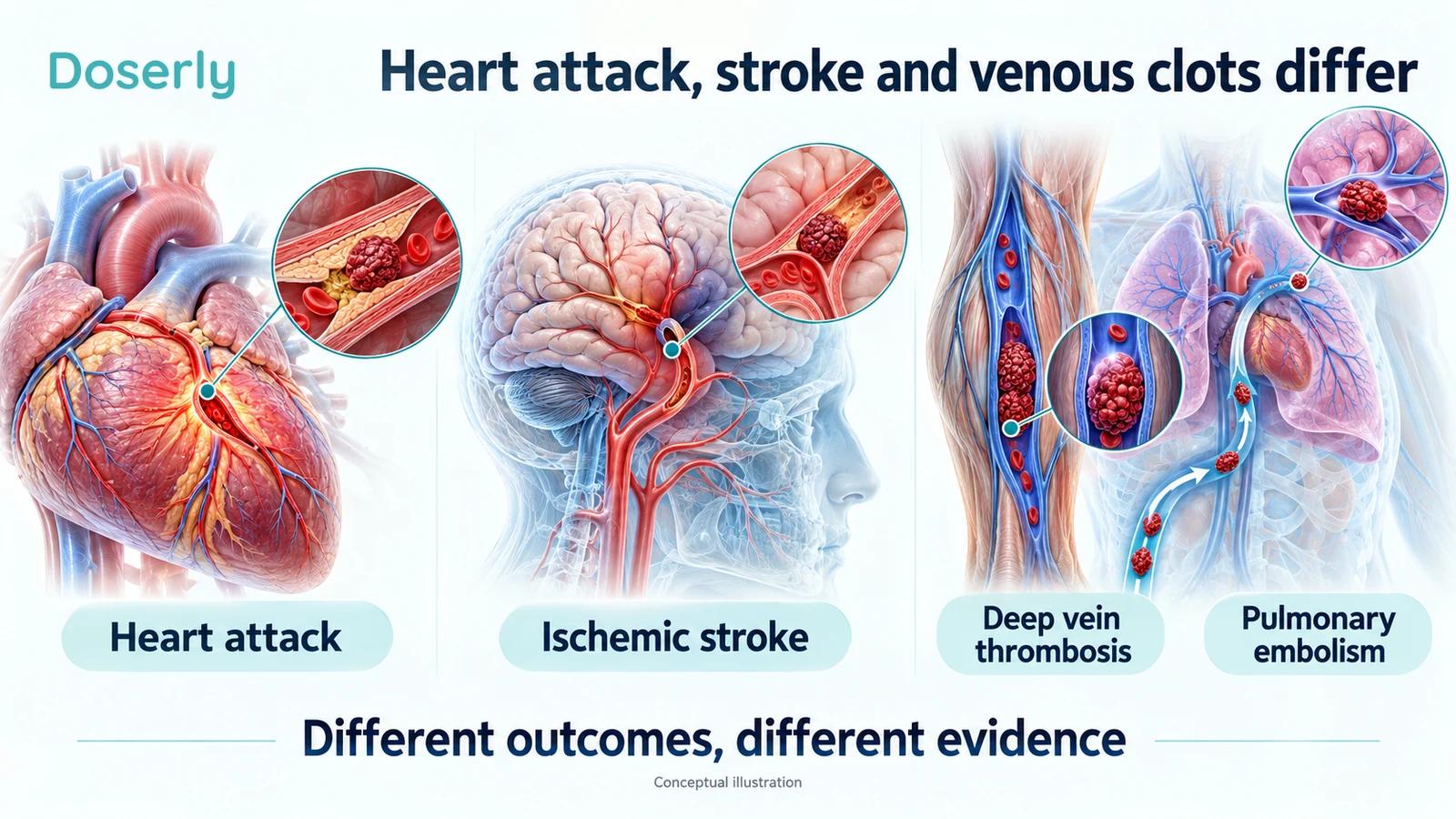
Venous clots have their own evidence
In the Tromsø study, 26,108 participants were followed for a median of 12.5 years. Higher hematocrit was associated with greater VTE risk after adjustment for several confounders. For the overall population, the adjusted hazard ratio was 1.25 per five-percentage-point increment. This was not a prescription to lower everyone's hematocrit, and it was not a testosterone study. Tromsø primary report
ARIC adds a useful complication. Over long-term follow-up, hematocrit in the highest population percentiles was associated with VTE, but the association was concentrated in provoked events, such as events occurring in the setting of another trigger. The adjusted hazard ratio for the highest group versus the middle reference group was 1.72. Different cohorts do not produce one simple universal rule, and the rest of a person's clotting risk matters. ARIC primary report
What TRAVERSE can reassure us about
TRAVERSE randomized 5,246 men aged 45–80 with symptoms, low testosterone and established or elevated cardiovascular risk to testosterone gel or placebo. Its primary cardiovascular outcome occurred in 7.0% versus 7.3%, meeting the trial's noninferiority criterion. The report also noted more pulmonary embolism, atrial fibrillation and acute kidney injury in the testosterone group. TRAVERSE primary report
This is reassuring evidence for the main outcome in a monitored treatment population. It is not a trial of leaving progressively rising hematocrit untreated. Enrollment restrictions and treatment adjustments limit what it can tell us about that situation. Noninferiority for a composite cardiovascular endpoint also does not mean every possible adverse effect was excluded.
The FDA's February 2025 labeling action removed boxed-warning language about increased adverse cardiovascular outcomes following its review of TRAVERSE. The same action required blood-pressure information and warnings based on ambulatory monitoring studies. A change to the cardiovascular warning should not be read as removal of all monitoring needs.
The newer review still describes an evidence gap
A 2025 systematic review included 45 studies of drug-induced erythrocytosis, 35 involving testosterone or other androgens. Definitions, populations and management varied. Thromboembolic events were uncommon in many reports, and the review emphasized uncertainty about their relationship to the elevated count and about optimal management. Its highest reported erythrocytosis rates should not be presented as the average risk for a typical patient. Liu and colleagues, Blood Advances
The most defensible interpretation is neither “a clot is inevitable” nor “there is no risk.” There is a biologically plausible concern, an observational TRT signal, differing findings across populations, and limited direct evidence about which hematocrit-lowering strategy best prevents events.
Why 54% appears so often in treatment guidance
A guideline threshold is an action point, not a biological cliff. Risk does not necessarily jump from zero to high between 53.9% and 54.1%. Clinicians still need a practical point at which to review and modify care while better evidence is developed.
The American Urological Association guideline advises baseline hemoglobin and hematocrit testing. It says a baseline hematocrit above 50% should prompt consideration of withholding treatment while the cause is investigated; during treatment, hematocrit of 54% or higher warrants intervention, including dose reduction or temporary discontinuation.
The Endocrine Society guideline recommends stopping treatment when hematocrit exceeds 54%, assessing hypoxia and sleep apnea, and restarting at a lower dose after it returns to a safe level. It also recognizes therapeutic phlebotomy as an option. These recommendations involve the prescribing clinician, rather than an independent donation calendar.
The current European Association of Urology guidance likewise recommends treatment adjustment or withdrawal above 54%, with venesection if required. It acknowledges limitations in the causal evidence while retaining a monitoring and action framework. That combination is reasonable: uncertainty about the exact threshold does not mean clinicians should have no response to a persistent high count.
If your result is near or above your clinician's action threshold, contact the prescribing team promptly and ask for the specific next step. A small elevation without symptoms is not automatically an emergency. A persistent or marked rise should not be dismissed because a video says the number is arbitrary.
Why some clinicians now question routine blood donation
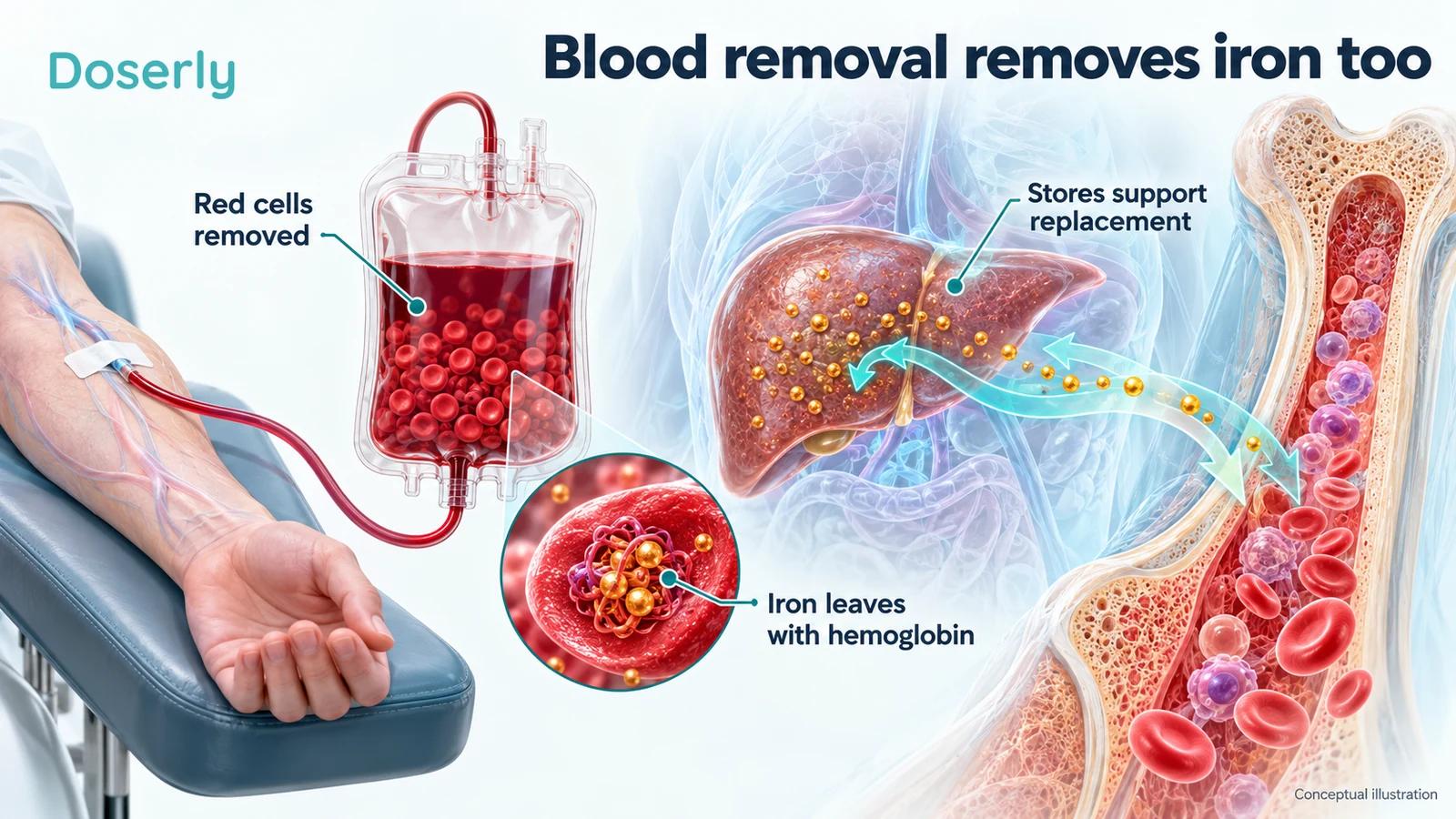
Therapeutic phlebotomy means removing blood as a medical intervention. Blood donation means giving blood for a transfusion service to use, subject to its eligibility rules. The physical act can overlap, but the purpose, assessment and follow-up are not interchangeable.
The strongest critique is about routine, repeated blood removal without addressing the cause. It is reasonable to ask whether a dose, formulation, breathing problem or other medication is maintaining the high count, and whether repeated donations are gradually depleting iron. None of those questions requires dismissing hematocrit monitoring.
A 2024 review by Bond, Verdegaal and Smit argued that direct evidence for the efficacy and safety of therapeutic phlebotomy in testosterone-induced erythrocytosis is lacking. They also discussed how iron depletion and hypoxia-related signaling could have unwanted consequences. Those proposed pathways are a reason for investigation and careful decisions; they are not proof that phlebotomy causes more clots in TRT patients. The authors favored weighing benefits and risks with the patient. Phlebotomy review
A newer observational study questions an assumed benefit
A 2025 two-center retrospective audit followed 206 people evaluated for non-clonal polycythemia, mostly secondary or idiopathic, with some apparent/relative and other cases. In an exploratory analysis treating venesection as a time-varying exposure, it was not associated with fewer thrombotic events: hazard ratio 0.88, with a 95% confidence interval of 0.36–2.17. Eleven participants had androgen use recorded as a contributor, and only three of those underwent venesection. Treatment was not randomized.
This weakens the assumption that removing blood has a proven preventive benefit in every form of secondary erythrocytosis. It does not prove that phlebotomy never helps a symptomatic patient or that it should be abandoned for TRT-associated elevations. The wide interval allows materially different possibilities. Five-year study, full text
Donation may not keep the count controlled
A study of blood donors using TRT found that repeated donation was insufficient to maintain hematocrit below 54% in some participants. This was a small donor study, not a trial of treatment strategies or stroke prevention. Its practical message is that a donation history is not proof that the underlying problem is controlled. Chin-Yee and colleagues
A separate large US blood-service study described the growing presence and donation patterns of TRT users. These data are useful for understanding the real-world intersection between treatment and donation, but donor records do not establish that frequent donation improves long-term health. People who choose or are advised to donate differ from those who do not. Blood-service cohort
What the disagreement does and does not justify
It is sensible to question an automatic instruction to donate every few weeks indefinitely. It is also sensible to question an automatic instruction to ignore a persistent high result because you feel well. Both shortcuts skip the same work: identifying the cause, assessing the person and deciding how success will be monitored.
Phlebotomy may remain part of a clinician-led plan in selected circumstances. The decision might be different for a person with symptoms, a very high count, a history of thrombosis or a suspected marrow condition than for someone with a mildly elevated, transient result. A hematologist and the TRT prescriber may need to coordinate that decision.
A useful question is: “What problem are we treating with blood removal, and how will we know it helped beyond lowering the next number?” That invites a discussion of symptoms, iron stores, recurrence and the underlying treatment rather than framing the choice as being for or against donation.
The iron problem: a high hemoglobin does not guarantee full reserves
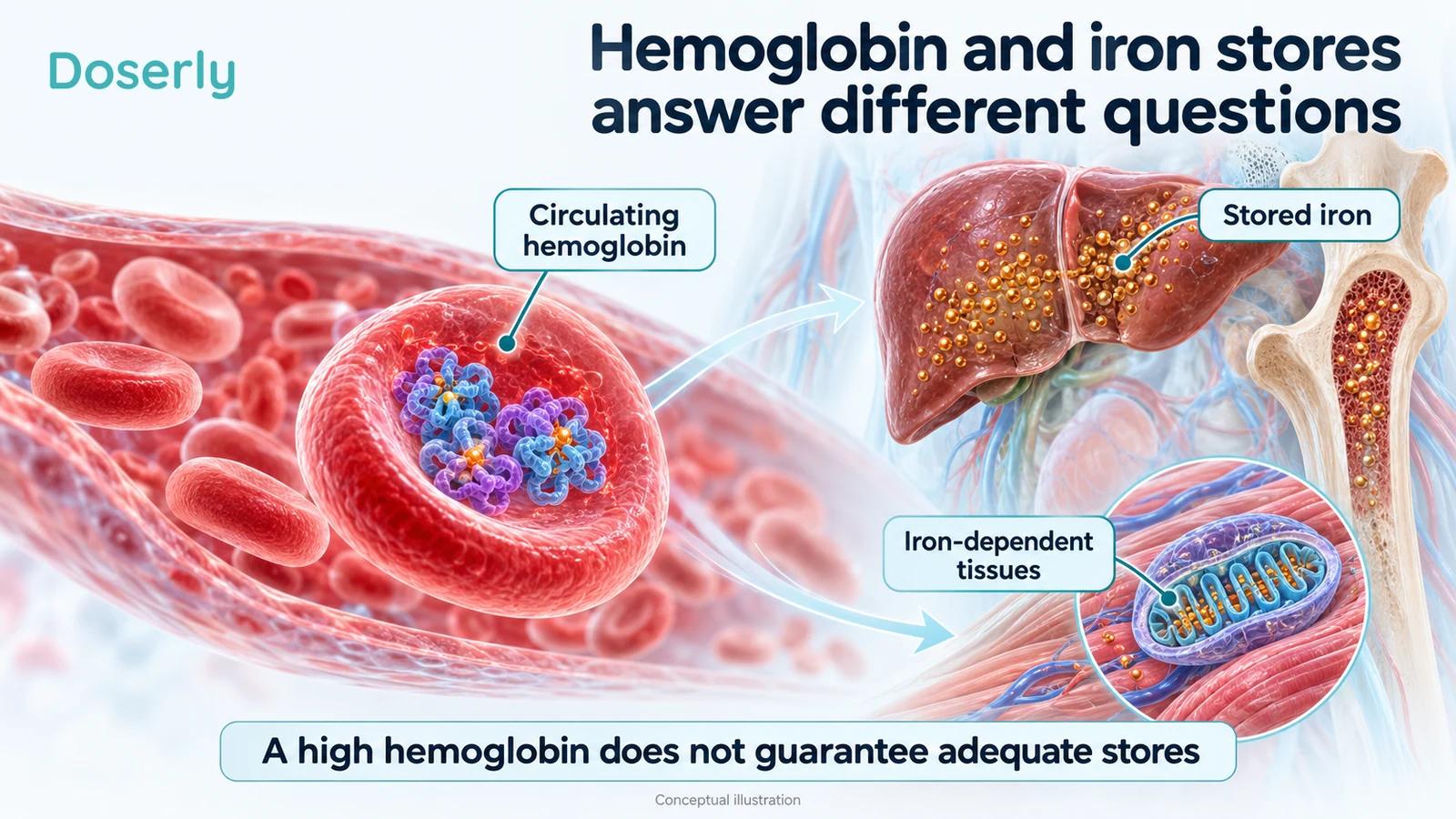
Ferritin helps assess stored iron. Hemoglobin describes a protein already circulating inside red cells. These measurements answer different questions, so a person can have a relatively high hemoglobin and depleted iron stores at the same time. Ferritin also needs context because inflammation and other conditions can raise it. MedlinePlus: ferritin testing
The distinction becomes particularly important after repeated donations. In a randomized study of 215 blood donors, iron supplementation accelerated recovery after a donation. Among participants not taking iron, 67% had not recovered their iron stores by 168 days. These were blood donors, not a trial of managing TRT-related erythrocytosis, so the study does not supply a TRT supplement protocol. It does show why assuming that iron stores recover quickly between donations can be wrong. Kiss and colleagues, randomized donor study
There are two separate mistakes to avoid. One is repeatedly removing blood without considering the cumulative iron loss. The other is independently adding iron to support continued donations without reconsidering why blood removal is needed. If testosterone exposure is still stimulating production, replacing iron can support that production too. A clinician may need to address the treatment plan and the iron deficiency together.
Fatigue after donation should not automatically be interpreted as low testosterone or a reason to increase the dose. Nor does every episode of fatigue prove iron deficiency. The timing, ferritin, blood-count pattern, symptoms and other causes need to be considered together. Our earlier discussion of TRT and blood donation introduces that treatment trade-off.
Does a higher hematocrit improve oxygen delivery or performance?
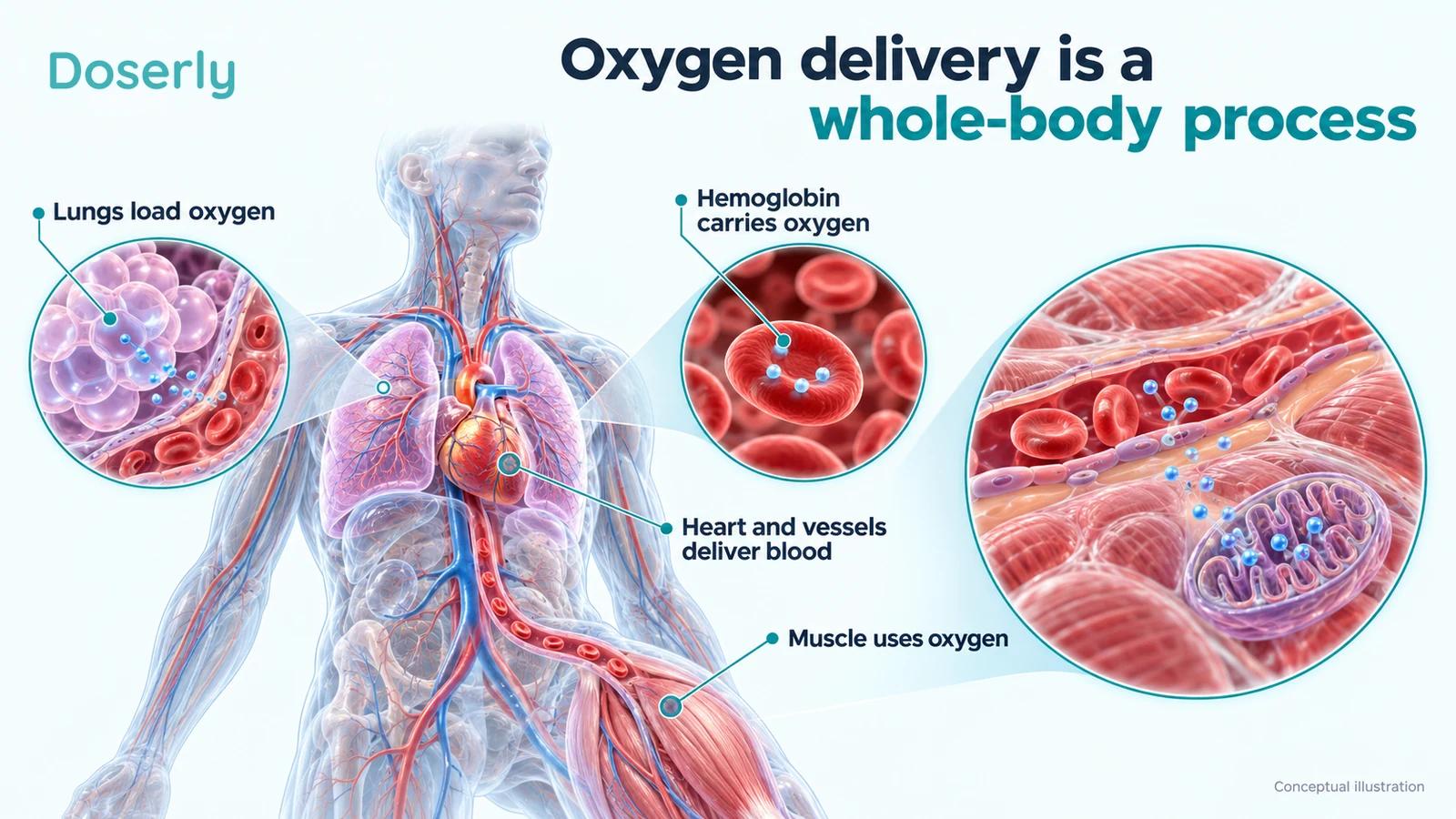
There is a real physiological idea behind this question. Hemoglobin carries most of the oxygen transported in blood. If oxygen saturation is similar, more hemoglobin per unit of blood generally means more oxygen carried in that unit. But muscles need oxygen delivered and used, not simply present in a blood sample.
A helpful way to follow the process is to separate four steps:
- The lungs bring oxygen into contact with blood and load it onto hemoglobin.
- The heart pumps oxygenated blood through the circulation.
- Small vessels distribute blood through working muscle, where oxygen moves into tissue.
- Muscle cells use oxygen in energy production, with capacity influenced by training and the condition of the tissue.
Increasing one part does not guarantee an equal improvement in the whole system. A higher blood oxygen content might be offset by reduced flow, limited oxygen movement into muscle or another constraint. A high hematocrit is therefore not a direct test of mitochondrial function, fitness or how efficiently a muscle produces energy. Oxygen delivery and red-cell physiology
What an EPO exercise trial can and cannot tell us
In a randomized, double-blind trial, 48 well-trained male cyclists received EPO or placebo for eight weeks. EPO improved maximal laboratory measures, including maximal oxygen uptake and power. However, the groups did not differ significantly in the submaximal exercise test or the Mont Ventoux road-race result. Heuberger and colleagues, cyclist trial
This is evidence that increasing red-cell production can improve some performance measurements. It also shows why a laboratory improvement should not be translated automatically into a predictable real-world result. The trial was small, involved EPO rather than TRT, and cannot establish the safety of pursuing a high hematocrit over years. It should not be read as showing that EPO never improves endurance performance, either.
For someone using prescribed testosterone, the relevant aim is effective treatment of a diagnosed deficiency with appropriate monitoring. Trying to maintain an abnormal blood count for a possible performance advantage is a different objective, with a different risk discussion. Neither a cyclist trial nor a good workout establishes an individually safe blood-count target.
Why trained athletes can have substantial red-cell mass without a high concentration
Concentration and total quantity are easy to confuse. Endurance training can expand plasma volume as well as the blood's red-cell component. Research comparing athletes at different altitudes illustrates why total hemoglobin mass and blood volume can provide information that a concentration alone misses. A person can have substantial oxygen-carrying capacity without an unusually high hematocrit. Blood volume and hemoglobin mass in athletes
This is another reason not to use the CBC as a fitness score. The same hematocrit can occur in people with different blood volumes, training histories, cardiac output and oxygen extraction. A lower concentration after training does not automatically mean the athlete has lost red cells, just as a higher concentration after dehydration does not mean new red cells have appeared.
More cells also change the conditions for flow
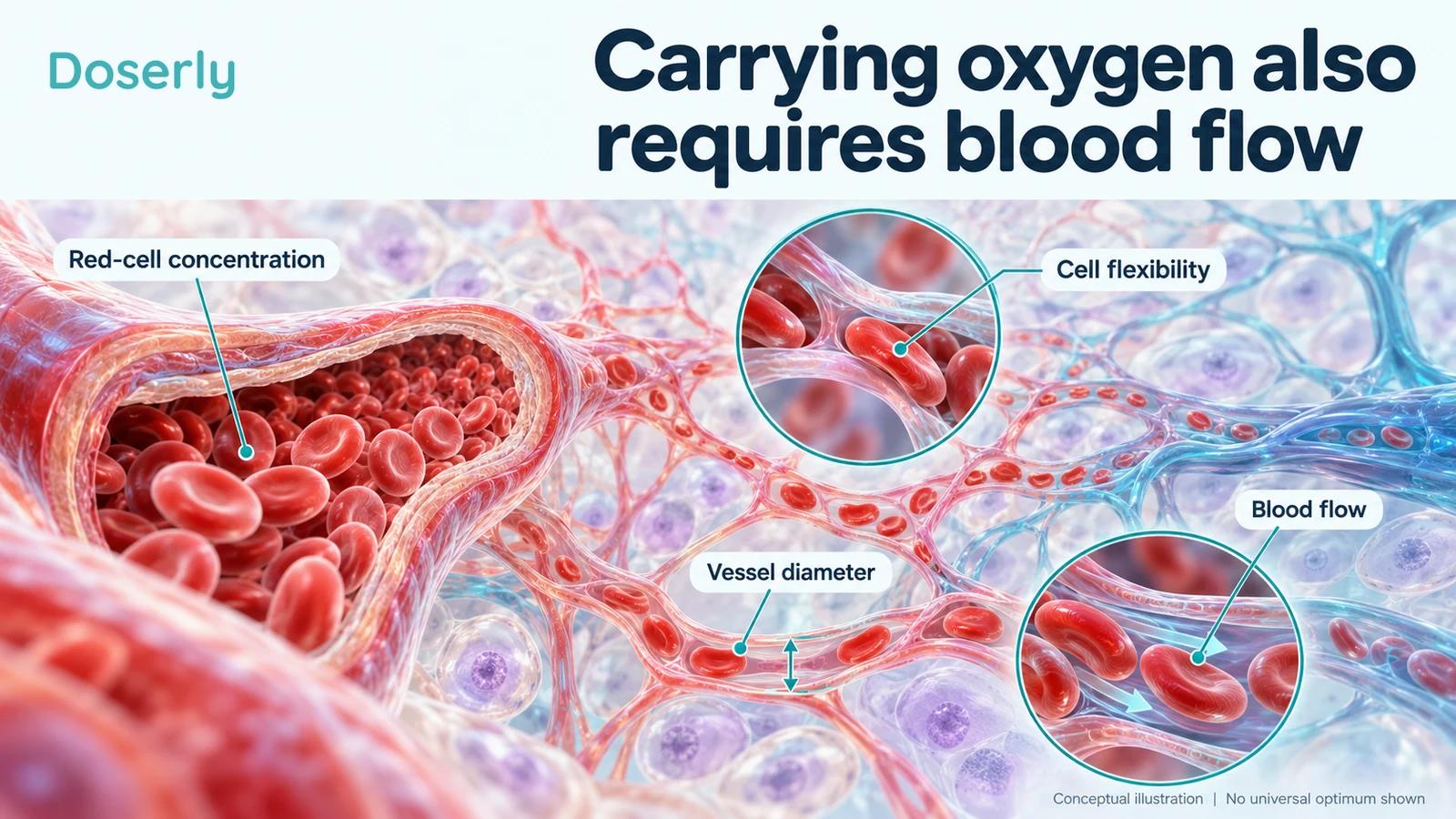
Blood is a suspension of deformable cells, not simply water with extra pigment. Its flow behavior depends on cell concentration, cell flexibility, vessel dimensions and the speed and pattern of flow. The physiological concern about hematocrit is therefore not imaginary, even though a viscosity argument alone cannot calculate someone's probability of a clot. Blood viscosity in microvessels
The most useful question is not “Can more hemoglobin carry more oxygen?” It can. The question is “Does this person's higher concentration improve useful oxygen delivery, and at what cost?” That requires more information than the hematocrit value. No study discussed here establishes one high hematocrit that optimizes both performance and long-term safety for everyone on TRT.
What people living at high altitude teach us
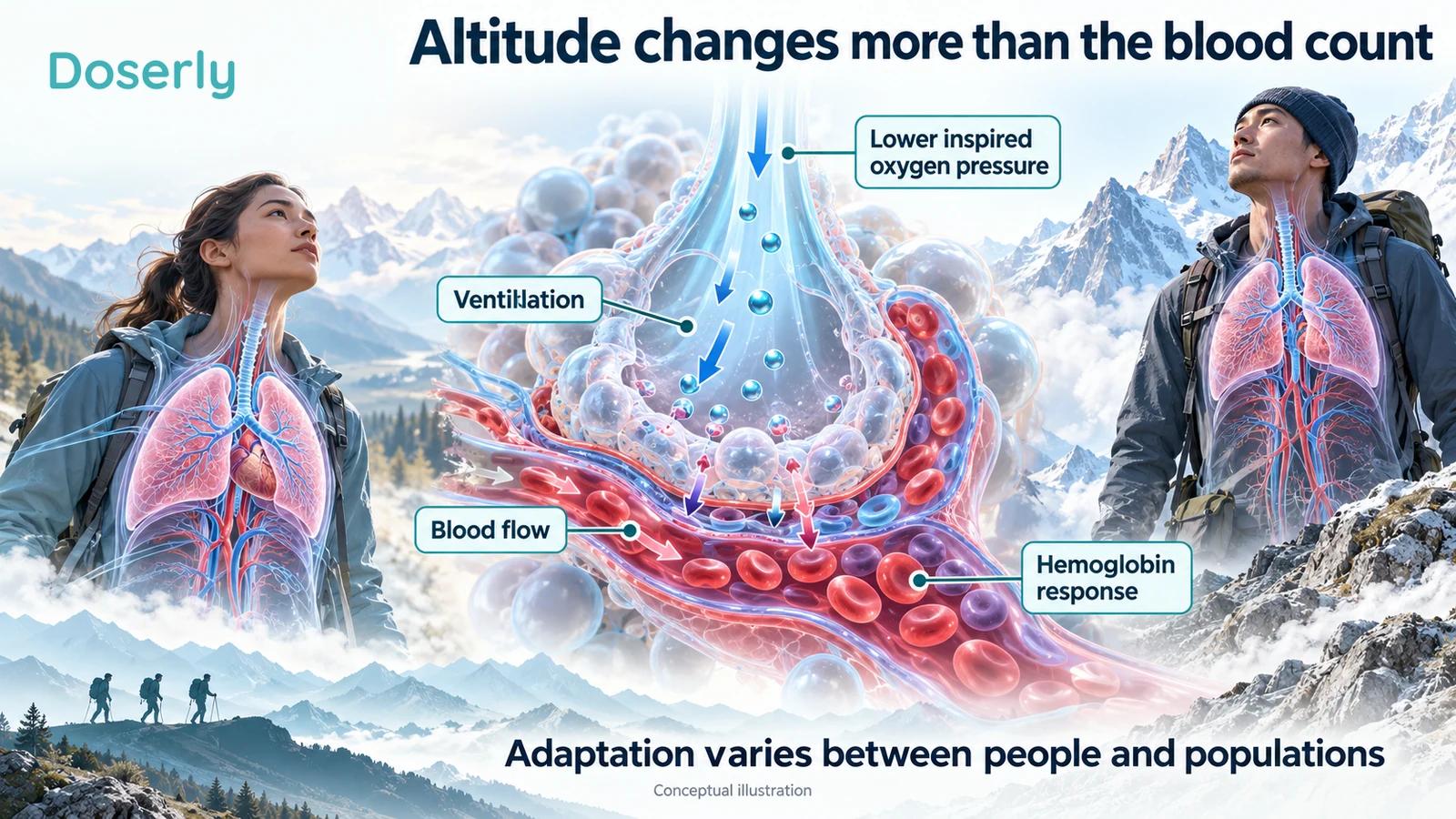
The altitude comparison deserves a serious answer. At higher elevations, lower inspired oxygen pressure can stimulate changes in breathing, circulation and red-cell production. That makes altitude an important part of interpreting a CBC. It does not make everyone living above sea level a natural experiment proving that any high hematocrit is safe.
Long-established high-altitude populations have different adaptations. Research comparing Tibetan and Andean highlanders describes differences in hemoglobin response, ventilation and circulation. Tibetans often maintain lower hemoglobin concentrations than Andean highlanders at comparable elevations. There is more than one way to adapt to reduced oxygen availability. Beall: contrasting high-altitude adaptations
That comparison matters because the familiar argument usually leaves out most of the physiology: “People live in the mountains with high counts, so my TRT count cannot be a problem.” A lifelong resident, a recent visitor and a sea-level patient taking testosterone do not necessarily have the same oxygen exposure, adaptation or underlying health risks. A population's survival also does not show that every value within that population is equally healthy.
A small human experiment makes the oxygen-delivery trade-off clearer
An Andean study examined 14 male residents of Cerro de Pasco, Peru, at about 4,340 meters. Six had excessive erythrocytosis. Their peak exercise oxygen uptake was similar to that of the eight comparison participants, despite higher arterial oxygen content and lower cardiac output. In the six affected participants, researchers then reduced hematocrit by isovolumic hemodilution, removing red cells while maintaining volume. Peak exercise capacity was preserved, rather than improved. Anza-Ramírez and colleagues, primary study
This was a small, specialized physiology experiment, not a study of stroke prevention or a recommendation for blood donation. Its value is showing that oxygen content, circulation and tissue extraction can compensate for one another. A high concentration did not translate into a simple, proportional exercise advantage.
Other high-altitude work has examined vascular function. The Global REACH study found an impaired response to a sustained blood-flow stimulus in Andean highlanders with excessive erythrocytosis. That is a physiological finding, not a measured TRT clot rate, but it challenges the idea that very high counts at altitude have no potentially adverse vascular consequences. Global REACH vascular study
For a person on TRT who lives at altitude, the useful next step is to discuss their baseline, location and oxygen status with the treating clinician. Altitude can explain part of a result and influence interpretation. It does not remove the need to examine a substantial change from that person's usual level.
Look for more than one contributor
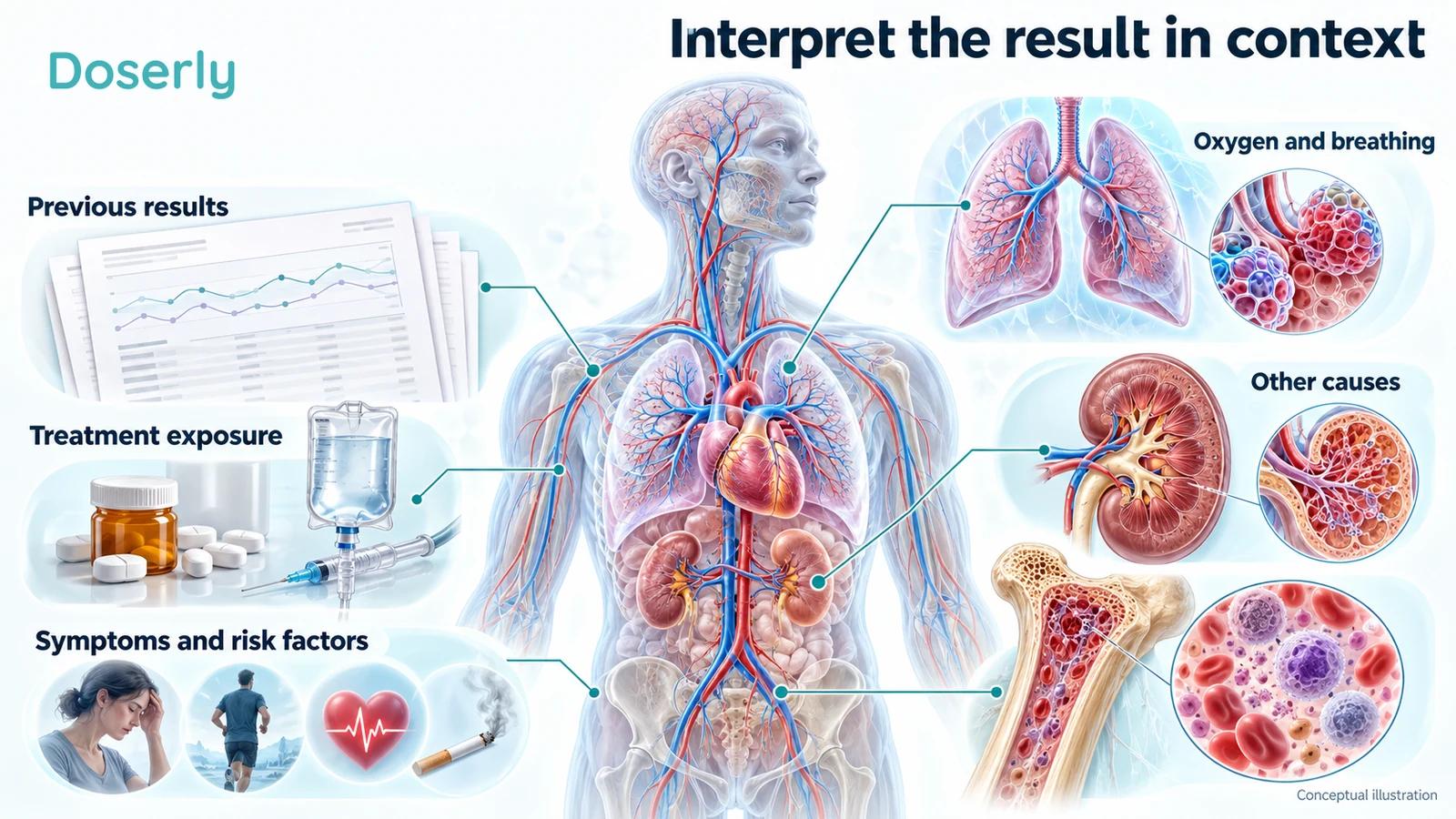
A rise after starting TRT makes testosterone an obvious candidate, but it does not establish that testosterone is the only contributor. Treatment, breathing, smoking exposure, fluid balance and other medical conditions can interact. A cause-based review is more informative than repeatedly responding to the number alone.
Sleep apnea and overnight oxygen
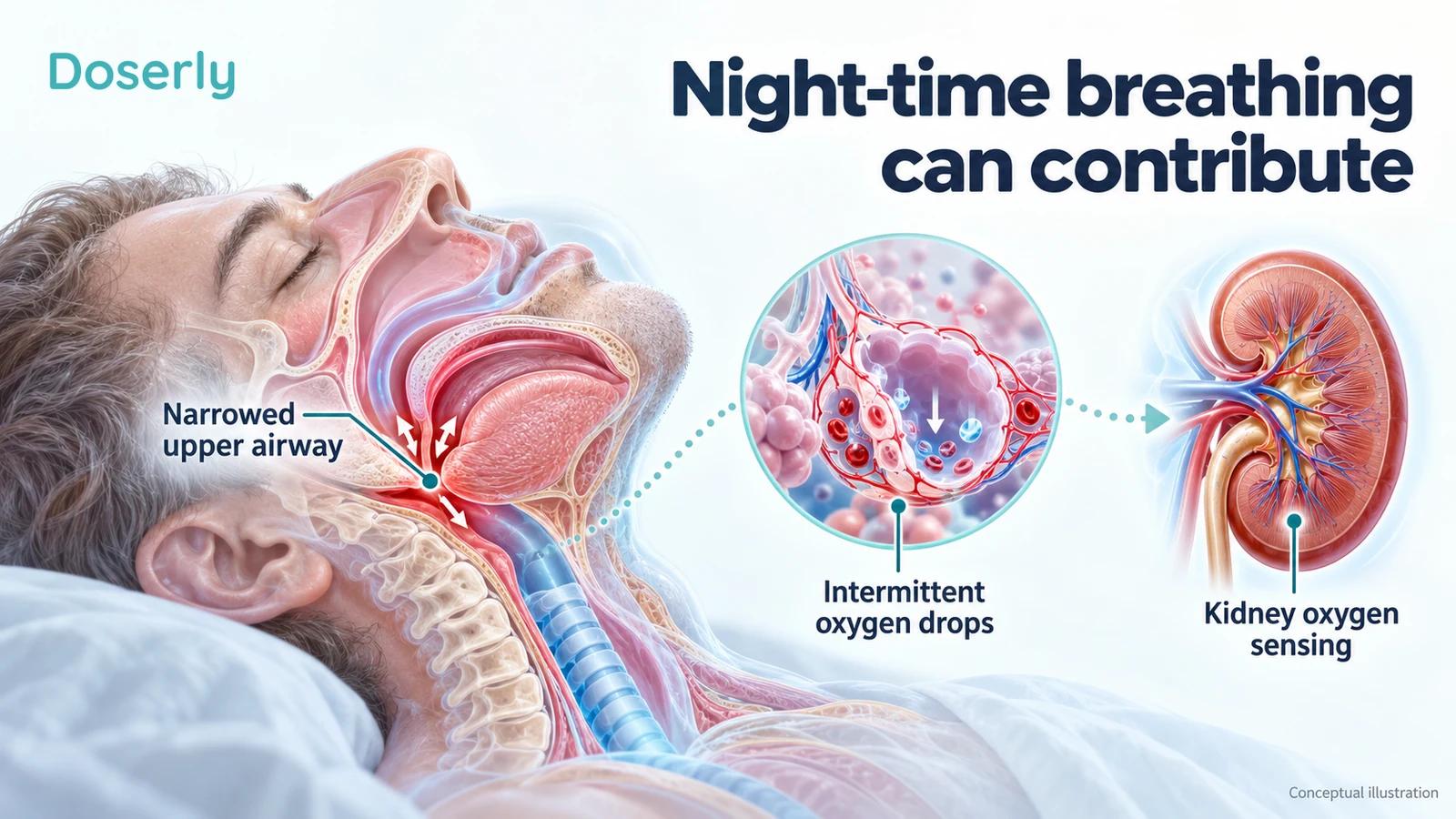
In a retrospective study of 474 men receiving testosterone, obstructive sleep apnea was associated with erythrocytosis defined as hematocrit of at least 52%. The adjusted odds ratio was 2.09, with a 95% confidence interval of 1.17–3.76. This was a single-provider observational study, so it cannot prove causation or tell us that everyone with a high result has apnea. It supports considering sleep-related breathing problems in the evaluation. Lundy and colleagues, TRT cohort
Snoring, witnessed breathing pauses and daytime sleepiness can be useful history, but symptoms alone do not confirm or exclude a sleep disorder. Similarly, a reassuring oxygen reading while awake does not describe an entire night's breathing. Our TRT and sleep apnea article explains the overlap without treating either diagnosis as a catch-all explanation.
Formulation, exposure and the limits of the microdosing claim
A network meta-analysis of 29 randomized trials, including 3,393 men, found that all evaluated testosterone formulations increased average hematocrit compared with placebo. Intramuscular enanthate/cypionate produced a greater increase than patches in the network comparison; most other between-formulation differences were not statistically established. These are group averages from heterogeneous studies, not a guarantee that switching products will solve an individual's problem. Nackeeran and colleagues, randomized-trial meta-analysis
This gives a reasonable basis for reviewing the prescribed formulation and exposure. It does not prove that dividing any weekly dose into more injections prevents erythrocytosis or clots. Injection frequency, total exposure, peak concentrations and achieved levels are related but distinct questions. A smoother theoretical curve is not an outcome trial.
Our testosterone half-life explainer and discussion of injection frequency cover those distinctions. Changes belong in a monitored treatment plan, with attention to both symptoms and follow-up results.
Other medicines and conditions can change the interpretation
SGLT2 inhibitors, commonly prescribed for diabetes, heart failure or kidney disease, can also raise hematocrit. A recent review discusses the growing importance of co-prescribing these medicines with testosterone and the uncertainty around management when erythrocytosis develops. These medicines can have substantial benefits, so a rising count is a reason for coordinated review, not an instruction to stop them independently. Testosterone and SGLT2-associated erythrocytosis review
A medication list should also include nonprescribed androgens, EPO products and supplements. Clinicians cannot interpret an apparent TRT effect accurately if important exposures are missing from the history.
Why podcasts and doctors sometimes reach different conclusions
Many patients encounter this topic through a conversation rather than a journal article. That can be helpful: a clinician explaining a difficult concept aloud may make it much easier to understand. The limitation is that personal experience, a physiological argument and a clinical trial can sound equally confident in the same interview.
The five discussions below offer different perspectives. The first three have publisher-provided transcripts that allow the relevant claims to be checked directly. The last two are included from their published episode descriptions and chapters, rather than represented as full transcript reviews. None should be treated as a substitute for the studies and guidance discussed above.
1. Starting Strength Radio: a strong critique of hematocrit-based fear
Starting Strength Radio #94 with Keith Nichols and Scott Howell discusses testosterone, PSA and erythrocytosis. In the transcript, Howell questions whether hematocrit independently explains thrombotic risk and challenges automatic phlebotomy. The discussion includes animal experiments with extreme hematocrit, while acknowledging that those findings cannot simply establish human safety.
The useful contribution is its challenge to unsupported assumptions and to treating TRT-related erythrocytosis as PV. The limitation is chronology and evidence type: this February 2021 conversation predates the Ory cohort and TRAVERSE results. Experimental mice and physiological reasoning cannot replace later human evidence. Listening with that timeline in mind gives the discussion more context.
2. Gabrielle Lyon and Rob Kominiarek: symptoms and clinical experience
Testosterone Replacement Therapy: Is It Only for Men? includes a hematocrit discussion around 1:04 in the publisher's transcript. Kominiarek describes a symptom-led approach to phlebotomy and recounts a patient whose symptoms occurred during a high-altitude trip, with additional cardiovascular findings during assessment.
The story illustrates why context matters and why one abnormal number may coexist with another medical problem. It cannot determine which intervention caused improvement or establish that an asymptomatic high count is safe. The absence of symptoms is clinically relevant, but it is not equivalent to an outcome study excluding future thrombosis. That symptom-only approach differs from the guideline action thresholds described above, which do not require symptoms before a markedly elevated hematocrit prompts intervention.
3. PROSTATE PROS: a more conservative historical threshold
Time to Address Testosterone, featuring Mark Scholz, discusses blood counts at approximately 4:18–5:04 in its transcript. The 2020 episode describes considering dose reduction or blood donation above a hematocrit of 50%.
This is a useful example of how clinical advice has varied. It is more conservative than the commonly cited on-treatment intervention threshold in major TRT guidance. It should be understood as a clinician's approach in that discussion, not proof that everyone above 50% benefits from donation or that the same target applies to every cause of erythrocytosis.
4. The Hunter Williams Podcast: hydration, breathing and iron stores
The published description of Hematocrit on TRT Explained, dated March 10, 2026, emphasizes hydration, sleep apnea, metabolic context and the potential cost of repeated donation. Those are reasonable topics to bring into a treatment review.
The distinction to keep in mind is that finding a contributor does not prove the elevated count is harmless. Hydration may change concentration, and addressing sleep apnea may treat an important underlying problem, but neither observation answers every question about the person's testosterone exposure or vascular risk. This entry is based on the episode description, not an independently checked full transcript.
5. The Sex Doctors: testosterone and blood-clot concerns
Testosterone and Blood Clots: Is the Risk Actually Real?, with Abraham Morgentaler and Marianne Brandon, was published in August 2026. Its listed chapters cover clot concerns, TRAVERSE, hematocrit and individual predisposition.
That combination of topics is important because overall treatment safety and the management of an elevated count are related but different questions. The episode is included as a current discussion to explore; its description and chapter list do not establish what every statement in the recording says, and they are not evidence that a particular hematocrit is safe.
Ten YouTube discussions to watch with the evidence in view
These videos provide a range of accessible explanations and contrasting claims. Their public titles, channels and available descriptions were checked. Complete captions were not retrievable for these entries, so the notes identify the question to examine rather than claim a full transcript-level endorsement. Several come from the same channel; ten videos do not represent ten independent bodies of evidence.
Video and channel
Managing Blood Thickness on Testosterone: Doctor's Analysis, Anabolic Doc
- What to look for while watching
- Thomas O'Connor's published chapters distinguish causes and discuss management, ferritin, aspirin and phlebotomy. Compare each proposed intervention with evidence for actual clinical outcomes.
Video and channel
High Hematocrit Levels on TRT: Blood Donation Yes or No?, TRT and Hormone Optimization
- What to look for while watching
- A useful framing of the central decision. The answer depends on cause, degree, symptoms, alternatives and follow-up, rather than a universal yes or no.
Video and channel
High Hematocrit (57%) on TRT: Blood Donation Required?, TRT and Hormone Optimization, featuring Jordan Grant
- What to look for while watching
- The title challenges clot concerns. Check whether reassurance comes from a relevant human outcome study or from an argument about mechanisms and other populations.
Video and channel
Testosterone Increases Red Blood Cells: Doctor's Case Study, Anabolic Doc
- What to look for while watching
- A case can explain clinical reasoning, but cannot estimate how often the same outcome occurs or establish which management strategy is best.
Video and channel
With 200 mg of Testosterone per Week, Is My Hematocrit Too High?, Anabolic Doc
- What to look for while watching
- A dose in a question is not a recommended dose. Ask how achieved levels, the CBC trend and other risk factors affect interpretation.
Video and channel
An Elevated Hematocrit Level on TRT Does Not Require Blood Donation, Man Medicine
- What to look for while watching
- The categorical title is worth testing against a more precise claim: automatic donation is not always appropriate, but some patients still need intervention.
Video and channel
Hematocrit Test in 5 Minutes! Anemia, Sleep Apnea, and TRT, Tom Schexnaildre MD
- What to look for while watching
- An introductory explanation can help distinguish concentration, anemia and possible contributors before considering treatment choices.
Video and channel
Do I Have to Lower High Hematocrit on TRT?, TRT and Hormone Optimization
- What to look for while watching
- Separate the question of whether to investigate or modify treatment from the narrower question of whether blood removal is appropriate.
Video and channel
Effect of TRT Administration Route on Hematocrit, TRT and Hormone Optimization
- What to look for while watching
- Compare discussion of formulations with randomized-trial evidence. A lower average rise with one formulation does not guarantee an individual response.
Video and channel
TRT and High Hematocrit: Is It Dangerous or a Myth?, Balance My Hormones
- What to look for while watching
- The published episode description identifies a discussion with Gabriel Alizaidy. The evidence supports a more qualified answer than the title's two alternatives.
The best question to bring to any of these videos is: “Which part is established in people, which part is an inference, and what would change the conclusion?” That keeps a useful explanation useful without turning confidence or popularity into a measure of evidence quality.
Where personal accounts help, and where they stop helping
Public comments beneath the Anabolic Doc discussion include markedly different experiences: people reporting years with high counts and no known event, people reporting clotting problems, and people describing depleted iron after blood removal. Those accounts are not independently verified medical records. They are useful reminders of the questions patients face, not a way to calculate risk. Reader discussion beneath the video
An uneventful experience cannot establish that an exposure is safe for everyone. A clot occurring during TRT cannot, by itself, establish that hematocrit caused it. A person may also change dose, hydration, sleep treatment and donation frequency together, making it difficult to know which change explains a later result. Anecdotes can suggest questions for research; they cannot supply the missing comparison group.
What a useful follow-up conversation looks like
The next step after a high result is usually a structured review with the prescribing clinician, with urgency determined by the degree of elevation, the trend and the clinical situation. It helps to bring a timeline rather than only the most recent number: pretreatment CBC, subsequent results, treatment changes, donation dates, ferritin if measured, and symptoms.
Ask whether the result needs confirmation under representative conditions, whether testosterone exposure needs adjustment, and whether another cause deserves investigation. If phlebotomy is proposed, ask about its specific purpose, the planned endpoint and how iron stores will be followed. If observation is proposed, ask what result or symptom would trigger a change and when the CBC will be repeated. A plan should include a follow-up date, not simply “keep an eye on it.”
Aspirin is not a general solution to an elevated hematocrit. It affects platelet activity rather than removing excess red cells, and starting it adds a separate benefit-versus-bleeding decision. It should not be used to make an otherwise unreviewed TRT regimen feel safer. The USPSTF aspirin recommendation illustrates why preventive aspirin decisions depend on the individual rather than a blanket rule.
Symptoms that should not wait for the next routine blood test
Sudden facial droop, one-sided weakness, difficulty speaking or other sudden stroke symptoms require emergency care. Do not wait to see whether hydration helps or arrange a donation instead. NHLBI: stroke symptoms
New unexplained breathlessness, chest pain, fainting or coughing blood can signal pulmonary embolism or another emergency. A newly swollen, painful leg also needs prompt medical assessment. These symptoms do not prove that TRT or hematocrit caused a clot, but the cause can be investigated after urgent problems are addressed. NHLBI: venous thromboembolism symptoms
For an elevated result without emergency symptoms, contact the prescribing team rather than deciding from a video whether to donate, stop treatment or ignore it. The goal is to preserve the benefits of appropriate testosterone treatment while identifying avoidable risks. That requires understanding why the count rose and choosing a response that does more than temporarily improve the appearance of the laboratory report.