
TRT
October 16, 2026
TRT and high hematocrit: why blood donation is only part of the answer
On this page
Testosterone can stimulate red blood cell production. During TRT, that may show up as a rising hematocrit: the percentage of blood volume occupied by red cells. It is one of the reasons follow-up blood counts matter even when treatment is helping symptoms.
Removing blood can lower the circulating red-cell volume. But “just donate” leaves several questions unanswered. Is testosterone exposure contributing? Are low oxygen levels, sleep apnea or another condition also involved? Is the result persistent? And what happens to iron stores if blood is removed repeatedly?
A useful plan addresses both the high result and why it happened. It may include therapeutic blood removal, a change in treatment, further investigation or a combination. Those decisions belong with the prescribing clinician rather than a standing self-directed donation schedule.
What hematocrit measures
Hematocrit is a proportion. A result of 50% means that approximately half of the sampled blood volume consists of red blood cells. It is not the same as hemoglobin concentration, although both are commonly reported in a complete blood count.
Because the denominator includes plasma, the liquid portion of blood, hematocrit can change when plasma volume changes. Dehydration can raise the proportion without a matching increase in the body's total red-cell mass. Altitude and conditions affecting oxygen delivery can also influence the result. MedlinePlus hematocrit explanation
That does not make a high value unimportant. It explains why clinicians interpret it alongside prior counts, the collection circumstances and the wider medical history. A persistent trend after TRT begins is a different situation from an isolated unexpected result during an acute illness.
The term erythrocytosis describes an increase in red cells. It should not automatically be confused with polycythemia vera, a specific bone-marrow disease. A testosterone-associated rise requires its own assessment rather than importing every treatment rule from another diagnosis.
Why testosterone affects red-cell production
Testosterone's effects involve more than simply making blood “thicker.” Human mechanistic research has linked treatment-related increases in hemoglobin and hematocrit with changes in erythropoietin, or EPO, and hepcidin.
EPO is a signal, produced mainly by the kidneys, that promotes red-cell production in bone marrow. Hepcidin helps regulate how much iron is available for use. A clinical study found increased EPO and reduced hepcidin and ferritin alongside testosterone-associated increases in red-cell measures. Bachman and colleagues
Iron matters because red cells contain hemoglobin, the oxygen-carrying protein that incorporates iron. Increasing production changes iron demand and handling. This helps explain why the red-cell count and iron stores are related but not interchangeable measurements.
The mechanism also explains the limitation of blood removal: taking away some circulating red cells does not necessarily remove the stimulus that produced them. If the stimulus continues, the count can rise again.
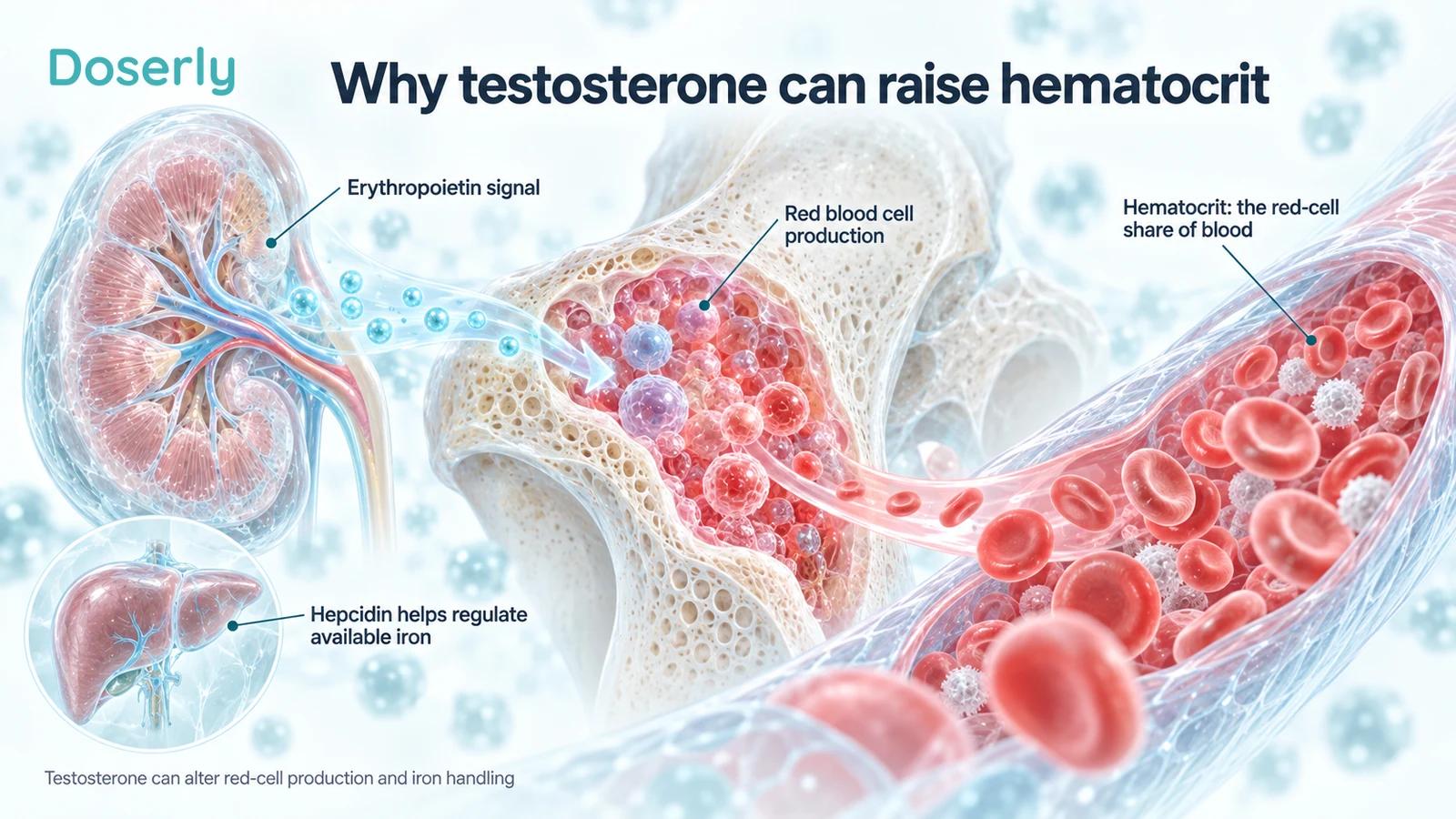
The kidney, marrow and liver illustrations explain signaling and iron availability. Their connectors represent physiological relationships, not direct anatomical tubes or a prediction of the size of a treatment effect.
How common is a substantial rise?
The answer depends on the formulation, exposure, population and definition used. A percentage from one study should not be treated as a universal chance for everyone receiving TRT.
In T4DM, men aged 50–74 with a large waist, lower testosterone and impaired glucose tolerance or recently diagnosed diabetes received a lifestyle program plus injectable testosterone undecanoate or placebo for two years. They did not have pathological hypogonadism as defined by the trial.
The prespecified hematocrit safety trigger around 54% occurred in 106 of 491 testosterone participants, reported as 22%, versus six of 484 placebo participants, reported as 1%. T4DM primary report
That is a substantial safety signal in the group and regimen studied. It is not an estimate for every gel user or every younger patient receiving replacement for established testicular disease. The trial also was not a comparison of routine donation against dose adjustment.
The practical lesson is that hematocrit monitoring needs to be planned before treatment, with an agreed response if the value rises. Waiting until the result is abnormal leaves the patient trying to build a plan after the fact.
Does a higher hematocrit mean a clot is inevitable?
No. Risk evidence describes groups, not a certainty for an individual. It also needs to be separated from evidence about how best to lower that risk.
A 2022 retrospective database study compared testosterone-treated men who developed hematocrit of at least 52% with matched men who did not. During the first year, major cardiovascular events or venous thromboembolism occurred in 5.15% versus 3.87%, with an odds ratio of 1.35 and a 95% confidence interval of 1.13–1.61. Ory and colleagues
The absolute difference was 1.28 percentage points. The odds ratio does not mean 35 additional events per 100 men. It also should not be described as a randomized estimate of what hematocrit alone caused.
Other differences between the groups may have contributed despite matching. The study did not randomly assign a hematocrit target or test whether scheduled phlebotomy prevented events. It supports taking erythrocytosis seriously; it does not establish that donation erases the associated risk.
What do guidelines say about 54%?
The American Urological Association recommends measuring hemoglobin and hematocrit before treatment and states that a hematocrit of 54% or higher warrants intervention, such as dose reduction or temporary discontinuation. AUA guideline
The Endocrine Society advises stopping treatment when hematocrit exceeds 54%, evaluating for hypoxia and sleep apnea, and restarting at a lower dose once the value is safe. It also recognizes therapeutic phlebotomy as a way to lower hematocrit. Endocrine Society guideline
These are clinician-managed recommendations. A threshold is not a guarantee that every lower result is harmless, nor proof that every higher result represents an immediate clot. The trajectory, symptoms, baseline value and other risk factors still matter.
If your result is near or above the action threshold, contact the prescribing team promptly for a specific plan. Do not wait for the next routine visit or assume that booking a donation independently resolves the treatment decision.
What should be reviewed before repeating blood removal?
The first review is the testosterone regimen itself: the exact product, prescribed exposure, actual use and any recent changes. The clinician may also need correctly timed testosterone measurements to understand exposure.
The second is other contributors. Hypoxia means inadequate oxygen availability; sleep apnea and some lung conditions can be relevant. Smoking, altitude and the broader medical history may also affect interpretation. A high count should not be attributed to TRT simply because TRT is present. Endocrine Society guideline and MedlinePlus
The third is whether the result persists and how it compares with the pretreatment count. If the elevation preceded testosterone, that fact changes the investigation. If other blood-cell measurements are abnormal, the clinician may need a broader evaluation.
For readers gathering their records, our TRT blood work guide explains the tests used in follow-up. Bring the actual reports rather than just a remembered highest value.
Donation and therapeutic phlebotomy are not the same care plan
Both remove blood, but their purposes differ. Blood donation is performed within a blood service's eligibility and collection system. Therapeutic phlebotomy is prescribed to address a medical indication, with the amount, timing and follow-up determined by a clinician.
Eligibility for donation does not establish that donation is the best treatment for an elevated count. Likewise, being unable to donate does not remove the need to manage the medical problem. The prescriber should arrange an appropriate route when therapeutic removal is indicated.
Avoid treating donation intervals as medical targets. A blood service's allowed interval is not individualized to your testosterone exposure, hematocrit trend or iron stores.
The useful question is what the removal is intended to accomplish and what happens afterward. Is it a short-term response while treatment is adjusted? What count will be rechecked? If repeated removal is proposed, how will the ongoing need and iron status be assessed?
The iron cost can outlast the fall in hematocrit
Blood removal takes away iron contained in hemoglobin. The body then needs iron to replace the lost red cells. A recovered hemoglobin concentration does not necessarily mean iron stores have fully recovered.
A randomized trial followed 215 blood donors for 24 weeks after a whole-blood donation, comparing iron supplementation with no supplementation. Without supplements, 67% had not recovered their iron stores by 168 days. Kiss and colleagues
Those participants were ordinary donors, not specifically men undergoing therapeutic phlebotomy for TRT-related erythrocytosis. The trial should not be used to prescribe an iron regimen for everyone on TRT. It does demonstrate that blood removal has an iron consequence that can persist for months.
That creates a reason to discuss ferritin, a marker used to assess iron stores, when repeated removal is considered. Neither a normal hemoglobin nor a lower hematocrit alone answers whether stores are adequate.
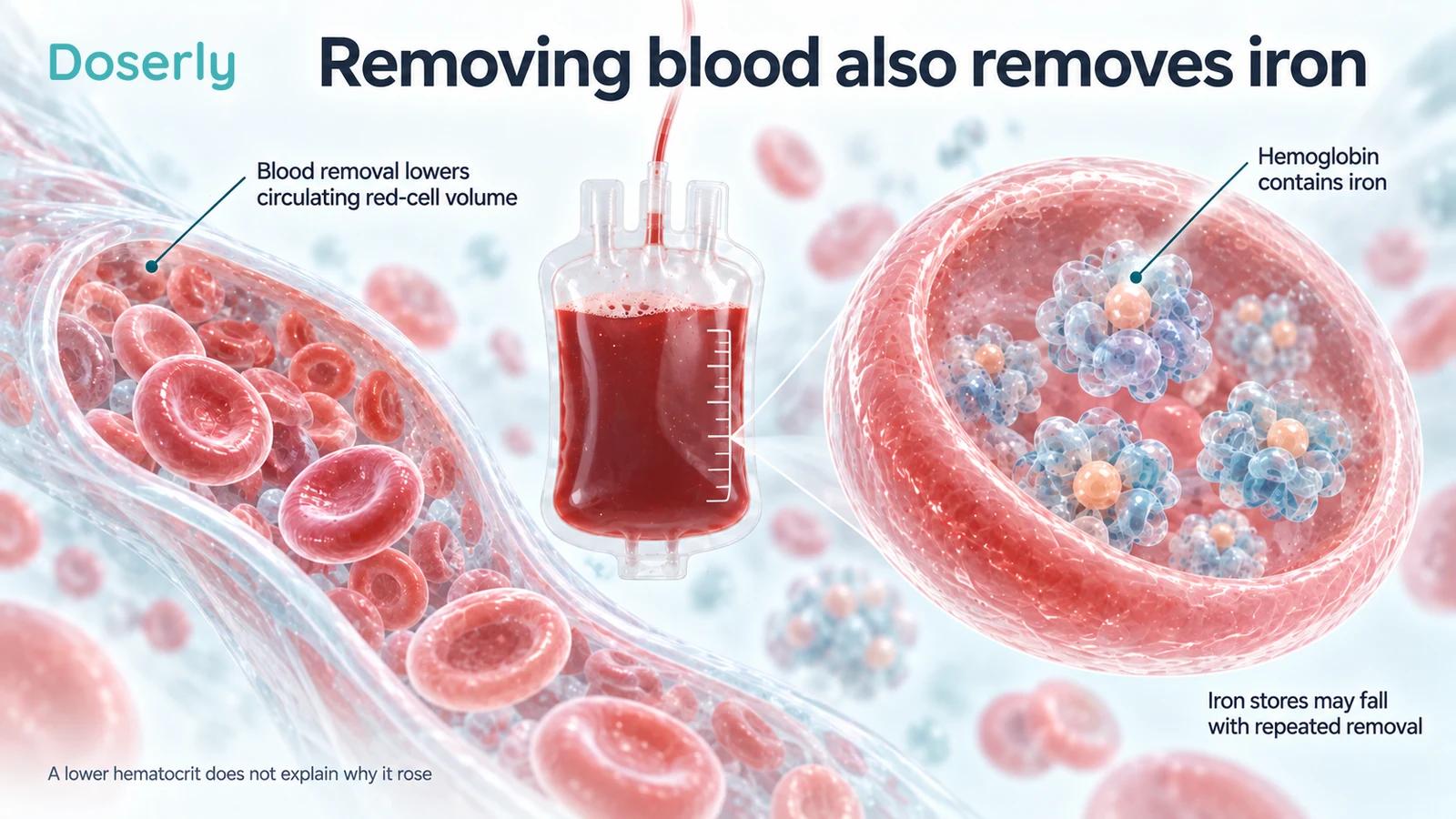
Hemoglobin-associated iron leaves the body with removed red cells. The enlarged protein shapes are conceptual. Iron stores elsewhere in the body are a separate consideration; the illustration does not show a proven reduction in clot risk.
Why “donate, then replace the iron” is not a complete solution
It can sound logical to remove red cells and then replace the iron. But the underlying red-cell stimulus may still be present, and the appropriate response depends on why the count rose and whether iron deficiency has developed.
The donor trial shows that iron changes recovery after donation. It does not test a strategy of maintaining an unchanged testosterone regimen through indefinite cycles of removal and supplementation. Blood-donor trial
That is why both decisions should be coordinated: whether blood needs to be removed and whether iron needs to be replaced. A low ferritin result should not be ignored, but it should not trigger an unsupervised supplement plan that bypasses the reason repeated blood removal became necessary.
A useful treatment discussion also distinguishes symptoms from numbers. Feeling tired after repeated donations could have several explanations; increasing testosterone because fatigue returned may be the wrong response if iron depletion has become part of the problem.
What to record between visits
Keep a dated record of hematocrit and hemoglobin, the testosterone formulation and any prescription changes, and the date of each donation or therapeutic phlebotomy. Include iron studies if they were ordered.
That timeline makes it possible to see whether the count rises again after removal, whether changes in treatment alter the pattern, and whether repeated removal coincides with falling iron stores. A single “normal” result after donation does not describe the entire trend.
Ask who is responsible for reviewing the next result and when you should contact them. A plan that says only “keep an eye on it” leaves both the timing and the response undefined. Ask whether the next test is meant to confirm an isolated result, assess the response to an intervention or monitor a stable regimen. Those purposes may justify different follow-up intervals.
If severe new symptoms occur, seek urgent clinical assessment rather than assuming a donation will address them. Routine blood-count monitoring is not a substitute for assessment of an acute problem.
A more useful conversation than “should I donate?”
Ask what is driving the increase, whether treatment exposure should change, whether oxygen-related causes need investigation, and what role blood removal has in the overall plan. If removal is repeated, ask how iron stores will be followed.
Our TRT and hematocrit guide provides more background on monitoring and management. The goal is a sustainable treatment plan that addresses the cause of the rising count and its consequences, with blood removal used for a clear clinical reason.
Sources
- MedlinePlus: hematocrit testing
- Bachman and colleagues: EPO, hepcidin and testosterone-associated erythrocytosis, 2014
- T4DM randomized trial, 2021
- Ory and colleagues: erythrocytosis and cardiovascular/thrombotic outcomes, 2022
- AUA testosterone-deficiency guideline
- Endocrine Society guideline
- Kiss and colleagues: iron recovery after donation, 2015