
TRT
October 16, 2026
TRT and sleep apnea: when tiredness has more than one explanation
On this page
Obstructive sleep apnea repeatedly interrupts breathing during sleep. Testosterone deficiency can affect sexual function, energy and other aspects of health. Because their symptoms overlap, someone looking for an explanation for persistent tiredness can end up considering both.
That overlap creates two practical questions. Could a sleep disorder be contributing to symptoms attributed to low testosterone? And if testosterone treatment is appropriate, does an existing breathing problem change how it should be started or monitored?
The answers require separate assessments. A testosterone result cannot diagnose sleep apnea, and a sleep-apnea diagnosis does not by itself establish testosterone deficiency. Treating one also does not prove that the other has resolved.
What obstructive sleep apnea does
During obstructive sleep apnea, the upper airway narrows or closes during sleep despite continuing effort to breathe. Breathing interruptions can fragment sleep and affect oxygen levels. A person may spend enough hours in bed yet still wake feeling unrefreshed.
Clues include loud snoring, gasping, witnessed pauses in breathing, daytime sleepiness and difficulty concentrating. Sexual dysfunction or reduced libido can also occur. People may be unaware of the nighttime events until someone who shares their room describes them. NHLBI symptoms guide
Tiredness alone is not specific. It is useful to distinguish feeling low in energy from struggling to stay awake, although the two can occur together. A clinician needs to know what happens during the day as well as what happens overnight.
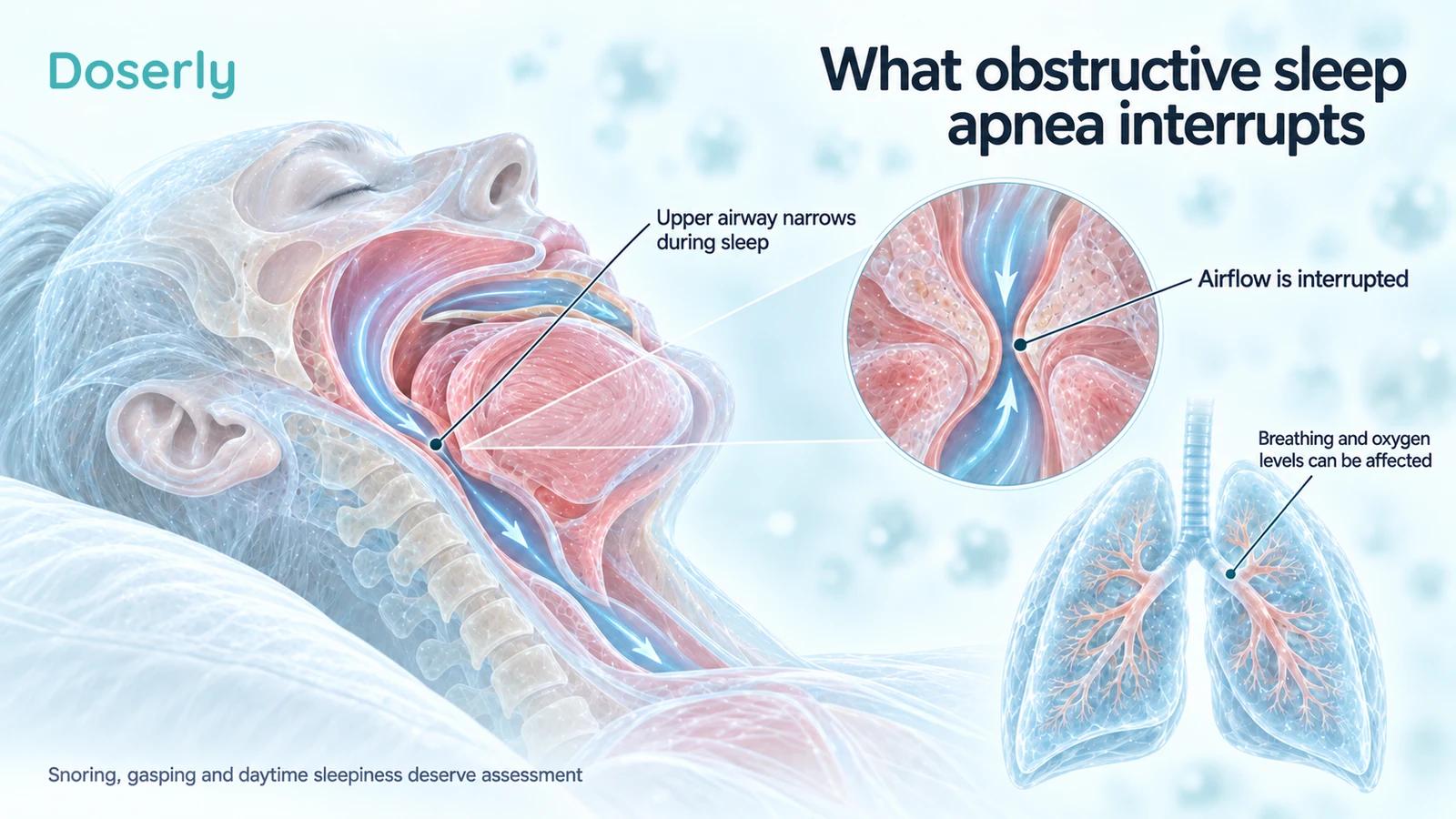
This conceptual image shows upper-airway narrowing during sleep. It does not depict testosterone physically blocking the throat or establish the mechanism of a treatment-related change in breathing.
Why symptoms cannot decide between the two
Reduced sexual desire, fatigue and changes in concentration may prompt a testosterone evaluation, but they do not uniquely identify hormone deficiency. The same person may have a sleep disorder, a hormone disorder, both or another explanation.
Obesity can complicate the picture because it is relevant to both conditions. It may also lower SHBG, the protein that binds testosterone in blood, making total testosterone harder to interpret. Our obesity-related hypogonadism guide explains why free testosterone assessment can sometimes clarify that result.
A useful consultation starts with the actual symptoms and timeline. Did sleepiness precede the hormone investigation? Has a partner noticed breathing pauses? Were symptoms present before TRT, or did they change after a prescription adjustment?
This avoids assigning every symptom to whichever diagnosis was made most recently. Feeling more energetic after treatment can be meaningful, but it does not independently establish that nighttime breathing is normal.
What the testosterone trial actually tested
A randomized, blinded trial published in 2012 enrolled 67 men with obesity and severe obstructive sleep apnea. All followed a reduced-calorie diet and received either intramuscular testosterone undecanoate or placebo during an 18-week study.
Researchers measured breathing using overnight polysomnography at baseline, seven weeks and 18 weeks. At seven weeks, testosterone worsened the oxygen desaturation index, or ODI, by 10.3 events per hour relative to placebo, with a 95% confidence interval of 0.8–19.8. ODI counts oxygen-drop events; it is not a testosterone concentration. Hoyos and colleagues
At 18 weeks, the between-group ODI difference was 4.5 events per hour, with a confidence interval of −5.4 to 14.4, and was not statistically significant. The later estimate was uncertain and did not establish that every participant's breathing had normalized.
This was a specific formulation in men with severe OSA. It cannot estimate the effect of every TRT regimen in someone with no apnea, mild apnea or well-controlled disease.
Why the later result is not an “all clear”
The trial is sometimes reduced to one of two claims: testosterone worsens apnea, or the effect disappears after a few months. Both statements lose detail that matters for an individual decision.
The study demonstrated an early between-group worsening in the population tested. The later comparison was less conclusive. A nonsignificant result is not an equivalence test proving that the two treatments have identical effects.
It also does not tell a patient to wait through new snoring, witnessed pauses or worsening sleepiness. Symptoms arising after a treatment change should be assessed rather than assumed to follow an average research trajectory.
For clinical monitoring, the important distinction is between a measured improvement and an assumed adaptation. The former can inform a treatment plan; the latter can delay investigation of a problem that remains present.
What guidelines say before starting TRT
The Endocrine Society recommends against starting testosterone in men with untreated severe obstructive sleep apnea. The wording matters: untreated severe disease is a specific concern, rather than a statement that anyone who has ever had sleep apnea can never receive testosterone. Endocrine Society guideline
If apnea has already been diagnosed, tell the prescriber how it is treated and whether treatment is being used effectively. Having a device at home is not the same as knowing whether breathing is controlled.
The clinician also needs to establish the indication for TRT through the appropriate hormone assessment. Addressing a sleep problem and investigating genuine testosterone deficiency are compatible goals; neither should be skipped because the other seems plausible.
For someone with suspected but unassessed apnea, the immediate discussion is about completing the sleep evaluation and clarifying how it affects the treatment decision. Avoid treating a trial of testosterone as a diagnostic test for the cause of tiredness.
How sleep apnea is diagnosed
The American Academy of Sleep Medicine recommends diagnosis with polysomnography, an attended sleep study, or a technically adequate home sleep apnea test in appropriate uncomplicated adults. A symptom questionnaire alone does not establish the diagnosis.
A home test is not suitable for every situation. The guideline favors polysomnography in several more complex circumstances, such as significant cardiorespiratory disease, suspected hypoventilation, chronic opioid use or severe insomnia. If a home test is negative, inconclusive or technically inadequate, further evaluation with polysomnography may be needed. AASM diagnostic guideline
A clinician should therefore interpret the test in the context of the original suspicion. “The home test was negative” and “sleep apnea has been adequately excluded” are not always the same conclusion.
Consumer sleep scores and overnight oxygen trends may be useful observations to mention, but they should not replace the diagnostic pathway. Bring the actual sleep report when possible, including the test type and the clinician's interpretation.
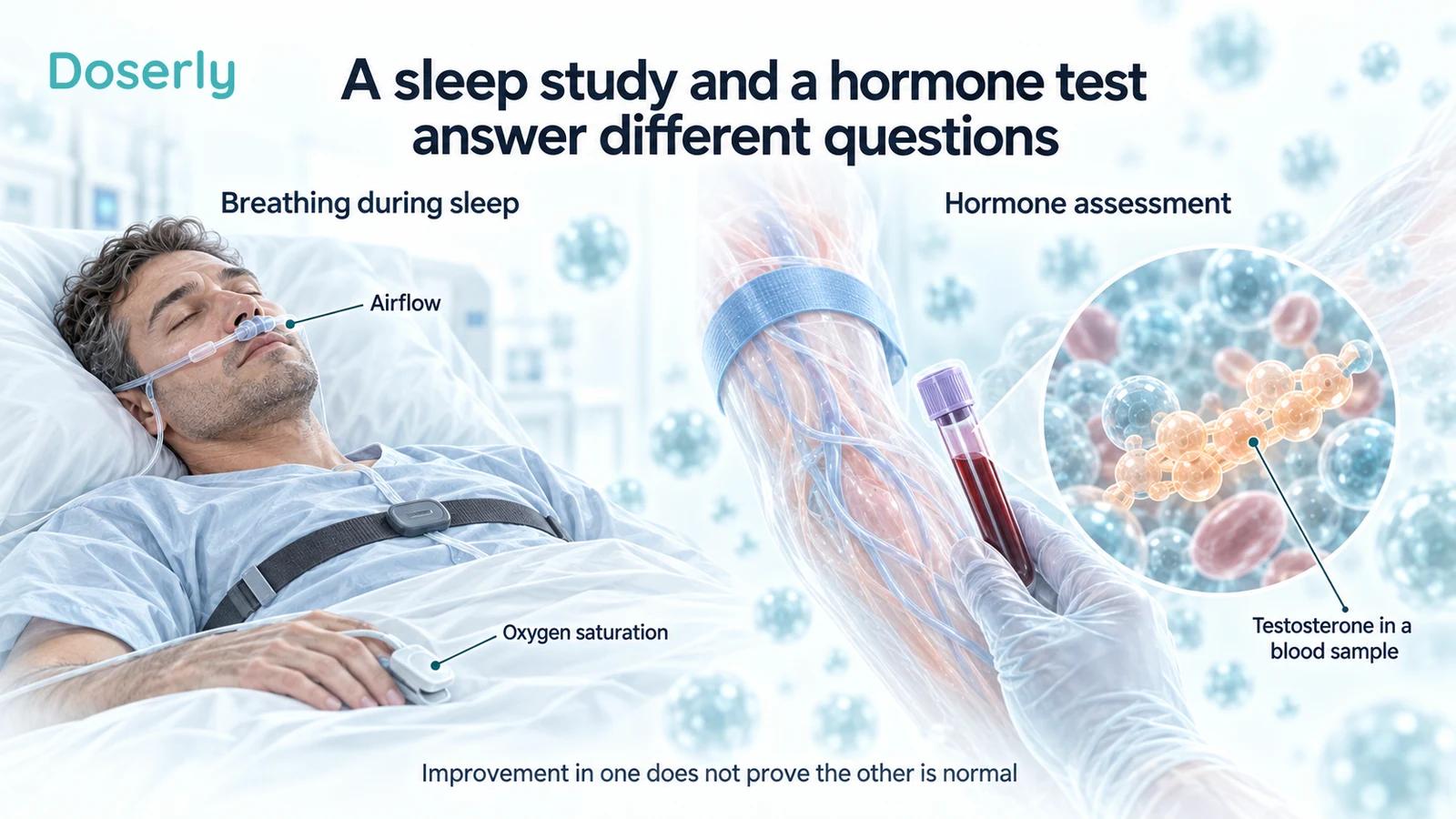
Sleep testing examines breathing during sleep, while hormone testing examines a blood sample. The scenes are conceptual and contain no actual patient results. The enlarged hormone shape is illustrative, not a chemical model.
What the measurements mean
Sleep-study terminology can obscure the practical issue. Apnea refers to a pause in airflow; hypopnea refers to a reduction meeting the test's scoring criteria. The apnea–hypopnea index summarizes these events per hour of sleep in a laboratory study.
The oxygen desaturation index counts drops in oxygen saturation. Time spent below a specified saturation threshold describes another aspect of the night. These measures are related, but they are not interchangeable.
This is why the testosterone trial's ODI finding should not be casually relabeled as an increase in every participant's apnea–hypopnea index. Keeping these measures distinct helps you understand which findings guide your treatment. Ask your clinician which results are driving the decisions in your case.
Ask whether the report suggests a breathing problem, how severe it appears, and whether the study captured a representative night. The answer is more useful than focusing on one unfamiliar acronym without its context.
Does CPAP treatment raise testosterone?
Continuous positive airway pressure, or CPAP, uses air pressure to help keep the upper airway open. Its clinical purpose is to treat sleep-disordered breathing, not to function as a testosterone-raising drug.
A 2019 systematic review and meta-analysis found no statistically significant pooled increase in total testosterone with CPAP. The underlying studies varied considerably, so the result is not a guarantee that no individual hormone value will change. It is a reason not to promise hormonal normalization from CPAP alone. CPAP and testosterone synthesis
The AASM recommends positive airway pressure for adults with OSA and excessive sleepiness and emphasizes treatment follow-up and support. Those benefits and care needs remain relevant even if a testosterone result does not rise. AASM treatment guideline
If symptoms improve with effective apnea treatment but testosterone remains low, the hormone question can still be assessed on its own merits. If testosterone improves but breathing symptoms remain, the sleep problem still needs care.
Why hematocrit enters the discussion
TRT can increase hematocrit, the proportion of blood volume occupied by red cells. Low oxygen availability is another issue clinicians consider when investigating an elevated count.
The Endocrine Society's response to hematocrit above 54% includes pausing testosterone, evaluating for hypoxia and sleep apnea, and adjusting treatment after the count is safe. Clinical guideline
That does not mean a high hematocrit diagnoses apnea. It means the combination can prompt a broader review than simply changing the testosterone prescription or repeatedly removing blood.
Our TRT and hematocrit guide explains the blood-count side. For the appointment, it helps to bring both the blood results and sleep-treatment information so that the two are not managed as unrelated fragments.
What to notice after treatment starts or changes
Keep track of changes that can be described clearly: new loud snoring, witnessed pauses, waking gasping, increased daytime sleepiness or a noticeable change in morning symptoms. Note when the testosterone prescription changed and whether sleep treatment was being used consistently.
A record cannot prove causation. Weight changes, alcohol, medicines, illness and sleep schedules can change at the same time. But a dated history gives the clinician a better starting point than a general impression that sleep has become worse.
If you use PAP, tell the sleep team about difficulties with mask fit, discomfort or regular use. Do not alter pressure settings solely because a hormone result changed; the breathing-treatment plan needs its own assessment.
The TRT side-effects guide provides broader context for symptoms to discuss during follow-up. New or worsening breathing concerns deserve attention even if the testosterone concentration itself looks satisfactory.
If you still feel tired after both treatments
Persistent tiredness should trigger a review of what has actually improved and what remains unexplained. Was apnea treatment effective? Was the hormone diagnosis well established? Did the symptom change at all, and over what period?
It is easy to assume that a remaining symptom means the testosterone dose must be too low. That assumption bypasses the fact that fatigue and sleepiness have multiple possible contributors.
Describe the impact concretely: falling asleep unintentionally, needing daytime naps, reduced exercise tolerance or difficulty completing ordinary tasks are different experiences. The clinician can use that description to guide the next evaluation.
Avoid treating a single reassuring laboratory result or device summary as the end of the assessment if the functional problem continues. Follow-up is about the person as well as the measurements.
Questions worth settling together
Before starting or changing TRT, ask whether sleep apnea has been adequately assessed, whether any diagnosed apnea is effectively treated, and what new symptoms should prompt earlier review. Ask who will coordinate the hormone and sleep follow-up.
If a sleep test is planned, clarify whether a home test is appropriate and what happens if its result is negative or technically inadequate. If treatment is already prescribed, ask how its effectiveness will be checked.
The aim is a clear explanation for your symptoms and a plan that measures both hormone treatment and nighttime breathing appropriately. Neither problem needs to be forced into the other's test result.
Sources
- NHLBI: sleep apnea symptoms
- Hoyos and colleagues: testosterone in severe OSA, randomized trial, 2012
- Endocrine Society testosterone guideline
- AASM diagnostic-testing guideline, 2017
- AASM positive-airway-pressure guideline, 2019
- CPAP and testosterone systematic review, 2019