
Vitamin B5 (Pantothenic Acid): The Complete Supplement Guide
On this page
Quick Reference Card
Attribute
Common Name
- Detail
- Vitamin B5
Attribute
Other Names / Aliases
- Detail
- Pantothenic acid, pantothenate, calcium pantothenate, pantethine, panthenol, dexpanthenol, D-panthenol, pantothenylalcohol
Attribute
Category
- Detail
- Water-Soluble Vitamin (B-Complex)
Attribute
Primary Forms & Variants
- Detail
- Calcium pantothenate (most common supplement form); pantethine (dimeric form of pantetheine, used for cholesterol support, distinct pharmacology); dexpanthenol/D-panthenol (stable alcohol analog, topical skin use); pantothenol (prodrug, converts to pantothenic acid)
Attribute
Typical Dose Range
- Detail
- AI: 5 mg/day (adults); supplemental in B-complexes: 10-100 mg; standalone: up to 1,000 mg; pantethine for lipid support: 600-900 mg/day
Attribute
RDA / AI / UL
- Detail
- AI (IOM 1998): 5 mg/day (adults 14+), 6 mg (pregnancy), 7 mg (lactation). No RDA established (insufficient data for EAR). No UL established (no toxicity reports)
Attribute
Common Delivery Forms
- Detail
- Capsule, tablet, softgel (pantethine), topical cream/ointment (dexpanthenol)
Attribute
Best Taken With / Without Food
- Detail
- Can be taken with or without food. Absorption does not require dietary fat for standard forms
Attribute
Key Cofactors
- Detail
- Other B vitamins (taken together in B-complex formulations); biotin (B7) shares the same intestinal transporter (SMVT); cysteine (involved in CoA synthesis pathway)
Attribute
Storage Notes
- Detail
- Store at room temperature in a dry place away from heat, moisture, and direct light. No refrigeration required
Overview
The Basics
Vitamin B5, or pantothenic acid, gets its name from the Greek word "pantos," meaning "everywhere." That name is fitting because this vitamin is found in nearly every food you eat. It plays a behind-the-scenes role in your body that's easy to overlook but hard to live without: it's the raw material your cells use to build Coenzyme A, a helper molecule involved in hundreds of different chemical reactions.
Think of Coenzyme A as a universal adapter in your body's energy system. Whether your cells are burning fat for fuel, converting carbohydrates into usable energy, or assembling cholesterol and hormones, CoA is part of the process. Without enough pantothenic acid to build CoA, these processes slow down.
Because pantothenic acid appears in such a wide range of foods, true deficiency is extraordinarily rare. Most people in developed countries consume around 4-7 mg per day, which comfortably meets the Adequate Intake of 5 mg [1]. The typical American diet provides about 6 mg daily [1][3]. For this reason, standalone B5 supplementation is uncommon for general health purposes. The supplement becomes more interesting in two specialized contexts: high-dose pantothenic acid for skin health (a use driven largely by community experience rather than robust clinical data), and pantethine, a derivative, for cholesterol management (supported by multiple clinical trials).
The Science
Pantothenic acid (vitamin B5) is a water-soluble vitamin essential for the biosynthesis of coenzyme A (CoA) and acyl carrier protein (ACP) [1][2]. CoA participates as a cofactor in approximately 4% of all known enzymatic reactions, making it one of the most ubiquitous coenzymes in human metabolism [2]. The primary biochemical roles of CoA include fatty acid synthesis and beta-oxidation, acetyl and acyl group transfer reactions, citric acid cycle function, and the synthesis of cholesterol, steroid hormones, vitamins A and D, heme, melatonin, and the neurotransmitter acetylcholine [3].
Approximately 85% of dietary pantothenic acid exists in the form of CoA or phosphopantetheine, which are hydrolyzed to free pantothenic acid by intestinal enzymes (nucleosidases, peptidases, and phosphorylases) prior to absorption [1][2]. The vitamin is transported throughout the body via red blood cells and is present in tissues predominantly as CoA, with smaller amounts as ACP or free pantothenic acid [1].
Pantothenic acid status is not routinely measured clinically. Urinary excretion is considered the most reliable biomarker, with values below 1 mg/day suggesting deficiency and normal excretion averaging approximately 2.6 mg/day on a typical Western diet [1]. Whole-blood concentrations normally range from 1.6 to 2.7 mcmol/L, with values below 1 mcmol/L indicating possible deficiency [1].
Recent case-control studies have identified cerebral pantothenic acid deficiency in patients with both Alzheimer's disease and Huntington's disease, suggesting potential neurological significance beyond general metabolic function [3].
Chemical & Nutritional Identity
Property
Chemical Name
- Value
- 3-[(2,4-dihydroxy-3,3-dimethylbutanoyl)amino]propanoic acid
Property
Synonyms
- Value
- Pantothenic acid, pantothenate, vitamin B5, calcium D-pantothenate
Property
Molecular Formula
- Value
- C9H17NO5
Property
Molecular Weight
- Value
- 219.23 g/mol (free acid); 476.53 g/mol (calcium pantothenate)
Property
CAS Number
- Value
- 79-83-4 (D-pantothenic acid); 137-08-6 (calcium D-pantothenate)
Property
PubChem CID
- Value
- 6613
Property
Category
- Value
- Water-soluble vitamin; B-complex member
Property
Active Form
- Value
- Coenzyme A (CoA), synthesized from pantothenic acid via a multi-step pathway
Property
AI (IOM 1998)
- Value
- 5 mg/day (adults 14+); 6 mg/day (pregnancy); 7 mg/day (lactation)
Property
UL (IOM 1998)
- Value
- Not established (no evidence of toxicity from oral intake)
Property
Daily Value (FDA)
- Value
- 5 mg
Pantothenic acid is commercially available in several forms. Calcium D-pantothenate is the most common supplement form, a stable calcium salt. Pantethine is a dimeric form of pantetheine (the dephosphorylated precursor of CoA), structurally related to CoA, and demonstrates distinct pharmacological activity from pantothenic acid, particularly regarding lipid metabolism. Dexpanthenol (D-panthenol) is a stable alcohol analog that converts to pantothenic acid in the body and is used primarily in topical skincare formulations for its stability and hygroscopic properties [2][3].
Mechanism of Action
The Basics
Pantothenic acid has one essential job: serving as the building block for Coenzyme A. You can think of CoA as a molecular tool that your cells use constantly, attaching to and detaching from various molecules to help chemical reactions proceed. About 4% of all the enzymes in your body need CoA to function.
The most important things CoA does include helping your cells extract energy from food (fats, carbohydrates, and proteins all funnel through CoA-dependent pathways), building fatty acids and cholesterol (which your body needs for cell membranes and hormones), manufacturing the neurotransmitter acetylcholine (critical for memory and muscle function), and modifying proteins through a process called acetylation, which acts like an on/off switch for many cellular processes.
Beyond CoA, pantothenic acid is also needed for a component called 4'-phosphopantetheine, which gets attached to certain enzymes to activate them. One important example is the acyl-carrier protein within fatty acid synthase, which cannot build fatty acids without this pantothenic acid-derived component.
The Science
The metabolically active derivatives of pantothenic acid include coenzyme A (CoA) and the 4'-phosphopantetheinyl moiety required for several enzyme systems [1][2][3].
CoA biosynthesis: Pantothenic acid is phosphorylated by pantothenic acid kinase 2 (PANK2) to 4'-phosphopantothenic acid in the rate-limiting step of the pathway. This proceeds through 4'-phospho-N-pantothenoylcysteine (with addition of cysteine), 4'-phosphopantetheine, dephospho-CoA, and finally CoA [2][3]. The pathway consumes ATP and is feedback-inhibited by CoA and its derivatives; this inhibition can be reversed by carnitine, linking fatty acid transport to CoA synthesis regulation [3].
CoA-dependent reactions include:
- Citric acid cycle: acetyl-CoA and succinyl-CoA are essential intermediates [1][2]
- Fatty acid synthesis and beta-oxidation via acyl-CoA derivatives [1][3]
- Cholesterol and steroid hormone synthesis via HMG-CoA [3]
- Acetylcholine synthesis [3]
- Melatonin synthesis [3]
- Heme biosynthesis [3]
- Drug and toxin metabolism in the liver [3]
- Protein acetylation, including histone acetylation for gene expression regulation [3]
- Protein acylation for cell signaling [3]
4'-Phosphopantetheinylation: Several enzymes require covalent attachment of 4'-phosphopantetheine for biological activity. These include acyl-carrier protein (ACP) within the fatty acid synthase complex, 10-formyltetrahydrofolate dehydrogenase (FDH, involved in folate metabolism and nucleotide synthesis), and alpha-aminoadipate semialdehyde synthase (AASS, involved in lysine degradation) [3].
Absorption & Bioavailability
The Basics
Your body absorbs pantothenic acid from food with moderate efficiency. Studies suggest you absorb about 40-61% of the pantothenic acid in your diet, roughly half on average [1]. Most dietary pantothenic acid arrives in the form of CoA or phosphopantetheine, which your digestive system breaks down into free pantothenic acid before absorption.
The absorption process uses a specialized transporter called the sodium-dependent multivitamin transporter (SMVT), which is the same transporter used by biotin (vitamin B7). This shared highway matters because at very high supplemental doses, pantothenic acid and biotin may compete with each other for absorption [2][3].
Your body stores only small amounts of pantothenic acid, and the vitamin is water-soluble, meaning excess is excreted through urine rather than stored in fat. This means you need a consistent daily supply. Interestingly, bacteria in your large intestine can also produce pantothenic acid, though how much this contributes to your total supply remains unknown [2].
One practical note: higher fat intake and exercise both appear to increase pantothenic acid utilization, which may increase requirements under those conditions [2].
The Science
Dietary pantothenic acid, predominantly in the form of CoA and phosphopantetheine, undergoes hydrolysis by intestinal phosphatases, peptidases, and nucleosidases to yield free pantothenic acid prior to absorption [1][2]. Pantetheine (the dephosphorylated form of phosphopantetheine) is taken up by intestinal cells and converted to pantothenic acid intracellularly before release into the bloodstream [1].
Absorption occurs via the sodium-dependent multivitamin transporter (SMVT, encoded by SLC5A6) in both the small and large intestines. SMVT appears to be the primary uptake mechanism, as siRNA knockdown of the transporter in animal models ablates pantothenic acid uptake [2]. The Ki for competition between pantothenic acid and biotin at the SMVT is approximately 14.4 mcM [2]. Absorption rates across all three segments of the small intestine appear similar [2].
Pantothenic acid is transported in the bloodstream by red blood cells [1]. Brain concentrations are approximately 50-fold higher than plasma levels, maintained by SLC5A6-mediated transport across the blood-brain barrier, which accounts for 98.6% of brain uptake in vitro models [2]. Intracellular pantothenic acid in the brain remains largely unmetabolized rather than being converted to CoA [2].
Colonic bacteria can synthesize pantothenic acid, and the colonocyte SMVT transporter enables absorption of bacterially produced vitamin, though the quantitative contribution to whole-body status remains undefined [2][3].
Understanding how your body absorbs a supplement is only useful if you can act on it. Doserly lets you log exactly when you take each form, whether it's a capsule with a meal, a sublingual tablet on an empty stomach, or a liquid taken with a cofactor, so you can see how timing and form choices affect your results over time.
The app also tracks cofactor pairings that influence absorption. If a supplement works better alongside vitamin C, fat, or black pepper extract, Doserly reminds you to take them together and logs both. Over weeks, your personal data reveals whether those pairing strategies are translating into measurable differences in the biomarkers you're tracking.
Track injection timing, draw notes, and site rotation.
Doserly helps keep syringe-related notes, injection site history, reminders, and reconstitution context together for easier review.
Injection log
Site rotation
Injection logs support record-keeping; follow clinician instructions for administration.
Research & Clinical Evidence
The Basics
The research picture for pantothenic acid is interesting because most of the clinical evidence centers on pantethine, a derivative, rather than pantothenic acid itself. For basic nutritional purposes, there isn't much to study because deficiency is so rare and the nutrient is so widespread in food.
The strongest clinical evidence supports pantethine for improving cholesterol levels. Multiple studies have found that taking 600-900 mg of pantethine daily can lower total cholesterol, LDL cholesterol, and triglycerides over 8-16 weeks. It's important to note that pantethine is chemically distinct from plain pantothenic acid, and standard B5 supplements do not appear to have the same cholesterol-lowering effects.
For skin health, particularly acne, the evidence is more limited. One randomized controlled trial using a formulation containing pantothenic acid along with other B vitamins and L-carnitine showed a 68% reduction in facial lesions over 12 weeks. However, because the supplement contained multiple active ingredients, isolating B5's contribution is not possible from this study alone.
Wound healing has been explored with dexpanthenol (a B5 derivative) applied topically and as oral pastilles after surgery. Results have been mixed, with some studies showing accelerated healing and others finding no significant benefit.
The Science
Hyperlipidemia (Pantethine):
A 2005 systematic review of 28 clinical trials (n=646 total, average sample size 22, median dose 900 mg/day pantethine for 12.7 weeks) reported mean reductions in triglycerides of 14.2% at 1 month and 32.9% at 4 months, total cholesterol declines of 8.7% (1 month) and 15.1% (4 months), LDL cholesterol declines of 10.4% (1 month) and 20.1% (4 months), and HDL cholesterol increases of 6.1% (1 month) and 8.4% (4 months) [4].
A randomized, triple-blinded, placebo-controlled trial (n=120) found that pantethine (600 mg/day for 8 weeks, then 900 mg/day for 8 weeks) significantly reduced LDL cholesterol, apolipoprotein B, and the TG:HDL-C ratio compared to placebo after 16 weeks [5]. A second trial by the same group (n=32) confirmed significant decreases in total cholesterol at 16 weeks [6].
A double-blind trial in China (n=216, hypertriglyceridemia) found 600 mg/day pantethine for 8 weeks reduced triglycerides by 16.5% from baseline [7].
The proposed mechanism involves pantethine (via its metabolite cysteamine) inhibiting acetyl-CoA carboxylase and HMG-CoA reductase, thereby affecting triglyceride synthesis and lipoprotein metabolism [5][6].
Acne/Skin Health:
A randomized, double-blind, placebo-controlled study of a dietary supplement containing 2,200 mg pantothenic acid, 733.3 mg L-carnitine, and other B vitamins (taken in two divided doses) found a 68.21% reduction in facial lesions over 12 weeks in subjects with mild to moderate blemishes [2]. The confounding formulation prevents attribution to B5 alone.
Wound Healing:
In vitro studies demonstrate that calcium D-pantothenate and pantothenol increase fibroblast proliferation and migration [3]. A randomized, double-blind, placebo-controlled study found dexpanthenol pastilles (300 mg/day for up to 14 days) accelerated mucosal healing after tonsillectomy in children [3]. However, early RCTs of oral vitamin C (1-3 g) plus pantothenic acid (200-900 mg) for 21 days after tattoo removal surgery did not show significant improvement in wound healing [3].
Neurodegeneration:
Case-control studies have documented cerebral pantothenic acid deficiency in patients with Alzheimer's disease and Huntington's disease [3]. The clinical significance of these findings and potential therapeutic implications remain under investigation.
Evidence & Effectiveness Matrix
Category
Heart Health
- Evidence Strength (1-10)
- 7
- Reported Effectiveness (1-10)
- 5
- Summary
- Multiple RCTs support pantethine (not plain B5) for lipid reduction. Community discussion is sparse.
Category
Skin Health
- Evidence Strength (1-10)
- 4
- Reported Effectiveness (1-10)
- 7
- Summary
- One confounded RCT for acne. Strong community reports of high-dose B5 for acne/sebum reduction, though mega-dosing risks exist.
Category
Hair Health
- Evidence Strength (1-10)
- 2
- Reported Effectiveness (1-10)
- 3
- Summary
- Animal deficiency causes fur graying. No modern clinical evidence in humans. Community reports negative outcomes (hair loss) at high doses.
Category
Energy Levels
- Evidence Strength (1-10)
- 3
- Reported Effectiveness (1-10)
- Not Scored
- Summary
- Essential for energy metabolism via CoA, but supplementation in non-deficient individuals has not been shown to increase energy. Insufficient community data.
Category
Side Effect Burden
- Evidence Strength (1-10)
- 6
- Reported Effectiveness (1-10)
- 5
- Summary
- Very low toxicity at nutritional doses. At mega-doses (2-10g), GI issues, vivid dreams, and potential hair loss are community-reported concerns.
Category
Nausea & GI Tolerance
- Evidence Strength (1-10)
- 5
- Reported Effectiveness (1-10)
- 4
- Summary
- Diarrhea and GI distress documented at very high doses (10g+). Generally well tolerated at typical supplemental doses.
Categories scored: 6
Categories with community data: 4
Categories not scored (insufficient data): Fat Loss, Muscle Growth, Weight Management, Appetite & Satiety, Food Noise, Sleep Quality, Focus & Mental Clarity, Memory & Cognition, Mood & Wellbeing, Anxiety, Stress Tolerance, Motivation & Drive, Emotional Aliveness, Emotional Regulation, Libido, Sexual Function, Joint Health, Inflammation, Pain Management, Recovery & Healing, Physical Performance, Gut Health, Digestive Comfort, Blood Pressure, Heart Rate & Palpitations, Hormonal Symptoms, Temperature Regulation, Fluid Retention, Body Image, Immune Function, Bone Health, Longevity & Neuroprotection, Cravings & Impulse Control, Social Connection, Treatment Adherence, Withdrawal Symptoms, Daily Functioning
Benefits & Potential Effects
The Basics
Pantothenic acid's benefits fall into two distinct categories: what the vitamin does as part of your normal nutrition, and what its derivatives may do at pharmacological doses.
As a nutrient, pantothenic acid is essential for energy production, fat metabolism, hormone synthesis, and neurotransmitter production. However, because deficiency is so rare, most people won't notice any benefit from supplementation at standard doses. You're almost certainly already getting enough from food.
Where things get more interesting is with pantethine, a derivative used at 600-900 mg/day. Clinical trials have shown it can modestly reduce total cholesterol, LDL cholesterol, and triglycerides. For people who cannot tolerate statins or prefer a non-pharmaceutical approach to mild lipid elevation, pantethine has shown promise as a complementary strategy.
The acne connection represents the most discussed benefit in supplement communities. Many users report significant improvement in acne and oily skin when taking high doses (1-5g/day) of pantothenic acid. The proposed mechanism involves increased CoA availability for fatty acid metabolism, which may reduce sebum production. While community reports are enthusiastic, clinical evidence supporting this use in isolation is limited to one confounded study.
The Science
Established biochemical roles (non-deficiency context):
Pantothenic acid, via CoA, is required for over 70 enzymatic reactions involving acetyl and acyl group transfer. These underpin energy metabolism (citric acid cycle, fatty acid beta-oxidation), biosynthesis (fatty acids, cholesterol, steroid hormones, vitamins A and D, heme, melatonin, acetylcholine), and epigenetic regulation (histone acetylation) [1][2][3].
Lipid modulation (pantethine):
Pantethine's lipid-lowering effects are thought to be mediated through inhibition of acetyl-CoA carboxylase and HMG-CoA reductase, the same enzyme target as statin drugs. At doses of 600-900 mg/day, clinical trials demonstrate 3-6% reductions in total cholesterol, 4-20% reductions in LDL cholesterol, and 14-33% reductions in triglycerides over 8-16 weeks [4][5][6][7]. Effects are more pronounced in individuals with existing hyperlipidemia.
Skin and wound healing:
In vitro, pantothenic acid deficiency inhibits proliferation in keratinocytes and induces differentiation markers in fibroblasts [3]. Calcium D-pantothenate increases fibroblast migration and proliferation in wound models [3]. Dexpanthenol applied topically improves stratum corneum hydration and reduces transepidermal water loss [2]. These findings suggest a role in skin barrier maintenance, though clinical translation has been inconsistent.
Reading about potential benefits gives you a framework. Seeing whether those benefits are showing up in your own body turns knowledge into confidence. Doserly lets you track the specific health markers relevant to this supplement, building a personal dataset that captures what's actually changing week over week.
The app's AI analytics go further than simple logging. By correlating your supplement intake with the biomarkers and health outcomes you're tracking, Doserly surfaces patterns you might miss on your own, like whether a dose adjustment three weeks ago corresponds to the improvement you're noticing now. When it's time to evaluate whether a supplement is earning its place in your stack, you have your own data to guide the decision.
Connect protocol changes to labs and health markers.
Doserly can keep lab results, biomarkers, symptoms, and dose history close together so follow-up conversations have better context.
Insights
Labs and trends
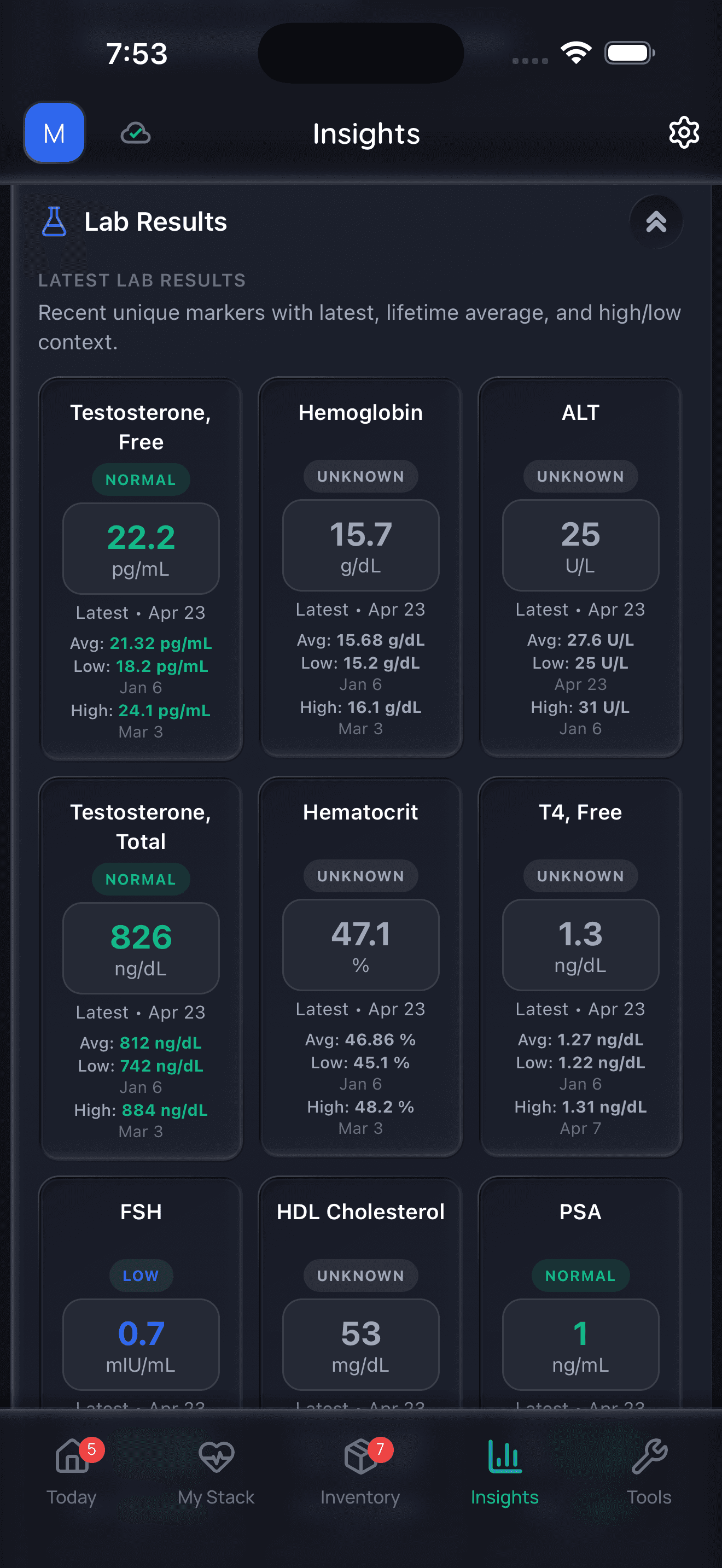
Doserly organizes data; it does not diagnose or interpret labs for you.
Side Effects & Safety
The Basics
Pantothenic acid has an excellent safety profile at nutritional doses. There is no established Upper Tolerable Intake Level (UL) because no toxicity has been documented from oral intake, even at doses many times higher than the AI [1][3].
At very high doses (10g/day or above), mild diarrhea and gastrointestinal disturbance have been reported [1][3]. These effects appear to be self-limiting and resolve when the dose is reduced.
Community reports add a few considerations not well-captured in clinical literature. Users taking mega-doses for acne (2-10g/day) report vivid dreams as a consistent side effect across multiple independent accounts. More concerning, multiple community reports describe hair loss or thinning during high-dose B5 use. The proposed mechanism involves competition between B5 and biotin (B7) at their shared intestinal transporter, potentially creating functional biotin insufficiency at very high B5 doses. This biotin-B5 competition has been documented in research, though the clinical threshold at which it becomes problematic in humans is not well defined.
One rare but serious adverse event in the literature involved a life-threatening eosinophilic pleuropericardial effusion in an elderly woman taking 300 mg/day of pantothenic acid combined with 10 mg/day of biotin for two months [3]. This is the only documented severe adverse event.
Pantethine, used at 600-1,200 mg/day for cholesterol management, is generally well tolerated. Reported side effects include occasional nausea and heartburn [3].
Topical dexpanthenol (up to 5% concentration) is considered safe for up to one month of use, though allergic contact dermatitis has been reported in some individuals [3].
The Science
Toxicity profile: The Food and Nutrition Board was unable to establish a UL for pantothenic acid due to the absence of documented toxicity in humans at high intakes [1][8]. Calcium D-pantothenate at doses of 10-20 g/day may produce mild diarrhea and GI distress; the mechanism is unknown [1][3]. Studies using 200-900 mg/day have not identified adverse effects [2].
Biotin competition: Large doses of pantothenic acid have the potential to compete with biotin for intestinal and cellular uptake by the human sodium-dependent multivitamin transporter (hSMVT) [3]. The Ki for this competition is approximately 14.4 mcM [2]. The clinical significance at various supplemental doses has not been systematically evaluated.
Pantethine safety: Doses up to 1,200 mg/day are generally well tolerated. Gastrointestinal side effects including nausea and heartburn have been reported [3]. Use of pantethine in combination with statins or nicotinic acid may produce additive effects on blood lipids and should be monitored by a healthcare provider [3].
Drug interactions: Pantothenic acid is not known to have clinically relevant interactions with medications [1]. Oral contraceptives containing estrogen and progestin may increase the requirement for pantothenic acid [3].
Knowing the possible side effects is the first step. Catching them early in your own experience is what keeps a supplement routine safe. Doserly lets you log any symptoms as they arise, tagging them with severity, timing relative to your dose, and whether they resolve on their own or persist.
The app's interaction checker cross-references everything in your stack, supplements and medications alike, flagging known interactions before they become a problem. It also monitors your total intake against established upper limits, alerting you if your combined sources of a nutrient are approaching thresholds where risk increases. Think of it as a safety net that works quietly in the background while you focus on the benefits.
Capture changes while they are still fresh.
Log symptoms, energy, sleep, mood, and other observations alongside protocol events so patterns do not live only in memory.
Trend view
Symptom timeline
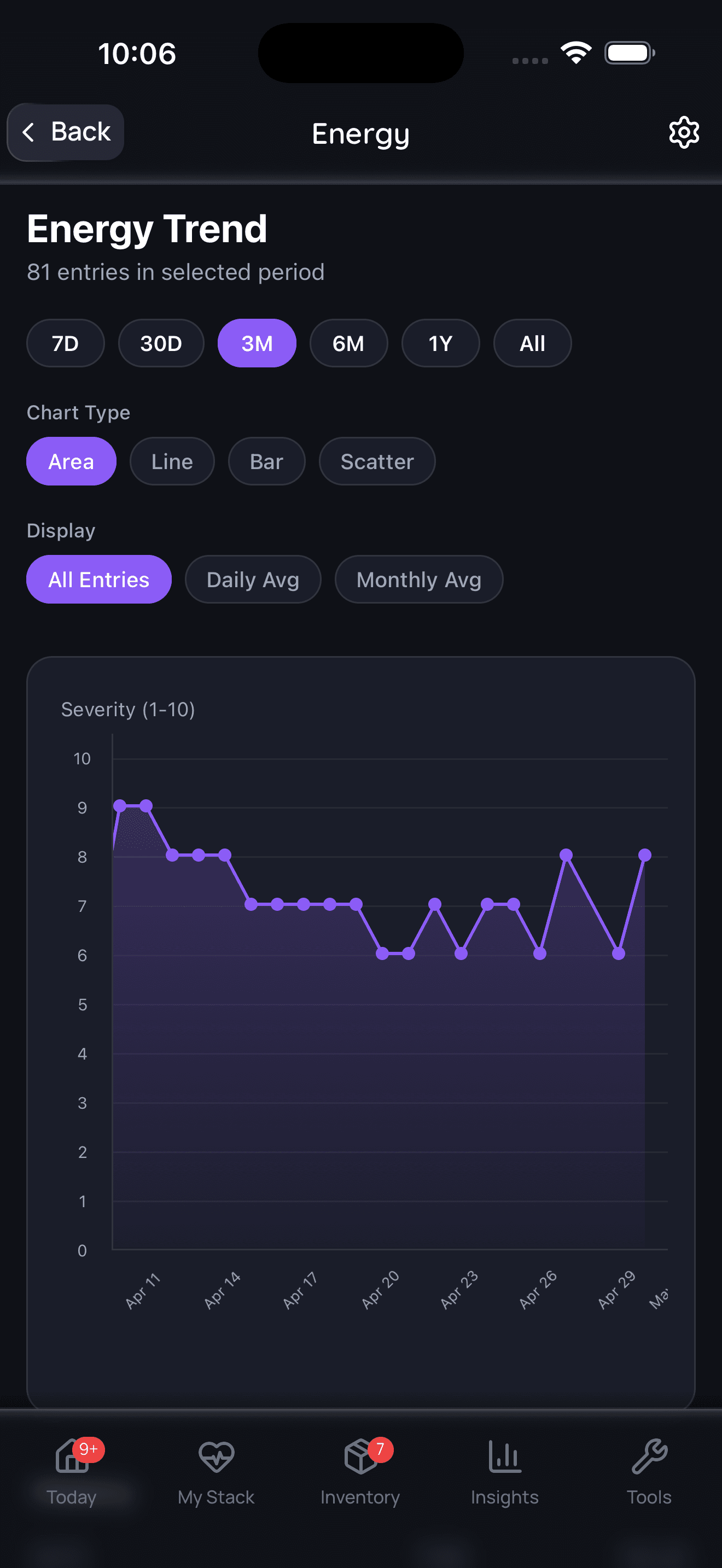
Symptom tracking is informational and should be interpreted with a qualified clinician.
Dosing & Usage Protocols
The Basics
Pantothenic acid dosing depends entirely on the purpose. For general nutritional adequacy, the Adequate Intake of 5 mg/day is easily obtained through a normal diet. Most multivitamin and B-complex supplements provide this amount or more.
For cholesterol management, pantethine (not plain pantothenic acid) is typically used at 600-900 mg/day. Clinical trials have commonly used a protocol of 600 mg/day for the first 8 weeks, followed by 900 mg/day for an additional 8 weeks, usually divided into two or three daily doses with meals [5][6].
For skin health, community-reported dosing ranges are significantly higher and less standardized. Most commonly cited ranges fall between 1,000-5,000 mg/day of pantothenic acid (as calcium pantothenate), with some individuals reporting use of up to 10g/day. The one clinical trial studying an acne formulation used 2,200 mg/day of pantothenic acid alongside other B vitamins and L-carnitine [2]. It is worth noting that these doses are 200-2,000 times the AI, and long-term safety data at these levels is limited.
The Science
Nutritional dosing:
The AI for pantothenic acid is 5 mg/day for adults 14+, 6 mg during pregnancy, and 7 mg during lactation [8]. These values are based on observed dietary intakes in healthy populations rather than dose-response studies. A typical mixed diet in the United States provides approximately 6 mg/day [1].
Pantethine dosing (lipid management):
Successful clinical trials have used 600 mg/day for 8 weeks followed by 900 mg/day for 8 weeks, typically divided into 2-3 doses taken with meals [5][6]. Increasing from 600 to 900 mg/day did not substantially increase the magnitude of lipid reduction in one trial [7]. Pantethine is not equivalent to pantothenic acid for this application.
No loading phase is established for any form of pantothenic acid supplementation.
What to Expect (Timeline)
Weeks 1-2: At standard nutritional doses, no noticeable effects are expected for individuals with adequate dietary intake. For high-dose acne use, some community members report seeing initial changes in skin oiliness, though many report no visible changes this early. Some users note the onset of vivid dreams.
Weeks 3-4: Community reports suggest initial improvements in acne may become visible around this timeframe for those responding to high-dose B5. The published acne study reported measurable lesion reduction. Pantethine users may begin to see initial changes in lipid markers, though clinical trials measured outcomes at 8 weeks minimum.
Weeks 5-8: For pantethine users, the first clinically meaningful timepoint. Lipid panel improvements (total cholesterol, LDL, triglycerides) have been documented at the 8-week mark in clinical trials [5][6]. Acne improvement, for those responding, is typically well-established by this point according to community reports.
Weeks 9-16: Full effects of pantethine on lipid metabolism are typically apparent. Some trials escalated the dose from 600 to 900 mg/day during this period. For acne use, sustained effects continue for responders, with some users describing near-complete clearing.
Long-term (months to years): Some community members report sustained acne benefit over many years of continuous use, with rapid return of acne upon discontinuation. Long-term pantethine use appears safe in available data, though monitoring by a healthcare provider is recommended for ongoing lipid management.
Interactions & Compatibility
Synergistic
- B-Complex: Pantothenic acid works in concert with other B vitamins. Taking a B-complex ensures balanced intake and may help prevent relative depletion of other B vitamins when supplementing with higher doses of B5.
- Biotin (Vitamin B7): Despite competing at the SMVT transporter, biotin and pantothenic acid are both essential and functionally complementary. Co-supplementation with biotin may be especially important when taking high-dose B5 to offset potential competitive absorption effects.
- Vitamin C: Studied alongside pantothenic acid for wound healing support, with some evidence of synergistic effects on fibroblast proliferation and tissue repair [3].
- Vitamin B2 (Riboflavin): Required as a cofactor (as FAD) for several CoA-dependent enzyme complexes.
- Vitamin B1 (Thiamine): Shares enzyme complexes in energy metabolism pathways. B vitamin deficiencies often occur in clusters.
Caution / Avoid
- Biotin (at high B5 doses): Large doses of pantothenic acid may compete with biotin for absorption via the shared SMVT transporter. Community reports of hair loss during high-dose B5 use may be related to this competition. Consider co-supplementation with biotin if taking B5 above 500 mg/day.
- Statins (HMG-CoA reductase inhibitors): Pantethine may produce additive effects on blood lipids when combined with statins. This combination should only be used under healthcare provider supervision [3].
- Nicotinic acid (Niacin): Pantethine combined with nicotinic acid may produce additive lipid-lowering effects. Monitor under medical supervision [3].
- Oral contraceptives: Estrogen-progestin contraceptives may increase the requirement for pantothenic acid [3].
- Ethanol: Chronic alcohol use can impair pantothenic acid storage and its conversion to CoA in the liver [2]. Individuals with high alcohol intake should ensure adequate B5 status.
How to Take / Administration Guide
Pantothenic acid as calcium pantothenate can be taken with or without food. There is no food requirement for absorption of standard forms. However, taking with meals may reduce the mild GI effects that some individuals experience at higher doses.
For pantethine, most clinical trials administered the supplement with meals, divided into 2-3 daily doses [5][6]. This approach aligns with common practice for lipid-lowering supplements.
When selecting forms, calcium pantothenate is the most common and affordable option for general supplementation. Pantethine should be specifically chosen when cholesterol management is the goal, as standard pantothenic acid does not demonstrate the same lipid effects. Dexpanthenol is primarily for topical use on skin.
For individuals taking high-dose pantothenic acid (above 500 mg/day), concurrent supplementation with a B-complex containing biotin is widely recommended in supplement communities to mitigate potential B5-biotin competition at the SMVT transporter.
No cycling protocols are established or recommended for pantothenic acid. The vitamin is not associated with tolerance, adaptation, or diminishing returns.
Choosing a Quality Product
Third-party certifications: Look for products carrying USP Verified, NSF Certified for Sport, or ConsumerLab approved seals. These certifications verify identity, potency, purity, and the absence of contaminants.
Active forms: Calcium D-pantothenate is the standard supplemental form. Some products use D-panthenol (pantothenol), which converts to pantothenic acid in the body. For cholesterol support, specifically seek pantethine, not pantothenic acid. Ensure the label specifies "D-pantothenate" or "D-calcium pantothenate" rather than DL-calcium pantothenate, as only the D-form is biologically active.
Red flags: Proprietary blends that obscure the actual amount of pantothenic acid, mega-dose products without clear labeling of the form used, and products marketed as "acne cures" making explicit therapeutic claims (these violate FDA regulations for dietary supplements).
Excipient/filler considerations: Pantothenic acid supplements are generally simple formulations with few concerning additives. Check for common allergens (gluten, soy, dairy) if relevant to your needs.
Supplement-specific quality markers: For pantethine products, look for standardized pantethine content (usually expressed as a percentage of the capsule fill). Some manufacturers use patented forms (such as Pantesin) that have been used in clinical studies.
Storage & Handling
Store pantothenic acid supplements at room temperature in a dry place away from direct light, heat, and moisture. Do not store in a bathroom where humidity fluctuates. No refrigeration is required.
Pantothenic acid is relatively stable in supplement form. Shelf life is typically 2-3 years when stored properly. Calcium pantothenate is more stable than free pantothenic acid, which is one reason it is preferred in supplement formulations.
Dexpanthenol topical products should follow product-specific storage instructions, typically room temperature storage away from light.
Lifestyle & Supporting Factors
Dietary sources: Because pantothenic acid is present in nearly all foods, maintaining a varied diet is the most reliable way to ensure adequate intake. The richest dietary sources include beef liver (8.3 mg per 3 oz serving, 166% DV), shiitake mushrooms (2.6 mg per half cup), sunflower seeds (2.4 mg per quarter cup), chicken breast (1.3 mg per 3 oz), and avocado (1.0 mg per half) [1].
Food processing effects: Be aware that food processing can destroy 20-80% of pantothenic acid content. Freezing and canning cause similar losses. Grain processing is particularly damaging, with losses up to 55% for wheat and 88% for maize [1][3]. Choosing whole grains over refined grains helps preserve B5 content.
Signs of deficiency: True deficiency is extremely rare. Historical and experimental deficiency symptoms include numbness and burning in the hands and feet (paresthesia), headache, fatigue, irritability, restlessness, disturbed sleep, and GI disturbances [1][3]. If you experience these symptoms, they are far more likely to be caused by something other than B5 deficiency.
Exercise and fat intake: Animal research suggests that both higher fat intake and increased physical activity may increase pantothenic acid utilization, suggesting that active individuals or those on high-fat diets may have modestly higher requirements [2].
Alcohol: Chronic alcohol use can impair pantothenic acid metabolism and reduce CoA synthesis in the liver. Individuals with high alcohol intake should pay attention to overall B vitamin status [2].
Regulatory Status & Standards
United States (FDA): Pantothenic acid is a recognized dietary supplement ingredient under DSHEA. Calcium pantothenate has GRAS (Generally Recognized as Safe) status. The FDA has established a Daily Value of 5 mg for food labeling purposes. Pantethine is available as a dietary supplement.
Canada (Health Canada): Pantothenic acid is authorized as a natural health product (NHP) ingredient. Available products carry Natural Product Numbers (NPNs).
European Union (EFSA): Pantothenic acid is authorized for use in food supplements. Calcium pantothenate, sodium pantothenate, and D-panthenol are authorized supplement forms. EFSA has not established maximum permitted levels for supplemental pantothenic acid.
Australia (TGA): Pantothenic acid is available in Listed Medicines for self-selected health conditions.
Active clinical trials: Research continues into pantethine for cardiovascular risk markers and pantothenic acid's potential role in neurodegeneration (Alzheimer's and Huntington's diseases).
Athlete & Sports Regulatory Status:
- WADA: Pantothenic acid (vitamin B5) does NOT appear on the WADA Prohibited List. It is permitted at all times, both in and out of competition.
- National Anti-Doping Agencies: No major NADO (USADA, UKAD, Sport Integrity Canada, Sport Integrity Australia, NADA Germany) has issued warnings or alerts specific to pantothenic acid.
- Professional Sports Leagues: Pantothenic acid is permitted by all major professional sports leagues (NFL, NBA, MLB, NHL, MLS, NCAA).
- NCAA: Pantothenic acid is not on the NCAA banned substance list. Athletic departments may provide B5 supplements without restriction. NSF Certified for Sport or Informed Sport certification is still recommended as best practice.
- Athlete Certification Programs: B5 products carrying Informed Sport, NSF Certified for Sport, Cologne List, or BSCG certifications are available.
- GlobalDRO: Athletes can verify pantothenic acid's permitted status on GlobalDRO.com across US, UK, Canada, Australia, Japan, Switzerland, and New Zealand.
Regulatory status and prohibited substance classifications change frequently. Athletes should always verify the current status of any supplement with their sport's governing body, their national anti-doping agency, and a qualified sports medicine professional before use. Third-party certification (Informed Sport, NSF Certified for Sport) reduces but does not eliminate the risk of contamination with prohibited substances.
Frequently Asked Questions
What is the difference between pantothenic acid and pantethine?
Pantothenic acid is the vitamin itself (B5), used by the body to build Coenzyme A. Pantethine is a chemically distinct derivative made from two molecules of pantetheine joined by a disulfide bond. While both ultimately contribute to CoA metabolism, pantethine has demonstrated lipid-lowering effects in clinical trials that standard pantothenic acid does not appear to share. For cholesterol management, specifically seek pantethine. For general B5 supplementation, calcium pantothenate is the standard form.
Can vitamin B5 help with acne?
Based on community reports and limited clinical data, some people report significant improvement in acne and oily skin when taking pantothenic acid at doses well above the nutritional AI (commonly 1,000-5,000 mg/day). The proposed mechanism involves increased CoA availability for fatty acid metabolism, potentially reducing sebum production. However, the only published RCT used a multi-ingredient formulation, making it impossible to isolate B5's contribution. Anyone considering high-dose B5 for skin should consult a healthcare professional and be aware of potential side effects, including possible hair thinning.
Does vitamin B5 cause hair loss?
Multiple community reports describe hair loss or thinning during high-dose B5 supplementation (typically 2g/day or above). The proposed mechanism involves competition between B5 and biotin (B7) at their shared intestinal transporter (SMVT), potentially reducing biotin absorption. This has not been formally studied at common supplemental doses. Co-supplementation with biotin is widely recommended in supplement communities when taking high-dose B5.
Is there any risk of taking too much B5?
No Tolerable Upper Intake Level has been established. At nutritional doses and typical supplemental doses, pantothenic acid appears very safe. At very high doses (10g/day or above), mild diarrhea and GI disturbance have been reported. Community reports of hair loss and vivid dreams at mega-doses (2-10g/day) suggest that extreme dosing is not entirely without consequence. One severe adverse event (eosinophilic pleuropericardial effusion) was reported in a patient taking 300 mg/day combined with biotin.
Should I take B5 with food?
Standard pantothenic acid supplements (calcium pantothenate) do not require food for absorption. Taking with food may reduce GI effects at higher doses. Pantethine was administered with meals in most clinical trials.
How much B5 do I need from food?
The Adequate Intake is 5 mg/day for adults. A typical Western diet provides 4-7 mg/day, meaning most people obtain sufficient B5 without supplementation. The richest dietary sources include organ meats, mushrooms, sunflower seeds, poultry, and avocado.
Does B5 interact with any medications?
Pantothenic acid itself has no known clinically relevant drug interactions. Pantethine may produce additive effects when combined with statins or niacin and should be used under medical supervision. Oral contraceptives may modestly increase B5 requirements.
Why do some B-complex supplements contain 500 mg or more of B5?
B-complex supplements often include amounts of B5 well above the AI. These higher doses are generally considered safe given the absence of documented toxicity. Whether doses above the AI provide additional benefit for individuals with adequate dietary intake is not supported by current evidence.
Can B5 help lower cholesterol?
Plain pantothenic acid (vitamin B5) has not been shown to lower cholesterol. Pantethine, a specific derivative, has demonstrated cholesterol-lowering effects in multiple clinical trials at doses of 600-900 mg/day. It's important to choose the correct form if lipid management is the goal.
What are the symptoms of B5 deficiency?
True B5 deficiency is extremely rare. Symptoms, documented in experimental deficiency studies and historical wartime observations, include numbness and burning in the hands and feet, headache, fatigue, irritability, insomnia, and GI disturbances. These symptoms overlap with many other conditions and are not specific to B5 deficiency.
Myth vs. Fact
Myth: Vitamin B5 is a proven acne treatment.
Fact: While community reports of high-dose B5 for acne are numerous and often enthusiastic, the clinical evidence is limited to one RCT using a multi-ingredient formulation that included L-carnitine and other B vitamins alongside pantothenic acid [2]. No published clinical trial has evaluated standalone pantothenic acid at the doses commonly used by community members (1-10g/day). The theory connecting B5 to reduced sebum production via increased CoA is plausible but unproven as a standalone intervention.
Myth: You can't take too much B5 because it's water-soluble.
Fact: While no UL has been established and pantothenic acid has very low acute toxicity, high-dose supplementation is not entirely benign. Community reports consistently describe hair thinning at mega-doses, likely related to competition with biotin at the SMVT transporter [2][3]. Vivid dreams and GI disturbance are also reported. One severe adverse event (life-threatening eosinophilic pleuropericardial effusion) was documented at a relatively modest dose of 300 mg/day combined with biotin [3].
Myth: Pantothenic acid and pantethine are interchangeable.
Fact: These are chemically distinct compounds with different pharmacological profiles. Pantethine (a dimeric form of pantetheine) has demonstrated cholesterol-lowering effects in clinical trials, while standard pantothenic acid has not [1][4][5]. Taking calcium pantothenate for cholesterol management is not supported by evidence. The two compounds should not be confused.
Myth: Most people are deficient in vitamin B5.
Fact: Pantothenic acid deficiency is among the rarest vitamin deficiencies. The vitamin is found in virtually all foods (hence its name from the Greek "pantos," meaning "everywhere"). A typical American diet provides about 6 mg/day, exceeding the 5 mg/day AI [1]. Deficiency has been documented only in cases of severe malnutrition, experimental restriction, or rare genetic conditions (PKAN) [1][3].
Myth: B5 supplements will boost your energy levels.
Fact: Pantothenic acid is essential for energy production as a precursor to CoA, which participates in the citric acid cycle and fatty acid oxidation. However, supplementation in non-deficient individuals has not been shown to increase energy beyond normal levels. One study of combined B5 and L-cysteine supplementation in recreationally active men found no effect on exercise performance, respiratory exchange ratios, or free CoA levels [2].
Myth: B5 shampoos strengthen hair and prevent graying.
Fact: Despite panthenol (a B5 derivative) being a common ingredient in hair care products, there is no credible clinical evidence that topical or oral B5 prevents graying or strengthens hair in humans. Mouse studies showed deficiency-induced fur graying reversed with B5, but human urinary B5 levels do not differ between people with and without graying hair or hair loss [2]. The cosmetic industry's use of panthenol in shampoos relates to its moisturizing properties on the hair shaft, not a vitamin deficiency mechanism.
Sources & References
Government / Institutional Sources
[1] National Institutes of Health, Office of Dietary Supplements. "Pantothenic Acid: Fact Sheet for Health Professionals." Updated March 26, 2021. https://ods.od.nih.gov/factsheets/PantothenicAcid-HealthProfessional/
[3] Linus Pauling Institute, Oregon State University. "Pantothenic Acid." Micronutrient Information Center. Updated April 2023. https://lpi.oregonstate.edu/mic/vitamins/pantothenic-acid
[8] Institute of Medicine, Food and Nutrition Board. "Dietary Reference Intakes: Thiamin, Riboflavin, Niacin, Vitamin B6, Folate, Vitamin B12, Pantothenic Acid, Biotin, and Choline." Washington, DC: National Academy Press; 1998:357-373.
Clinical Trials & RCTs
[4] McRae MP. "Treatment of hyperlipoproteinemia with pantethine: A review and analysis of efficacy and tolerability." Nutrition Research. 2005;25:319-33.
[5] Evans M, Rumberger JA, Azumano I, et al. "Pantethine, a derivative of vitamin B5, favorably alters total, LDL and non-HDL cholesterol in low to moderate cardiovascular risk subjects." Vasc Health Risk Manag. 2014;10:89-100. PubMed: 24600231.
[6] Rumberger JA, Napolitano J, Azumano I, et al. "Pantethine, a derivative of vitamin B(5) used as a nutritional supplement, favorably alters low-density lipoprotein cholesterol metabolism." Nutr Res. 2011;31(8):608-15. PubMed: 21925346.
[7] Chen YQ, Zhao SP, Zhao YH. "Efficacy and tolerability of coenzyme A vs pantethine for the treatment of patients with hyperlipidemia." J Clin Lipidol. 2015;9:692-7.
Observational Studies & Reviews
[2] Multiple sources compiled from Examine.com research breakdown citations, including: Chawla J, Kvarnberg D. Handb Clin Neurol 2014;120:891-914; Tarr JB, et al. Am J Clin Nutr 1981;34:1328-37; Kelly GS. Altern Med Rev 2011;16:263-74.
[9] Patassini S, Begley P, Xu J, et al. "Cerebral vitamin B5 (D-pantothenic acid) deficiency as a potentially-reversible cause of neurodegeneration and dementia in sporadic Alzheimer's disease." Biochem Biophys Res Commun. 2020;527(3):676-681.
[10] Patassini S, Begley P, Xu J, et al. "Cere bral deficiency of vitamin B5 (d-pantothenic acid) as a potential cause of metabolic perturbation and neurodegeneration in Huntington's disease." Metabolites. 2019;9(6):113.
[11] Hrubsa M, Siatka T, Nejmanova I, et al. "Biological properties of vitamins of the B-complex, part 1: vitamins B(1), B(2), B(3), and B(5)." Nutrients. 2022;14(3):484.
Related Supplement Guides
Same Category (Water-Soluble Vitamins)
- Vitamin C
- Vitamin B1 (Thiamine, Benfotiamine)
- Vitamin B2 (Riboflavin)
- Vitamin B3 (Niacin, Niacinamide)
- Vitamin B6
- Vitamin B7 (Biotin)
- Vitamin B9 (Folic Acid, Methylfolate)
- Vitamin B12
- B-Complex
Common Stacks / Pairings
- Biotin — Shares SMVT transporter; co-supplementation recommended at high B5 doses
- L-Carnitine — Studied alongside B5 for acne; may enhance CoA-related effects
- Vitamin C — Combined for wound healing support
Related Health Goal
- Zinc — Commonly used for skin health and acne
- Vitamin A — Retinoids are a primary acne treatment; B5 community often compares to Accutane
- Niacin (Vitamin B3) — Niacinamide used topically for oil control; pantethine may have additive lipid effects
- CoQ10 — Related to cellular energy metabolism via CoA pathway