
In this guide
What is Urolithin A?
Urolithin A is a compound that some gut microbes produce from ellagic acid and ellagitannins in foods such as pomegranate, walnuts and some berries. It is not an essential vitamin and has no RDA or recognized deficiency syndrome. Direct supplements usually contain a manufactured, purified form rather than the food precursors.
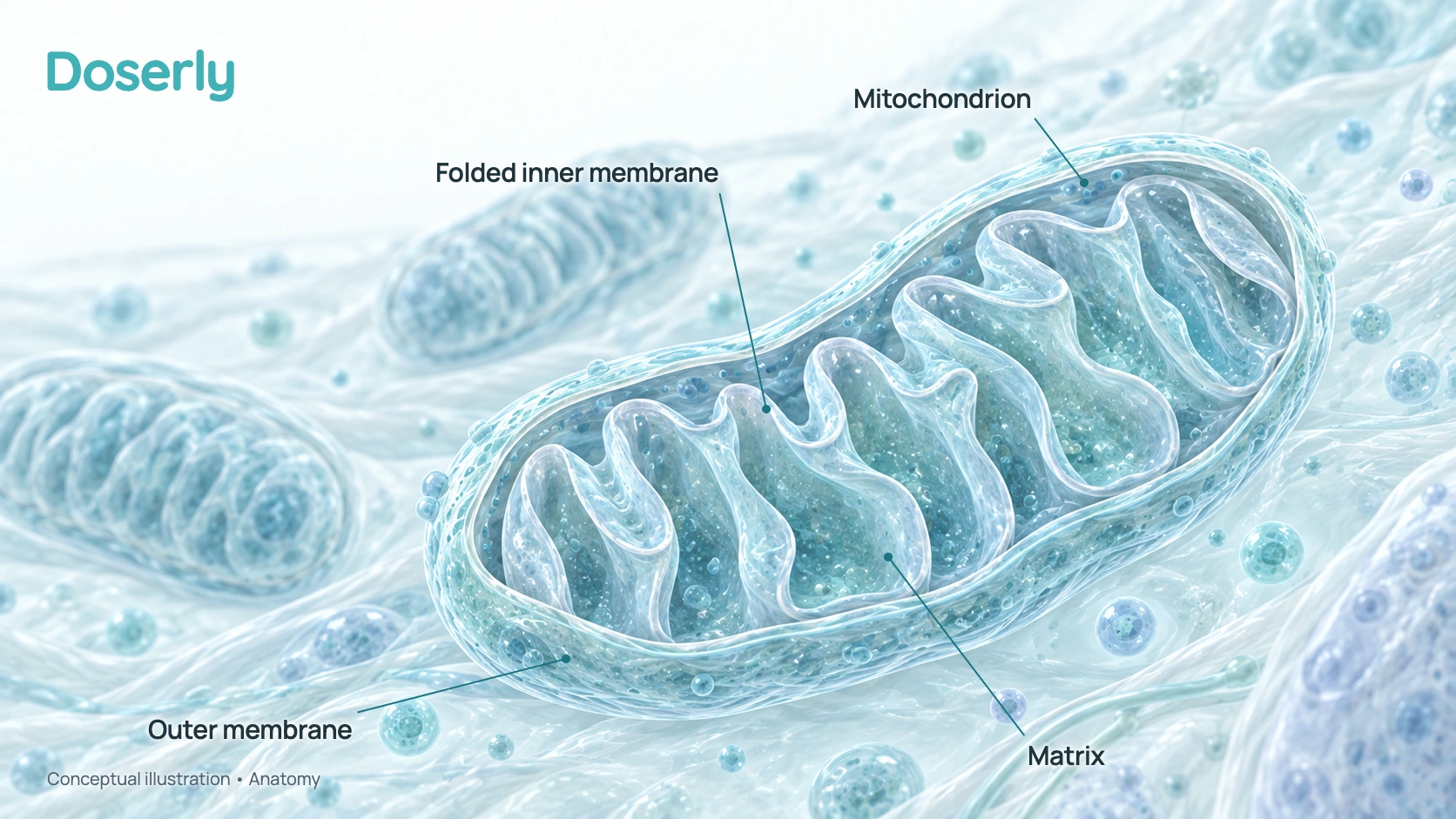
Interest centers on mitophagy, the selective recycling of damaged mitochondria. Human trials show that direct Urolithin A reaches circulation and changes some molecular, inflammatory and muscle measures. They do not show a broad reversal of aging. Two important performance trials missed their prespecified primary or co-primary endpoints even though selected secondary outcomes favored active product. [1]–[5]
Typical Urolithin A Protocols
| Study and population | Product | Amount each administration | Daily total | Frequency and duration | Main interpretation |
|---|---|---|---|---|---|
| Andreux 2019 · older sedentary adults | Purified Urolithin A | Not reported in abstract | 500 or 1,000 mg/day | Administration count not reported; 4 weeks | Bioavailability and molecular signatures; no clinical anti-aging outcome |
| ATLAS 2022 · overweight, untrained middle-aged adults | Urolithin A | Not reported in abstract | 500 or 1,000 mg/day | Administration count not reported; 4 months | Peak-power primary endpoint null; selected strength and biomarker signals |
| Liu 2022 · 66 adults aged 65–90 | Urolithin A | Not reported in abstract | 1,000 mg/day | Administration count not reported; 4 months | 6-minute-walk and maximal-ATP co-primary endpoints null; local endurance signals |
| Denk 2025 · 50 healthy middle-aged adults | Urolithin A | Not reported in abstract | 1,000 mg/day | Administration count not reported; 28 days | Immune-cell and metabolic changes; short, multiple exploratory outcomes |
These are records of different experiments, not a universal schedule. The publications commonly report a daily total, but a daily total does not prove once-daily administration. The amount at each administration therefore remains unreported unless the methods state it.
The 500 mg direct-exposure study answered another question: it compared circulating exposure after direct Urolithin A with precursor conversion after pomegranate juice. It did not test strength, endurance or longevity. [2]
- Exposure type
- Record direct Urolithin A separately from pomegranate, ellagic acid or an ellagitannin extract.
- Administration count
- Keep the reported daily total separate from an unreported per-administration amount.
- Endpoint
- Choose peak power, local endurance, walking, biomarker or immune phenotype before interpreting the result.
What is Urolithin A commonly used for?
Muscle strength and performance
ATLAS reported about a 12% placebo-adjusted hamstring-strength improvement at both 500 and 1,000 mg/day and selected endurance, walking and biomarker signals after four months. Peak power, the prespecified primary endpoint, did not improve significantly. This supports further muscle research, not a general performance claim. [3]
In adults aged 65–90, 1,000 mg/day improved endurance in two tested muscles and changed acylcarnitines, ceramides and CRP. Yet the co-primary 6-minute-walk and maximal-ATP outcomes did not differ significantly from placebo. Whole-body function and local endurance are not interchangeable. [4]
Mitochondrial health and mitophagy
Early studies found molecular signatures consistent with mitochondrial remodeling, while ATLAS reported transcriptomic and proteomic signals. These are mechanistic or biomarker findings. They do not show that every user has more energy or that a mitochondrial disease is treated. [1], [3]
Immune aging
The 28-day study found changes in CD8+ T-cell phenotype, fatty-acid oxidation and exploratory immune measures. It was short, tested many outcomes without multiple-comparison adjustment and had sponsor ties. It does not establish fewer infections, better vaccine response or durable immune rejuvenation. [5]
Healthy aging and longevity
No trial shows longer life, slower biological aging or prevention of age-related disease. A 2024 review of five studies and 250 healthy people found biological activity and selected muscle signals but no convincing broad physical-function, cardiovascular, anthropometric or maximal-ATP benefit. [6]
Endpoint hierarchy
Positive secondary signals sit beside null primary results
A secondary outcome cannot silently replace the trial's prespecified main question.
How do forms and labels differ?
Pomegranate and other ellagitannin foods provide precursors, not a standardized Urolithin A dose. Microbiome conversion differs across people: only about 40% produced meaningful Urolithin A after a pomegranate challenge in the cited study. Direct 500 mg supplementation created consistent exposure across producer types and over six-fold greater exposure than juice. That is an exposure result, not proof that direct dosing improves health. [2]
Labels may list Urolithin A alone, a branded raw material or a blend with NAD+ precursors and other mitochondrial ingredients. Combination products cannot inherit single-ingredient outcomes, and any response cannot be attributed to Urolithin A alone.
Exposure pathway
Pomegranate and direct Urolithin A are not equivalent
Reliable exposure still does not guarantee a clinical benefit.
How should Urolithin A be stored?
Keep the finished product sealed, dry and protected from heat and direct light. Follow its label for temperature, expiry and moisture protection. Record product switches because assay, purity, excipients and combination ingredients may change together.
What does the human evidence show?
| Question | Evidence | Finding | Boundary |
|---|---|---|---|
| Does direct dosing produce reliable exposure? | 100-person crossover | Yes, versus variable precursor conversion | Exposure, not efficacy |
| Does it improve peak power? | ATLAS, 4 months | Primary endpoint null | Selected secondary strength signals |
| Does it improve walking and maximal ATP production? | 66 older adults, 4 months | Both co-primary comparisons null | Local endurance and biomarkers changed |
| Does it alter immune-cell measures? | 50 adults, 28 days | Selected changes | Short, many outcomes, no clinical immune endpoint |
| Does it extend life? | No human lifespan trial | Not established | Mitophagy rationale is insufficient |
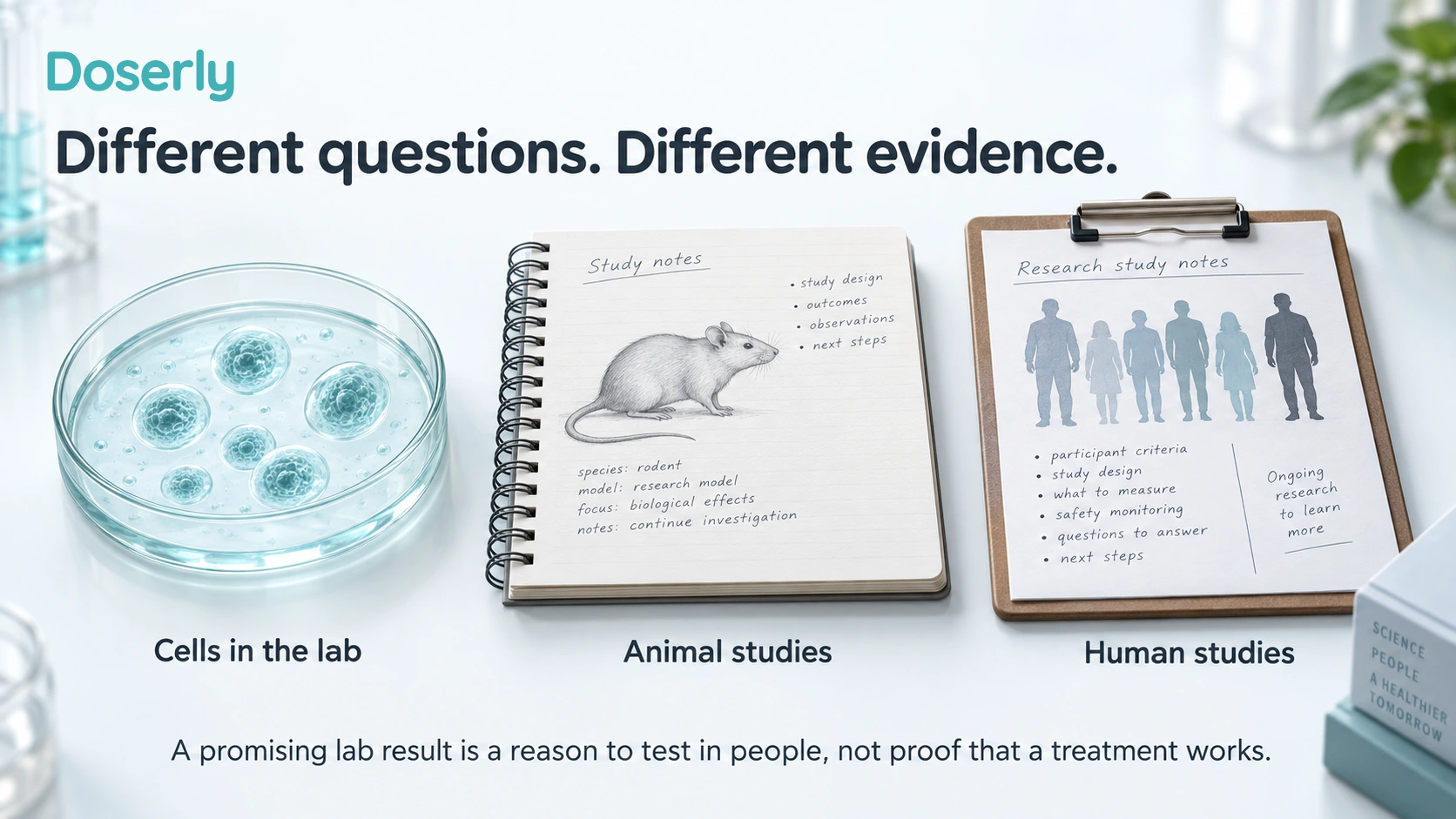
Most human studies come from a narrow, sponsor-linked research program. That does not invalidate them, but it raises the value of independent replication. The evidence is best described as biologically active with selected muscle signals and unresolved general functional benefit. [1]–[6]
What are the risks and interactions?
Trials lasting four weeks to four months generally reported good tolerability and no major adverse-event imbalance, but the samples are too small to define uncommon or long-term harms. Record GI symptoms, headache, fatigue, sleep change, rash or another new symptom.
Direct drug-interaction data are sparse. Pregnancy, breastfeeding, childhood use, kidney or liver disease, active cancer treatment, immune-modifying therapy and planned surgery warrant clinician review. Multi-ingredient longevity products add every co-ingredient’s risks and make attribution difficult.
What is the legal and regulatory status?
In the United States, FDA’s GRAS inventory records a “no questions” response for a specified Urolithin A food-ingredient notice. A GRAS response concerns defined conditions of food use; it is not drug approval and does not establish efficacy for muscle decline, immune aging or longevity. Urolithin A supplements remain subject to dietary-supplement requirements. [7], [8]
In Canada, product authorization should be verified on the specific label through an NPN or DIN-HM. Status in one jurisdiction or for one food ingredient specification should not be generalized to every product or disease claim.
What happens when you stop?
Urolithin A has no established withdrawal syndrome or evidence-based taper. Direct exposure and its conjugated metabolites will decline after stopping. Any perceived energy or performance change may move toward baseline, but progressive weakness, reduced walking capacity or unexplained fatigue deserves medical assessment.
What should you monitor?
Record direct Urolithin A amount, finished product, amount at each administration, daily total, timing, start date and co-ingredients. Choose one outcome in advance: a repeatable strength test, local endurance task, standardized walk or clinician-selected laboratory measure.
Keep exercise, illness and medication changes on the same timeline. Track GI symptoms, headache, fatigue, sleep and rash. A consumer log cannot measure mitophagy, interpret immune phenotypes or prove biological-age reversal.
What does community experience add?
Public reports may surface cost, capsule preference, exercise context, fatigue, headache and the common experience of feeling no obvious change. They cannot verify mitophagy, identify a microbiome producer type or establish a response rate. No systematic current community sample was assembled, so this guide reports no consensus brand or protocol.
How does Urolithin A compare with related options?
| Option | Practical distinction | Evidence boundary |
|---|---|---|
| Direct Urolithin A | Consistent exposure across producer types | Mixed functional outcomes |
| Pomegranate or ellagitannin foods | Require microbial conversion | Food benefits cannot be assigned to Urolithin A alone |
| Spermidine | Polyamine linked to general autophagy research | Different compound and human trials |
| PQQ or CoQ10 | Other mitochondrial-marketed compounds | Cannot inherit Urolithin A outcomes |
| Progressive exercise | Directly trains strength and endurance | Remains the functional reference intervention |
Common questions
Is Urolithin A found directly in pomegranate?
Pomegranate mainly supplies ellagitannin and ellagic-acid precursors. Gut microbes perform the conversion, and production varies substantially among people. [2]
Does Urolithin A improve muscle strength?
ATLAS reported a hamstring-strength signal, but its primary peak-power outcome was null. Another trial found local endurance signals with null co-primary walking and ATP outcomes. [3], [4]
Does it increase mitophagy in humans?
Human molecular signatures support a mitophagy-related rationale, but no routine test establishes a clinically useful mitophagy effect in an individual. [1], [3]
Is 1,000 mg better than 500 mg?
Not established. ATLAS tested both amounts without a clear universal dose-response, and other trials used 1,000 mg for different endpoints.
Is it proven safe long term?
No. Human trials up to four months are reassuring but cannot establish uncommon harms or safety over years.
Does it slow aging or extend lifespan?
No human trial shows either outcome. Mitochondrial and inflammatory biomarkers cannot substitute for lifespan or disease endpoints.
Glossary
Plain explanations of Urolithin A terms.
- Urolithin A
- A metabolite some gut microbes produce from ellagic-acid and ellagitannin precursors.
- Mitophagy
- Selective degradation and recycling of mitochondria by cellular quality-control systems.
- Ellagitannin
- A plant polyphenol precursor found in foods such as pomegranate and walnuts.
- Acylcarnitine
- A metabolite used in research as one window into fatty-acid and mitochondrial metabolism.
- Primary endpoint
- The outcome specified in advance as the main statistical test of a trial.
- Urolithin A producer
- A person whose gut microbiome converts food precursors into measurable Urolithin A.
How this guide was researched
Primary trial records, full reports where available, the current systematic review and official regulatory sources were checked. Daily totals were not rewritten as once-daily administrations. Null primary outcomes remain beside selected secondary signals.
Research record · checked October 9, 2026
Identity verification: PMID 32694802 is the first-in-human study; PMID 34117375 is the direct-versus-precursor exposure study; PMID 35584623 is ATLAS; PMID 35050355 is the older-adult trial; PMID 41174221 is the immune-aging trial; PMID 39002645 is the systematic review.
Correction review: the author correction linked to PMID 41174221 replaces an accidentally duplicated Figure 3e. No value from the superseded panel is used here, and the protocol and clinical interpretation are unchanged.
Protocol extraction: daily totals are shown as reported; administration counts remain unreported when not established in the checked source.
Endpoint hierarchy: null peak-power, 6-minute-walk and maximal-ATP primary results remain explicit.
Exposure boundary: direct Urolithin A and dietary precursors remain distinct.
Conflict context: several key trials involved Amazentis employees, advisers or funding.
Explore the sources
Primary human trials, current synthesis and official regulatory context.
Showing 8 sources
- 01
The mitophagy activator urolithin A is safe and induces a molecular signature of improved mitochondrial and cellular health in humans. ↗
First-in-human randomized study
Repeated-dose exposure and molecular signatures without a clinical anti-aging endpoint.
- 02
Direct supplementation with Urolithin A overcomes limitations of dietary exposure and gut microbiome variability in healthy adults to achieve consistent levels across the population. ↗
Randomized crossover exposure study
Direct 500 mg exposure compared with variable conversion after pomegranate juice.
- 03
Urolithin A improves muscle strength, exercise performance, and biomarkers of mitochondrial health in a randomized trial in middle-aged adults. ↗
Randomized controlled trial
Null peak-power primary endpoint with selected strength, function and biomarker signals.
- 04
Effect of Urolithin A Supplementation on Muscle Endurance and Mitochondrial Health in Older Adults: A Randomized Clinical Trial. ↗
Randomized clinical trial
Null walking and maximal-ATP co-primary outcomes with selected local-endurance and biomarker signals.
- 05
Effect of the mitophagy inducer urolithin A on age-related immune decline: a randomized, placebo-controlled trial. ↗
Randomized controlled trial
Short immune-cell study with numerous mechanistic and exploratory outcomes; a linked 2026 author correction replaced an accidentally duplicated Figure 3e panel.
- 06
Targeting aging with urolithin A in humans: A systematic review. ↗
Systematic review
Five studies, 250 participants and important limits on broad physical-function claims.
- 07
GRAS Notice Inventory — Urolithin A ↗
Official food-ingredient notice record
A defined food-use safety record, not drug approval or proof of efficacy.
- 08
Dietary Supplements ↗
Official regulatory overview
Explains dietary-supplement oversight and manufacturer responsibility.
No matching sources
Try a different term or show the full list.
Editorial note
This guide keeps exposure, mitochondrial mechanisms, biomarkers, local muscle measures, whole-body function and longevity outcomes separate.