
Saccharomyces boulardii: The Complete Supplement Guide
On this page
Quick Reference Card
Attribute
Common Name
- Detail
- Saccharomyces boulardii
Attribute
Other Names / Aliases
- Detail
- S. boulardii, Saccharomyces cerevisiae var. boulardii, probiotic yeast, Florastor strain family, CNCM I-745 in many studies
Attribute
Category
- Detail
- Probiotic yeast
Attribute
Primary Forms & Variants
- Detail
- Lyophilized capsules, sachets, yeast-plus-prebiotic formulas, single-strain gut-support products; many trials focus on CNCM I-745 style preparations
Attribute
Typical Dose Range
- Detail
- Common adult study ranges are 250 mg twice daily, 500 mg/day, 750 mg/day, or about 1 g/day depending on the indication
Attribute
RDA / AI / UL
- Detail
- No established RDA, AI, or UL. Probiotic yeasts are not essential nutrients.
Attribute
Common Delivery Forms
- Detail
- Capsule, sachet, powder stick, combination gut-support formula
Attribute
Best Taken With / Without Food
- Detail
- Often taken with meals or alongside an antibiotic course. Separate from antifungal drugs because it is a yeast.
Attribute
Key Cofactors
- Detail
- Good hydration, indication-specific timing, and in some IBS protocols fiber co-therapy
Attribute
Storage Notes
- Detail
- Many lyophilized products are shelf-stable when protected from heat and moisture. Follow label storage instructions.
Overview
The Basics
Saccharomyces boulardii is not a bacterial probiotic. It is a probiotic yeast. That difference matters because it behaves differently from the more familiar Lactobacillus or Bifidobacterium products. It is usually discussed for diarrhea-prone situations, especially antibiotic-associated diarrhea, travel-related gut disruption, and selected IBS-style complaints [1][2][3][4][5].
One reason people reach for it is practical. Because it is a yeast, standard antibacterial drugs do not wipe it out the way they wipe out bacterial probiotics. That makes it a popular add-on during antibiotic use, at least in otherwise stable adults [1][3][6].
The catch is that this supplement is neither universally effective nor universally low-risk. In healthy outpatient use, the evidence is reasonably encouraging. In critically ill, catheterized, or immunocompromised patients, the safety picture changes and can become much more serious [1][7].
The Science
Saccharomyces boulardii was originally described as a distinct probiotic yeast, though parts of the literature still refer to it as a variant of Saccharomyces cerevisiae. Modern clinical papers often keep the probiotic name because it helps distinguish the supplement strain from ordinary baker's yeast and from the broad Saccharomyces genus [1].
The adult trial and review literature gives the strongest support for prevention of antibiotic-associated diarrhea, with more mixed but still interesting findings for IBS-related quality of life, inflammatory signaling, and short-term microbiome support during antibiotic exposure [1][2][3][4][5][6]. The literature is less convincing if the question is framed as "Does this solve every gut problem?" It does not.
Chemical & Nutritional Identity
Property
Classification
- Detail
- Living yeast microorganism
Property
Taxonomy
- Detail
- Saccharomyces boulardii, often described within the S. cerevisiae family but treated clinically as a distinct probiotic yeast strain family
Property
Cell Type
- Detail
- Eukaryotic yeast, not a bacterium
Property
Molecular Formula
- Detail
- Not applicable as a living organism
Property
Molecular Weight
- Detail
- Not applicable as a living organism
Property
CAS Number
- Detail
- Not typically used in consumer probiotic guidance
Property
PubChem CID
- Detail
- Not applicable as a live yeast supplement
Property
Common Clinical Reference Strain
- Detail
- CNCM I-745 appears frequently in human studies
Property
Dosing Unit
- Detail
- Milligrams or CFU, depending on the product and the paper
Property
Key Distinction
- Detail
- Unaffected by antibacterial drugs, but sensitive to antifungal drugs
Saccharomyces boulardii is better understood as a living delivery system than as a nutrient. It does not have an RDA, a deficiency syndrome, or a single chemical identity the way magnesium or vitamin D does. What matters are strain lineage, viability, manufacturing quality, and fit with the clinical goal [1][6].
Mechanism of Action
The Basics
This yeast seems to help the gut in several ways at once. It can interfere with toxins and pathogen attachment, support intestinal barrier stability, and create a gut environment that is harder for some harmful organisms to dominate. In simple terms, it is less like pouring in a nutrient and more like adding a temporary defensive teammate to the gut ecosystem [1][6].
It also appears to affect inflammatory signaling. That matters because many GI complaints are not just about what is present in the gut, but how inflamed and reactive the gut lining becomes during stress, infection, antibiotics, or IBS-like flares [1][5].
The Science
Mechanistic work summarized in adult reviews describes luminal actions, trophic actions, and mucosal signaling effects. Reported mechanisms include toxin degradation, interference with pathogen adhesion, preservation of epithelial physiology, immune modulation, and support of short-chain-fatty-acid balance after antibiotic disruption [1].
The IBS-D cytokine trial strengthens the anti-inflammatory framing. Compared with placebo, S. boulardii plus ispaghula husk reduced IL-8 and TNF-alpha while improving IL-10-related signaling, alongside better quality-of-life outcomes [5]. That does not prove it is broadly anti-inflammatory in every setting, but it gives the mechanism section more than just theory.
Pathway
Saccharomyces boulardii follows a practical probiotic-yeast pathway:
- A viable yeast dose survives storage and gastric transit.
- The yeast passes through the gut without permanently colonizing it.
- During transit it can modulate toxin handling, inflammatory tone, and gut-environment conditions.
- During antibiotic exposure it may help limit dysbiosis-related symptom burden.
- Benefits, when they occur, usually fade after discontinuation because the yeast does not set up permanent residence [1][6].
This transient behavior is a major reason some community reports sound contradictory. People often feel better while taking it and worse again after stopping. That pattern does not necessarily mean the product failed. It often means the support was temporary rather than curative.
Absorption & Bioavailability
The Basics
For Saccharomyces boulardii, "bioavailability" does not mean bloodstream absorption. The real question is whether enough live yeast survives transit, stays viable through the GI tract, and reaches the gut in a useful state. A second question is whether the specific product on the shelf actually contains the viable dose printed on the label [1].
Lyophilized products tend to be more stable and portable than heat-sensitive products, but product quality still varies. That is one reason people sometimes report very different experiences with products that all look similar on paper [1].
The Science
Adult review data describe S. boulardii as a yeast probiotic that is resistant to antibacterial drugs, acid-tolerant enough for clinical use, and metabolically distinct from standard bacterial probiotics [1]. The product-quality section of that review also documented potency and labeling variability across commercial preparations, including products that did not match claimed viable counts [1].
The healthy-volunteer microbiota study supports the idea that the yeast can remain active enough to influence GI symptom scores and antibiotic-associated dysbiosis patterns during co-administration with amoxicillin-clavulanate [6].
Research & Clinical Evidence
The Basics
The strongest use case is still antibiotic-associated diarrhea prevention, but even there the evidence is mixed rather than perfect. Older trials and pooled reviews look meaningfully positive. Some later inpatient trials look neutral. That means the correct takeaway is not "always works" or "does not work." It is "can help, but the effect depends on who is taking it and why" [1][2][3].
The IBS story is similar. Some studies found better quality of life and better inflammatory markers, but not every symptom moved dramatically. This is more consistent with a modest gut-environment tool than with a miracle fix [4][5].
The Science
The 2010 adult review found a significant pooled benefit for prevention of antibiotic-associated diarrhea, with a relative risk of 0.47 in the meta-analysis [1]. A classic beta-lactam prophylaxis trial also found lower diarrhea rates with S. boulardii than placebo [3].
The counterweight is the later German inpatient RCT, which did not show clear prevention of antibiotic-associated diarrhea or C. difficile-associated diarrhea in hospitalized adults [2].
IBS evidence is also mixed in a useful way. One placebo-controlled multicenter trial found improved IBS-related quality of life without strong superiority on every bowel symptom [4]. Another randomized IBS-D trial found better cytokine profiles and better quality-of-life measures with S. boulardii plus fiber support [5].
The healthy-volunteer microbiota study adds a mechanistic bridge by showing reduced antibiotic-associated diarrhea scores and a microbiota-protective signal during co-use with antibiotics [6]. That makes the antibiotic-adjunct framing more coherent biologically, even if not every trial reaches the same efficacy endpoint.
Evidence & Effectiveness Matrix
Category
Gut Health
- Evidence Strength
- 8/10
- Reported Effectiveness
- 7/10
- Summary
- Strongest overall use case. Clinical and community data both center on bowel-pattern stabilization and gut recovery.
Category
Digestive Comfort
- Evidence Strength
- 7/10
- Reported Effectiveness
- 6/10
- Summary
- Many users report less churning and fewer loose stools, but bloating tolerance is inconsistent.
Category
IBS-D / Loose Stool Control
- Evidence Strength
- 7/10
- Reported Effectiveness
- 8/10
- Summary
- IBS and diarrhea-related quality-of-life data are encouraging, and community reports are often very positive here.
Category
Antibiotic-Associated Diarrhea Support
- Evidence Strength
- 8/10
- Reported Effectiveness
- 7/10
- Summary
- Best-supported indication, although later inpatient RCT data are less favorable than older pooled literature.
Category
Bloating / Gas
- Evidence Strength
- 4/10
- Reported Effectiveness
- 4/10
- Summary
- Highly polarized. Some users improve quickly, others worsen quickly.
Category
Inflammation
- Evidence Strength
- 6/10
- Reported Effectiveness
- Community data not yet collected
- Summary
- Cytokine and mucosal-signaling evidence is promising in IBS-D, but direct community language here is weak.
Category
Side Effect Burden
- Evidence Strength
- 6/10
- Reported Effectiveness
- 5/10
- Summary
- Usually acceptable in healthy adults, but rash, itching, cramps, and bloating appear often enough to matter.
Category
Treatment Adherence
- Evidence Strength
- 5/10
- Reported Effectiveness
- 6/10
- Summary
- Adherence improves when bowel benefit is obvious, but cost and early intolerance can stop the trial.
Categories scored: 8Categories with community data: 7Categories not scored (insufficient data): Muscle Growth, Fat Loss, Appetite & Satiety, Food Noise, Sleep Quality, Energy Levels, Focus & Mental Clarity, Memory & Cognition, Stress Tolerance, Motivation & Drive, Emotional Aliveness, Emotional Regulation, Libido, Sexual Function, Joint Health, Pain Management, Recovery & Healing, Physical Performance, Skin Health, Hair Health, Heart Health, Blood Pressure, Heart Rate & Palpitations, Hormonal Symptoms, Temperature Regulation, Fluid Retention, Body Image, Immune Function, Bone Health, Longevity & Neuroprotection, Cravings & Impulse Control, Social Connection, Withdrawal Symptoms, Daily Functioning
Benefits & Potential Effects
The Basics
The likeliest benefits are less diarrhea, more stable bowel patterns during antibiotic exposure, and better day-to-day function for some diarrhea-predominant IBS users. That does not mean every user will notice a dramatic change, but those are the outcomes most consistently discussed in both trials and community experience [1][3][4][5].
Another practical benefit is that the yeast does not get wiped out by antibiotics the way bacterial probiotics do. That makes it easier to use during an antibiotic course without complicated separation rules, aside from standard product instructions [1].
The Science
Clinical evidence supports the strongest benefit signal in antibiotic-associated diarrhea prevention, though the magnitude varies by setting [1][2][3]. IBS-related quality-of-life and inflammatory-signaling results are also directionally positive [4][5].
The microbiota study in healthy volunteers suggests that S. boulardii can soften some of the collateral gut disruption caused by amoxicillin-clavulanate [6]. That is not the same as saying it rebuilds the whole microbiome permanently, but it supports its role as a temporary buffer during disruption.
When you're taking multiple supplements, it's hard to know which one is doing the heavy lifting. The benefits described above may overlap with effects from other items in your stack, lifestyle changes, or seasonal variation. Doserly helps you untangle that by keeping everything in one place, with timestamps, doses, and outcomes logged together.
Over time, this builds something more valuable than any product review: your personal evidence record. You can see exactly when you started this supplement, what else was in your routine at the time, and how your tracked health markers responded. That clarity makes the difference between guessing and knowing, whether you're talking to a healthcare provider or simply deciding if it's worth reordering.
Capture changes while they are still fresh.
Log symptoms, energy, sleep, mood, and other observations alongside protocol events so patterns do not live only in memory.
Trend view
Symptom timeline
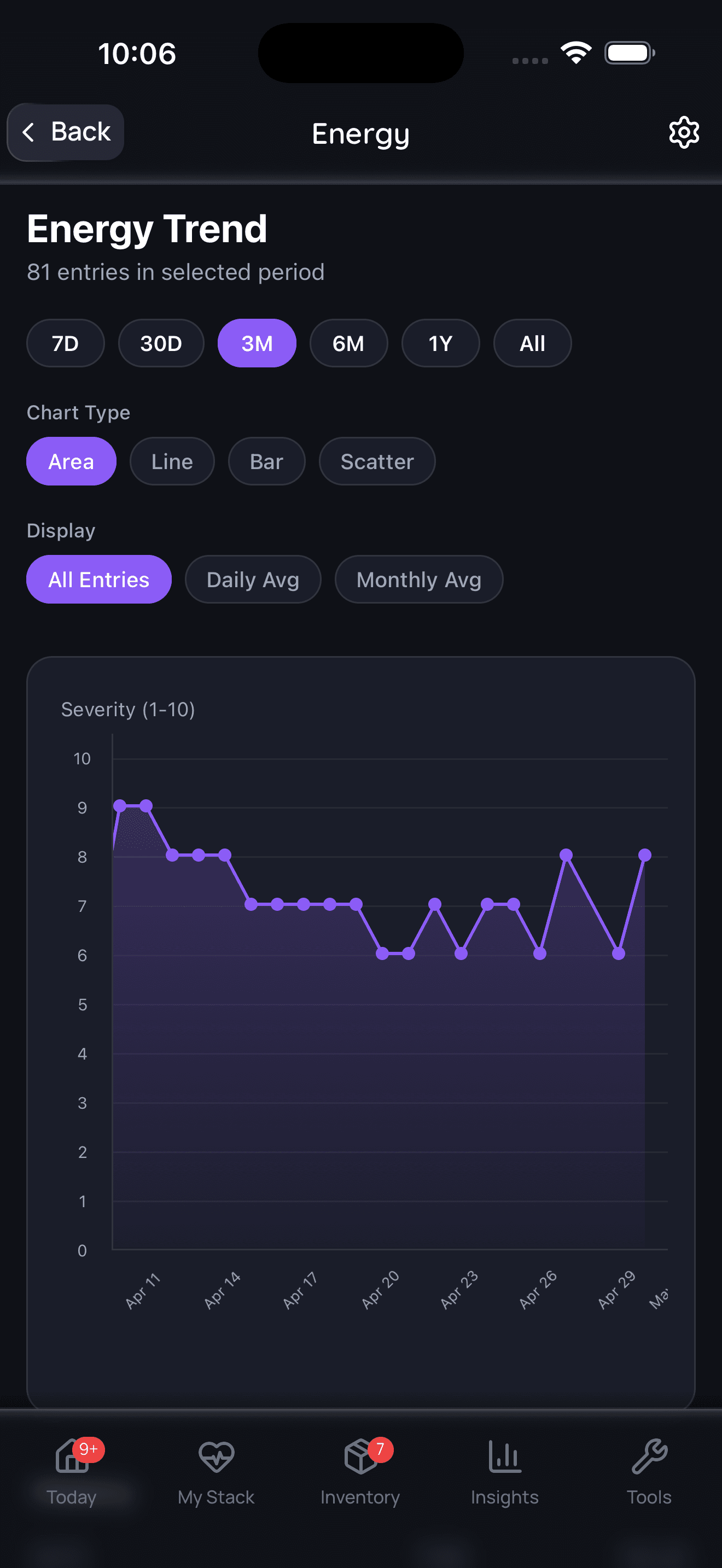
Symptom tracking is informational and should be interpreted with a qualified clinician.
Side Effects & Safety
The Basics
In healthy adults, side effects are usually GI-style rather than catastrophic. Gas, bloating, cramps, constipation, diarrhea shifts, itching, or rash show up most often in user reports. Many people tolerate it well. A meaningful minority do not [1][7].
The serious caution is not ordinary mild bloating. It is fungemia risk in vulnerable patients. If someone is critically ill, immunocompromised, catheterized, or has severe GI barrier problems, this is not a casual over-the-counter experiment [7].
The Science
The fungemia review is the main reason this guide cannot frame S. boulardii as broadly benign. Case data linked recent probiotic exposure to bloodstream infection and other fungal culture findings in medically fragile patients, with especially strong concern in ICU and compromised-GI settings [7].
Managing side effect risks across a multi-supplement stack can feel overwhelming, especially when interactions between supplements, medications, and foods add layers of complexity. Doserly brings all of that into a single safety view so nothing falls through the cracks.
Rather than researching every possible interaction yourself, the app checks your full stack automatically and flags supplement-drug and supplement-supplement interactions that warrant attention. If you do experience something unexpected, logging it takes seconds, and over time the app helps you spot patterns: whether symptoms correlate with specific doses, timing, or combinations. One place for the safety picture that matters most when your stack grows beyond a few bottles.
Connect protocol changes to labs and health markers.
Doserly can keep lab results, biomarkers, symptoms, and dose history close together so follow-up conversations have better context.
Insights
Labs and trends
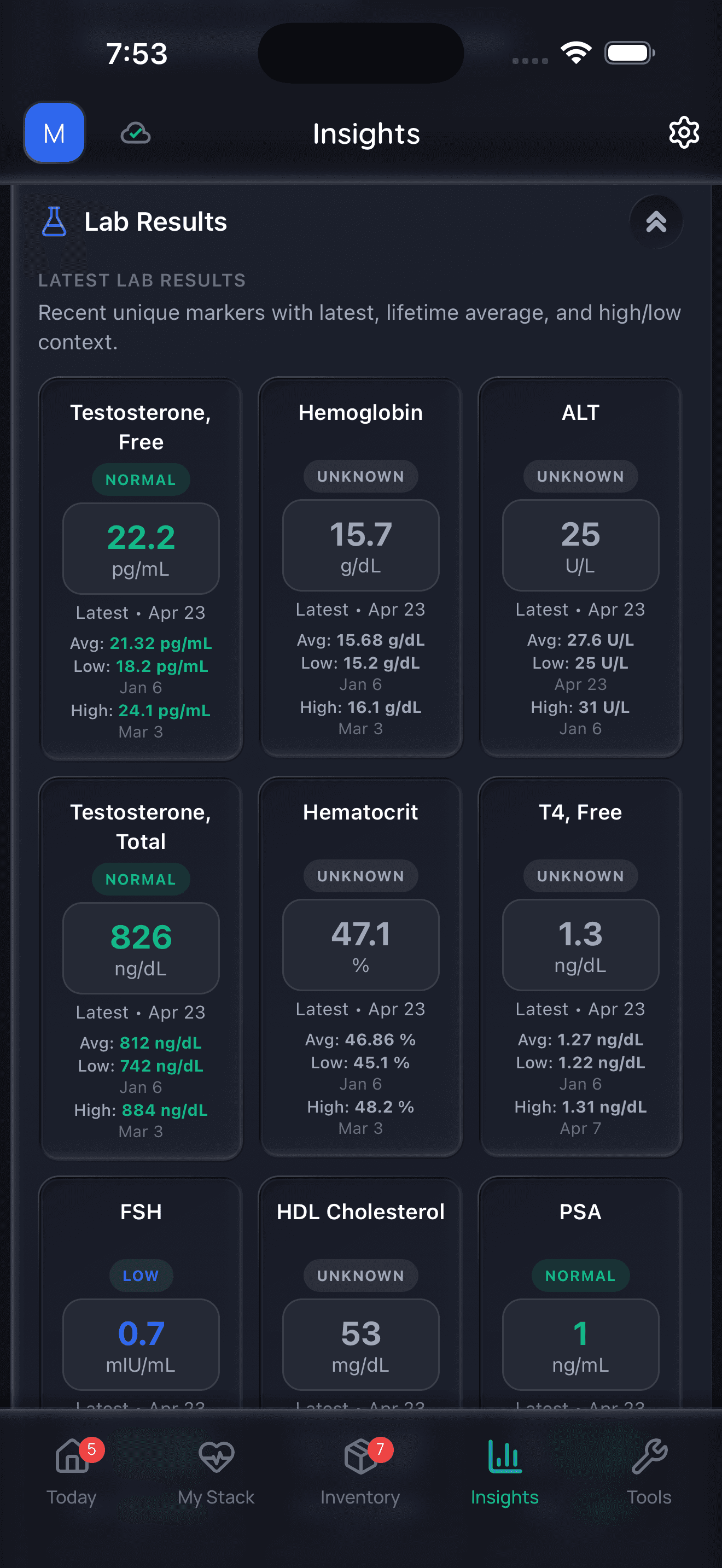
Doserly organizes data; it does not diagnose or interpret labs for you.
Dosing & Usage Protocols
The Basics
There is no single universal dose. Common adult regimens cluster around 250 mg twice daily, 500 mg/day, 750 mg/day, or 1 g/day, depending on whether the goal is antibiotic support, IBS-D support, or a shorter acute-style GI trial [1][2][3][4][5].
For antibiotics, the common practical pattern is to start early in the antibiotic course and continue through the course, sometimes for a few days afterward [2][3]. For IBS-style goals, protocols are often longer, such as 4 to 6 weeks [4][5].
The Science
The inpatient AAD RCT used 250 mg twice daily [2]. The older beta-lactam prevention study used 1 g/day [3]. The IBS-D cytokine trial used 750 mg/day for 6 weeks [5]. The IBS quality-of-life trial used a live-cell-count formulation for 4 weeks [4].
This matters because the literature does not point to one perfect dose. It points to goal-specific dose bands.
- Antibiotic-adjunct use: usually lower-to-moderate daily doses, started early.
- IBS-D or quality-of-life protocols: often longer duration and sometimes higher total daily dose.
- Immediate discontinuation makes sense if itching, rash, severe bloating, or marked cramping emerges quickly.
When your stack includes several supplements, each with its own dose, form, and timing requirements, the logistics alone can derail consistency. Doserly consolidates all of it into one protocol view, so every dose across your entire routine is accounted for without spreadsheets or guesswork.
The app also tracks cumulative intake for nutrients that appear in multiple products. If your multivitamin, standalone supplement, and fortified protein shake all contain the same nutrient, Doserly adds them up and shows you the total alongside recommended and upper limits. Managing a thoughtful supplement protocol shouldn't require a degree in nutrition science. The app handles the complexity so you can focus on staying consistent.
Turn symptom and safety notes into a clearer timeline.
Doserly helps you log doses, symptoms, and safety observations side by side so patterns are easier to discuss with a qualified clinician.
Pattern view
Logs and observations

Pattern visibility is informational and should be reviewed with a clinician.
What to Expect (Timeline)
Days 1-3: Sensitive users usually know early if the product is a poor fit. Bloating, cramps, constipation, itching, or GI worsening often appear quickly in negative reviews. Some positive responders also report early improvement in urgency or stool frequency.
Days 4-7: This is where community reports most often start describing meaningful bowel-pattern change, especially in post-antibiotic or IBS-D style use. Not everyone notices anything by this point.
Weeks 2-4: If the supplement is helping, this is when quality-of-life changes become more believable. Users often describe fewer panic-to-bathroom episodes, better travel confidence, or less gut churn.
Weeks 4-6: Longer IBS-style protocols may show their main payoff here. If there is still no benefit and tolerance is mediocre, many users stop.
After stopping: Because S. boulardii does not permanently colonize the gut, benefit may fade after discontinuation. Community reports frequently describe recurrence of symptoms after stopping.
Interactions & Compatibility
Synergistic
- Antibiotic courses: often used specifically during antibiotics because the yeast is not an antibacterial target [1][3].
- Fiber-based IBS protocols: one IBS-D trial paired S. boulardii with ispaghula husk [5].
- Broader gut-support stacks: often discussed alongside Lactobacillus Species, Bifidobacterium Species, Prebiotic Fibers, and Synbiotics when the goal is restoring bowel stability.
Caution / Avoid
- Antifungal drugs: can directly reduce or negate the yeast product.
- Central venous catheters, ICU care, or severe immunosuppression: strong avoid-unless-clinician-directed category because of fungemia risk [7].
- Severe GI barrier compromise or high-risk hospitalization: use only with explicit clinician oversight [7].
- Sensitive SIBO-like or histamine-reactive users: community reports suggest some people worsen rather than improve.
How to Take / Administration Guide
- Use the exact product instructions first, because potency units vary by brand.
- Many users take it with meals or alongside antibiotic doses for convenience.
- If the goal is antibiotic support, start early rather than waiting for diarrhea to become severe.
- If the goal is IBS-D support, a 4- to 6-week structured trial is more realistic than judging it after one dose.
- If strong bloating, itching, rash, or cramping appears quickly, stop and reassess rather than pushing through automatically.
Choosing a Quality Product
- Prefer products that clearly name the strain or clinically studied lineage instead of vague "probiotic yeast" labeling.
- Look for viable count at expiration, not only at manufacture.
- Lyophilized products are generally more practical for stability than heat-sensitive products [1].
- Athletes should favor third-party certified products because the main sports-risk problem is contamination, not the yeast ingredient itself [8][9].
- Avoid proprietary blends that hide the actual amount of S. boulardii.
Storage & Handling
- Keep the product dry and away from excess heat.
- Follow refrigeration guidance only when the label requires it.
- Do not assume all products are equally stable. Manufacturing and packaging quality matter.
- In hospitals or high-risk care settings, handling procedures matter because catheter contamination is one of the feared safety pathways in fungemia case literature [7].
Lifestyle & Supporting Factors
- Hydration matters, especially if the product is being used during diarrhea-prone periods.
- A gentler diet during antibiotic recovery often makes the supplement easier to assess.
- If IBS-D is the main goal, track stool frequency, urgency, cramping, and bloating instead of relying on vague impressions.
- Users with suspected SIBO or strong bloating sensitivity should start conservatively, because response is highly polarized in community reports.
- A supplement log is more useful than memory alone because benefit can be temporary and context-dependent.
Regulatory Status & Standards
In the United States, Saccharomyces boulardii supplements are sold under the dietary supplement framework rather than as approved drugs. The key regulatory issue is not that the yeast itself is widely treated as a banned compound. The bigger issue is that the supplement market is regulated after products reach shelves, not before [9].
For athletes, the WADA Prohibited List is updated annually, and USADA directs athletes to check medications through Global DRO. However, USADA explicitly excludes dietary supplements from Global DRO because labels can be inaccurate and products may contain undeclared banned substances [8][9]. Based on those materials, Saccharomyces boulardii itself is not specifically singled out as a prohibited ingredient in the pages reviewed here, but the finished supplement still carries contamination risk as a sports product. That is an inference from the guidance, not a direct ingredient listing.
USADA recommends third-party certified products, especially NSF Certified for Sport, when athletes choose to use supplements despite contamination risk [9]. For practical sports use, the question is less "Is the yeast prohibited?" and more "Can I trust this exact bottle?"
FAQ / Frequently Asked Questions
Is Saccharomyces boulardii the same as a bacterial probiotic?
No. It is a probiotic yeast, which is one reason it is often used during antibacterial treatment [1].
Can I take it with antibiotics?
That is one of the most common ways it is used. The yeast is not directly wiped out by antibacterial drugs, which is part of its appeal [1][3].
Does it permanently repopulate the gut?
Probably not. The evidence and community reports both support a more temporary, non-colonizing role [1][6].
Is it good for IBS?
Possibly, especially for selected IBS-D users, but results are mixed and usually partial rather than universal [4][5].
Can it make bloating worse?
Yes. Community data show both quick bloating relief and quick bloating worsening, especially in sensitive SIBO-style users.
Is it safe for immunocompromised people?
That is the wrong group for casual self-experimentation. Hospital infectious-disease literature supports clear caution or avoidance in high-risk patients [7].
What dose should most adults use?
Published regimens vary. Common adult trial ranges include 250 mg twice daily, 500 mg/day, 750 mg/day, or 1 g/day depending on the goal [1][2][3][4][5].
Should athletes worry about anti-doping?
Yes, but mostly because supplement labels and contamination risk are unreliable. USADA excludes supplements from Global DRO and recommends third-party certification [8][9].
Myth vs. Fact
Myth 1: If it is a yeast probiotic, it cannot cause problems.
Fact: It is usually well tolerated in healthy adults, but fungemia and related complications are documented in vulnerable hospitalized patients [1][7].
Myth 2: It always prevents antibiotic-associated diarrhea.
Fact: The evidence is favorable overall, but not every RCT confirmed benefit in every adult population [1][2][3].
Myth 3: More capsules always means better protection.
Fact: Clinical dosing varies by indication, and there is no universally proven "more is better" rule [1][2][3][5].
Myth 4: If symptoms return after stopping, the supplement failed.
Fact: The yeast is generally transient, so loss of benefit after discontinuation is plausible [1][6].
Myth 5: If the ingredient is not obviously banned, athletes do not need to worry.
Fact: USADA's concern is contamination and unreliable supplement labeling, not just the named ingredient [8][9].
Sources & References
- McFarland LV. Systematic review and meta-analysis of Saccharomyces boulardii in adult patients. World J Gastroenterol. 2010;16(18):2202-2222.
- Ehrhardt S, Guo N, Hinz R, et al. Saccharomyces boulardii to Prevent Antibiotic-Associated Diarrhea: A Randomized, Double-Masked, Placebo-Controlled Trial. Open Forum Infect Dis. 2016;3(1):ofw011.
- McFarland LV, Surawicz CM, Greenberg RN, et al. Prevention of beta-lactam-associated diarrhea by Saccharomyces boulardii compared with placebo. Am J Gastroenterol. 1995;90(3):439-448.
- Choi CH, Jo SY, Park HJ, Chang SK, Byeon JS, Myung SJ. A randomized, double-blind, placebo-controlled multicenter trial of Saccharomyces boulardii in irritable bowel syndrome: effect on quality of life. J Clin Gastroenterol. 2011;45(8):679-683.
- Abbas Z, Yakoob J, Jafri W, et al. Cytokine and clinical response to Saccharomyces boulardii therapy in diarrhea-dominant irritable bowel syndrome: a randomized trial. Eur J Gastroenterol Hepatol. 2014;26(6):630-639.
- Kabbani TA, Pallav K, Dowd SE, et al. Prospective randomized controlled study on the effects of Saccharomyces boulardii CNCM I-745 and amoxicillin-clavulanate or the combination on the gut microbiota of healthy volunteers. Gut Microbes. 2017;8(1):17-32.
- Rannikko J, Holmberg V, Karppelin M, et al. Fungemia and Other Fungal Infections Associated with Use of Saccharomyces boulardii Probiotic Supplements. Emerg Infect Dis. 2021;27(8):2090-2096.
- U.S. Anti-Doping Agency. World Anti-Doping Agency (WADA) Prohibited List guidance. Accessed March 23, 2026.
- U.S. Anti-Doping Agency. Supplement Connect guidance. Accessed March 23, 2026.
Related Supplement Guides
Same Category
Common Stacks / Pairings
Related Health Goal