
Postbiotics (Butyrate/SCFAs): The Complete Supplement Guide
On this page
Quick Reference Card
Attribute
Common Name
- Detail
- Postbiotics
Attribute
Other Names / Aliases
- Detail
- Butyrate support, short-chain fatty acid support, sodium butyrate, calcium/magnesium butyrate, tributyrin, heat-treated microbial preparations
Attribute
Category
- Detail
- Postbiotic / gut health / SCFA support supplement category
Attribute
Primary Forms & Variants
- Detail
- Purified butyrate salts, butyrate-containing triglyceride systems, heat-treated microbial preparations, and mixed formulas. Under the strict ISAPP definition, only inanimate microbial preparations with demonstrated benefit qualify as true postbiotics [1].
Attribute
Typical Dose Range
- Detail
- No universal range. Human studies use very different preparations and dose structures, so product-specific evidence matters more than any single category-wide number [1][3][4][5][6][7].
Attribute
RDA / AI / UL
- Detail
- No established RDA, AI, or UL identified in the current source set.
Attribute
Common Delivery Forms
- Detail
- Capsules, tablets, powders, specialty triglyceride softgels, and inactivated microbial preparations
Attribute
Best Taken With / Without Food
- Detail
- Product-dependent. Some trials and labels use meal-based administration, but no single timing rule fits every postbiotic preparation [3][6][7].
Attribute
Key Cofactors
- Detail
- Fiber intake, resistant starch, broader diet quality, and the surrounding gut microbiome context all influence how relevant a postbiotic product may be [1][2].
Attribute
Storage Notes
- Detail
- Most products are shelf-stable, but form-specific storage still matters. Keep sealed, dry, and away from excess heat.
Overview
The Basics
Postbiotics are one of the newer gut-health categories in supplements. The simplest way to think about them is this: probiotics are the live microbes, while postbiotics are the non-living microbial preparations or compounds people use in hopes of getting some of the same downstream benefits without depending on live bacterial survival.
That sounds simple, but the category is messy in real life. Some products use the word "postbiotic" for heat-treated bacterial preparations. Others use it for direct butyrate or short-chain fatty acid products. Those are related ideas, but they are not always the same thing. That definitional slippage is one of the biggest reasons the category gets oversold [1][2].
The practical reason people care is easier to understand. Postbiotics are usually discussed for gut barrier support, digestive comfort, inflammation-related gut symptoms, and sometimes broader metabolic or mood-adjacent benefits through the gut-brain axis. The current human evidence is promising enough to take seriously, but still too product-specific to treat the whole category as settled science [2][3][4][5][7].
The Science
The most important scientific anchor is the 2021 ISAPP consensus statement, which defines a postbiotic as a "preparation of inanimate microorganisms and/or their components that confers a health benefit on the host" [1]. That definition is narrower than common supplement-market use. ISAPP explicitly states that substantially purified metabolites, such as butyrate on its own, do not automatically qualify as postbiotics in the strict consensus sense unless they are part of a qualifying microbial preparation [1].
Clinical and translational literature, however, often discusses butyrate-centered interventions alongside broader postbiotic research because SCFAs are central functional outputs of microbial metabolism and are widely used in supplement practice [2][3][6][7]. This creates a category problem rather than a simple scientific error. The biology overlaps, but the terminology does not always line up cleanly across consensus documents, clinical reviews, and commercial products [1][2].
Chemical & Nutritional Identity
Property
Defining Feature
- Value
- A category of inanimate microbial preparations and related gut-active compounds rather than a single nutrient or molecule [1]
Property
Core Molecular Themes
- Value
- Short-chain fatty acids such as butyrate, microbial cell-wall components, peptides, enzymes, and other retained fermentation-related factors [1][2]
Property
Molecular Formula
- Value
- No single formula applies to the category as a whole
Property
Molecular Weight
- Value
- No single molecular weight applies to the category as a whole
Property
CAS Number
- Value
- Not applicable for the full category
Property
PubChem CID
- Value
- Not applicable for the full category, though individual compounds such as butyrate have their own identifiers
Property
Nutritional Classification
- Value
- Not an essential nutrient and not a recognized deficiency-correction supplement class
Property
Established Daily Values
- Value
- No established RDA, AI, or UL identified in the current source set
Property
Common Commercial Approaches
- Value
- Direct butyrate salts, buffered butyrate blends, tributyrin-like delivery systems, and inactivated microbial products marketed for gut support
Property
Identity Problem
- Value
- Many products marketed as postbiotics are functionally or legally different from consensus-defined postbiotic preparations [1][2]
The identity issue matters more here than it does for a vitamin or mineral. With magnesium, the question is often which salt form is best. With postbiotics, the first question is whether two products even belong in the same category in the first place. A direct butyrate capsule, a heat-treated microbial preparation, and a mixed gut-support formula may all get marketed under similar language while working through different pathways and carrying different evidence bases [1][2][6].
Mechanism of Action
The Basics
Most postbiotic claims revolve around three big ideas. First, some products may help nourish the gut lining. Second, some may help shift inflammation or immune signaling in a calmer direction. Third, some may influence digestion and symptoms through the gut-brain and gut-metabolism connections.
Butyrate is the easiest part of the category to picture. It is one of the short-chain fatty acids that gut bacteria naturally produce when they ferment fiber. Colon cells use it as a preferred fuel source, which is why butyrate gets discussed so often in gut-health conversations. Some direct butyrate products try to deliver that function without waiting for the microbiome to make it on its own [2][6][7].
For inactivated microbial postbiotics, the theory is a little different. The point is not to colonize the gut like a live probiotic. The point is to present non-living microbial components and retained metabolites that may still signal to the immune system, epithelial barrier, or microbiome environment in useful ways [1][2][4].
The Science
The ISAPP statement outlines multiple possible postbiotic mechanisms, including interaction through microbial cell-wall fragments, pili, retained metabolites, and other structural components that can signal at mucosal surfaces [1]. In butyrate-focused literature, the mechanistic emphasis shifts toward colonocyte fueling, gut-barrier maintenance, histone deacetylase inhibition, G-protein-coupled receptor signaling, and broader immune and inflammatory modulation [2][6][7].
Human and translational data support a mechanistic bridge between gut effects and systemic effects, but the strength of that bridge varies by preparation. Inactivated microbial preparations may primarily affect epithelial or immune signaling, whereas specialty butyrate delivery systems may aim to raise local or systemic SCFA exposure directly [4][6]. This is why category-level statements must stay specific: "postbiotics may work" is too vague to be useful, but "some postbiotic preparations may support barrier and inflammatory signaling" is defensible [1][2][6][7].
Pathway
Postbiotics follow at least two practical pathways, and mixing them up is where many claims start to drift.
- Direct SCFA delivery pathway. A butyrate-focused product is taken orally, survives formulation-specific digestion to some degree, reaches the lower gut or systemic circulation, and then influences colonocyte energy use, gut barrier function, or downstream inflammatory signaling [6][7].
- Inactivated microbe signaling pathway. A non-living microbial preparation reaches the gastrointestinal tract, where microbial structures and retained metabolites may interact with epithelial tissue, mucosal immunity, and microbiome dynamics without requiring live colonization [1][4].
The practical consequence is straightforward. A person can be "taking a postbiotic" while using a product that behaves more like a direct metabolite supplement, or one that behaves more like a non-living microbial immune or gut-barrier preparation. Those are overlapping, but not identical, ideas.
Absorption & Bioavailability
The Basics
Absorption is not a one-answer question for postbiotics. With a direct butyrate product, the big issue is whether the formulation gets enough active compound to the place it is supposed to work. With an inactivated microbial preparation, the key question is often not bloodstream absorption at all. It is whether the product keeps enough of its relevant structure intact to interact meaningfully with the gut.
That is why shoppers can see one brand talk about tributyrin, another about sodium or calcium butyrate, and another about heat-treated bacteria, all under similar gut-health language. The delivery problem changes depending on what the product really is [1][4][6].
The Science
The clearest direct PK signal in the current dossier comes from the 2023 crossover trial showing that butyrate- and hexanoate-enriched triglycerides increased postprandial circulating SCFA exposure in men with overweight or obesity [6]. That confirms at least some specialized oral delivery systems can alter systemic butyrate availability. Importantly, the acute biomarker changes did not automatically translate into immediate clinical benefit in the short trial setting [6].
For consensus-defined postbiotic preparations, classic serum PK may be less relevant than structural integrity and local mucosal interaction. ISAPP emphasizes that the microorganism, matrix, inactivation method, and final composition all matter [1]. The result is a category where "bioavailability" is partly a formulation problem and partly a biological-context problem.
Research & Clinical Evidence
Digestive Symptoms and Gut Comfort
The Basics
The cleanest real-world clinical signal for postbiotics is digestive support. This is where the category feels most believable and least promotional. Human data suggest that some postbiotic preparations may improve bowel regularity, stool form, bloating-related discomfort, or mild digestive symptom burden over time [4][5].
That still does not make the category universal. Some people feel better, some feel nothing, and some report feeling worse. The best reader-facing takeaway is that digestive benefits are plausible and sometimes meaningful, but they remain preparation-specific rather than guaranteed [2][4][5].
The Science
In a 2024 randomized, placebo-controlled crossover trial in young adults with chronic diarrhea, a specific postbiotic product improved stool consistency, defecation frequency, urgency, and several metabolite markers, including fecal butyrate [5]. In a separate 2024 randomized pilot study, heat-treated Bifidobacterium longum CECT 7347 in adults with mild to moderate digestive symptoms showed signals consistent with better digestive tolerance and a more favorable gut ecosystem profile [4].
Taken together, these studies provide genuine human support for digestive-comfort claims, but only at the level of specific preparations tested under trial conditions [4][5]. They do not prove that all products labeled "postbiotic" will do the same thing.
Metabolic and Inflammatory Support
The Basics
The next strongest area is broader metabolic or inflammatory support. This is where the category starts to get more interesting and also more fragile. Some butyrate-centered interventions have shown improvement in liver, inflammatory, or metabolic markers, but these are still small studies in specific populations [3][7].
That means the category can support measured optimism, not sweeping promises. It is reasonable to say that butyrate-centered postbiotic strategies may matter beyond the gut. It is not reasonable to treat that as settled evidence for general wellness users [2][3][7].
The Science
The 2024 NAFLD and metabolic syndrome trial reported improvements in several liver and cardiometabolic markers after supplementation with a butyrate-based formula [3]. A 2025 randomized controlled trial in active ulcerative colitis also reported improvement in disease activity, inflammatory markers, and some psychological outcomes with sodium butyrate compared with placebo [7].
These findings broaden the clinical picture, but they also deepen the need for caution. The products, populations, and endpoints differ substantially across studies [3][7]. Benefits seen in metabolic syndrome or ulcerative colitis should not be generalized into broad category claims for healthy users or all commercial postbiotic products.
Evidence & Effectiveness Matrix
Category
Gut Health
- Evidence Strength
- 6/10
- Reported Effectiveness
- 6/10
- Summary
- The best combined signal in the current dossier. Human trials and community discussion both support a plausible gut-support role, but results remain preparation-specific [4][5][7].
Category
Digestive Comfort
- Evidence Strength
- 6/10
- Reported Effectiveness
- 6/10
- Summary
- Improved stool consistency, regularity, or less bloating is the clearest practical benefit cluster, although tolerability is still mixed [4][5].
Category
Inflammation
- Evidence Strength
- 5/10
- Reported Effectiveness
- Not Scored
- Summary
- Human disease-specific trials suggest anti-inflammatory relevance, but community discussion is too indirect to justify a reliable reported-effectiveness score [3][7].
Category
Mood & Wellbeing
- Evidence Strength
- 4/10
- Reported Effectiveness
- 4/10
- Summary
- Gut-brain-axis interest is real, but community reports are mixed and the clinical signal is still secondary to GI or disease-specific outcomes [2][7].
Category
Nausea & GI Tolerance
- Evidence Strength
- 4/10
- Reported Effectiveness
- 4/10
- Summary
- Some users report improved tolerance, while others report worse diarrhea, odor, fatigue, or discomfort. The category is not universally easy to tolerate [5].
Category
Side Effect Burden
- Evidence Strength
- 4/10
- Reported Effectiveness
- 4/10
- Summary
- Major toxicity signals are not dominant in this dossier, but enough users describe unpleasant effects to keep the burden score conservative [2].
Category
Treatment Adherence
- Evidence Strength
- 4/10
- Reported Effectiveness
- 5/10
- Summary
- Adherence depends heavily on early tolerability and on whether the user understands the exact product class they are taking.
Categories not scored: All remaining biomarker categories lacked enough direct evidence or meaningful community discussion for a defensible score.
Benefits & Potential Effects
The Basics
The most realistic benefit profile for postbiotics is centered on the gut. Some people may notice easier digestion, more stable stool patterns, less bloating, or a calmer-feeling gut after several days to weeks. In a narrower set of cases, people may also notice broader changes that seem to track with improved gut function, such as more stable energy, less brain fog, or a better overall sense of wellbeing [2][4][5][7].
The limit is just as important as the benefit. This category is easy to romanticize because it sits at the intersection of microbiome science and supplement marketing. The current evidence is promising, but still too uneven to justify treating postbiotics as a broad fix for gut, mood, immune, and metabolic problems all at once [1][2].
The Science
The strongest human data in this dossier support digestive symptom improvement and selected disease-adjacent inflammatory or metabolic outcomes [3][4][5][7]. The chronic-diarrhea study and the healthy-adult heat-treated Bifidobacterium study both support practical GI benefits, while butyrate-centered metabolic and UC trials support the idea that postbiotic biology can extend beyond simple bowel-function claims [3][4][5][7].
The correct scientific framing is therefore conditional rather than maximal. Some postbiotic preparations may provide clinically relevant support in digestive, inflammatory, or metabolic settings, but the evidence does not justify treating all forms, salts, or products as interchangeable [1][2].
When you’re taking multiple supplements, it’s hard to know which one is doing the heavy lifting. The benefits described above may overlap with effects from other items in your stack, lifestyle changes, or seasonal variation. Doserly helps you untangle that by keeping everything in one place, with timestamps, doses, and outcomes logged together.
Over time, this builds something more valuable than any product review: your personal evidence record. You can see exactly when you started this supplement, what else was in your routine at the time, and how your tracked health markers responded. That clarity makes the difference between guessing and knowing, whether you're talking to a healthcare provider or simply deciding if it's worth reordering.
Connect protocol changes to labs and health markers.
Doserly can keep lab results, biomarkers, symptoms, and dose history close together so follow-up conversations have better context.
Insights
Labs and trends
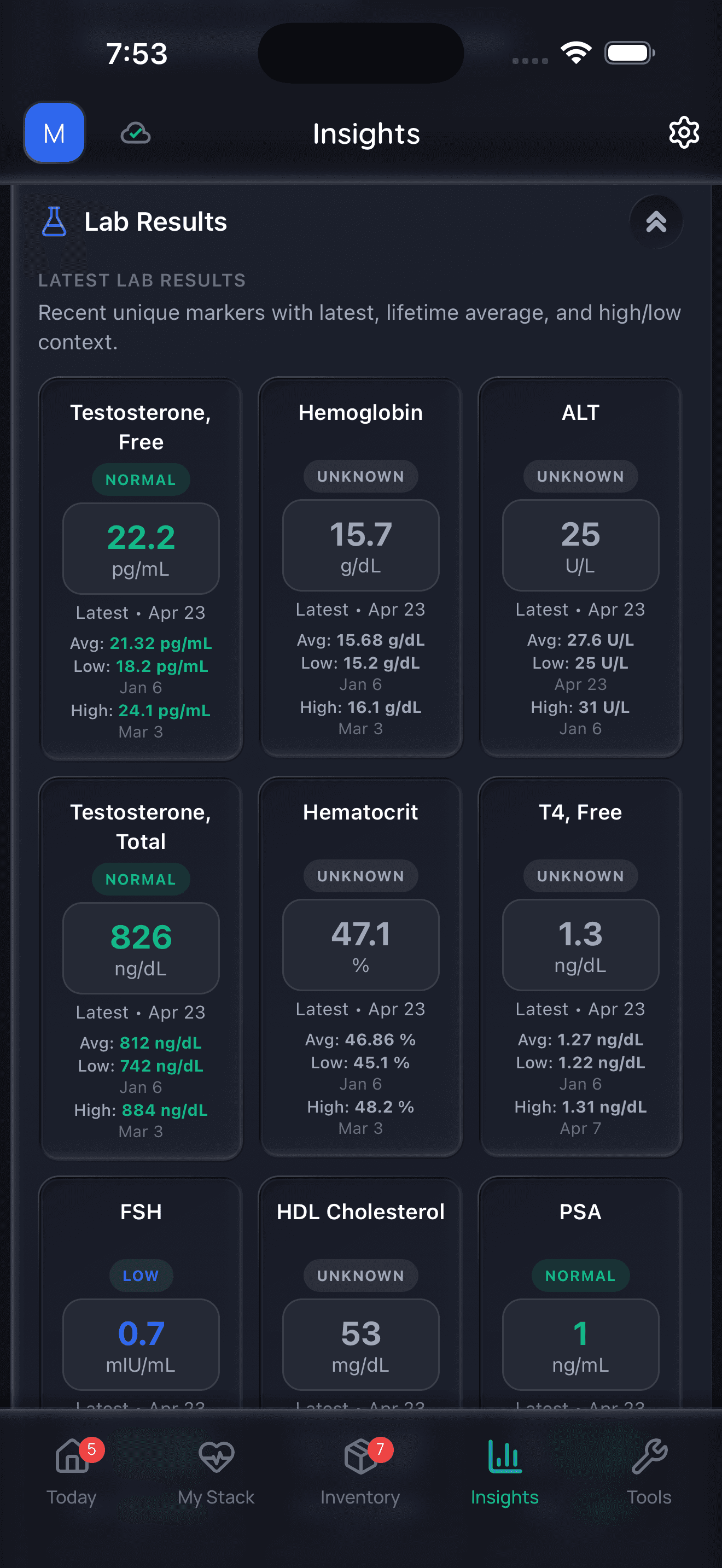
Doserly organizes data; it does not diagnose or interpret labs for you.
Side Effects & Safety
The Basics
Postbiotics are often marketed as the gentler, safer cousin of probiotics because they do not depend on live organisms. That may be directionally true in some contexts, but it does not mean they are side-effect free. In real-world use, some people report brain fog, worse sleep, fatigue, odor-related GI issues, diarrhea, or a general feeling that the product made their gut more unstable before it made anything better [2].
The other practical issue is category confusion. A buffered calcium-magnesium butyrate capsule is not the same thing as a heat-treated microbial preparation, and neither one is the same as a specialty triglyceride delivery system. Tolerability questions therefore need to be asked at the product level, not just at the "postbiotics" level [1][6].
The Science
The current dossier does not show a dominant serious-toxicity signal from modern human trials, but it also does not provide deep, long-term safety assurance across the full category [2][3][4][5][7]. ISAPP also makes an important point: safety is part of the definition of a postbiotic, which means a qualifying preparation should have a host-specific safety assessment for intended use [1].
Official regulatory sources reinforce a second kind of safety issue: product quality and labeling. FDA emphasizes that supplements are not pre-approved for safety or effectiveness before marketing, TGA listed medicines are sponsor-certified rather than individually pre-assessed, and Health Canada has already published a butyrate-product recall for a labeling problem [8][9][11]. That does not prove the category is dangerous, but it does show why product-quality scrutiny matters.
Managing side effect risks across a multi-supplement stack can feel overwhelming, especially when interactions between supplements, medications, and foods add layers of complexity. Doserly brings all of that into a single safety view so nothing falls through the cracks.
Rather than researching every possible interaction yourself, the app checks your full stack automatically and flags supplement-drug and supplement-supplement interactions that warrant attention. If you do experience something unexpected, logging it takes seconds, and over time the app helps you spot patterns: whether symptoms correlate with specific doses, timing, or combinations. One place for the safety picture that matters most when your stack grows beyond a few bottles.
Capture changes while they are still fresh.
Log symptoms, energy, sleep, mood, and other observations alongside protocol events so patterns do not live only in memory.
Trend view
Symptom timeline
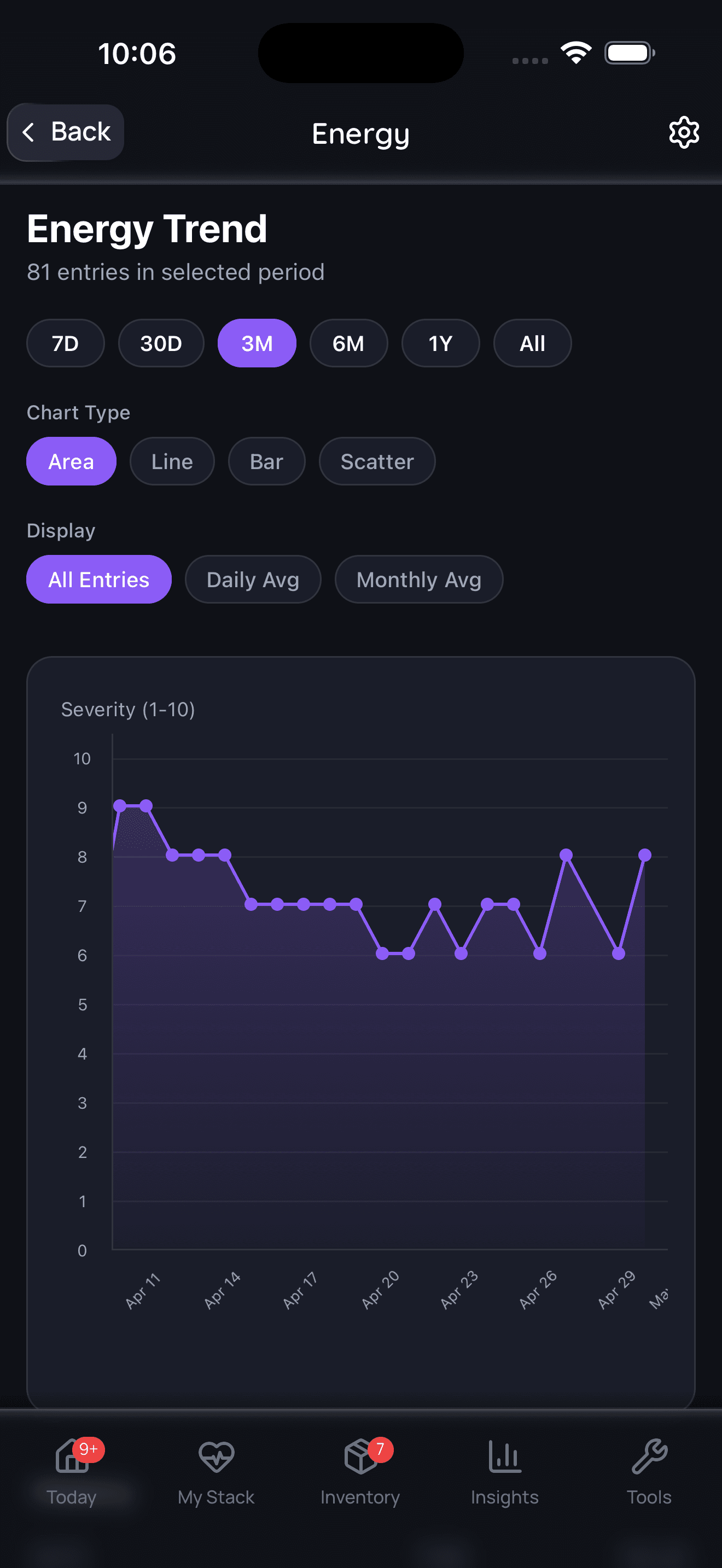
Symptom tracking is informational and should be interpreted with a qualified clinician.
Dosing & Usage Protocols
The Basics
There is no single "postbiotic dose." That is not a cop-out. It is the core reality of the category. Some studies use specific non-living microbial preparations. Others use direct butyrate salts. Others use specialty lipid-based delivery systems. Even when two labels both say "postbiotic," the dosing logic may be completely different [1][3][4][5][6][7].
The safest way to read dosing claims in this category is as product-specific, form-specific, and context-specific. A user should match the label and the evidence to the exact preparation instead of assuming that all butyrate or postbiotic products can be swapped milligram for milligram.
The Science
The dosing heterogeneity in the current dossier is substantial. The healthy-adult heat-treated Bifidobacterium study used a specific inactivated microbial preparation over 8 weeks [4]. The chronic-diarrhea trial studied a proprietary postbiotic product in crossover fashion [5]. The ulcerative colitis RCT used sodium butyrate as an adjunctive intervention in active disease [7]. The pharmacokinetic trial tested butyrate- and hexanoate-enriched triglycerides for systemic exposure rather than symptom relief [6]. These are not interchangeable interventions.
For readers, the scientific implication is simple: the most defensible dosing summary is a range of approaches rather than one number. Clinically and practically, postbiotic dosing remains a formulation-dependent decision that should be interpreted through the lens of the exact product studied, the population studied, and the goal being discussed [1][2][3][4][5][6][7].
When your stack includes several supplements, each with its own dose, form, and timing requirements, the logistics alone can derail consistency. Doserly consolidates all of it into one protocol view, so every dose across your entire routine is accounted for without spreadsheets or guesswork.
The app also tracks cumulative intake for nutrients that appear in multiple products. If your multivitamin, standalone supplement, and fortified protein shake all contain the same nutrient, Doserly adds them up and shows you the total alongside recommended and upper limits. Managing a thoughtful supplement protocol shouldn't require a degree in nutrition science. The app handles the complexity so you can focus on staying consistent.
Track injection timing, draw notes, and site rotation.
Doserly helps keep syringe-related notes, injection site history, reminders, and reconstitution context together for easier review.
Injection log
Site rotation
Injection logs support record-keeping; follow clinician instructions for administration.
What to Expect (Timeline)
For many users, postbiotics are not a dramatic first-dose supplement. If a response happens, the early period often looks like one of three patterns: mild digestive improvement, no obvious change, or temporary GI weirdness that makes the user question whether to continue. Community reports suggest that the first one to two weeks are the most variable period.
By weeks 3 to 8, the most plausible benefits are steadier bowel habits, less bloating, and a more predictable digestive baseline [4][5]. Disease-specific or metabolic endpoints, when they improve in trials, generally take longer and are less likely to be visible without formal tracking [3][7].
The most important expectation is not speed. It is interpretation. If the product helps, the benefit is usually specific and context-bound. If it does nothing, that does not automatically disprove the whole category. It may simply mean that the chosen form, goal, or underlying gut context was a mismatch.
Interactions & Compatibility
SYNERGISTIC
- Prebiotic Fibers: fiber fermentation is one of the main natural routes to endogenous SCFA production, so the conceptual overlap is strong.
- Resistant Starch: resistant starch is one of the best-known dietary strategies for increasing butyrate production in the colon.
- Lactobacillus: some gut-support protocols combine live probiotics with postbiotic or butyrate products to target both microbial ecology and barrier function.
- Bifidobacterium: frequently discussed together in gut-health protocols, especially when the goal is better fermentation balance and butyrate-supportive ecology.
- Synbiotics: the most intuitive stack for users who want both substrate support and microbial or postbiotic support.
- Saccharomyces boulardii: sometimes paired in GI-recovery or antibiotic-recovery routines where users want multiple gut-support angles.
CAUTION / AVOID
- Multi-supplement gut stacks: community discussion repeatedly shows that butyrate, probiotics, fibers, enzymes, and antimicrobials are often started together, which makes benefit attribution and tolerability troubleshooting difficult.
- Disease-specific self-treatment: human trials in ulcerative colitis or metabolic syndrome should not be treated as a reason to self-manage inflammatory or complex GI disease without clinician oversight [3][7].
- High-sensitivity GI states: users with SIBO-like, histamine-like, or highly reactive gut patterns sometimes report worsening rather than benefit.
- Mineral or sodium load from certain forms: some butyrate products bring along calcium, magnesium, or sodium that may matter in the context of the wider stack or diet.
How to Take / Administration Guide
The practical rule for postbiotics is to match the product form to the actual use case. A direct butyrate salt, a tributyrin-style product, and a heat-treated microbial preparation should not be treated as identical. Labels, trial design, and delivery system all matter here [1][4][6].
In real-world use, people often discuss taking butyrate-containing products with meals, or using slower ramps when GI sensitivity is high. That is reasonable context, but it still should not be mistaken for a universal rule. The available evidence supports product-specific interpretation much more strongly than blanket timing advice [3][6][7].
For readers trying to keep the category straight, the most useful administration question is not "when do I take a postbiotic?" It is "what exactly is this product delivering, and does that delivery model match the evidence I care about?" If the answer is unclear, the label is probably not doing enough work.
Choosing a Quality Product
This category demands more label scrutiny than most.
- Check whether the product is a true postbiotic or a direct butyrate product. Those are related but not identical categories under the current scientific definition [1].
- Look for exact ingredient identity. Heat-treated strain names, buffered butyrate salts, tributyrin, and vague "gut metabolite blend" language are not interchangeable.
- Avoid proprietary vagueness. If the label hides the preparation details, it is difficult to connect the product to any human trial.
- Look for quality and contamination controls. Third-party programs such as USP, NSF, Informed Sport, or NSF Certified for Sport matter most when the product is intended for long-term use or athlete populations [9][10].
- Treat broad systemic claims skeptically. "Supports gut, brain, immune, detox, metabolism, and mood" is common marketing language, but the evidence remains narrower than that.
- Product form matters. A product that aims for local colonic delivery and one that aims for systemic SCFA exposure should not be judged by the same assumptions.
Storage & Handling
Most postbiotic products are marketed as shelf-stable and easier to store than live probiotics. That is one of the main category advantages. In practice, cool, dry, sealed storage remains the safest default unless the label says otherwise [1][2].
Odor can matter more here than in many other supplement categories, especially with butyrate-containing products. A strong smell does not automatically mean the product is bad, but it is one more reason to keep containers tightly sealed and to pay attention to packaging quality.
For liquid or specialized formulas, storage quality matters because the whole category depends on preserving a specific preparation. If the product identity is the point, handling sloppiness defeats the purpose.
Lifestyle & Supporting Factors
Postbiotics make the most sense when they are placed back inside the broader gut-health picture.
- Fiber intake still matters, especially if the goal is to support the body’s own SCFA production [1][2].
- Resistant Starch and Prebiotic Fibers remain central if the real target is butyrate production through diet and fermentation.
- A chaotic diet, poor sleep, repeated antimicrobial use, or highly restricted eating may make any gut-targeted supplement harder to interpret.
- Tracking symptoms, food patterns, and stack changes matters more here than in simpler categories because response is so context-sensitive.
The most practical lifestyle lesson is that postbiotics are not a substitute for a healthy fermentation environment. They may complement it, bridge a gap, or offer a more direct route to a specific effect. They do not remove the importance of the underlying diet and gut context.
Regulatory Status & Standards
In the United States, products in this space generally fall under the dietary supplement framework described by FDA, which means they are regulated under DSHEA and are not pre-approved for safety or efficacy before marketing [8]. In Australia, comparable low-risk complementary products can be listed medicines under the TGA framework, where sponsors self-certify compliance and the products are not individually pre-assessed before supply [9].
In Canada, butyrate-containing natural health products are clearly in active circulation and subject to post-market action, as shown by Health Canada’s 2023 labeling recall for a calcium magnesium butyrate product with an NPN [11]. Across jurisdictions, the consistent theme is the same: post-market oversight exists, but label accuracy and sponsor quality still matter.
For athletes, the ingredient-level picture looks less like a clear ban and more like a contamination-risk problem. USADA’s current prohibited-list guidance points athletes to the annual WADA list and to Global DRO for ingredient checks, while also emphasizing that supplements are risky because of mislabeling and contamination [10]. No postbiotic- or butyrate-specific entry was identified in the general WADA/USADA guidance used for this dossier, but that should be read as "not specifically highlighted here," not as a blanket sport-safety guarantee [10].
The best athlete-facing standard remains conservative:
- verify current anti-doping status through current official resources,
- prefer third-party tested products such as Informed Sport or NSF Certified for Sport when available,
- and assume strict liability still applies if a contaminated supplement causes a positive test [10].
FAQ
Is butyrate the same thing as a postbiotic?
Not exactly. Based on current consensus terminology, purified butyrate on its own is not automatically the same thing as a true postbiotic preparation. In everyday supplement language, though, the terms are often blended together. That is why checking the exact product type matters [1].
Are postbiotics better than probiotics?
Based on available data, it is more accurate to say they work differently. Postbiotics may offer better stability and may be easier to formulate consistently, but the evidence remains product-specific and does not support a universal "better" claim [1][2].
What do postbiotics usually help with?
Based on current human evidence, the most plausible uses are digestive comfort, gut-health support, and selected inflammatory or metabolic contexts. The evidence is not strong enough to promise broad whole-body benefits from the category as a whole [3][4][5][7].
How long does it take to notice anything?
Available trials and community reports suggest that digestive changes, if they occur, are more likely to show up over days to weeks than instantly. Broader metabolic or disease-specific outcomes, when present, usually take longer and are harder to judge without structured tracking [3][4][5][7].
Are postbiotics easier to tolerate than probiotics?
Sometimes, but not always. Some users feel better on them than on probiotics, while others report fatigue, brain fog, odor issues, diarrhea, or general GI worsening. The exact form and the user’s gut context appear to matter a lot [2].
Is there a standard postbiotic dose?
No. Based on the current literature, dosing varies widely by product class and study design. The most useful interpretation comes from matching the exact preparation to the exact trial rather than looking for one category-wide number [1][3][4][5][6][7].
Can athletes use postbiotics safely?
Based on currently available official guidance, the ingredient category is not specifically highlighted in the general WADA/USADA material used for this dossier. That still does not remove supplement contamination risk. Athletes should verify the current status of the exact product and use third-party tested options when possible [10].
Should I use a postbiotic instead of eating more fiber?
That is too broad to answer directly. Based on available research, fiber and resistant starch still matter because they support the body’s own SCFA production. A postbiotic product may be an adjunct, but it does not replace the broader dietary context [1][2].
Do postbiotics work for leaky gut?
The research and community discussion suggest gut-barrier support is one of the main reasons people try this category, especially butyrate-centered products. Still, the evidence is not broad enough to treat "leaky gut" as a settled supplement indication, and the exact preparation matters [2][6][7].
Myth vs. Fact
Myth 1: All butyrate products are true postbiotics.
Fact: The current ISAPP definition is narrower. A true postbiotic is an inanimate microbial preparation with demonstrated benefit, not just any isolated microbial metabolite sold in a capsule [1].
Myth 2: Postbiotics are automatically safer than probiotics.
Fact: They may avoid some live-microbe concerns, but they can still be poorly tolerated, mislabeled, or marketed too aggressively. Safety still depends on the exact preparation and manufacturing quality [1][8][11].
Myth 3: If a study on one postbiotic product looks good, all postbiotic supplements should work the same way.
Fact: Human trials in this category test very different things, from heat-treated microbes to direct butyrate formulations. The evidence does not support broad interchangeability [3][4][5][6][7].
Myth 4: Postbiotics fix the gut immediately.
Fact: Digestive benefits, when they occur, usually look gradual and specific rather than instant and universal. Some users even report a rough adjustment period or no benefit at all [4][5].
Myth 5: If a postbiotic is not specifically named on a banned-substance list, it is safe for sport.
Fact: Athletes still face contamination and mislabeling risk from supplements. Ingredient absence from a general prohibited-list page is not the same thing as product clearance [10].
Sources & References
- Salminen S, Collado MC, Endo A, et al. The International Scientific Association of Probiotics and Prebiotics (ISAPP) consensus statement on the definition and scope of postbiotics. Nat Rev Gastroenterol Hepatol. 2021;18(9):649-667. https://pmc.ncbi.nlm.nih.gov/articles/PMC8387231/
- Mosca A, Abreu y Abreu AT, Gwee KA, et al. The clinical evidence for postbiotics as microbial therapeutics. Gut Microbes. 2022;14(1):2117508. https://pmc.ncbi.nlm.nih.gov/articles/PMC9542959/
- Fogacci F, Giovannini M, Di Micoli V, et al. Effect of supplementation of a butyrate-based formula in individuals with liver steatosis and metabolic syndrome: a randomized double-blind placebo-controlled clinical trial. Nutrients. 2024;16(15):2454. https://pmc.ncbi.nlm.nih.gov/articles/PMC11313833/
- Naghibi M, Pont-Beltran A, Lamelas A, et al. Effect of postbiotic Bifidobacterium longum CECT 7347 on gastrointestinal symptoms, serum biochemistry, and intestinal microbiota in healthy adults: a randomised, parallel, double-blind, placebo-controlled pilot study. Nutrients. 2024;16(22):3952. https://pmc.ncbi.nlm.nih.gov/articles/PMC11597252/
- Guo S, Ma T, Kwok LY, et al. Effects of postbiotics on chronic diarrhea in young adults: a randomized, double-blind, placebo-controlled crossover trial assessing clinical symptoms, gut microbiota, and metabolite profiles. Gut Microbes. 2024;16(1):2395092. https://pmc.ncbi.nlm.nih.gov/articles/PMC11352714/
- van Deuren T, Smolders L, Hartog A, et al. Butyrate and hexanoate-enriched triglycerides increase postprandial systemic butyrate and hexanoate in men with overweight/obesity: a double-blind placebo-controlled randomized crossover trial. Front Nutr. 2023;9:1066950. https://pmc.ncbi.nlm.nih.gov/articles/PMC9846253/
- Firoozi D, Masoumi SJ, Hosseini Asl SMK, et al. Effects of short chain fatty acid-butyrate supplementation on the disease severity, inflammation, and psychological factors in patients with active ulcerative colitis: a double-blind randomized controlled trial. J Nutr Metab. 2025;2025:3165876. https://pmc.ncbi.nlm.nih.gov/articles/PMC11930386/
- U.S. Food and Drug Administration. Dietary Supplements. https://www.fda.gov/food/dietary-supplements
- Therapeutic Goods Administration. Listed medicines overview. https://www.tga.gov.au/products/medicines/listed-medicines/overview/listed-medicines
- U.S. Anti-Doping Agency. World Anti-Doping Agency (WADA) Prohibited List; Supplement High Risk List: What are Regulatory Warnings? https://www.usada.org/athletes/substances/prohibited-list and https://www.usada.org/spirit-of-sport/regulatory-warnings/
- Health Canada. Calcium Magnesium Butyrate: labelled with incorrect dosage form. https://recalls-rappels.canada.ca/en/alert-recall/calcium-magnesium-butyrate-labelled-incorrect-dosage-form