
Synbiotics: The Complete Supplement Guide
On this page
Quick Reference Card
Attribute
Common Name
- Detail
- Synbiotics
Attribute
Other Names / Aliases
- Detail
- Synbiotic blends, probiotic-prebiotic combinations, probiotic plus substrate formulas, complementary biotics, synergistic biotics
Attribute
Category
- Detail
- Synbiotic supplement, live microorganism plus selectively utilized substrate
Attribute
Primary Forms & Variants
- Detail
- Complementary synbiotics, synergistic synbiotics, capsule formulas, powder blends, sachets, drink mixes, refrigerated or shelf-stable products
Attribute
Typical Dose Range
- Detail
- No single standard dose. Common study ranges include about 1 to 20 billion CFU per day for the probiotic component plus roughly 2 to 10 g/day of substrate, depending on the formulation and goal.
Attribute
RDA / AI / UL
- Detail
- No established RDA, AI, or UL. Synbiotics are product categories, not nutrients.
Attribute
Common Delivery Forms
- Detail
- Capsule, powder, sachet, drink mix, capsule plus fiber blend
Attribute
Best Taken With / Without Food
- Detail
- Many products are taken with meals for tolerance, but the best timing depends on the specific strain and substrate.
Attribute
Key Cofactors
- Detail
- Adequate fluid intake, gradual titration when tolerated, dietary fiber context, strain-substrate matching, consistency
Attribute
Storage Notes
- Detail
- Follow the label. Some products are shelf-stable, while others require refrigeration or strict moisture control.
Overview
The Basics
Synbiotics are supplements that combine a live microorganism with a substrate that the organism, or other helpful gut microbes, can selectively use. In plain English, the idea is to pair a microbe with its preferred food so the blend has a better chance of doing something useful in the gut [1].
Most people look at synbiotics for the same reasons they look at probiotics or prebiotic fiber on their own. They want better bowel regularity, less bloating, less post-meal discomfort, or support after antibiotics. The difference is that synbiotics try to package the organism and the fuel together instead of asking your diet to do all the work.
The Science
The ISAPP consensus definition frames synbiotics as a mixture of live microorganisms and selectively utilized substrates that confers a health benefit on the host [1]. That definition matters because it separates real synbiotic design from simple product marketing. A formula can contain a probiotic and a fiber, but still fail to qualify as a meaningful synbiotic if the pairing is not evidence-based.
Synbiotic formulations are therefore heterogeneous. Some are complementary, where the probiotic and substrate are both expected to help but do not necessarily interact directly. Others are synergistic, where the substrate is intended to support the included microorganism specifically [1]. That distinction is central to interpreting the literature and the label.
Chemical & Nutritional Identity
Property
Classification
- Detail
- Combination product, live microbial component plus selective substrate
Property
Core Live Microbes
- Detail
- Commonly Bifidobacterium, Lactobacillus, Bacillus, and sometimes Saccharomyces in broader gut-health products
Property
Common Substrates
- Detail
- Inulin, fructooligosaccharides, galactooligosaccharides, resistant starch, and other selectively utilized fibers
Property
Molecular Formula
- Detail
- No single formula. Synbiotics are mixtures, not one discrete chemical entity.
Property
Molecular Weight
- Detail
- Not applicable as a category
Property
CAS Number
- Detail
- Not applicable as a category
Property
PubChem CID
- Detail
- Not applicable as a category
Property
Labeling Note
- Detail
- Product labels should disclose the strain and the substrate. The exact ratio matters because the clinical effect is formulation dependent.
Property
Common Supplement Forms
- Detail
- Capsule, powder, sachet, drink mix, refrigerated blend, shelf-stable blend
Property
Bioavailability Note
- Detail
- The probiotic component is judged by viability through transit. The substrate is judged by whether it reaches gut microbes and is selectively fermented.
Mechanism of Action
The Basics
Synbiotics work by giving beneficial microbes a better chance to survive and by feeding the gut ecosystem they live in. If a probiotic is a seed, the substrate is the fertilizer. That does not guarantee a result, but it improves the odds that something useful happens in the gut.
The Science
Synbiotics can support intestinal function through several overlapping pathways. The microbial component may transiently colonize or at least pass through the gut in an active state, while the substrate is fermented into short-chain fatty acids and other metabolites that influence epithelial energy use, barrier function, and immune signaling [1][6][8].
This is why synbiotics are often discussed in relation to bifidogenic effects, stool regularity, and inflammatory tone. The substrate can also create cross-feeding opportunities for resident microbes, which means the benefit may extend beyond the included strain itself [1][6][8].
Pathway
Synbiotics usually follow a two-part pathway.
- The live microorganism survives packaging, storage, and GI transit.
- The substrate reaches the lower gut and is fermented by the intended organism or by resident microbes.
- Fermentation products such as acetate, propionate, and butyrate influence the gut environment.
- Barrier integrity, motility, and immune signaling can shift over time.
- Symptom changes may lag behind ingestion by days or weeks, depending on the product and the person.
The main practical point is that the product can be active even when the effect is subtle. Synbiotics are not usually "felt" the way a stimulant is felt. The relevant changes are often bowel pattern, bloating, post-meal comfort, or other slow-moving gut markers.
Absorption & Bioavailability
The Basics
Synbiotics are not absorbed like vitamins or minerals. The probiotic part needs to stay alive long enough to matter, while the substrate part needs to make it to the microbes that can ferment it. The useful question is not "how much enters the blood?" but "did the formulation survive the journey and produce a response?" [1][11]
The Science
The probiotic component is a viability problem, while the substrate component is a fermentation problem. Heat, moisture, long storage, and poor labeling can reduce viability. On the substrate side, chain length and fermentability matter, because faster fermentation can increase gas and bloating while slower fermentation may be easier to tolerate [1][11].
The key conflict is that delivery does not guarantee benefit. A synbiotic can survive transit and still be a poor fit for a sensitive gut. That is why the clinical trials and the real-world experience sometimes point in different directions.
Research & Clinical Evidence
The Basics
The best human evidence for synbiotics clusters around IBS, constipation, metabolic markers, inflammatory biomarkers, and selected immune outcomes. The signal is real, but it is not uniform. Different strains, different substrates, different doses, and different baseline gut states all change the result [2][3][4][5][6][7][8].
The Science
A randomized clinical trial in IBS found that higher-dose synbiotics improved gastrointestinal symptoms and fatigue more than placebo, which supports the idea that dose and formulation matter [3]. A broader systematic review and meta-analysis of probiotics, prebiotics, and synbiotics in IBS also found beneficial effects, but the pooled results were heterogeneous across interventions [2].
Constipation is another recurring use case. A chronic functional constipation pilot trial found benefit for biotic supplementation, and a hypothyroidism study reported improvements in constipation alongside more modest effects on appetite and anthropometrics [4][5]. These results are encouraging, but they do not justify treating synbiotics as a universal laxative.
Metabolic and immune outcomes are more mixed, but still interesting. In obese adults, synbiotic supplementation improved some body composition and lipid-related endpoints in a randomized trial [7]. In healthy adults, synbiotics influenced immune parameters and gut microbiota, including stool secretory IgA [6]. A broad meta-analysis of inflammatory biomarkers found adult improvements across several markers, especially in short-term studies [8].
The broader biotics literature also suggests possible effects on anxiety, depression, and sleep, but the class-level signal is mixed and synbiotic-specific certainty remains limited [9].
Evidence & Effectiveness Matrix
Category
Gut Health
- Evidence Strength
- 8/10
- Reported Effectiveness
- 7/10
- Summary
- Strongest overall use case. IBS and general gut-support data are the most convincing.
Category
Digestive Comfort
- Evidence Strength
- 8/10
- Reported Effectiveness
- 6/10
- Summary
- Bloating and post-meal comfort can improve, but response is uneven.
Category
Constipation / Regularity
- Evidence Strength
- 7/10
- Reported Effectiveness
- 7/10
- Summary
- One of the clearest practical goals, especially when the formula matches the user.
Category
Bloating / Gas
- Evidence Strength
- 5/10
- Reported Effectiveness
- 4/10
- Summary
- Can improve or worsen depending on fermentation load and baseline sensitivity.
Category
Inflammation
- Evidence Strength
- 7/10
- Reported Effectiveness
- 5/10
- Summary
- Biomarker data are encouraging, especially in adults, but not definitive.
Category
Metabolic Health
- Evidence Strength
- 6/10
- Reported Effectiveness
- 4/10
- Summary
- Modest support for body composition and lipids, not a stand-alone weight-loss strategy.
Category
Mood / Sleep
- Evidence Strength
- 4/10
- Reported Effectiveness
- 3/10
- Summary
- Possible but uncertain. The broader biotics literature is mixed.
Category
Side Effect Burden
- Evidence Strength
- 5/10
- Reported Effectiveness
- 4/10
- Summary
- The same fermentation that may help can also create symptoms.
Category
Treatment Adherence
- Evidence Strength
- 6/10
- Reported Effectiveness
- 5/10
- Summary
- Adherence depends on tolerance, price, and whether the user can identify a clear benefit.
Categories scored: 9Categories with community data: 9Categories not scored (insufficient data): Muscle Growth, Appetite & Satiety, Food Noise, Energy Levels, Focus & Mental Clarity, Memory & Cognition, Stress Tolerance, Motivation & Drive, Emotional Aliveness, Emotional Regulation, Libido, Sexual Function, Joint Health, Pain Management, Recovery & Healing, Physical Performance, Skin Health, Hair Health, Heart Health, Blood Pressure, Heart Rate & Palpitations, Hormonal Symptoms, Temperature Regulation, Fluid Retention, Body Image, Immune Function, Bone Health, Longevity & Neuroprotection, Cravings & Impulse Control, Social Connection, Withdrawal Symptoms, Daily Functioning, Other
Benefits & Potential Effects
The Basics
The most believable synbiotic benefits are better bowel regularity, less IBS-type discomfort in selected users, and a possible improvement in inflammatory tone. Some formulas also appear to help with appetite or body composition, but those effects are usually modest [2][3][4][5][7][8].
The Science
IBS trials suggest that synbiotics can reduce gastrointestinal symptom burden, especially when the dose and substrate match the clinical goal [2][3]. Constipation studies point in the same direction, with some benefit for stool frequency and comfort [4][5].
Metabolic outcomes are promising but not uniformly strong. In obesity trials, synbiotics have been associated with improvements in body weight, waist measures, body fat, LDL-C, and appetite-related markers, but the magnitude is not large enough to treat synbiotics like a weight-loss drug [7]. Inflammatory biomarker data are more encouraging in adults than in children, which suggests age and baseline physiology matter [8].
Connect protocol changes to labs and health markers.
Doserly can keep lab results, biomarkers, symptoms, and dose history close together so follow-up conversations have better context.
Insights
Labs and trends
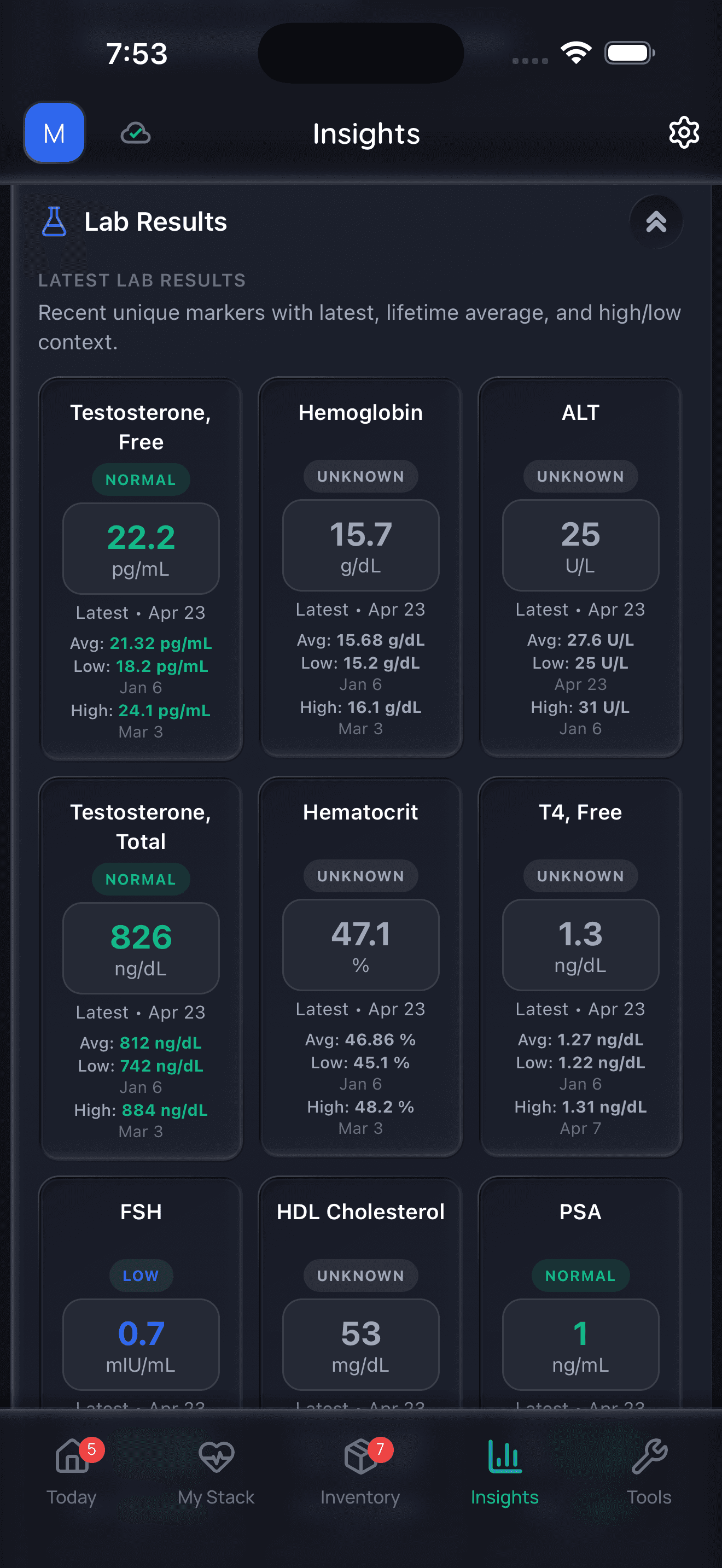
Doserly organizes data; it does not diagnose or interpret labs for you.
Reading about potential benefits gives you a framework. Seeing whether those benefits are showing up in your own body turns knowledge into confidence. Doserly lets you track the specific health markers relevant to this supplement, building a personal dataset that captures what's actually changing week over week.
The app's AI analytics go further than simple logging. By correlating your supplement intake with the biomarkers and health outcomes you're tracking, Doserly surfaces patterns you might miss on your own, like whether a dose adjustment three weeks ago corresponds to the improvement you're noticing now. When it's time to evaluate whether a supplement is earning its place in your stack, you have your own data to guide the decision.
Side Effects & Safety
The Basics
The main downsides are gas, bloating, stool changes, nausea, fatigue, headache, and symptom flare-ups in sensitive users. A synbiotic that helps one person can feel like too much fermentation for another [11][community].
The highest-risk groups are people who are immunocompromised, critically ill, have a central venous catheter, or have major gut barrier problems. For those users, probiotic safety needs to be discussed with a clinician rather than guessed from online reviews [11][13].
The Science
The NIH ODS fact sheet emphasizes that probiotics are generally safe for many healthy people, but adverse effects can include GI symptoms and rare systemic infection in medically fragile groups [11]. The TGA also notes that probiotic safety can be strain dependent and should not be generalized across the whole category [13].
Community reports mirror that caution. Some users describe improvement, while others describe nausea, migraines, fatigue, or a histamine-like flare after starting a synbiotic. Those reports are not proof of causation, but the pattern is strong enough to matter when a formula is marketed as gentle for everyone.
Capture changes while they are still fresh.
Log symptoms, energy, sleep, mood, and other observations alongside protocol events so patterns do not live only in memory.
Trend view
Symptom timeline
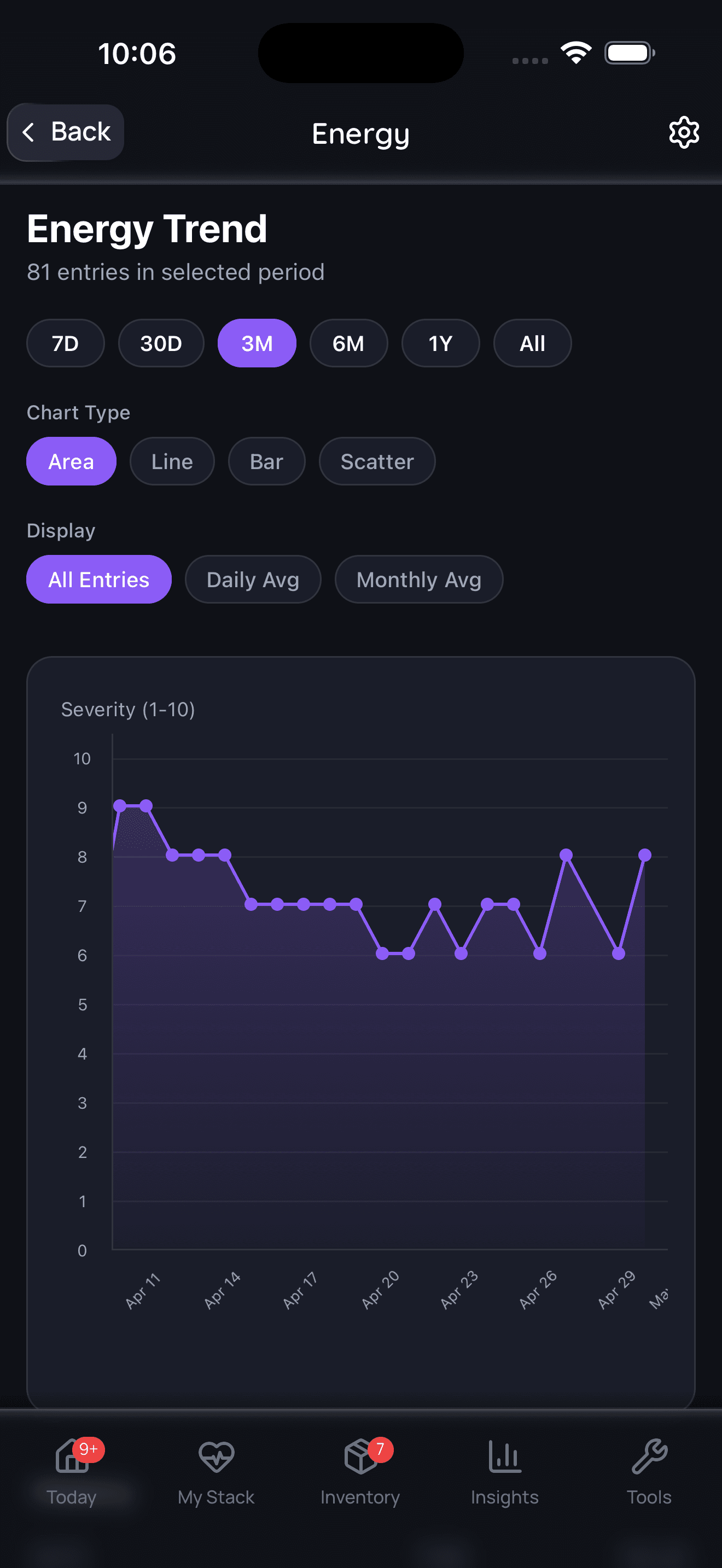
Symptom tracking is informational and should be interpreted with a qualified clinician.
Managing side effect risks across a multi-supplement stack can feel overwhelming, especially when interactions between supplements, medications, and foods add layers of complexity. Doserly brings all of that into a single safety view so nothing falls through the cracks.
Rather than researching every possible interaction yourself, the app checks your full stack automatically and flags supplement-drug and supplement-supplement interactions that warrant attention. If you do experience something unexpected, logging it takes seconds, and over time the app helps you spot patterns: whether symptoms correlate with specific doses, timing, or combinations. One place for the safety picture that matters most when your stack grows beyond a few bottles.
Dosing & Usage Protocols
The Basics
There is no universal synbiotic dose. Most commercial and clinical formulas report the probiotic component in CFU and the substrate in grams, which makes direct comparisons difficult. Common study ranges include about 1 to 20 billion CFU per day plus roughly 2 to 10 g/day of substrate, but the actual useful range depends on the product and the goal [2][3][4][7].
The Science
Dose dependence shows up repeatedly in the literature. In IBS, a higher-dose synbiotic outperformed placebo in symptom and fatigue outcomes, which means the amount and the formulation both matter [3]. That finding does not automatically transfer to every commercial product, but it does support the idea that low-dose or loosely designed formulas may underperform.
Because synbiotics can ferment quickly, many practitioners describe gradual titration and with-food use as common tolerability strategies. Those are practical patterns, not universal rules, and they should be balanced against the specific label and a clinician's advice [11].
Track injection timing, draw notes, and site rotation.
Doserly helps keep syringe-related notes, injection site history, reminders, and reconstitution context together for easier review.
Injection log
Site rotation
Injection logs support record-keeping; follow clinician instructions for administration.
Getting the dose right matters more than most people realize. Too little may be ineffective, too much wastes money or introduces risk, and inconsistency undermines both. Doserly tracks every dose you take, across every form, giving you a clear record of what you're actually consuming versus what you planned.
The app helps you compare RDA recommendations against therapeutic ranges discussed in the research, so you can see exactly where your intake falls. If you switch forms, say from a standard capsule to a liposomal liquid, Doserly adjusts your tracking to account for different bioavailabilities. Pair that with smart reminders that keep your timing consistent, and the precision that makes a real difference in outcomes becomes effortless.
What to Expect (Timeline)
The Basics
Some people notice bowel changes within a few days, especially if the formula is more fermentable than what they were taking before. More stable changes in stool regularity, bloating, or IBS symptoms usually take longer, often a few weeks rather than a few doses [2][3][4].
The Science
Synbiotic trials are not perfectly consistent in timing, but the pattern is familiar. Early GI effects can show up fast, while metabolic or inflammatory outcomes tend to take longer and may require repeated dosing over several weeks [6][7][8][9].
If the product is going to help, the signal often appears first in bowel pattern or post-meal comfort. If the product is going to irritate, the warning signs usually appear there too. That is why tolerability tracking matters as much as outcome tracking.
Interactions & Compatibility
Synbiotics often pair well with other gut-health tools, but they can also add up fast. Prebiotic fibers, resistant starch, and high-FODMAP foods can all increase fermentation load. That may be useful if the gut tolerates it, or it may be too much if the user already has IBS, SIBO-like symptoms, or a low-fermentation threshold.
Antibiotics are another consideration. In broad probiotic practice, timing away from antibiotics is common so the live microbes are less likely to be inactivated by the medication [11]. Immunosuppressants, severe acute illness, and major GI disease deserve more caution because the safety margin narrows [11][13].
How to Take / Administration Guide
Many synbiotic products are taken once daily with food because that pattern is often easier on the stomach and more consistent in real life. Some people split doses, especially when the formula is fermentable or when the label is high in substrate. The best choice is product-specific, not universal.
Common label checks include the strain name, CFU at expiration, the substrate amount in grams, allergen statements, and whether refrigeration is needed. If the label hides those details, the product is harder to evaluate.
Choosing a Quality Product
The best synbiotic is the one that actually tells you what is inside it. That means strain-level disclosure for the probiotic component, substrate identification for the prebiotic component, and a clear statement of CFU at expiration rather than at manufacture [10][12].
Look for products that match the evidence. A formula supported by IBS data should not be sold like a generic immunity booster. A formula designed around constipation should not pretend it is also a metabolic cure. Health Canada and FDA labeling expectations both point toward better specificity, not vaguer marketing [10][12].
Red flags include proprietary blends that hide the ratio, unsupported "synergy" claims, missing third-party testing, and overpromising on weight loss or mood.
Storage & Handling
Storage depends on the strain and the delivery system. Some synbiotics are shelf stable, while others need refrigeration or strict moisture control. Heat and humidity can reduce viability, especially for the probiotic component.
The safest rule is simple. Follow the label, keep the container dry, and do not assume all synbiotics have the same storage needs.
Lifestyle & Supporting Factors
Synbiotics work best in the context of a gut-friendly routine. Adequate water intake, regular meals, sleep, movement, and a tolerable amount of dietary fiber all affect how the gut responds. If the baseline diet is highly irregular or very low in fiber, the formula may look weaker than it really is.
Tracking also matters. If bowel symptoms, bloating, or fatigue are the main concern, logging those patterns alongside food, stress, and sleep can make it easier to tell whether the synbiotic is helping or just adding noise.
Regulatory Status & Standards
In the United States, synbiotics fall under DSHEA when sold as dietary supplements, and live microbial products may have specific labeling expectations for quantity and identity [10][11]. In Canada, probiotic products are generally regulated as natural health products, and strain-level labeling is a recurring quality requirement [12].
In the European Union, claims remain ingredient specific, and synbiotic marketing still needs to map to the evidence for each strain and substrate rather than to the broad category. In Australia, probiotic products usually sit within complementary medicine regulation, where strain safety and product quality remain important [13].
Active clinical research tends to be product specific and indication specific, which is another reason to avoid treating the category as a single standardized ingredient.
FAQ
What is a synbiotic?It is a combination of a live microorganism and a selectively utilized substrate. The idea is to support a better gut response than either component might produce alone [1].
Is a synbiotic better than a probiotic alone?Sometimes, but not always. The best available data suggest that benefit depends on the exact strain, substrate, dose, and the problem being targeted [2][3][8].
Can synbiotics help constipation?Based on available studies, constipation is one of the more plausible use cases. Reported benefits are usually modest and formulation dependent [4][5].
Can synbiotics help IBS?Some trials and meta-analyses suggest improvement in IBS symptoms, especially at the right dose, but results vary and not every formula works [2][3].
Can synbiotics cause bloating or gas?Yes. Fermentation can improve comfort for some people and worsen it for others, especially early in use or at higher doses [11][community].
How long do synbiotics take to work?Some bowel changes can appear within days, but a more meaningful response often takes a few weeks. If a formula is going to be tolerated and helpful, the pattern often becomes clear in that window [2][3][4].
Can I take a synbiotic with antibiotics?Many people separate probiotic products from antibiotics by a couple of hours, but the exact timing depends on the medication and the product. A clinician can help with the safest plan [11].
What should I look for on the label?Strain names, CFU at expiration, substrate type, substrate amount, storage instructions, and allergen details. If those are missing, the product is harder to judge [10][12].
What is the best brand?There is no universal best brand. Based on available data, the more useful question is which formulation matches the outcome you are trying to track and whether the label is specific enough to evaluate [1][10][12].
Are synbiotics safe long term?Many healthy adults tolerate them, but long-term use should still be contextualized by the person's medical history, the exact strains, and whether the product continues to provide a clear benefit [11][13].
Myth vs. Fact
Myth: Synbiotics are just marketing for a probiotic plus random fiber.Fact: Some products are only loosely combined, but the formal definition requires a live microorganism and a selectively utilized substrate that together confer a benefit [1].
Myth: More CFU always means better results.Fact: Dose matters, but more is not always better. IBS research shows dose-dependent effects, and tolerance often becomes the limiting factor before the label does [3].
Myth: All synbiotics work the same way.Fact: Strain, substrate, and indication all matter. A formula built for constipation is not interchangeable with one designed for immune markers [4][6][7].
Myth: If a synbiotic makes you gassy, that means it is working.Fact: Gas can be an adjustment effect, but it can also be a sign that the formula is too fermentable for the person taking it [11][community].
Myth: Synbiotics are mainly for weight loss.Fact: Weight and body composition changes have been reported, but the effect is modest and should not be treated like a weight-loss drug [7][8].
Myth: Synbiotics replace dietary fiber.Fact: They do not. The substrate is usually a small, targeted slice of the broader fiber ecology that a diet still needs to support [1][6].
Sources & References
- ISAPP consensus statement on synbiotics. PubMed. https://pubmed.ncbi.nlm.nih.gov/32826966/Definition and scope paper used for category framing.
- Efficacy of probiotics, prebiotics, and synbiotics in IBS: systematic review and meta-analysis. PubMed. https://pubmed.ncbi.nlm.nih.gov/37772692/IBS symptom and heterogeneity evidence.
- Randomized clinical trial of synbiotics in IBS, dose-dependent effects. PubMed. https://pubmed.ncbi.nlm.nih.gov/30360032/Dose-response and fatigue findings.
- Biotic supplementation in chronic functional constipation: randomized placebo-controlled pilot trial. PubMed. https://pubmed.ncbi.nlm.nih.gov/39530075/Constipation and stool regularity evidence.
- Synbiotic supplementation in hypothyroidism: anthropometrics, appetite, and constipation. PubMed. https://pubmed.ncbi.nlm.nih.gov/32363616/Constipation-focused outcome data.
- Synbiotic supplementation in healthy adults: immune parameters and gut microbiota. PubMed. https://pubmed.ncbi.nlm.nih.gov/37614109/Immune markers and microbiota outcomes.
- Synbiotic supplementation in obese adults: body composition and gut microbiota. PubMed. https://pubmed.ncbi.nlm.nih.gov/39664910/Body composition and metabolic markers.
- Synbiotics and inflammatory biomarkers in children and adults: systematic review and meta-analysis. PubMed. https://pubmed.ncbi.nlm.nih.gov/40581234/Inflammatory biomarker synthesis.
- Biotics for anxiety, depression, and sleep: systematic review and meta-analysis. PubMed. https://pubmed.ncbi.nlm.nih.gov/41310510/Mood and sleep context.
- FDA draft guidance on quantitative labeling of dietary supplements containing live microbials. FDA. https://www.fda.gov/regulatory-information/search-fda-guidance-documents/draft-guidance-industry-policy-regarding-quantitative-labeling-dietary-supplements-containing-liveUS labeling and quantity conventions.
- NIH ODS Probiotics Consumer Fact Sheet. NIH Office of Dietary Supplements. https://ods.od.nih.gov/factsheets/Probiotics-Consumer/Safety, adverse effects, and general use.
- Health Canada probiotic licensing and strain labeling guidance. Government of Canada. https://www.canada.ca/en/health-canada/services/drugs-health-products/natural-non-prescription/legislation-guidelines/guidance-documents/notice-product-licence-applications-natural-health-products-containing-probiotics.htmlCanadian strain-labeling expectations.
- TGA complementary medicines committee minutes on probiotic safety. Therapeutic Goods Administration. https://www.tga.gov.au/sites/default/files/cmec-minutes-06.pdfAustralia complementary medicine safety framing.