
Soil-Based Organisms/Spore-Based Probiotics: The Complete Supplement Guide
On this page
Quick Reference Card
Attribute
Common Name
- Detail
- Soil-based organisms, spore-based probiotics, Bacillus-based probiotics
Attribute
Other Names / Aliases
- Detail
- SBO probiotics, spore probiotics, Bacillus probiotic blends
Attribute
Category
- Detail
- Probiotic (spore-forming bacteria)
Attribute
Primary Forms & Variants
- Detail
- Bacillus coagulans, Bacillus subtilis, Bacillus clausii, and multi-strain Bacillus blends. Effects are strain-specific, not class-wide.
Attribute
Typical Dose Range
- Detail
- Commonly 1 to 10 billion CFU/day. Many human trials use 2 billion CFU/day or 2.5 billion CFU twice daily.
Attribute
RDA / AI / UL
- Detail
- No established RDA, AI, or UL. Probiotics are not essential nutrients.
Attribute
Common Delivery Forms
- Detail
- Capsules, powders, sachets, combo probiotic blends
Attribute
Best Taken With / Without Food
- Detail
- Usually with or without food. Sensitive users often tolerate them better with meals.
Attribute
Key Cofactors
- Detail
- Prebiotic fibers, hydration, steady diet patterns, and consistent timing. Separate from antibiotics when possible.
Attribute
Storage Notes
- Detail
- Many spore probiotics are shelf-stable. Keep them cool, dry, and tightly sealed unless the label says otherwise.
Overview
The Basics
Spore-based probiotics are live bacteria that protect themselves by making a hard shell called an endospore. That shell helps them survive heat, storage, and stomach acid better than many traditional probiotics. Most products in this category use Bacillus species, which are often described as soil-based organisms because they are common in the environment rather than only in the human gut [1][5].
People usually buy spore probiotics for digestive reasons. The category is marketed for bloating, gas, bowel regularity, and post-antibiotic gut support. That said, the benefits are not interchangeable across brands. A product with Bacillus subtilis is not the same thing as a product with Bacillus coagulans, and a result from one strain should not be assumed to apply to another [5][6][7].
Most people do not "need" spore probiotics the way they need vitamins or minerals. They are optional live microorganisms that may help some people with some outcomes. That is why the best way to think about them is as a strain-specific digestive tool, not as a universal wellness supplement [1][5].
The Science
Bacillus probiotic strains are Gram-positive, spore-forming organisms that can pass through manufacturing, shelf storage, and gastric transit more reliably than many non-spore probiotics. The review literature describes several mechanisms that may matter clinically: competitive exclusion of unwanted microbes, antimicrobial compound production, enzyme activity, and support for the intestinal barrier [5].
That same literature also warns that Bacillus probiotics are not automatically benign. Some strains can produce toxins or biogenic amines, and some can transfer antibiotic-resistance genes. For that reason, strain-level identification and safety evaluation matter more here than in a generic probiotic label [5].
The current human evidence is strongest for digestive outcomes. The overall signal is not that spore probiotics fix everything. It is that some Bacillus strains can survive well enough to matter, and a few strains have real human data for IBS-type symptoms, gas, and stool regularity [6][7][8][9].
Chemical & Nutritional Identity
Attribute
Chemical name(s)
- Detail
- Not applicable as a single chemical compound. This category contains living bacterial strains.
Attribute
Molecular formula
- Detail
- Not applicable
Attribute
Molecular weight
- Detail
- Not applicable
Attribute
CAS number
- Detail
- Not applicable to the category as a whole
Attribute
PubChem CID
- Detail
- Not applicable to the category as a whole
Attribute
Category classification
- Detail
- Probiotic, spore-forming bacterium, live microbial supplement
Attribute
Established daily values
- Detail
- No RDA, AI, or UL has been established for probiotics
Attribute
Common supplement forms
- Detail
- Single-strain capsules, multi-strain Bacillus blends, powders, sachets
Attribute
Taxonomic note
- Detail
- Some Bacillus coagulans strains are now classified under updated genus names in the literature, but many supplements still use the Bacillus label [5].
Attribute
Practical meaning
- Detail
- The label should name the genus, species, and strain, because the strain is what determines the evidence [1][4][5].
Mechanism of Action
The Basics
Spore probiotics work by surviving the trip through the stomach, waking up in the intestine, and then interacting with the gut ecosystem. Once active, they can crowd out unwanted microbes, make antimicrobial compounds, and support a better balance in the gut environment [1][5].
Some strains also seem to help digestion more directly. A few Bacillus strains produce enzymes and metabolites that can support protein breakdown, stool consistency, and bowel comfort. That is part of why people often use them for gas, bloating, and post-antibiotic bowel changes [6][7][9].
The Science
The Bacillus review literature describes several overlapping mechanisms. Spores survive gastric acid, germinate in the small intestine, and can then produce organic acids, enzymes, and antimicrobial compounds. Those effects may shift luminal pH, inhibit competing organisms, and improve the intestinal environment for other microbes [5].
The same review also notes that Bacillus strains may influence barrier function and microbiome composition, but human microbiome data are still limited. That matters because many marketing claims imply broad systemic effects that the current evidence does not support [5].
The best human evidence is still outcome-specific rather than mechanism-specific. In practice, the category is most convincing when the outcome is digestive, not when the claim is broad general wellness [6][7][8][9].
Pathway
Spore-based probiotics follow a simple but useful pathway:
- The capsule or powder is swallowed.
- The spore survives the stomach and upper GI tract better than many fragile probiotics.
- The spore germinates in the small intestine and becomes metabolically active.
- The active organism interacts with local microbes, gut barrier function, and intestinal metabolites.
- The effect is usually transient and depends on repeat dosing and strain fit [1][5][6][7][8][9].
The practical implication is that the category is best used as a short- to medium-term gut tool, not as a permanent colonizer or a one-time fix.
Absorption & Bioavailability
The Basics
Bioavailability for a spore probiotic is not about how much gets absorbed into your blood. It is about whether the spores survive long enough to reach the intestine and become active there. That is the main advantage of this category [1][5].
Most spore products are designed to tolerate stomach acid and shelf storage. That means they are often less fragile than traditional lactobacillus-heavy formulas. Food may help some users tolerate them better, but the spores themselves are already built to survive the transit [1][5][6].
The Science
The review literature describes Bacillus spores as highly resistant to heat, moisture, and low pH, with germination happening after they reach the small intestine [5]. Human trials then measure the outcome of that survival, not a nutrient-like absorption curve [6][7][9].
Reported survival and persistence numbers vary by strain and method. Some studies track stool recovery, others track germination, and still others use in vitro digestive models. Those methods are not identical, so they should not be treated as perfectly interchangeable [5][6].
Research & Clinical Evidence
Digestive Comfort and IBS
The Basics
The strongest human evidence for spore probiotics is digestive comfort, especially IBS-type symptoms such as bloating, gas, and abdominal pain. A Bacillus coagulans trial in IBS patients found improvements in abdominal pain and bloating over an 8-week tracking period, and a newer healthy-adult trial found improved gastrointestinal function with the same strain family [7][8].
The Science
The Bacillus coagulans IBS study found statistically significant improvement in abdominal pain and bloating with daily symptom tracking over 8 weeks. The more recent healthy-adult RCT of Heyndrickxia (Bacillus) coagulans GBI-30, 6086 focused on gastrointestinal function and the gut microbiome, which reinforces the idea that this strain family can influence digestive outcomes in adults [7][8].
Bloating, Gas, and Healthy Adult GI Symptoms
The Basics
The BS50 trial gives the category a second human signal. In healthy adults, Bacillus subtilis BS50 improved bloating, burping, and flatulence at 2 billion CFU per day over 6 weeks. That is a practical fit for people who mainly want less gas and a calmer post-meal feeling [6].
The Science
B. subtilis BS50 is useful because it shows the category can work outside IBS only populations. The trial is not huge, but it is a randomized, double-blind, placebo-controlled study with a clear symptom target and a clear dose [6].
Acute Diarrhea and Pediatric Evidence
The Basics
Bacillus clausii has evidence in acute childhood diarrhea, where a meta-analysis found shorter diarrhea duration and shorter hospital stays. That does not mean adults should self-treat acute infections with probiotics, but it does show that spore-forming Bacillus strains have real clinical relevance in diarrhea-related contexts [9].
The Science
The Bacillus clausii meta-analysis pooled six randomized trials and found a statistically significant reduction in diarrhea duration and hospital length of stay with a good safety profile. The pediatric setting matters, though, so the result should be treated as supportive evidence for the category rather than direct adult dosing guidance [9].
Evidence & Effectiveness Matrix
Category
Gut Health
- Evidence Strength
- 8/10
- Reported Effectiveness
- 7/10
- Summary
- Supported by human RCTs and strain-specific IBS data. Community reports most often mention regularity, motility, and post-antibiotic recovery.
Category
Digestive Comfort
- Evidence Strength
- 8/10
- Reported Effectiveness
- 6/10
- Summary
- Human studies show meaningful effects on bloating, gas, and abdominal discomfort. Community reports are positive overall but not uniform.
Category
Nausea & GI Tolerance
- Evidence Strength
- 6/10
- Reported Effectiveness
- 4/10
- Summary
- Clinical trials are usually tolerable, but community users report nausea, gurgling, and flares in sensitive guts.
Category
Side Effect Burden
- Evidence Strength
- 6/10
- Reported Effectiveness
- 4/10
- Summary
- Healthy adults often tolerate the category well, but the downside signal is real enough that sensitive users need caution.
Category
Treatment Adherence
- Evidence Strength
- 4/10
- Reported Effectiveness
- 5/10
- Summary
- Shelf stability helps adherence, but uncertainty about cycling, colonization, and whether the product is "working" reduces confidence.
Categories scored: 5
Categories with community data: 5
Categories not scored (insufficient data): Fat Loss, Muscle Growth, Weight Management, Appetite & Satiety, Food Noise, Energy Levels, Sleep Quality, Focus & Mental Clarity, Memory & Cognition, Mood & Wellbeing, Anxiety, Stress Tolerance, Motivation & Drive, Emotional Aliveness, Emotional Regulation, Libido, Sexual Function, Joint Health, Inflammation, Pain Management, Recovery & Healing, Physical Performance, Skin Health, Hair Health, Heart Health, Blood Pressure, Heart Rate & Palpitations, Hormonal Symptoms, Temperature Regulation, Fluid Retention, Body Image, Bone Health, Immune Function, Longevity & Neuroprotection, Cravings & Impulse Control, Social Connection, Withdrawal Symptoms, Daily Functioning
Benefits & Potential Effects
The Basics
The most realistic benefit to expect is better digestion. For some people that means less bloating or gas. For others it means more regular bowel movements or less of a post-antibiotic lag. The effect is strain-specific, so one product can be useful while another does very little [6][7][8][9].
Some users also view the category as a convenient maintenance tool. Because many products are shelf-stable, they are easy to keep in the cabinet and easy to take consistently. That matters because probiotic use is usually about steady exposure, not one-off rescue dosing [1][2][5].
The Science
The human evidence clusters around digestive endpoints. Bacillus coagulans GBI-30, 6086 improved IBS symptoms and gastrointestinal function in adult trials, Bacillus subtilis BS50 improved bloating and gas in healthy adults, and Bacillus clausii improved acute diarrhea outcomes in children [6][7][8][9].
That pattern suggests the category is most useful for digestive comfort, bowel regularity, and strain-specific gut support. It does not justify broad claims about mood, hormones, or whole-body optimization [1][5].
Doserly helps separate "I think it helped" from "I know it helped" by showing whether your stool pattern, bloating, or antibiotic recovery actually moved after the start date. If a probiotic is earning its place in your routine, you should be able to see that over time.
Reading the benefit story in your own data also helps with dose changes. If the pattern improves after a switch in strain or timing, you have something concrete to compare against the research instead of relying on memory.
Connect protocol changes to labs and health markers.
Doserly can keep lab results, biomarkers, symptoms, and dose history close together so follow-up conversations have better context.
Insights
Labs and trends
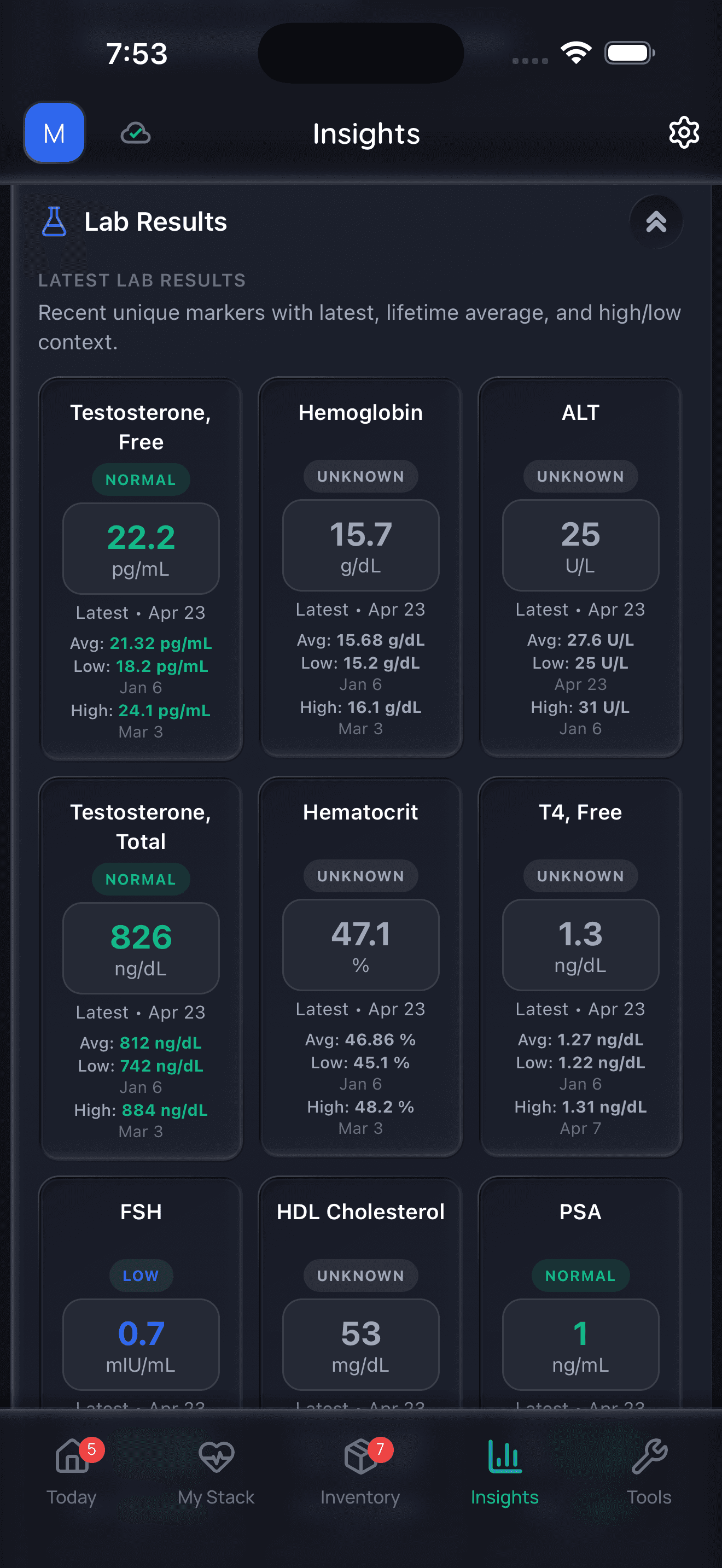
Doserly organizes data; it does not diagnose or interpret labs for you.
Side Effects & Safety
The Basics
The common side effects are the same ones people often associate with probiotics in general: gas, bloating, stomach noise, and occasional nausea. Most healthy adults tolerate spore probiotics reasonably well, but that does not mean every gut will like every strain [1][5][6].
The biggest safety warning is for medically fragile people. Preterm infants, severely immunocompromised users, and people with central lines or serious illness need more caution than healthy adults because live microorganisms can cause problems in the wrong setting [3].
The Science
The Bacillus review literature is clear that safety is strain-specific. Some strains are well studied, while others may carry toxin production or antibiotic-resistance concerns. FDA and ODS materials also emphasize that probiotic side effects are usually mild in healthy people but not risk free in vulnerable groups [1][2][3][5].
Community reports add a useful caution. A subset of users report nausea, histamine-type reactions, or a general gut flare after starting a spore product. That does not outweigh the positive digestive signal, but it does mean the category should not be treated as universally gentle [community sentiment analysis].
Managing the risk is mostly about starting cautiously, watching the first 1 to 2 weeks, and stopping if symptoms get worse instead of better. If a user has a major medical condition, that decision should happen with a clinician.
The side effect section is exactly where a tracking app earns its keep. If the symptom starts after the probiotic and resolves when you stop it, that pattern is more useful than any one-off forum post.
Capture changes while they are still fresh.
Log symptoms, energy, sleep, mood, and other observations alongside protocol events so patterns do not live only in memory.
Trend view
Symptom timeline
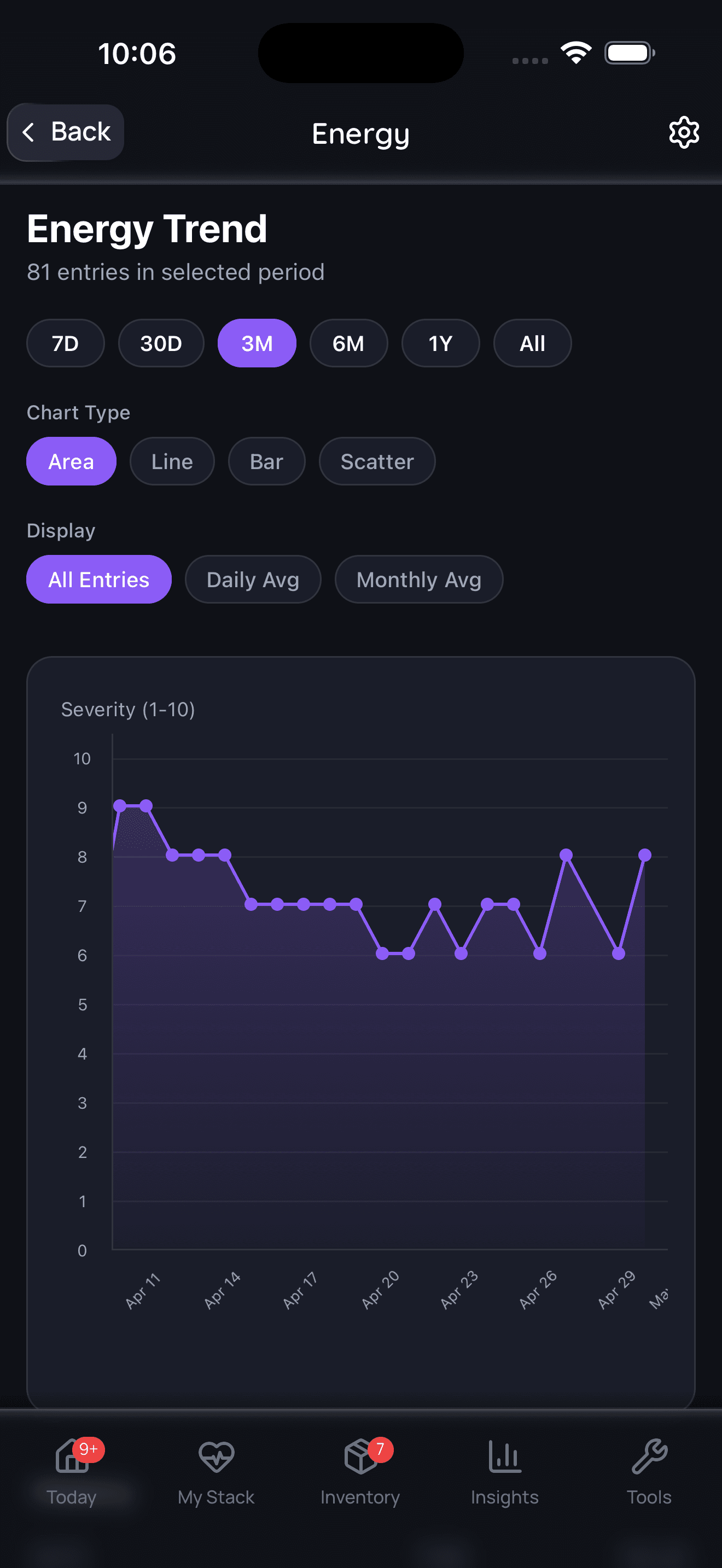
Symptom tracking is informational and should be interpreted with a qualified clinician.
Dosing & Usage Protocols
The Basics
There is no single spore-probiotic dose that fits every strain. In practice, many adult products land in the 1 to 10 billion CFU per day range, with a lot of clinical trial data clustering near 2 billion CFU per day or, for some formulas, 2.5 billion CFU twice daily [1][6][7][8][9].
If you are sensitive, start low. If the product makes you more bloated or more nauseated, it is not a moral failure and it does not mean you should power through. It may simply be the wrong strain, the wrong dose, or the wrong timing.
The Science
The dose pattern is strain- and outcome-dependent. Bacillus subtilis BS50 used 2 billion CFU per day for 6 weeks, the Bacillus coagulans IBS study used daily symptom tracking over 8 weeks, and the Bacillus coagulans GI-function trial again reinforces that the useful dose is tied to the specific strain and endpoint [6][7][8].
For antibiotics, separation by about 2 hours is the standard practical rule because antibiotics can reduce viability after the spores germinate. For meals, the literature does not require a universal rule, but taking the product with food is often a good tolerability strategy if the stomach is sensitive [1][2][5].
The safest practical approach is to keep the dose consistent for at least 2 to 8 weeks before deciding whether it is doing anything useful. That time window matches the human data better than same-day expectations.
Track injection timing, draw notes, and site rotation.
Doserly helps keep syringe-related notes, injection site history, reminders, and reconstitution context together for easier review.
Injection log
Site rotation
Injection logs support record-keeping; follow clinician instructions for administration.
What to Expect (Timeline)
Most users do not notice a dramatic shift on day one. If the product is going to help, the first change is often a quieter gut, less gas, or more predictable bowel movements in the first 1 to 2 weeks.
By weeks 3 to 4, the signal is clearer if the strain is a good fit. If the product is helping IBS-type symptoms, the changes often look like less bloating, better stool form, or less post-meal discomfort [6][7][8][9].
By weeks 6 to 8, a user usually has enough time on the product to know whether the benefit is real or not. If symptoms keep worsening instead of improving, the probiotic is probably not a fit.
Interactions & Compatibility
SYNERGISTIC
- Prebiotic Fibers can give beneficial microbes more substrate to work with.
- Resistant Starch may complement gut-focused probiotic routines.
- Bifidobacterium can be a reasonable pairing when the goal is broader gut support.
- Saccharomyces boulardii is often discussed alongside Bacillus products in post-antibiotic routines.
- Lactobacillus may be paired in some stacks, but sensitive users should add one variable at a time.
CAUTION / AVOID
- Antibiotics can reduce viability, so separate dosing when possible.
- People who are severely immunocompromised, critically ill, or have central lines should ask a clinician before using live microbes [3].
- If a specific strain repeatedly causes gas, bloating, or nausea, do not assume it will "kick in later." It may simply be the wrong fit.
- If histamine-type symptoms flare, the safest move is to stop and reassess rather than pushing through.
How to Take / Administration Guide
Spore probiotics are usually oral products, most often capsules or powders. They can be taken with or without food, but taking them with a meal is often easier on the stomach if you are sensitive.
Practical points:
- Avoid hot drinks or hot food when mixing powders.
- Keep timing consistent instead of changing the schedule every few days.
- Separate from antibiotics by about 2 hours when possible.
- If the label gives a specific strain and dose, follow that rather than a generic probiotic rule.
- There is no universal cycling rule. Some users take them continuously, while others use them in post-antibiotic windows.
Choosing a Quality Product
Look for the full genus, species, and strain name. Bacillus by itself is too vague. Good labels usually tell you whether you are buying B. coagulans, B. subtilis, or another named strain with a specific code [1][4][5].
Quality markers:
- CFU listed at end of shelf life, not only at manufacturing time
- Strain ID on the label
- Clear storage instructions
- Third-party testing or a visible quality program
- Transparent ingredient list with no hidden proprietary blend
Red flags:
- No strain code
- Huge CFU claims with no strain context
- Vague "soil-based" marketing without a real identity
- No expiry or storage information
- Claims that sound like a drug claim rather than a supplement claim
Storage & Handling
Most spore products are shelf-stable, which is part of their appeal. Keep them in a cool, dry place, away from humidity and heat, and do not leave them in a car or a steamy bathroom cabinet.
If the label says refrigeration is required, follow the label. If it does not, room temperature storage is usually the practical default.
Lifestyle & Supporting Factors
The probiotic is only one variable. Hydration, fiber intake, meal regularity, and sleep all affect how your gut feels day to day.
Helpful context:
- A fiber-rich diet can make gut outcomes easier to interpret.
- Unnecessary antibiotic exposure can complicate the picture.
- Fermented foods may complement the routine for some users, but they are not a substitute for a targeted strain.
- Tracking stool form, bloating, and timing makes the result much easier to judge.
Regulatory Status & Standards
In the United States, spore-based probiotics are generally sold as dietary supplements under DSHEA, not as approved drugs. That means the manufacturer is responsible for safety and labeling, and FDA premarket approval for efficacy is not part of the supplement pathway [2].
In Canada, probiotic products move through natural health product licensing workflows, and the strain field matters. That is one reason strain-specific labeling is a quality issue, not just a marketing detail [4].
In the European Union and Australia, probiotic and health-claim rules are also product-specific, and companies should not assume a U.S.-style label will translate cleanly across borders.
For athletes, the safest statement is careful rather than absolute. I am not aware of spore-based probiotics being specifically listed as a prohibited category on the current WADA list. That is an inference from the list's absence, not a guarantee that every finished product is safe. Contamination, extra ingredients, and batch-to-batch variation still matter, so athletes should verify products through GlobalDRO, USADA, UKAD, Sport Integrity Canada, Sport Integrity Australia, NSF Certified for Sport, Informed Sport, Cologne List, or BSCG.
Regulatory status and prohibited substance classifications change frequently. Athletes should always verify the current status of any supplement with their sport's governing body, their national anti-doping agency, and a qualified sports medicine professional before use. Third-party certification reduces but does not eliminate the risk of contamination with prohibited substances.
FAQ
Q: What is a spore-based probiotic?A: It is a live bacterial supplement that uses an endospore to survive heat, storage, and stomach acid.
Q: Are spore probiotics better than Lactobacillus?A: Not universally. The evidence is strain-specific, and the best choice depends on the symptom you are trying to address.
Q: How long do they take to work?A: If they help, many people notice something within 1 to 4 weeks, with a more reliable read after 6 to 8 weeks.
Q: Can I take them with antibiotics?A: Common practice is to separate them by about 2 hours, because antibiotics can reduce viability once the spores germinate.
Q: Can they cause bloating or gas?A: Yes. A short adjustment period is common, but persistent worsening suggests the strain may not be a fit.
Q: Do they colonize permanently?A: Based on available data, they are better described as transient gut residents than permanent colonizers.
Q: What CFU should I choose?A: Based on available trials, many products land around 1 to 10 billion CFU per day, but the strain matters more than the headline number.
Q: Should I take them with food?A: You can often take them either way, but food may improve tolerance if you have a sensitive stomach.
Q: Are they safe if I have histamine intolerance?A: Not all strains are equally tolerated. If you have a strong histamine history, start cautiously and stop if symptoms flare.
Q: Are they safe for immunocompromised people?A: Based on available guidance, that is a clinician-level question, not a self-experimentation question.
Q: Are they worth trying after antibiotics?A: Based on available data, they may be worth discussing with a clinician if post-antibiotic motility or bloating is the problem.
Q: Do I need to cycle them?A: There is no universal cycling rule in the literature. Use the strain and the response to guide the decision.
Myth vs. Fact
Myth: All spore probiotics colonize the gut permanently.Fact: The scientific literature describes transient gut residency and strain-specific activity, not guaranteed permanent colonization [5].
Myth: More CFU always means better results.Fact: The strain, dose, and target outcome matter more than the biggest number on the bottle [1][5][6][7][8][9].
Myth: Spore-based means risk free.Fact: Healthy adults often tolerate them well, but medically fragile people need caution and some sensitive users report real side effects [1][3][5].
Myth: All Bacillus strains do the same thing.Fact: Bacillus coagulans, B. subtilis, and B. clausii have different study designs, different outcomes, and different evidence profiles [5][6][7][8][9].
Myth: If it causes gas, it is working.Fact: Some temporary adjustment is common, but ongoing nausea, bloating, or worsening is a sign to reassess the strain or stop it.
Myth: Probiotics can replace medical treatment for diarrhea or IBS.Fact: The evidence supports them as supportive tools, not as a substitute for diagnosis or clinician-guided care [7][8][9].
Sources & References
Clinical Trials & RCTs
- National Institutes of Health Office of Dietary Supplements. Probiotics Fact Sheet for Consumers. https://ods.od.nih.gov/factsheets/Probiotics-Consumer/General definition, CFU framing, common side effects, antibiotic timing, and safety caveats.
- U.S. Food and Drug Administration. Dietary Supplements: What Pharmacists Should Know. https://www.fda.gov/media/158288/downloadExplains DSHEA context and live microbials as dietary supplements.
- U.S. Food and Drug Administration. Live microorganism safety caution for hospitalized preterm infants. https://www.fda.gov/media/175866/downloadHighlights higher-risk populations and safety concerns.
- Health Canada. Natural Health Product licensing guidance. https://www.canada.ca/content/dam/hc-sc/migration/hc-sc/dhp-mps/alt_formats/pdf/pubs/natur/eplaguide-eng.pdfShows why probiotic strain labeling matters for licensing.
Systematic Reviews & Meta-Analyses
- Lee NK, Kim WS, Paik HD. Bacillus strains as human probiotics: characterization, safety, microbiome, and probiotic carrier. PubMed PMID: 31695928. https://pubmed.ncbi.nlm.nih.gov/31695928/Core review for Bacillus-based probiotics, spore survival, and safety concerns.
Clinical Trials & RCTs
- The probiotic Bacillus subtilis BS50 decreases gastrointestinal symptoms in healthy adults: a randomized, double-blind, placebo-controlled trial. PMC article. https://pmc.ncbi.nlm.nih.gov/articles/PMC9590435/Human evidence for bloating, burping, and flatulence improvements.
- Bacillus coagulans significantly improved abdominal pain and bloating in patients with IBS. PubMed PMID: 19332970. https://pubmed.ncbi.nlm.nih.gov/19332970/Direct IBS symptom evidence for a Bacillus-based spore probiotic.
- Impact of Heyndrickxia (Bacillus) coagulans GBI-30, 6086 (BC30) probiotic on gastrointestinal function in healthy adults: a randomised controlled trial. PubMed PMID: 40707016. https://pubmed.ncbi.nlm.nih.gov/40707016/Healthy-adult GI function and microbiome data for the category.
- Bacillus clausii for the Treatment of Acute Diarrhea in Children: A Systematic Review and Meta-Analysis of Randomized Controlled Trials. PubMed PMID: 30103531. https://pubmed.ncbi.nlm.nih.gov/30103531/Pediatric diarrhea evidence and safety profile for a spore-forming Bacillus strain.