
Pectin: The Complete Supplement Guide
On this page
Quick Reference Card
Attribute
Common Name
- Detail
- Pectin
Attribute
Other Names / Aliases
- Detail
- Apple pectin, citrus pectin, pectinic acid, modified citrus pectin (MCP)
Attribute
Category
- Detail
- Soluble dietary fiber / plant polysaccharide
Attribute
Primary Forms & Variants
- Detail
- Standard citrus or apple pectin; high-methoxy pectin; low-methoxy pectin; amidated pectin; modified citrus pectin with shorter carbohydrate chains [1][3][10]
Attribute
Typical Dose Range
- Detail
- Consumer references most often describe about 10 to 15 g/day for supplemental use, though commercial products and clinical goals vary [2]
Attribute
RDA / AI / UL
- Detail
- No pectin-specific RDA, AI, or UL exists. General adult dietary fiber targets are about 25 g/day for women and 38 g/day for men [5]
Attribute
Common Delivery Forms
- Detail
- Powder, capsules, tablets, drink mixes, gummies, liquid pectin, multi-ingredient "binder" formulas
Attribute
Best Taken With / Without Food
- Detail
- Usually mixed with water and taken with or around meals. Separate from interacting medications when relevant [1][2]
Attribute
Key Cofactors
- Detail
- Adequate hydration, gradual dose titration, realistic total-fiber planning, and meal context
Attribute
Storage Notes
- Detail
- Keep sealed, dry, and away from humidity. Powders clump easily once exposed to moisture [9][10]
Overview
The Basics
Pectin is a soluble fiber found naturally in fruit, especially in apple pomace and citrus peel. It is part of what gives jams and preserves their gel-like texture, but it is also sold as a supplement for people who want help with cholesterol management, stool consistency, or general gut support [1][2][3].
What makes pectin interesting is that it behaves more like a physical tool than like a stimulant. It absorbs water, thickens, and changes how food moves through the gut. That can make digestion feel slower and steadier, which is part of why pectin is discussed for satiety, post-meal glucose control, and cholesterol support [3][4][5].
The important caveat is that "pectin" is not one perfectly uniform ingredient. Source material, degree of methylation, and processing all matter. Standard food-grade pectin, apple pectin capsules, and modified citrus pectin are related, but they should not be treated as interchangeable for every goal [1][3][10].
The Science
Pectins are complex, high-molecular-weight polysaccharides composed chiefly of partially methylated polygalacturonic acid units, with additional structural variation depending on source and processing [3][10]. They are classified functionally as viscous soluble fibers, meaning their physiologic effects depend heavily on hydration, gel formation, and fermentability rather than systemic absorption [4][5].
Across the current source set, the most defensible clinical themes are modest cholesterol support, stool and digestive-use applications, and mechanistic plausibility for glycemic and microbiota effects [1][2][3][5]. The weakest and most speculative themes are cancer prevention, "detox," and broad disease-treatment narratives, especially when tied to modified citrus pectin marketing [1][2].
Chemical & Nutritional Identity
Property
Chemical Class
- Value
- Heterogeneous soluble polysaccharide rich in polygalacturonic acid units
Property
CAS Number
- Value
- 9000-69-5
Property
Category
- Value
- Direct food substance affirmed as GRAS in the United States [10]
Property
Structural Note
- Value
- Includes high-ester pectins, low-ester pectins, amidated pectins, pectinic acids, and pectinates [10]
Property
Molecular Weight
- Value
- No single fixed value; depends on source and processing [3][10]
Property
Typical Commercial Sources
- Value
- Citrus peel, apple pomace, beet pulp [10]
Property
Nutritional Role
- Value
- Soluble dietary fiber rather than essential micronutrient
Property
Digestive Fate
- Value
- Largely resists small-intestinal digestion and is fermented in the colon [4]
Property
Food Sources
- Value
- Apples, oranges, lemons, grapefruit, and other fruit peels and pulps [1][3]
Property
FDA / eCFR Position
- Value
- GRAS direct food substance under current good manufacturing practice as emulsifier, stabilizer, and thickener [10]
Pectin is defined more by function than by a single clean chemical identity. That matters because product form can change performance. A fast-setting kitchen pectin, an apple-pectin tablet, and a modified citrus pectin powder may all sit under the pectin label while behaving differently in the body and in the evidence base [3][10][14].
Mechanism of Action
The Basics
Pectin works mainly by changing texture inside the gut. Once it hydrates, it turns part of the meal into a thicker, slower-moving mixture. That can blunt how quickly some nutrients are absorbed and can make the stomach empty more gradually [3][4][5].
The second half of the story happens farther down. Because pectin is not fully broken down in the upper digestive tract, part of it reaches the colon and becomes food for microbes. That fermentation process helps explain why pectin is often discussed as both a fiber supplement and a prebiotic-like ingredient [3][4].
The Science
The small-bowel effects of pectin appear to be largely gel-dependent. The 2015 clinical fiber review describes cholesterol lowering and improved glycemic handling as viscosity-driven phenomena for the subset of soluble fibers capable of meaningful gel formation [5]. The 2025 pectin review expands that model, describing slower starch digestion, altered amylase access, and reduced postprandial glucose exposure as plausible downstream effects of pectin's physicochemical behavior [3].
In the colon, pectin becomes a fermentation substrate that can support short-chain fatty acid production and microbiota shifts, with downstream implications for gut barrier function and inflammatory signaling [3][4]. These mechanistic findings are credible, but they do not guarantee a large or uniform clinical effect in every person because pectin structure and microbiome responsiveness vary substantially [3][4][14].
Absorption & Bioavailability
The Basics
Pectin is unusual because the usual goal is not for all of it to be absorbed into the bloodstream. Standard pectin is meant to act mostly inside the digestive tract. In practical terms, that means "bioavailability" is less about blood levels and more about whether the product hydrates properly, forms a useful gel, and reaches the colon in a form the microbiome can ferment [3][4].
Modified citrus pectin is marketed differently. It is processed into shorter chains and is often described as more absorbable. That does not mean it is automatically better for common fiber goals like cholesterol management or stool support. It means it may behave differently and should be judged on its own evidence, not assumed to be a stronger version of kitchen pectin [1][3].
The Science
Standard pectin largely resists salivary, gastric, and small-intestinal digestion and is then fermented in the colon [4]. Its functional performance depends on source, structure, degree of methylation, hydration, and surrounding food matrix [3][4][10]. These factors influence gel strength, fermentation pattern, and the balance between upper-gut effects such as slower nutrient absorption and lower-gut effects such as short-chain fatty acid production.
The current dossier does not support a single universal bioavailability hierarchy across pectin forms. Instead, it supports a more cautious conclusion: pectin behavior is formulation-dependent, and evidence should be matched to the actual form being used [1][3][14].
Research & Clinical Evidence
Cholesterol and Cardiometabolic Support
The Basics
If pectin has one use case that looks reasonably grounded, it is cholesterol support. The evidence does not suggest a dramatic drug-like effect, but it does support the idea that pectin can modestly improve lipid handling in at least some settings [1][2][3].
That benefit seems tied to the same thickening behavior that slows digestion. A well-hydrated, gel-forming fiber can trap bile acids and shift how the body recycles cholesterol. This is a fiber effect, not a stimulant effect, which is why consistency matters more than "feeling" something after a single dose [5].
The Science
MSKCC, WebMD, and the 2025 pectin review all identify hypercholesterolemia as one of the more plausible clinical uses for pectin [1][2][3]. The dossier also surfaces older human data and follow-up work showing that cholesterol response differs by pectin type rather than by the name alone [7][8][14]. That matters because it helps explain why some consumers report little effect while certain trial designs show meaningful but modest benefit.
The 2015 clinical fiber review is also useful here because it argues that cholesterol lowering is a gel-dependent fiber effect and that viscosity predicts benefit better than grams on the label alone [5]. Inference: if a product has weak gel behavior, its real-world cholesterol effect may be disappointing even if it technically contains pectin.
Diarrhea and Digestive Use
The Basics
Pectin has an older digestive-health reputation that still shows up in the evidence. It was once used in OTC anti-diarrheal products, and there is still some clinical support for stool-related uses. At the same time, the evidence was not strong enough for FDA to keep pectin in that old OTC anti-diarrheal role [2][6].
The fairest summary is that pectin may help some digestive patterns, especially when stool consistency is part of the goal, but it should not be sold mentally as a proven rescue treatment for every diarrhea problem.
The Science
The clearest specific trial in the current dossier is Rabbani et al. 2001, which found benefit from dietary management with green banana or pectin in children with persistent diarrhea [1][6]. MSKCC continues to present diarrhea as a preliminary but plausible use case [1]. WebMD adds an important regulatory caution: FDA found the evidence insufficient for pectin as an OTC anti-diarrheal agent, which is why the old kaolin-pectin identity no longer applies [2].
Together, these sources support limited digestive-use credibility but not sweeping efficacy claims. Pectin belongs in the "possible support tool" category, not the "established therapy" category [1][2][6].
Glycemic Handling, Satiety, and Gut-Microbiota Effects
The Basics
Pectin is often discussed for blood-sugar control, fullness, and microbiome support because it can slow carbohydrate handling and feed fermenting microbes. All three ideas make sense biologically. What the evidence does not show yet is that every pectin supplement reliably produces a large clinical effect across all of those goals [3][4][5].
This is where hype often outruns reality. Someone may absolutely feel better digestion or steadier meals with pectin. That still does not mean pectin is a guaranteed weight-loss or glucose-management supplement.
The Science
The 2025 pectin review emphasizes anti-hyperglycemic and anti-hyperlipidemic potential, slower starch digestion, satiety support, and microbiota effects [3]. The 2021 review reinforces that pectin can reduce glucose and cholesterol absorption, slow gastric emptying, and support short-chain fatty acid production through fermentation [4]. The 2015 clinical fiber review adds the crucial nuance that not all fiber supplements deliver clinically meaningful metabolic benefit, even when the category sounds promising [5].
The dossier therefore supports cautious wording such as "may help" or "has plausible mechanistic support," especially for appetite, postprandial glycemia, and microbiome-related outcomes [3][4][5]. It does not support strong promises about weight loss, detoxification, or broad metabolic reversal.
Cancer and Modified Citrus Pectin Claims
The Basics
Cancer-related pectin marketing is where the gap between mechanistic interest and clinical certainty becomes widest. Modified citrus pectin has been studied in prostate-cancer contexts, and there are interesting lab findings. That is not the same as having good evidence that pectin treats or prevents cancer in routine use [1][9].
The Science
MSKCC explicitly says evidence is insufficient to support cancer-use claims for pectin or modified citrus pectin, even while summarizing preclinical galectin-3 and anti-metastatic mechanisms [1]. The small prostate-specific antigen doubling-time study is hypothesis-generating, not practice-changing [1][9]. For a consumer guide, the right posture is simple: mention the research interest, but do not present it as an established benefit.
Evidence & Effectiveness Matrix
Category
Gut Health
- Evidence Strength
- 7/10
- Reported Effectiveness
- 5/10
- Summary
- Mechanistic and review support are credible for fermentation and microbiota effects, while community discussion is sparse but generally positive [3][4][14].
Category
Digestive Comfort
- Evidence Strength
- 6/10
- Reported Effectiveness
- 5/10
- Summary
- Stool-related and digestive-use evidence exists, but effect size and real-world predictability remain modest [1][2][6][14].
Category
Heart Health
- Evidence Strength
- 6/10
- Reported Effectiveness
- Community data not yet collected
- Summary
- Pectin has a reasonable cholesterol-support case, but the current community set is too thin to score consumer-reported effectiveness confidently [2][3][5][7][8].
Category
Weight Management
- Evidence Strength
- 4/10
- Reported Effectiveness
- Community data not yet collected
- Summary
- Satiety and slower gastric emptying are plausible, but the current source set does not justify strong weight-loss expectations [3][4][5][14].
Category
Focus & Mental Clarity
- Evidence Strength
- 2/10
- Reported Effectiveness
- 4/10
- Summary
- Clinical support is weak, while community anecdotes connect pectin to reduced brain fog in niche "binder" contexts. Confidence remains low [14].
Category
Side Effect Burden
- Evidence Strength
- 6/10
- Reported Effectiveness
- 4/10
- Summary
- GI complaints and absorption interactions are well documented, but they are usually manageable rather than severe when dose and timing are handled well [1][2][5][14].
Category
Treatment Adherence
- Evidence Strength
- 5/10
- Reported Effectiveness
- 4/10
- Summary
- Adherence depends on powder texture, hydration, medication spacing, and tolerance for gradual fiber titration [2][5][14].
Categories scored: 7
Categories with community data: 5
Categories not scored (insufficient data): Fat Loss, Muscle Growth, Appetite & Satiety, Food Noise, Energy Levels, Sleep Quality, Memory & Cognition, Mood & Wellbeing, Anxiety, Stress Tolerance, Motivation & Drive, Emotional Aliveness, Emotional Regulation, Libido, Sexual Function, Joint Health, Inflammation, Pain Management, Recovery & Healing, Physical Performance, Nausea & GI Tolerance, Skin Health, Hair Health, Blood Pressure, Heart Rate & Palpitations, Hormonal Symptoms, Temperature Regulation, Fluid Retention, Body Image, Immune Function, Bone Health, Longevity & Neuroprotection, Cravings & Impulse Control, Social Connection, Withdrawal Symptoms, Daily Functioning, Other.
Benefits & Potential Effects
The Basics
The realistic benefits of pectin cluster around three themes: steadier digestion, modest cholesterol support, and possible meal-slowing or satiety effects. Those are useful benefits, but they are not flashy ones. Pectin tends to work, when it works, by nudging physiology rather than by producing an obvious stimulant-like response [1][2][3].
It is also one of those supplements where the difference between food and supplement matters. Eating more fruit and using a pectin powder are related strategies, but they are not interchangeable. Whole fruit changes the diet broadly. Pectin isolate changes the physical behavior of one part of digestion [3][5].
The Science
The strongest support in the dossier is for lipid handling and digestive applications, backed by institutional summaries, broader reviews, and older human trials [1][2][3][7][8]. There is also credible mechanistic support for slower nutrient absorption, more fermentation substrate reaching the colon, and greater short-chain fatty acid production in suitable microbiome settings [3][4].
What remains weaker is broad wellness marketing. The current evidence does not justify treating pectin as a universal detoxifier, anti-inflammatory cure-all, or reliable stand-alone weight-loss supplement [1][2][3][5].
Capture changes while they are still fresh.
Log symptoms, energy, sleep, mood, and other observations alongside protocol events so patterns do not live only in memory.
Trend view
Symptom timeline
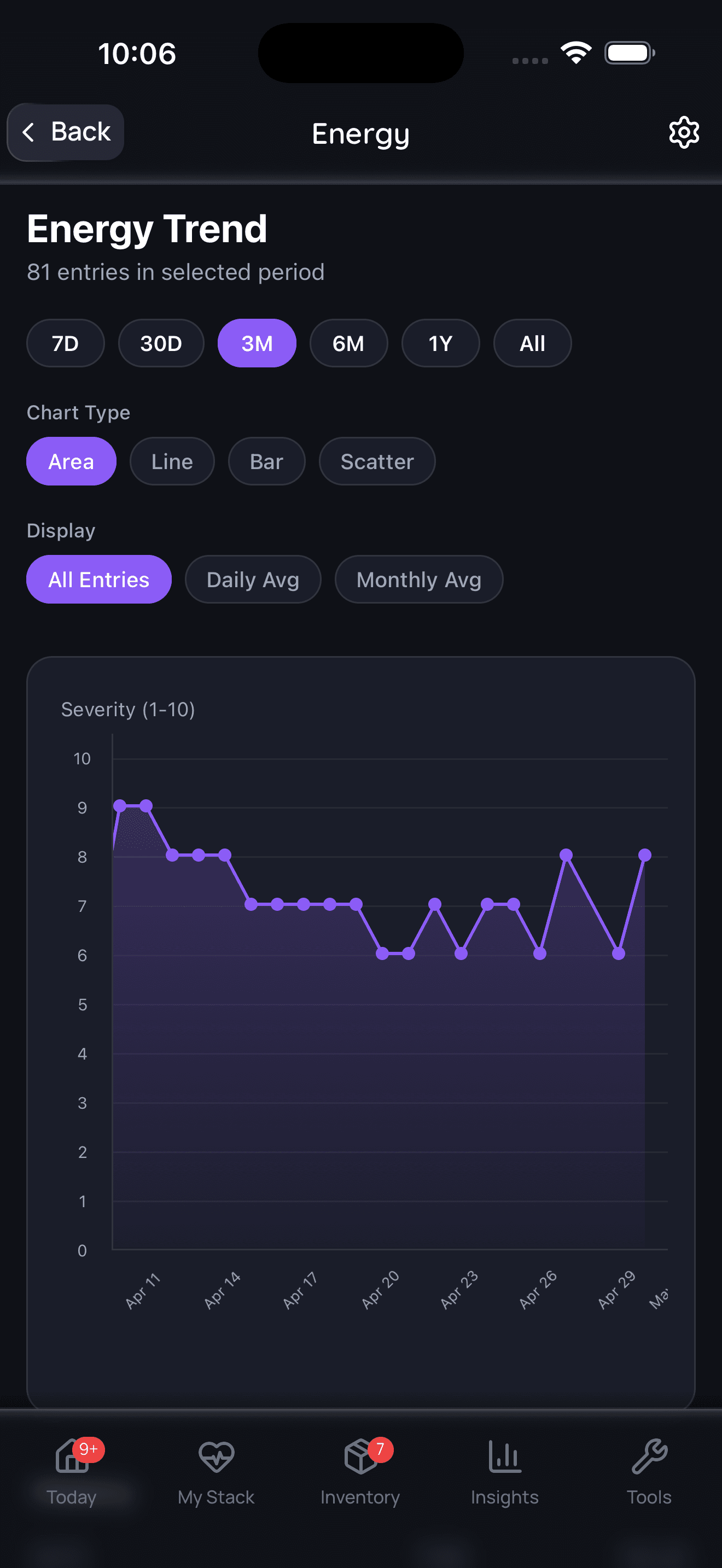
Symptom tracking is informational and should be interpreted with a qualified clinician.
Side Effects & Safety
The Basics
Most pectin side effects are digestive. Gas, cramping, loose stools, and general bloating are the usual complaints. In other words, the downside tends to look like "too much fiber too fast" rather than a dramatic systemic reaction [1][2][5].
The second safety issue is interactions. Because pectin can interfere with absorption, timing matters if you take certain medications or nutrient supplements. That matters much more in day-to-day use than dramatic internet claims about pectin being inherently dangerous.
The Science
MSKCC lists abdominal cramps and diarrhea as the main adverse reactions in its pectin monograph [1]. WebMD similarly describes diarrhea, gas, and stomach cramps as the dominant tolerability issues and provides timing guidance for tetracyclines, digoxin, and lovastatin [2]. MSKCC also warns about reduced absorption of carotenoid and alpha-tocopherol supplements [1].
This pattern fits the broader 2015 fiber review, which notes that GI symptoms are common with fiber supplements when titration is too abrupt or when product properties do not match the user's tolerance [5]. Rare allergy signals exist, especially in niche pectin or cashew-cross-reactive contexts, but they are not the main consumer risk story in the present source set [2].
Connect protocol changes to labs and health markers.
Doserly can keep lab results, biomarkers, symptoms, and dose history close together so follow-up conversations have better context.
Insights
Labs and trends
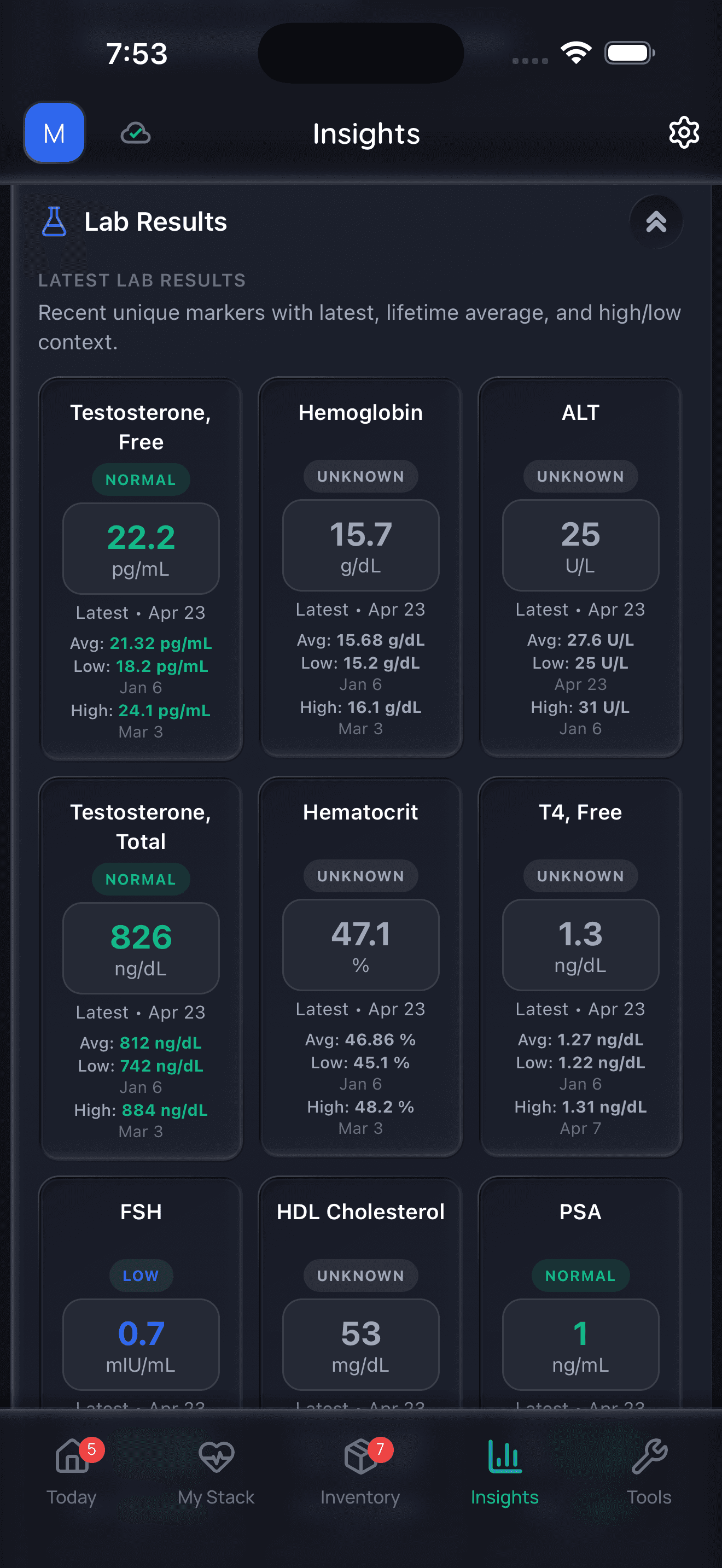
Doserly organizes data; it does not diagnose or interpret labs for you.
Dosing & Usage Protocols
The Basics
There is no single official pectin dose because the ingredient is used across very different products and goals. Consumer-facing references most often mention about 15 g/day for adults, while actual product instructions can differ substantially by form and by whether the product is standard pectin or modified citrus pectin [2].
For most people, the sensible strategy is simple: start lower than the headline dose, mix it with adequate fluid, and increase only if digestion stays comfortable. Fiber tolerance matters more than ambition.
The Science
The current dossier supports a cautious dosing framework rather than a disease-specific protocol ladder. WebMD reports that pectin has most often been used by adults at 15 g/day by mouth for up to one year [2]. Institutional and review sources reinforce that form, viscosity, and product type change how that dose behaves in practice [1][3][5].
Practical dosing framework
Goal
General trial of tolerance
- Practical Range
- Start low, then increase gradually
- Notes
- Useful for minimizing gas, cramping, and loose stools [2][5]
Goal
Cholesterol-support use
- Practical Range
- Often built toward the commonly cited 15 g/day area
- Notes
- Response depends on pectin type and consistency, not just grams [2][7][8][14]
Goal
Digestive / stool-support use
- Practical Range
- Product dependent
- Notes
- Older diarrhea data exists, but pectin is no longer an FDA-recognized OTC anti-diarrheal ingredient [2][6]
Goal
Modified citrus pectin products
- Practical Range
- Follow product-specific instructions
- Notes
- MCP should not be assumed equivalent to standard pectin powders [1][3]
Timing rules that matter
- Take interacting medications at separate times when relevant [1][2].
- Hydrate well with powders or mixed drinks.
- Increase slowly if your baseline fiber intake is low.
- Reassess after several weeks instead of expecting one-dose clarity.
What to Expect (Timeline)
In the first several days, the most noticeable change is often digestive rather than systemic. Some people notice more bulk, more gas, or a different stool pattern before they notice any positive effect at all [1][2][5].
Within one to three weeks, people who tolerate pectin well may start to get a clearer read on whether it is helping meal pacing, digestive comfort, or stool consistency. If it is not fitting your digestion by then, the issue is often dose, hydration, or product choice rather than patience alone.
For cholesterol-related goals, expect a slower readout. Consistent daily use over several weeks matters more than whether you "feel" anything. Lipid changes, if they occur, are better judged with follow-up labs than with symptoms [2][7][8].
Longer term, the right expectation is modest support rather than a dramatic transformation. Pectin is best viewed as a fiber strategy that may earn a place in a routine, not as a supplement that should produce a dramatic before-and-after feeling.
Interactions & Compatibility
Synergistic
- Glucomannan: Another viscous soluble fiber that is often used for similar meal-slowing and lipid-support goals. Combining fibers may increase fullness and stool effects, but also raises GI-tolerance demands.
- Resistant Starch: Complements pectin as a fermentable fiber strategy for people building a broader prebiotic routine rather than relying on one ingredient alone.
- Synbiotics: Relevant when the goal is broader microbiome support, because pectin can serve as a fermentable substrate rather than acting like a probiotic itself.
- Vitamin C: Practical whole-food patterns that raise pectin intake often also raise vitamin C intake, especially from citrus fruit, though the supplement ingredients do not need to be paired.
Caution / Avoid
- Lovastatin: Separate dosing. MSKCC and WebMD both flag reduced lovastatin effectiveness risk [1][2].
- Digoxin: Separate dosing because pectin may reduce absorption [2].
- Tetracycline antibiotics: Separate dosing because fiber can reduce absorption [2].
- Carotenoid and alpha-tocopherol supplements: Absorption may be reduced by pectin [1].
- Low-hydration use: Thick fiber products can be unpleasant or poorly tolerated when fluid intake is inadequate.
- Multi-ingredient detox or weight-loss blends: Risk is less about pectin itself and more about undeclared or poorly disclosed companion ingredients [11][12][13].
How to Take / Administration Guide
Pectin works best when the administration details are boringly consistent. Mix powders thoroughly, take them with enough fluid, and give them their own timing window when you know a medication interaction matters. If you are using capsules or tablets, still think in terms of hydration, not just convenience [1][2].
For cholesterol or meal-related goals, taking pectin with or around meals is the more intuitive approach because that is when its gel-forming behavior can matter most. For medication timing, the better rule is separation first and convenience second [2].
The biggest administration mistake is pretending pectin is a neutral powder that can be dropped into any routine without tradeoffs. It is a fiber tool. That means texture, fluid, timing, and tolerance are part of the protocol.
Keep multi-step protocols organized from start to finish.
Use Doserly to map compounds, timing, cycle windows, notes, and review points so complex protocols stay readable in one place.
Plan view
Protocol schedule
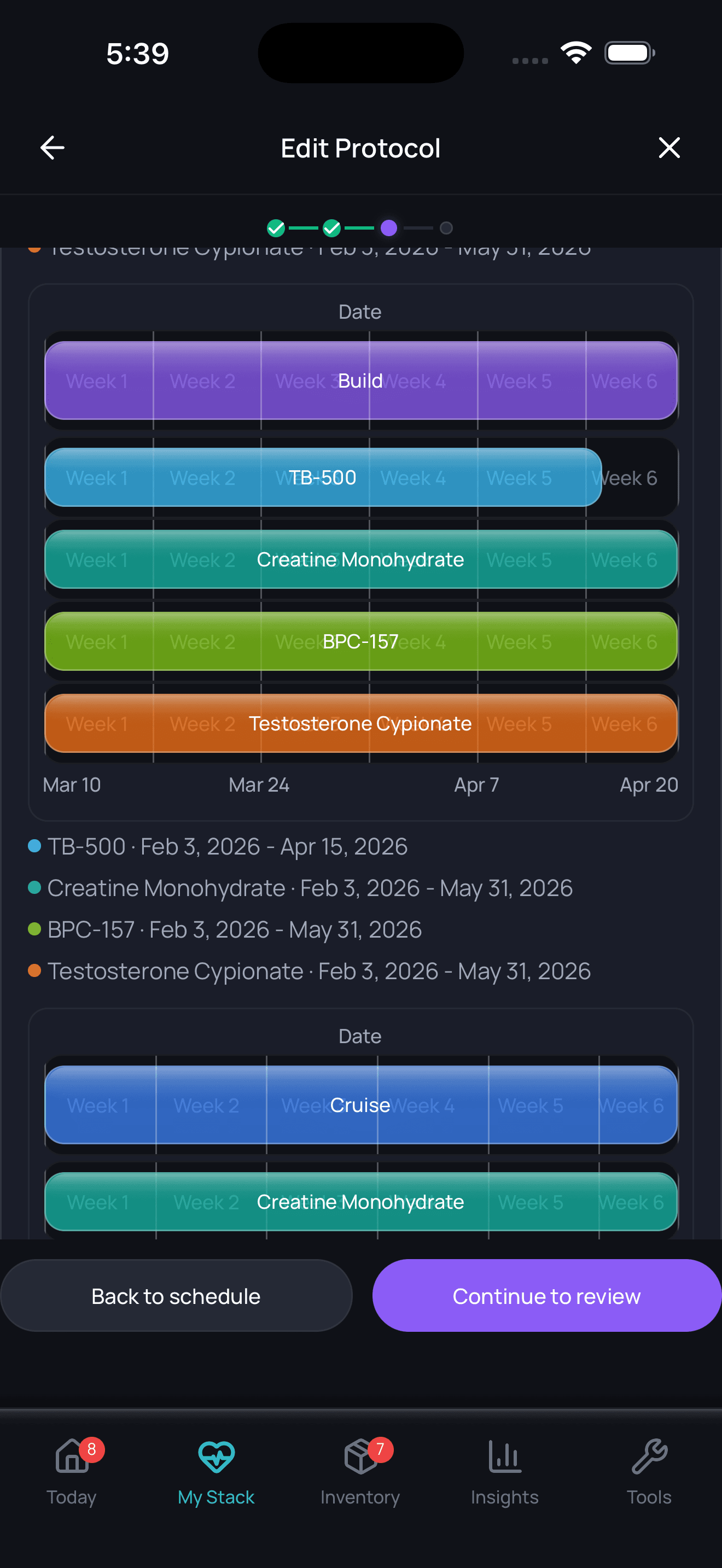
Planning views are organizational and should be aligned with professional guidance.
Choosing a Quality Product
A good pectin product should tell you what kind of pectin it is. Apple pectin, citrus pectin, and modified citrus pectin are not the same thing, and a label that hides behind vague "fiber blend" language is harder to trust than one that states its source and form clearly [1][3][10].
Look for products that disclose:
- source material, such as citrus or apple
- whether the product is standard pectin or modified citrus pectin
- serving size in grams, not just capsule count
- excipients and sweeteners in flavored powders
- third-party testing or lot-level quality information when available
Be cautious with products marketed primarily around detox, mold, or heavy-metal narratives. Those categories tend to attract more aggressive claims and more complicated blends. For athletes or anyone who wants cleaner supply-chain reassurance, third-party certification such as NSF Certified for Sport or Informed Sport is a higher-value signal than dramatic marketing copy [11][12][13].
Storage & Handling
Store pectin in a cool, dry place with the container tightly closed. Moisture is the enemy because pectin is meant to hydrate and thicken. Once humidity gets into the product, clumping and poor mixability become more likely [9][10].
If you use bulk powder, use a dry scoop and reseal the container immediately. Pre-mixed drinks should be consumed according to product instructions because viscosity can change quickly after mixing.
Lifestyle & Supporting Factors
Pectin makes the most sense when it supports a food pattern that already includes fruit, vegetables, and adequate total fiber. It is a weak substitute for a poor diet and a more reasonable add-on to a diet that is already moving in the right direction [3][5].
Hydration also matters more than most labels make obvious. Many of pectin's benefits depend on hydration, and many of its annoyances become worse when fluid intake is low.
If your goal is cholesterol support, the most useful companion habits are predictable meal quality, repeat lipid testing, and realistic time horizons. If your goal is digestive comfort, the key companion habit is paying attention to dose-response instead of escalating out of impatience.
Regulatory Status & Standards
In the United States, pectins are affirmed as generally recognized as safe direct human food ingredients under 21 CFR 184.1588 and may be used as emulsifiers, stabilizers, and thickeners under current good manufacturing practice [10]. That speaks to ingredient status, not to proof that a given supplement works for a given health claim [10][11].
As a supplement ingredient, pectin sits under the normal DSHEA-style landscape where products are marketed without FDA preapproval for efficacy. FDA explains that food ingredients and dietary-supplement ingredients are not pre-cleared as disease-treatment drugs in this framework [11]. That is why label claims deserve skepticism even when the ingredient itself is familiar.
For athletes, the relevant point is straightforward. The retrieved WADA 2026 Prohibited List materials do not identify pectin as a named prohibited substance, but USADA stresses that supplement products cannot be assumed safe based on the label alone [12][13]. Plain pectin is lower concern than many performance blends, yet blended powders and proprietary detox formulas still carry contamination and mislabeling risk. NSF Certified for Sport or similar certification is the more defensible path for tested athletes [12][13].
FAQ
Is pectin the same thing as modified citrus pectin?
No. They are related, but modified citrus pectin is processed into shorter chains and should not be assumed equivalent to standard pectin for every goal [1][3].
Does pectin lower cholesterol enough to replace medication?
Usually no. Pectin may offer modest support, but the current source set supports it as an adjunctive fiber strategy, not as a reliable medication replacement [2][5][7][8].
Can pectin help with diarrhea?
Possibly in some settings, but the evidence is limited and it is no longer an FDA-recognized OTC anti-diarrheal ingredient [2][6].
Why do some people get gas or cramping from pectin?
Because it is a fermentable fiber. Dose, hydration, baseline fiber intake, and product form all influence tolerability [1][2][5].
Should I take pectin with food or away from food?
For common fiber goals, with or around meals often makes practical sense. For interacting medications, separation is more important than meal timing [1][2].
Is pectin good for detox?
That is one of the weakest narratives in the source set. It is better supported as a fiber with digestive and cholesterol-related uses than as a broad detox supplement [1][2][3].
Can athletes use pectin?
The ingredient itself is not identified as prohibited in the retrieved WADA material, but athletes should still treat the product category cautiously and prefer certified products [12][13].
Myth vs. Fact
Myth: All pectin products work the same way.Fact: Source, degree of methylation, and processing change how pectin behaves. Standard pectin and modified citrus pectin should not be treated as interchangeable [1][3][10][14].
Myth: Pectin is a proven detox supplement.Fact: The current source set does not support broad detox claims. Pectin has much stronger support as a fiber ingredient than as a universal toxin-clearing agent [1][2][3].
Myth: Because pectin is natural, it cannot interact with medications.Fact: Pectin can reduce absorption of lovastatin, digoxin, tetracyclines, and some nutrient supplements, so timing matters [1][2].
Myth: If pectin helps cholesterol, more is always better.Fact: Higher doses also increase the chance of gas, cramps, and loose stools. Product type and consistency matter more than blindly escalating dose [2][5][7][14].
Myth: Pectin is an established cancer treatment because modified citrus pectin has been studied in prostate cancer.Fact: The cancer evidence remains preliminary and insufficient for treatment claims [1][9].
Sources & References
Institutional and Clinical Summaries
- Memorial Sloan Kettering Cancer Center. Pectin. https://www.mskcc.org/cancer-care/integrative-medicine/herbs/pectin
- WebMD. Pectin - Uses, Side Effects, and More. https://www.webmd.com/vitamins/ai/ingredientmono-500/pectin
Reviews and Mechanistic Context
- Valladares L, Vio F. Pectin and Its Beneficial Effect on Health: New Contributions in Research and the Need to Increase Fruits and Vegetables Consumption - A Review. Int J Mol Sci. 2025. https://pmc.ncbi.nlm.nih.gov/articles/PMC12294815/
- Blanco-Perez F, Steigerwald H, Schulke S. The Dietary Fiber Pectin: Health Benefits and Potential for the Treatment of Allergies by Modulation of Gut Microbiota. Curr Allergy Asthma Rep. 2021. https://pmc.ncbi.nlm.nih.gov/articles/PMC8433104/
- McRorie JW Jr. Evidence-Based Approach to Fiber Supplements and Clinically Meaningful Health Benefits, Part 1. Nutr Today. 2015. https://pmc.ncbi.nlm.nih.gov/articles/PMC4415962/
Trials and Human Evidence
- Rabbani GH, Teka T, Zaman B, et al. Clinical studies in persistent diarrhea: dietary management with green banana or pectin in Bangladeshi children. Gastroenterology. 2001.
- Brouns F, Theuwissen E, Adam A, et al. Cholesterol-lowering properties of different pectin types in mildly hypercholesterolemic men and women. Eur J Clin Nutr. 2012.
- Knopp RH, Superko HR, Davidson M, et al. Long-term blood cholesterol-lowering effects of a dietary fiber supplement. Am J Prev Med. 1999.
- Guess BW, Scholz MC, Strum SB, et al. Modified citrus pectin increases the prostate-specific antigen doubling time in men with prostate cancer: a phase II pilot study. Prostate Cancer Prostatic Dis. 2003.
- Wanders AJ, Feskens EJM, Jonathan MC, et al. Pectin is not pectin: a randomized trial on the effect of different physicochemical properties of dietary fiber on appetite and energy intake. Physiol Behav. 2014.
Regulatory and Athlete-Risk Sources
- eCFR. 21 CFR 184.1588 - Pectins. https://www.ecfr.gov/current/title-21/section-184.1588
- U.S. Food and Drug Administration. Determining the Regulatory Status of a Food Ingredient. https://www.fda.gov/food/food-ingredients-packaging/determining-regulatory-status-food-ingredient
- U.S. Anti-Doping Agency. Supplement Connect. https://www.usada.org/substances/supplement-connect/
- World Anti-Doping Agency. 2026 Prohibited List. https://www.wada-ama.org/en/resources/world-anti-doping-code-and-international-standards/prohibited-list
Community Signal
- Public Reddit discussion set on pectin and modified citrus pectin, collected March 25, 2026, including r/GERD, r/MCAS, and related discussion threads summarized for internal community-signal scoring.