
Longevity
October 17, 2026
Mitochondrial health: comparing exercise, supplements and peptide claims
On this page
When people say they want healthier mitochondria, they usually want something more familiar: enough energy to get through the day, better exercise tolerance, stronger muscles or more resilience as they grow older. Those are reasonable goals. The difficulty is that mitochondrial health has become a label for interventions with very different kinds of evidence.
Exercise studies can measure both cellular adaptation and physical performance. Supplement studies may find changes in blood metabolites, muscle endurance or selected immune-cell populations. Peptide research ranges from mouse experiments to disease-specific human trials and, in one narrow setting, an approved medicine. Putting all of these under the same heading can make them look much more comparable than they are.
The useful question is not whether an intervention has a mitochondrial mechanism. It is whether it improves a meaningful outcome in people like the person considering it. That question leaves plenty of room for promising research while preventing a colorful cellular explanation from becoming a treatment recommendation.
What mitochondria do, beyond the powerhouse metaphor
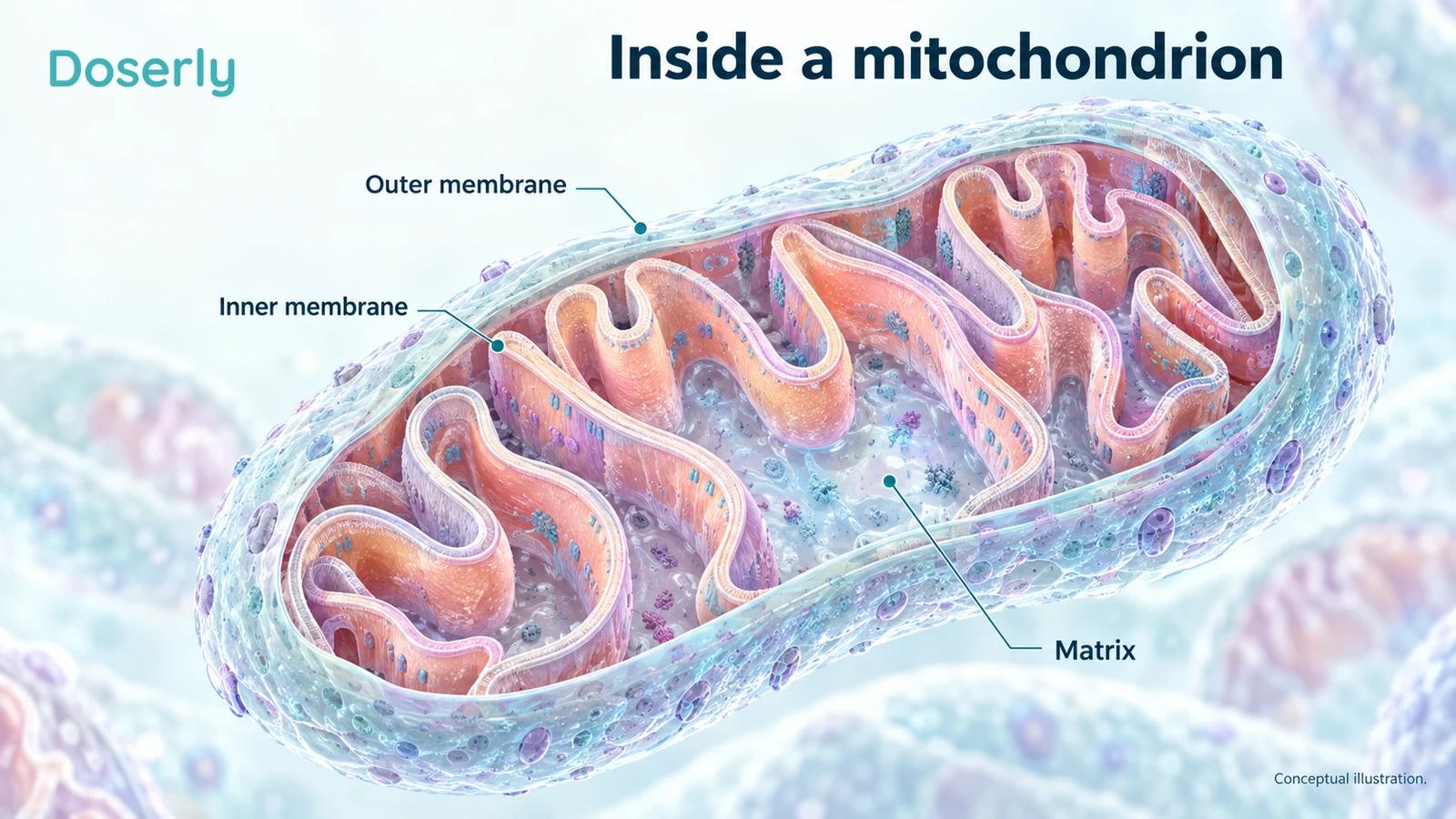
Mitochondria are structures inside most of our cells. Their inner membranes contain machinery that helps convert energy from nutrients into ATP, a molecule cells use to support work. The folds of the inner membrane are called cristae. Their organization matters because the relevant reactions depend on carefully controlled movement of electrons and protons.
The familiar battery analogy is incomplete. Mitochondria are living, responsive parts of a cell. They can change their organization, exchange material, help regulate stress responses and communicate with other cellular systems. Their behavior differs across tissues because a contracting muscle, a neuron and an immune cell have different demands.
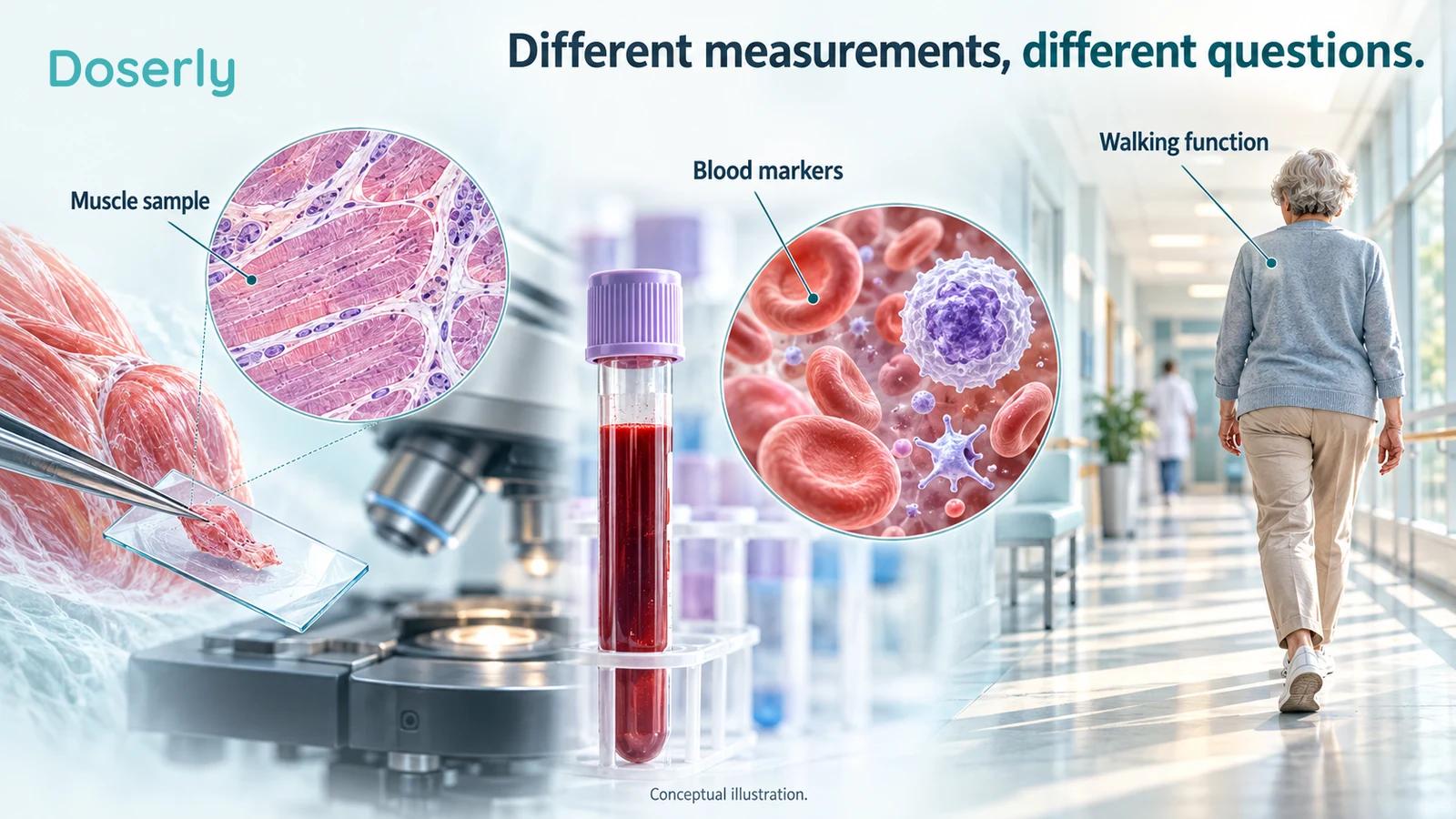
This explains why a single blood result cannot summarize every mitochondrion in the body. Blood cells are accessible; skeletal muscle may require a biopsy; heart and brain tissue are much harder to examine directly. Researchers therefore use different measurements, each answering a limited question.
A test of oxygen consumption in isolated muscle fibers asks how those fibers perform under laboratory conditions. A blood metabolite tells us something about metabolism or exposure. A walking test measures the performance of an entire person, including circulation, breathing, nerves, joints, motivation and muscle. None of these is interchangeable with the others.
That distinction is not a criticism of laboratory science. It is how laboratory results become useful: researchers identify a plausible change, then test whether it helps the person rather than only the sample.
Exercise provides the clearest comparison point
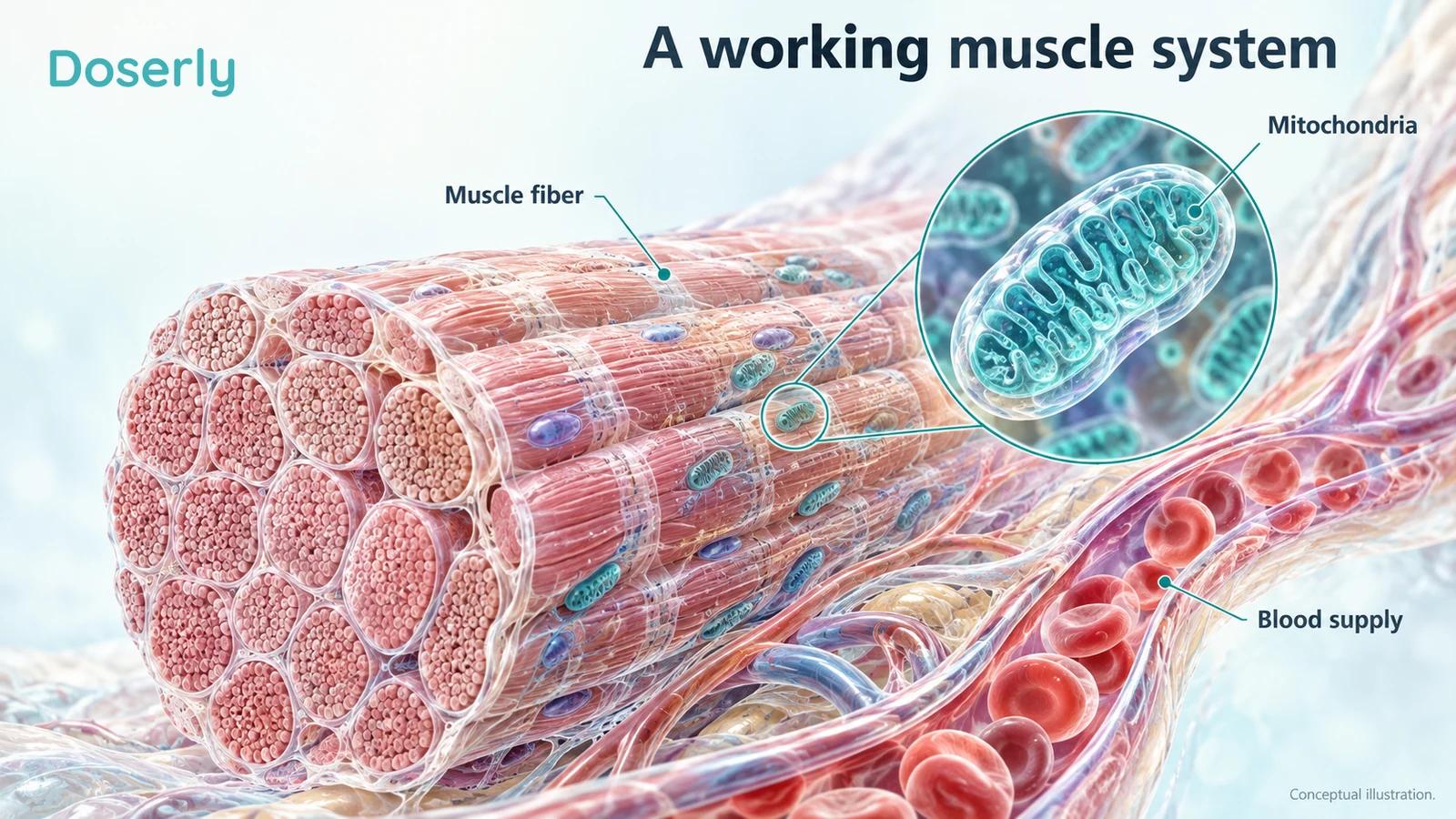
Exercise repeatedly asks the body to produce energy and perform work. The adaptations are therefore broader than a change in one molecule. Training can affect cardiovascular delivery, muscle recruitment, coordination and cellular energy systems together.
In a 2017 human study, twelve weeks of interval, resistance or combined training produced different patterns of adaptation in younger and older adults. Interval and combined training improved aerobic capacity and skeletal-muscle mitochondrial respiration; the interventions also affected protein synthesis and other metabolic measures. The study helps show that older muscle retains substantial capacity to respond. It was not a lifespan trial and does not establish that everyone needs high-intensity intervals. Robinson and colleagues, 2017
The clinical case for activity also extends beyond mitochondrial measurements. The LIFE trial randomized 1,635 sedentary adults aged 70 to 89 who had physical limitations but could initially walk 400 meters. A structured activity program reduced major mobility disability compared with health education: 30.1% versus 35.5% over an average 2.6 years. The program included aerobic, resistance and flexibility activity. LIFE primary trial
The second finding does not prove that mitochondria alone caused the benefit. It is valuable precisely because the endpoint was something people needed to do. A person does not have to know which proportion of an improvement came from muscle metabolism, balance or confidence for better mobility to matter.
This creates a high standard for an exercise-mimicking claim. Matching one signaling pathway would not reproduce the mechanical, cardiovascular and behavioral features of movement. A proposed replacement needs direct comparative evidence, not merely a shared molecular vocabulary.
Training should match the person, not a mitochondrial headline
A research program involving supervised intervals is not automatically suitable for someone with pain, exertional symptoms or severe deconditioning. The practical task is to find activity that can be progressed safely and maintained. Rehabilitation, adapted exercise or a gradual return to movement may be more relevant than maximizing a laboratory marker.
Different goals also call for different training. Being able to walk farther, lift a bag or get up from the floor requires overlapping but distinct capabilities. A person can improve endurance without developing much additional strength, and can become stronger without maximizing aerobic capacity. A balanced plan recognizes both.
The common mistake is to treat the most impressive cellular percentage in a paper as the best exercise prescription. That number may come from a small biopsy sample, a particular analytic method or a subgroup. It does not tell us which program the reader will enjoy, tolerate or continue.
A more useful approach follows the task that matters. If stairs have become difficult, the question includes leg strength and breathlessness. If walking has slowed, pain, balance and circulation may need attention. If fatigue is new or disproportionate, it deserves assessment rather than an assumption that the mitochondria simply need stimulation.
Urolithin A has human data, with important endpoint limits
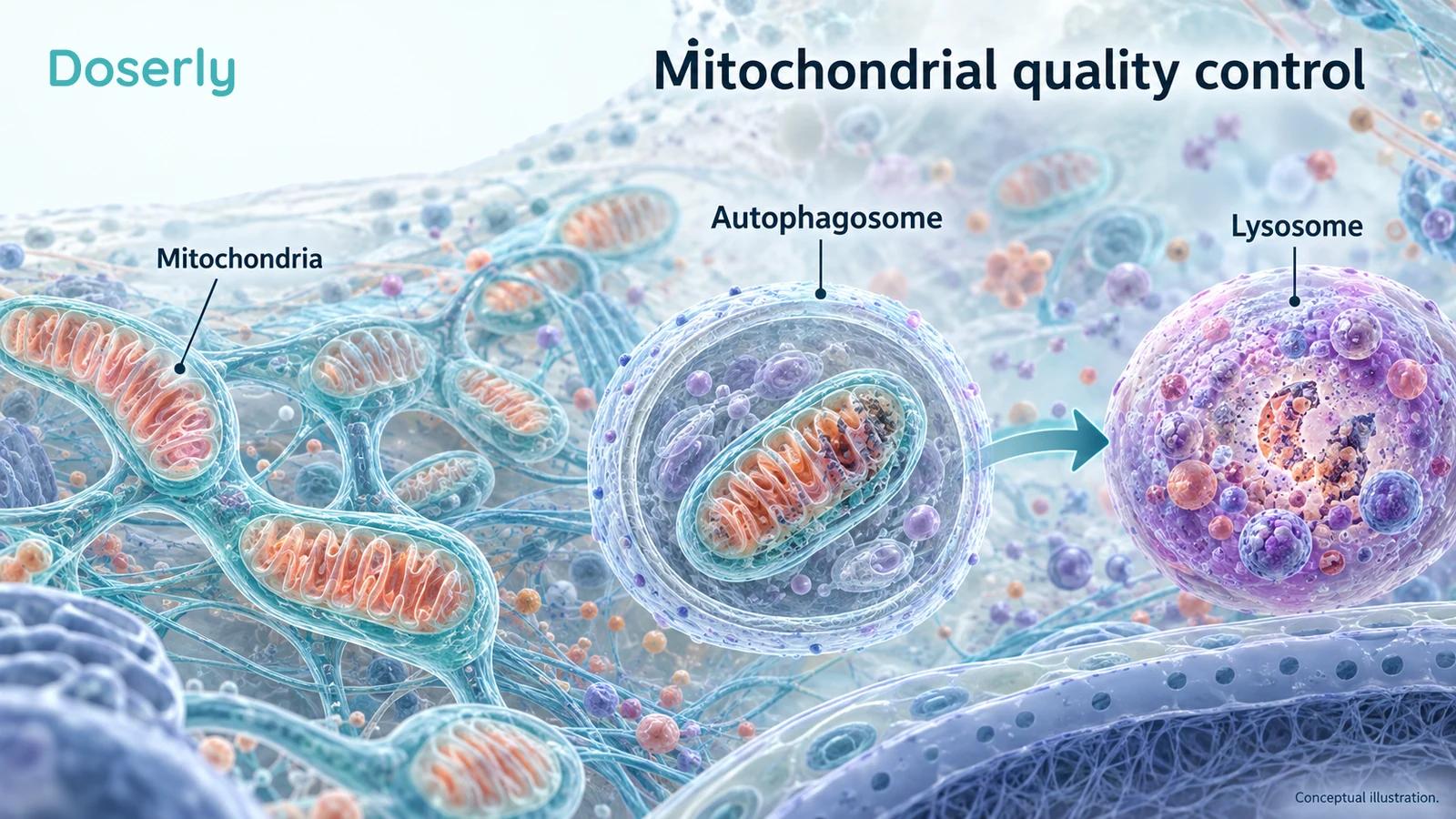
Urolithin A is a compound some gut microbes produce from dietary precursors. Supplemental urolithin A is studied partly for its effects on mitophagy, the process through which cells remove selected mitochondria. The hypothesis is that improving quality control could support muscle or immune function. That is a research rationale, not a guarantee of rejuvenation.
A 2022 randomized trial enrolled 66 adults aged 65 to 90 and compared urolithin A with placebo over four months. The primary outcomes, six-minute walking distance and maximal ATP production in hand muscle, did not show significant between-group improvement. Secondary tests of repeated hand and leg muscle contractions found benefits in endurance. Both groups improved on walking distance, illustrating why the comparison matters more than a before-and-after number from the active group alone. Older-adult urolithin A trial
A separate trial in middle-aged adults reported improvements in selected muscle-strength, performance and biomarker outcomes, but did not find a significant benefit on its primary peak-power endpoint. This is encouraging but mixed evidence. It should not be summarized as uniformly positive proof that the supplement restores youthful muscle. Middle-aged adult trial, 2022
The commercial context matters: these studies involved the product's developer or related financial interests. That does not invalidate randomized findings, but independent replication and prespecified outcomes deserve particular attention. A small secondary benefit is a reason to investigate further, not a reason to quietly promote the endpoint after the primary test disappoints.
For consumers, the unanswered question is often practical: will the supplement produce a noticeable and durable benefit beyond what an appropriate activity and nutrition program already provides? Existing trials do not fully settle that comparison.
The newer immune trial does not establish fewer infections
A 2025 randomized, placebo-controlled proof-of-concept trial tested urolithin A for four weeks in 50 healthy middle-aged adults. It examined immune-cell populations and mitochondrial activity, reporting changes consistent with some favorable features of immune-cell function. The study was designed around cellular endpoints, not clinical infections or vaccine protection. MitoImmune primary report, 2025
This is an informative extension of the research because it examines a different tissue system. It also shows how easily a conclusion can expand during retelling. More naive-like T cells or altered immune metabolism does not yet demonstrate fewer sick days, a better response to vaccination or improved cancer treatment outcomes.
The word immune aging describes multiple changes, not one switch that a supplement turns backward. A short study can detect a real biological effect while leaving the clinical importance unresolved. Larger trials with longer follow-up and outcomes that patients experience are needed to make that connection.
It would also be wrong to turn this supplement trial into a claim that eating a particular fruit reproduces the tested exposure. Food contains many compounds, and microbial conversion varies. A dietary pattern may be worthwhile for other reasons without being equivalent to a standardized study product.
NAD precursors: more substrate does not guarantee more function
The nicotinamide riboside guide explains the precursor and its human evidence in more detail.
NAD is involved in cellular energy reactions and signaling. Nicotinamide riboside, usually shortened to NR, is a precursor used in the body's NAD-related metabolism. The appeal is understandable: if an energy-related molecule changes with age, perhaps supplying a precursor can help.
Human trials show why the reasoning needs an outcome check. A small randomized crossover study in older men found changes in the muscle NAD metabolome and gene-expression or inflammatory signatures after NR. Those changes did not establish better everyday performance. Metabolic exposure and clinical usefulness remained separate questions. Elhassan and colleagues, 2019
Another randomized study in men with obesity and insulin resistance found no improvement in skeletal-muscle mitochondrial respiration, content or morphology. Different populations and study durations may produce different results, but the finding directly challenges a universal claim that NR reliably upgrades human muscle mitochondria. Dollerup and colleagues
It is therefore useful to ask which compartment changed. Blood NAD-related measurements, muscle metabolites and mitochondrial respiration are not synonymous. A supplement can clearly reach a biochemical pathway without the pathway being the limiting factor in a person's fatigue or physical capacity.
This also explains why a higher result is not automatically a better result. Biology needs regulated supply, use and recycling. A concentration does not reveal all of those processes, and there is no validated universal NAD target for maximizing healthy human lifespan.
A walking trial offers a more tangible NR signal
The NICE trial randomized 90 people with peripheral artery disease to NR, NR plus resveratrol, or placebo. Peripheral artery disease can limit blood supply to the legs and make walking difficult. At six months, NR alone improved six-minute walking distance by 17.6 meters relative to placebo.
The statistical framework needs to travel with that number: the trial used a prespecified one-sided threshold of 0.10, and the reported P value was 0.08 with a 90% confidence interval. It met the trial's criterion, but should not be presented as a conventionally definitive two-sided result. The NR-plus-resveratrol group did not significantly improve the primary six-month outcome. NICE primary report, 2024
This is closer to a patient-relevant question than a blood biomarker, and it warrants follow-up. It is still a small study in a particular vascular disease. It does not show that NR improves endurance in all healthy older adults or replaces established peripheral-artery-disease care.
The combination result is also useful. Adding another plausible compound did not automatically produce a stronger result. More ingredients can create a more complicated story without creating better evidence. Any proposed stack needs to be evaluated as the actual combination rather than as the sum of favorable descriptions of its parts.
MOTS-c: human exercise measurements are not injection results
MOTS-c is a short peptide encoded within mitochondrial genetic material. A widely cited 2021 paper combined cell experiments, mouse treatment studies and human exercise measurements. Administering MOTS-c improved physical performance in mice; in people, the investigators measured changes in the peptide produced naturally during exercise. The human participants were not given MOTS-c as the intervention. Reynolds and colleagues, 2021
Those are distinct findings. A substance rising during exercise may participate in the response, reflect the response or do both. Administering that substance later does not automatically reproduce the timing, location or many other signals generated by exercise.
The current research landscape includes a registered phase 2a MOTS-c study in adults with prediabetes and overweight or obesity. The ClinicalTrials.gov record checked for this article lists it as recruiting, with insulin-sensitivity and safety endpoints and no posted results. A registered study is evidence that a question is being investigated, not that the treatment works. MOTS-MET registry
The MOTS-c guide provides additional compound-specific background. CB4211 is a related investigational analog, not another name for the same molecule. Its early human study also cannot be merged with native MOTS-c evidence. The registry identifies a safety, tolerability and pharmacology study; it does not supply a completed healthy-aging outcome trial. CB4211 study record
For the longevity decision, the gap is specific: verified human outcome evidence has not established that self-administered MOTS-c improves healthspan or safely reproduces exercise. Animal performance results do not provide a human dosing plan, and a vial's research label does not solve the missing clinical questions.
SS-31 and elamipretide require a current, precise description
The SS-31 guide provides additional background on elamipretide and its disease-specific evidence.
SS-31 is another name used for elamipretide, a peptide that interacts with cardiolipin in the inner mitochondrial membrane. The mechanism has motivated substantial clinical research. It also provides an example of why disease-specific evidence cannot be compressed into a simple works-or-does-not-work label.
In September 2025, the FDA granted accelerated approval to the manufactured medicine Forzinity to improve muscle strength in adults and children with Barth syndrome weighing at least 30 kilograms. Barth syndrome is a rare genetic disease involving mitochondrial dysfunction. The approval does not extend to ordinary aging, general fatigue or unregulated products sold under the SS-31 name. FDA approval announcement
The FDA describes a very small clinical program, including twelve participants in a randomized crossover study and a longer open-label extension. Accelerated approval requires continued evidence development to confirm benefit. The limited population and design need to remain visible when discussing the result. FDA trial snapshot
A separate phase 3 trial, MMPOWER-3, enrolled 218 people with primary mitochondrial myopathy. After 24 weeks, elamipretide did not improve the coprimary outcomes of six-minute walking distance and fatigue compared with placebo. A treatment can have a narrow approved indication while a different trial in a different mitochondrial disorder is negative. MMPOWER-3 primary report, 2023
The lesson is not that mitochondrial treatments are impossible. It is that the diagnosis, formulation, endpoint and evidence quality matter as much as the target. Neither a regulatory approval nor a negative trial can be responsibly generalized beyond what it tested.
Why a clean-build-fuel sequence is still a hypothesis
Online discussions often arrange these interventions into an attractive order: remove damaged mitochondria, rebuild membranes, then stimulate energy production. The sequence sounds organized because each component is assigned a different biological job.
The problem is that those jobs are simplified interpretations of overlapping biology. Cells regulate production, removal, signaling and repair continuously. A mechanism does not establish that one product must come first, that two products cooperate or that a particular interval prevents harm.
A meaningful combination study would specify the actual compounds, compare the combination against appropriate alternatives, measure clinical outcomes and track adverse effects. Without that evidence, sequencing advice is an untested treatment proposal even if every individual pathway has a scientific paper behind it.
This matters especially when people change several things at once. If sleep, training, diet and multiple compounds all change, an improvement cannot reliably be assigned to one component. New symptoms become harder to interpret as well. Complexity can make a personal experiment less informative while making its risks less predictable.
Choose the outcome before choosing the intervention
If the goal is better walking endurance, follow walking capacity under comparable conditions. If it is strength, assess strength or useful daily tasks. If it is persistent fatigue, begin with a clinical history rather than assuming a specific cellular defect. Sleep disorders, anemia, medications, mood, inadequate nutrition and cardiopulmonary illness can all change energy and deserve appropriate evaluation.
A mitochondrial mechanism may eventually help explain a problem, but it should not become a shortcut around diagnosis. Primary mitochondrial disease requires specialized assessment; ordinary tiredness does not establish that diagnosis. Equally, a person with substantial unexplained symptoms should not be dismissed simply because a commercial energy panel is uninformative.
For a supplement discussion, useful questions include the exact product studied, the population, the primary endpoint, the size of the difference and whether the benefit persisted. For a peptide, add the formulation, regulatory status, human safety evidence and whether the claimed result came from administered treatment or endogenous measurements.
Cost belongs in this conversation too. An intervention with uncertain benefit can displace physiotherapy, appropriate food, sleep evaluation or activity that addresses the person's actual limitation. That is not an argument against all experimentation; it is a reason to make the comparison explicit.
The most convincing mitochondrial intervention is ultimately one that helps people do something meaningful, with acceptable burdens and harms. Exercise already has evidence at both the cellular and functional levels. Supplements offer interesting, uneven signals that need replication. Peptide claims range from legitimate narrow disease treatment to early hypotheses. Keeping those differences visible is the best way to follow the science without letting energy branding decide the care plan.