
In this guide
What is SAMe (S-Adenosyl-L-Methionine)?
SAMe is a methyl donor with drug-like interaction questions. Evidence for mood and osteoarthritis is mixed, and formulation changes exposure. No U.S. RDA, AI, UL or established general supplement dose exists for SAMe. Clinical schedules vary by indication and formulation.
Typical SAMe (S-Adenosyl-L-Methionine) Protocols
| Source and population | Form and amount each time | Frequency | Total exposure | Duration or boundary |
|---|---|---|---|---|
| Sarris 2020 · 49 unmedicated adults with mild/moderate MDD | Oral SAMe totaling 800 mg/day | Daily schedule; administration split not reported in abstract | 800 mg/day | 8 weeks; adjusted primary MADRS result not significant |
| Gören 2004 · pharmacokinetic study | Oral SAMe escalated to 1,600 mg/day | Study-specific escalation | Up to 1,600 mg/day | Serum exposure; not an efficacy protocol |
| Rutjes 2009 · 4 OA placebo trials, 656 participants | SAMe formulations and schedules varied | Study-specific | No universal regimen | Pain/function effects small and inconclusive |
These rows reproduce sources. Do not average them into one universal regimen.
From source to outcome
Primary adjusted result null.
Routine use not advised.
Review medicines first.
Which forms and label details matter?
Record the SAMe salt, elemental/SAMe-equivalent amount, enteric coating, blister integrity, storage, administration relative to food and co-ingredients. Formulations with different stability or bioavailability are not interchangeable.
How should it be stored?
Follow the label, close the container and protect it from heat, light and moisture.
Read the label before the claim
Keep form and outcome linked.
Not a universal regimen.
Track a chosen outcome.
What is it commonly used for?
SAMe is used for depression, osteoarthritis pain and liver-related claims. Mood evidence is promising but inconsistent; osteoarthritis evidence is inconclusive and routine use was not supported by the Cochrane review.
What does human research show?
Sarris randomized 49 unmedicated adults with mild-to-moderate major depression to SAMe 800 mg/day or placebo for eight weeks. The adjusted primary MADRS comparison was not statistically significant; a milder-severity subgroup result was exploratory. [2] The Cochrane osteoarthritis review included four placebo-controlled trials and 656 participants. Pain and function effects were small and evidence quality poor; routine use was not advised pending better trials. [3] NCCIH describes limited, mixed evidence and emphasizes interactions, mania risk and product quality. [1] Pharmacokinetic findings confirm oral exposure but do not establish efficacy, and enteric formulations can differ. [4]
How might it act?
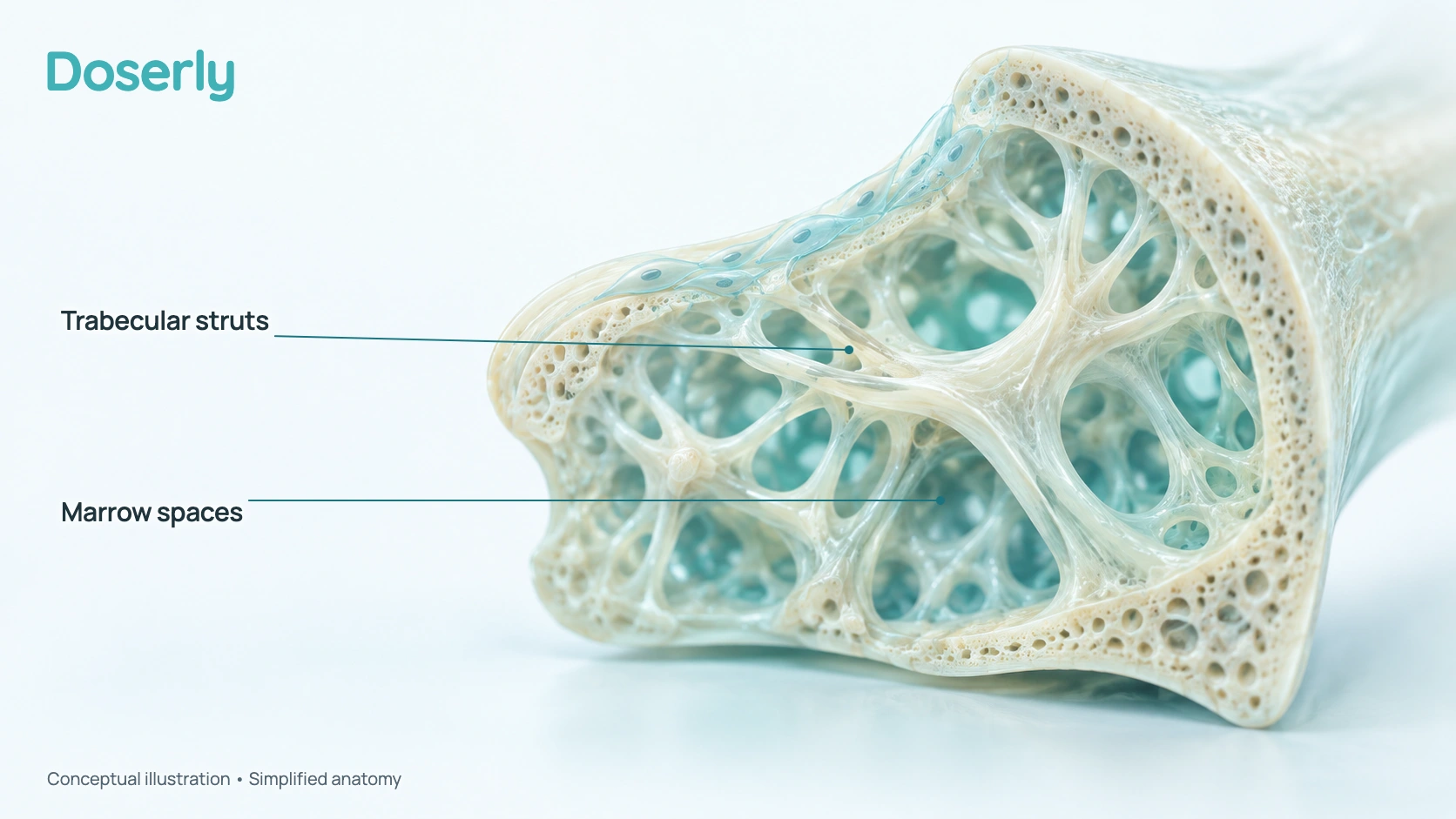
Biological plausibility does not establish a clinical outcome. The guide therefore keeps preparation, population and endpoint attached to each result.
How does it compare with related products?
| Product | Identity to preserve | Evidence boundary |
|---|---|---|
| Glucosamine | Sulfate or hydrochloride; active amount | Form-specific osteoarthritis evidence |
| Chondroitin | Chondroitin sulfate and product quality | Symptom and structure outcomes differ |
| UC-II collagen | Undenatured type II collagen | Milligram-dose proprietary trials |
| Collagen | Hydrolyzed peptides, source and grams | Peptide trials do not transfer to UC-II |
What are the risks and interactions?
SAMe can cause GI symptoms, anxiety, insomnia or activation. It may precipitate mania or hypomania in bipolar disorder and can add to serotonergic effects with antidepressants, tramadol, dextromethorphan, linezolid, MAO inhibitors, St. John’s wort or other serotonergic agents. Review Parkinson disease and levodopa, pregnancy, breastfeeding and surgery.
Which medicines require review?
Have the product reviewed with medicines, before surgery, and during pregnancy or breastfeeding. No universal separation interval is established.
Regulatory status: In the United States, supplements generally lack premarket efficacy approval. In Canada, verify the finished product’s NPN or DIN-HM and licensed conditions. [5], [6]
What should be monitored?
Record product, lot, form, amount per administration, frequency, daily total, co-ingredients, meals, symptoms, medicines, chosen outcome and review date.
What happens when it is stopped?
No ingredient-specific withdrawal syndrome is established. Record the stop date, symptoms and chosen outcome; seek care for a persistent serious symptom.
Seek prompt care for a serious allergic reaction, unusual bleeding, persistent palpitations, chest pain or another severe symptom.
What do public communities report?
Public reports can suggest questions to track, but they do not verify the product, dose or causality. This update did not newly quantify a community sample.
Common questions about SAMe (S-Adenosyl-L-Methionine)
Is SAMe an antidepressant?
It has been studied for depression, but evidence is mixed and it should not replace diagnosis or prescribed care.
Can it trigger mania?
Yes. Activation, hypomania and mania are central concerns, especially with bipolar disorder.
Can it be combined with an SSRI?
Only with prescriber oversight because serotonergic effects and adverse reactions can add.
Does it help osteoarthritis?
The Cochrane review found small, inconclusive effects and did not advise routine use.
Does enteric coating matter?
It can affect stability and exposure; keep the exact product and food timing attached.
What should I track?
Salt/formulation, amount, timing, mood, sleep, activation, medicines, joint symptoms and review date.
Glossary
Terms for reading the evidence.
- Formulation
- The chemical form, source and finished delivery system used in a study.
- Daily total
- The sum across administrations; it does not reveal amount each time.
- WOMAC
- A questionnaire for osteoarthritis pain, stiffness and physical function.
- DXA
- Dual-energy X-ray absorptiometry; some materials can alter the reading itself.
- Subgroup
- A subset analysis that usually carries more uncertainty than the primary result.
- Clinical outcome
- A change in symptoms, function or events rather than only a laboratory marker.
How this guide was researched
Accessible official sources and human reports were read on October 9, 2026. Titles, authors, journals, DOI, PMID and visible corrections were checked. An unreported frequency was not guessed.
How this guide was made
Research and drafting were AI-assisted. This draft awaits Doserly editorial review and independent clinical review. See the editorial policy.
Explore the sources
Sources preserve form, amount, frequency, population, duration and outcome.
Showing 6 sources
- 01
S-Adenosyl-L-Methionine (SAMe): In Depth ↗
Official evidence and safety overview
Current page or report reviewed; scope and limits retained.
Detail: Evidence limits, bipolar and serotonergic cautions, product questions.
- 02
S-Adenosylmethionine (SAMe) monotherapy for depression: an 8-week double-blind, randomised, controlled trial. ↗
Randomized depression pilot
Current page or report reviewed; scope and limits retained.
Detail: 49 adults; 800 mg/day for eight weeks; adjusted primary result not significant.
- 03
S-Adenosylmethionine for osteoarthritis of the knee or hip. ↗
Cochrane systematic review
Current page or report reviewed; scope and limits retained.
Detail: Four trials, 656 participants; small inconclusive effects and poor methods.
- 04
Bioavailability and lack of toxicity of S-adenosyl-L-methionine (SAMe) in humans. ↗
Oral pharmacokinetic study
Current page or report reviewed; scope and limits retained.
Detail: Oral exposure through 1,600 mg/day; efficacy not established by PK.
- 05
Questions and Answers on Dietary Supplements ↗
U.S. regulatory overview
Current page or report reviewed; scope and limits retained.
Detail: Supplements generally lack efficacy preapproval.
- 06
Product Licensing ↗
Canadian licensing overview
Current page or report reviewed; scope and limits retained.
Detail: Finished natural health products require licensing and authorized labels.
No matching sources
Try a different term or show the full list.