
Supplements
October 16, 2026
Resveratrol and exercise: an antioxidant story can have trade-offs
On this page
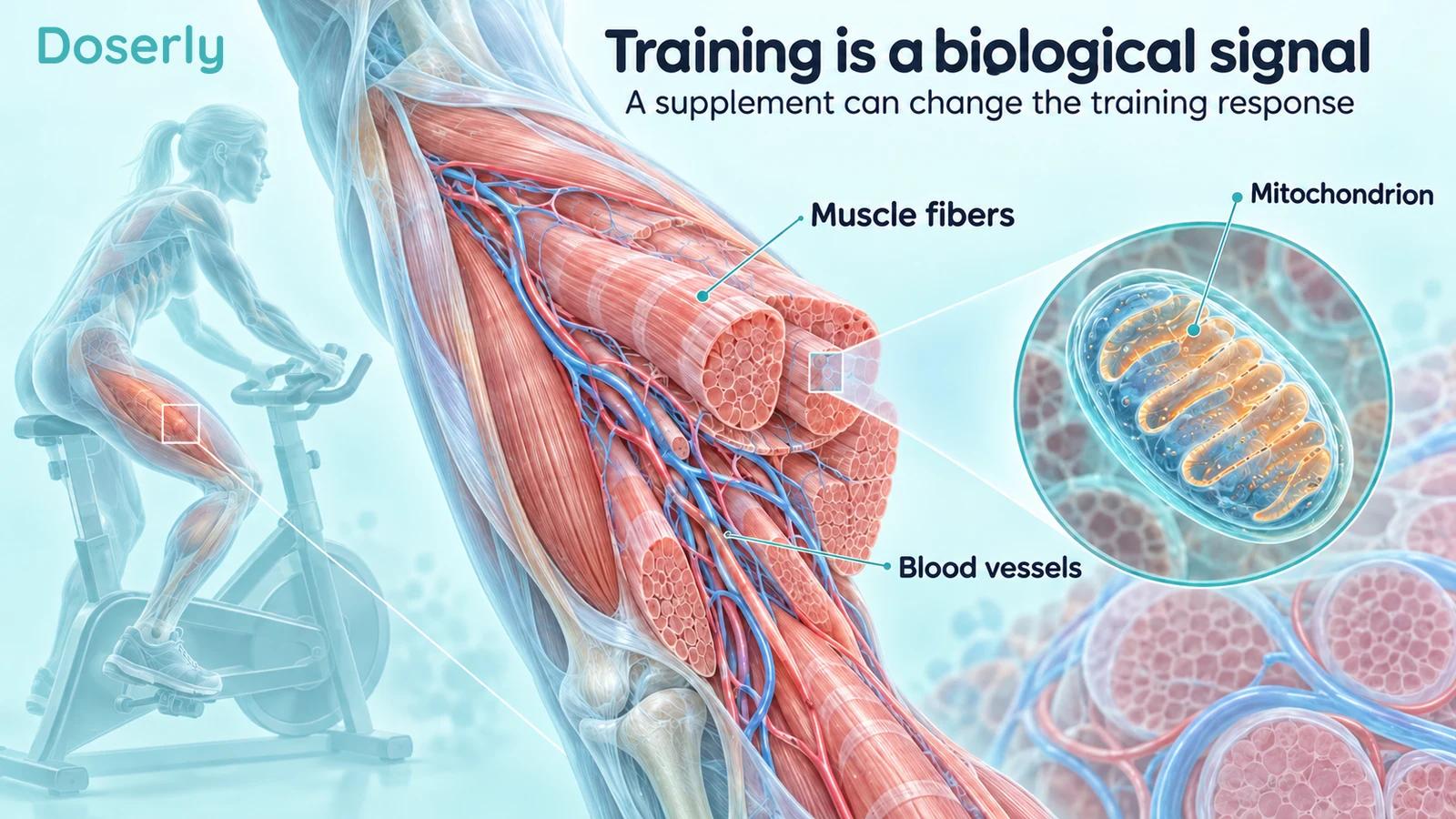
Exercise creates a challenge that the body adapts to. That is why an ingredient described as an antioxidant cannot automatically be assumed to improve training: changing the biological response to a challenge may help, do nothing or interfere with some adaptations.
Resveratrol is a useful example. It attracted interest because laboratory and animal experiments suggested effects on metabolic and vascular pathways. Human exercise studies have not produced a simple “more antioxidant, better fitness” result.
One trial in older men found smaller gains in several cardiovascular measures when resveratrol accompanied training. Other small studies reported neutral results or potentially favorable findings in different settings. The practical lesson is to examine the person, formulation, exercise program and outcome together.
Our resveratrol guide provides broader ingredient context. Here we’ll focus on the interaction with exercise, including why a concerning study should neither be ignored nor turned into a universal claim that resveratrol cancels every workout.
Why “antioxidant” does not predict a training result
Reactive molecules are often discussed only as sources of damage. In exercise biology, changes in cellular signaling also help coordinate adaptation. The relevant question is not whether a supplement has antioxidant activity in a laboratory. It is what the whole intervention does to useful function over time.
Resveratrol affects multiple pathways, so even a trial showing an altered training response cannot automatically identify antioxidant activity as the cause. Mechanistic explanations remain hypotheses unless the experiment establishes the intervening steps.
The older-men studies measured cardiovascular responses, muscle proteins and other markers rather than simply rating the supplement’s chemical antioxidant capacity. Their mixed outcomes make the distinction important: a label describing a molecular property is not a prediction of improved oxygen uptake, strength or walking ability. Original training study; muscle analysis.
A supplement can therefore be biologically active without being a useful exercise aid. Conversely, an unhelpful result for one training program does not settle every possible clinical use.
The trial behind the “blunted benefits” headline
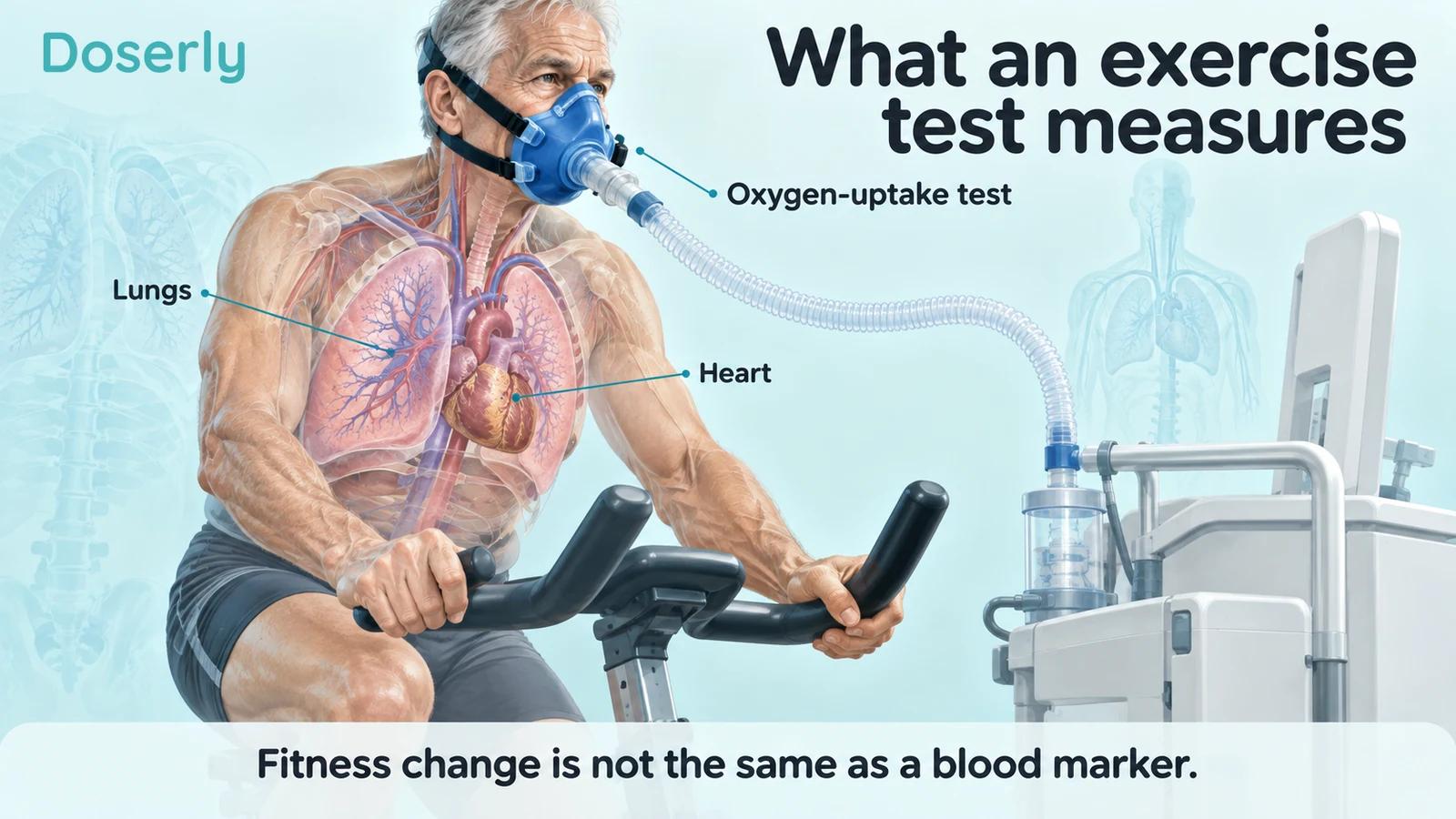
In 2013, researchers reported a blinded randomized study of twenty-seven healthy, physically inactive older men. All completed eight weeks of high-intensity exercise training. Fourteen received 250 mg trans-resveratrol daily and thirteen received placebo.
The increase in maximal oxygen uptake was 45% greater in the placebo group than in the resveratrol group. That describes a difference between the improvements, not a 45% loss of fitness caused by the supplement. Mean arterial pressure decreased in the placebo group only, and some favorable blood-lipid changes associated with training were absent with resveratrol.
Not every measured outcome differed. The result was a pattern of reduced gains in several measures, not proof that exercise stopped working altogether. Gliemann and colleagues.
The trial amount describes a research protocol. It is not a recommendation to use that amount or evidence that a slightly different schedule would avoid the observed effect.
Who does that result apply to?
These participants were older men who had been relatively inactive and then began a defined training program. The trial did not enroll trained endurance athletes, younger women or people taking resveratrol for a diagnosed disease.
Eight weeks is long enough to study some adaptations, but not to determine effects on cardiovascular events or lifespan. A physiological signal can matter without answering those longer-term questions.
The small sample also limits precision and the ability to investigate individual differences. It cannot tell you which particular user would experience a smaller gain. Nor can a personal improvement while taking resveratrol show that the supplement helped: improvement could have been larger with training alone.
That counterfactual is exactly what the placebo group helps estimate. The important comparison is between otherwise similar treatment strategies, not whether the supplement group improved at all.
Several papers do not necessarily mean several independent trials
A 2014 muscle paper from the same research program examined forty-three older men across training and nontraining groups. Its training cohort overlaps the earlier cardiovascular report. It should not be counted as an independent replication of the twenty-seven-person training comparison.
Exercise improved several muscle-related measures and knee-extensor endurance, with no significant added benefit or adverse effect of resveratrol on those particular outcomes. Resveratrol did blunt some training-associated improvements in markers of oxidative stress and inflammation. Olesen and colleagues.
This is scientifically interesting because different outcomes within the same program did not behave identically. It also makes broad statements such as “resveratrol blocked all muscle adaptation” inaccurate.
When assessing an evidence list, look beyond the number of citations. Papers may analyze different samples or outcomes from the same participants. They add detail, but they do not add the same amount of independent confirmation as a new randomized population.
A small study in young men also found no clear enhancement
A separate trial assigned sixteen recreationally active young men to resveratrol or placebo while they completed four weeks of low-volume high-intensity interval training. The resveratrol amount was 150 mg daily.
The study did not find a consistent performance advantage from supplementation. Some training and gene-expression responses differed between groups, and the authors concluded that resveratrol could alter the normal response to this program. Young-adult interval-training trial.
The sample was very small, and the results were not uniformly negative across every endpoint. It is stronger evidence against assuming an automatic enhancement than for estimating a precise amount of harm.
An important statistical caution applies here: an outcome reaching significance within one group but not another does not, on its own, prove the groups differ. A direct between-group or interaction analysis is needed. That is why a careful account should use the study’s comparative results rather than cherry-picking separate before-and-after tests.
There are favorable signals—but the formulation matters
Another sixteen-person study in healthy young adults examined four weeks of forearm endurance training. Participants received placebo or a combination of 500 mg resveratrol and 10 mg piperine daily.
Mitochondrial capacity, assessed using near-infrared spectroscopy, increased more in the trained arm of the combination group than in the placebo group. The untrained arms did not show corresponding changes. Polley and colleagues.
That finding deserves to be included. It also needs its boundaries: the intervention contained piperine, the exercise involved wrist flexors, and the endpoint was a localized physiological measurement. It did not establish better whole-body endurance, reduced disability or a benefit of resveratrol alone.
Piperine is part of the studied formulation, not an incidental detail that can be dropped from the headline. A combination result cannot isolate each ingredient’s contribution without an appropriate comparison.
The study also helps explain why seemingly contradictory findings can coexist. Different muscles, exercise loads, compounds and measurements can produce different responses.
What about older adults with functional limitations?
A pilot trial published in 2021 enrolled sixty older adults with physical-function limitations. Participants completed twelve weeks of supervised walking and whole-body resistance exercise while receiving placebo or one of two resveratrol amounts.
Adherence was reasonably high, and adverse-event frequency and type were similar between groups. Some mobility and muscle measurements suggested possible benefit. The authors concluded that a larger trial was needed to formally test the efficacy hypotheses. Functional-limitation pilot.
The abstract reports several within-group changes. For example, an improvement from baseline in a resveratrol group is not equivalent to a proven advantage over the exercise-plus-placebo group. The pilot was useful for feasibility and estimating effects, but those distinctions prevent it from becoming a definitive treatment claim.
Participants with functional limitations also differ from the relatively healthy men in the earlier training study. Neither population should be used as a universal substitute for the other.
Walking research outside a training program adds context
The 2017 RESTORE trial studied sixty-six adults aged sixty-five or older with peripheral artery disease. Participants received one of two resveratrol amounts or placebo for six months; it was a supplement trial, not the same exercise-training intervention described above.
The lower amount produced a more favorable six-minute walk signal than placebo under the trial’s exploratory one-sided statistical threshold. The higher amount did not, and treadmill results did not provide consistent support. The investigators concluded that there was no consistent evidence of improved walking performance. RESTORE primary report.
This matters for two reasons. First, functional outcomes can be measured directly instead of inferred from antioxidant mechanisms. Second, a larger amount did not reliably produce a better result. The findings do not support choosing a dose by assuming a simple upward relationship between exposure and benefit.
The later NAD precursor guide discusses combination research separately; a resveratrol-alone study and an NR-plus-resveratrol study answer different questions.
What these trials do not tell us about food
The interventions used concentrated supplements in specified amounts. They were not trials of eating berries, grapes or a varied plant-rich diet. A finding about a capsule should not become advice to remove ordinary foods.
Likewise, identifying resveratrol in a food does not make that food a way to reproduce a trial protocol. The amount, surrounding nutrients and exposure pattern differ. The human experiments summarized here do not establish that a food source improves or impairs training through resveratrol.
This is particularly important when the supplement’s origin becomes part of the sales story. “Found in plants” describes where a compound occurs; it does not supply the missing clinical comparison.
Can taking it farther from a workout solve the problem?
These studies do not establish a reliable timing workaround. A result from repeated daily use during a training program cannot determine that taking the same product a few hours earlier or later preserves all adaptations.
Nor does a single good workout prove the supplement has no effect on adaptation. Training effects accumulate, and day-to-day performance varies. A wearable estimate or personal best does not reveal what would have happened under the same conditions without the supplement.
If resveratrol is part of a clinician-directed plan, discuss the training context with that clinician rather than changing treatment on the basis of one study. If you are considering it solely to improve fitness, ask what human outcome supports that purpose and whether the tested product matches yours.
A more useful way to track the decision
Record why you are taking the product, its actual ingredients and when it began. Note changes in training volume, intensity, illness, sleep and other supplements. Those details help interpret symptoms or performance changes without attributing everything to the newest bottle.
A Doserly record can organize that history for a clinician or other qualified professional. It cannot replace controlled evidence or diagnose a molecular pathway from how a session felt.
Keep the practical objective visible. Better fitness, easier daily movement and improved health are outcomes; an antioxidant label is a proposed property. The available human studies do not support assuming that resveratrol makes exercise more effective, and some show potential trade-offs.
At the same time, the varied results justify careful research rather than a claim of universal harm. The strongest conclusion is specific: adding resveratrol changes the intervention, and its value must be demonstrated in the relevant people, training program and outcomes.
Sources
- Gliemann et al., 2013.
- Olesen et al., 2014.
- Young-adult interval-training study, 2014.
- Polley et al., 2016.
- Functional-limitation pilot, 2021.
- RESTORE, 2017.