
Supplements
October 16, 2026
Nicotinamide riboside trials: why target engagement is only the first milestone
On this page
A supplement can reach its biological target without improving the problem someone wants to solve. Nicotinamide riboside, usually called NR, makes that distinction unusually clear. Human studies show that it can alter NAD-related measurements. Whether that translates into better walking, metabolism, neurological function or longer life requires a separate answer for each outcome.
Target engagement means the intervention affected the biological system researchers intended to influence. It is a necessary milestone for many treatments, but it is not a synonym for clinical effectiveness. A fuel-related measurement can change while an engine’s performance stays the same; biology adds even more layers between the measurement and the result.
NR research includes encouraging functional findings, neutral metabolic trials and, as of October 2026, a larger Parkinson’s trial that did not support benefit. Reading those results together is more useful than choosing one headline. Our nicotinamide riboside guide introduces the ingredient; this article focuses on what the human experiments can establish.
What exactly are researchers measuring?
NAD participates in cellular energy reactions and serves as a substrate for enzymes involved in other cell processes. NR is a precursor the body can use within NAD metabolism. A study may measure NAD in whole blood, metabolites inside blood cells, compounds in muscle samples or a brain signal obtained with a specialized imaging technique. Those are different measurements in different compartments. Muscle sampling study; brain measurement study.
Even the phrase “NAD metabolome” is broader than NAD alone. It includes related compounds that help researchers understand how the pathway is responding. A rise in a breakdown product or an intermediate should not automatically be described as an equal rise in the active NAD pool of every organ.
The early human trials are valuable because they ask whether oral NR produces measurable biological exposure. The next question is whether the particular biological change predicts a health outcome. An assay result becomes clinically useful only when we know how to interpret it for the decision at hand.
This is why a percentage increase without the sample type, timing and comparator tells an incomplete story. “NAD increased” can be accurate while the accompanying promise about energy, memory or lifespan remains untested.
The early healthy-adult study opened a question
A 2018 randomized, blinded crossover trial studied NR and placebo over two six-week periods in healthy middle-aged and older adults. NR stimulated NAD metabolism and was generally well tolerated. The researchers also reported preliminary physiological findings that justified further investigation of blood pressure and arterial stiffness. Martens and colleagues.
A crossover design allows the same person to receive both treatments in separate periods. That can make a small physiological experiment informative, but it does not transform it into a long-term cardiovascular prevention trial.
The sensible interpretation is that an oral precursor affected the intended pathway and generated additional hypotheses. It did not establish prevention of heart attack, stroke or age-related disability. A claim about those outcomes needs studies designed to measure them, with enough participants and follow-up to distinguish treatment effects from chance.
Muscle exposure did not guarantee better mitochondrial performance
In 2019, researchers gave twelve older men NR or placebo in a blinded crossover study. Each NR period used 1 gram daily for twenty-one days. Muscle sampling showed changes in the NAD metabolome, including higher nicotinic acid adenine dinucleotide and nicotinamide clearance products.
However, the experiment did not find improved mitochondrial bioenergetics. Some circulating inflammatory markers decreased, and gene-expression patterns changed, but these are different outcomes from greater strength or endurance. Elhassan and colleagues.
That distinction helps prevent a common marketing shortcut. Evidence that muscle tissue responds biochemically is not evidence that the muscle produces more useful work. The study was small, short and limited to older men; it cannot resolve every possible muscle effect. It does show that a response in one layer of biology need not be accompanied by a measurable improvement in the next.
The experimental amount is a description of the protocol, not a recommendation for personal use.
A metabolic trial tested a more direct hypothesis
Forty sedentary men with obesity and insulin resistance took NR or placebo for twelve weeks in a 2018 trial. Researchers used a hyperinsulinemic–euglycemic clamp, a controlled research procedure for measuring insulin sensitivity, alongside assessments of substrate metabolism and body composition.
NR at 1,000 mg twice daily did not improve insulin sensitivity, glucose production or disposal, resting energy expenditure, lipid oxidation or body composition. No serious adverse events attributed to NR were observed, and the reported safety blood tests were normal. Dollerup and colleagues.
The trial’s population and duration matter. It does not prove that every possible NR use is ineffective. It does directly challenge the claim that a substantial oral amount reliably improves insulin resistance in people resembling those participants.
A neutral result should not disappear from the discussion because another study reported a favorable molecule or symptom score. The closer a study’s outcome is to the promise being made, the more directly it informs that promise.
Parkinson’s research shows why follow-up trials matter
The 2022 NADPARK study was a phase I experiment in thirty newly diagnosed, treatment-naive people with Parkinson’s disease. Participants received NR or placebo for thirty days. Brain NAD rose variably with NR, measured using phosphorus magnetic resonance spectroscopy; related metabolites and other biological measures also changed.
Among NR recipients whose brain NAD increased, researchers observed altered cerebral metabolism associated with mild clinical improvement. That was an early, short study designed around safety and biological response, not proof of slowed disease progression. NADPARK primary report.
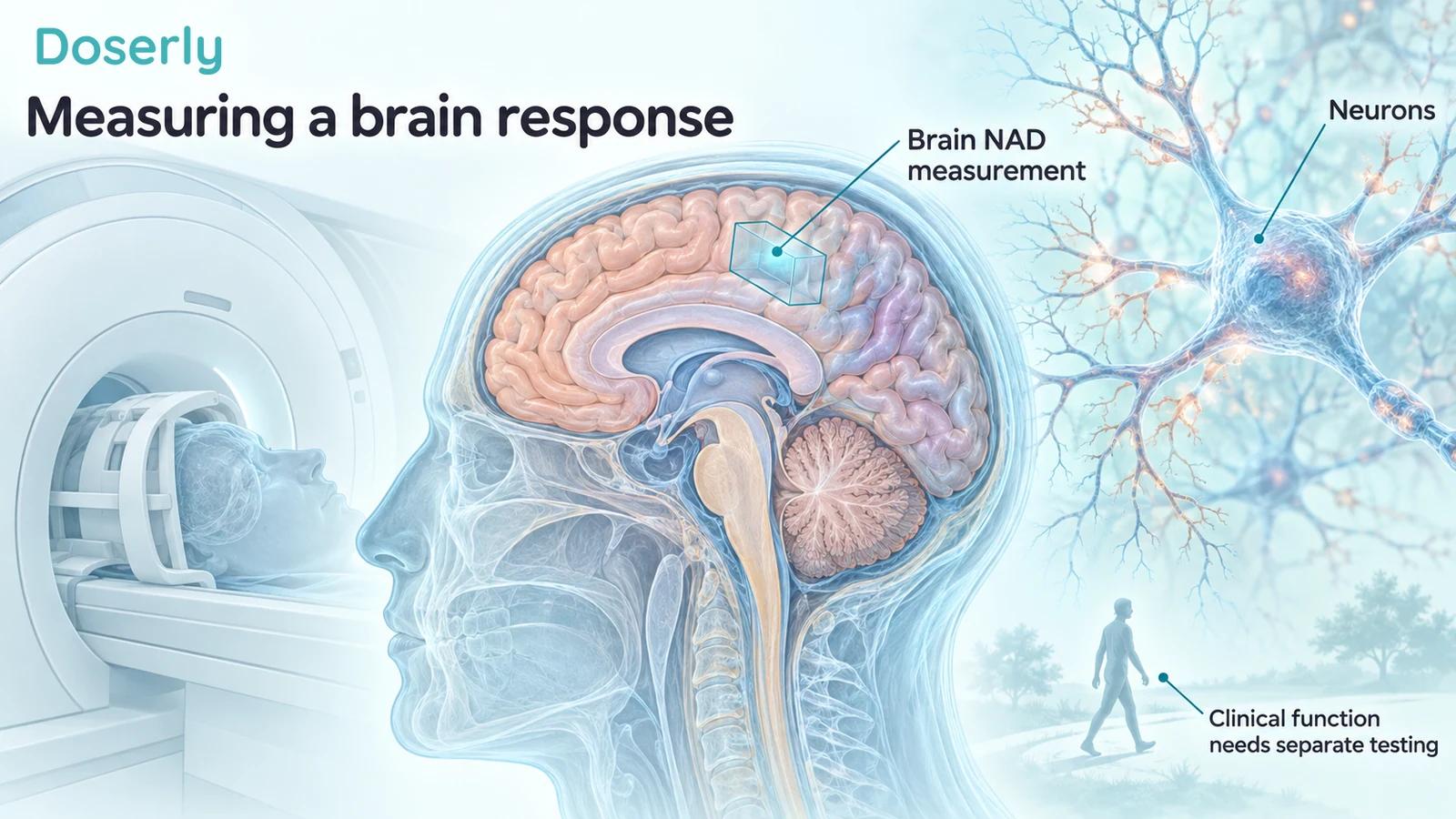
The larger NOPARK trial, published October 8, 2026, randomized 410 people with early Parkinson’s disease to NR or placebo for fifty-two weeks. The primary analysis included 393 participants. Disease-severity scores favored placebo: the adjusted difference was 2.72 points, with a 95% confidence interval of 0.47–4.98; higher scores represented worse disease. The authors concluded that the findings did not support NR as a disease-modifying treatment. NOPARK primary report.
This later result changes how the earlier signal should be presented. Biological plausibility and a small exploratory improvement did not predict clinical success in the larger experiment. It would be misleading to describe the early study as established neurological benefit while omitting the follow-up.
The result concerns this disease, regimen and study population. It does not establish that NR harms every user or answer every non-neurological question. Equally, it cannot be turned into a positive trial simply because an earlier biomarker moved as expected.
A walking trial provides a different kind of signal
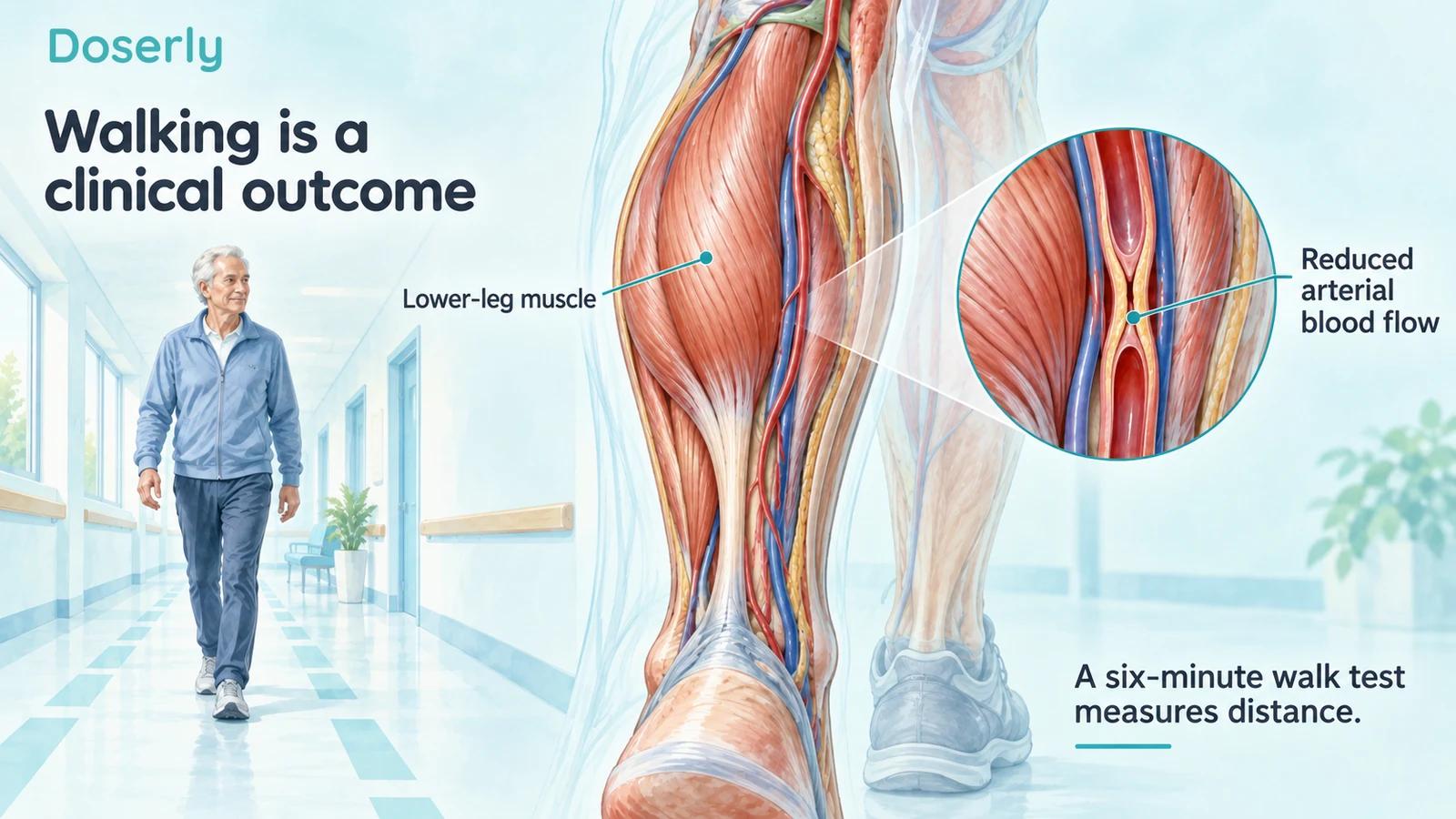
The 2024 NICE study enrolled ninety people with lower-extremity peripheral artery disease, a condition that can impair walking. It compared six months of NR, NR plus resveratrol, and placebo.
The NR group’s six-minute walking distance increased by 7.0 meters while the placebo group’s decreased by 10.6 meters, giving a between-group difference of 17.6 meters. The study reported a one-sided 90% confidence interval, rather than the familiar two-sided 95% interval. Its authors called for a larger confirmatory trial. NICE primary report.
This is more than a blood-marker result: walking is a functional outcome. It deserves attention on those terms. But the statistical design, modest sample and specific disease context still matter. It is not a demonstrated longevity benefit or a prediction of athletic improvement in healthy people.
The study also reported stronger results in a subgroup who took at least 75% of study pills. That subgroup analysis can help generate hypotheses, but selecting participants by adherence can weaken the protection randomization provides. The randomized comparison should remain visible.
Adding resveratrol did not establish extra benefit over NR alone. A plausible complementary ingredient therefore did not automatically make a better intervention in this experiment.
What about heart-failure research?
A thirty-participant trial in clinically stable heart failure with reduced ejection fraction found that NR approximately doubled whole-blood NAD. Within-person NAD increases correlated with changes in respiration and an inflammatory pathway in peripheral blood mononuclear cells. The study primarily addressed safety and tolerability. Heart-failure trial.
Blood immune-cell respiration is not the same measurement as the heart’s pumping performance. Correlation between two changing laboratory measurements also does not establish that one causes an improvement in a clinical endpoint.
The useful conclusion is that this was a translational experiment supporting further investigation. It does not justify replacing established heart-failure treatment or claiming fewer hospitalizations. The organ named in a study’s title does not make every measured endpoint an organ-level clinical benefit.
How can favorable and neutral studies coexist?
Different studies recruit different people and ask different questions. A person limited by arterial disease does not have the same starting physiology as a healthy older adult or a person with early Parkinson’s disease. An effect on walking need not predict an effect on insulin sensitivity.
There are methodological differences too: treatment duration, sample size, the way outcomes are measured and whether an analysis was planned in advance. When researchers measure many outcomes, a few favorable results can appear by chance. Replication helps identify which signals are dependable.
A useful reading habit is to identify the primary endpoint before reading the most striking secondary result. Then ask whether the supplement outperformed placebo, rather than merely improving from its own baseline. Participants can improve because of practice, attention, concurrent care or natural variation.
Publication date matters when a research program moves from an early experiment to a larger trial. An older positive signal may still be scientifically interesting, but it should be presented alongside later tests of the clinical hypothesis. The NADPARK-to-NOPARK sequence is a concrete example: the research progressed, and the interpretation needed to progress with it. October 2026 follow-up trial.
The converse matters as well. A neutral primary endpoint does not erase every biological finding; it limits what can be claimed clinically. Good interpretation preserves both the interesting observation and the boundary around it.
What does this mean for a personal decision?
Start by naming the outcome that matters to you. “Support NAD” names a pathway. Better walking, fewer symptoms or lower disease risk names a result. Look for a trial that connects the specific ingredient and formulation to that result in people reasonably similar to you.
Short-term tolerability in selected trial participants is useful evidence, but it does not establish the safety of years of use, every commercial formulation or a multi-ingredient stack. The NAD precursor guide can help distinguish the category from an individual product.
If you discuss NR with a clinician, bring the actual label and your reason for considering it. Record other supplements and changes in treatment. For someone managing a diagnosed disease, a promising mechanistic explanation should never displace therapies with established clinical benefit.
A Doserly record can help reconstruct exposure and symptom timing. It cannot turn a before-and-after impression into a controlled experiment or establish that a blood NAD measurement predicts future health.
NR is biologically active in humans. The important next sentence is specific: active where, measured how, and associated with which outcome? That is how target engagement becomes a useful scientific milestone without becoming an unsupported health promise.
Sources
- Martens et al., 2018.
- Elhassan et al., 2019.
- Dollerup et al., 2018.
- NADPARK, 2022.
- NOPARK, October 2026.
- NICE, 2024.
- NR in heart failure.