
Longevity
October 17, 2026
Are GLP-1 medicines becoming healthspan treatments?
On this page
A medicine that helps people lose weight is one kind of advance. A medicine that also prevents heart attacks, slows serious kidney disease or makes daily life with heart failure easier raises a broader question: could it help people spend more years in good health?
That is why GLP-1 medicines now appear in longevity discussions. The strongest argument is no longer a change on the bathroom scale. Large randomized trials have measured outcomes that patients can feel or that can change their future care. Yet the word healthspan can also blur the boundary between treating a high-risk medical condition and slowing aging itself.
Some incretin-based medicines already improve important health outcomes in defined patient groups. They have not been shown to be general anti-aging treatments for healthy people. Understanding both parts of that statement makes the research more useful, whether someone is considering treatment for obesity, managing diabetes or simply following longevity science.
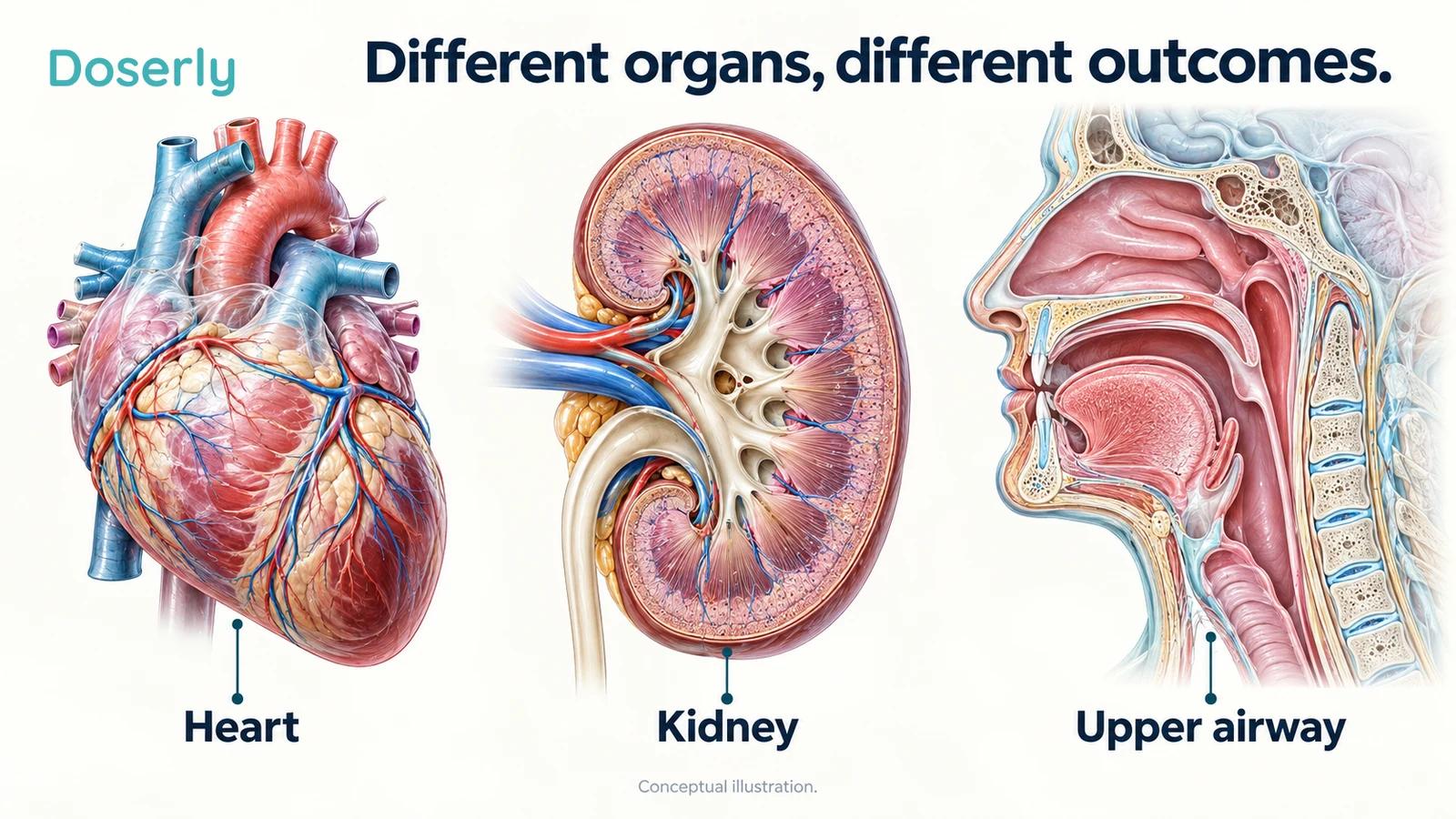
What healthspan means in this conversation
Healthspan usually means time lived with good function and without major disease or disability. It is not a single laboratory value. Someone who avoids a heart attack, remains out of hospital or can walk with less breathlessness may gain something that matters even if no biological-age test changes.
That makes established disease treatment highly relevant to healthy aging. We do not need to prove that a drug resets a universal aging process before acknowledging that it helps a patient. Conversely, benefits across several diseases do not automatically prove such a reset.
The key distinction is between the question a trial actually tested and the larger story attached to it. Preventing another cardiovascular event in a person with established disease is different from preventing all age-related disease in a healthy thirty-year-old. Both involve prevention, but the starting risks, expected benefits and tolerance for side effects differ substantially.
A useful reading of this field therefore starts with the participants. Were they living with obesity, diabetes, kidney disease or heart failure? What treatment were they already receiving? Was the study designed around a clinical event, symptoms, body weight or an exploratory blood marker? Those details determine whether a finding belongs in someone's own care conversation.
These medicines are related, but they are not interchangeable
GLP-1 is a natural hormone involved in coordinating the response to food. Medicines such as semaglutide activate its receptor. Tirzepatide activates both GLP-1 and GIP receptors, so calling it a dual incretin agonist is more precise than treating it as an identical member of the same class.
Their actions can influence appetite, glucose regulation and gastric emptying. A medicine's clinical effects depend on more than the name of the receptor, however. Formulation, exposure, study population and accompanying care all matter. The current semaglutide prescribing information describes specific indications, limitations and precautions rather than a blanket claim of rejuvenation. Wegovy prescribing information
This is why a result with semaglutide does not automatically become a result with every GLP-1 product, and a tirzepatide trial does not establish an identical effect for semaglutide. It is also why experimental combinations and products sold as research peptides cannot borrow the complete benefit-risk profile of an approved manufactured medicine.
For a closer look at the medicines themselves, see the semaglutide guide and tirzepatide guide.
The practical question is not which pathway sounds most powerful. It is which treatment has evidence for the person's condition, is appropriate alongside their other medicines and can be used with continuing support.
SELECT changed the meaning of weight-treatment success
SELECT enrolled 17,604 adults with overweight or obesity and established cardiovascular disease, but without diabetes. Participants received semaglutide or placebo in addition to usual care. Its primary endpoint combined cardiovascular death, nonfatal heart attack and nonfatal stroke.
Over a mean follow-up of approximately 40 months, that endpoint occurred in 6.5% of the semaglutide group and 8.0% of the placebo group. The hazard ratio was 0.80, commonly described as a 20% relative reduction. The observed difference in the proportions was 1.5 percentage points. These are two ways of describing the same study, not competing results. SELECT primary report, 2023
The finding established something more consequential than improved risk markers: fewer major cardiovascular events in this population. It did not test healthy people with normal weight, and it was not a trial of first-event prevention in a generally low-risk population.
That population boundary is central to the healthspan question. A person who has already had vascular disease has more opportunity to benefit from risk reduction than someone whose chance of an event over the same period is very small. Even a similar relative effect, if it existed in a low-risk population, would translate into fewer events prevented.
It is also inappropriate to interpret the composite as proof of an equal reduction in each component. Trials combine outcomes to obtain a meaningful overall test. The individual components need their own estimates and uncertainty, especially when discussing survival rather than the broader event outcome.
FLOW extends the discussion to the kidneys
FLOW tested semaglutide in 3,533 people with type 2 diabetes and chronic kidney disease. The primary outcome combined major kidney disease events with death from kidney or cardiovascular causes. The trial was stopped early after a prespecified interim analysis, with a median follow-up of 3.4 years.
There were 331 first primary events among 1,767 people assigned semaglutide, compared with 410 among 1,766 assigned placebo. That corresponds to approximately 18.7% versus 23.2%, an observed difference of about 4.5 percentage points. The hazard ratio was 0.76. This supports a clinically important benefit in the population studied, while early stopping and the composite definition remain relevant to interpretation. FLOW primary report, 2024
Kidney disease matters to healthspan because it can lead to demanding treatment, cardiovascular complications and loss of resilience during illness. Preserving kidney health is therefore valuable in its own right. We do not need to relabel the result as anti-aging to recognize its significance.
A 2026 analysis examined outcomes across categories of baseline kidney disease severity within FLOW. That helps clinicians explore consistency and applicability within the original population. It is not a new randomized trial in people with healthy kidneys, and subgroup findings do not expand eligibility without qualification. FLOW severity analysis, 2026
For someone with diabetes and kidney disease, this is a discussion about adding evidence-based protection to a coordinated plan. For someone with normal kidney tests, the trial cannot supply a promise that taking the drug will preserve youthful filtration indefinitely.
SUMMIT brings symptoms and function into focus
Heart failure with preserved ejection fraction, often shortened to HFpEF, can cause major symptoms even though the proportion of blood ejected from the heart with each beat is preserved. The label does not mean the heart works normally in every respect. Filling pressures, stiffness and the interaction between the heart and the rest of the body can still limit activity.
SUMMIT randomized 731 people with HFpEF and obesity to tirzepatide or placebo. Cardiovascular death or worsening heart failure occurred in 9.9% versus 15.3% over a median follow-up of 104 weeks. The hazard ratio was 0.62, and the benefit was driven mainly by fewer worsening heart-failure events. The trial also assessed patient-reported health status. It did not establish a stand-alone cardiovascular mortality benefit. SUMMIT primary report, 2025
This is a particularly useful healthspan example because keeping a person out of hospital and improving how they feel can matter immediately. A scale cannot capture all of that value. Nor can a single ejection-fraction number describe the full burden of heart failure.
The result still belongs to a specific phenotype: HFpEF with obesity. Other forms of heart failure, severe frailty and people without obesity may require different decisions. A broad claim that a drug rejuvenates the heart loses exactly the detail a patient needs.

Sleep apnea is another meaningful, but separate, outcome
SURMOUNT-OSA studied tirzepatide in two trials of adults with obesity and moderate-to-severe obstructive sleep apnea. One trial enrolled people not receiving positive airway pressure treatment; the other enrolled people using it. The main outcome was the change in apnea-hypopnea index, the number of breathing interruptions or reductions per hour of sleep.
At 52 weeks, the treatment difference in the first trial was about 20 fewer events per hour compared with placebo, with a substantial reduction also seen in the second trial. This was a sleep-disorder outcome in people with diagnosed disease, not simply a better sleep score on a wearable. SURMOUNT-OSA primary report, 2024
It is tempting to fold this into the same story as cardiovascular and kidney protection. There is a connection through obesity and metabolic health, but the measured outcomes remain different. Improving an apnea index does not by itself prove longer survival, and treatment decisions still depend on symptoms, oxygenation, sleep testing and the wider clinical picture.
Someone already using prescribed airway therapy should not decide it is unnecessary because weight has fallen or snoring has improved. The research supports reassessment with the treating team. It does not make subjective improvement a substitute for checking whether the breathing disorder persists.
Prevention evidence is strongest when the risk state is defined
The longer SURMOUNT-1 analysis followed participants with both obesity and prediabetes. Over three years, tirzepatide produced sustained weight reduction and markedly reduced progression to type 2 diabetes compared with placebo. That is a useful prevention result because the study identified a group at increased risk and followed a recognizable diagnosis. SURMOUNT-1 diabetes-prevention report, 2025
It does not answer whether a metabolically healthy person with normal weight should take an incretin medicine for decades. The balance is different when the risk of the targeted problem is low, and long-term effects cannot be inferred simply by extending a trial curve beyond its observed follow-up.
Prevention also does not mean that every person with a risk marker needs the same intervention. The degree of risk, preferences, other conditions and feasible alternatives influence the decision. A diagnosis such as prediabetes should start a conversation, not erase individual circumstances.
This is one reason the healthspan label can be both helpful and misleading. It encourages attention to future disease rather than weight alone. But it can also make a medicine sound universally appropriate when the supporting studies actually provide a more selective and useful message.
The Alzheimer's trials show why each disease needs its own test
Observational studies and biological hypotheses generated substantial interest in GLP-1 medicines for brain health. That interest reached large randomized trials. The evoke and evoke+ studies tested oral semaglutide in people with early symptomatic Alzheimer's disease.
The 2026 primary publication did not support efficacy for slowing clinical disease progression in those participants. This is an important limit to the idea that benefits across several organs imply protection against every age-related disease. It also illustrates why changes in disease-related biomarkers cannot be assumed to produce a benefit in cognition or daily function. Evoke and evoke+ primary report, 2026
The result does not settle every possible dementia-prevention question. Treating established symptomatic Alzheimer's disease is different from reducing future dementia incidence in people with diabetes or vascular risk. But that distinction cannot be used to convert a negative trial into positive evidence for a different claim.
The responsible interpretation is specific: this tested strategy did not deliver the hoped-for clinical benefit in this population. Other questions remain research questions. A patient with memory symptoms deserves a proper assessment, not an assumption that a metabolic medicine already covers brain aging.
Losing lean mass is not identical to becoming frail
Weight loss includes more than fat. A 2025 body-composition substudy from SURMOUNT-1 found reductions in both fat and lean mass with tirzepatide. Approximately three quarters of the lost weight was fat and one quarter was lean mass. That pattern needs attention, but it is not a direct measurement of muscle strength or frailty. SURMOUNT-1 body-composition analysis
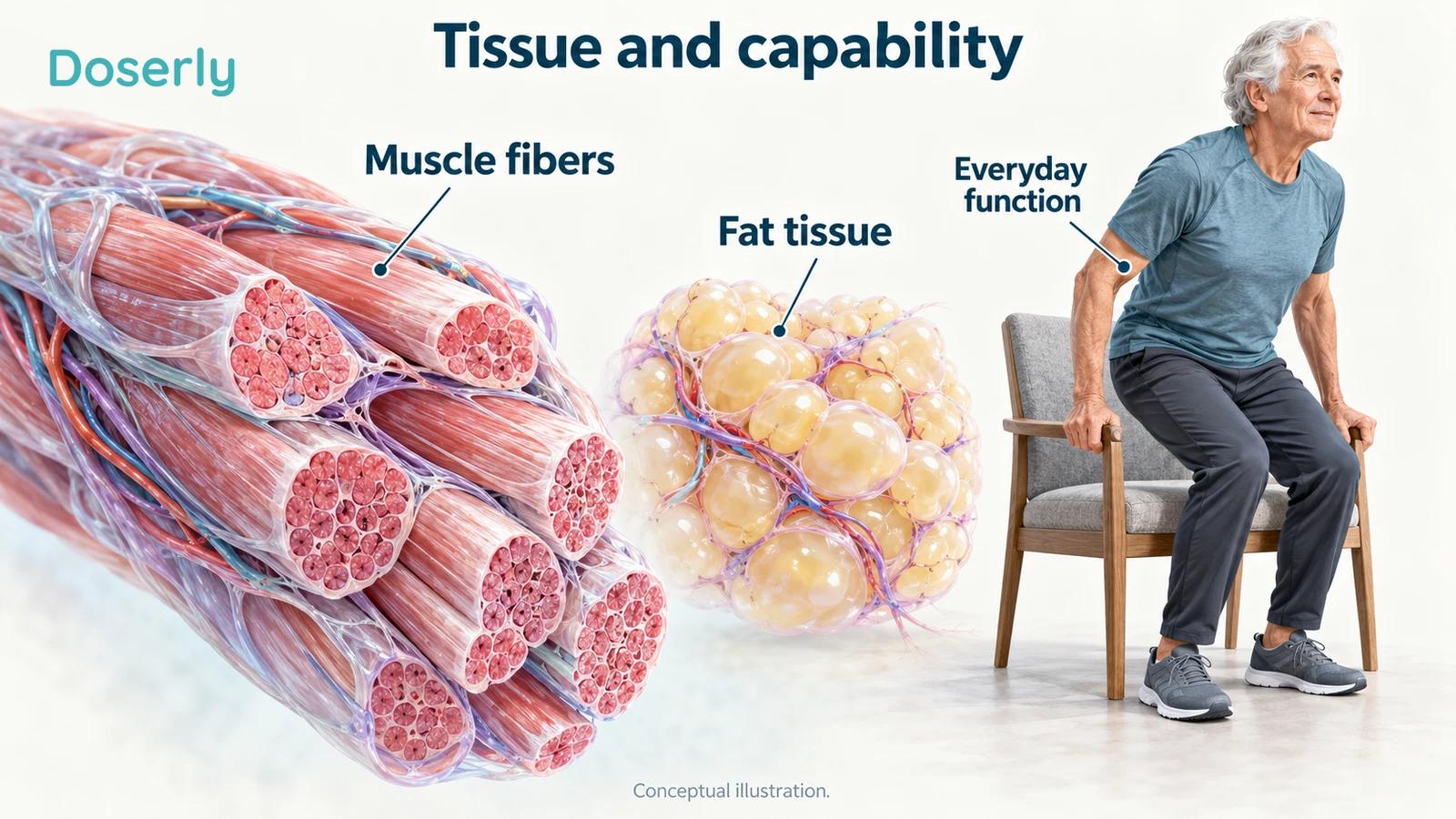
Lean mass measured by DXA includes water and tissues other than skeletal muscle. Muscle itself has multiple qualities: size, strength, power and endurance. A smaller body may move more easily while losing some lean tissue; another person may struggle to eat enough and become weaker. The scan alone cannot decide which story is occurring.
For an older adult, the goal should therefore include preserving capability. Can the person rise from a chair, walk at a useful pace, carry everyday objects and recover from illness? Are appetite changes making normal meals difficult? Has weight loss become unintentional or excessive relative to the agreed goal?
A 2025 joint clinical advisory emphasizes nutritional assessment, management of gastrointestinal symptoms, adequate diet and resistance training during GLP-1 treatment. This is professional guidance, not proof that one supplement or exercise prescription prevents every loss of lean tissue. Its main contribution is to treat nutrition and muscle function as part of care from the beginning. Joint nutritional advisory
Tolerability is part of the outcome
An intervention that improves a trial endpoint can still be unsuitable for a particular person. Nausea, vomiting, constipation and other gastrointestinal effects can affect eating, hydration and willingness to continue. Persistent symptoms deserve a care-plan adjustment rather than being treated as evidence that the medicine is working especially well.
Current semaglutide labeling also describes precautions involving pancreatitis, gallbladder disease, volume depletion and kidney injury, and hypoglycemia with certain other glucose-lowering medicines. It includes specific contraindications, including a personal or family history of medullary thyroid carcinoma or MEN2. Those details belong in prescribing decisions, not a generic longevity checklist. Current prescribing information
The relevant comparison is the overall expected benefit and burden for this patient. It is possible to take obesity seriously as a medical condition while also taking adverse effects, eating disorders, frailty, pregnancy plans and affordability seriously. None of those concerns is answered by a dramatic average weight-loss number.
Trial populations are also selected. People with complex comorbidity, limited support or difficulty attending follow-up may experience treatment differently. Manufacturer-funded trials can provide strong randomized evidence, but funding and sponsor involvement remain relevant context. The major trials discussed here were supported by the manufacturers of the study medicines; replication, transparent reporting and postmarketing evidence continue to matter.
A treatment plan needs a maintenance plan
SURMOUNT-4 used a randomized withdrawal design. After an initial period on tirzepatide, participants either continued treatment or switched to placebo. Withdrawal led to substantial weight regain, whereas continuing treatment maintained and extended weight reduction. The trial helps explain why these medicines are usually discussed as chronic treatment rather than a brief reset. SURMOUNT-4 primary report
That does not mean every person must remain on the same treatment forever. It means stopping is a clinical decision with predictable challenges, not proof that a person lacks willpower. Cost, supply, side effects and changing health circumstances can all force a reassessment.
A useful plan anticipates those possibilities before they become urgent. Who will review symptoms? How will nutrition and function be followed? What happens if coverage ends? Which measures matter beyond weight? A plan that only specifies a target number leaves the most difficult part of chronic care unresolved.

Reading benefit without adding unrelated percentages
A person with obesity, diabetes and kidney disease may resemble participants in more than one trial. It would still be wrong to add the reported cardiovascular, kidney and sleep-apnea percentages together and call the total a reduction in aging. The outcomes overlap, follow-up periods differ, and the same event may appear in more than one composite definition.
The right synthesis is clinical rather than arithmetic. A treatment may address several relevant problems at once, making it particularly useful for that person. The clinician then considers the entire regimen, including therapies already protecting the kidneys or heart, and whether adding this medicine creates a manageable burden. A positive placebo-controlled trial does not directly rank every possible combination against every alternative.
Another useful distinction is between what happened on average and what a patient can observe. Avoiding a future heart attack is not something an individual can prove happened because of treatment. Improved walking tolerance or fewer disruptive symptoms may be noticeable, but they still deserve assessment for other causes. Monitoring should therefore combine the intended disease outcomes, treatment tolerance and daily capability rather than demand a visible transformation as proof of benefit.
This also explains why a medicine can be worthwhile without making someone feel dramatically different. Prevention often has no immediate sensation. The decision rests on credible outcome evidence and individual risk, while follow-up checks that the treatment remains appropriate.
What to ask when the goal is more healthy years
The most useful questions are concrete: Which condition are we treating? Which trial resembles my situation? What absolute benefit is plausible over a meaningful period? What would make us reconsider the treatment? How will we protect nutrition and physical capability while monitoring the intended benefit?
These questions avoid two unhelpful extremes. One dismisses the medicines as cosmetic because weight changes are visible. The other treats them as universal protection against aging because several trials were positive. The evidence supports a more clinically useful position: important benefits, attached to particular medicines, populations and outcomes.
For people with the conditions studied, those benefits may be highly relevant to healthspan. Avoiding a cardiovascular event, delaying serious kidney disease or improving life with heart failure can preserve choices and independence. For healthy people considering treatment solely to slow aging, the supporting outcome evidence is still missing.
The research is changing what good metabolic care can accomplish. Its value becomes clearer when we describe the gains precisely, preserve the boundaries of each trial and keep the person's everyday function at the center of the decision.