
In this guide
What is Cilantro Extract?
Cilantro is the fresh leaf of Coriandrum sativum; coriander commonly refers to its seed. Food, leaf juice, tincture, essential oil and standardized extract create different chemical exposures. [1], [4]
Typical Cilantro Extract Protocols
| Source and question | Preparation | Amount each administration | Daily total | Frequency and duration | Main interpretation |
|---|---|---|---|---|---|
| Controlled human chelation trials | Cilantro leaf or standardized extract | No verified amount | No established total | No validated schedule | No qualifying controlled human evidence for diagnosed heavy-metal burden |
| FDA chelation safety boundary | Unapproved OTC detox or chelation products | No approved self-treatment amount | None established | Do not self-treat suspected poisoning | Unapproved products can cause harm and delay effective care |
| Clinical toxicology pathway | Exposure history, source control and toxicant-specific testing | Not a supplement protocol | Not applicable | Prompt evaluation based on toxicant and symptoms | Diagnosis and treatment depend on the exact substance and measured exposure |
- Exact product
- Record species, form, lot and co-ingredients.
- Each administration
- Keep amount, timing and context.
- Real endpoint
- Separate biomarker, symptom and clinical outcome.
What is it commonly used for?
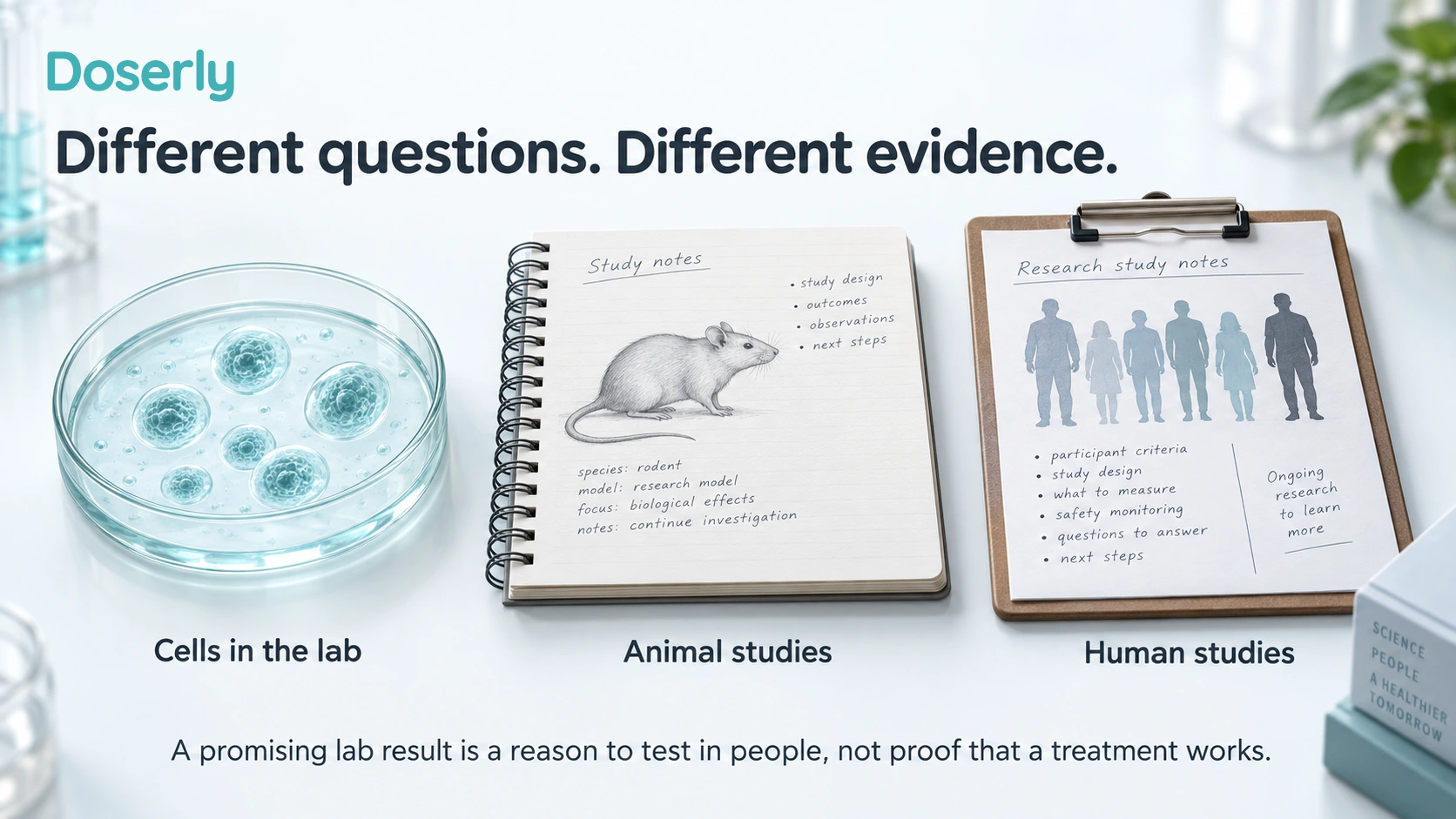
Heavy-metal claims come mainly from laboratory, animal and mixed-protocol reports. No controlled human trial establishes that cilantro extract removes a diagnosed body burden or improves a clinical toxicology outcome. FDA warns that unapproved over-the-counter chelation products can delay effective diagnosis and treatment. [1], [2], [4]
One result answers one question
How do forms and labels differ?
Record leaf versus seed, fresh food versus concentrate, extraction solvent, ratio, each amount and co-ingredients. Essential oil is especially concentrated and cannot be treated as culinary cilantro. [4], [5]
How should the product be stored?
Follow the finished product’s label, keep it dry in its original container and away from children. Discard an expired, heat-damaged, broken-seal or untraceable product.
What does human research show?
| Question | Best direct evidence | Finding | Boundary |
|---|---|---|---|
| Efficacy | Controlled human chelation trials | No qualifying controlled human evidence for diagnosed heavy-metal burden | Specific product and population |
| Replication | Limited evidence | No universal effect established | Variable formulations |
| Universal dose? | None | Not established | Rows cannot be combined |
Keep the finished product reviewable
What are the risks and interactions?
Food allergy and gastrointestinal symptoms are possible; concentrated extracts may affect glucose, blood pressure or medication response. Pregnancy, breastfeeding, surgery and glucose- or pressure-lowering medicines warrant review. A provoked urine test after an unvalidated binder does not diagnose toxicity. [2], [3], [5], [6]
Contact poison control or emergency services for a significant suspected exposure, confusion, weakness, severe abdominal symptoms, breathing difficulty, seizure or loss of consciousness. Bring product and exposure details.
What is the legal and regulatory status?
In the United States, it is sold as a dietary supplement; FDA does not approve it for safety and effectiveness before sale. In Canada, verify the exact product, NPN and authorized label. Legal sale does not prove efficacy or sport suitability. [6]
When should use stop?
Stop for any allergic reaction, persistent symptom worsening, unexpected laboratory result or doubt about product identity.
What should be monitored?
For suspected exposure, record source, timing, occupation or hobby, symptoms and validated blood or urine results ordered for the specific toxicant. Remove the source and involve poison control or a clinician. Do not use symptom changes after cilantro as proof of mobilization.
What can community experience add?
Reports can describe taste, odor and tolerance. They cannot diagnose metal toxicity or validate a chelation protocol. No systematic current community sample was assembled.
How do related options compare?
| Option | Main distinction |
|---|---|
| Culinary cilantro | Food exposure; no chelation protocol |
| Leaf extract or tincture | Concentrated and product-specific |
| Essential oil | Highly concentrated; separate safety profile |
Common questions
Does cilantro remove mercury or lead?
Controlled human evidence has not established that.
Is a detox reaction proof it works?
No.
Can provoked urine testing diagnose toxicity?
It can mislead; use validated toxicant-specific testing.
What comes first after exposure?
Stop the source and contact poison control or a clinician.
Is essential oil equivalent to food?
No.
What belongs in a record?
Exact product, exposure source, symptoms and validated measurements.
Glossary
Terms for reading the evidence.
- Endpoint
- A defined result measured in a study.
- Anaphylaxis
- A potentially life-threatening systemic allergic reaction.
- Biomarker
- A biological measure that does not guarantee clinical benefit.
- Standardization
- A measured specification for a product component.
- Cross-reactivity
- Immune recognition of related proteins from different sources.
How this guide was researched
NCBI identities, publication notices, indexed abstracts and available open methods were checked. Null outcomes, mixed products, surrogate endpoints and missing details remain visible.
Research record · checked October 9, 2026
Search boundary: current institutional toxicology and supplement sources were checked along with the legacy research set; no controlled human cilantro-chelation trial with a validated clinical endpoint was identified.
Dose: no human chelation amount or schedule was invented.
Clinical boundary: food use, supplement use, diagnosis and approved chelation remain separate.
Explore the sources
Primary human evidence and official context.
Showing 6 sources
- 01
Questions and Answers on Unapproved Chelation Products ↗
Official safety warning
FDA states that no over-the-counter chelation product is approved and warns that unapproved products can delay effective care.
- 02
Lead Poisoning ↗
Official exposure and testing guidance
Prevention, source control and validated blood testing are central; supplement response is not a diagnostic method.
- 03
Heavy Metal Poisoning ↗
Official clinical overview
Testing and treatment depend on the specific metal and exposure; symptoms alone are nonspecific.
- 04
Mixing Medications and Dietary Supplements Can Endanger Your Health ↗
Official interaction guidance
Natural does not mean interaction-free, and concentrated products require medication review.
- 05
FDA 101: Dietary Supplements ↗
Official supplement overview
FDA does not approve dietary supplements for safety and effectiveness before sale.
- 06
Coriander ↗
Official lactation evidence review
Culinary use and concentrated preparations are distinct; human supplement safety data are limited.
No matching sources
Try a different term or show the full list.
Editorial note
This guide separates composition, biomarker, symptom and clinical outcome. It does not turn a narrow signal into a general promise.