
Peptides
October 16, 2026
Survodutide in type 2 diabetes: what a 16-week trial can tell us
On this page
Survodutide is being developed to activate two hormone receptors involved in metabolism: the receptors for glucagon-like peptide-1, usually shortened to GLP-1, and glucagon. For someone living with type 2 diabetes, the important question is how that combination affects blood sugar as well as weight. Glucagon can stimulate the liver to release glucose, so a drug that activates its receptor needs to demonstrate its overall glucose effect in people.
A 16-week randomized trial provided an early answer. In adults taking metformin, survodutide lowered average HbA1c and body weight. The finding helped justify larger studies, but the trial was designed to establish a dose response over several months, rather than determine whether treatment prevents diabetes complications over years. Original diabetes trial
There is now a longer phase 3 diabetes study, too. That makes the early trial useful for understanding how researchers selected treatment approaches and why a promising short-term percentage isn't a forecast of an individual's eventual result. Our survodutide guide provides the broader background; here we'll focus on what the early diabetes experiment measured.
Why blood sugar and weight belong in the same discussion
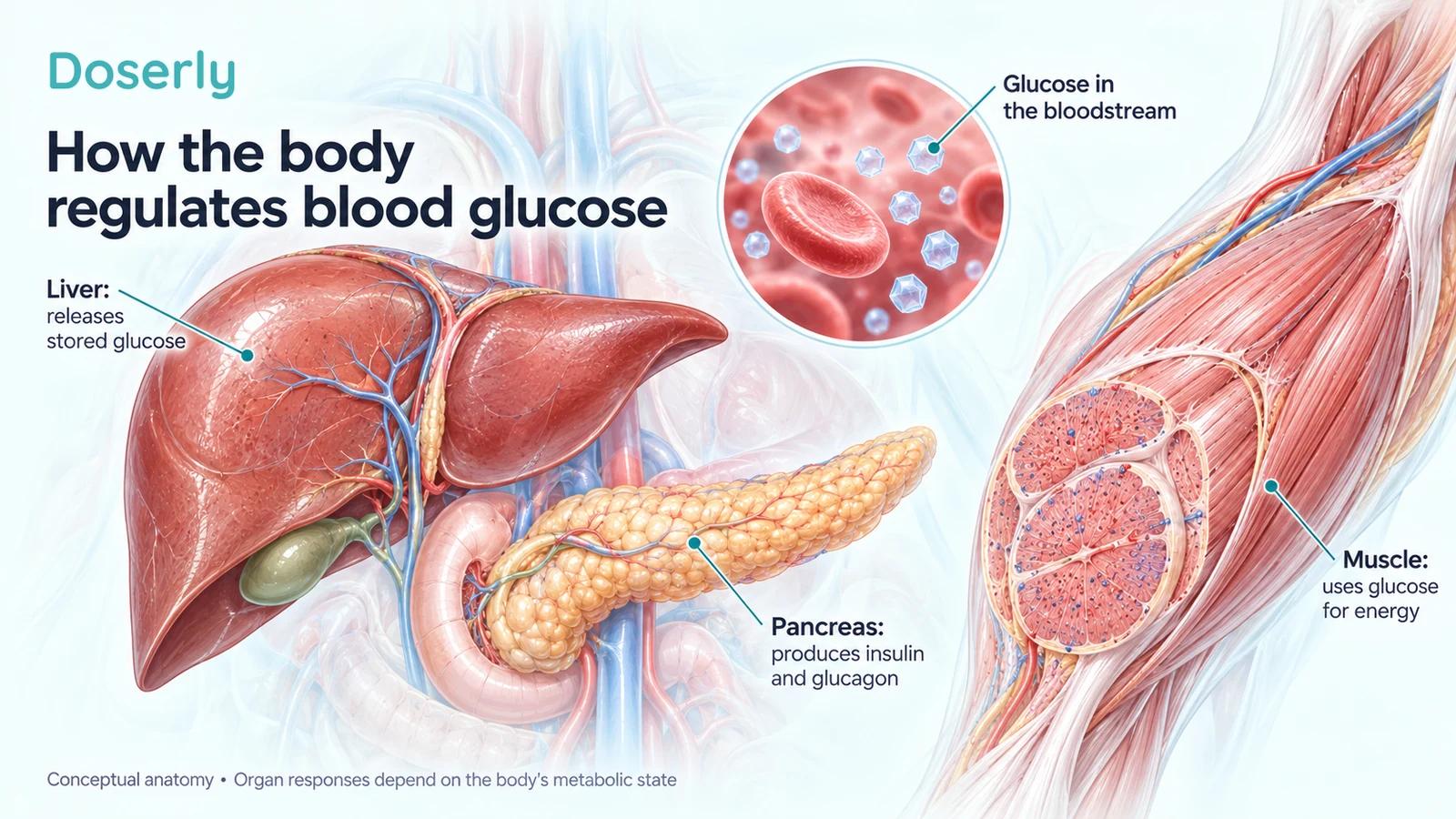
In type 2 diabetes, the body's response to insulin is impaired and insulin production may no longer meet its needs. Insulin helps glucose enter cells for energy. The liver also contributes glucose to the circulation, so blood sugar reflects more than the sugar in a recent meal. Treatment can act on several parts of this system. NIDDK overview of type 2 diabetes
Survodutide's GLP-1 activity is intended to support glucose regulation and reduce food intake. Its glucagon activity adds effects on liver metabolism. These actions occur together in one molecule; the diabetes trial tested their combined result. It didn't separately assign participants to the two receptor activities, so it cannot identify exactly how much each contributed. Trial biological rationale
A mechanism can sound contradictory before it is tested. Activating a receptor associated with glucose release doesn't necessarily mean the complete treatment raises average glucose. Conversely, describing a molecule as a dual agonist doesn't guarantee better glucose control. The measured response, including adverse effects, determines whether the proposed combination has clinical promise.
Who participated in the 16-week study?
The trial randomized 413 adults, and 411 received treatment. Participants were aged 18–75, had type 2 diabetes for at least six months, an HbA1c of 7.0–10.0%, and a body mass index of 25–50. All had been taking a stable metformin dose of at least 1,000 mg daily for at least three months. Mean age was about 57, mean BMI about 34, and average starting HbA1c about 8.1%. Most participants were White. Eligibility and baseline characteristics
These details describe a specific treatment situation: blood sugar remained above the study's entry threshold despite metformin. The study wasn't a test in newly diagnosed people receiving no medicine, people using insulin, or everyone who has diabetes regardless of weight. A result in this selected population can inform further research without automatically answering all those other questions.
Participants entered six survodutide groups, a placebo group or a semaglutide reference group. The survodutide groups tested several escalating regimens, including weekly and twice-weekly administration. Those were experimental schedules used to study dose response, not instructions for personal use. Semaglutide was escalated to a target of 1 mg weekly. Study methods
The survodutide and placebo comparisons were blinded within dose groups. The semaglutide arm was open-label, meaning its treatment identity was known. The authors explain that it served as a reference for response curves and planning subsequent research. That is useful context when a headline portrays this as a definitive contest between two medicines.
What does a change in HbA1c mean?
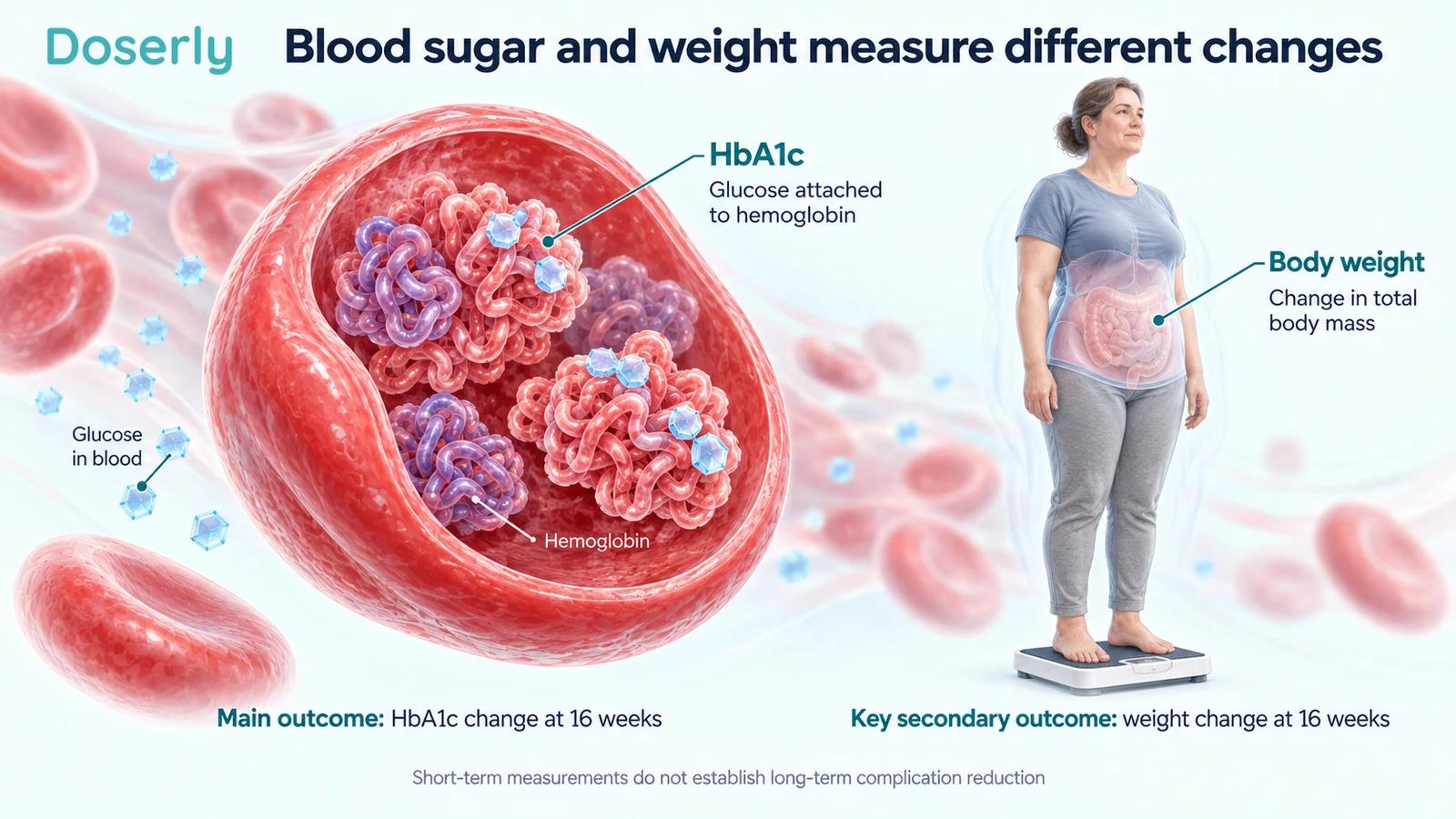
HbA1c, also called glycated hemoglobin, reflects glucose attached to hemoglobin in red blood cells. It summarizes average glucose exposure over roughly the preceding three months. A single glucose-meter reading tells you about one moment; HbA1c answers a longer-term question. Recent weeks influence it more than earlier weeks. NIDDK explanation of HbA1c
The trial's main endpoint was the absolute change in HbA1c after 16 weeks. The key secondary endpoint was the percentage change in body weight. These use percentages differently. Moving from an HbA1c of 8.0% to 6.5% is a fall of 1.5 percentage points. Losing 5% of starting body weight is a relative change in mass. Confusing those units makes the findings harder to interpret.
An HbA1c improvement is clinically relevant to diabetes management, but it doesn't describe every aspect of glucose control. Two people can have similar averages and different patterns of high and low readings. Changes in red blood cells or hemoglobin can also affect the test. A clinician interprets the value alongside symptoms, glucose measurements and medical history. NIDDK testing limitations
How much did HbA1c fall?
Adjusted average HbA1c changes ranged from −0.91 to −1.71 percentage points across the six survodutide groups, compared with −0.15 points with placebo. The semaglutide reference group had a change of −1.47 points. These are model-based group averages, not the improvement every participant experienced. Primary HbA1c results, registered endpoint definitions
The lowest survodutide dose had a smaller effect than the other regimens. Above that, the glucose response didn't keep increasing in a simple straight line. The authors' dose-response model suggested a plateau around the 1.8 mg weekly regimen. This is a research finding about the tested schedules, not evidence that everyone should aim for that dose.
The plateau has a practical meaning for drug development. Researchers need to know whether greater exposure produces an additional improvement large enough to justify any additional adverse effects. Blood sugar and weight need not plateau at the same exposure. A dose-finding study helps reveal that distinction before a larger trial commits to fewer treatment arms.
Starting HbA1c also matters. An average change from a baseline near 8.1% shouldn't be transplanted to someone starting close to their treatment goal. Nor should subtracting the largest average reduction from one person's laboratory result be presented as a prediction. The trial describes a distribution of responses in selected participants.
What happened to weight?
Body weight decreased more at higher tested survodutide exposures. The largest adjusted average reduction was 8.7% in the highest twice-weekly group, with a 95% confidence interval of 7.3%–10.1% weight loss. The semaglutide reference group lost an average 5.3%. The interval describes uncertainty around the group estimate, rather than the range of individual outcomes. Weight results
It would be misleading to describe the 8.7% figure as the result of the later once-weekly phase 3 regimen. It came from a particular experimental arm in this 16-week study. The amount administered, escalation period and number of observations contributing to the final estimate all belong with the number.
The trial also cannot establish that survodutide is superior to every semaglutide treatment approach. The comparator here targeted 1 mg weekly, not every dose, formulation or indication in which semaglutide is used. The open-label reference arm and exploratory dose-finding purpose further limit a sweeping ranking. The semaglutide guide explains why its different clinical uses shouldn't be collapsed into one comparison.
Tolerability was part of the experiment
Adverse events occurred in 77.8% of survodutide recipients, compared with 52.5% of placebo recipients and 52.0% of semaglutide recipients. Gastrointestinal events were prominent. Across the entire treated study population, 80 participants stopped treatment early, including 53 because of an adverse event. The latter counts cover all study groups and must not be described as survodutide-only totals. Participant flow and safety results
Dose escalation was relatively rapid: the design allowed six weeks of escalation followed by ten weeks at the maintenance dose. The investigators considered this a likely contributor to tolerability problems and proposed testing slower escalation. That is a plausible design lesson. It is not proof that any slower schedule would eliminate gastrointestinal symptoms or make an experimental drug safe for self-administration.
For a person with diabetes, a treatment has to be usable as well as effective in an analysis. Symptoms can affect eating, daily activity and willingness to continue. A small trial can identify common problems; it cannot reliably exclude rare or delayed harms. Sixteen weeks also provides little information about maintaining treatment over several years.
What does the newer diabetes trial add?
The phase 3 SYNCHRONIZE-2 report was published on October 1, 2026. It enrolled 752 adults with type 2 diabetes and BMI of at least 27, comparing two once-weekly survodutide targets with placebo over 76 weeks. Average baseline HbA1c was 7.4%. The primary report describes average HbA1c changes of −0.9 and −0.8 percentage points in the survodutide groups and −0.2 with placebo. SYNCHRONIZE-2 primary report
Those smaller HbA1c changes don't establish that the drug became less effective. The starting glucose level, participants, schedules, duration and analysis differ from the phase 2 trial. The later trial also asked an obesity-treatment question in people with diabetes. Comparing isolated changes across the two experiments would ignore the conditions that produced them.
The newer study means the 16-week trial should no longer be described as the full human diabetes evidence base. It remains an informative early experiment, especially for understanding dose selection and the distinction between glucose and weight responses. A reader considering current evidence should discuss the longer trial as well.
What remains beyond a 16-week result?
Better glucose control is worthwhile, but this early trial didn't establish fewer heart attacks, less kidney failure, prevention of blindness or longer survival. Those claims require studies designed around the relevant complications, with enough events and follow-up to estimate effects. They cannot be calculated from the size of an HbA1c reduction alone.
It also didn't establish diabetes remission. A lower HbA1c while receiving a glucose-lowering treatment answers a different question from sustained control after treatment is withdrawn. Likewise, a weight reduction during treatment doesn't tell us how much would remain after stopping.
For a clinical conversation, start with the goal that matters to you: reaching an individualized glucose target, managing weight, reducing an established complication risk, or finding a treatment you can tolerate. Then ask whether the supporting evidence addresses that goal in people with a similar treatment history. Keeping a dated record of glucose results, symptoms and medication changes can make the conversation more concrete. The survodutide guide connects this early diabetes study with the wider research program.
Sources
- Blüher and colleagues: 16-week randomized diabetes trial, published online 2023, journal issue 2024. Original methods and results; funded by Boehringer Ingelheim.
- Trial registration, NCT04153929. Study identifier and protocol location cited by the publication.
- NIDDK: type 2 diabetes. Background on insulin and glucose regulation.
- NIDDK: the A1C test. Measurement and limitations.
- Wharton and colleagues: SYNCHRONIZE-2, 2026. Longer phase 3 diabetes study; abstract-level check for details used here.