
HRT
October 16, 2026
Surgical menopause: planning for an abrupt hormonal transition
On this page
The ovaries produce estrogen and other hormones before natural menopause. Removing both ovaries during this time ends that ovarian hormone production abruptly. Hot flashes, disrupted sleep, vaginal symptoms and changes in sexual wellbeing can therefore appear alongside recovery from the operation.
That experience differs from the gradual, variable transition through natural menopause. It also differs from having the uterus removed while the ovaries remain. The operation’s name, the organs removed, your age and the reason for surgery all shape what happens next. British Menopause Society surgical menopause toolkit.
A useful plan begins before surgery when possible. It addresses recovery, symptoms, fertility, hormone treatment and longer-term follow-up, rather than waiting until everything is difficult to disentangle. If surgery has already happened, it is still worth asking for that conversation.
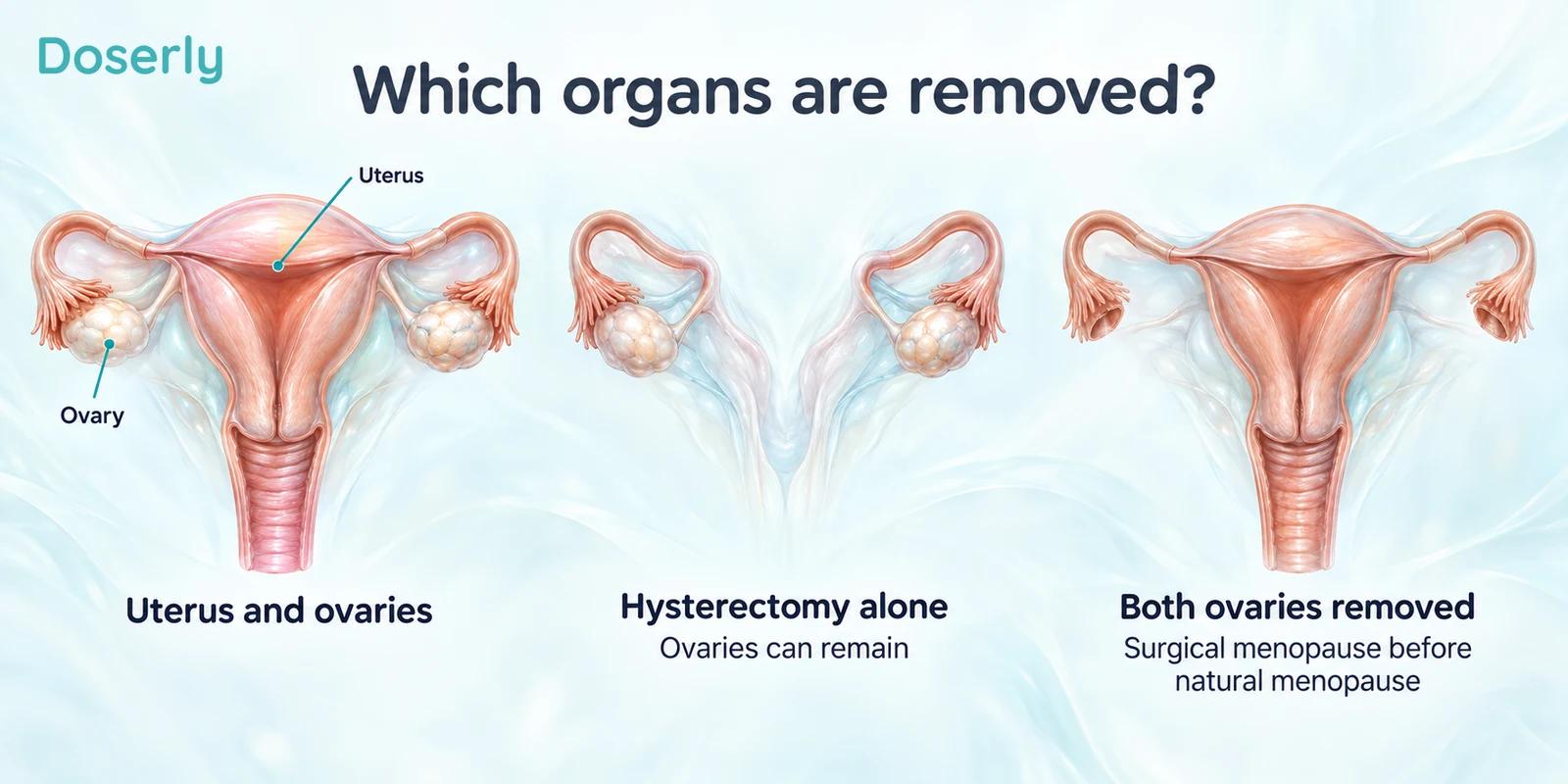
Hysterectomy and ovary removal are different operations
A hysterectomy removes the uterus. It stops menstrual bleeding because the uterine lining is no longer present, but it does not necessarily remove the ovaries. Ovaries that remain can continue producing hormones, although their future function can vary.
An oophorectomy removes an ovary; bilateral oophorectomy removes both. A bilateral salpingo-oophorectomy removes both ovaries and fallopian tubes. Removing tubes alone is not the same hormonal event as removing both ovaries.
This terminology matters when interpreting symptoms and choosing treatment. “I had a hysterectomy” is not enough information to establish whether someone entered surgical menopause. The operative report or discharge summary can clarify what was removed and whether any tissue or disease remains relevant to future care.
Removing one ovary does not automatically produce immediate menopause if the other continues functioning. Conversely, someone who has had both ovaries removed before natural menopause does not need to wait for a year without periods to recognize the surgical cause of hormone loss. BMS toolkit.
Why the first weeks can feel complicated
A sudden change in ovarian hormones can contribute to hot flashes, night sweats and disturbed sleep. At the same time, pain, anesthetic recovery, reduced activity and worry about the reason for surgery can affect energy and mood. Not every postoperative symptom is therefore a hormone symptom.
That distinction is practical. Increasing hormone treatment would not address an infection, anemia or an inadequately controlled pain problem. Fever, worsening abdominal pain, wound concerns or other symptoms identified in the discharge instructions need the surgical team’s assessment.
Record when symptoms began and how they relate to the operation and medication changes. For example, describe whether sleep is interrupted by heat and sweating, pain, urinary symptoms or anxiety. That gives clinicians more to work with than a single statement that recovery feels wrong.
The speed of the transition also means that comparison with a friend’s natural menopause can be unhelpful. Someone may need treatment promptly and may need adjustments as surgical recovery progresses. Our surgical menopause guide explains the broader symptom and treatment picture.
Age at surgery changes the long-term context
When ovaries are removed well before the usual age of menopause, the person may face many additional years with reduced ovarian hormone exposure. This is one reason guidelines discuss hormone replacement differently in younger patients.
A large Ontario cohort studied 200,549 women, aged 30–70, undergoing hysterectomy for nonmalignant conditions. Median follow-up was 12 years. Compared with ovarian conservation, bilateral salpingo-oophorectomy was associated with higher all-cause mortality below age 45: hazard ratio 1.31, with a 95% confidence interval of 1.18–1.45. For ages 45–49, the estimate was 1.16, with a confidence interval of 1.04–1.30. Cusimano and colleagues.
The study was observational, and age groups were used to approximate menopause stage. It was not a randomized trial of removing ovaries, nor a trial proving that HRT reverses the association. Crucially, it studied nonmalignant hysterectomy. Its findings cannot by themselves determine whether cancer treatment or inherited cancer-risk surgery should proceed.
What another long-term cohort adds
The Nurses’ Health Study compared ovarian removal with conservation among women having hysterectomy for benign disease. Over 28 years, all-cause mortality was 16.8% after bilateral oophorectomy and 13.3% with ovarian conservation; the adjusted hazard ratio was 1.13, with a 95% confidence interval of 1.06–1.21. Ovarian cancer deaths were fewer after ovary removal. Parker and colleagues.
The competing outcomes explain why “remove the ovaries to prevent cancer” is not a complete decision framework for every person. Baseline cancer risk, age and the clinical indication matter. Because surgery and hormone use were not randomly assigned, the study cannot eliminate differences between the groups or promise an individual outcome.
For someone already recovering from surgery, these findings should support follow-up rather than regret or a prediction of shortened life. They identify population-level associations and reasons to manage modifiable risks. They do not tell you what will happen to you.
When hormone replacement is part of the plan
The BMS recommends offering HRT to appropriately selected younger people undergoing surgical menopause, generally through the usual age of natural menopause unless contraindicated. Treatment can address symptoms and the consequences of premature estrogen loss. This is not the same clinical situation as initiating hormones for the first time many years after natural menopause. BMS toolkit.
The appropriate medicine, route and timing depend on the operation, medical history and immediate recovery. A history of hormone-sensitive cancer needs specialist input. The discussion should include clotting risk, other medicines, treatment tolerance and what will trigger a review.
If the uterus remains, systemic estrogen generally requires a progestogen to protect its lining. After total hysterectomy, estrogen alone may be appropriate, but the reason for surgery can create exceptions. Do not infer a complete regimen from the word “hysterectomy” without checking the surgical and pathology details.
The prescription should come with a practical explanation: what each component does, how to use it, expected effects, possible adverse effects and who will adjust it. A plan that is hard to obtain or tolerate is not a finished plan.
Risk-reducing surgery needs its own evidence
People with an inherited cancer predisposition may choose surgery despite the consequences of early hormone loss because their baseline cancer risk is different. They should not be grouped automatically with people undergoing surgery for benign symptoms or with people who have already had breast cancer.
NICE recommends HRT until around the average menopause age, usually 51, for people who have not had breast cancer and undergo risk-reducing bilateral salpingo-oophorectomy before that age. It advises combined HRT if a uterus is present, estrogen-only treatment if it is not, and starting when clinically appropriate after surgery. A personal breast cancer history requires liaison with the cancer team. NICE NG241.
A prospective cohort of 872 BRCA1 mutation carriers without a personal cancer history found no association between any HRT use after oophorectomy and increased breast cancer risk: hazard ratio 0.97, with a 95% confidence interval of 0.62–1.52. Mean follow-up after surgery was 7.6 years. Kotsopoulos and colleagues.
This was observational evidence, with uncertainty around formulation comparisons. It is reassuring in its studied context, but it is not proof of safety for every regimen, every mutation or breast cancer survivors.
Endometriosis can alter the usual uterus-based rule
Endometriosis involves tissue similar to the uterine lining outside the uterus. Removing the uterus does not necessarily remove every endometriosis deposit. That can affect the choice of hormone treatment after surgical menopause.
BMS guidance advises considering continuous combined HRT for people with endometriosis after hysterectomy, particularly during the earlier years after surgery, rather than automatically using estrogen alone. The aim is to balance symptom and bone needs against concern about stimulating residual disease. Evidence is limited, so the surgical findings and specialist judgment matter. BMS endometriosis guidance.
If endometriosis was the reason for surgery, ask whether disease was fully excised and whether the pathology changes the hormone plan. Persistent or recurrent pelvic pain deserves assessment. It should not automatically be managed by either increasing estrogen or abandoning all hormone treatment.
Symptoms are only one part of follow-up
Bone health, blood pressure and other cardiovascular risk factors deserve attention, particularly after early ovary removal. The need for a bone-density scan and its timing should be based on age, history, treatment and local guidance. Nutrition, suitable activity and avoiding smoking remain relevant alongside any prescription.
Sexual wellbeing also deserves a direct discussion. Discomfort, dryness, fatigue, relationship strain and changes in desire can coexist. A low hormone measurement alone does not explain every sexual concern, and systemic HRT may not resolve every local symptom. The BMS toolkit recommends assessment that considers these different contributors. BMS surgical menopause toolkit.
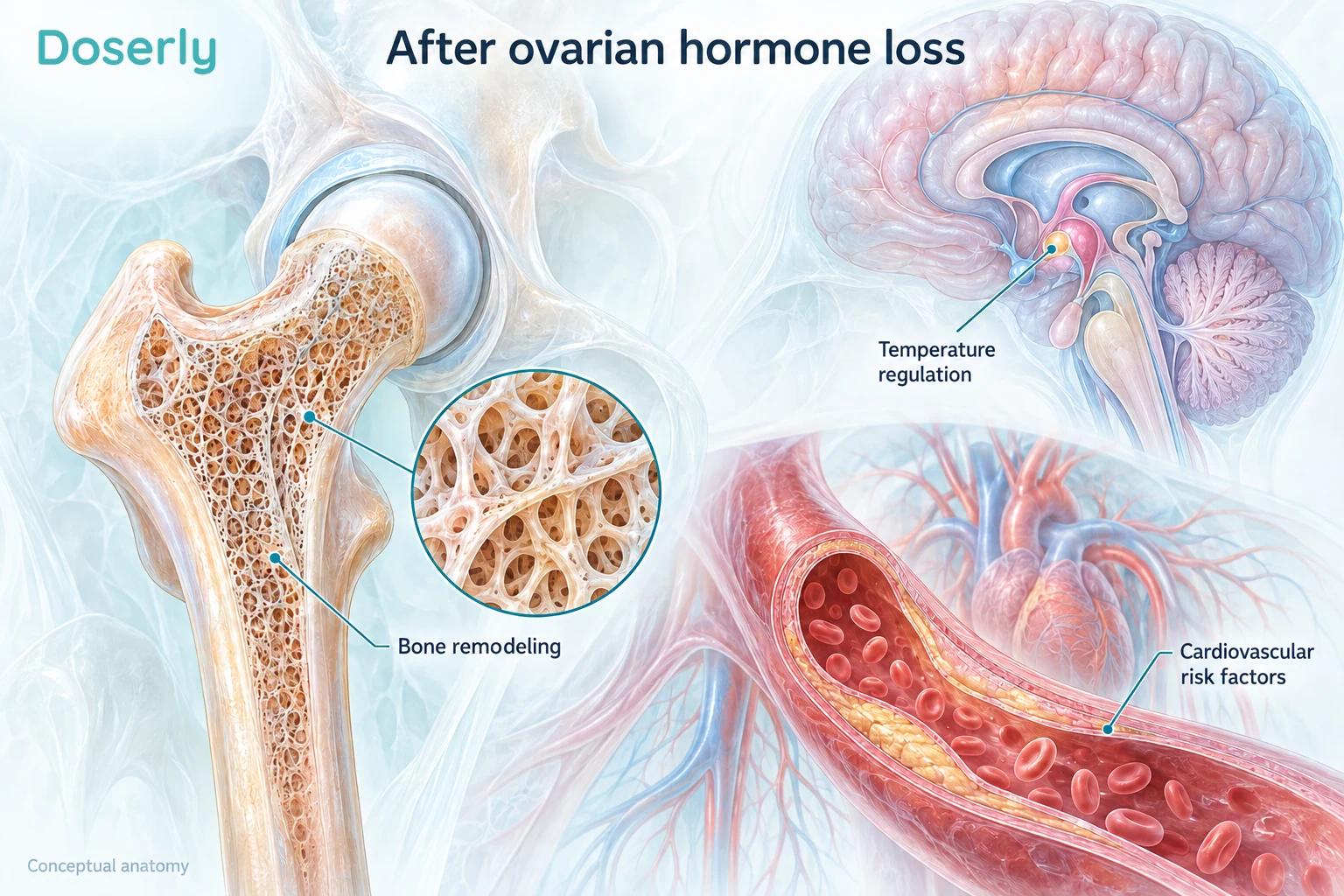
A review should therefore ask both “Are the hot flashes improving?” and “Is the wider plan working?” The answers may differ. Better sleep is valuable, but it does not replace preventive care or establish that every long-term risk has been removed.
Discuss fertility before surgery when possible
Removing both ovaries ends the possibility of future ovulation from those ovaries. Removing the uterus has a different consequence: it removes the ability to carry a pregnancy in that uterus. The exact operation therefore matters to reproductive counseling as well as hormone care.
If pregnancy or fertility preservation is relevant, ask for specialist advice before a planned procedure when time and the underlying condition allow. Cancer urgency can limit the options, and not every preservation approach is suitable. A clinician can explain what is established, feasible and safe in the specific situation.
These conversations can be emotionally difficult even when surgery is clearly the right medical choice. A person can feel relief about cancer-risk reduction or pain control and grief about fertility or bodily change at the same time. Follow-up should make space for both.
Leave with a named follow-up plan
Before surgery, clarify which organs are expected to be removed, what findings might change the plan and whether hormone treatment is expected afterward. After surgery, confirm what actually happened and whether pathology changes those expectations.
It helps to have a named contact for early recovery concerns and another clear route for ongoing menopause care. Ask when the first review will occur and what to do if symptoms become difficult before then. Keep the discharge summary, medication list and treatment changes together.
At the usual age of menopause, the hormone plan can be reassessed rather than stopped automatically or continued without discussion. The reasons for treatment, current health and preferences may have changed since surgery.
The central aim is continuity: the operation, abrupt hormone change and longer-term care should form one connected plan. Our surgical menopause guide can help you prepare the questions that matter most to you.
A concise surgical summary can help when care moves between teams. It should state the date and indication, which ovaries and whether the uterus were removed, relevant pathology, and the agreed hormone and follow-up plan. “Previous gynecological surgery” is too vague to carry those distinctions.
If the planned operation changed during surgery, request an explanation after recovery allows time to absorb it. The preoperative discussion remains useful, but the actual operation and findings determine the next questions. This is particularly important when the prescription was planned before final pathology was available. Keep a copy of the updated plan for the clinician who will manage longer-term care.
Sources
- BMS surgical menopause toolkit, 2024.
- Ontario mortality cohort, 2021.
- Nurses’ Health Study mortality analysis, 2013.
- BRCA1 HRT cohort, 2018.
- NICE NG241 risk-reducing surgery recommendations, 2024.
- BMS induced menopause and endometriosis guidance, 2022.