
Peptides
October 16, 2026
Sermorelin combinations: what a better hormone result can tell you
On this page
Sermorelin stimulates growth-hormone release from the pituitary. In some treatment programs, it is prescribed alongside other hormone-releasing peptides, testosterone or a broader plan involving nutrition and exercise. Someone who feels better after starting such a program may understandably want to know which part helped.
That question is harder than it first appears. A change after several treatments begin can be real without identifying the contribution of each ingredient. The same is true of a laboratory result: an increase in IGF-1 after a combination does not show that sermorelin alone caused it, or that the combination improved strength, body composition or quality of life.
There is a published clinic-record study directly relevant to this discussion. Looking closely at its participants and measurements helps clarify what a combination result can establish, what remains uncertain and how to make follow-up more informative.
What was actually studied?
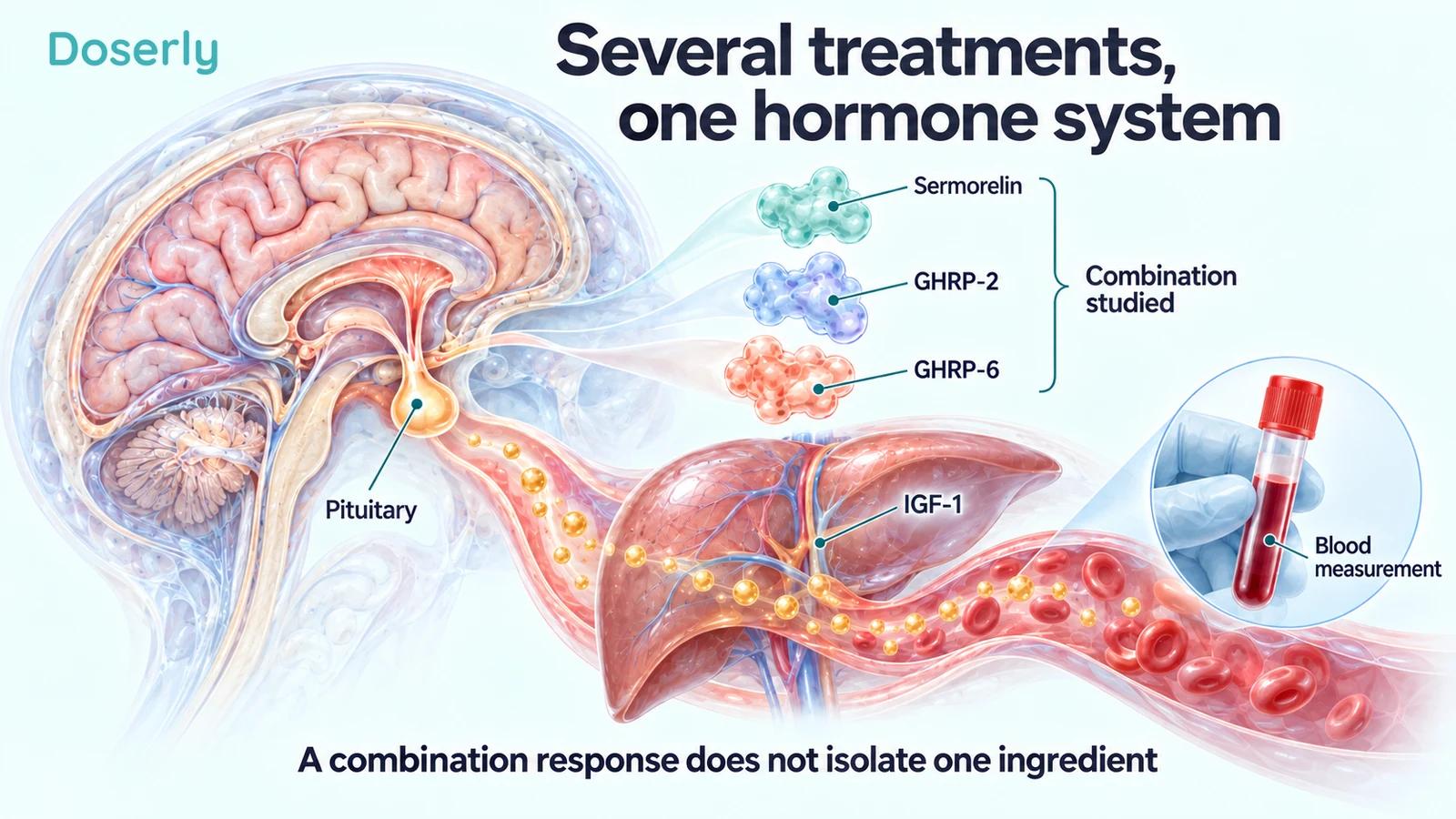
A 2017 report reviewed records from 105 men receiving testosterone therapy who had been prescribed a combination of sermorelin, GHRP-2 and GHRP-6. Only 14 men met the analysis criteria, which included baseline IGF-1 below 200 ng/mL and a prescription-refill definition of adherence.
The included men averaged 33.2 years of age, and treatment averaged 134 days. Mean IGF-1 increased from 159.5 to 239.0 ng/mL. Some men also received an aromatase inhibitor or tamoxifen, affecting the hormonal context. The study was retrospective and had no randomized untreated or single-peptide comparison. Sigalos and colleagues.
The measured finding was a rise in a blood marker during combination treatment in a selected group. The report did not establish measured fat loss, increased strength or a safety rate for the combination. Its discussion of possible clinical applications should be distinguished from the outcomes the investigators actually collected.
This is useful preliminary information. It is not a trial comparing sermorelin alone with the three-peptide combination, and it cannot identify which component was necessary.
Why does the selection of 14 men matter?
The original record pool and the final analysis group answer different questions. A result in the selected group does not describe every person who began treatment. People who refill prescriptions regularly may differ from those who stop early, cannot tolerate treatment, cannot afford it or do not return for testing.
The report's adherence definition also relied on prescription refills, which are an indirect measure of use. A refill does not document every administration. This doesn't invalidate the records, but it helps explain what was and was not observed.
Selecting people with a low baseline marker can also complicate a before-and-after comparison. Measurements vary, and an unusually low starting value may be followed by a higher one even without a treatment effect. A concurrent control group helps distinguish that variation from the effect of intervention.
These are design limitations, not accusations that participants or clinicians misreported their experience. The appropriate conclusion should stay close to the data: the selected group's marker rose during a particular combination, while the size of each ingredient's contribution remained unresolved.
What does IGF-1 measure here?
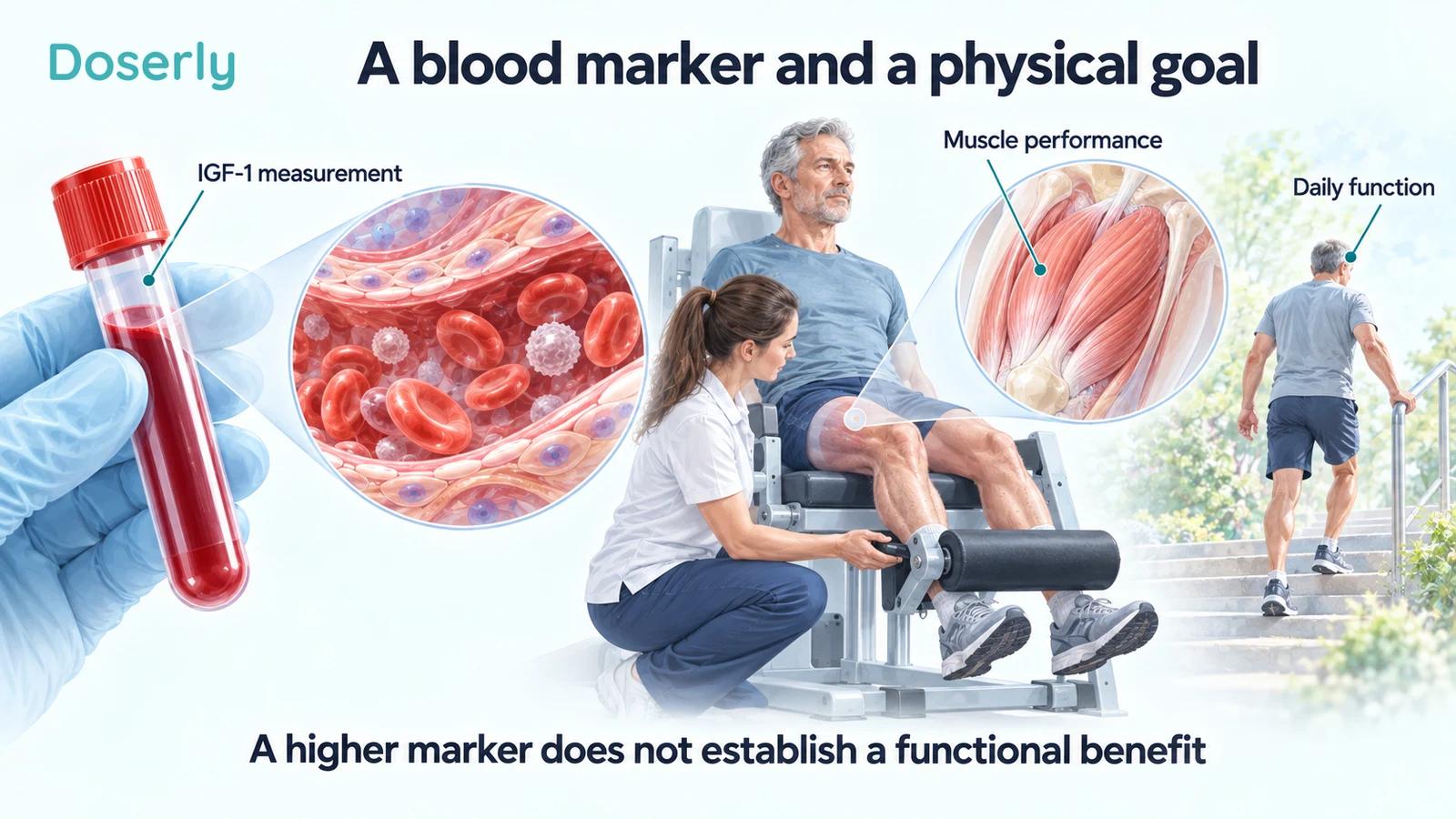
Insulin-like growth factor 1, or IGF-1, is a growth factor influenced by the growth-hormone system. It can help assess biological response. It does not directly measure how much fat someone lost, how strong they became or whether everyday activities became easier.
The difference is visible in direct sermorelin research. A six-week study of 11 older men found increased overnight growth-hormone secretion without a significant IGF-1 or body-composition change. The relationship between a stimulating treatment and downstream outcomes was not a simple proportional one. Vittone and colleagues.
There are also studies of other hormones in which composition and performance diverged. An analysis of testosterone and growth-hormone supplementation found that early changes in lean mass did not translate into comparably large changes in muscle performance. Those were different interventions, but the measurement lesson is relevant: a tissue or hormone result cannot replace the outcome the patient cares about. Schroeder and colleagues.
Why doesn't a larger response prove synergy?
People sometimes use “synergy” to mean that a combination produces a larger response than expected from its components. To establish that, researchers need a meaningful comparison with the individual treatments and a clear definition of what counts as an interaction.
A rise from baseline while three peptides are given together does not provide those comparisons. The result could reflect one ingredient, several additive effects, an interaction or other changes occurring during treatment. Without the appropriate groups, the study cannot separate those possibilities.
Even a demonstrated interaction in hormone release would leave a second question: does the larger response produce a worthwhile clinical benefit? A combination could increase a marker more than either component without improving symptoms enough to justify additional treatment burden or risks.
For a patient, the useful question is therefore specific: “What evidence shows that adding this ingredient improves the outcome we are trying to achieve?” The answer should identify a comparison and an outcome, not only describe two pathways that might complement each other.
Testosterone and other medicines are part of the intervention
When participants are already receiving testosterone, that background cannot be omitted from the description. The findings belong to people treated in that context. They do not automatically apply to someone without testosterone therapy or to a different combination that substitutes ipamorelin for GHRP-2 and GHRP-6.
The archived Geref diagnostic information lists several medicines and hormonal conditions that can alter the pituitary response to testing. That document concerns a supervised diagnostic procedure, not a contemporary wellness package. It supports the importance of a complete medication history, rather than proving the safety or efficacy of any current combination. Historical Geref product information.
A clinician may need to consider changes in other hormone medicines, weight-loss treatments and the timing of tests. If a medication is added halfway through an assessment period, calling the entire period “sermorelin treatment” hides part of what happened.
The most informative record names the actual products and dates. It doesn't require a patient to decide which interaction occurred; it gives the clinician enough information to investigate plausible explanations.
What if the whole program really helped?
A person may feel better after receiving more clinical attention, improving sleep habits, changing food intake, exercising and starting medicines. That improvement matters. Uncertainty about attribution doesn't make the experience unreal.
It does affect the next decision. If the question is whether to continue every component, add another peptide or accept additional cost, the contribution of each component becomes important. A successful package does not establish that every part was necessary.
Consider someone who begins resistance training and several treatments together. Their strength improves over three months. Without a comparable group receiving the same training and background care but not the added peptide, it is difficult to estimate the peptide's extra benefit. The improvement may still be worth documenting, but it should not be labeled a single-ingredient result.
Similarly, a difficult period can be followed by natural improvement. People often seek treatment when symptoms are particularly troublesome. Comparing that moment with a later, more typical period can exaggerate the apparent effect of whatever changed in between.
What would a better comparison look like?
To test whether sermorelin adds benefit to an existing program, researchers could keep background care similar and randomly assign the additional intervention or a matching control. If the question concerns the three-peptide blend itself, separate component groups would be needed to understand contributions.
The main outcome should be chosen before looking at results. A study about body composition would need appropriate composition measures. A study about daily function would need a suitable functional assessment. Hormonal measurements could help explain the response, but they should not quietly replace the clinical goal.
Follow-up should also capture people who stop treatment. Their reasons may reveal tolerability, feasibility or lack of benefit. Reporting only those who remain adherent can give an incomplete picture of what happens when a program is offered in practice.
This is a description of the research needed, not a suggestion to run an unsupervised personal treatment experiment. Patients should discuss changes with the prescribing clinician rather than deliberately adding and removing medicines to test a theory.
Combination safety needs its own evidence
Knowing something about each ingredient separately does not establish the safety of giving them together. The combination may change exposure, overlapping effects or the interpretation of symptoms. Conversely, the lack of a definitive combination trial does not prove that a particular harm will occur.
Product quality is another separate issue. FDA explains that compounded drugs do not undergo the same premarket approval review as approved medicines, and quality problems can cause harm. A combination's biological rationale cannot verify the contents or handling of a particular preparation. FDA on compounded drugs.
The underlying diagnosis also matters. Adult growth-hormone deficiency usually requires a specific diagnostic evaluation; nonspecific fatigue or a body-composition goal does not establish it. Endocrine Society guideline.
Making follow-up more useful
Before treatment, agree on the symptom or functional goal that matters most and how it will be assessed. Keep a dated list of medicines, formulation changes, major training changes, symptoms and laboratory measurements. Bring the actual dispensing information to appointments when product details are uncertain.
During follow-up, discuss benefit and unwanted effects separately. A favorable hormone result should not make a new symptom irrelevant, and a lack of marker change should not automatically trigger more treatment. The whole clinical picture matters.
The current combination evidence supports a limited statement about a selected group's IGF-1 response. It does not tell us which peptide caused that response or establish the added clinical value of a modern clinic package. The sermorelin guide provides background for asking a more concrete question: what is each proposed treatment expected to add, and what evidence would show that it has done so?
Sources
- Sigalos et al., 2017: combination secretagogues in men receiving testosterone.
- Vittone et al., 1997: nightly GHRH(1-29) in older men.
- Schroeder et al.: lean mass and muscle performance.
- Archived Geref 50 diagnostic product information.
- FDA: risks of compounded drugs.
- Endocrine Society: adult growth-hormone deficiency.