
Peptides
October 16, 2026
Selank versus benzodiazepines: what the human comparisons actually show
On this page
Selank attracts interest partly because people want relief from anxiety without feeling sedated or becoming dependent on a medicine. Benzodiazepines can relieve anxiety, but their known risks make the search for alternatives understandable. The question is whether Selank has demonstrated a comparable benefit with a better overall safety profile.
There are small human reports comparing Selank with particular benzodiazepines. It would be inaccurate to say no comparisons exist. It would also be inaccurate to treat those reports as proof that Selank matches every benzodiazepine or can replace an established treatment.
The details matter: which medicine, which patients, which outcome and whether Selank was given alone or added to something else. The Selank guide covers the broader background; here we will focus on what a fair comparison can tell you.
Why this comparison interests patients
An effective anxiety treatment should help with symptoms that matter in everyday life. That may mean less persistent worry, fewer episodes of disabling fear or better ability to work and maintain relationships. Relief should also be weighed against unwanted effects.
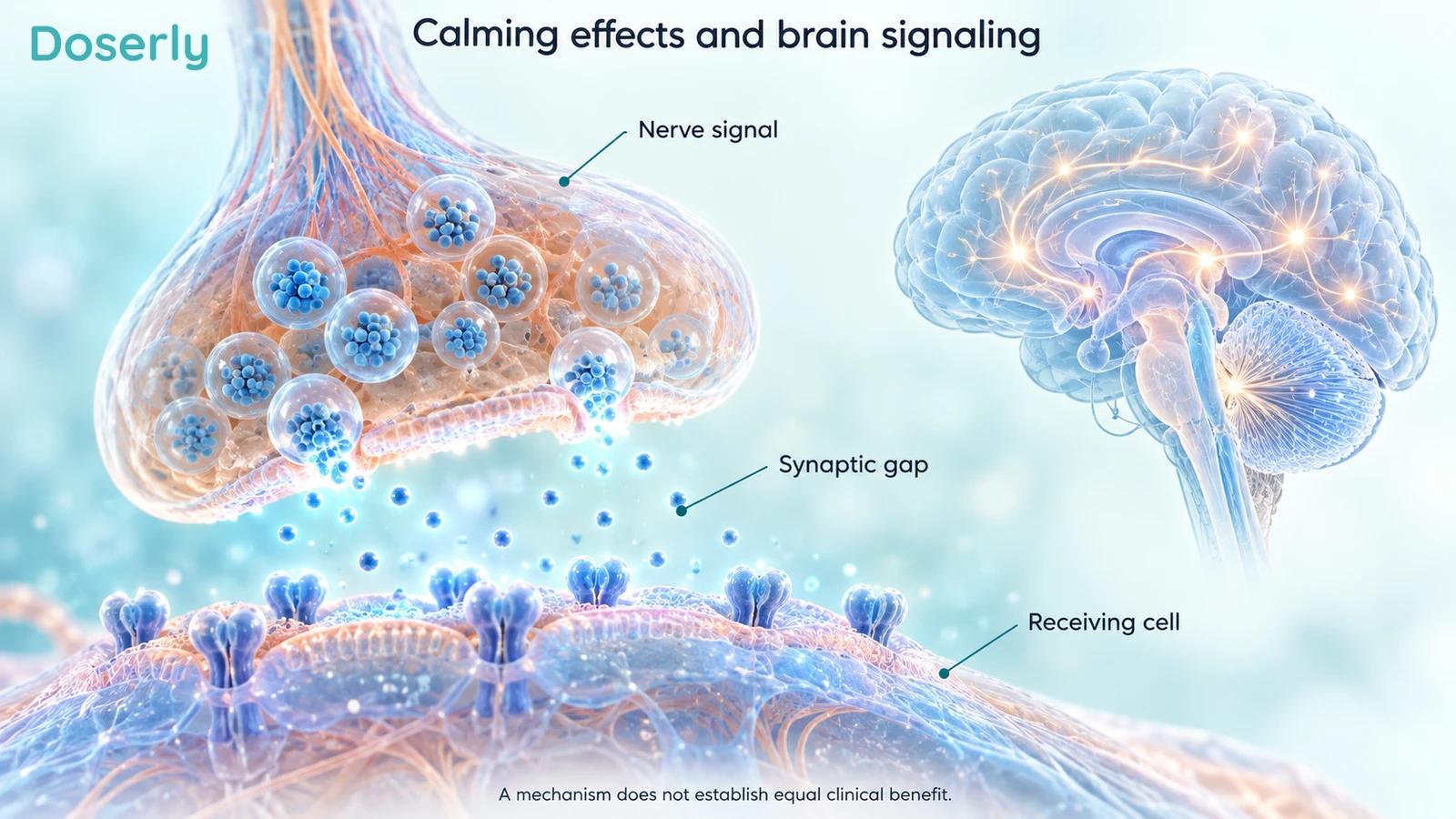
Benzodiazepines act on GABA-related signaling in the brain and can produce calming and drowsy effects. FDA identifies risks including misuse, addiction, physical dependence and withdrawal. These are important reasons to consider the indication, duration and other medicines carefully. FDA benzodiazepine safety communication.
That known risk profile does not make another substance safer automatically. A less studied treatment can have fewer documented problems because fewer people have been assessed systematically. The comparison must include the quality and extent of the safety information.
It also helps to avoid treating “benzodiazepines” as one identical product. Medicines within the class differ in their time course and clinical use. A study against one comparator cannot establish the same relationship with every other member of the class.
The medazepam comparison
A 2008 report involved 62 patients with generalized anxiety disorder or neurasthenia. Thirty received Selank and 32 received medazepam. The investigators assessed symptoms using psychometric measures and described similar anxiety-relieving effects. Original report.
That is preliminary comparative clinical evidence. Its scope is the patients, treatments and observations in that report. The accessible abstract does not provide the complete numerical between-group result and uncertainty needed to make a confident equivalence claim.
Neurasthenia, which includes fatigue or weakness-related complaints, also affects how the study should be interpreted. A mixed population may show changes that are not identical across diagnoses. A benefit for one symptom pattern is not automatically a benefit for every anxiety presentation.
The report's favorable description should therefore remain attached to its actual comparator. It does not demonstrate equal effectiveness to alprazolam, lorazepam or all other anxiety medicines, and it does not establish a safe substitution plan.
The phenazepam comparison
A 2014 report compared Selank with phenazepam in 60 people with phobic-anxiety and somatoform disorders. Its abstract describes favorable anxiety-related effects and quality-of-life observations, with the effect reported to persist for one week after the last peptide administration. Original phenazepam comparison.
The study is relevant because it addresses a clinical comparison rather than only a proposed mechanism. But the abstract alone does not allow a complete evaluation of allocation methods, masking, attrition or the precision of the treatment difference.
A one-week post-treatment observation also does not establish the safety of months of repeated use. A comparative claim has to specify the time period for which it is supported.
For a reader, the most useful question is not simply whether the authors used the word “effective.” It is how much the groups differed on a meaningful outcome, how uncertain that estimate was and whether the result could reasonably apply to the proposed treatment setting.
Why the combination report is different
The 2015 study compared phenazepam alone in 30 patients with phenazepam plus Selank in 40. The authors reported earlier improvement on one symptom measure and reductions in several unwanted effects with the combination. Original add-on study.
This asks whether adding Selank changes the experience of phenazepam treatment. It does not compare Selank alone with phenazepam alone. The difference is fundamental to interpreting the result.
If a person improves while receiving two medicines, the outcome does not tell us what would have happened after removing one of them. Likewise, fewer reported side effects during combination treatment do not establish that Selank prevents every benzodiazepine adverse effect.
The report mentions observations after tranquilizer withdrawal, but that is not sufficient evidence for using Selank as a benzodiazepine discontinuation treatment. Such a claim would require an appropriate study of withdrawal outcomes and safety.

Similar outcomes do not automatically prove equivalence
A small study may fail to detect a difference even when a clinically important difference exists. Its estimate may simply be too imprecise. “No statistically significant difference” and “equally effective” are therefore different conclusions.
A formal noninferiority trial asks whether a new treatment is not worse than an established one by more than a prespecified clinically acceptable amount. An equivalence trial asks whether the difference lies within defined bounds in both directions. Neither is established merely by finding that both groups improved.
The margin must be justified before seeing the results. If it is too generous, a substantially less effective treatment could be described as acceptable. Researchers also need enough participants and reliable methods to distinguish treatments that truly differ.
FDA/ICH guidance explains a further requirement: the trial must be capable of distinguishing an effective treatment from a less effective or ineffective one. If the comparator performs poorly because of the design or conduct of the trial, similar results can be misleading. ICH E10 guidance.
The accessible Selank abstracts do not establish that these formal requirements were met. Their favorable observations support further investigation, but not a blanket equivalence statement.
The comparator has to be used fairly
A comparison can be distorted if one treatment is poorly matched to the population or evaluated at an unsuitable time. The chosen dose, treatment period, adherence and co-treatments all affect the meaning of the result.
For example, a study focused only on an early visit may favor a treatment with a faster onset while missing later outcomes. A study focused only on the final visit may miss early adverse effects that caused participants to stop. These are design questions, not reasons to choose a dose yourself.
The assessment methods should also be comparable. If one group receives detailed questioning about side effects and the other does not, a difference in reported tolerability may reflect detection rather than biology.
The E10 guidance discusses fairness of comparisons, including doses, populations and endpoint timing. These principles help explain what needs to be verified in the full reports before using a small study to guide a strong clinical claim. FDA/ICH control-group guidance.
What would “safer” have to mean?
Safety is not a single score. A treatment might cause less short-term sleepiness while having less information about prolonged exposure, interactions or uncommon adverse events. A useful comparison specifies which risks were measured.
For this question, relevant outcomes include daytime function, attention, memory, falls or accidents where appropriate, reasons for stopping and symptoms after discontinuation. Researchers would also need to consider the actual product's quality and route.
FDA identifies important safety-information gaps for compounded Selank acetate and potential immunogenicity concerns related to aggregation and peptide impurities. That does not quantify an individual person's risk, but it prevents an unsupported claim that the compound is broadly risk-free. FDA Selank acetate entry.
A short favorable tolerability report cannot fill those gaps. It can identify a finding to test more rigorously, with systematic adverse-event collection and sufficient follow-up.
Why the choice is broader than two substances
For many patients, the real decision is not simply Selank or a benzodiazepine. Anxiety treatment can include psychological interventions, other medicines, education and ongoing assessment, chosen according to the condition and the person's needs.
NICE recommends a stepped approach for generalized anxiety disorder. At relevant stages, options include cognitive behavioral therapy or applied relaxation and medication treatment. It recommends benzodiazepines for GAD only as a short-term measure during crises. NICE recommendations.
That recommendation does not validate Selank as the alternative. It shows why a treatment conversation should consider the range of supported options rather than assume that avoiding one drug class leaves only an experimental peptide.
A person who previously experienced a difficult side effect may reasonably prioritize avoiding it. The next step is to identify an option with evidence for their diagnosis and a monitoring plan that addresses that concern.
What if you already take a benzodiazepine?
Do not treat the Selank comparisons as instructions to stop or replace your medicine. FDA warns that abrupt discontinuation or overly rapid reduction can cause serious withdrawal reactions, including seizures. An individualized plan should be discussed with the prescribing clinician. FDA benzodiazepine warning.
This is especially important when an online summary uses the 2015 add-on study to claim that Selank eliminates withdrawal. The study design and accessible results do not establish that protection.
A clinician will need to know the current medicine, duration of use, other substances and the symptoms driving the wish to change. Those details influence the safest way to address the problem.
Keeping a clear medication and symptom history can support the discussion. It should include sleepiness, memory concerns, anxiety changes and any previous difficulties reducing treatment, rather than just a general judgment that one product feels better.
Questions that make a comparison concrete
Ask which benzodiazepine was used in the supporting study and whether Selank was tested alone or added to it. Ask whether the participants had your diagnosis, and whether the outcome was symptom relief, everyday function or tolerability.
Then ask for the size of the difference and its uncertainty. A descriptive statement such as “similar effect” is less informative than a complete result with a prespecified clinical threshold.
Finally, ask how long the comparison lasted and what happened to people who stopped treatment. A medicine that looks acceptable among completers may have a different overall profile if many participants left because of symptoms.
These questions are not obstacles to considering new treatments. They identify the information needed to make a comparison useful to a patient.
What the evidence supports today
The reviewed Selank literature contains small favorable human comparisons with medazepam and phenazepam, plus an add-on phenazepam study. It does not establish class-wide equivalence, superior long-term safety or a validated replacement strategy.
A stronger trial could clarify whether a defined Selank preparation provides a meaningful anxiety benefit with fewer specific adverse effects. Until then, the distinction between preliminary comparison and established alternative should remain explicit.
The Selank guide provides additional background on formulations and biological research. For treatment decisions, the relevant standard is a demonstrated benefit and risk profile for the actual patient, product and intended duration.
Sources
- Selank and medazepam comparison, 2008.
- Selank and phenazepam comparison, 2014.
- Selank added to phenazepam, 2015.
- FDA benzodiazepine safety communication, 2020.
- FDA/ICH E10 control-group guidance, 2001.
- NICE generalized anxiety disorder recommendations.
- FDA Selank acetate safety-information entry.