
Supplements
October 16, 2026
Creatine, brain energy and sleep loss: what the human trials show
On this page
Creatine helps cells manage energy demand. That is familiar in muscle, where supplementation has a substantial sports research history, but the brain also uses energy continuously. Researchers are investigating whether additional creatine can help maintain thinking and attention when that system is challenged, including during sleep loss.
This is the useful question behind recent online discussions: does a convincing explanation of cellular energy translate into a benefit you can notice? The answer depends on the person, the situation and the outcome. A better result on a task after staying awake overnight is different from better concentration during an ordinary working day.
Thomas DeLauer’s June 2026 episode page lists chapters on cellular energy transfer and a sleep study, including the limits of generalizing from trials. It also discloses a paid partnership. The chapter list provides context for this article; it is not a transcript, and we are not attributing detailed claims from an unseen conversation. Original episode page.
What creatine does in an energy-demanding cell
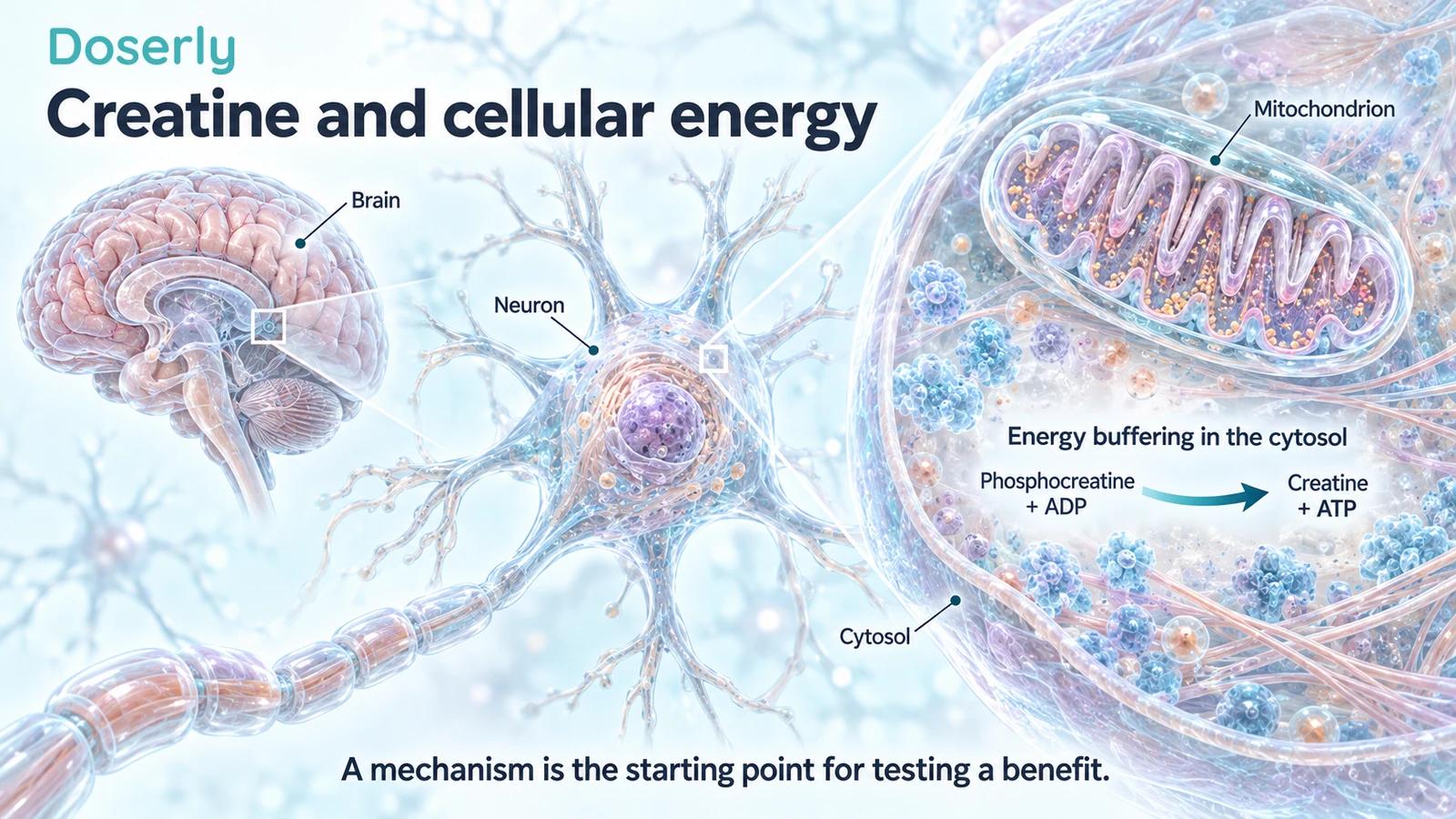
Cells use adenosine triphosphate, or ATP, to supply energy for their work. Creatine can be stored as phosphocreatine, which participates in regenerating ATP when demand changes. This is one reason researchers have considered supplementation for cognition: nerve cells need to maintain energy availability while they are active. Cognition trial background.
The biological role is real, but several steps separate it from a practical benefit. An oral supplement must alter the relevant tissue supply; that change must help under the conditions being studied; and the resulting difference must be large enough to matter. Demonstrating the first step does not automatically establish the last.
The Doserly creatine guide explains the broader supplement background. Here, we will focus on the human brain and sleep-loss experiments.
What the 2024 sleep-deprivation experiment tested
A 2024 crossover experiment studied 15 healthy participants during an overnight protocol involving about 21 hours of wakefulness. On separate occasions they received creatine monohydrate or placebo. The creatine condition used a single experimental dose of 0.35 grams per kilogram of body weight. Researchers repeatedly measured cognitive performance and brain metabolites using magnetic resonance spectroscopy. Primary report.
They reported changes in brain-energy measurements and improvements in selected cognitive performance and processing-speed outcomes during the challenge. That is an interesting signal because it connects a proposed biological effect with measured performance in the same experiment.
The result is still specific. It involved a small group, acute sleep loss, a high single dose and repeated laboratory tasks. It did not test whether supplementation prevents mistakes across months of shift work or improves the grades of well-rested students.
For scale, 0.35 g/kg corresponds to 24.5 grams for a 70-kilogram person. That arithmetic explains the research exposure; it is not a suggested dose. Copying it because of a headline would skip the study’s selection, supervision and limited follow-up.
A 2026 follow-up used a lower acute dose
A further trial published in 2026 studied 29 healthy adults, this time using a single 0.2 g/kg dose during a similar 21-hour sleep-deprivation setting. Testing occurred at baseline and at several points over the following night. Researchers reported less deterioration in logical and numerical tasks, language-related processing speed and a psychomotor vigilance task. 2026 trial.
A vigilance task measures the ability to respond to signals over time. It is relevant to attention, but it is not the same as measuring safe driving, workplace errors or clinical decision-making. Those applications need their own evidence.
The paper reported stronger effects in women on some outcomes. With only 29 participants overall, those subgroup findings need replication before they become sex-specific advice. They do not establish that every woman needs a different creatine regimen.
The authors’ comparison with their earlier higher-dose experiment also should not be treated as a definitive head-to-head dose comparison. Different experiments can differ in participants and circumstances. The useful new result is another acute laboratory signal, not an established optimal brain dose.
A newer sleep-restriction pilot found no clear benefit
A study published on October 14, 2026 asked a different question. Eight adults completed a crossover pilot involving seven days of creatine monohydrate or placebo before a night restricted to three hours in bed. Researchers measured cognition, mood, sleepiness and frontal brain oxygenation. Sleep and Vigilance pilot.
Creatine did not significantly improve the measured cognitive or physiological variables. The study was very small, with substantial loss between recruitment and completion, and its registration was retrospective. It therefore cannot confidently exclude smaller benefits.
This result matters because it prevents a one-directional account of the field. Partial sleep restriction after a week of supplementation is not identical to taking a large acute dose during prolonged wakefulness. The exposure, challenge and measurement schedule all differ.
We should neither discard the positive experiments nor hide the null one. Together they suggest that the conditions under which creatine might help remain unresolved. “Creatine helps when you sleep badly” is broader than the findings currently support.
Does it help cognition without an overnight challenge?
A larger 2023 crossover study included 123 participants, about half vegetarian and half omnivorous. Each supplement period lasted six weeks and used 5 grams of creatine daily or placebo. The principal tasks assessed abstract reasoning and the ability to repeat numbers in reverse order. BMC Medicine trial.
Conventional significance tests were not positive for either main task: p=0.064 for backward digit span and p=0.327 for reasoning. A different, Bayesian analysis supported the possibility of a small benefit. Exploratory tasks did not show convincing improvements, and vegetarians did not benefit more than omnivores.
Those analyses are not a reason to choose whichever headline feels preferable. The responsible interpretation is that a small effect remained plausible, while a broad or large cognitive enhancement was not demonstrated.
A separate six-week study randomized 30 healthy young adults to 10 grams daily, 20 grams daily or placebo. It did not establish improvements in the tested cognitive measures or prefrontal oxygenation. Dose-response trial. Small samples leave uncertainty, but increasing the dose should not be assumed to produce increasing benefit.
What do brain scans add?
Magnetic resonance spectroscopy estimates aspects of tissue chemistry. It can help researchers examine energy-related compounds without assuming that a person’s subjective feeling reveals what happened inside the brain. Computer tasks, in contrast, measure performance: speed, accuracy, memory or sustained attention.
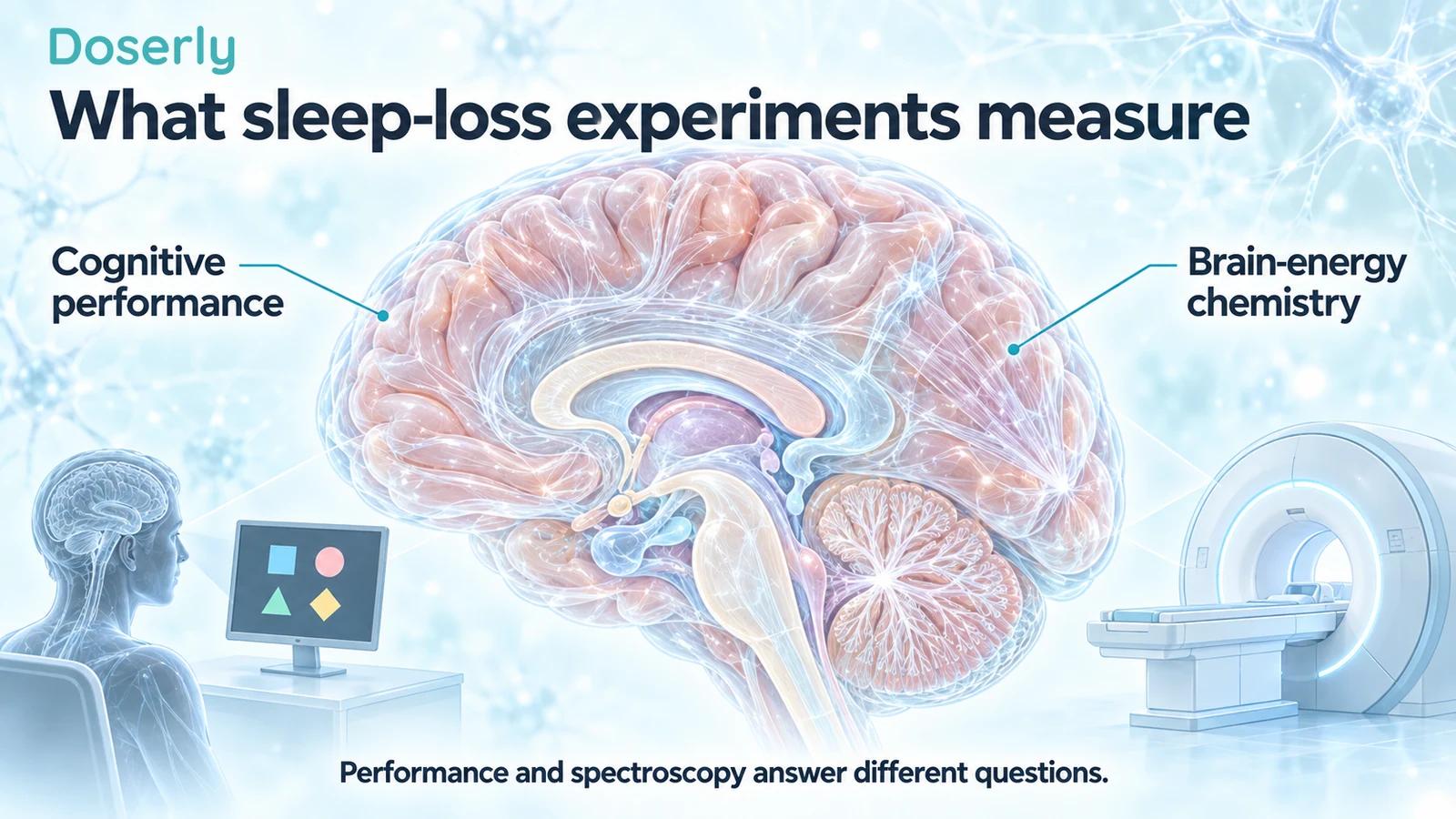
A study can find a chemical change without showing a useful functional improvement. It can also find a performance difference while leaving the mechanism uncertain. Both measurements can be valuable, but they should keep their own names.
For example, a faster response on a repeated task does not reveal whether someone can sustain a complex conversation, learn unfamiliar material or make better decisions while tired. Those questions involve overlapping abilities, but they are not identical tests.
That distinction is especially helpful when reading about “brain energy.” It is an appealing phrase because fatigue feels like a lack of energy. Yet the sensation, the laboratory metabolite measurement and the performance outcome are three different observations.
Why sleep still matters
Sleep deficiency affects more than a short cognitive task. It can interfere with learning, emotional regulation, physical health and safe daily functioning. A supplement experiment that measures selected outcomes over one night does not establish protection against the broader effects of repeatedly inadequate sleep. NHLBI sleep information.
If your actual problem is persistent daytime sleepiness, start by describing the pattern. Are you allowing enough time for sleep? Is your schedule irregular? Are you waking repeatedly or feeling unrefreshed despite adequate opportunity? Those are useful distinctions for a clinical conversation.
A person can feel more capable while remaining impaired in ways they do not recognize. The creatine studies discussed here do not validate driving or other safety-sensitive work after sleep deprivation. They also do not show that people need less sleep after supplementation.
Treat a laboratory finding as a reason for further research, not as permission to extend a demanding schedule. The most relevant comparison for everyday life may be adequate sleep and a sustainable routine, rather than one supplement against placebo during an imposed overnight challenge.
How this differs from the sports evidence
Creatine’s evidence for repeated high-intensity exercise is more established than its evidence for general cognitive enhancement. NIH’s Office of Dietary Supplements describes benefits in activities involving intense efforts separated by short recovery periods, while responses vary across sports and people. ODS evidence summary.
That difference matters when choosing a goal. Someone using creatine to support resistance training is making a different evidence-based decision from someone hoping to compensate for poor sleep. The same substance can have stronger support for one use than another.
The formulation matters too. Studies often use creatine monohydrate. A gummy, multi-ingredient blend or heavily marketed delivery system should not inherit every trial result merely because it contains creatine somewhere on the label.
Safety should be considered in the context of the person and the actual exposure. ODS discusses potential weight gain and other adverse effects in sports use. Existing kidney disease or a complex medical history warrants individualized review rather than importing reassurance from healthy volunteers.
Questions that make a decision more concrete
Before changing a routine for “brain health,” define what you hope will improve. Is it staying attentive during an unavoidable overnight shift, remembering material while rested or addressing unexplained fatigue? The trials do not answer all three equally.
Then ask whether the evidence matches the situation, formulation and duration. A single-dose sleep-deprivation experiment cannot identify the best long-term routine. A six-week trial in healthy adults cannot establish treatment for a neurological illness.
If you already take creatine, keeping a dated record of the product, sleep opportunity, symptoms and purpose can help you discuss it with a clinician. Avoid treating a good day after starting as proof, especially if training, caffeine or sleep changed at the same time.
The research is worth following because the biological rationale is plausible and several human experiments are informative. The practical conclusion remains specific: creatine has shown promising effects in some acute sleep-loss settings, while everyday cognitive benefits and the best conditions for using it remain uncertain.
Sources
- The Creatine Science Just Got Way More Crazy (2026)
- Single dose creatine improves cognitive performance and induces changes in cerebral high energy phosphates during sleep deprivation (2024)
- Single-Dose Creatine Reduces Sleep Deprivation-Induced Deterioration in Cognitive Performance (2026)
- The effects of creatine supplementation on cognitive performance—a randomised controlled study (2023)
- Effect of Creatine Supplementation on Cognitive Performance and Frontal Haemodynamics Following Acute Sleep Restriction (2026)
- Dose-Response of Creatine Supplementation on Cognitive Function in Healthy Young Adults (2023)
- Dietary Supplements for Exercise and Athletic Performance
- Sleep Deprivation and Deficiency