
Red Light Therapy
October 17, 2026
Red light therapy for fat loss and metabolism: inches, weight and health are different outcomes
On this page
A smaller waist measurement, a lower number on the scale and better blood-glucose control can all sound like “fat loss.” In research, they are different outcomes. A treatment can affect one without demonstrating the others, and the difference becomes especially important when a body-contouring advertisement starts making promises about metabolic health.
Red and near-infrared light have been studied for cosmetic circumference reduction, as additions to exercise programs, and for short-term metabolic responses. Some controlled studies report favorable findings. Others are negative, small, short or difficult to separate from the rest of the intervention. There is enough human research to discuss the subject seriously, but not to treat a home light panel as an established obesity treatment.
The most useful first question is therefore simple: What changed, and how was it measured? Once that is clear, a headline about “inches lost” becomes much easier to interpret.
Body contouring has a specific purpose
Body contouring aims to change the shape or appearance of a body area. It may involve a localized bulge, a circumference measurement or the appearance of cellulite. The FDA distinguishes this cosmetic purpose from treating obesity and obtaining the health benefits associated with weight loss. Its explanation also notes that results may be temporary. The agency describes these boundaries directly.
This does not mean a cosmetic goal is unimportant. Someone may reasonably care about how clothing fits or how a particular area looks. The problem arises when evidence for that goal is repackaged as evidence for reduced diabetes risk, improved liver health or lasting weight reduction.
A regulatory claim should be read at the same level of detail. For example, the FDA's 2022 clearance documentation for the Zerona Z-Bed describes a noninvasive aesthetic use for reducing body circumference and specifies over-the-counter distribution. It does not establish a general indication to treat obesity or metabolic disease. The submission also states that it included no new clinical study results, relying on comparison with a predicate device. The original FDA document provides the indication and submission details.
A clearance belongs to a particular device and intended use. It is not a transferable endorsement for every product emitting a similar color. Nor does “over the counter” turn an aesthetic indication into a medical weight-management indication.
Why several inches may not mean several inches off the waist
One influential 2009 randomized, sham-controlled trial enrolled 67 adults with BMI between 25 and 30. After a short treatment course, the active group had a reported reduction of 3.51 inches in combined circumference measurements, compared with about 0.68 inches in the sham group. The combined outcome added measurements from the waist, hips and both thighs. The waist component was about 0.98 inches, not 3.51 inches. Eight participants lacked the later follow-up measurement. The original trial reports both the total and individual sites.
Adding measurements can be a legitimate prespecified research outcome. It becomes misleading when the word “combined” disappears. A centimeter from one thigh and a centimeter from the other thigh contribute two centimeters to the total, even though neither thigh changed by two centimeters.
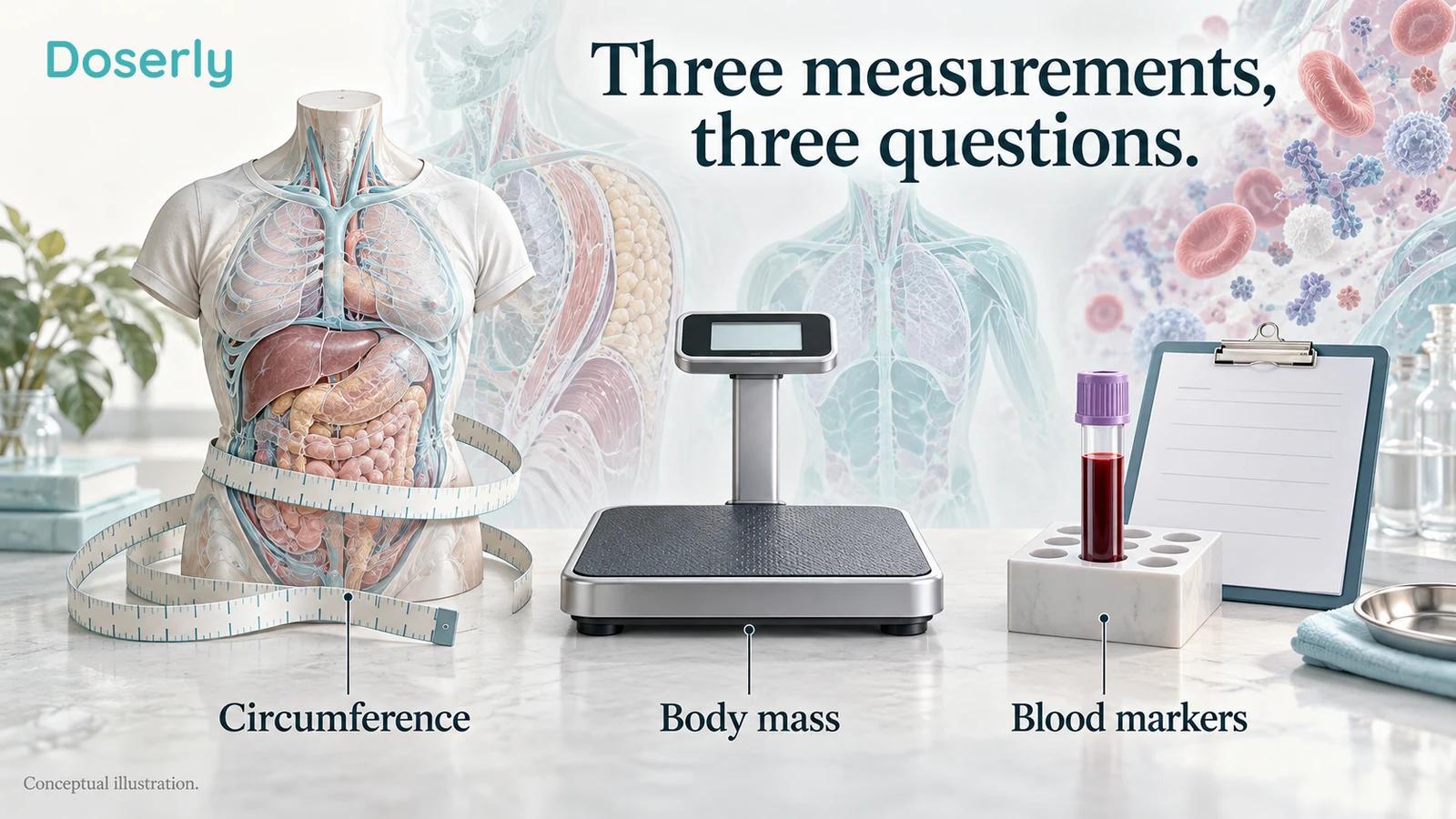
It also does not follow that an added circumference result represents a particular mass of fat. A tape measures the outside of a body region. It does not weigh the tissue underneath, distinguish fluid from tissue, or identify whether a change occurred in superficial fat rather than deeper compartments.
A 2012 sham-controlled upper-arm study gives a particularly clear example. Forty participants were randomized, and the active group had a 3.7 cm reduction in the combined arm measurements versus 0.2 cm with sham after the treatment course. BMI remained unchanged. The study was supported by the device manufacturer, and an investigator disclosed related speaking honoraria. The original report includes the outcomes and disclosure.
That is a circumference result with a stable weight-related measure. It should be described that way, without converting it into a claim of general fat loss. It also shows why readers should look for the individual measurement sites and the comparison group before deciding whether a result would be meaningful to them.
Positive trials do not erase negative findings
A sham-controlled study in 53 otherwise healthy people with BMI between 30 and 40 reported larger combined circumference reductions with active treatment. After four weeks, 20 of 28 treated participants met the prespecified combined-reduction threshold, versus three of 25 receiving sham. Mean combined reductions were 10.52 cm and 1.80 cm, respectively. Follow-up was short, and the outcome remained an aesthetic measurement rather than a demonstration of improved obesity-related disease. The original study describes its population and endpoint.
There are less encouraging results as well. A small split-body study of five participants did not find a significant circumference reduction or reduction in ultrasound-measured fat-layer thickness. Blinded dermatologists identified the relevant photographs correctly about half the time. Five people are far too few to settle effectiveness, but the study is a useful reminder that results have not been uniformly positive. The original report describes the negative findings.
Another randomized study enrolled 40 adults and reported a waist-girth advantage for active light. However, the reported analysis focused on participants whose weight stayed within a specified range during the study. That restriction matters when interpreting the result: a selected stable-weight analysis is not the same as showing that treatment causes weight loss in everyone randomized. The original report explains the analysis and its circumference outcome.
The practical conclusion is more nuanced than “it works” or “it cannot work.” Certain devices have evidence of short-term cosmetic measurement changes in selected populations. The size, consistency, durability and clinical meaning of those changes remain separate questions. A pooled headline cannot resolve differences between devices, study designs and measurement methods.
What a tape measure cannot tell you
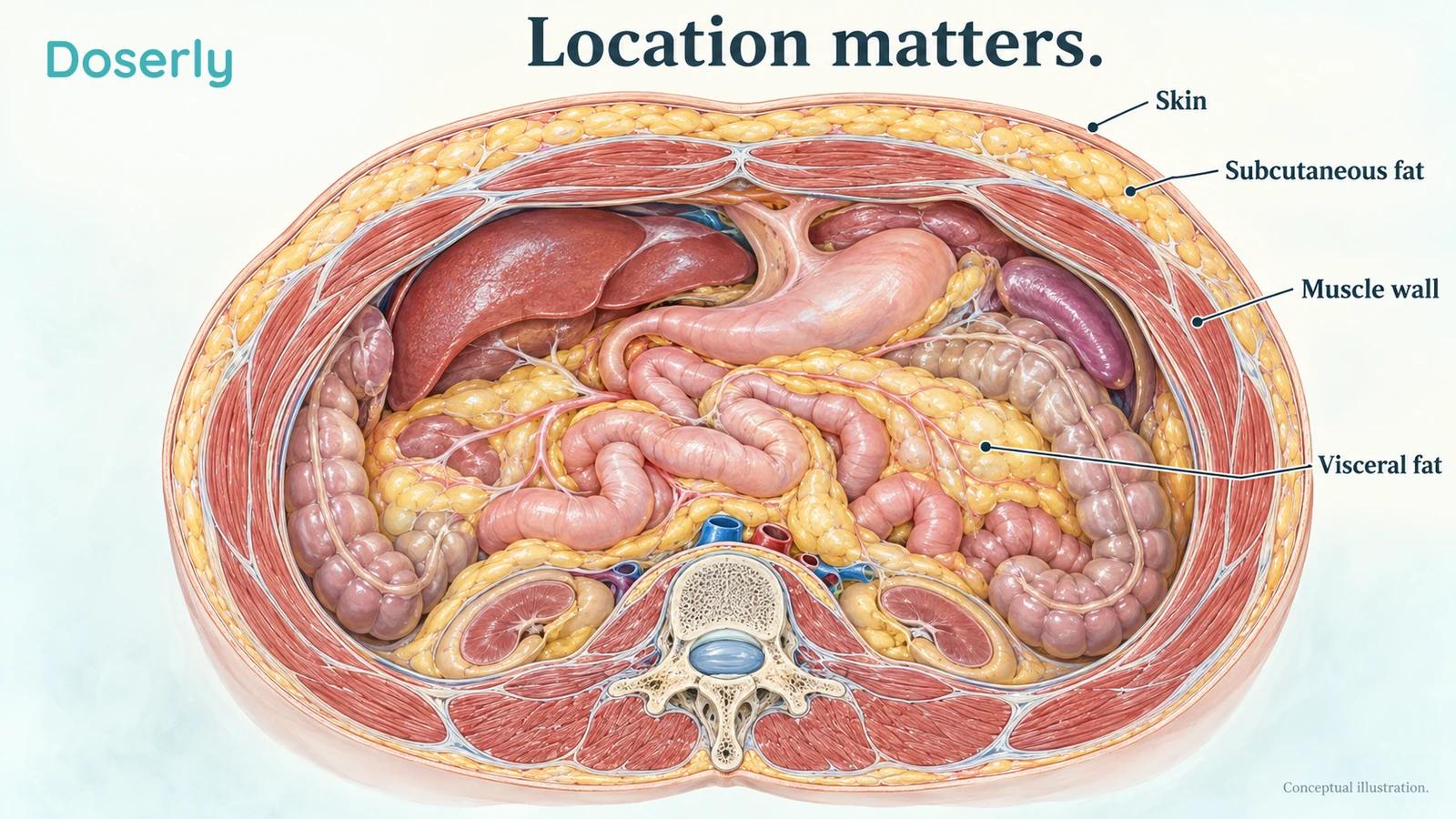
Subcutaneous fat lies beneath the skin. Visceral fat is located within the abdomen around internal organs. A change in external shape does not identify which compartment changed. Likewise, a person can have changes in body composition without a large change in total weight if fat, lean tissue and body water are moving in different directions.
For this reason, a study that claims selective fat reduction needs a measurement suited to that claim. Ultrasound can examine local tissue thickness; other methods estimate total or regional body composition. Each has limitations, and the quality of the measurement matters as much as its name. “Body composition assessed” is not enough information to judge whether a small reported difference is dependable.
The most informative studies also ask whether the result persists after treatment stops. A measurement at the end of a short course answers an immediate question. It cannot establish what happens months later, whether maintenance sessions are needed, or whether an initial response is worth the ongoing cost and inconvenience.
There is also a difference between a measured average and an individual expectation. A group mean can include people with a noticeable change, people with little change and people whose measurements increased. A response threshold and the proportion reaching it can make that spread easier to understand. They still need the actual size of the change and the corresponding sham result to be useful.
For a personal cosmetic goal, standardized photographs and measurements can help document change, but they are easy to influence unintentionally. Tape placement, posture and the conditions of measurement need to be consistent. A reassuring interpretation should not depend on choosing the most flattering photograph or the smallest of several measurements taken that day.
Exercise-plus-light studies ask a different question
Some obesity research studies PBM alongside structured exercise rather than as a stand-alone body-contouring treatment. In this setting, both groups may improve substantially because both receive exercise. The question is whether adding light produces a further benefit beyond the same program with sham treatment.
A 2015 trial randomized 64 women with obesity to aerobic and resistance training plus either phototherapy or sham. The investigators reported greater improvements in several body-composition and insulin-resistance measures with the combined intervention. This was a structured program in a defined female population, not evidence that passive light exposure replaces exercise or produces the same changes without the program. The original trial describes the groups and measured outcomes.
A related 2018 report involving 49 women found improvements in body composition and several metabolic measurements in both exercise groups. Some inflammatory and signaling findings favored the phototherapy group. The researchers discussed possible markers of adipose-tissue “browning,” but blood-marker changes do not directly demonstrate that clinically meaningful amounts of human fat became energy-burning brown tissue. The original report distinguishes the measured markers from its proposed explanation.
These reports include overlapping investigators and related research programs. They should not automatically be counted as wholly independent replications. Their encouraging signals justify stronger studies with clear participant flow, prespecified outcomes and long-term follow-up. They do not establish a universal fat-loss effect across devices, sexes, ages and clinical circumstances.
A trial in postmenopausal women was also more mixed than a broad “metabolic improvement” headline suggests. Forty-five women were randomized and 30 completed the study, divided among treadmill-plus-light, treadmill-only and sedentary groups. Several outcomes changed across groups; quality of life improved within the light-plus-exercise group. The small completed groups, attrition and varied findings make a sweeping metabolic conclusion difficult. The original report provides the full abstract of these results.
Does light increase the number of calories you burn?
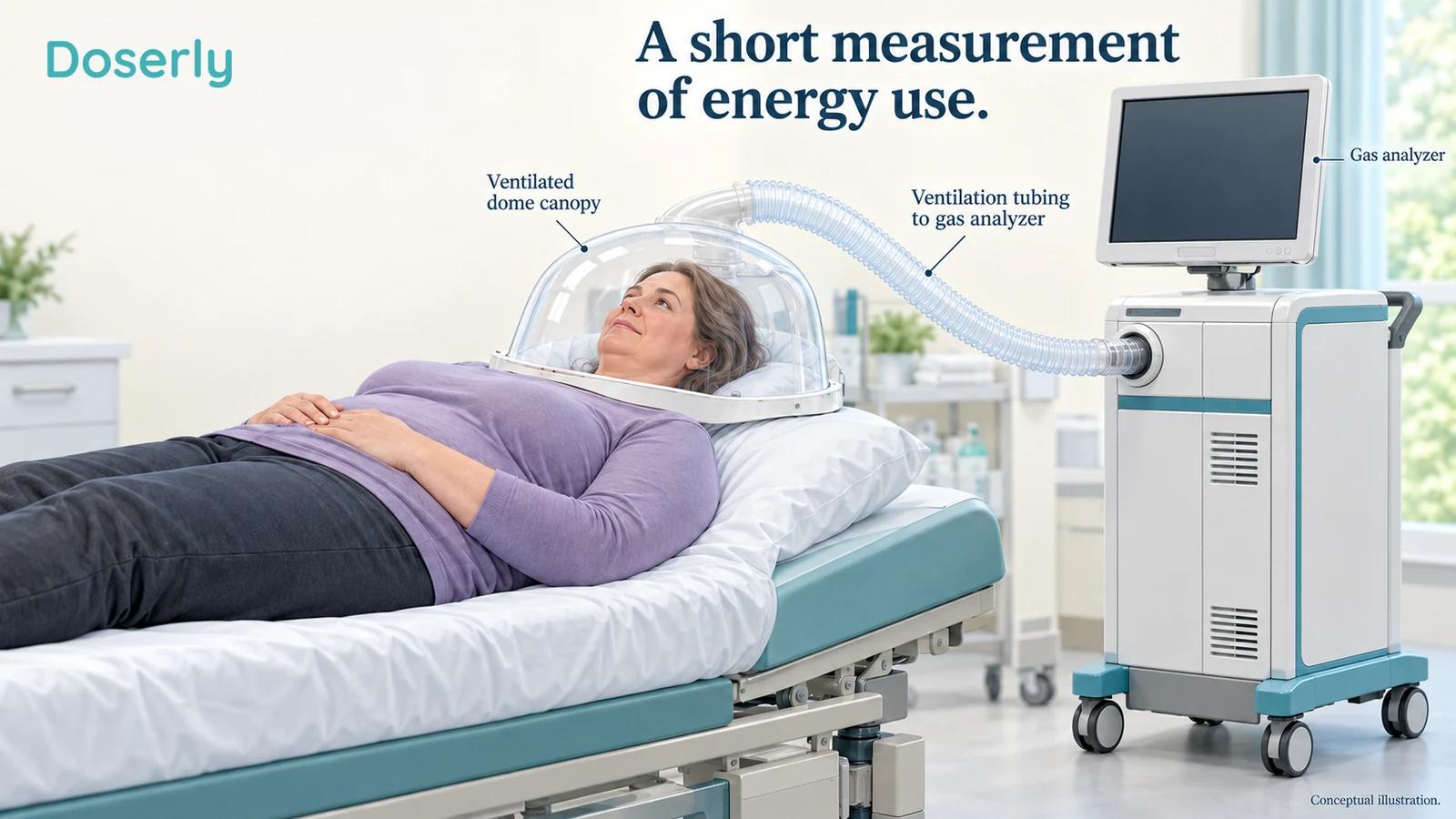
A 2025 randomized crossover study examined 16 women with obesity and 16 women of normal weight. Each completed an active red/near-infrared session and a sham session. Researchers used indirect calorimetry to estimate resting energy expenditure. In the women with obesity, the measured rate increased by about 9% after active exposure, with a greater change than under sham. Respiratory exchange ratio did not change, and skin temperature increased. The original study reports the methods and acute findings.
This was a short physiological experiment. The reported values were expressed in kilocalories per day, but that unit describes an estimated rate derived from a brief recording. It does not mean the participants were observed burning the additional amount for an entire day. The study did not establish sustained weight loss, and its temperature findings complicate a purely nonthermal interpretation.
Think of the distinction as a speed measurement. Observing a particular speed for a few minutes does not tell you the distance traveled over the next day. Similarly, an acute metabolic rate cannot simply be multiplied into a promised monthly fat loss without knowing how long the effect lasts and what happens to the rest of energy balance.
“Efficiency” also deserves care. A larger energy-expenditure number is not automatically proof that mitochondria became more efficient. Efficiency relates useful output to inputs; expenditure measures energy use. Establishing the mechanism requires more than observing a change in breathing gases after a session.
A 2026 human experiment tested that mechanistic story more directly. Twelve healthy adults received PBM on one randomized leg and sham on the other, followed by skin and muscle sampling. The investigators found no increase in measured mitochondrial respiration in either tissue, despite a substantial skin-temperature rise in the treated leg. The original report describes the null result.
One acute study cannot rule out every device or repeated-treatment effect. It does challenge the assumption that shining light on human tissue reliably produces an immediate mitochondrial boost. Mechanisms need testing in the relevant tissue and exposure conditions, just as clinical benefits do.
Glucose findings are promising but preliminary
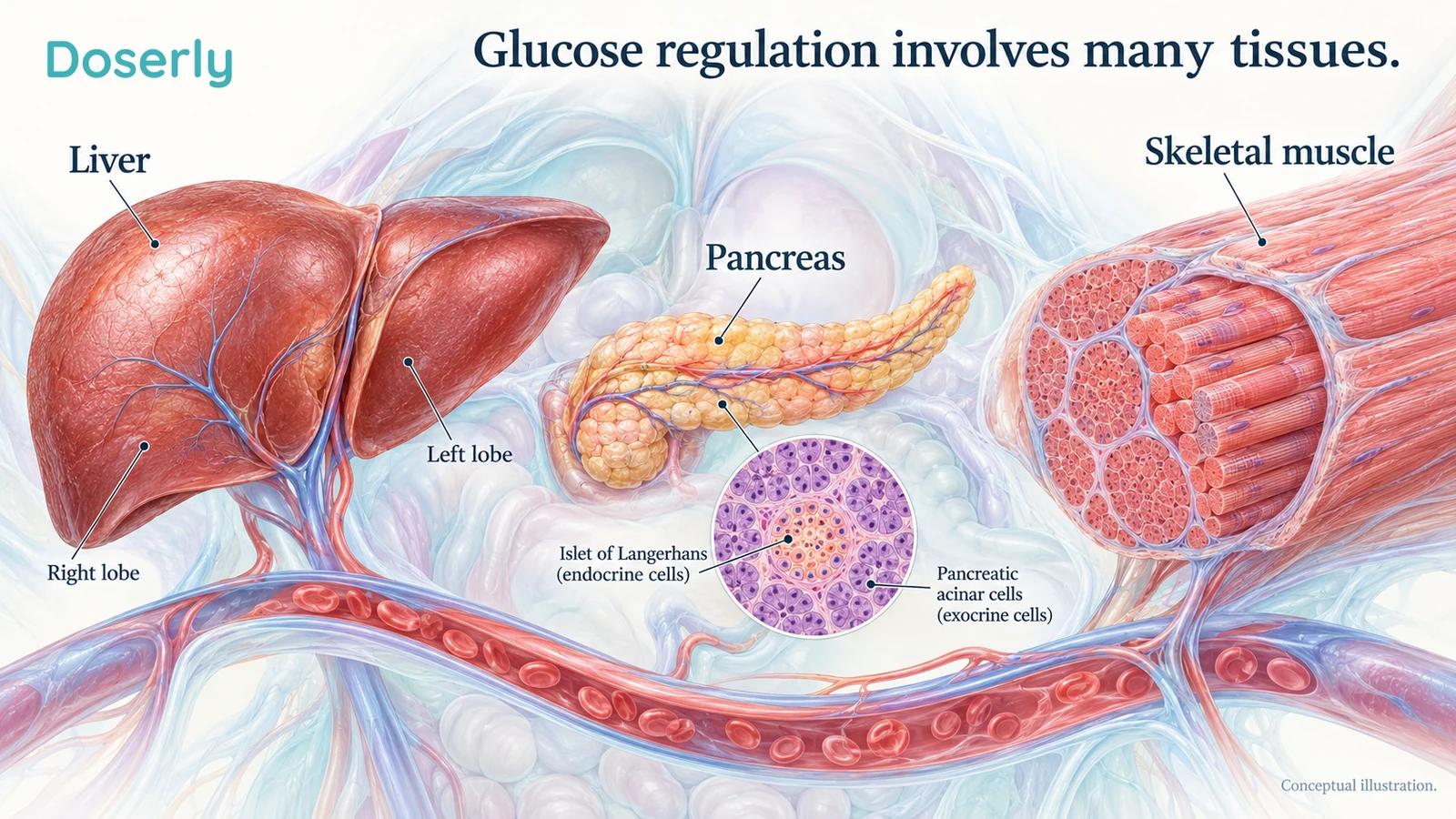
A 2024 study randomized 30 healthy adults to red light or a no-light comparison around an oral glucose-tolerance test. It reported a smaller post-drink glucose rise in the light group. The widely repeated 27.7% figure refers to the integrated rise above baseline, not a 27.7% fall in all circulating glucose. The absolute glucose-area comparison was smaller. Participants did not have diabetes, and the study did not test HbA1c, weight loss or diabetes complications. The original paper explains the distinct analyses.
That is a useful early physiological finding, but its meaning depends on the test. Drinking a standardized glucose solution under research conditions is not the same as demonstrating reliable control across ordinary meals, different medications and months of daily life. Nor does a lower glucose response identify exactly where glucose went.
A 2026 prospective study followed 15 people with type 2 diabetes who remained on metformin while receiving a vascular PBM approach. Fasting and immediate capillary glucose measurements improved, but HbA1c did not significantly change: the reported averages were 7.61% before and 7.65% afterward. There was no control group. Two participants reported local burning and redness early in treatment. The original study describes both the findings and adverse effects.
The absence of a comparator prevents confident attribution of the glucose changes to light. The unchanged HbA1c also needs to remain visible, even though the short observation period limits what that measure could show. This study supplies a reason for a better trial, not a basis for replacing diabetes treatment or adjusting medication around home light sessions.
Different glucose tests also cover different time windows. HbA1c reflects glucose exposure over roughly the preceding three months, whereas a finger-prick result describes a particular moment. Food, exercise, illness and stress can affect that moment. Conditions affecting red blood cells can also complicate HbA1c interpretation. These are reasons to interpret results together, rather than choose whichever number best supports a treatment claim. NIDDK explains the differences and limitations of these tests.
A brief improvement can therefore be real without demonstrating lasting disease control. Conversely, a short study may be too brief to show the full effect on a longer-term marker. The appropriate response to that mismatch is a trial designed for the longer-term question, not an assumption that benefit must appear eventually. For a person receiving diabetes care, the existing monitoring plan remains the useful framework for interpreting any new result.
Fat-cell explanations should stay attached to their evidence
Body-contouring marketing often describes fat cells opening pores, releasing contents or “melting” under light. These are different proposed processes, and pictures of a shrinking cell can make them appear more settled than the clinical evidence warrants.
The 40-person circumference study also included laboratory work suggesting triglyceride release without the particular cell-lysis or lipolysis findings tested. That laboratory component does not demonstrate the amount of fat removed from a person's body or establish the final fate of released material. It should not be turned into a claim that fat simply drains away after a session.
A useful explanation must account for the whole process. A change in one cell, one blood marker or one circumference is not a complete energy-balance measurement. If an advertisement jumps directly from a glowing mitochondrion to lasting weight loss, it has skipped the clinical steps that would connect those observations.
This is also why “detox” language adds little. It often substitutes an appealing story for a defined outcome. A study can measure a specific substance, tissue or physiological process; a promise to “flush fat toxins” without identifying those measurements is not an equivalent scientific claim.
This is not evidence of equivalence to GLP-1 treatment
A cosmetic circumference trial cannot be compared directly with a medication trial measuring sustained body-weight change. In STEP 1, 1,961 adults were randomized to semaglutide or placebo alongside lifestyle intervention for 68 weeks. Mean weight changes were approximately −14.9% and −2.4%, respectively. Gastrointestinal adverse effects were common, and more treated participants stopped because of them. The trial was manufacturer funded. The original report provides the weight and safety outcomes.
A different semaglutide trial, SELECT, studied 17,604 people with established cardiovascular disease and overweight or obesity, without diabetes. Major cardiovascular events occurred in 6.5% with semaglutide and 8.0% with placebo during follow-up. Treatment discontinuation because of adverse events was more frequent with semaglutide. These findings concern a particular higher-risk population and do not make medication suitable for everyone. The original SELECT publication reports the benefits, harms and funding.
The point is the outcome being tested, not a recommendation to choose a drug. Neither trial compared semaglutide with light, and they cannot provide a numerical head-to-head ranking. They show what evidence for sustained weight reduction or a cardiovascular benefit actually looks like, rather than allowing a circumference result to stand in for it.
Doserly's semaglutide guide explains that treatment's evidence and practical context separately. Similar marketing language about “metabolism” does not make a red-light device an alternative with equivalent outcomes.
Choosing a goal before choosing a device
For someone seeking weight-related health improvement, the care plan should address the relevant conditions and circumstances. NIDDK describes options that can include behavioral support, eating and activity changes, medicines and metabolic surgery when appropriate. The plan depends on the person, and maintaining changes usually requires continuing support. Its treatment overview explains the range of established approaches.
If the goal is cosmetic, ask about the actual device, the exact indication, the expected change at the specific site, the proportion of people who respond and how long results have been followed. A total package price and any proposed maintenance schedule matter as much as the headline number. Paying for a cosmetic service should not require accepting an unsupported health claim.
If the goal is metabolic, ask which health measure is expected to improve and what controlled human evidence supports that expectation. A clinic should be able to distinguish weight, body composition, glucose, HbA1c and symptoms. An explanation that moves between them whenever challenged is not giving a clear account of benefit.
Safety is also device-specific. Low-level light, thermal lasers, intense pulsed light and other body-contouring technologies do not share identical exposures or risks. The FDA's body-contouring information discusses eye protection, medication and medical-history review, and potential complications. A “noninvasive” label does not remove those considerations.
For tracking, choose a small number of measurements matched to the goal and record them under consistent conditions. Note changes in medication, eating patterns, exercise or other treatments that could explain a result. If several things changed at once, it is reasonable to observe progress without declaring that the light caused it.
Red-light research contains real signals worth following, particularly for specific cosmetic applications and carefully defined metabolic questions. The most defensible reading keeps those findings in their proper categories. Inches, weight and health can each matter, but evidence for one should not be quietly promoted into a promise about all three.