
Red Light Therapy
October 17, 2026
Red light therapy for long COVID and persistent fatigue: an early evidence check
On this page
When an ordinary conversation leaves you exhausted, or a short errand costs the next two days, a treatment described as restoring cellular energy has an understandable appeal. Red light therapy often arrives with that promise. It sounds gentle, it can be delivered at home, and its proposed biology seems relevant to an illness involving fatigue and difficulty thinking.
The human evidence is much narrower than the promise. There are preliminary photobiomodulation studies in people with post-COVID symptoms, including a sham-controlled brain-fog trial published in 2026. That trial did not establish an overall cognitive benefit at its primary endpoint, and it did not establish a fatigue benefit. Positive findings for particular symptoms or exploratory subgroups deserve follow-up, without being promoted into a treatment for long COVID as a whole.
This distinction matters especially for people with post-exertional malaise. Feeling a little more alert immediately after an intervention does not tell us whether someone can safely do more, sustain that improvement, or avoid a delayed crash. A useful evidence check asks those questions directly.
Start with the symptom the treatment is supposed to change
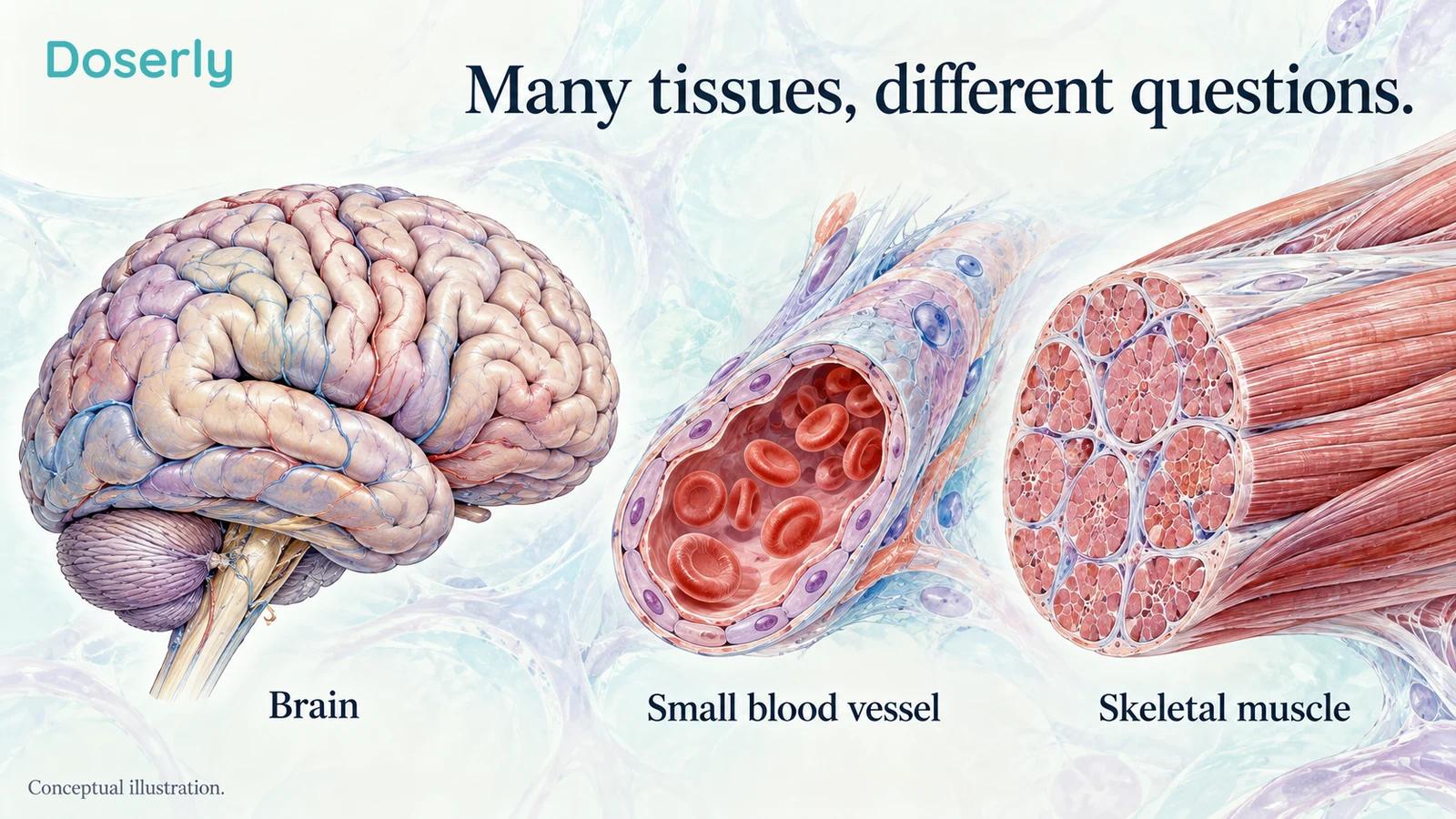
Long COVID is not a single measurement. One person may have persistent loss of smell, another may struggle to stand without palpitations, and another may have disabling cognitive and physical exhaustion. Those experiences can overlap, but improvement in one does not automatically mean improvement in the others.
The RECOVER investigators made that heterogeneity visible in their updated research index, published in 2025. Their observational analysis included 13,647 participants and identified five symptom subtypes. The index incorporated symptoms including post-exertional malaise, fatigue, brain fog, dizziness, palpitations and altered smell or taste. It was developed to help classify participants for research, rather than to provide a single laboratory diagnosis or select a light treatment. RECOVER-Adult research index.
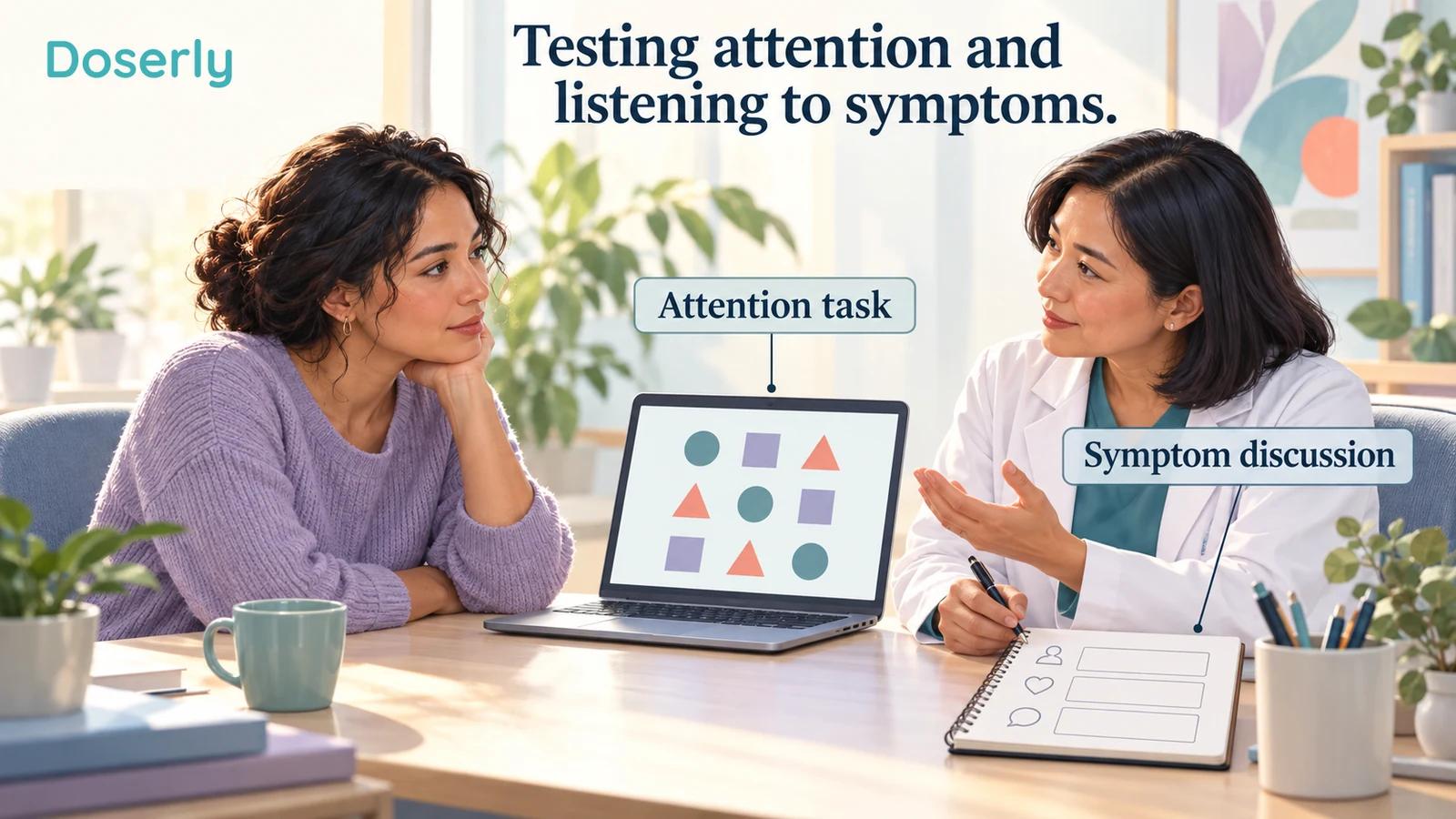
For someone considering photobiomodulation, the first useful question is therefore specific: what would count as a meaningful change? Remembering appointments, preparing a meal, tolerating a conversation and having fewer crashes are different goals. A study that measures a computerized attention task may be relevant to one part of that picture, while leaving the rest unanswered.
Fatigue also needs a more careful description than a single word allows. Someone can feel sleepy, physically weak, mentally overloaded, or disproportionately ill after activity. A clinician can help separate these experiences and look for contributing conditions. That work is still worthwhile when a person already has a long COVID diagnosis; an experimental device should not become the explanation for every symptom or the only available response.
Why light entered the conversation
Photobiomodulation uses selected wavelengths of light to try to influence tissue biology. In this literature, the intervention might be a device applied to the head, an intranasal component, or a system exposing a larger area of the body. These are distinct experimental approaches. The phrase “red light therapy” hides substantial differences in where the light goes and what researchers are trying to change.
The attraction is partly biological. Studies of long COVID have identified abnormalities that might make energy metabolism, inflammation or vascular function worth investigating. In a 2023 cross-sectional study of 275 people, researchers found differences in immune-cell populations, antibody responses and circulating hormones between groups with and without long COVID. Cortisol levels were lower in the long COVID group. These were associations, not proof of one cause, an indication for hormone treatment, or evidence that light normalizes the abnormalities. Original immune-profiling study.
Another study used specialized MRI and laboratory methods to investigate the blood-brain barrier in people with cognitive symptoms. It found evidence of barrier disruption associated with long COVID brain fog, alongside inflammatory and cellular findings. This helps explain why brain fog deserves biological investigation. It does not establish that all brain fog comes from a leaky barrier, that routine imaging will show it, or that photobiomodulation repairs it in patients. Original 2024 blood-brain barrier study.
The missing bridge is treatment evidence. Finding a possible biological problem does not tell us which intervention will correct it, how much correction matters, or whether the person will feel and function better. Those questions need studies of the actual treatment in the relevant patients. A persuasive illustration of mitochondria cannot supply the missing clinical result.
What the early brain-fog pilot showed
A 2023 open-label pilot involved 14 people, divided into two groups of seven. One group used a transcranial helmet and the other a whole-body light system over four weeks. The investigators reported improvements in several cognitive tests and supportive changes in their EEG assessment. There was no inactive or sham comparison group. Original pilot study.
That is a reasonable starting point for research, but a fragile basis for treatment claims. With seven participants per device, a few unusually good responses can strongly influence the average. Repeating cognitive tests can also change performance. Attention from researchers, changes elsewhere in a person's care and the natural course of symptoms remain possible explanations when everyone receives an active intervention.
The study cannot establish that a helmet and a whole-body system are equivalent. Nor can a comparison with each person's starting score establish how much improvement the light caused. For readers, the most useful interpretation is that the pilot supplied a reason to conduct a better controlled trial. It did not settle the question of persistent fatigue or show that commercial panels restore normal daily capacity.
There is also a practical difference between “a test score improved” and “I can resume my life.” Both matter, but they should be measured separately. A person might complete a short assessment more quickly while still needing hours of rest afterward. Another might report clearer thinking without any measurable change on the particular test chosen. A good trial needs enough detail to recognize both possibilities.
The 2026 controlled trial changes the conversation
The subsequent pilot registered as NCT05857124 tested a specific combined intranasal and transcranial device against sham in adults with persistent post-COVID cognitive symptoms. It used an eight-week treatment period and subsequent observation. The registration describes the planned trial; it is not a second set of treatment results. Trial registry.
The published 2026 report randomized 43 adults and analyzed 41 in its principal per-protocol analysis. At day 56, the between-group difference in the primary cognitive composite was 0.043, with a 95% confidence interval from −0.007 to 0.092. The result was not statistically significant. An analysis in participants younger than 45 was positive but exploratory and not adjusted for multiple comparisons.
Crucially, the total fatigue score did not differ significantly between groups; some fatigue items favored sham. The study reported no serious adverse events, but headaches and skin irritation occurred. Vielight funded the trial, and all authors reported compensation as employees or consultants/advisors. These facts support further independent research, not a claim that the device has proven overall cognitive or fatigue efficacy. Original 2026 trial and full report.
A null primary result does not prove that every possible version of the treatment is ineffective. It does mean that the central question this trial set out to answer remains unresolved. An appealing subgroup result cannot substitute for a confirmed benefit in the full target population.
For a person deciding whether to spend money and energy, that uncertainty has real meaning. The available evidence does not provide a dependable estimate of the chance of meaningful recovery. Nor does it establish which patient should use which commercial system. It is reasonable to find the research interesting while declining to treat an exploratory signal as a personal recommendation.
Brain fog is real even when a treatment does not work
Disappointing treatment results can feel like another dismissal of the illness. They should not be read that way. A treatment can fail to demonstrate benefit while the symptom it targets remains serious and measurable.
In a large 2024 community study, 112,964 adults completed an online cognitive assessment. Participants with unresolved persistent symptoms had larger average cognitive deficits than the comparison group without confirmed COVID. Memory, reasoning and executive-function tasks were among the affected areas. The study was observational and did not test photobiomodulation or establish an individual's prognosis. Original cognition and memory study.
This is why the appropriate response to an inconclusive light trial is better research and continued clinical support. It is not to tell people that brain fog is imaginary, or that they simply need more motivation. Research on causes, measurement and treatment asks different questions. Evidence for the first two remains valuable even when the third produces a negative result.
It also helps to distinguish an assessment from a judgment about effort. A short task samples performance under particular conditions. It cannot capture every demand of parenting, employment, household management or social interaction. Those practical losses belong in the conversation even when a clinic test looks reassuring.
Smell and taste results address different problems
There are more encouraging findings in particular post-COVID sensory symptoms. In a 2025 trial, 81 participants with impaired smell were allocated to control, red-light or infrared groups. All groups also received a short course of prednisolone and olfactory training. The infrared group showed a greater improvement in the objective smell test than controls, with an adjusted difference of 4.6 points. The red-light comparison was not statistically significant. Twelve participants did not complete follow-up and were excluded from analysis. Original olfactory-disorders trial.
That result concerns a specific combined clinical approach for smell dysfunction. It does not establish the effect of light used alone, justify improvising an intranasal treatment, or demonstrate improvement in systemic fatigue. The distinction is particularly important because “post-COVID improvement” can sound much broader than the outcome actually measured.
A separate 2024 trial randomized 70 people with altered taste to active or simulated photobiomodulation, with both groups receiving olfactory therapy. Taste improved in both groups, with a difference favoring active treatment at weeks seven and eight. This was a single-blind study using combined treatment sites, so it cannot identify which component produced the finding. Original dysgeusia trial.
Regaining taste or smell can be deeply meaningful. It can change how someone experiences food and daily life. Giving that outcome proper attention does not require presenting it as evidence that a light device treats every long COVID symptom. The patient, treatment site and outcome should stay attached to the claim.
Post-exertional malaise deserves its own outcome
The defining difficulty for some patients is the delayed response to exertion. Current CDC guidance describes post-exertional malaise as symptom worsening after even minor physical or mental activity, often beginning 12 to 48 hours later and lasting days or weeks. That timing makes an immediate “energy boost” an incomplete measure of benefit. CDC clinical guidance.
Imagine that someone feels clearer during the afternoon after a session and uses that window to catch up on tasks. If symptoms worsen substantially the following day, the afternoon alone cannot tell the story. A meaningful assessment needs to include the delayed cost as well as the temporary gain. This example is a way of thinking about measurement, not evidence that light itself causes or prevents such a pattern.
Physical and cognitive demands both belong in that assessment. Travel to an appointment, completing questionnaires, sitting upright and managing equipment may consume capacity before any treatment effect is considered. A home intervention can reduce travel demands, but it can still create work for the patient or a caregiver.
A person should not be expected to demonstrate determination by pushing through a crash or escalating activity to prove that a treatment is helping. Research should make it possible to report worsening, rest, withdraw or seek clinical review without framing those actions as failure. The important question is whether the intervention makes daily life more sustainable.
Muscle biology supports investigation, not a shortcut
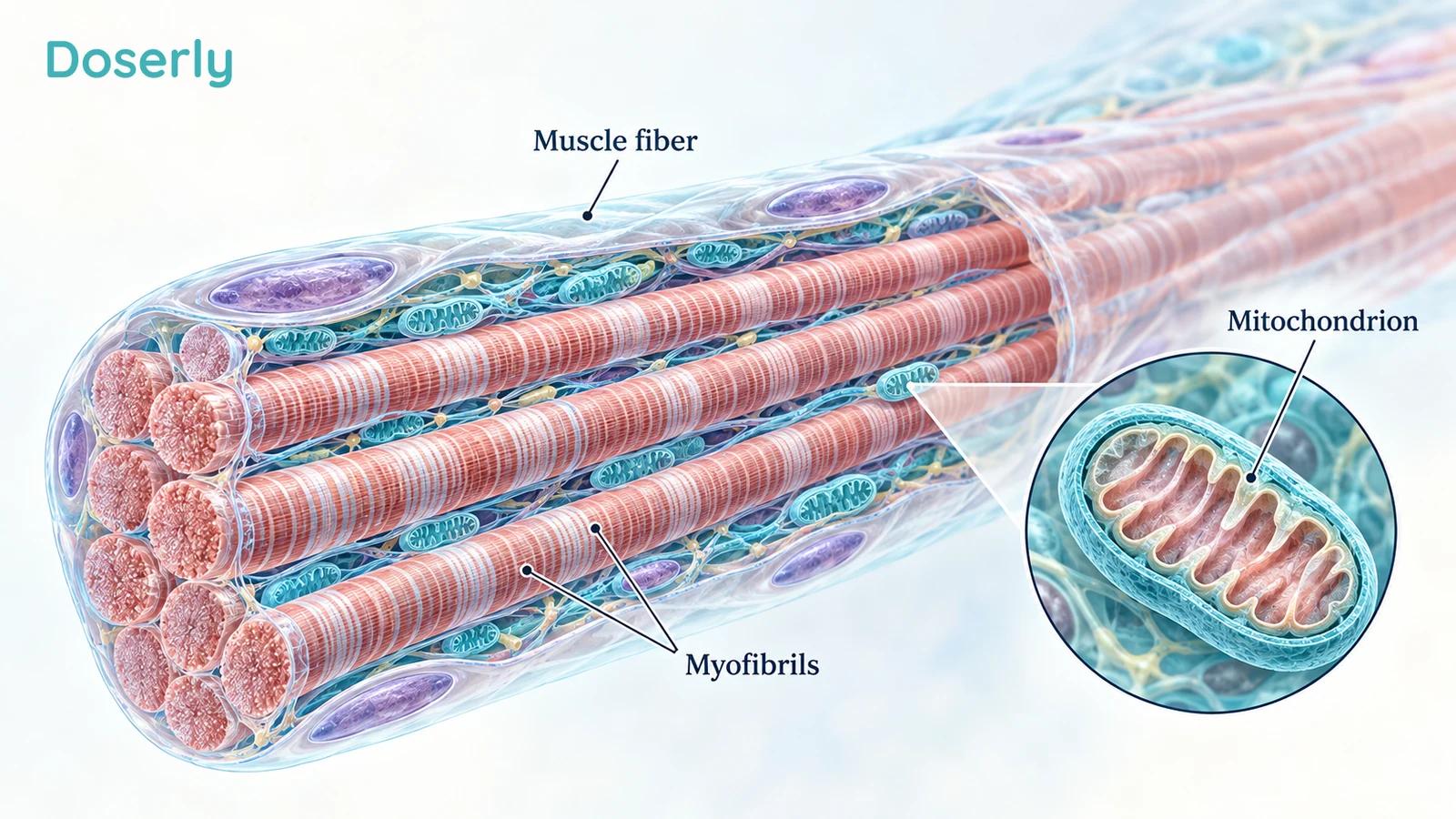
A 2024 longitudinal case-control study examined people with long COVID before and after an exercise challenge. It found lower exercise capacity and abnormalities in skeletal-muscle structure and metabolism, with several findings worsening after induced post-exertional malaise. The study included muscle sampling and physiological measurements; it was not a trial of light therapy. Original muscle and post-exertional malaise study.
These findings make it inappropriate to reduce the whole problem to ordinary tiredness. They also illustrate the limits of a mitochondrial sales pitch. Even if a treatment influences a cellular process under some conditions, it still needs to show that the influence helps people with this particular illness. It may not reach the relevant tissue, alter the relevant process, or produce a lasting functional effect.
The same caution applies to the word “inflammation.” It describes many processes in many tissues. A change in one blood marker cannot establish that the cause of a person's fatigue has been removed. Before accepting a claim of biological repair, ask which process was measured in patients and whether changes in that process tracked a meaningful improvement.
Researchers can test these connections. For now, they should be presented as questions, with diagrams clearly identified as conceptual. A picture of light reaching a mitochondrion is an explanation of a proposed idea, not a photograph of recovery occurring in a person with long COVID.
What other treatment research can teach us
Another intervention illustrates why the clinical test matters. A double-blind crossover trial randomized 121 people with post-COVID condition to coenzyme Q10 or placebo in alternating treatment periods. It did not find a significant advantage for symptom burden or the health index, although scores improved over time regardless of treatment. Original CoQ10 trial.
That is not a trial of red light, and it cannot determine whether photobiomodulation works. Its relevance is more basic: an intervention can have a plausible connection to mitochondrial biology and still fail to improve the clinical outcome. If you are comparing claims about cellular energy, the Doserly CoQ10 guide provides background on the compound; it should not be treated as evidence that supplementation or a supplement-and-light combination treats long COVID.
Research on supportive care also requires careful interpretation. The 2026 STIMULATE-ICP trial enrolled 1,152 participants across specialist services. Fatigue scores improved across groups, but adding multiorgan MRI, digital rehabilitation, or their combination did not significantly improve the primary 12-week fatigue outcome over usual care. The study did not test photobiomodulation. Original STIMULATE-ICP trial.
The practical lesson is not that clinical care has no value. It is that a new addition must demonstrate what it contributes beyond the care people already receive. Expensive testing, an elaborate digital program and a light device all deserve the same question: what extra patient benefit does this component actually deliver?
Support can be useful without promising a cure
Pacing is often discussed in the context of post-exertional symptoms. In the PACELOC prospective cohort, 31 participants completed an eight-week program involving individualized pacing, active rest and clinician contact. Post-exertional symptom episodes became less frequent, shorter and milder, but broader symptom and disability changes did not reach clinical significance. The study had no randomized control group. PACELOC original report.
That combination of findings is worth respecting. Fewer crashes may matter greatly even when a person remains ill. At the same time, an uncontrolled program cannot tell us how much improvement came from each component, and it should not be advertised as a cure. Supportive strategies can have a modest, practical goal without needing a sweeping biological claim.
For someone considering experimental treatment, preserving an existing care relationship is valuable. It provides a place to discuss changes, review medications and decide whether a new symptom needs assessment. A device seller's explanation should not become the only interpretation available to the patient.
A useful trial must include the people most affected
When reading a study, look beyond the average result to who could participate. A program requiring repeated online tests may be manageable for some patients and inaccessible to others. Someone who needs help with basic daily activities may face a very different treatment burden from someone able to work part time. Neither experience should be erased by describing all participants simply as people with fatigue.
Future studies should make that distinction visible. They should explain the severity of participants' illness, whether delayed post-exertional worsening was assessed, and what happened to people who could not complete treatment. If the final analysis includes only those who finished, readers need to know whether missing participants stopped for logistical reasons, lack of benefit, worsening symptoms or something else.
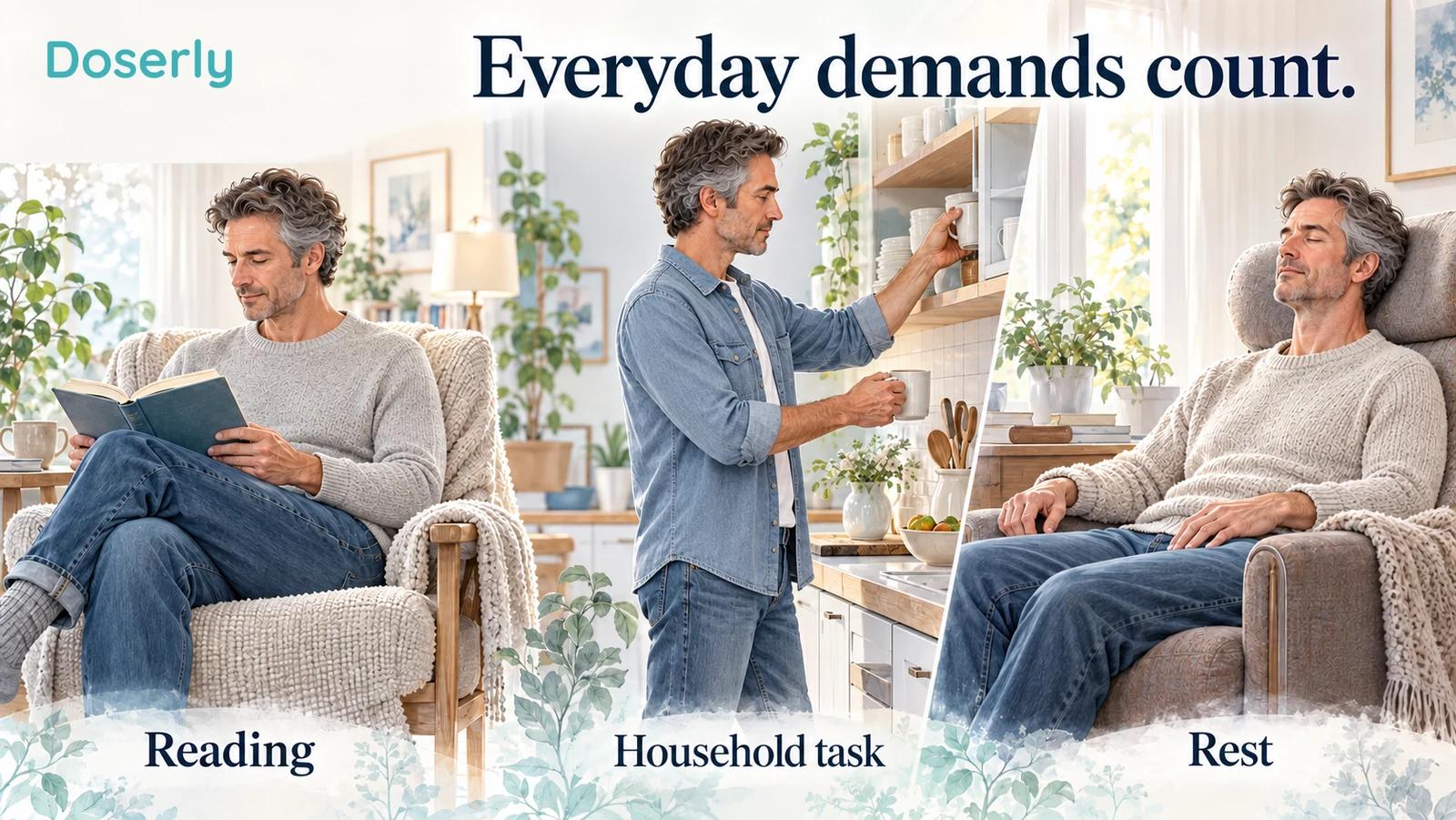
It would also help to measure outcomes that survive outside the research visit. Can someone sustain a chosen household task without borrowing capacity from the following day? Is clearer thinking accompanied by better participation in family life? Do benefits persist when sessions stop? These are examples of useful questions, not a demand that every participant reach the same activity target. Recovery goals should make sense for the person living with the illness, including people whose immediate priority is simply fewer severe symptom flares.
Questions worth taking to a clinician or research team
A productive discussion can begin with a few concrete questions:
- Does the study involve people with my main symptom and level of disability, including post-exertional worsening?
- Was the benefit measured against sham, and was it the primary outcome or an exploratory finding?
- What daily function improved, and how long did the improvement last after treatment ended?
- How were delayed symptoms, adverse effects and withdrawals recorded?
- What are the time, travel, caregiver and financial demands, and what happens if participation makes life harder?
These questions are especially useful when a clinic cites several small papers together. Check whether they study the same intervention and outcome. A smell trial, a cognitive pilot and an unrelated muscle experiment do not become three confirmations of a fatigue treatment simply because all mention light or mitochondria.
Keeping a brief record may help a clinical conversation, but it should fit the person's capacity. A few notes about a meaningful activity and its later consequences can be more useful than an exhausting daily battery of scores. Tracking can clarify experience; it cannot turn an uncontrolled personal experiment into proof of efficacy.
As of October 2026, photobiomodulation remains an early research question for long COVID brain fog and persistent fatigue. The controlled evidence does not support a confident promise of recovery, and the sensory-symptom findings should remain attached to those specific symptoms. People living with long COVID deserve treatments evaluated against the outcomes they actually need: clearer thinking, tolerable daily activity, fewer crashes and improvement that lasts.