
Red Light Therapy
October 17, 2026
Red light therapy: which benefits are supported by human research?
On this page
Red light therapy can mean a mask worn while you read, a cap used for thinning hair, a laser offered during rehabilitation, or a carefully specified treatment delivered in a cancer center. Those experiences belong to the same broad family of light treatments. They do not have the same evidence behind them.
That is why asking whether red light therapy “works” can be frustrating. A yes can hide important limits, while a no can overlook legitimate clinical uses. The more useful question is whether a particular device, delivered in a particular way, improves an outcome that matters for a particular person.
Human research supports some specific uses of photobiomodulation, especially prevention of oral mucositis in defined cancer treatment settings. There are also encouraging, device-specific skin and hair studies, mixed findings for musculoskeletal pain, and emerging neurological research. These findings do not establish broad promises about whole-body repair, cancer treatment or longer life. This overview considers research available through October 17, 2026, including studies whose results are less straightforward than their headlines.
What treatment are we actually talking about?
Photobiomodulation, usually shortened to PBM, involves exposing tissue to light with the aim of influencing biological activity without intentionally cutting, destroying or substantially heating that tissue. Red and near-infrared wavelengths are common, and the light can come from LEDs or low-level lasers. Older papers often call it low-level laser therapy or low-level light therapy.
The terminology matters because several different treatments get swept into the same conversation. Ultraviolet phototherapy used for some inflammatory skin diseases is different from red-light PBM. An ablative laser that resurfaces skin has another mechanism and risk profile. Intense pulsed light is also distinct. A lamp used to influence the sleep-wake cycle is not interchangeable with a device studied for a painful tendon.
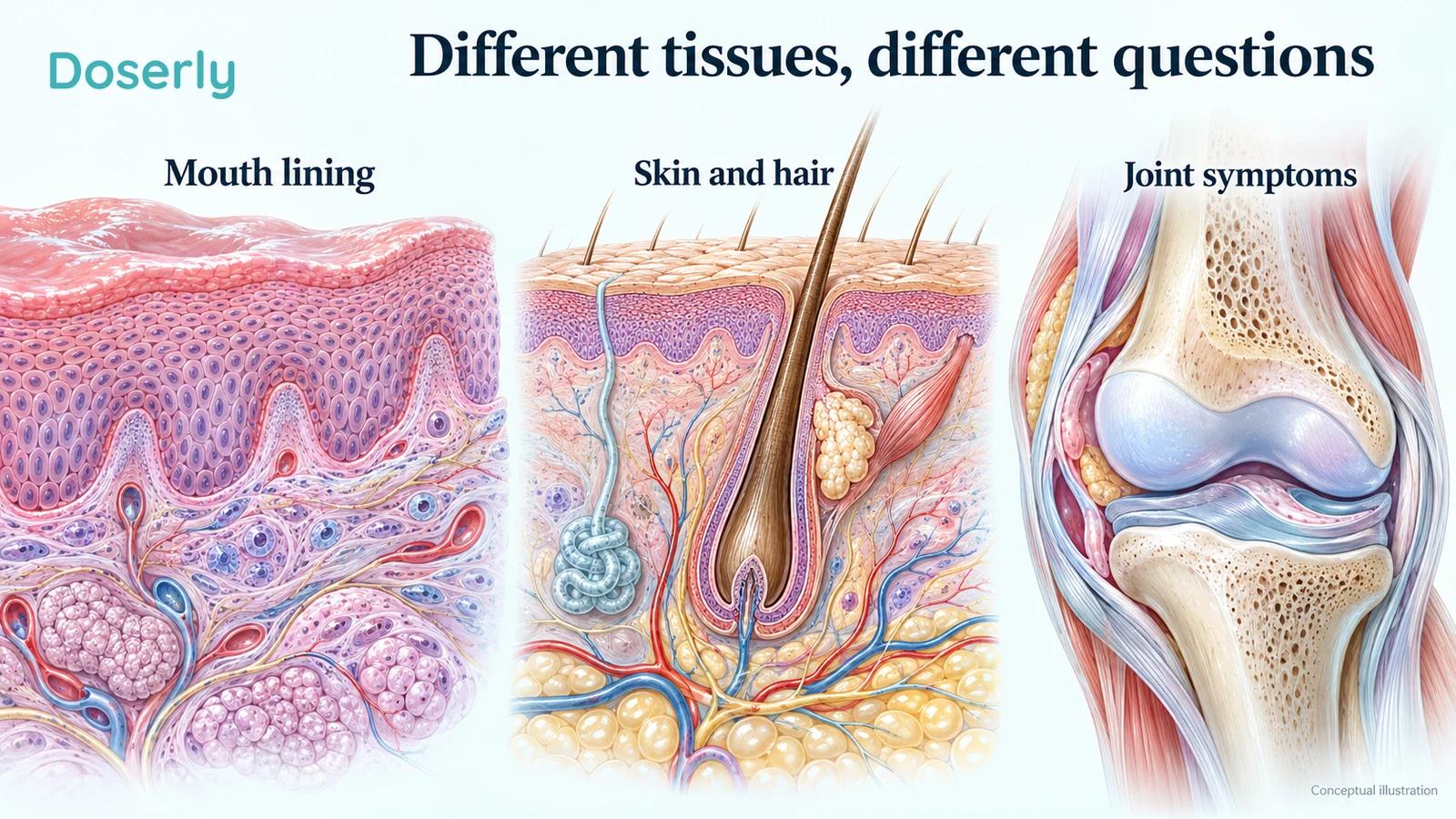
In a clinical paper, the intervention is more than its color. It includes wavelength, output at the treatment surface, exposed area, treatment duration, placement, session schedule and the condition being treated. The mouth lining, a scalp follicle and a knee joint do not present the same optical or biological problem. A positive result in one location cannot simply be carried across to another.
There is a plausible biological basis for studying these effects. Proposed mechanisms include changes in mitochondrial signaling, nitric oxide biology, calcium signaling and the activity of stressed cells. But the familiar explanation that light simply “charges your mitochondria” is too certain and too simple. Researchers disagree about how well particular molecular mechanisms have been demonstrated under relevant conditions. Proposed PBM mechanisms, critical examination of the cytochrome oxidase hypothesis.
A mechanism explains why an experiment might be worth doing. A human trial tells us whether the intervention actually helped the people studied. Keeping those questions separate makes the research more interesting, because it lets useful clinical findings stand on their own without attaching an unproved explanation to every improvement.
A useful way to read the evidence map
The following categories describe the overall direction of the evidence discussed here. They are an editorial guide to the studies below, not a formal grading system or a ranking of popular uses.
Question
Mouth sores during selected cancer treatments
- What the human evidence currently supports
- Guideline-supported preventive PBM protocols in specific settings
- What it does not establish
- Treatment of cancer itself or equivalence to a home panel
Question
Fine lines and skin appearance
- What the human evidence currently supports
- Some improvements with studied devices and schedules
- What it does not establish
- A guaranteed visible transformation or reversal of skin aging
Question
Hereditary pattern hair loss
- What the human evidence currently supports
- Some sham-controlled evidence of increased hair density
- What it does not establish
- Regrowth for every cause of hair loss or restoration of a full head of hair
Question
Knee pain and rehabilitation
- What the human evidence currently supports
- Some positive trials alongside trials showing no added benefit
- What it does not establish
- Cartilage regeneration or a replacement for rehabilitation
Question
Acne
- What the human evidence currently supports
- Small trials of blue-red and other light treatments
- What it does not establish
- That red light alone treats all acne or prevents scarring
Question
Cognition and systemic health
- What the human evidence currently supports
- Early, sometimes encouraging clinical signals
- What it does not establish
- Prevention of dementia, whole-body rejuvenation or longer human lifespan
This map also illustrates a practical point: the strongest evidence may concern a use that is very different from the product someone is considering. A treatment can have a legitimate place in medicine without every consumer claim made under the same name becoming legitimate.
For a purchase or treatment decision, begin with your goal. “I want my knee to feel better on stairs” is a different question from “I want to rebuild cartilage.” “I want fewer inflammatory pimples” differs from “I want to prevent permanent scars.” When the goal is specific, it becomes much easier to find the relevant evidence and recognize a result that does not answer your question.
Mouth sores during cancer treatment: a defined clinical use
Oral mucositis is inflammation and injury of the mouth lining that can occur during cancer treatment. It can make eating, drinking and speaking painful. Preventing it is an important supportive-care goal, even though it does not treat the underlying cancer.
The MASCC/ISOO guideline review supports PBM for prevention in specific settings, including certain stem-cell transplantation regimens and head-and-neck radiotherapy, with or without chemotherapy. Its recommendations concern particular protocols and patient groups. They are not an endorsement of shining an unspecified device into the mouth or using light directly over a tumor. MASCC/ISOO PBM guideline review, 2020 clinical practice guideline.
There is uncertainty even within this more established area. The UK LiTEFORM trial recruited 87 participants rather than its planned 380. It could not provide a reliable conclusion about benefit or cost-effectiveness. Mouth soreness was slightly worse in the active group, but the small sample limited interpretation. The investigators also encountered practical challenges in scheduling treatment and providing rooms and trained staff. LiTEFORM randomized trial.
That does not erase the wider evidence underpinning the guidelines. It does show why implementation and protocol matter. For someone undergoing treatment, the useful question is whether their oncology and oral-care team offers a supported PBM approach for their particular situation. The answer depends on the cancer treatment, local expertise and available equipment, not just access to red light.
A home wellness purchase and a hospital supportive-care intervention therefore require different judgments. The latter may be delivered within a plan that already includes oral hygiene, pain management, nutritional support and regular examination. Removing the light treatment from that context changes what is being offered. A mouth sore that needs diagnosis also cannot be assumed to be treatment-related mucositis simply because PBM has been studied for mucositis.
Skin appearance: encouraging results with modest expectations
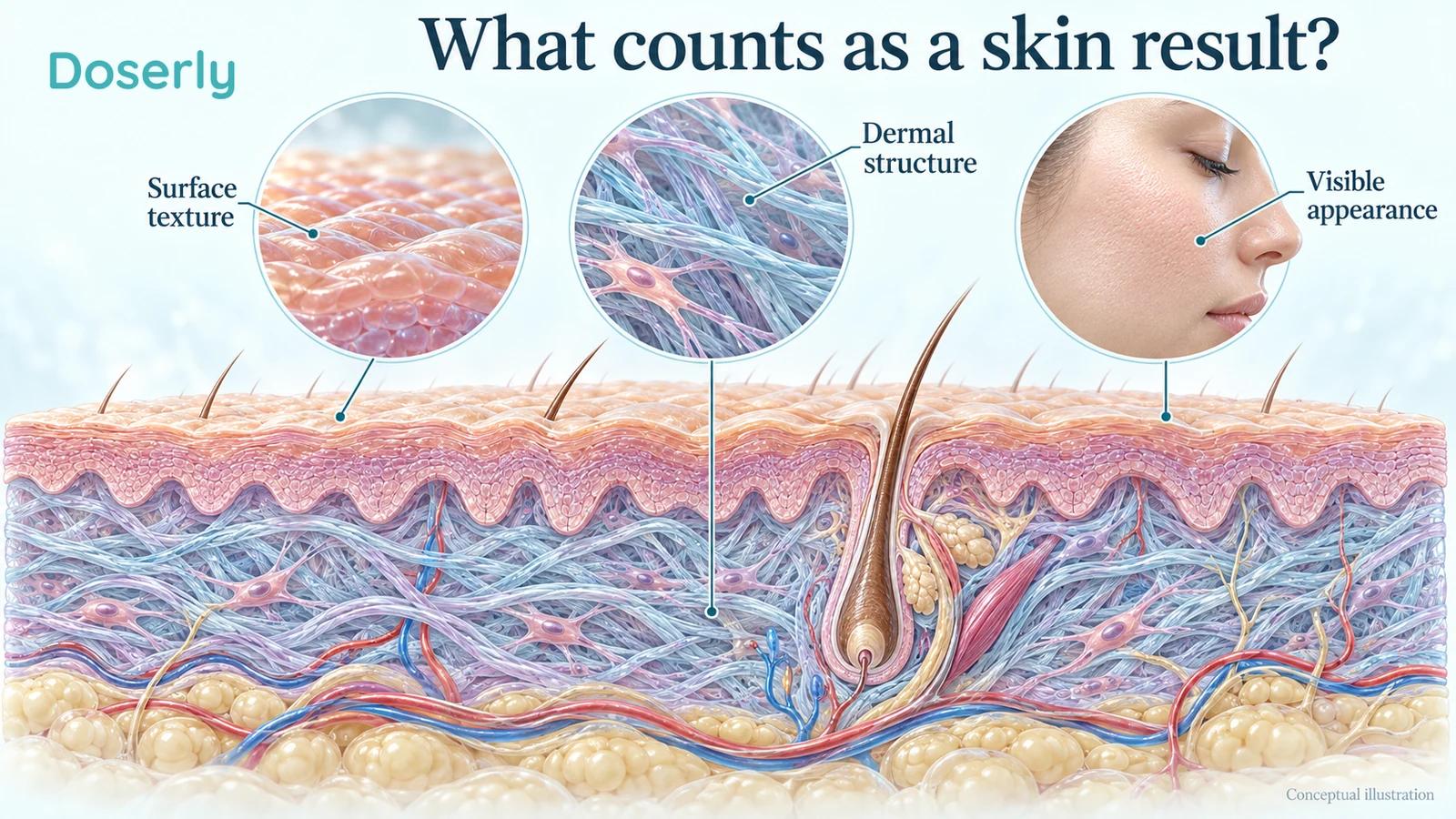
Skin research often measures several things at once: how participants feel about their appearance, what blinded clinicians see in photographs, how rough the skin surface is, and what an instrument suggests about dermal structure. Each can be useful, but they are not identical outcomes.
A controlled study published in 2014 included 136 volunteers and evaluated two broad light ranges. Treated groups showed improvements in several skin assessments after repeated sessions, including photographic ratings, roughness and ultrasound-assessed collagen density. The broader spectrum did not outperform the red-only spectrum. The comparison included an untreated control group, which is less convincing for some subjective outcomes than a credible sham treatment. Wunsch and Matuschka skin study.
The 2025 frequency trial is a good example of why the details matter. Ninety-five women aged 45–60 received one of two active schedules or sham treatment. The clinician-rated Wrinkle Assessment Scale did not differ significantly between groups. Image analysis found improvements in some wrinkle regions, and participant satisfaction favored active treatment. More frequent sessions did not clearly improve the reported results. 2025 sham-controlled facial rejuvenation trial.
A fair interpretation is that there are signals of benefit, with disagreement between measurement methods. It would be misleading to turn that into “everyone sees fewer wrinkles” or “more sessions are better.” The findings also do not tell us that every mask with the same advertised wavelength will perform similarly.
For someone considering PBM for skin appearance, the size and visibility of the change deserve as much attention as whether a result reached statistical significance. A small difference detectable by image software might matter to one person and be barely noticeable to another. A comfortable routine with realistic expectations is a different proposition from an expensive purchase justified by dramatic before-and-after photographs.
Photographs themselves need care. Camera distance, face position, expression, makeup and the direction of light can alter the appearance of fine lines. If a treatment is being evaluated with photographs, matching those conditions is part of measuring the result. The photograph should help answer the question rather than make an ordinary lighting change look like a biological transformation.
Pattern hair loss: density can improve, but diagnosis matters
Hair research is mainly about androgenetic alopecia, the hereditary pattern of thinning often called male or female pattern hair loss. That is a specific diagnosis. It should not be treated as a stand-in for sudden shedding, patchy loss, scalp inflammation or scarring disorders.
A multicenter sham-controlled study published in 2014 tested low-level laser devices in men and women with pattern hair loss. It is part of the clinical evidence supporting the possibility of increased hair density with certain devices. Its relevance is strongest for the studied diagnosis and equipment, rather than any red light positioned near the head. Jimenez and colleagues' randomized study.
The newer 2025 study deserves particular care. It randomized 160 people to different LED caps or sham treatment. Ninety-one were excluded from the per-protocol analysis. None of the individual active arms achieved a statistically significant result on the primary week-16 hair-count endpoint. A pooled analysis combining the three active arms did favor treatment, with 28.5 more hairs per square centimeter than sham. Several authors had manufacturer affiliations. 2025 LED-cap trial.
Those findings are more nuanced than a simple declaration that the caps succeeded. Pooling groups can increase statistical power, but it also changes the question. A pooled result across different light combinations does not prove each combination works independently. Excluding many randomized participants also raises questions about how the result applies to ordinary users who may find regular treatment difficult.
Hair density is a meaningful measure, but a count in a small marked scalp area is not the same as satisfaction with overall coverage. Hair thickness, distribution and styling can affect how a change looks. The treatment commitment matters too: a device may require repeated use over months before the relevant assessment can be made.
The most helpful first step is therefore an accurate diagnosis, followed by a discussion of realistic options and how success will be judged. That conversation can include light devices, but it should also establish whether a different cause of hair loss needs attention. A delayed diagnosis can matter more than the choice between two devices.
Acne: separate the red and blue questions
Acne studies often involve both blue and red light. A result from a combined device does not isolate the contribution of red light alone. It also cannot automatically be applied to severe acne, nodules or a person already developing scars.
In a double-blind randomized Korean study, 35 participants with mild-to-moderate acne used an active blue-red device or sham. The treatment group had reductions in inflammatory and noninflammatory lesions at the final assessment. Tissue findings accompanied the clinical observations, but the small sample and combined intervention limit what can be concluded about either wavelength on its own. Home-use blue-red acne trial.
A separate randomized comparison of red and blue light included 28 participants. Both groups improved, but differences between the groups were not statistically significant. Without a clear between-group difference, the numerically larger improvement in one group should not be presented as proof that one color was superior. Red versus blue acne study.
This is a promising area for carefully selected use, with a smaller evidence base than marketing often suggests. The decision is also shaped by what the person needs from treatment. A modest reduction in pimples can be useful, but prevention of scars and control of painful disease may require a broader plan. Comparing light with doing nothing is not the same as comparing it with an effective, tolerable acne treatment.
Pain and movement: a positive trial is only part of the picture
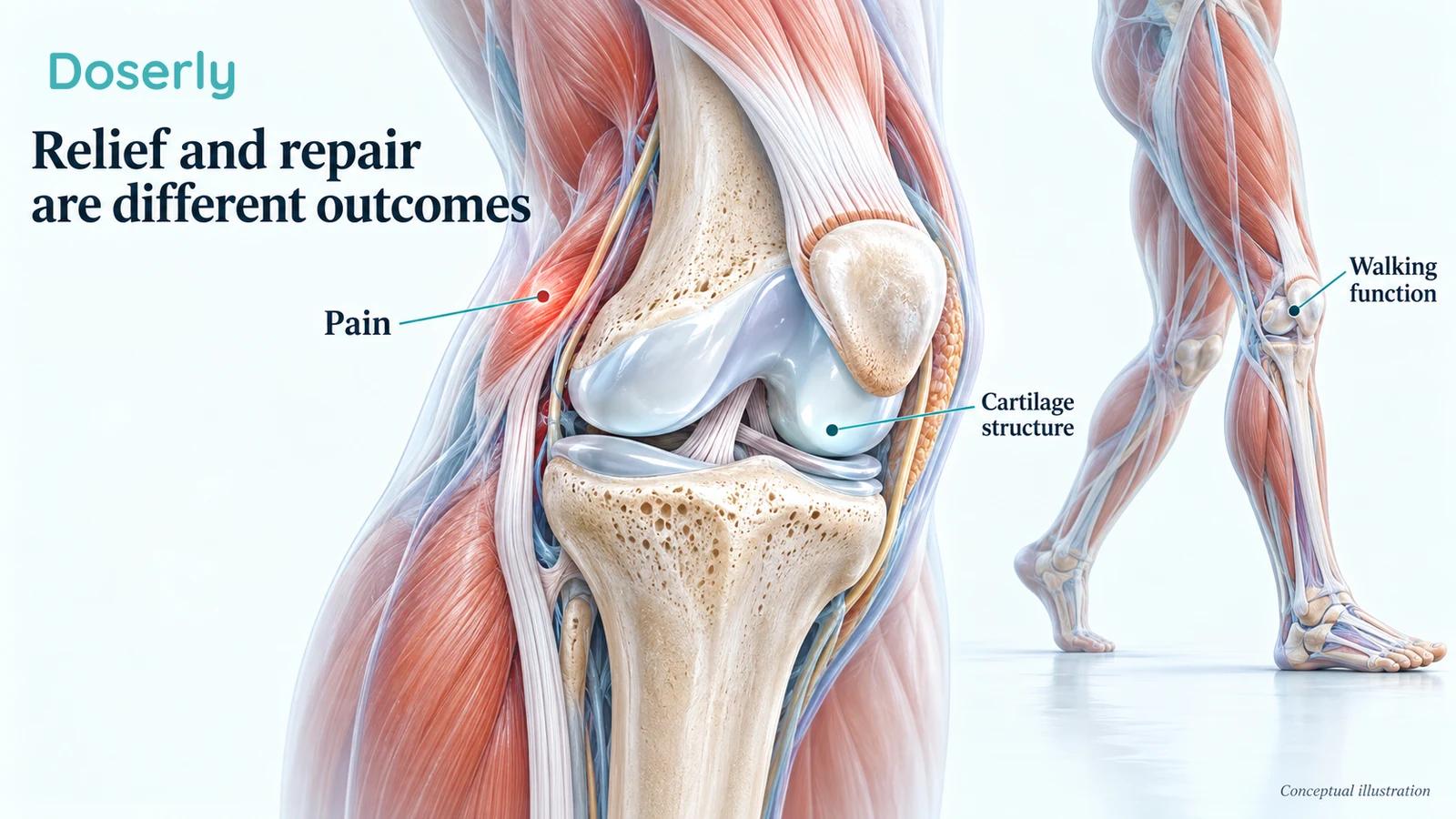
Pain is a real and important outcome. Relief can help someone walk, sleep or participate in rehabilitation. But symptom improvement should not be described as proof that a joint has been rebuilt or a tendon repaired.
A 2025 knee osteoarthritis trial randomized participants to PBM, sham or no intervention; 65 remained for final analysis. It reported pain improvements with a specified low-level laser approach. Its abstract also described changes in function-related measures, although some were reported as within-group changes rather than clean estimates of the difference between groups. 2025 knee osteoarthritis trial.
Another trial asked a different, very practical question: does PBM add anything when people already receive strengthening exercise? In that 2023 study, 127 participants were allocated to exercise alone, exercise with active PBM, or exercise with sham PBM. Adding PBM did not improve pain, physical function or quality of life relative to the comparison groups. Attrition was substantial at later follow-up, which limits long-term certainty. Exercise plus PBM trial.
These findings can coexist. An intervention might look helpful against no intervention yet add little to a good rehabilitation program. The comparison is not a technical footnote; it changes what someone can reasonably expect to gain.
For a person with knee pain, a useful conversation would identify the diagnosis, current rehabilitation plan, functional goal and expected contribution of the light treatment. If the goal is climbing stairs more comfortably, that ability should be measured. A transient change in pain immediately after a session may still be welcome, but it answers a narrower question than sustained improvement in daily activity.
Exercise recovery and brain health remain active research areas
Recovery claims are especially easy to overextend because studies can measure soreness, blood markers, strength, jump performance or endurance. An improvement in one does not establish an improvement in all the others.
In one randomized study of 54 untrained participants, PBM, stretching and their combination were tested after exercise-induced soreness. PBM did not improve the reported soreness and functional-performance outcomes. This provides a useful counterweight to claims that recovery benefits are automatic, although it cannot settle every athletic population, device or timing strategy. Randomized muscle-soreness study.
Brain-directed PBM is also being studied in humans. A 2026 sham-controlled pilot in 20 people with mild cognitive impairment reported encouraging cognitive and biological findings after six weeks. It was a small exploratory study, with several different outcomes and a manufacturer-affiliated author. That makes it a reason for further investigation, not evidence that an ordinary home panel prevents dementia. 2026 cognitive impairment pilot.
These areas deserve neither dismissal nor premature certainty. A finding can be promising while the important practical questions remain unanswered: which people benefit, whether the effect lasts, whether daily functioning changes, and how an intervention compares with established care. Specialized head-directed research devices also raise different delivery and safety questions from a facial cosmetic mask.
The same restraint applies to longevity claims. None of the skin, hair, pain or short cognitive trials discussed here establishes longer human life. Improvements in a local symptom do not demonstrate a slower overall aging process. If mitochondrial language is what drew your attention, the Doserly SS-31 guide provides a separate example of why a mitochondrial target still needs condition-specific clinical evidence. It is not evidence that PBM and a mitochondrial drug are interchangeable or should be combined.
Device authorization and safety need specific questions
“FDA-cleared” is meaningful only when attached to an actual device and its intended use. The FDA explains that the 510(k) pathway assesses substantial equivalence to a legally marketed device, with safety and effectiveness underlying that comparison. It is different from premarket approval and from De Novo classification. Registration by itself is not a clinical endorsement. FDA explanation of device review pathways.
A device supported for one purpose does not acquire every other purpose advertised beside it. Look for the exact model and indication, rather than treating a regulatory phrase as a general badge for red light. Also check whether a cited paper actually tested that model or simply studied light therapy in the same broad category.
For skin and hair devices, dermatologists emphasize following the device instructions, considering skin conditions and medications, and using the specified eye protection when required. Sunglasses are not a substitute for protective equipment recommended by the manufacturer. Short-term tolerability in a study also does not establish unlimited long-term safety for every user. American Academy of Dermatology guidance.
A practical safety discussion should be specific enough to be useful. Ask about the area you intend to treat, any active skin problem, previous reactions to light and the medicines or topical products you use. Avoid assuming that a device is harmless because treatment is painless or because its light looks less intense than sunlight. Appearance is not a measurement of exposure.
How to decide whether the evidence fits your goal
Start by describing the outcome in ordinary language. You might want a more comfortable meal during cancer treatment, fewer visible inflammatory lesions, improved scalp coverage, or easier movement after sitting. Then check whether the study measured that outcome in a similar population.
Next, identify what treatment was compared with. A credible sham helps separate the device's contribution from expectations and the experience of attending treatment. A comparison with usual care tells you something different. If everyone received exercise, medication or another procedure, ask whether the light added a worthwhile benefit beyond that shared care.
Finally, consider the burden. Repeated sessions take time. A device takes money and space. Some benefits may be subtle, and follow-up or maintenance may be necessary. A small effect is not automatically unimportant, but its value depends on what it costs you and whether it improves something you care about.
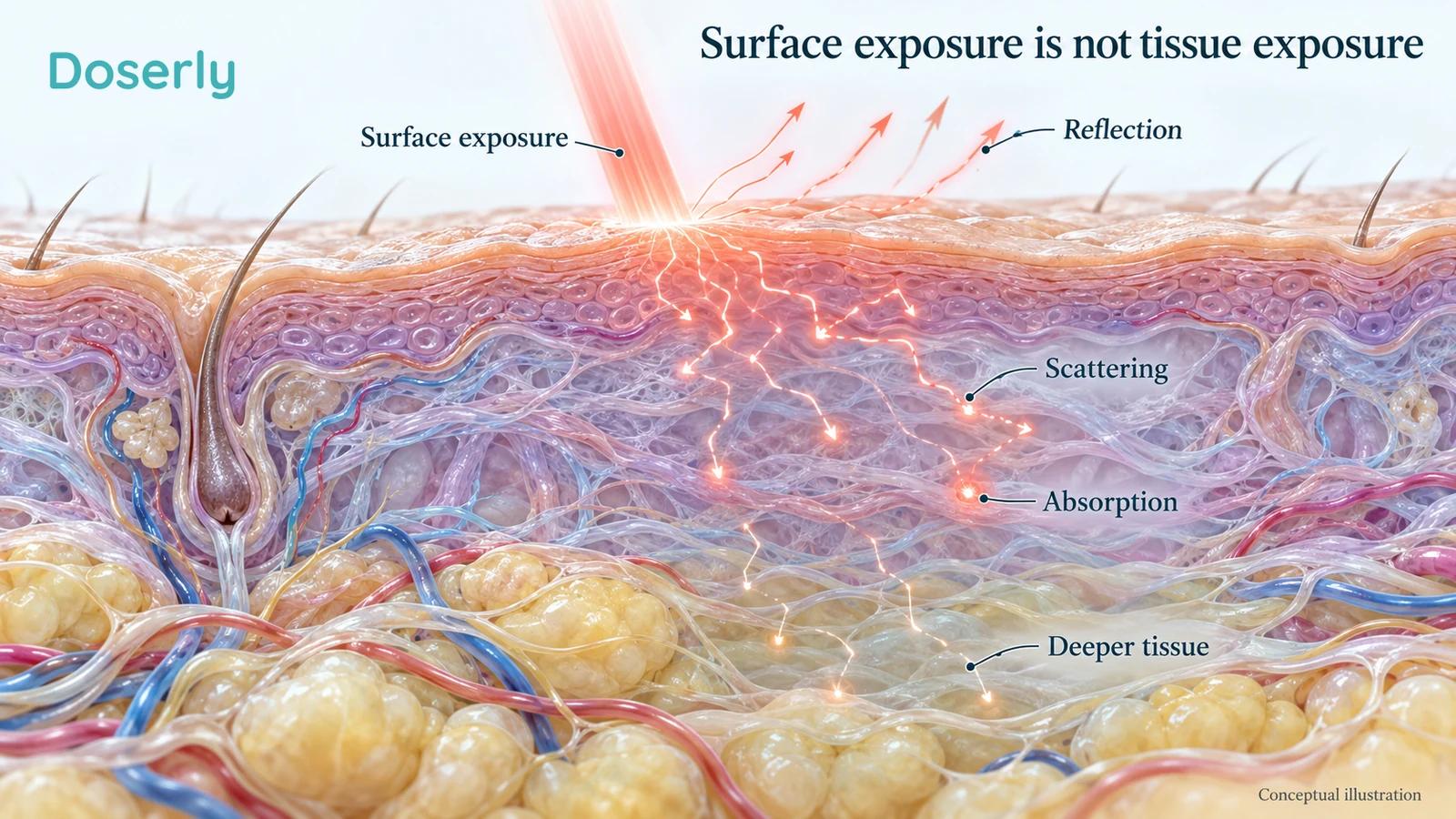
Light is also scattered and absorbed as it travels through tissue. The exposure measured at the skin surface is not the exposure received by every deeper structure. This helps explain why device placement and tissue target belong in the evidence discussion. Tissue optical properties.
Red light therapy has moved beyond being only a laboratory idea, but it has not become one treatment for everything. Its most useful evidence is specific: a defined patient group, a measured exposure and an outcome assessed against a meaningful comparison. Keeping that specificity is how we recognize both the benefits worth considering and the promises that research has not yet earned.