
Red Light Therapy
October 17, 2026
Can red light therapy improve exercise performance?
On this page
If a light treatment could help you run a little faster or complete another good repetition, it would be easy to understand the appeal. Performance improvements are often hard won. A device that seems to add something without adding fatigue sounds like an unusually convenient training partner.
There are human studies behind this idea. Some have found better exercise-test performance after photobiomodulation, or PBM, applied over working muscles. Others have found no advantage, including studies in trained athletes and newer trials using different delivery methods. The results do not support a single percentage improvement that you can attach to red light therapy as a category.
As of October 17, 2026, PBM has promising, device-specific performance findings but has not established a reliable general benefit for strength, endurance or race performance. The answer depends on the task being measured, the people studied and the treatment actually delivered. A positive laboratory test is a reason to investigate, not a guarantee of a personal best.
This article concerns performance: how much force or power a person produces, how long they sustain a task, or how quickly they finish an event. Recovery is related, but different. A person can feel less sore without running faster, and a treatment can change a blood marker without improving either experience. Keeping the goal specific makes the evidence easier to use.
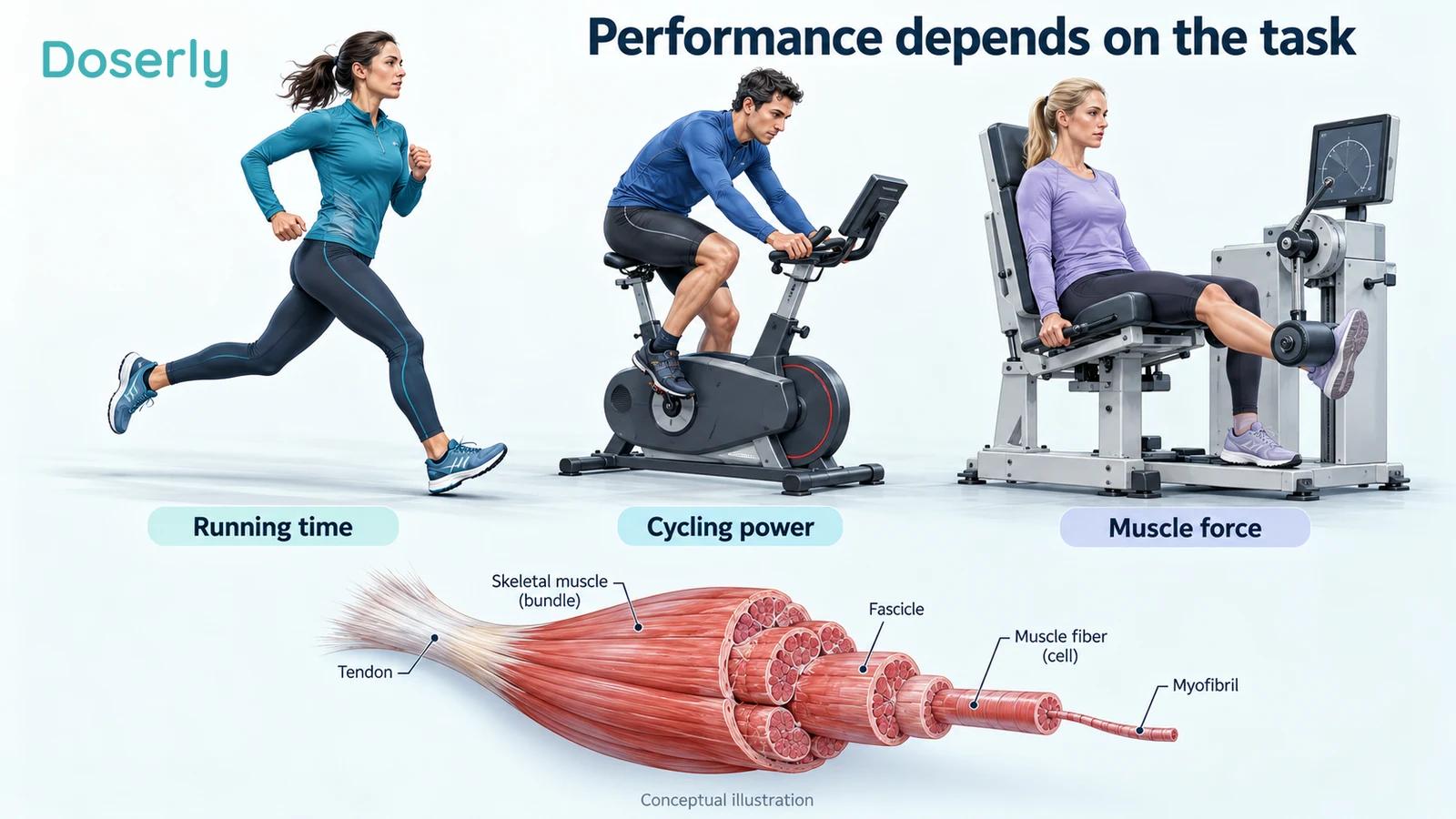
First define the performance claim
Exercise performance is not one biological trait. A strong maximal contraction, a repeated sprint and a long steady effort depend on overlapping but different capacities. When a device advertisement says performance improved, the next question is which of those capacities was tested.
A time trial asks someone to complete a fixed distance as quickly as possible, or to do as much work as possible within a fixed time. A time-to-exhaustion test usually fixes the workload and asks how long the participant can continue. Both are useful research tools, but they are not interchangeable. Lasting longer at one imposed workload does not mean a race time improves by the same percentage.
Strength tests also differ. A maximal voluntary isometric contraction measures force without a joint moving through a full repetition. A one-repetition maximum tests the heaviest successful lift under a defined technique. Repetitions to failure mix force capacity with local endurance, pacing and the rules used to stop the test. A jump includes coordination and how quickly force is produced.
That is why an honest answer may sound narrow: the treatment improved one repeated exercise test under one set of conditions. Narrow does not mean unimportant. It means we know where the observation begins and ends. The mistake is turning it into a promise about every exercise someone might do afterward.
What the positive endurance experiments actually found
A randomized, triple-blind crossover trial in 22 high-level male soccer players tested local PBM before a progressive running test to exhaustion. The investigators reported improvements in selected aerobic and performance measures, including time to exhaustion, along with biochemical findings. These were athletes from one team completing a standardized test, rather than competing in full matches. The result supports a specific pre-exercise intervention; it does not demonstrate more goals, fewer injuries or improved performance across an entire season. Soccer-player running-test trial
A 2023 double-blind placebo-controlled study in 16 trained cyclists examined successive time-to-exhaustion tests. PBM improved the first two tests compared with placebo, while the third did not show the same clear benefit. Oxygen-uptake kinetics also differed in the first test. This is a useful example of a performance signal that depends on the stage of the experiment. The study did not establish that all repeated efforts improve equally or that a road time trial would change by an equivalent amount. Successive cycling tests
In 2024, an experiment in 12 female futsal players compared PBM with placebo in conditions with and without a standardized warm-up. The combination of warm-up and PBM produced a better intermittent running-test result than warm-up plus placebo and placebo without warm-up. Its small crossover design makes it an interesting lead, but the result concerns that combined preparation and that test. It is not a reason to discard a warm-up or assume light can replace one. Warm-up and PBM trial
These studies offer more than an attractive mechanism. They measured people performing exercise. At the same time, they illustrate why sports-science results require careful translation: the activity, preparation and population are part of the intervention's context. A device does not carry the whole experiment into your living room simply because it produces red light.
Timed running provides a more cautious counterpoint
A 2020 crossover trial studied 19 recreationally trained runners completing a 1,500-metre time trial. Overall performance did not improve significantly with PBM compared with placebo, and the estimated overall effect was described as likely trivial. The authors also examined apparent responders and nonresponders. Those exploratory groupings should not replace the trial's overall result or be treated as a validated way to predict who will benefit. Original 1,500-metre running trial
This distinction matters because responder language is persuasive. Almost any athlete can imagine being one of the people who gets the benefit. But a good day, a pacing change or ordinary measurement variation can make a person look like a responder after one comparison. To identify a dependable personal response, repeated testing and an appropriate comparison are much more useful than labeling the fastest half of a small sample.
Suppose you run a familiar route faster after trying a device. That improvement is welcome. It also has several possible explanations: weather, pacing, recent training, sleep, competition or expectation. The observation alone does not tell you which explanation is correct. Repeating the situation helps, but it remains difficult to blind yourself to a light treatment.
For a purchase decision, this means that a laboratory endurance result should be connected explicitly to your event. Ask whether a trial measured a comparable distance or duration, whether the participants were similarly trained and whether the improvement was reproduced. A convincing argument should survive those questions without retreating to a general claim about cellular energy.
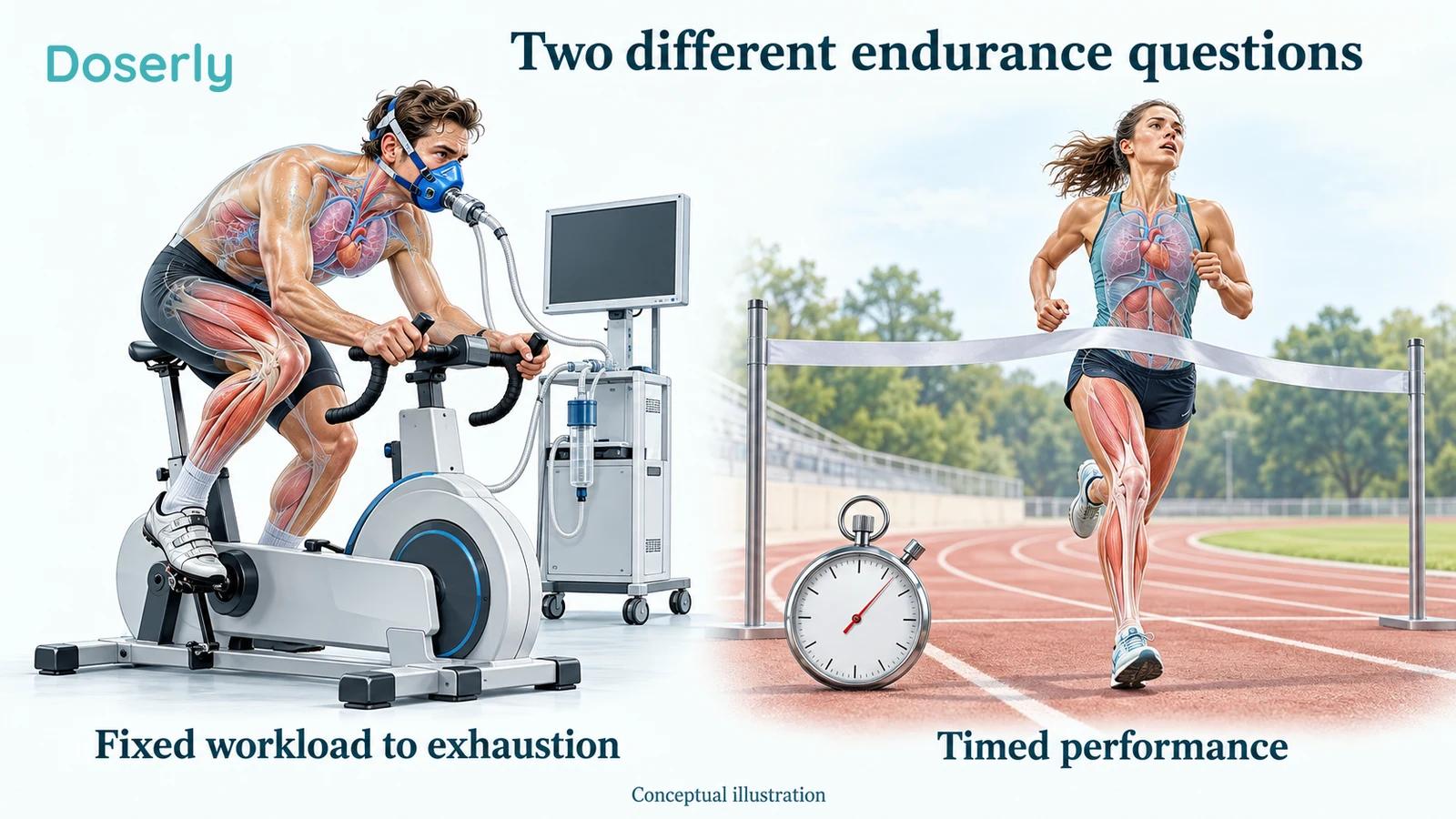
Strength and power are not consistently improved
A trial published in the March 2025 issue of its journal tested 15 female futsal players under placebo and three active LED conditions. The investigators measured leg-press repetitions, perceived exertion, fatigue index, jumping and isometric torque. None showed a significant advantage from the tested PBM conditions. The study is particularly useful because it directly tests several familiar performance claims in trained women rather than assuming findings from untrained men apply. Female futsal strength and power trial
Another 2025 randomized study assigned 42 participants to sham, a cluster device or an LED blanket before ten lower-limb training sessions. The active approaches delivered the same reported total energy with different parameters. The investigators did not find the anticipated performance enhancement, and lactate and subjective measures did not show significant between-group or group-by-time differences. This makes it difficult to argue that simply selecting a different irradiance or a larger illuminated area reliably solves inconsistent results. Irradiance and strength-training trial
Neither experiment proves that every possible PBM regimen fails. They do show that plausible exposures can produce no detectable added benefit. That is important information for someone deciding whether a recurring treatment is likely to improve an already sensible training program.
A null trial also should not be dismissed automatically as using the wrong dose. Dose could explain a result, but that explanation needs evidence. Otherwise, every positive trial is taken as proof and every negative trial is excluded after the fact. A treatment claim becomes more credible when it predicts which conditions will work before the next experiment is conducted.
What happens over a training block?
An acute experiment asks whether treatment changes performance today. A training trial asks whether repeated use changes the adaptation to weeks of exercise. These are separate questions. A short-lived effect might help a single session without changing long-term gains, while a repeated intervention could have an effect that an acute test misses.
A 2025 trial followed 48 physically inactive young men through 12 weeks of resistance training and four weeks without training. PBM combined with a static magnetic field was given during different phases or replaced with placebo. The investigators reported better preservation of strength and muscle measures with active treatment. The finding is promising, but it concerns a combined intervention in a restricted population, with only a short detraining period. It does not establish that light alone preserves an elite athlete's gains during a long injury layoff. Training and detraining trial
An earlier randomized running study assigned 30 untrained men to eight weeks of training with PBM or placebo. Both groups improved their 5-kilometre running time. The paper also used magnitude-based inference to describe a possible additional PBM benefit. That exploratory framing should not be converted into certainty that the device caused the training gains. The exercise program itself was an active intervention in both groups. Eight-week running-training trial
The practical lesson is to keep the added value visible. If people train and improve, the device must show an advantage over the same training with a suitable comparison. Before-and-after photographs, bigger weights or faster times from a treatment group alone do not establish that advantage.
For someone returning after a break, the distinction is especially relevant. Initial progress can be rapid simply because a consistent training routine has resumed. Starting a device at the same time can make those gains feel like proof of its effect. A structured comparison is needed to separate the contributions.
Whole-body light has its own results
A local probe used over selected muscles cannot stand in for a whole-body bed or panel. These devices differ in how light reaches the skin, how evenly it covers the body and what tissues receive an appreciable exposure. A larger device may be more convenient without producing a larger biological effect.
A randomized crossover trial in 48 active men and women tested whole-body PBM before repeated Wingate cycling efforts. It did not improve power output or the main exercise responses. The study found a difference in next-morning heart-rate variability, but perceived recovery and stress scores were not different. Describing that result as improved cycling performance would be incorrect; the favorable physiological observation did not establish the performance claim. Whole-body Wingate trial
A separate small randomized study of 13 young male water-polo athletes tested full-body PBM after matches during a tournament. It found no significant treatment interactions for the main hormonal, inflammatory, CK, neuromuscular or heart-rate-variability outcomes. An isolated LDH finding did not change the broadly null pattern. This recovery study is relevant to claims about sustaining performance across competition days, but it does not provide evidence of improved tournament performance. Water-polo full-body trial
If a seller cites a whole-body study, read the actual exercise outcome. The paper's title or concluding sentence may emphasize a favorable secondary observation. That observation can be scientifically interesting while leaving the main performance question unanswered. The distinction is particularly important when the proposed purchase is expensive and the expected athletic benefit is small.
What about aiming light at the head?
Some performance research targets the brain rather than the working muscle. The idea is that changing neural processes might affect fatigue or exercise control. This is a different intervention, not a stronger version of shining a panel on the legs.
A 2026 randomized, double-blind crossover study in 18 trained cyclists tested transcranial PBM before constant-load cycling and a 25-minute self-paced time trial. The investigators did not find improved cycling performance or the expected perceptual and physiological responses under the tested conditions. That is a direct human test of a specific approach, not evidence for trying unsupervised head or eye exposure with a consumer device. 2026 transcranial cycling trial
The result also illustrates a recurring pattern: plausible biological explanations can coexist with null functional findings. Proposing that light affects an energy pathway or a brain region does not tell us how large the effect will be, whether it reaches the intended tissue or whether it changes the whole task enough to matter.
Keep research devices and consumer equipment distinct. A study-specific applicator, exposure geometry and safety procedure cannot be reproduced merely by placing a different light near the same body part. The performance evidence does not justify improvising direct eye exposure or assuming greater intensity will produce the missing effect.
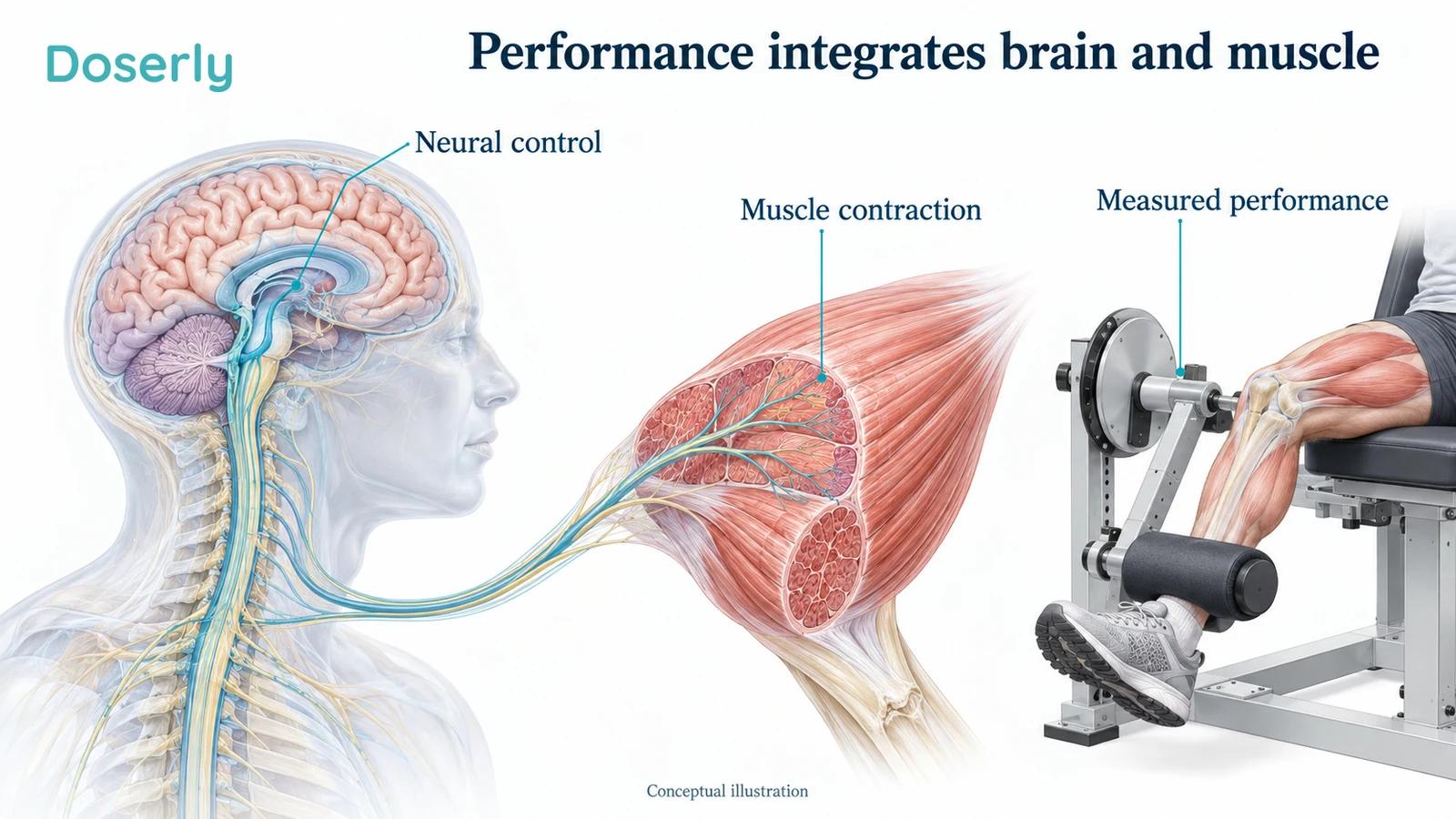
Why expectation and blinding matter in sport
Performance tests involve effort. An athlete who expects a treatment to help may tolerate discomfort differently or pace an effort more confidently. That does not make the athlete dishonest or the experience imaginary. It makes a credible comparison important when the question concerns the specific effect of light.
A sham device should resemble the active procedure closely enough that participants do not reliably know their assignment. Visible brightness, warmth, sounds and the therapist's behavior can all provide clues. A paper described as double-blind deserves closer reading about who was blinded and how the sham worked. The label alone does not guarantee that expectation was balanced.
Crossover studies are common because each participant can receive both active treatment and placebo. This reduces some differences between people, but it introduces other considerations. Participants may learn the test, adapt to the exercise or carry effects from an earlier session. Randomizing the order and allowing appropriate separation help, while familiarization helps prevent practice from masquerading as a treatment effect.
For endurance tests, the stopping rule matters too. Was the participant unable to maintain a required cadence, or did they decide to stop? Were instructions and encouragement standardized? A useful experiment makes these details consistent so that a small difference has a clearer interpretation.
This does not mean an athlete needs a statistics degree before reading a paper. A few concrete questions go a long way: was there a credible sham, was the task familiar, was the main outcome chosen in advance and did the active condition actually outperform the comparison? Those questions preserve the meaning of an encouraging result without assuming it is either worthless or definitive.
How large would a benefit need to be?
A statistically significant difference can be too small to notice in normal training. It can also be meaningful in a tightly contested event. The interpretation depends on the absolute change, its uncertainty and the reliability of the test. A percentage without the underlying task is especially easy to overread.
For example, a percentage increase in time to exhaustion at a fixed workload cannot be pasted onto a race prediction. Race pacing changes continuously, and finishing time reflects many influences beyond the laboratory task. Similarly, a small increase in isometric torque does not specify how much weight someone should add to a squat.
When considering a device, write down the outcome you would want to improve and the smallest change that would justify its cost and inconvenience. A recreational exerciser might value a repeatable, comfortable session more than a tiny improvement on a specialized test. A competitive athlete may care about a very small advantage, but will also need confidence that it is reproducible under competition conditions.
Look for independent replication with comparable participants. Several papers from one research group can establish a productive research program, but they are not the same as several independent groups obtaining the same effect. Manufacturer involvement should be disclosed and considered alongside the design, outcome reporting and replication, rather than treated as either automatic disqualification or irrelevant detail.
Fit the decision around training, not the device
For most people, the clearest performance questions concern training consistency, progression, technique and whether food and sleep support the workload. A light device should be evaluated as a possible addition to that routine. It should not determine the routine before its value is clear.
The Doserly creatine guide provides background on a separate performance intervention with its own evidence and limitations. The plant-based protein guide can help when the practical issue is meeting nutritional needs within a preferred diet. Neither guide establishes that combining a supplement with PBM produces an extra benefit. Combination claims require combination studies.
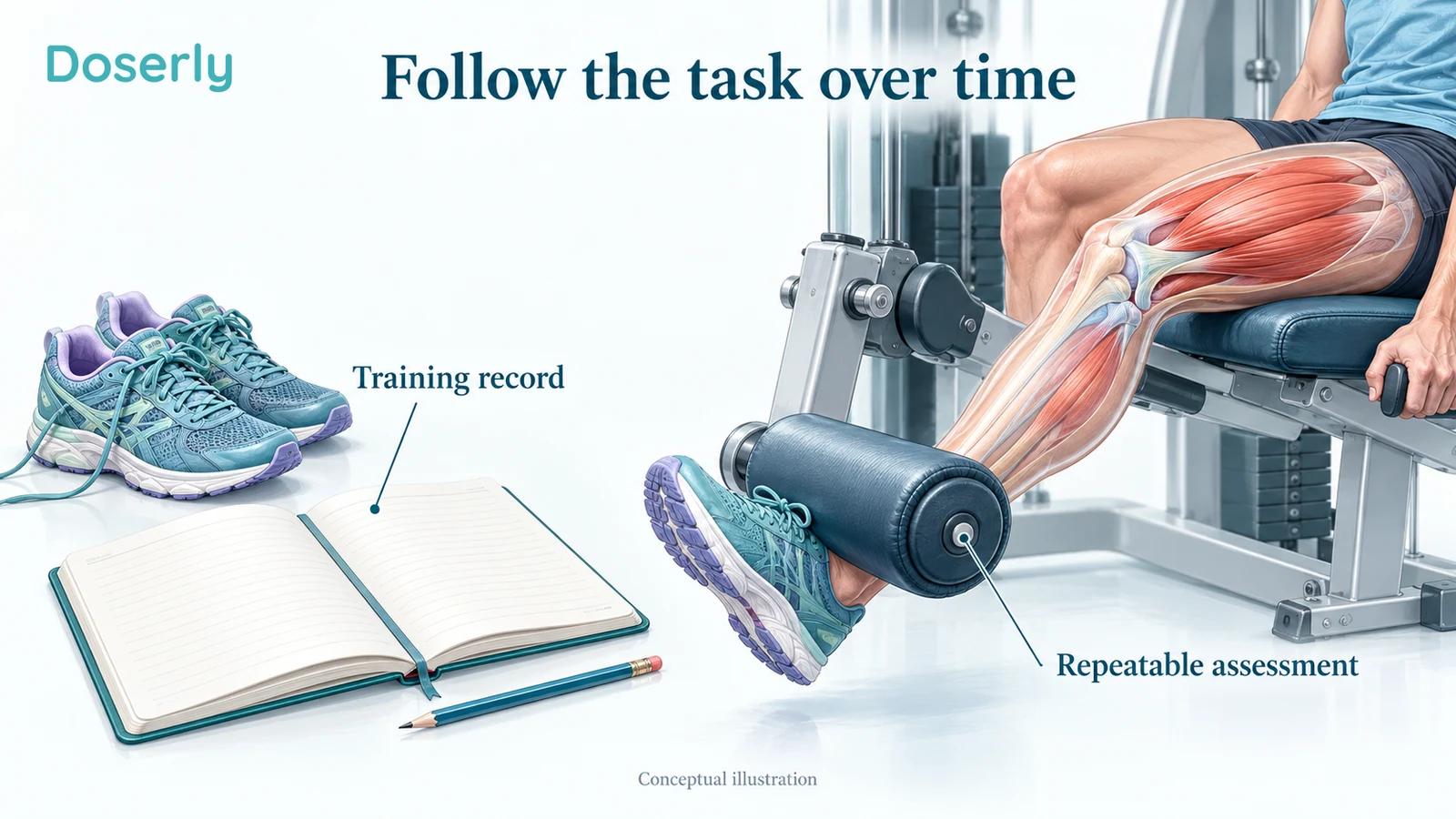
If you introduce several changes at once, improvement may be real while attribution remains uncertain. A new training plan, better sleep and a new device are three changes, even if the device is the most memorable. Keeping a simple record of sessions and context helps you avoid crediting every good workout to the newest addition.
Do not repeatedly test maximal performance just to justify a purchase. Testing adds fatigue and can disrupt the training you wanted to improve. A coach or clinician can help choose a relevant, repeatable assessment when the question matters enough to investigate more formally.
Questions worth taking to a clinic or seller
Ask for the original paper that supports the exact performance claim. Then ask which outcome improved, how many people were studied and whether the result concerns a single session or weeks of training. A provider should be able to explain the difference without substituting a general discussion of mitochondria.
Ask whether the device and application resemble those used in the study. A shared wavelength is only one part of the exposure. Ask about the comparator, the magnitude of benefit and whether any similarly relevant trials were negative. If the answer depends entirely on excluding every null trial as unsuitable, the explanation needs more scrutiny.
Finally, ask what would count as no useful benefit for you. An intervention without a stopping or reassessment point can become a habit whose value is never examined. It is reasonable to decide that an uncertain marginal benefit is not worth the expense, even while the research remains promising.
Red light therapy deserves continued study because some controlled experiments have found interesting performance effects. It also deserves realistic expectations because closely related experiments have not. The useful conclusion is specific: judge the device by a relevant human comparison and an outcome you actually care about, while leaving room for the possibility that your performance does not change.