
Longevity
October 17, 2026
Rapamycin for longevity: what human trials can tell us now
On this page
Rapamycin has an unusually strong scientific reason to appear in conversations about aging. Researchers have extended the lives of mice with it, including when treatment began relatively late. It is also a real prescription medicine, with decades of clinical experience. Those facts make it a serious research candidate. They do not tell a healthy person whether taking it will add good years to their life.
The human evidence is becoming more informative, partly because it is becoming less tidy. The 2025 PEARL trial reported some encouraging secondary findings but did not improve its primary body-composition outcome. A small 2026 trial combining rapamycin with exercise found no added functional benefit and raised a possible concern about reduced training gains. Studies of related medicines have produced both promising immune results and a failed larger infection trial.
As of October 16, 2026, rapamycin has not been shown to extend human lifespan or reliably improve overall healthspan in healthy adults. The useful question is what each experiment has established, which tradeoffs remain unresolved, and what a stronger result would look like.
Why a transplant medicine became an aging candidate
Rapamycin is also called sirolimus. Its established medical uses and its proposed longevity use have different goals. In transplantation, clinicians accept meaningful risks to prevent rejection of a donated organ. In a healthy person, the starting benefit is hypothetical, so the same uncertainty carries a different weight.
A foundational 2009 experiment tested encapsulated rapamycin in genetically heterogeneous mice at three research sites. Beginning treatment at 600 days of age extended median and maximal lifespan in both sexes. The design mattered: several sites and genetically varied animals made the finding more persuasive than a result in one highly specialized mouse strain. It nevertheless remained an animal survival experiment, not a human prevention trial. Harrison and colleagues, Nature
There is no dependable conversion from a percentage increase in mouse lifespan to years gained by a person. The causes of death, infections, food supply, medical care and drug exposure differ. Even an excellent animal experiment leaves open which human outcome to test first.
That is why a clinical program may begin with immune responses, physical function or drug exposure. Such studies can answer manageable questions before anyone attempts a large trial lasting years. Their value depends on describing them accurately. A study that establishes tolerability over several months is useful even when it cannot answer whether people live longer.
mTOR has useful jobs as well as possible liabilities
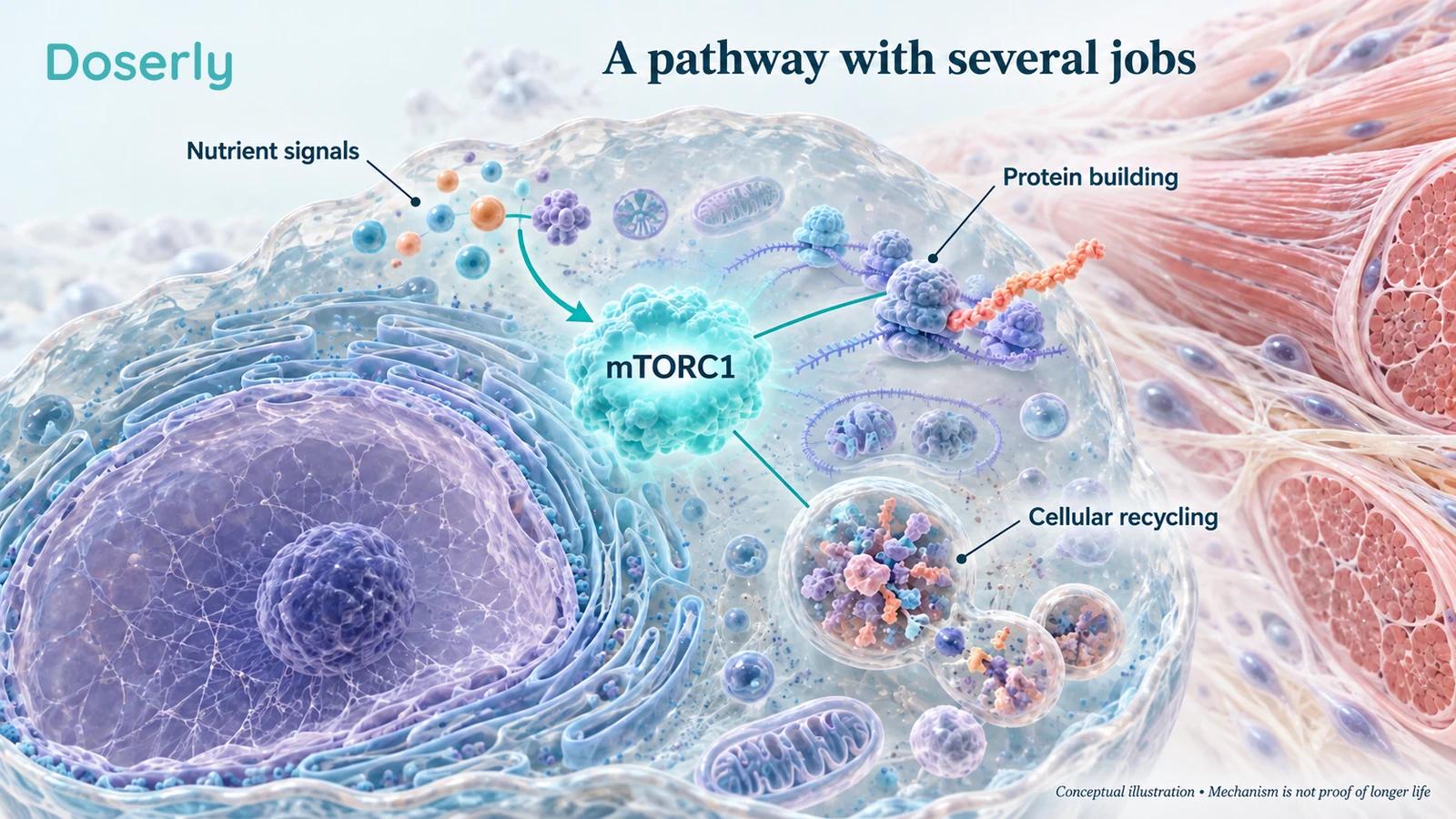
The name mTOR refers to a protein involved in sensing resources and coordinating cellular activity. It works in protein complexes, commonly called mTORC1 and mTORC2. Discussion of longevity often focuses on mTORC1, but describing the entire system as an aging switch is misleading.
A cell needs to respond to food, repair damage and make new proteins. Muscle needs to adapt to mechanical loading. Immune cells need to change behavior when they encounter a threat. Suppressing a pathway involved in these processes can create different effects in different tissues.
A human laboratory experiment illustrates the point. Rapamycin given before resistance exercise blocked the early rise in muscle protein synthesis during recovery. This was an acute mechanistic study, not evidence that every intermittent regimen causes muscle loss. It does show why inhibiting mTOR cannot automatically be equated with improving every feature of aging. Drummond and colleagues, Journal of Physiology
Another small human experiment found no effect on basal post-absorptive muscle protein metabolism under its study conditions. A pathway's response during a resting measurement may differ from its response when the tissue is challenged. Dickinson and colleagues, Metabolism
Think about the practical implication rather than memorizing pathway names. If a proposed longevity intervention changes cellular maintenance, we also need to know whether someone can still recover from exercise, heal after surgery and respond to an infection. These are part of healthy aging, not distractions from it.
What PEARL actually found
PEARL was a 48-week randomized, blinded, placebo-controlled trial in generally healthy adults. Its published analysis included 114 completers; 11 people who discontinued were excluded. The primary outcome was visceral adiposity measured by DXA. That outcome did not improve significantly. Some secondary results favored treatment, including lean tissue and pain findings in women and questionnaire findings in other analyses.
The investigators reported similar adverse-event rates between groups. They also identified lower exposure from their compounded formulation than from a commercial formulation in separate testing. Several authors disclosed employment and shareholdings in AgelessRx. These details belong beside the favorable results, not hidden beneath them. PEARL, Aging, 2025
The fair reading is a mixed, exploratory result that supports more research. It is neither a demonstration of rejuvenation nor proof that every possible rapamycin strategy is ineffective. Its primary result remains negative, while subgroup findings need independent confirmation.
Why the outcome hierarchy matters
Imagine designing a study to find out whether a treatment improves walking endurance. You also measure sleep, blood pressure, ten laboratory values and several questionnaires. If walking does not improve but one questionnaire does, the questionnaire result may be interesting. It does not change the answer to the question you designed the study around.
This is particularly relevant to longevity, where researchers can measure hundreds of biological features. The more outcomes and subgroups explored, the easier it becomes to find an apparently favorable result by chance. Preplanned analyses, appropriate statistical adjustments and replication help distinguish a useful discovery from an attractive accident.
A result found in women deserves proper investigation, including enough women in the next trial. It does not establish that all women benefit, or that men cannot benefit. Nor does a statistically significant change tell us whether the effect would be noticeable in daily life.
There is also an important difference between analyzing everyone assigned to treatment and analyzing only people who finish. Someone may leave because of inconvenience, an unrelated illness, disappointment or a treatment problem. Excluding withdrawals can make the remaining group less representative. The reason for missing data and the way researchers handle it can therefore change how confident we should be.
A scan change is not automatically a stronger person
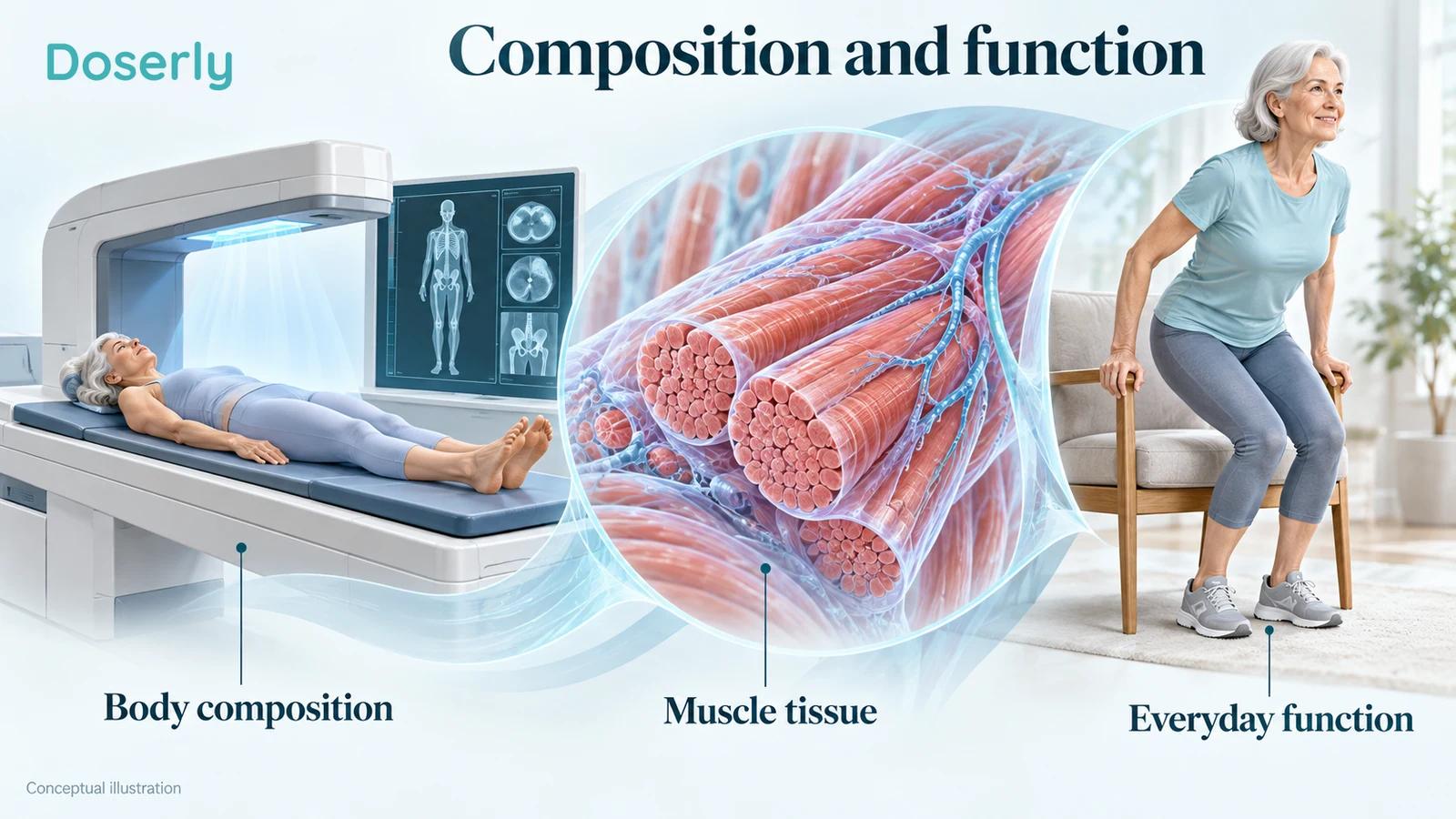
Lean tissue measurements can help researchers describe body composition. They should not be read as direct measurements of muscle strength, balance or independence. An intervention could alter a scan measurement without improving stair climbing, and an effective training program could improve strength through coordination before producing a large change in muscle size.
For a person trying to remain independent, the outcomes should connect to a task. Can they get out of a low chair? Carry shopping? Recover their balance? Walk far enough to visit friends? A useful healthspan study does not have to measure every task, but it should explain why its chosen measurement matters.
This distinction also helps interpret personal testing. Suppose someone starts a medicine and their next scan looks better. Their exercise, weight, hydration, illness history and measurement conditions also deserve attention. The result may be encouraging, but the comparison needed to isolate the medicine's contribution is missing.
It is reasonable to want an early sign that an intervention is doing something. The mistake is making the sign carry more meaning than it has. Repeating a measurement can reduce some uncertainty about the measurement itself; it cannot by itself prove causation or predict a longer life.
The 2026 exercise trial adds a different kind of evidence
RAPA-EX-01 randomized 40 sedentary adults aged 65–85 to weekly sirolimus or placebo during a 13-week home exercise program. Both groups improved chair-stand performance. The primary intention-to-treat difference favored placebo by 2.13 repetitions, but its confidence interval crossed zero. Sensitivity analyses suggested less improvement with sirolimus. These analyses raise a concern; they do not turn the primary result into a definitive harmful effect.
Seventeen participants in each group reported at least one adverse event, but the sirolimus group had more total events, 99 versus 63. One pneumonia was considered possibly drug-related. The trial was small and exploratory. It did not show that adding sirolimus improved the functional response to this exercise program. Stanfield and colleagues, Journal of Cachexia, Sarcopenia and Muscle, 2026
This addresses a common assumption: two plausible interventions are not necessarily better together. An exercise program creates a stimulus; a medicine may alter the response to that stimulus. The combination needs its own evidence.
For someone already prescribed sirolimus for an established condition, this study is a reason for a clinical discussion, not a reason to stop treatment. For longevity marketing, it is a reason to avoid promises that the medicine will amplify a person's training.
Can an immune-suppressing medicine improve immunity?
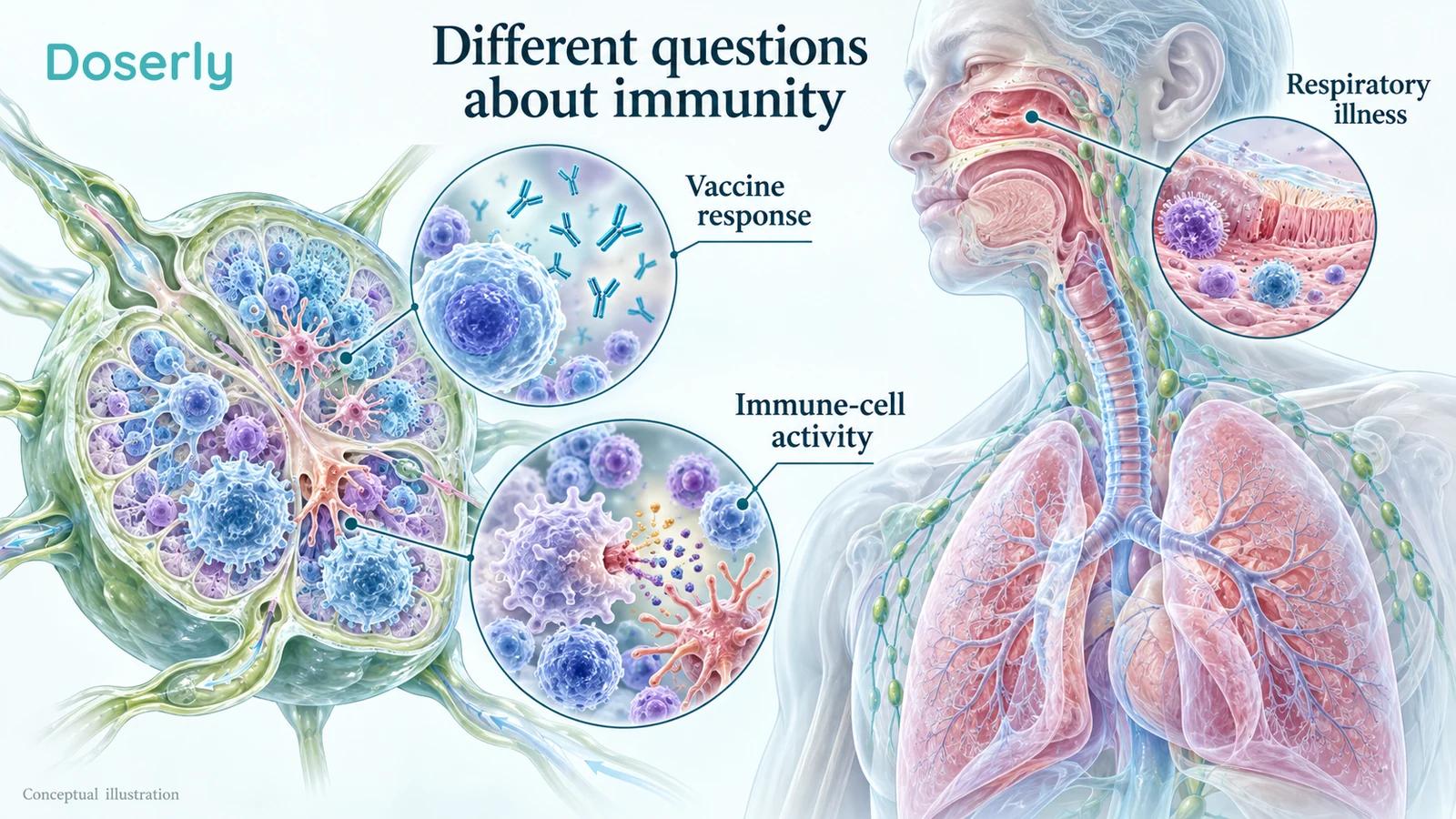
The apparent contradiction becomes less puzzling when immunity is treated as several functions rather than one volume control. Preventing organ rejection, producing vaccine antibodies and defending against respiratory infection are related but distinct outcomes. Drug, exposure, timing and population all matter.
In a randomized 2014 study, the related mTOR inhibitor everolimus improved influenza vaccine responses by about 20% at relatively well-tolerated study exposures. That was an immune-response result, not a 20% increase in lifespan or proof of 20% fewer severe infections. The authors' affiliations included the medicine's manufacturer. Mannick and colleagues, Science Translational Medicine
A 2018 randomized study in 264 older adults tested low-dose mTOR inhibitors for six weeks. A combination was associated with fewer reported infections over a year, alongside antiviral gene-expression and vaccine-response findings. It provided a clinical signal worth pursuing, but it involved particular drugs and a particular trial population. It did not validate arbitrary rapamycin schedules. Mannick and colleagues, 2018
The subsequent RTB101 program showed why larger trials matter. In a phase 2b analysis, laboratory-confirmed respiratory infections occurred in 19% versus 28%, an absolute difference of about nine percentage points. A later phase 3 trial did not meet its primary endpoint involving clinically symptomatic respiratory illness. The endpoints and study populations were not identical, and RTB101 is not rapamycin. Both the favorable result and the failure belong in the evidence picture. Phase 2b and phase 3 trial report, The Lancet Healthy Longevity
A claim about improved immune signaling should therefore prompt a practical follow-up: did participants actually have fewer infections, fewer hospital visits or less severe illness? Each step toward an outcome people experience makes the result more useful.
Why formulation and exposure cannot be ignored
The number printed on a capsule describes how much drug it is intended to contain. It does not tell you how much reaches the circulation, how long it remains there or how strongly a tissue responds.
A pharmacokinetic study of sirolimus described low and variable oral availability and investigated intestinal and liver metabolism as contributors. This helps explain why a nominal dose alone is an incomplete description of an intervention. Sirolimus pharmacokinetic model, CPT: Pharmacometrics & Systems Pharmacology
The relevant research chain has several links: product quality, absorption, measured exposure, biological response and clinical outcome. A failure at any link changes the interpretation. If little drug reached the body, a negative clinical result may not test the intended biological hypothesis very well. If exposure was high, a tolerability result from another preparation may not apply.
Our half-life explainer explains why drug exposure persists between administrations. Its peptide-specific estimates should not be transferred to sirolimus.
Neither situation justifies improvising a conversion. Blood concentrations from one time point cannot supply a universal equivalence between products. A larger dose is also a new intervention with potentially different risks, not a correction that can be assumed to preserve the original trial's safety findings.
For a reader, the useful habit is simple: when comparing studies, look for the exact product and how exposure was assessed. Two papers using the word rapamycin may be testing meaningfully different interventions. A careful article should explain that uncertainty without turning it into instructions for increasing absorption or changing a prescription.
What the safety evidence can and cannot reassure us about
A placebo-controlled pilot in 25 generally healthy older adults assessed short-term rapamycin exposure, including immune, physical-performance and cognitive measurements. It supported the feasibility of further study. Its size and duration could not settle uncommon harms or long-term prevention benefits. Kraig and colleagues, Experimental Gerontology
The current US sirolimus label identifies risks including infection, impaired wound healing, elevated lipids, mouth inflammation, proteinuria and noninfectious lung inflammation. It also describes important interactions and reproductive risks. Much of the clinical experience comes from populations and regimens different from intermittent longevity use, so those adverse-event frequencies should not be transferred directly to healthy users. The underlying hazards cannot simply be erased either. Sirolimus prescribing information
Safety has a time dimension. A study may detect frequent short-term symptoms but miss an uncommon event that requires thousands of participants or longer exposure to recognize. “No statistically significant difference” can mean the groups were similar, or that the study was too small to distinguish them reliably.
The relevant standard is not whether a drug is perfectly safe. No effective medicine meets that standard. The question is whether established benefit outweighs harm for a particular purpose. A medicine that is worthwhile for an organ recipient may remain an uncertain choice for someone whose goal is to reduce an already low future risk.
A normal laboratory panel cannot answer that benefit question. Monitoring can detect some problems, but it cannot manufacture evidence that an unproven intervention works. It is possible to monitor an uncertain treatment very carefully and still be uncertain about whether taking it is worthwhile.
Skin findings answer a local question
A small 2019 study applied rapamycin cream to one hand and a control preparation to the other. Researchers reported changes in a senescence-associated protein, collagen VII and skin appearance. Of 36 enrolled participants, 17 completed the study, and only eight tissue samples provided reliable material for analysis. No rapamycin was detected in the sampled blood at the assay's detection limit. Chung and colleagues, GeroScience
This is an interesting example of studying a specific tissue directly. It is also a different intervention from swallowing a tablet. A local skin finding does not establish improved internal-organ function, and fewer cells staining for one marker does not demonstrate that an entire person has become biologically younger. The high attrition and small tissue sample make replication particularly important. Future skin studies could ask whether changes translate into less fragility or better function, rather than relying only on appearance and laboratory staining.
What is being studied next?
In March 2026, UT Health San Antonio described a National Institute on Aging-funded program examining biological benchmarks, exposure and different rapamycin strategies in older adults. Its planned longer randomized phase compares daily and intermittent administration with placebo, followed by observation after treatment. The announcement describes a research program, not completed evidence of improved healthspan. UT Health San Antonio research announcement
This is a sensible direction because it connects pharmacology to outcomes rather than assuming the connection. A compelling future trial would establish what participants actually received, retain an interpretable comparison and report both everyday function and harms.
Longer follow-up is especially valuable when an intervention is intended for years. Researchers need to know whether a favorable effect persists, disappears or reverses. They also need to understand who benefits. A result in robust volunteers does not automatically apply to someone with frailty, multiple illnesses or several interacting medicines.
A useful discussion about rapamycin
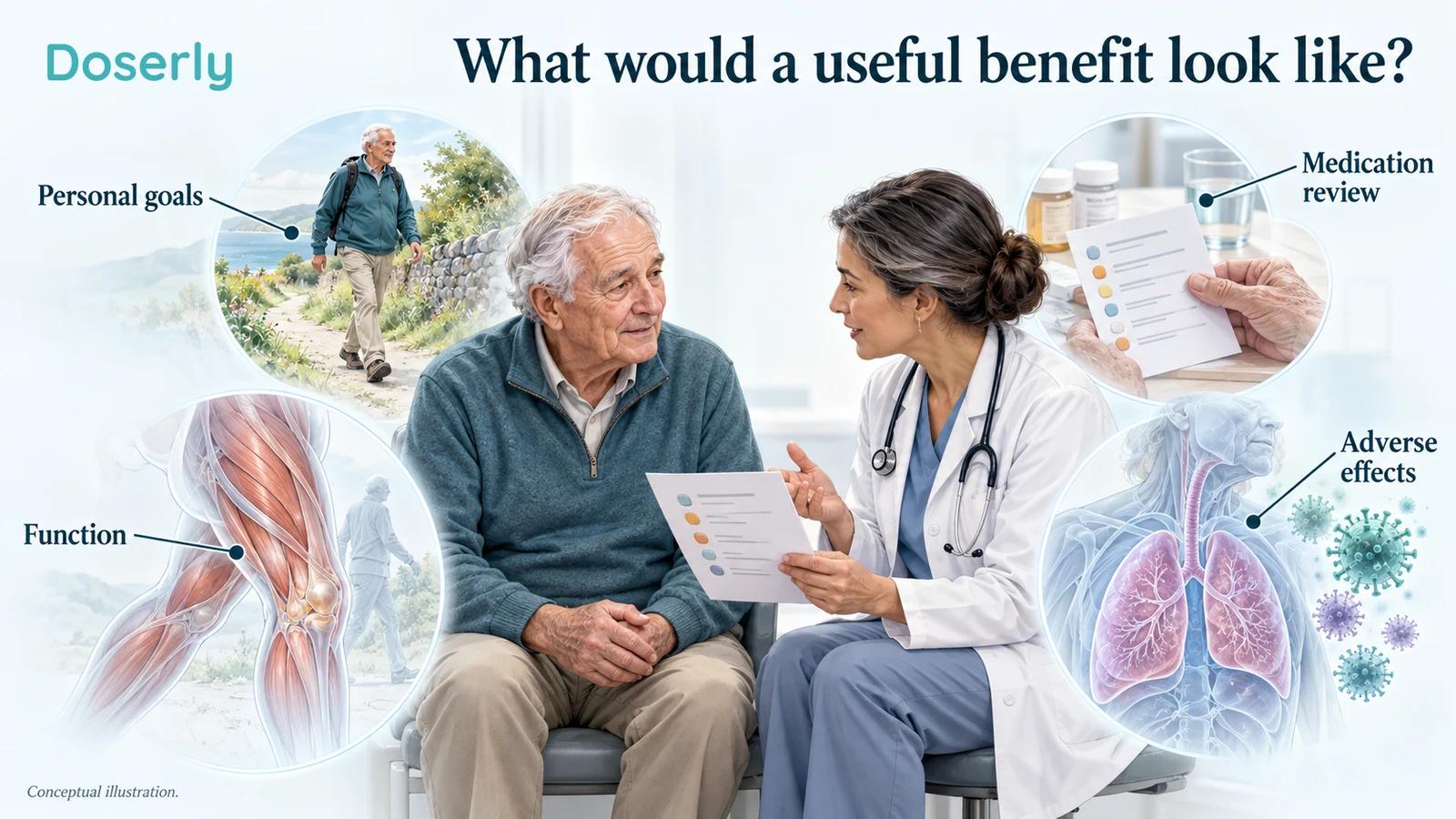
Start with the goal. “I want to age well” is meaningful, but it is too broad to judge a medicine. “I want to preserve walking ability after a period of inactivity” or “I am worried about recurrent infections” gives the conversation a clearer target.
Ask which human trial supports that target, whether people like you were included, and whether the benefit was a main outcome or an exploratory finding. Ask about the size of the difference, not simply whether a p-value crossed a threshold. If a claim is based on mice, it should stay identified as an animal finding.
For someone considering a study, useful questions include what the visits involve, who reviews adverse events, whether usual treatments continue, and what happens if a participant withdraws. For someone already using an off-label prescription, the discussion should include the exact product, other medicines, planned procedures, symptoms and the reason for continuing.
Rapamycin deserves serious research because its biological rationale is substantial. It also deserves careful language because the human answer remains incomplete. The strongest position today is to welcome better trials, give negative results their proper weight, and keep the outcome that matters in view: more years of useful, satisfying life, with acceptable tradeoffs.