
Longevity
October 17, 2026
Protein and longevity: protecting muscle without oversimplifying the science
On this page
Protein advice can sound like two conversations taking place in different rooms. In one, protein is essential for preserving muscle, recovering from illness and remaining independent. In the other, reducing protein is presented as a way to quiet growth signals and extend life. A person trying to age well is left wondering whether protecting their strength might somehow accelerate aging.
The apparent conflict becomes easier to understand when the questions are made specific. How old is the person? Are they eating enough overall? Are they active, losing weight or recovering from illness? Does the research measure a cellular signal, muscle strength, disability or mortality? What foods are providing the protein, and what would replace them?
There is no established human longevity target that can answer all of those questions with one number. There is, however, useful evidence for making protein decisions around nutritional adequacy, function and the whole dietary pattern. That evidence is more practical than treating protein as either an anti-aging nutrient or an aging accelerator.
Muscle health is about what you can do
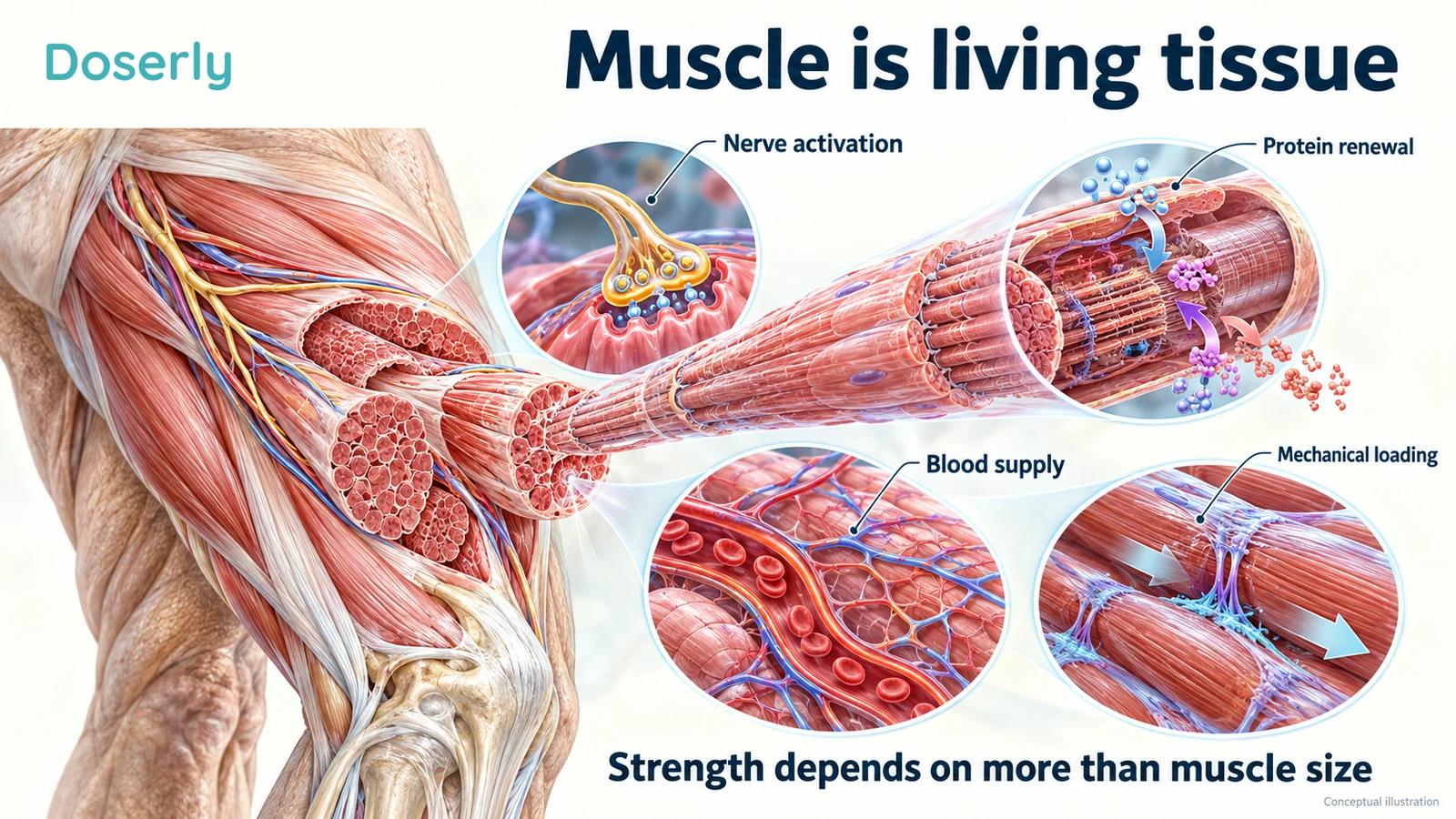
Muscle helps you get out of a chair, carry groceries, climb stairs and recover balance. Losing the ability to perform those tasks can change daily life well before a person thinks of themselves as frail. Preserving muscle health is therefore a healthspan goal in its own right, not merely an interest in appearance.
Muscle mass, strength and physical performance are related but distinct. A scan estimates tissue quantity. A strength test asks how much force can be generated. A walking or chair-rise test involves coordination, balance, joints, circulation and confidence as well as muscle. Improvements in one measure do not guarantee equal improvements in the others.
The National Institute on Aging describes resistance exercise as an important way to maintain muscle and mobility, including during weight management in older adults. Nutrition supports that work, but cannot replace the movement stimulus. NIA on strength training and aging
This is why a useful protein trial should report more than lean mass. A small difference on a scan may be biologically interesting. Whether it helps someone walk safely, stand up more easily or avoid disability is a further question. Those outcomes deserve attention even when the product being studied is marketed mainly around muscle size.
For someone noticing new weakness, protein intake is one part of an assessment. Pain, medication effects, neurological problems, illness and inactivity can also contribute. Buying a larger tub of powder is not a substitute for understanding why function has changed.
Why needs can change with age and illness
The body continuously breaks down and rebuilds proteins. Dietary protein supplies amino acids used in that turnover, along with many functions beyond skeletal muscle. A meal is therefore part of an ongoing maintenance process rather than a deposit that automatically becomes new muscle.
Older muscle can respond less strongly to a given nutritional stimulus, a phenomenon often called anabolic resistance. Illness, inactivity and inadequate intake can complicate the picture further. A person who eats less because of poor appetite may have difficulty obtaining enough protein at the same time that recovery increases nutritional demands.
The PROT-AGE expert group recommended roughly 1.0–1.2 grams of protein per kilogram of body weight daily for many healthy adults over sixty-five, with individualized higher needs in some active or ill older adults and important kidney-disease exceptions. These are clinical nutrition recommendations, not experimentally proven lifespan-maximizing doses. Bauer and colleagues, PROT-AGE position paper
A range is a starting point for a discussion, not a reason to convert every meal into a compliance test. Body size, activity, current intake, kidney function and nutritional status affect interpretation. In people with substantial obesity or fluid retention, even the weight used in a calculation may require clinical judgment.
It also matters whether a person is below an adequate intake or already comfortably meeting it. Correcting a shortfall and adding more to an adequate diet are different interventions. A study showing benefit in undernourished participants should not be used to promise the same benefit to everyone who adds a shake.
What happens when older adults are given more protein?
Randomized trials do not show a uniform response. In a six-month study of functionally limited older men, increasing intake from 0.8 to 1.3 grams per kilogram daily did not significantly improve lean body mass, strength or several functional measures. The factorial trial also studied testosterone, but the protein comparison did not establish the expected advantage. Bhasin and colleagues, JAMA Internal Medicine
The PROVIDE trial tested a vitamin D- and leucine-enriched whey product against an energy-matched control in 380 older adults with sarcopenia. After thirteen weeks, the primary outcomes, handgrip strength and the Short Physical Performance Battery, did not differ significantly between groups. Secondary measures favored the supplement for appendicular muscle mass and chair-rise performance. Because several nutrients were combined, the result cannot be attributed to protein alone. Bauer and colleagues, PROVIDE trial
These examples show why both the primary outcome and the formulation matter. Calling the first trial a failure of nutrition would be too broad. Calling the second proof that protein supplements restore independence would also be too broad. Each asks a more limited question in a particular group.
Trials differ in baseline diet, frailty, exercise, duration and the amount of additional protein actually consumed. Some participants may already have enough protein; others may have a shortfall but limited capacity to train. A combined product may address several nutritional needs simultaneously. Those details affect how much a finding can tell an individual reader.
A 2026 trial puts baseline intake in focus
A secondary analysis of a randomized trial published in 2026 examined 295 frail, community-dwelling older adults undergoing twelve weeks of supervised resistance training. Adding dietary counseling and tailored whey supplementation increased protein intake, but did not significantly improve the overall gains in leg-press strength, appendicular lean mass or physical performance compared with training alone. Biersteker and colleagues, Journal of Nutrition, Health and Aging
Exploratory analyses suggested greater strength gains among participants whose starting intake was lower, with the strongest signal in those below 0.8 grams per kilogram daily. Those subgroup findings require confirmation. They should not be presented as the trial's overall result or as a precise rule for identifying who will respond.
The practical insight is that starting conditions deserve measurement. Before asking which supplement is strongest, it may be more useful to ask whether there is a nutritional gap. A brief dietary assessment can reveal that a person is skipping meals, eating little at breakfast, or relying on foods that no longer fit their appetite or chewing ability.
It is equally possible to discover that intake is already adequate and the larger barrier is inactivity, pain or an exercise program that has not progressed. In that situation, adding protein may be less useful than addressing the actual limitation. The right intervention depends on the problem, not on the popularity of the nutrient.
Where the low-protein longevity argument comes from
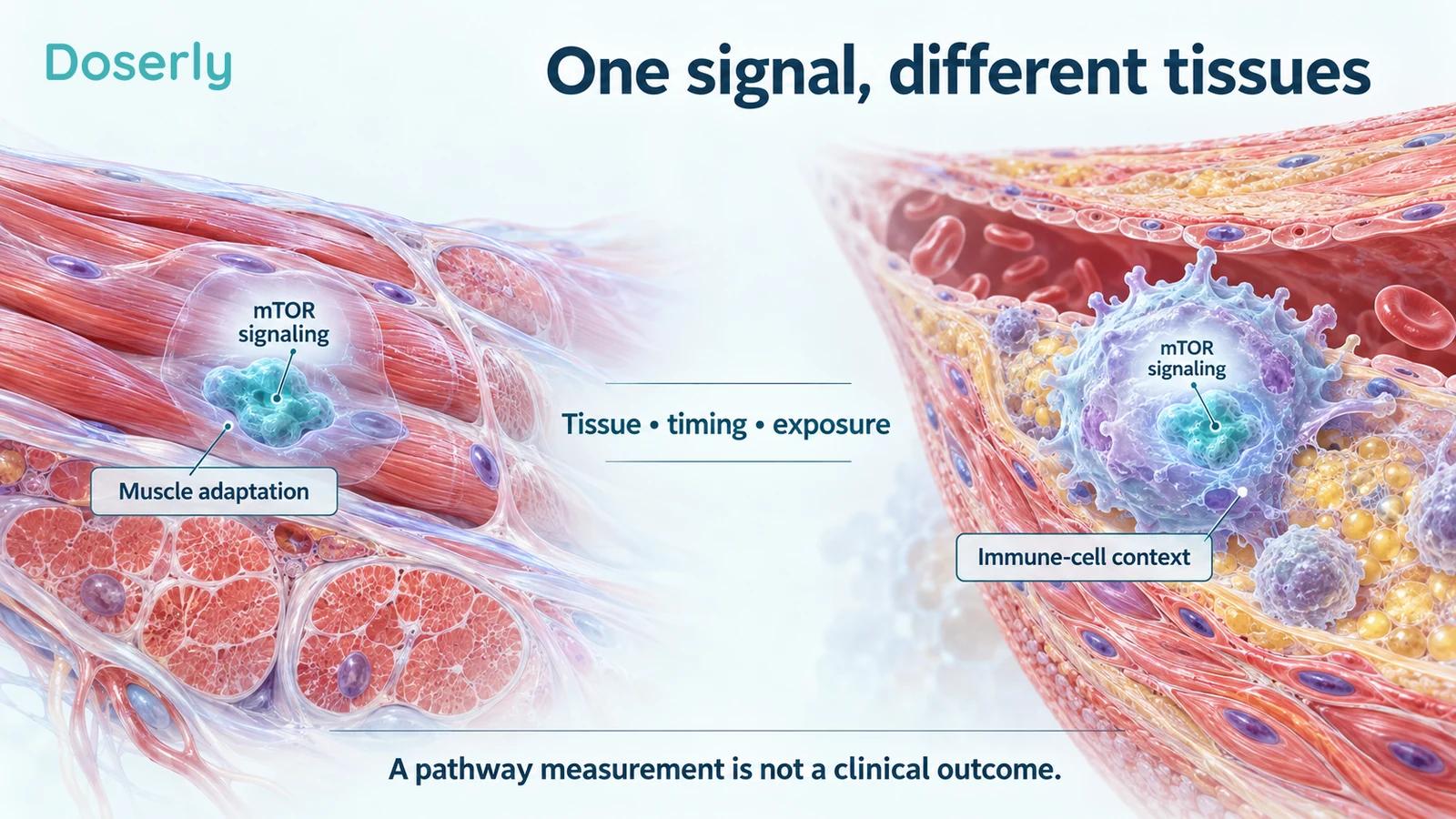
Protein influences nutrient-sensing pathways, including signaling related to mTOR and IGF-1. Animal and cellular experiments have made these pathways central to aging research. But a pathway that participates in aging also participates in ordinary growth, maintenance and repair. Its activity cannot be interpreted as uniformly good or bad without context.
An influential 2014 study combined human observational data with mouse experiments. In the human analysis, higher reported protein intake was associated with greater mortality in adults aged fifty to sixty-five, while the direction differed in older participants; plant-derived protein also showed different associations. The people were not randomized to long-term protein targets. Levine and colleagues, Cell Metabolism
The finding generated important hypotheses, but it does not establish a birthday at which everyone should abruptly change intake. Age groups in an observational analysis are analytical categories. They are not proof of a sharp physiological threshold at sixty-five.
Diet reporting is also imperfect, and illness can change what someone eats. A low intake may reflect an intentional dietary pattern in one person and poor appetite or declining health in another. Statistical adjustment helps, but cannot make all of those differences disappear.
The reasonable conclusion is that life stage and food source deserve attention in longevity research. The stronger claim, that deliberate protein restriction has been shown to extend human lifespan, does not follow from this study. That claim would require direct intervention evidence with relevant long-term outcomes and careful assessment of nutritional harms.
mTOR is not a dietary moral score
A 2024 study examined protein ingestion, amino-acid responses and mTOR signaling in human immune cells, alongside experiments in mice. It identified leucine-related signaling effects and found increased atherosclerosis under particular high-protein conditions in male mouse models. The human component did not demonstrate that a specified protein percentage causes heart attacks in people. Zhang and colleagues, Nature Metabolism
That boundary is easy to lose when a mechanistic headline becomes a dietary rule. An acute immune-cell response, a mouse plaque outcome and a human cardiovascular event are different observations. The study is a reason to investigate exposure, tissue and disease context, not to label every protein-containing meal harmful.
The reverse mistake is also possible. Showing that a meal stimulates muscle protein synthesis does not establish that the same meal improves every long-term health outcome. A favorable muscle mechanism is useful evidence, but it still belongs within the broader nutritional and clinical picture.
A 2026 crossover trial further illustrates the uncertainty around simple pathway predictions. Moderate protein reduction in healthy adults did not significantly increase autophagic flux in circulating immune cells. That was a four-week dietary comparison, not a lifespan trial, and it says nothing definitive about every organ. Singh and colleagues, Clinical Nutrition
You do not need to keep a growth pathway permanently switched off to have a sensible aging strategy. The aim is a functioning person with adequate nutrition, appropriate activity and managed health risks. A single molecular signal cannot serve as the scorecard for all of those goals.
Food source changes the question
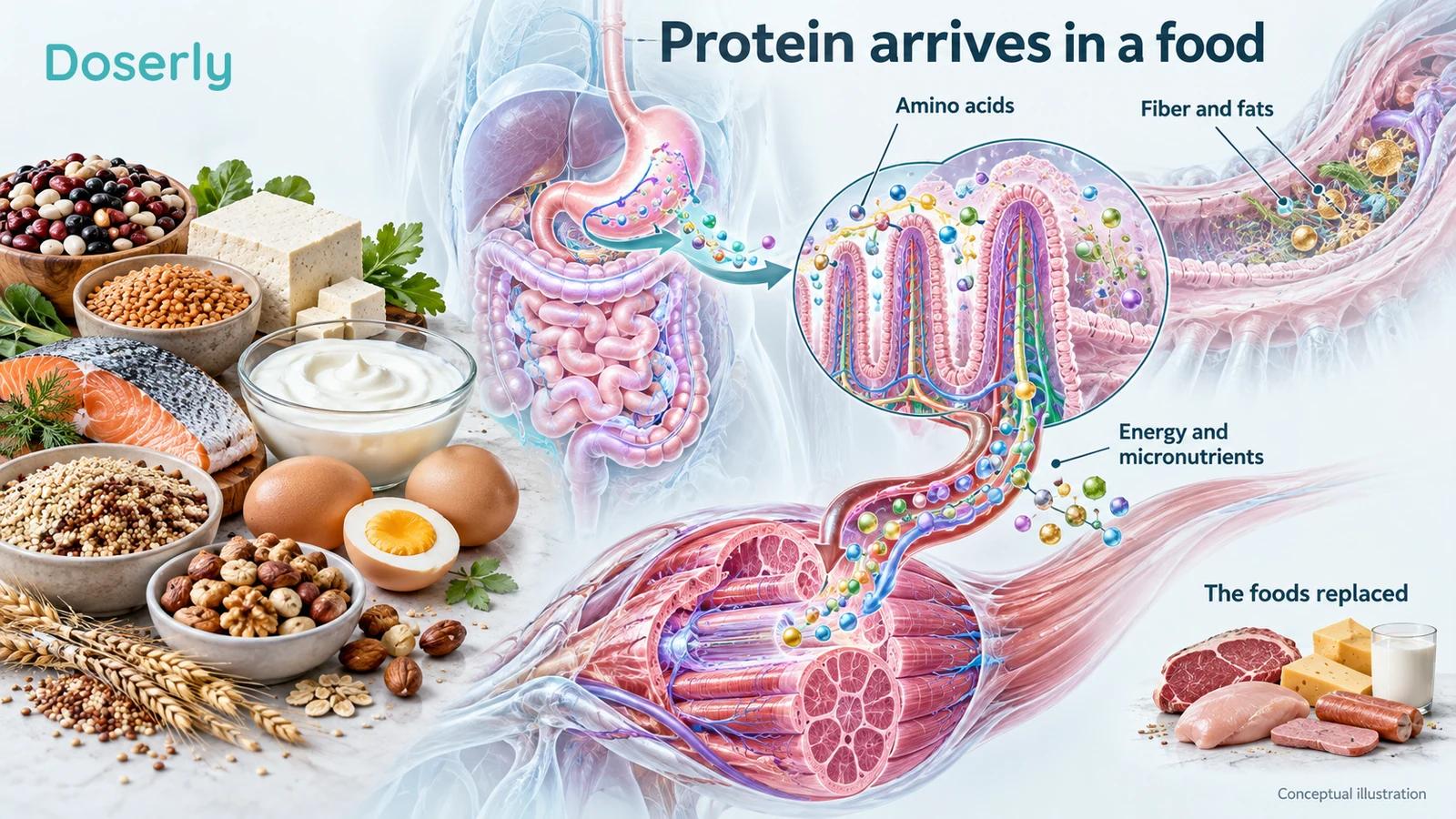
Protein comes packaged with other nutrients. Beans, lentils and nuts provide a different combination of fiber, fats and micronutrients from fish, yogurt, eggs or processed meat. Foods also replace other foods. Increasing one source may improve a diet when it displaces a less useful choice, but have a different effect when it displaces something already nutritious.
A 2024 Nurses' Health Study analysis followed 48,762 women who were younger than sixty at the dietary baseline. Higher midlife protein intake, especially plant protein, was associated with greater odds of healthy aging across a definition incorporating chronic disease, physical function, cognition and mental health. It was a prospective cohort analysis, not a trial assigning women to plant-protein diets. Korat and colleagues, American Journal of Clinical Nutrition
The association supports taking plant foods seriously. It does not isolate amino acids from the rest of the food pattern or prove that a particular powder reproduces the relationship. People eating more plant protein may differ in other behaviors, and questionnaires cannot capture every relevant feature of diet.
A larger 2025 analysis of dietary patterns in the Nurses' Health Study and Health Professionals Follow-Up Study also associated several healthier patterns with healthy aging. The patterns differed, but commonly emphasized nutrient-dense plant foods and a broader balance of choices. Again, these were observational results rather than proof of one optimal longevity diet. Tessier and colleagues, Nature Medicine
This shifts the everyday question from “Is protein good?” to “What would make this person's overall diet better while meeting their needs?” That question leaves room for plant-forward meals, adequate total protein and individual preferences at the same time.
Can plant proteins support older muscle?
Plant foods can contribute substantially to protein intake, but sources differ in amino-acid composition, digestibility and the amount of food needed to obtain a given quantity. A varied diet and adequate total intake matter more than assigning an entire food category a single quality score.
A 2025 randomized feeding study compared predominantly plant- and animal-derived protein in middle-aged to older adults over ten days. Resistance exercise increased daily myofibrillar protein synthesis, with no significant influence of protein source under the tested conditions. This was a short metabolic study, not evidence that all sources are identical for long-term strength or disability prevention. Korzepa and colleagues, American Journal of Clinical Nutrition
The useful message is that a plant-forward approach and muscle maintenance are not inherently opposing goals. The details still matter. Someone with a large appetite may comfortably obtain protein from beans, lentils, tofu, nuts and grains. Someone with a small appetite may need more concentrated or easier-to-eat options, whether plant-based or animal-based.
It helps to consider meals as they are actually eaten. A bowl of vegetable soup with very little legume or other protein content is not equivalent to a substantial lentil dish simply because both are plant-based. Likewise, a food marketed as high-protein may not improve a diet if it crowds out fiber-rich foods or supplies nutrients the person does not need.
The NIA recommends a variety of nutrient-dense protein foods rather than relying on a single source. NIA food-group guidance That variety can make nutritional adequacy easier while preserving enjoyment and cultural preferences.
Kidney disease requires a different conversation
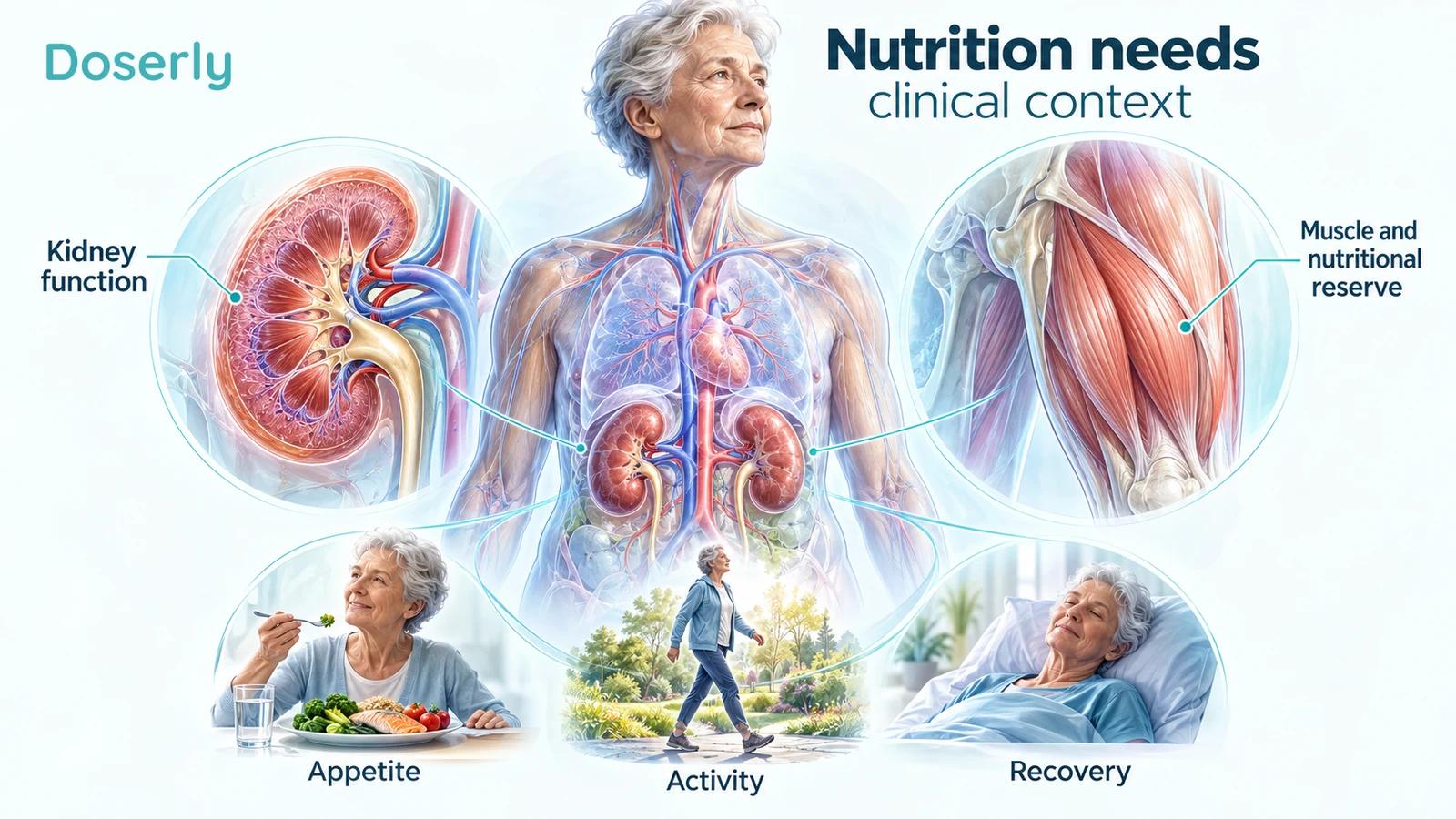
Protein advice for healthy active adults cannot simply be transferred to someone with chronic kidney disease. Kidney function, disease stage, nutritional status and treatment all influence the balance between limiting metabolic burden and maintaining muscle and adequate intake.
KDIGO's 2024 guideline suggests around 0.8 grams per kilogram daily for adults with CKD stages G3–G5 and advises avoiding high intakes above 1.3 grams per kilogram in adults at risk of progression. It also specifically recognizes that older adults with frailty or sarcopenia may need higher protein and calorie targets. KDIGO 2024 executive summary
Those statements are not contradictory. They identify competing clinical needs that require an individualized plan. Dialysis, acute illness and malnutrition can change the situation further. A generic internet target cannot account for all of them.
For someone with kidney disease, the useful step is to bring the actual foods, supplements and current intake to the treating team or renal dietitian. “High protein” is too vague to assess. A product label, approximate daily use and the reason it was added make the conversation more concrete.
The same principle applies to a person restricting protein out of fear despite having no established diagnosis. It is better to clarify kidney health and nutritional needs than to assume that less is always protective. Avoiding excess and avoiding inadequate intake are both legitimate goals.
When appetite or weight loss becomes the main issue
A person can have excess body fat and still have low strength or inadequate nutrition. Weight alone does not reveal the quality of the tissue being lost or the person's ability to function. During intentional weight loss, preserving activity and assessing muscle function are useful parts of the discussion.
If appetite has fallen, the first question is why. Illness, mood, dental problems, swallowing difficulty, medications and practical barriers to shopping or cooking may matter. A supplement may help fill a gap, but it cannot resolve every cause of reduced intake.
Food texture and convenience can be as important as a calculated target. Yogurt, eggs, tofu, well-cooked legumes or other tolerated foods may be easier for one person than a large meat portion. A ready-to-drink supplement may be useful when preparing food is difficult. The appropriate choice depends on the person's needs and preferences, not on the prestige of a protein source.
The whey protein guide discusses a common concentrated option. Its role is to help meet a nutritional need when appropriate. It does not establish that a powder is necessary for healthy aging, or that adding it to an already adequate diet guarantees a functional benefit.
A plan should also be checked against what happens after it is introduced. Does the person actually consume it? Does it reduce appetite for other meals? Is it tolerated? Is strength stable or improving? These practical observations can be more useful than repeatedly escalating intake because a marketing claim says more must be better.
Building a protein discussion around your life
Before changing intake, consider a few ordinary days of eating, including days when appetite or routine is difficult. The aim is to identify a pattern, not to judge every bite. A clinician or dietitian can use that information alongside health status, weight change and activity to decide whether a shortfall exists.
Then define the goal. Maintaining strength, recovering from illness and supporting training are concrete aims. “Lowering mTOR” is not, by itself, a clinical outcome. The plan should make sense for the person's function and health rather than merely producing a desirable story about a pathway.
It is also worth deciding how progress will be recognized. Easier chair rises, improved training performance, stable weight when weight loss is unwanted, and better meal completion each answer a practical question. No single observation proves that aging has slowed, but they help assess whether the plan is serving the person.
Protein is essential, and its effects are contextual. The strongest approach is to meet nutritional needs, choose a varied food pattern, maintain an appropriate strength stimulus and adapt to medical circumstances. Human longevity research has not established a reason to sacrifice muscle or adequate nourishment in pursuit of a simpler slogan.