
Longevity
October 17, 2026
Muscle strength, power and healthy aging: what is worth measuring?
On this page
Getting out of a low chair can reveal something a bathroom scale cannot. The task requires enough force to lift your body, enough speed to complete the movement smoothly, and enough balance to finish standing. A report showing more lean mass does not guarantee that all three have improved. For healthy aging, muscle is most useful when it helps you do things.
That is why strength, power and muscle size deserve separate attention. They are related, but they describe different capacities. A training program may improve one more than another, and a supplement study may report a body-composition change without demonstrating easier walking or fewer falls. The distinction becomes especially important when a promising result is described as a general reversal of aging.
Research reviewed through October 16, 2026 supports resistance training as a practical way to develop and preserve muscle function. The long-term LISA trial provides an encouraging example, with a useful qualification: preserved leg strength did not mean that every measure of power, muscle mass or health was preserved. Understanding that result helps make both training and measurement more purposeful.
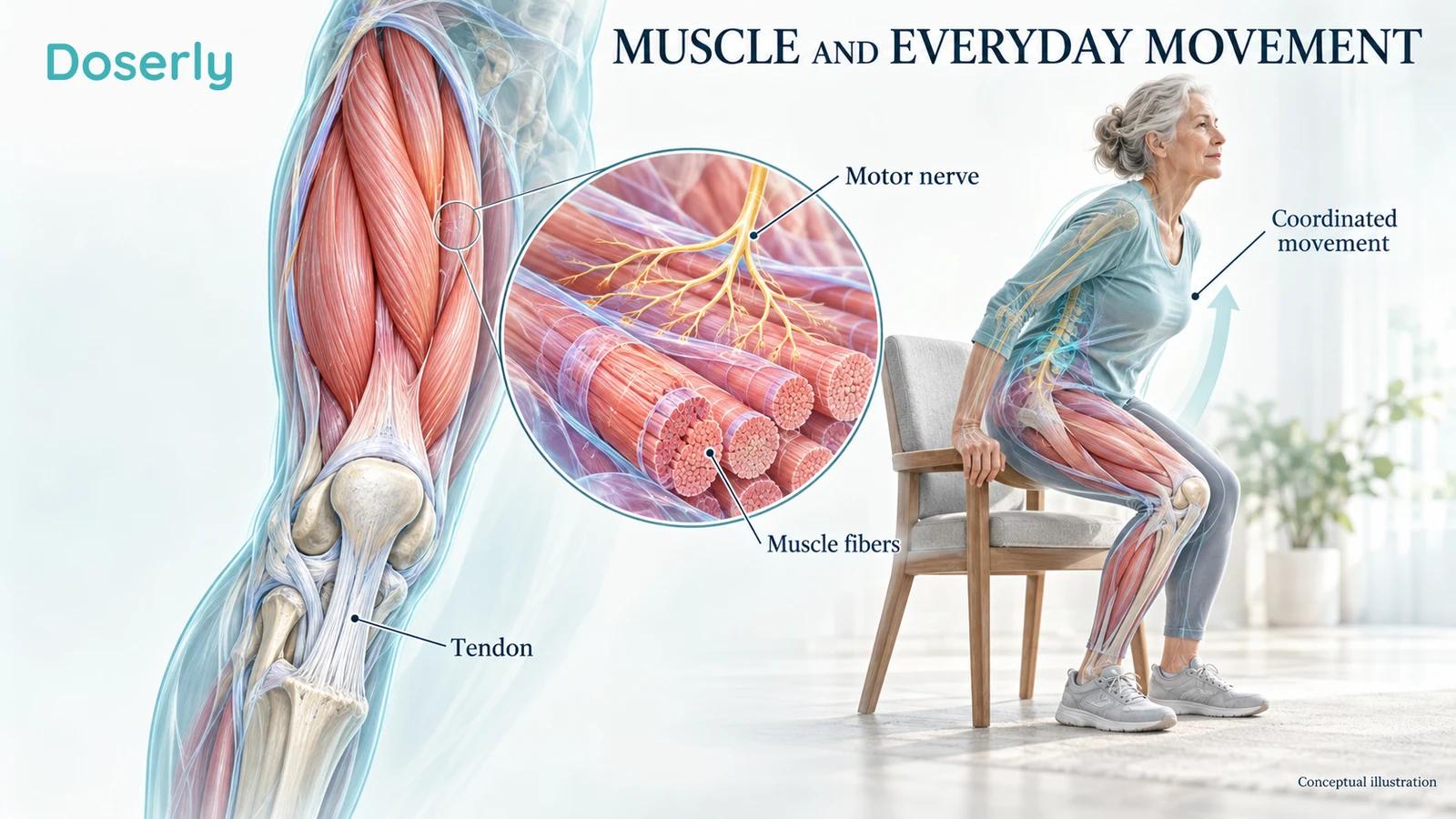
Muscle tissue, neural activation and coordinated movement contribute to everyday function. This conceptual illustration does not show a measured treatment effect.
Muscle mass, strength and power answer different questions
Muscle mass concerns the amount of muscle tissue. A body-composition scan can estimate lean tissue in different regions, but lean tissue is not identical to contractile muscle. It includes water and other non-fat components. A small change on a report needs interpretation within the measurement method and conditions, rather than automatic celebration as newly useful muscle.
Strength is the ability to produce force. It might be assessed through a handgrip squeeze, a controlled leg extension or the heaviest load someone can move in a particular exercise. The result belongs to that task. A strong grip is informative, but it does not directly measure whether painful knees can extend effectively or whether a person can rise from a chair.
Power adds the speed of movement: in mechanical terms, force multiplied by velocity. Two people may be able to move the same load, while one can move it more quickly under controlled conditions. That difference can matter when the task requires timely movement. Power is not simply a more impressive word for strength, and it is not measured by looking at the size of a muscle. LISA study protocol.
Everyday performance combines these capacities with other systems. Standing up also involves coordination, balance, joint range and confidence. Walking includes endurance and sensory information. If performance changes, it is worth asking which part of the task changed. The answer may point toward resistance training, rehabilitation, treatment of pain or another intervention rather than a universal muscle-building solution.
Why clinicians look beyond a scan
The revised European sarcopenia consensus places low strength at the center of assessment. In that framework, low strength suggests probable sarcopenia; low muscle quantity or quality helps confirm the diagnosis, and poor physical performance identifies more severe disease. Grip strength and chair-rise assessment are practical parts of that process. A single self-administered test does not establish the diagnosis. EWGSOP2 consensus.
This approach helps explain why two people with similar body-composition results may need different care. One may be functioning well and seeking a training baseline. Another may have recent weight loss, increasing difficulty standing and reduced food intake. The same scan value can sit inside very different clinical stories. The history and pattern of change matter alongside the number.
Avoid treating every age-related change as inevitable. A new decline after illness, a medication change or a period of reduced activity deserves attention. So does progressive weakness that limits daily tasks. An assessment can look for contributing problems and decide what support is useful. The purpose is to preserve participation and independence, not to give everyone a disease label based on an online threshold.
What the LISA trial found four years later
LISA randomized 451 adults around retirement age to one year of heavy resistance training, moderate training or a control condition. At the four-year assessment, 369 returned. The heavy-training group had maintained its baseline isometric leg strength, while its change differed favorably from the other groups. This was three years after the supervised intervention ended, an unusually valuable window into durability. Four-year LISA follow-up.
The primary outcome was leg extensor power, and that measure did not show a significant group advantage across four years. Grip strength and lean leg mass also declined over time without significant between-group differences in their four-year change. The headline strength finding concerned a secondary outcome. It was meaningful, but it was not evidence that training had preserved every feature of muscle function.
Participants were relatively well functioning and active. The heavy program included familiarization, supervision and progressive machine-based work. Follow-up losses and activity after the intervention also complicate interpretation. The study supports investing in resistance training around retirement; it does not show that one year of lifting permanently removes the need to keep active, or that every frail person should immediately copy the study’s loads.
The distinction between strength and power changes the practical takeaway. If a person’s main goal is rising more smoothly, it is reasonable to evaluate that ability as well as a strength measure. If the goal is carrying shopping, a task that reflects carrying may matter. A result is most useful when it addresses the ability the person actually wants to preserve.
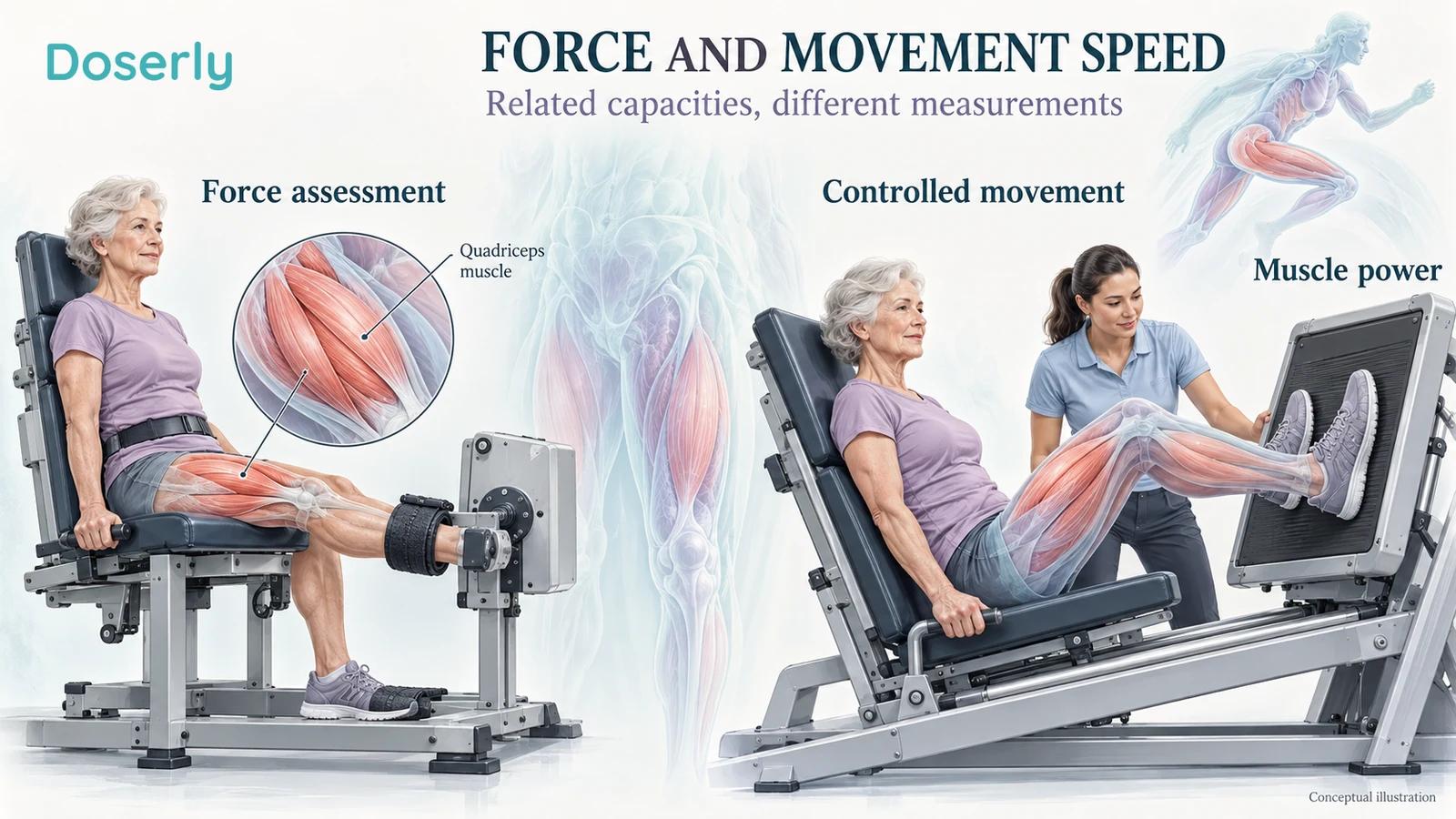
Producing force and producing it during movement are related but distinct. Preserving one measured capacity does not establish that every functional outcome has improved.
A stronger leg does not prove a younger whole body
A separate LISA analysis published in 2025 examined brain imaging over four years. Among 276 participants with scans at every time point, the resistance-training assignments did not produce the hoped-for preservation of the studied brain volumes. Changes in leg strength were not associated with changes in the prespecified brain regions. That is a useful boundary on claims that this particular strength result demonstrated broad brain rejuvenation. LISA brain-imaging analysis.
Brain volume is itself an intermediate measurement, and a null imaging result does not erase the value of stronger legs. It also cannot settle every question about exercise and cognition. The lesson is to keep outcomes separate. An intervention can be worthwhile for the ability it improves without needing to succeed on every biological test associated with aging.
The same discipline applies to your own progress. Easier chair rises can be a success even if your body-composition report barely changes. A larger lean-mass estimate may be less satisfying if stairs remain difficult. Start by deciding what would count as a useful improvement, then choose measurements that can tell whether it happened.
Does muscle power predict a longer life?
A 2025 prospective study examined 3,889 middle-aged and older adults in a Brazilian exercise-clinic cohort. Relative muscle power was a stronger mortality predictor than relative strength in that dataset. Power was assessed with an upper-body movement, while strength used handgrip testing. Participants were not randomized to power training, and the study compared different tests as well as different physiological concepts. Muscle power and mortality study.
Those details matter. The result suggests that power can contain useful information beyond a familiar grip measurement. It does not prove that moving a weight faster reduces mortality by the difference observed between groups. Health, activity history and other characteristics can influence both test performance and survival. A clinic-based cohort also may not represent people who cannot safely complete the tests.
It is reasonable to take power seriously without turning it into a competitive longevity score. A physiotherapist or qualified exercise professional can assess whether movement speed is a useful training target. The target should connect to safe function. An older adult does not need to perform an unfamiliar explosive lift merely because a cohort study found an association with survival.
Power training is a skill to develop
A movement can be performed with an intention to rise or push promptly while the return remains controlled. That is different from throwing a weight, bouncing through a painful range or racing against a timer. The appropriate resistance and movement depend on the person. Someone who is learning a task may first need confidence, positioning and basic strength.
Research also cautions against assuming that specialized equipment is automatically superior. A 2025 trial compared flywheel-style and conventional resistance systems in 44 physically active adults older than 57. Only 27 completed the six-week program. One eccentric power comparison favored the flywheel system, while most between-group comparisons, including physical performance and fall-risk variables, were not significant. It did not demonstrate fewer real-world falls. Iso-inertial resistance trial.
For a reader, that is a reason to focus on the program rather than the novelty of the machine. Can the movement be learned comfortably? Can difficulty be adjusted? Is someone available to help if balance or technique is uncertain? Equipment can support those needs, but ownership of a particular device is not the outcome that matters.
Falls require more than muscle strength
A fall is an event involving a person, a task and an environment. Strength may help with some demands, but vision, balance, footwear, obstacles and medication effects can also matter. A leg-strength improvement should not be translated automatically into a claim of fewer falls. Studies need to count falls, with a clear comparison and follow-up, to answer that question.
The Australian LiFE trial tested a program that embedded tailored balance and strength activities into daily life in 317 older adults at increased fall risk. It reduced the rate of falls compared with a control program: the incidence rate ratio was 0.69, with a 95% confidence interval of 0.48–0.99. That corresponds to a relative reduction in fall rate, not a promise that every participant avoided falling. LiFE randomized trial.
A different US trial, LIFE, illustrates the importance of naming the outcome. Its physical-activity program helped preserve mobility, but the prespecified serious fall-injury outcome was not significantly reduced: 9.2% versus 10.3%, hazard ratio 0.90, with a confidence interval from 0.66 to 1.23. These were different interventions and populations, not a contradiction that can be resolved by calling all exercise the same. LIFE serious fall-injury analysis.
If falls or near-falls are the concern, an assessment should address that concern directly. A professional can help decide whether strength, balance practice, environmental changes or medication review should take priority. Recording where and when instability occurs may reveal a more actionable pattern than buying a grip device and hoping its number explains everything.
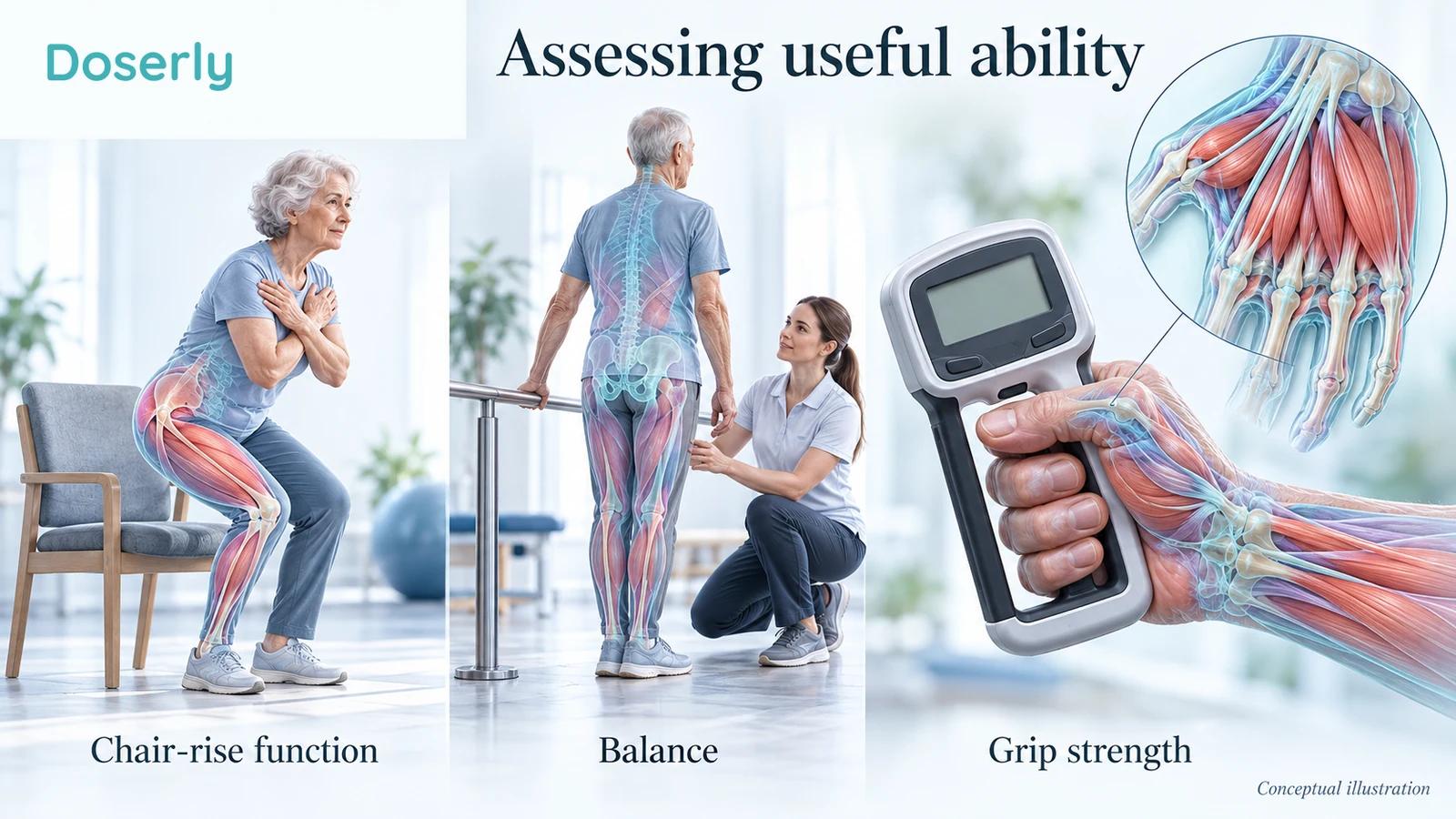
Different assessments sample different abilities. This conceptual scene shows supervised testing, not a home diagnostic protocol or a guarantee against falls.
Choose a small set of useful measurements
A practical baseline starts with a task you value. It might be rising from your usual dining chair, carrying a manageable bag or using a familiar staircase. Note what makes it difficult: effort, pain, speed, unsteadiness or the need for assistance. That description helps decide whether a formal strength or functional test would add useful information.
When a professional uses repeated testing, consistency matters. Chair height, arm support, footwear, instructions and testing conditions can change performance. A faster time after switching to a higher chair does not mean the same thing as a faster time under unchanged conditions. Record enough detail to avoid comparing different tasks and calling the difference progress.
Grip testing is similarly specific. Hand pain, injury and positioning can affect the result. A low reading can prompt further assessment, but it does not explain the cause by itself. Where grip is limited for a local reason, another assessment may better represent the question being asked. The best test is one that can be performed safely and interpreted sensibly.
You also do not need to test your maximum every session. Routine training records can show whether a familiar exercise is becoming more manageable at the same resistance and technique. Periodic formal reassessment can then answer a focused question. Testing should help the program, not consume the energy and confidence needed to participate in it.
Protein supports the plan; more is not always the missing piece
Food intake belongs in the assessment, especially when appetite, shopping, chewing or meal preparation has become difficult. A protein discussion is more useful when it starts with what someone actually eats and whether they have enough energy overall. A powder may be convenient, but it does not reveal why a person is losing weight or struggling to train.
The PROVIDE trial studied 380 older adults with sarcopenia using a whey-based supplement enriched with leucine and vitamin D. Over 13 weeks, the main handgrip and overall physical-performance outcomes did not differ significantly between groups. Secondary outcomes favored the supplement for chair-rise time and appendicular muscle mass. Because several nutrients were combined, the study cannot assign those benefits to protein alone. Two authors listed affiliations with Nutricia Research, which is relevant context for a commercial nutritional product. PROVIDE randomized trial.
This is a more specific message than recommending the same supplement to every older adult. Nutritional support may be relevant when intake or function is compromised, and the outcome should be checked. A dietitian can help adapt food choices to preferences and medical needs. The Doserly plant-based protein guide offers background on one option, while the larger question remains how nutrition supports the person’s overall plan.
Where creatine fits, and where the evidence stops
Creatine has been tested alongside resistance training in older adults. In a small 14-week randomized trial involving 28 people older than 65, supplementation produced greater gains in fat-free mass and some isometric strength measures than placebo. Both groups trained and improved on several tasks. That is evidence about an adjunct to training in a small study, not proof of extended life or a replacement for exercise. Brose and colleagues.
A larger two-year trial in 237 postmenopausal women gives a more mixed picture. Adding creatine to resistance training and walking did not improve the primary bone-density outcome or the measured bench-press and hack-squat strength outcomes compared with placebo. Walking time improved, and a lean-mass advantage appeared in a completer analysis rather than the main intention-to-treat analysis. The result depends on which endpoint and analysis is being discussed. Two-year creatine trial.
The Doserly creatine guide provides broader background for a discussion about whether it fits your circumstances. Keep expectations tied to the evidence: a possible training adjunct is different from a proven treatment for frailty, falls or aging itself. Changes in body-composition estimates should be considered alongside strength and function, rather than allowed to substitute for them.
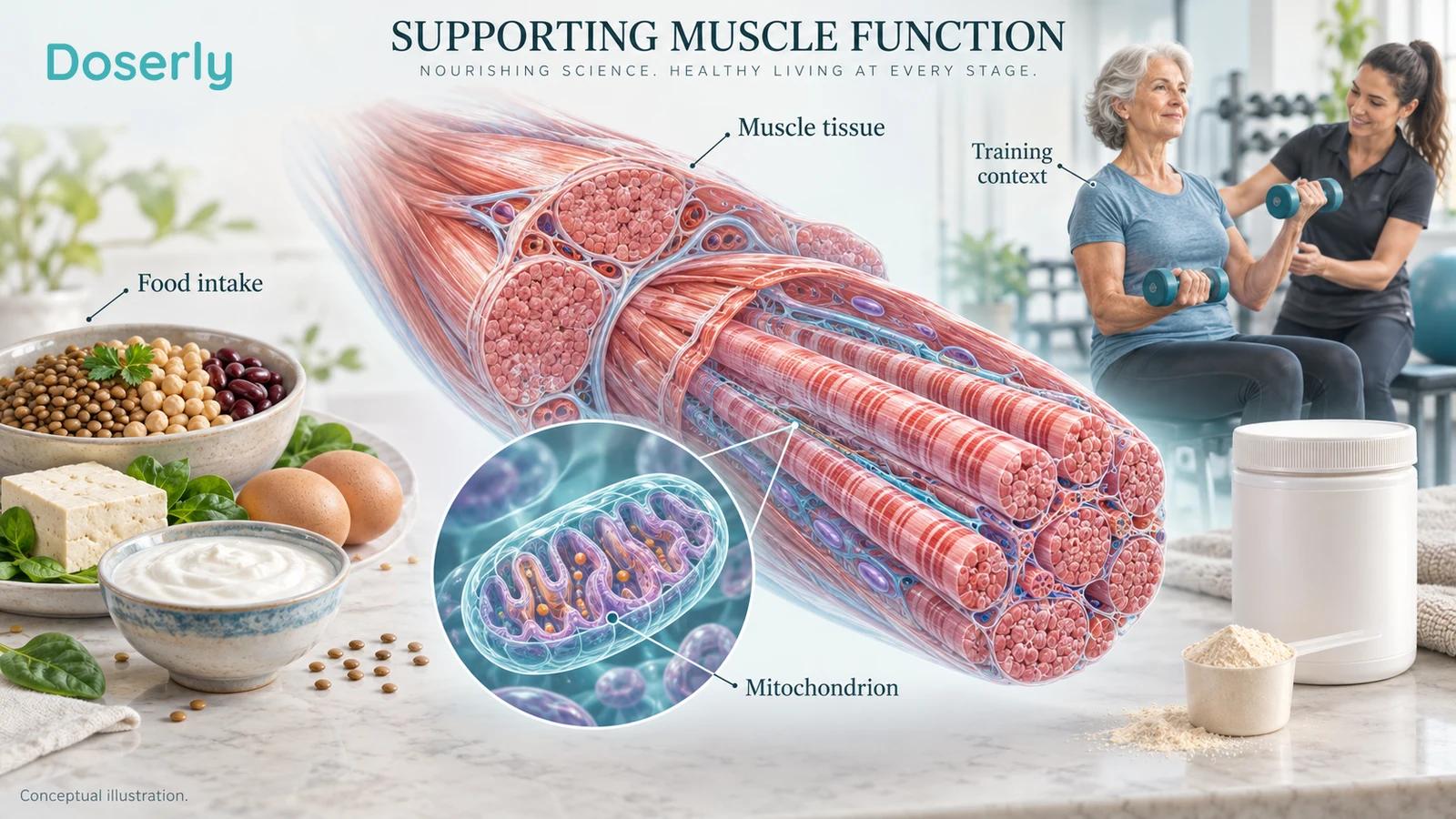
Nutrition can support muscle training and recovery. Foods or supplements shown here are contextual examples, not evidence that a particular product prevents disability.
Reassess after a period of reduced activity
Muscle capacity can change on a shorter timescale than an annual checkup. In a small study of 11 healthy older adults, ten days of continuous bed rest reduced several measures of leg strength, stair-climbing power and aerobic capacity. Two broader physical-performance tests did not change significantly. This was an experimental bed-rest study, not a forecast for every hospital stay, but it illustrates why different assessments can tell different parts of the story. Functional impact of bed rest.
After illness or hospitalization, ask what level of activity is appropriate now and whether rehabilitation would help. A previous training load may no longer be the right starting point. Equally, a temporary setback need not be interpreted as a permanent loss of independence. Reassessment can establish a realistic baseline and identify which tasks need support while recovery continues.
Consider someone who previously carried laundry upstairs but now stops halfway. The limitation could involve strength, endurance, breathlessness, pain or fear of falling. Measuring only muscle mass would leave much of that question unanswered. Describing the specific task, the timing of the change and any accompanying symptoms gives a clinician a more useful starting point.
Keep the record proportionate to the decision. A short note about the task and assistance needed can be enough to show a pattern. There is little value in repeatedly collecting a difficult measurement if nobody knows what would change in response to it. Before adding a new test, ask what result would lead to a different plan, and whether a simpler observation could answer the same question safely.
Make progress useful enough to keep
Choose a training setting that allows you to learn and return. That may be a gym, a rehabilitation service, a community class or an adapted home program. Progressive resistance means adjusting the challenge as capacity develops. It does not mean that every session needs to be heavier, faster or harder than the last one.
A useful review asks what has changed outside the exercise itself. Are you standing more confidently? Is carrying something easier? Are you recovering well enough to remain active between sessions? If a number improves but the original task does not, reconsider whether the program is addressing the actual limitation. If function is worsening, seek assessment rather than simply adding more load.
Maintaining ability can also be a success. LISA’s most encouraging finding was preservation of a specific capacity over time, not an endless rise in performance. A thoughtful plan can value that stability while remaining responsive to illness, pain and changing goals. Muscle matters because of the life it helps you live; measurement is worthwhile when it helps you protect that ability.