
Supplements
October 16, 2026
Iron for athletes: investigate low energy before choosing a supplement
On this page
A familiar training pace suddenly feels harder. Recovery takes longer, or fatigue persists through a lighter week. Iron deficiency is one possible explanation, especially when training demands, menstrual losses or limited dietary intake make it difficult to maintain iron stores. It is not the only explanation, and the symptoms do not reveal how much iron to take.
Iron participates in oxygen transport and cellular metabolism. Too little can affect health and training, but extra iron is not a general performance aid for everyone who feels tired. The useful first step is to establish whether iron stores are depleted, whether anemia is present and why the problem developed. A supplement plan without those answers can miss the cause and make follow-up harder. Australian Institute of Sport iron guidance
This article concerns assessment and treatment decisions for adult athletes. It does not provide a self-prescribed iron protocol or a ferritin target to chase before a race.
Iron stores and anemia are related, but not identical
Hemoglobin is the iron-containing protein in red blood cells that carries oxygen. Ferritin is an iron-storage protein; its concentration in blood helps clinicians assess iron stores. Transferrin saturation provides another perspective on the iron available in circulation.
An athlete can have depleted iron stores while hemoglobin remains within the expected range. This is often called iron deficiency without anemia. Iron-deficiency anemia involves insufficient iron together with a reduced hemoglobin concentration. The distinction matters because a normal hemoglobin result does not automatically mean iron stores are adequate, while a low hemoglobin result does not establish iron deficiency as its cause. AIS stages and screening measures
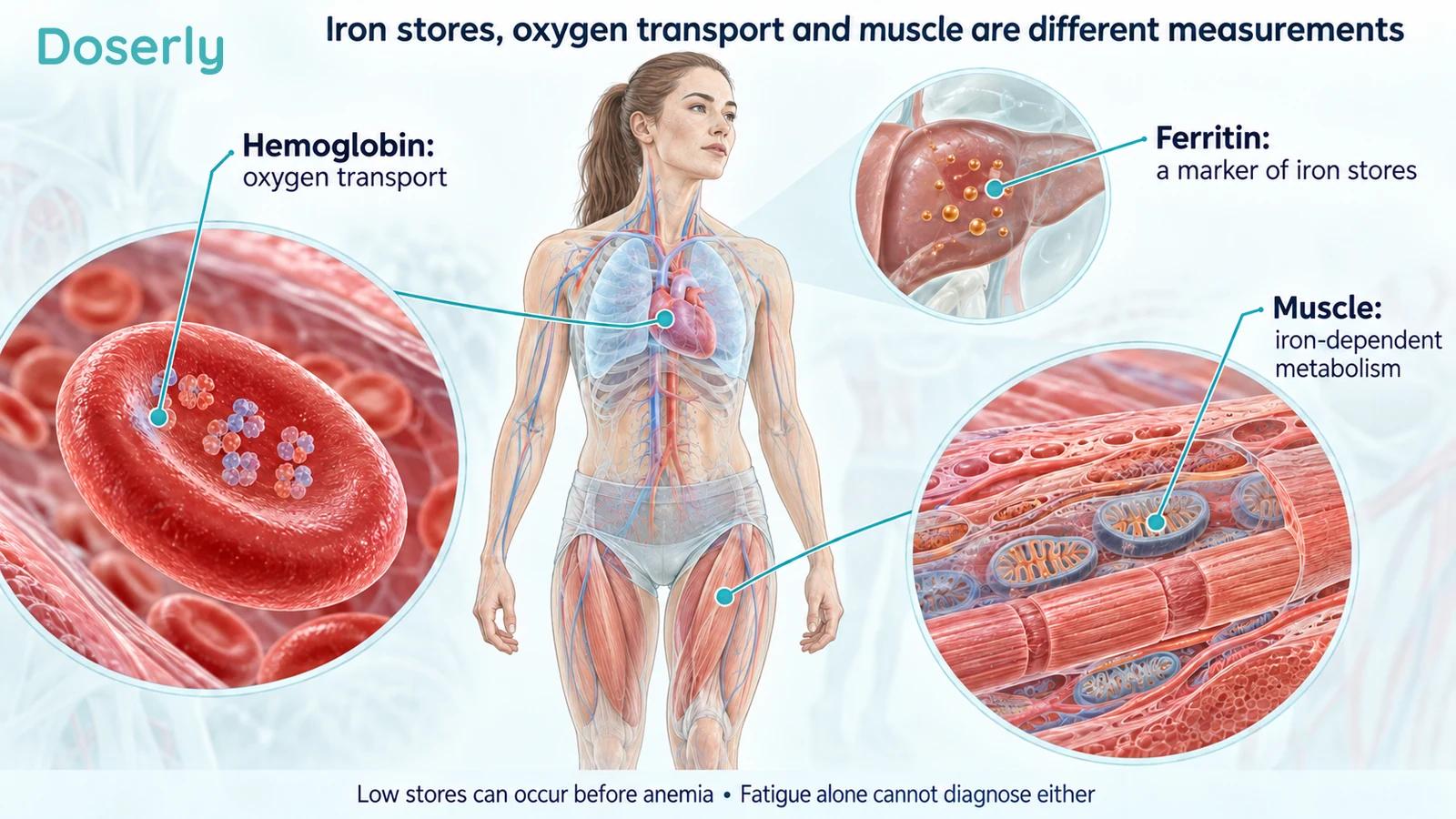
Ferritin also rises in response to inflammation. That can complicate interpretation during illness or around demanding exercise. A result that looks reassuring in isolation may need to be interpreted alongside other markers and the circumstances of sampling. This is one reason a clinician may review more than ferritin and may repeat testing under more comparable conditions. NIH iron assessment
Why an athlete may become iron deficient
Iron balance depends on intake, absorption, losses and demand. Training can make a marginal situation more apparent, but the label “athlete” is not an explanation by itself. Menstrual blood loss, restricted food intake, a diet with fewer readily absorbed iron sources, previous deficiency and endurance training all belong in the history. AIS also identifies athletes with low energy availability as a group needing attention. AIS risk factors
A heavy training schedule can make it difficult to eat enough overall, even when food choices look nutritious. Low energy availability means that energy intake is insufficient relative to exercise expenditure to support normal physiological needs. The IOC's REDs consensus describes potential health and performance consequences in both female and male athletes. An iron tablet cannot supply the missing food energy or address the full problem. IOC REDs consensus, 2023
This is why a sports dietitian may ask about missed meals, dietary restrictions, carbohydrate availability and the practical demands of training. These are not distractions from the iron result. They help identify whether the same pattern is likely to continue after a short course of supplementation.
Blood loss or impaired absorption also deserves investigation when the history suggests it. Repeatedly replacing iron without asking why it is low can turn a treatable cause into a recurring supplement habit. Menstrual history, gastrointestinal symptoms, blood donation and relevant medical conditions should be discussed with the clinician rather than assumed to be ordinary consequences of sport. NIH causes and risk groups
What the randomized-trial synthesis found
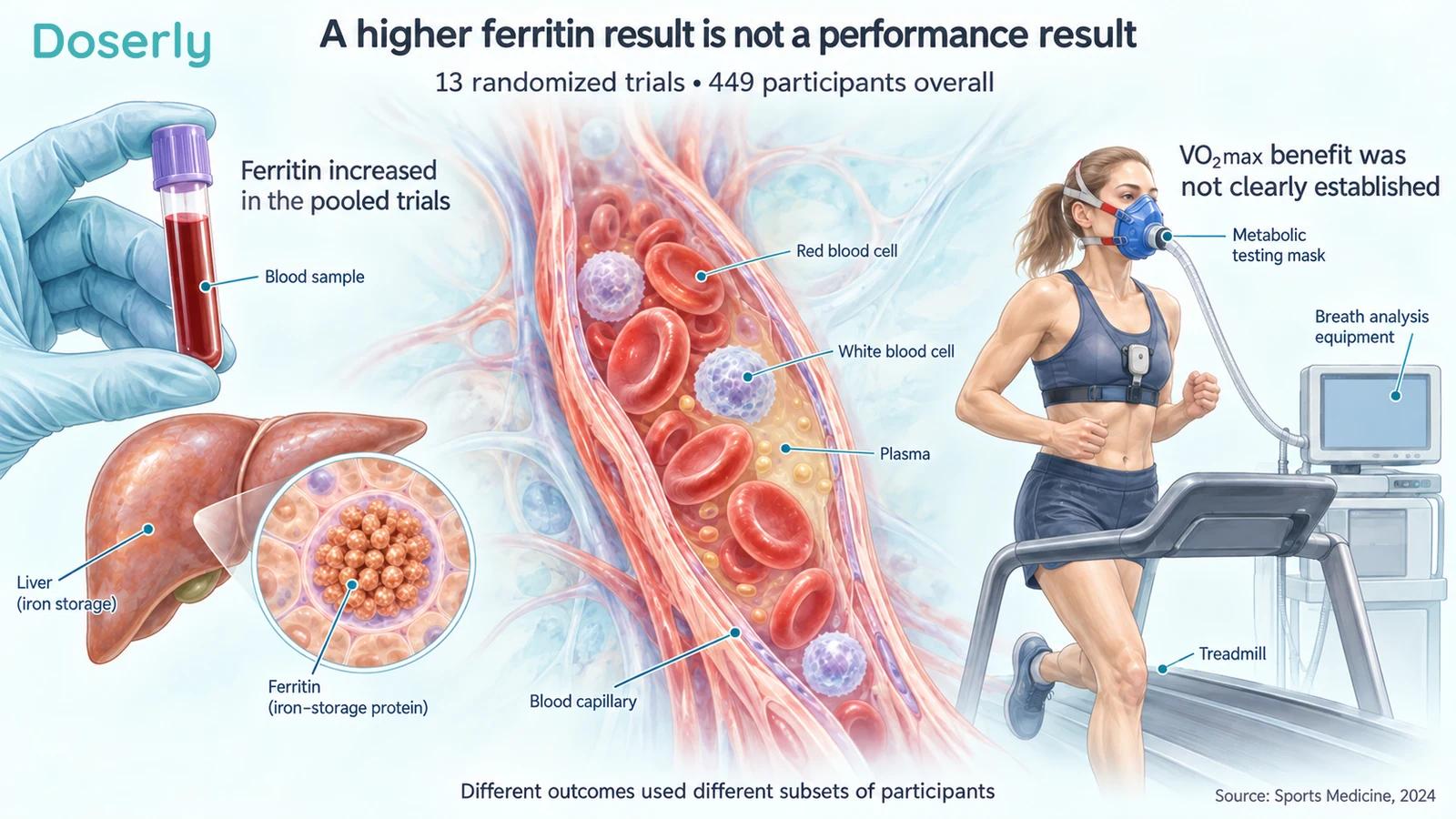
A 2024 systematic review and meta-analysis included 13 trials with 449 adult, physically active participants. It examined oral iron alone, excluding intravenous treatment, simultaneous micronutrient combinations and recent altitude acclimatization. The search covered studies available through November 2022.
Oral supplementation increased ferritin in the pooled analysis. The standardized mean difference was 1.27, with a 95% confidence interval from 0.44 to 2.10. This is a statistical effect expressed relative to variability across studies; it is not a rise of 1.27 units on an individual's laboratory report.
The pooled hemoglobin, transferrin-receptor and transferrin-saturation comparisons did not establish clear changes. For maximal oxygen uptake, or VO₂max, the estimate favored iron numerically but its confidence interval crossed no effect: a standardized mean difference of 0.49, with a confidence interval from −0.09 to 1.07. Ten studies with 243 participants contributed to that performance outcome, rather than all 449 people in the review. Meta-analysis results
The ferritin response was more apparent in participants starting with very low stores. The review's subgroup analysis identified a clearer response at initial ferritin of 12 µg/L or lower. That should not become a universal diagnostic boundary or a rule that everyone above it cannot benefit. It describes an analysis within a small, heterogeneous evidence base.
Heterogeneity was substantial, and the evidence ranged from moderate to low quality. Many trials did not adequately characterize inflammation or total dietary iron intake. These limitations reduce confidence in a universal regimen and reinforce the value of assessing the individual athlete. Review limitations
A positive small trial still needs its own context
Not every performance-related finding has been negative. A double-blind trial in female rowers randomized 40 participants to ferrous sulfate or placebo, and 31 completed six weeks. The iron group showed greater improvements in some measures of energetic efficiency during endurance exercise, while both groups improved peak oxygen uptake with training.
That is a potentially useful signal in athletes with depleted stores. It is not proof that iron makes iron-replete athletes faster, nor does it mean every performance measure improved because of supplementation. The study's small size, nine non-completers, specific population and training context all limit the reach of the result. DellaValle and Haas, 2014
The practical distinction is between restoring a limiting nutrient and adding more of a nutrient that is not limiting. It is possible for treatment to matter greatly to a deficient individual while the average effect across mixed athlete studies remains uncertain. It is also possible for training itself to improve performance in both treatment groups. A comparison needs to separate those effects.
Testing conditions can change the interpretation
AIS recommends considering ferritin, hemoglobin and transferrin saturation together, with additional measures such as C-reactive protein useful in some circumstances. Its athlete framework also emphasizes standardized blood collection: preferably in the morning, adequately hydrated, without signs of illness, and after an appropriate period without unusually demanding or muscle-damaging exercise. AIS blood-screening framework
The purpose is consistency, not creating a perfect number. If one sample was taken after a hard event while unwell and another after a quiet recovery period, an apparent change may not represent only a change in iron stores. Tell the clinician about recent training, illness and existing supplementation so the comparison can be interpreted sensibly.
Athlete screening frameworks may also use different action points from a laboratory's general reference interval. That does not make a social-media target authoritative. A low result, a borderline result and an unexpectedly high result each call for interpretation in context. The appropriate response can depend on symptoms, past results, the sport and upcoming demands such as altitude exposure.
Keeping the original report matters. Record the units and date, and avoid combining values from different measures into a single “iron level.” Ferritin, serum iron, transferrin saturation and hemoglobin describe different aspects of the system. A change in one is not interchangeable with a change in another.
Timing research is about absorption, not a race-day shortcut
Hepcidin is a hormone involved in regulating iron availability. Exercise and time of day can influence it, which has prompted studies of when iron is absorbed most effectively.
In a crossover study of 16 endurance-trained runners with ferritin below 50 µg/L, researchers compared morning and afternoon exercise and used stable iron isotopes with standardized meals to estimate absorption. Hepcidin increased after exercise, yet the study found favorable absorption at breakfast after the morning run. This illustrates why a simple statement such as “exercise blocks iron absorption” is incomplete. McCormick and colleagues, 2019
The study measured absorption under controlled conditions. It did not demonstrate that taking iron at a particular minute improves race performance or that an athlete should reorganize training around a supplement without first establishing a need. Timing can be part of a clinician's or dietitian's plan, alongside food, tolerance and adherence. It is a refinement of an indicated intervention, not a substitute for the indication.
A monitored plan includes food, tolerance and a reassessment date
For confirmed deficiency, the plan should address both replenishment and the reason stores became depleted. AIS places medical supervision and dietary assessment within the same management program. Depending on severity and history, approaches may include changes in food intake, oral replacement or specialist consideration of intravenous treatment. AIS management guidance
If an oral product is prescribed, the amount of elemental iron matters. That is the iron supplied by the preparation, which differs from the total weight of its iron salt. Comparing two labels by the largest number on the front can therefore be misleading. Bring the exact product and serving instructions to the appointment.
Gastrointestinal side effects can interfere with adherence. Nausea, abdominal discomfort or constipation should be reported, because the clinician may adjust the preparation or schedule rather than having the athlete quietly stop and restart it. More iron is not automatically better tolerated or better absorbed. Excess iron can be harmful, and supplements should be kept away from children. NIH supplement safety
Intravenous iron is a medical treatment, not an upgraded recovery supplement. The decision requires a clinician to assess indication, response to other approaches and the patient's circumstances. A difficult training week or an approaching competition does not itself establish the need.
What to track while the cause is being addressed
A useful training record links symptoms to context. Note when fatigue began, whether it persists after rest, how ordinary sessions compare with previous weeks, and any illness, dietary restriction or major increase in workload. Include menstrual changes where relevant and dates of blood testing.
If replacement is started, record the actual product, prescribed amount, dates taken and side effects. Keep the planned review date visible. A record that says “iron most days” cannot distinguish an ineffective intervention from an intervention that was not tolerated well enough to follow.
Interpret performance changes cautiously. Pace, power and perceived effort are influenced by training load, weather, sleep and illness. A better session is encouraging, but it does not replace the agreed clinical reassessment. Equally, persistent fatigue after a ferritin rise deserves attention rather than indefinite escalation of iron.
The Doserly iron guide provides ingredient context. For athletes, the central decision is whether deficiency is present and what is causing it. Restoring iron when it is needed can support health and training; investigating first makes that treatment more precise and keeps other causes of low energy from being overlooked.
Sources
- Australian Institute of Sport: Iron: athlete risk, screening and supervised management.
- NIH Office of Dietary Supplements: iron physiology, assessment and safety.
- 2024 oral-iron meta-analysis: biomarker and performance outcomes in randomized trials.
- DellaValle and Haas, 2014: female-rower randomized trial.
- McCormick and colleagues, 2019: exercise timing and measured iron absorption.
- IOC REDs consensus, 2023: low energy availability and athlete health.