
Peptides
October 16, 2026
Epitalon and sleep: what the circadian research actually measured
On this page
Epitalon is discussed as a sleep peptide largely because of its connection with the pineal gland, melatonin and the body's daily timing system. That connection is biologically interesting. If you are lying awake at night, though, the practical question is whether taking it helps you fall asleep, stay asleep or function better the next day.
The available human research does not give a clear treatment answer. Some small studies examined melatonin-related measurements and the activity of genes involved in circadian rhythms. Those findings are different from demonstrating improvement in diagnosed insomnia. In its 2026 review, FDA did not identify clinical evidence establishing the proposed Epitalon substances as effective insomnia treatments. FDA briefing.
There is more to the story than “only animal studies,” however. Understanding the human work helps explain both why researchers are interested and why an injection protocol cannot be justified from a biomarker study. For the broader identity and safety background, see our Epithalon guide.
Sleep timing and sleep quality are related, but different
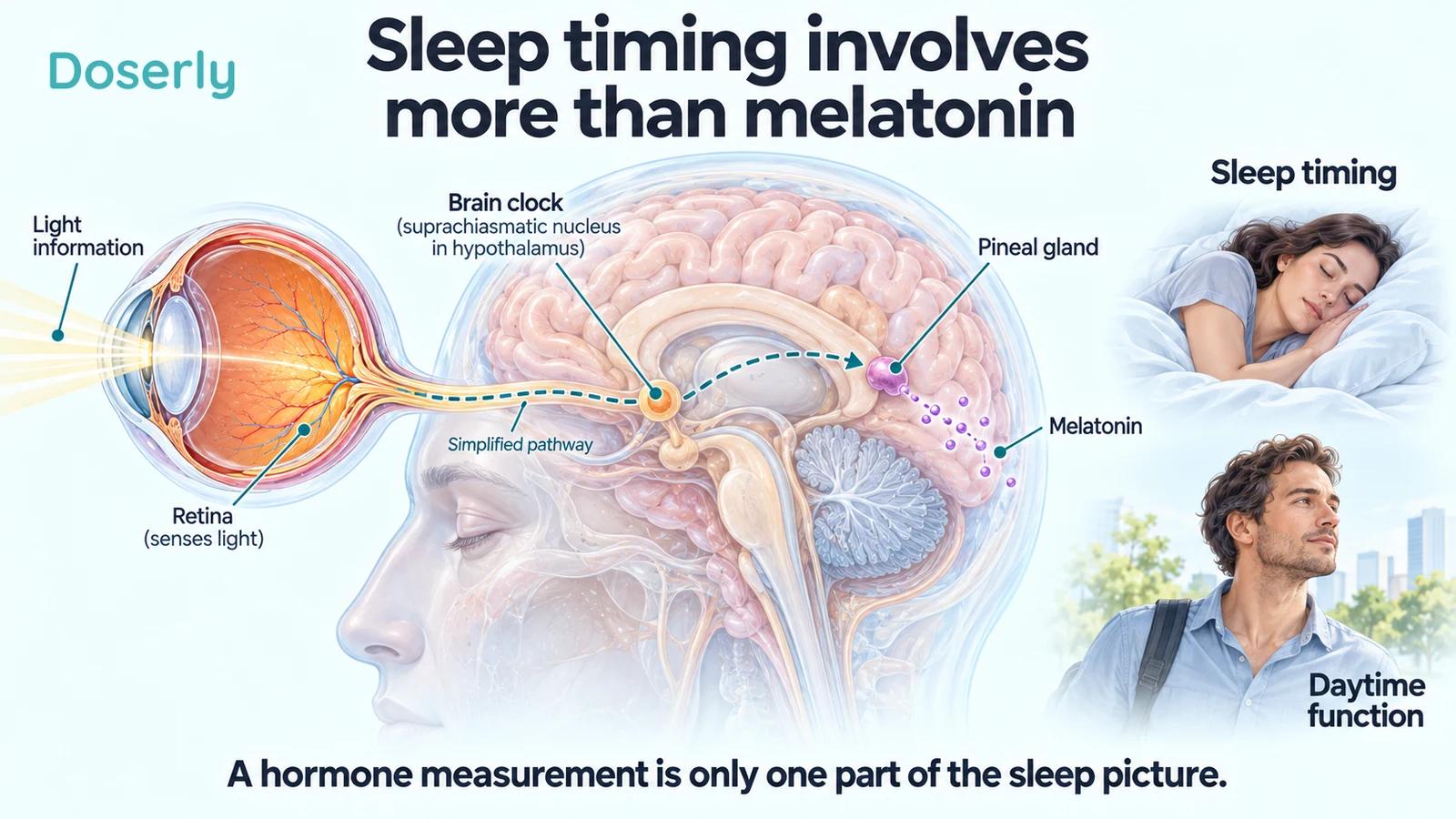
A circadian rhythm is a roughly 24-hour pattern in biological activity. Light information helps the brain coordinate these rhythms with the outside world. Melatonin, produced by the pineal gland, is one signal involved in that timing system.
Sleep is not controlled by melatonin alone. Your sleep history, opportunities to sleep, work schedule, medical conditions and other factors also affect what happens at night. This is why a clinician asks about the pattern of a sleep problem rather than diagnosing it from a single hormone result. NHLBI, diagnosing insomnia.
Someone who cannot sleep at the socially required time may have a timing problem. Someone else may spend enough time in bed at a suitable time but repeatedly lie awake. Another person may sleep for many hours yet remain unusually sleepy because their sleep is disrupted. Those experiences can overlap, but they need not have the same explanation or treatment.
A study of melatonin production therefore addresses one part of sleep biology. To establish a treatment benefit, researchers also need to assess the sleep problem that brought the person to care.
What the older pineal-peptide paper reported
A 2007 report discussed melatonin rhythms in old monkeys and older people. It distinguished epithalamin, a pineal peptide extract, from Epitalon, a synthetic tetrapeptide, and described changes in nighttime melatonin in people with reduced pineal function. Original abstract.
The broad conclusion in that abstract should not be mistaken for a modern insomnia trial. The accessible abstract does not give a complete account of allocation, group sizes, sleep measurements or systematic adverse-event monitoring. Its statement about side effects cannot establish long-term safety across products and routes.
The species and preparation also need to remain visible. A result in an old monkey is not a human treatment result, and an extract is not the same intervention as synthetic AEDG. A combined narrative about “pineal peptides” can obscure both differences.
What the report contributes is a hypothesis about pineal function and melatonin rhythms. What it does not provide is a reliable estimate of how many minutes sooner a person with insomnia will fall asleep after taking a particular Epitalon product.
The night-shift-worker study is human research
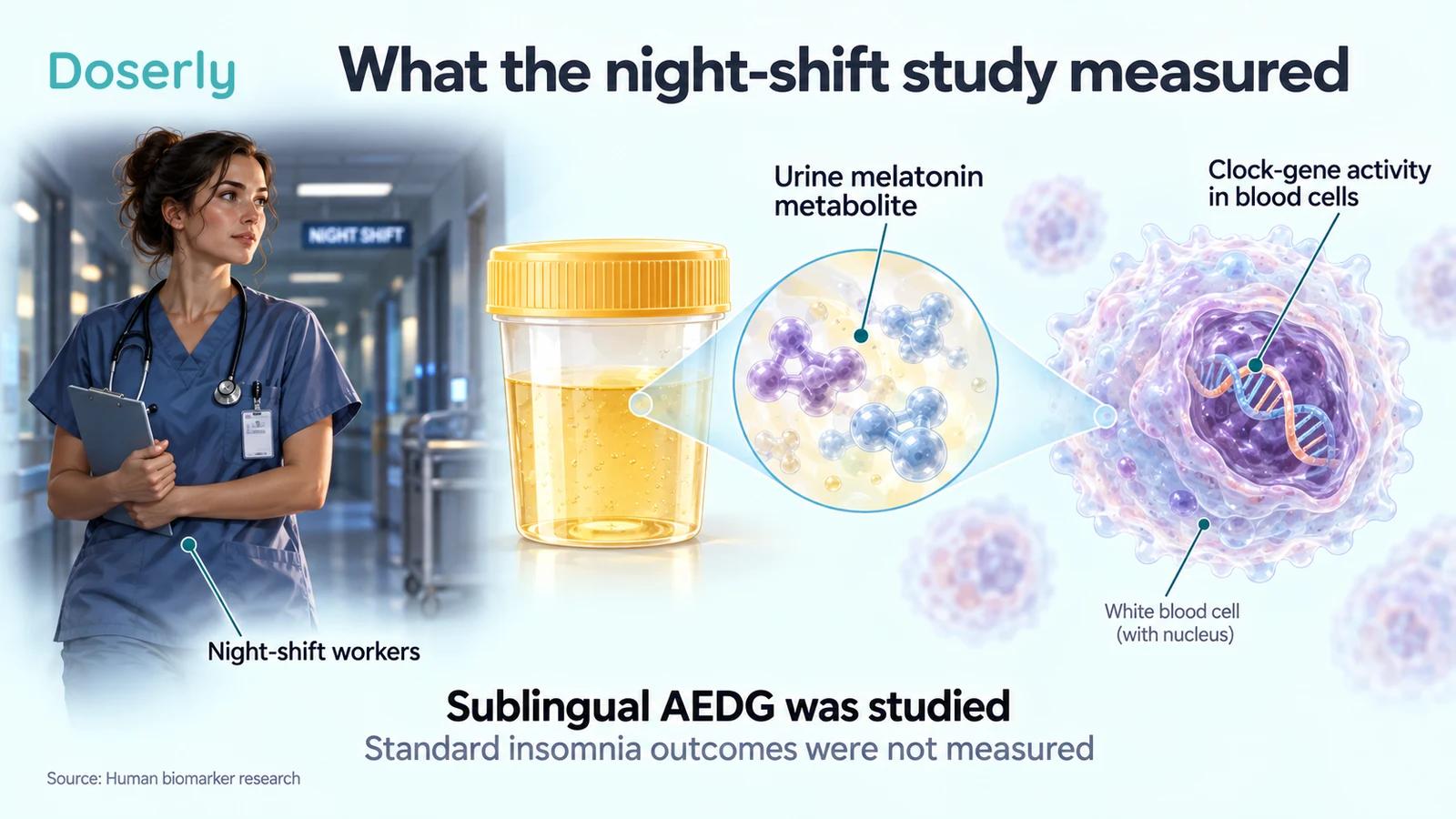
A short 2021 report describes 75 women working mainly night shifts, including doctors and nurses. Thirty-five with age-normal melatonin-related measurements formed a reference group. The forty with lower measurements were divided between placebo and a sublingual AEDG preparation, meaning a preparation administered under the tongue, over twenty days. Original report.
The paper describes ages 40–59; FDA's account of the related study uses 40–50. That reporting difference does not change the central point: this was a selected group of middle-aged female night-shift workers, not a broad sample of people with diagnosed insomnia.
Researchers examined clock-gene activity in blood cells. Related reporting also examined urinary 6-sulfatoxymelatonin, a substance formed when the body processes melatonin. The reported changes were biochemical findings. The study did not establish a benefit on standard insomnia outcomes such as time to fall asleep, time awake during the night or an insomnia severity score. FDA's study assessment.
This makes the study relevant to human circadian biology while leaving the clinical sleep question open. Neither description requires pretending that the human participants did not exist or that their results proved an insomnia treatment.
What a urinary melatonin metabolite can tell you
Measuring a melatonin metabolite in urine can provide information about melatonin production over a collection period. The result depends on what was collected and when. It is not a direct recording of how long a person slept or how refreshed they felt afterward.
A higher measurement might support a biological effect on the pathway being investigated. It does not automatically mean the timing of the rhythm is appropriate for that person's desired sleep schedule. Nor does it demonstrate that nighttime awakenings, distress about sleep or daytime impairment improved.
This distinction is especially important for shift workers. Their sleep opportunities and light exposure may differ markedly from those of people who work during the day. A biochemical response in that context cannot be assumed to solve a different person's difficulty sleeping at night.
The authors reported favorable changes in some participants' general condition, but FDA noted that the assessment methods were insufficiently described. A broad statement about feeling better is not equivalent to a validated sleep outcome measured consistently in both groups. Regulatory assessment.
What do changes in clock genes mean?
Genes such as CLOCK, CRY2 and CSNK1E participate in processes associated with circadian regulation. Measuring their activity in blood cells can help researchers investigate how a treatment interacts with this biology. It does not directly measure the activity of the brain's central clock or prove that a person's sleep rhythm has normalized.
The 2021 report used blood immune cells because directly sampling the living human pineal gland is not a practical research approach. That is an understandable choice, but the substitute tissue should remain part of the interpretation. Original clock-gene report.
A 2020 abstract also describes AEDG-related melatonin and circadian-gene findings. It belongs to the same research theme and should not be counted automatically as an independent confirmation of clinical sleep benefit. Establishing whether reports involve overlapping participants would require fuller cohort documentation. 2020 abstract.
Gene activity is dynamic. An increase or decrease has meaning in relation to tissue, timing and the biological question. “Changed clock genes” is not a synonym for “repaired the body clock,” and a favorable-sounding gene result does not measure how someone slept.
The later report did not demonstrate age reversal
A 2024 paper studied melatonin-related findings in shift workers and included sublingual AEDG, a pineal polypeptide preparation and placebo. The methods describe sixty middle-aged participants and urine collection during a specified overnight interval. It reported changes in melatonin-related measurements and subjective well-being. Original report.
Its title refers to reversal of biological age, but the measurements do not demonstrate that participants became biologically younger in a validated clinical sense. A change in a hormone metabolite or a tissue-staining result does not establish slower disease development, longer survival or sustained restoration of function.
The interventions also had different treatment durations. That makes a simple comparison of which preparation “works better” difficult. These observations are worth describing as exploratory research rather than converting them into a ranked treatment recommendation.
The public value of the paper is in the question it raises: can changing these pathways improve a meaningful sleep or health outcome? That question still requires direct testing.
Why a sublingual study cannot validate injections
Route matters because it affects exposure. A substance administered under the tongue may be absorbed, distributed and broken down differently from the same named peptide injected under the skin. The formulation and its quality matter as well.
The human night-shift study therefore cannot establish the effectiveness or safety of an injectable Epitalon schedule. It also cannot determine which injection timing, course length or interval between courses would improve sleep.
The study regimen is a description of an experiment, not a general dose recommendation. Repeating an online schedule does not recreate its participant selection, product, comparison group or measurements.
If a proposed treatment relies on this research, ask the clinician to explain the connection between the studied formulation and the proposed one. The answer may be a hypothesis. It should be identified as such, rather than presented as a result that the study directly demonstrated.
If your main concern is insomnia, start with the sleep problem
A useful assessment begins with when the problem happens, how long it has persisted, the opportunity you have to sleep and its daytime consequences. NHLBI recommends discussing sleep habits, medicines and health conditions; a sleep diary can help show the pattern. Depending on the history, additional evaluation may be appropriate. NHLBI diagnosis guidance.
A diary can record approximate bedtimes, time to fall asleep, awakenings, final wake time, naps, work shifts and relevant medication changes. You do not need minute-perfect estimates for it to provide useful context. The aim is to describe your experience consistently, not to create another score to worry about.
For chronic insomnia in adults, the American Academy of Sleep Medicine gives a strong recommendation to multicomponent cognitive behavioral therapy for insomnia, or CBT-I. This is a structured treatment addressing behaviors and thought patterns that maintain insomnia; it is more than a list of sleep-hygiene tips. AASM guideline.
That recommendation does not mean every sleep complaint has the same cause or that medication is never appropriate. It does mean there are treatments supported by direct sleep outcomes to discuss while experimental peptide questions remain unresolved.
For a shift worker, recording which days were workdays can be especially informative. A better night during a stretch away from work is not directly comparable with a daytime sleep opportunity after an overnight shift. That does not invalidate the improvement; it identifies context needed to understand it. The same applies if light exposure, another medicine, or available sleep time changed alongside an experimental treatment. A diary helps preserve those differences without claiming to prove what caused them.
What would make an Epitalon sleep trial useful?
The trial would need to define its target condition first. Chronic insomnia, shift-work-related sleep disruption and an altered melatonin pattern are not interchangeable entry criteria. Researchers would then test a characterized product against an appropriate comparison under a clear protocol.
Useful outcomes could include time to fall asleep, wakefulness after sleep onset, total sleep time, validated symptom scores and daytime functioning. The choice should match the problem being treated. Biochemical measurements could help explore a mechanism, but they should accompany the patient outcomes rather than replace them.
Safety reporting, withdrawals and persistence of benefit after treatment would also matter. A short biomarker change cannot answer whether repeated courses remain useful or safe.
At present, the circadian studies offer an interesting biological lead. They do not establish Epitalon as a treatment for insomnia or a method of reversing age. If sleep is the concern, a discussion centered on your symptoms and existing treatment options is more useful than trying to reach a particular melatonin reading. The Epithalon guide can provide background for the peptide part of that conversation.
Sources
- Pineal peptides and melatonin rhythms, 2007: older animal and human report; abstract-level access.
- AEDG circadian-gene abstract, 2020: biomarker findings, not a confirmed insomnia outcome study.
- Khavinson, Linkova and Ivko, 2021: original night-shift-worker clock-gene report.
- Ilnitski and colleagues, 2024: exploratory melatonin-related research; title exceeds what clinical outcomes establish.
- FDA Epitalon briefing, 2026: appraisal of the human study and proposed insomnia use.
- NHLBI, insomnia diagnosis: assessment and sleep diary context.
- AASM behavioral and psychological treatment guideline, 2021: evidence-based CBT-I recommendation.