
Peptides
October 18, 2026
Eloralintide explained: the amylin peptide, GLP-1 differences and latest research
On this page
Eloralintide is attracting attention because it approaches weight management through a hormone pathway that many people have never heard of: amylin. It is being developed as a weekly injection, but it is not another version of semaglutide and it is not a GLP-1 receptor agonist.
The distinction is useful. Different hormone signals can influence appetite and metabolism in different ways, which raises two possibilities: a future alternative for some people, and a treatment that might complement an existing medicine. Neither possibility means that eloralintide is ready for routine prescribing. It remains investigational as of October 18, 2026. Lilly's current development update
There is now more to discuss than an early weight-loss headline. The evidence includes a published 48-week trial, longer-term studies underway, and September 2026 results testing eloralintide together with tirzepatide. The newer combination data are encouraging, but side effects and treatment discontinuation are an important part of the same story.
This article explains how to read those findings and what they could mean. For a more detailed reference on the molecule, earlier trial schedules and terminology, see our eloralintide peptide guide.
What is eloralintide, in everyday terms?
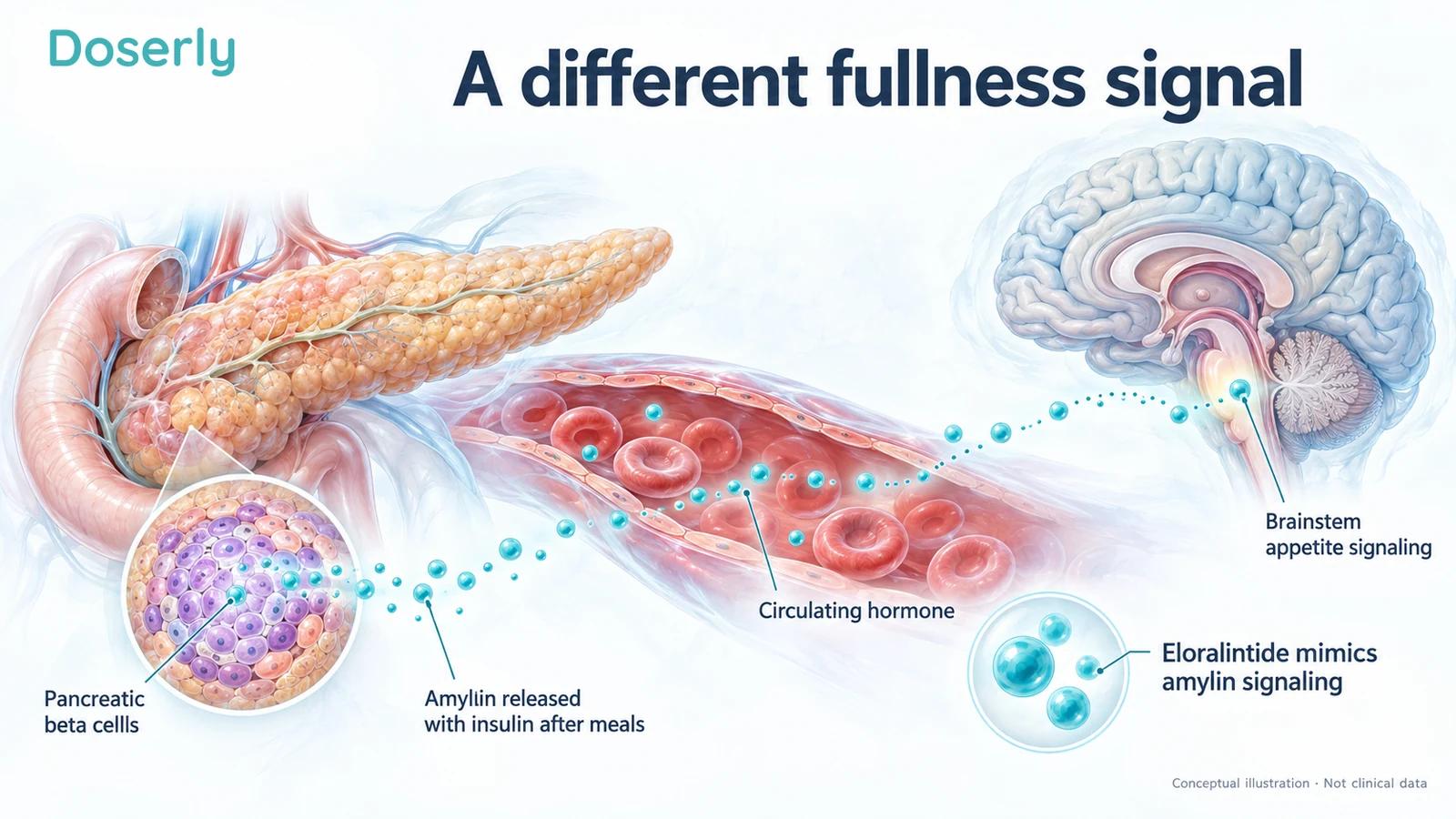
Eloralintide, previously called LY3841136, is a manufactured peptide designed to activate amylin receptors. A peptide is a chain of amino acids; a receptor is a cellular protein that responds to a signal. An agonist activates a receptor rather than blocking it.
Your pancreatic beta cells release amylin alongside insulin after eating. Insulin helps coordinate glucose handling. Amylin contributes to the signals that help regulate eating and post-meal metabolism. Brainstem regions, including the area postrema, are important parts of that system, although the biology involves a wider network. Amylin and incretin physiology
Eloralintide is engineered to last much longer than the body's brief meal-related hormone signal. Its molecular design includes modifications that support prolonged exposure and favor amylin receptor activity over calcitonin receptor activity. The discovery work found a preference for the human AMY1 receptor in laboratory assays. That describes its pharmacology; it does not mean the drug acts at only one site in a living person. Original discovery and early human study
The intended clinical result is easier appetite regulation and weight reduction. People often describe this goal as feeling satisfied with less food. That is a helpful way to understand the idea, provided we remember that a description of fullness is not the same as a measured long-term health outcome.
How is it different from GLP-1 medicines?
“GLP-1” is sometimes used casually for almost every new weight-loss injection. Scientifically, the drugs do not all belong to the same receptor class.
Treatment
Eloralintide
- Main receptor targets
- Selective amylin receptor activity
- What the distinction means
- Investigates a different hormonal approach to appetite and weight
Treatment
Semaglutide
- Main receptor targets
- GLP-1 receptor
- What the distinction means
- An incretin-based medicine with established human trial evidence
Treatment
Tirzepatide
- Main receptor targets
- GIP and GLP-1 receptors
- What the distinction means
- One molecule activates two incretin pathways
Treatment
EloraTZP
- Main receptor targets
- Amylin plus GIP and GLP-1 pathways
- What the distinction means
- Investigational combination of eloralintide and tirzepatide
The semaglutide and tirzepatide receptor distinctions are described in their original clinical studies. EloraTZP is a combination development program, not a new name for eloralintide alone. Semaglutide trial, tirzepatide trial, EloraTZP announcement
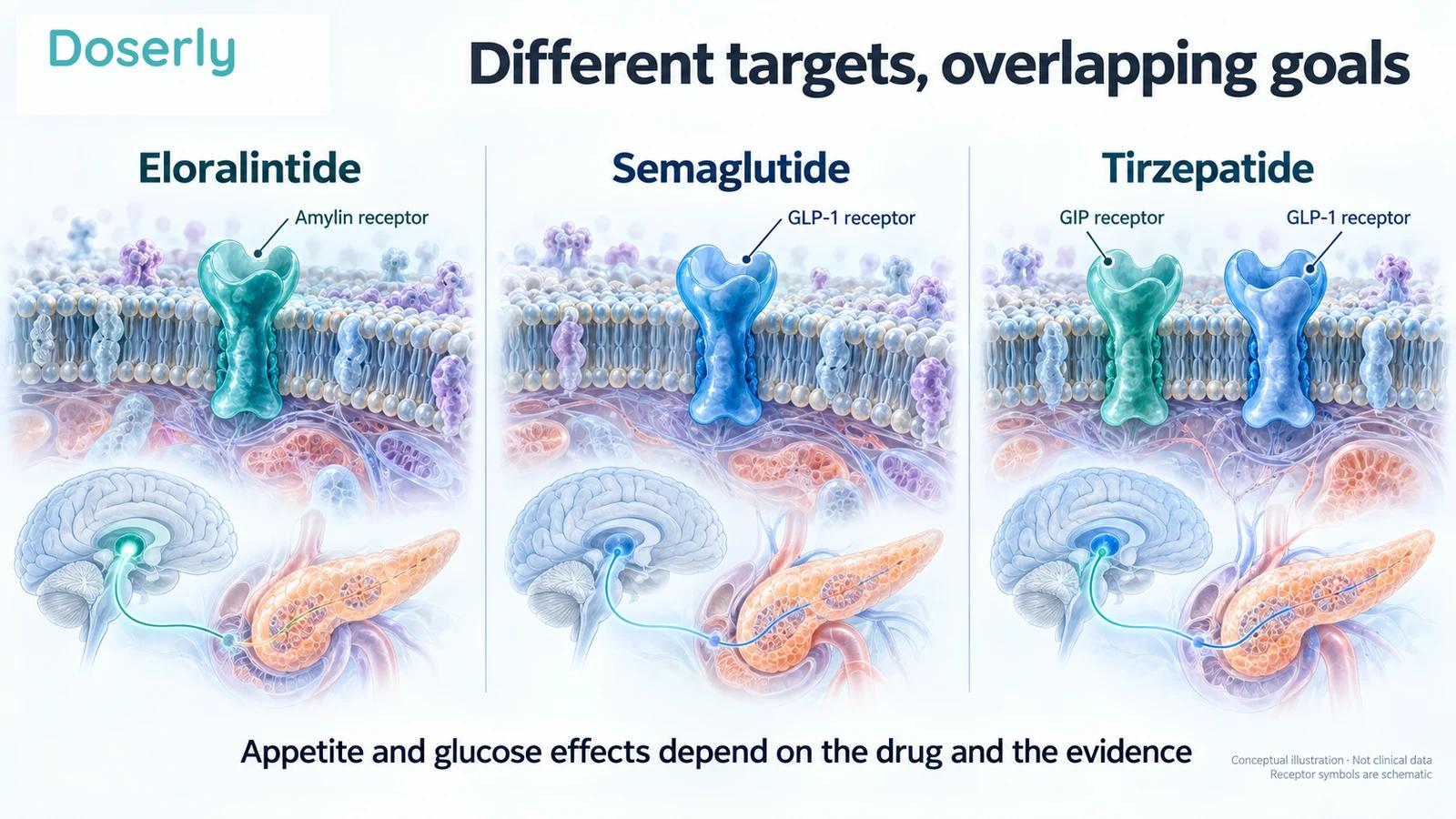
The possibility of combining complementary signals is scientifically interesting. But activating more targets is not automatically better: the added benefit has to justify added side effects, complexity and cost. That is why a combination needs its own trials rather than borrowing the reputation of its individual ingredients.
It also helps to separate eloralintide from cagrilintide. Both are amylin-based agents, but their receptor profiles and clinical programs differ. Laboratory selectivity is a rationale for testing tolerability, not proof that one will cause less nausea in patients. Our eloralintide guide explains that comparison in more detail.
The 48-week study that established the main weight-loss signal
The key peer-reviewed phase 2 study enrolled 263 adults at 46 US centers. Participants had obesity, or overweight with a weight-related condition, and did not have type 2 diabetes. They were assigned to placebo or one of six eloralintide groups for 48 weeks. The study was published online in The Lancet in November 2025. Original trial abstract
Lilly reported average weight reductions ranging from 9.5% to 20.1%, compared with 0.4% for placebo, under the trial's efficacy estimand. The groups included fixed doses and two escalation approaches. The more gradual 3-to-6-to-9 mg group averaged 16.4%, while the fixed 9 mg group averaged 20.1%. These are descriptions of research groups, not prescribing instructions. Sponsor's detailed results
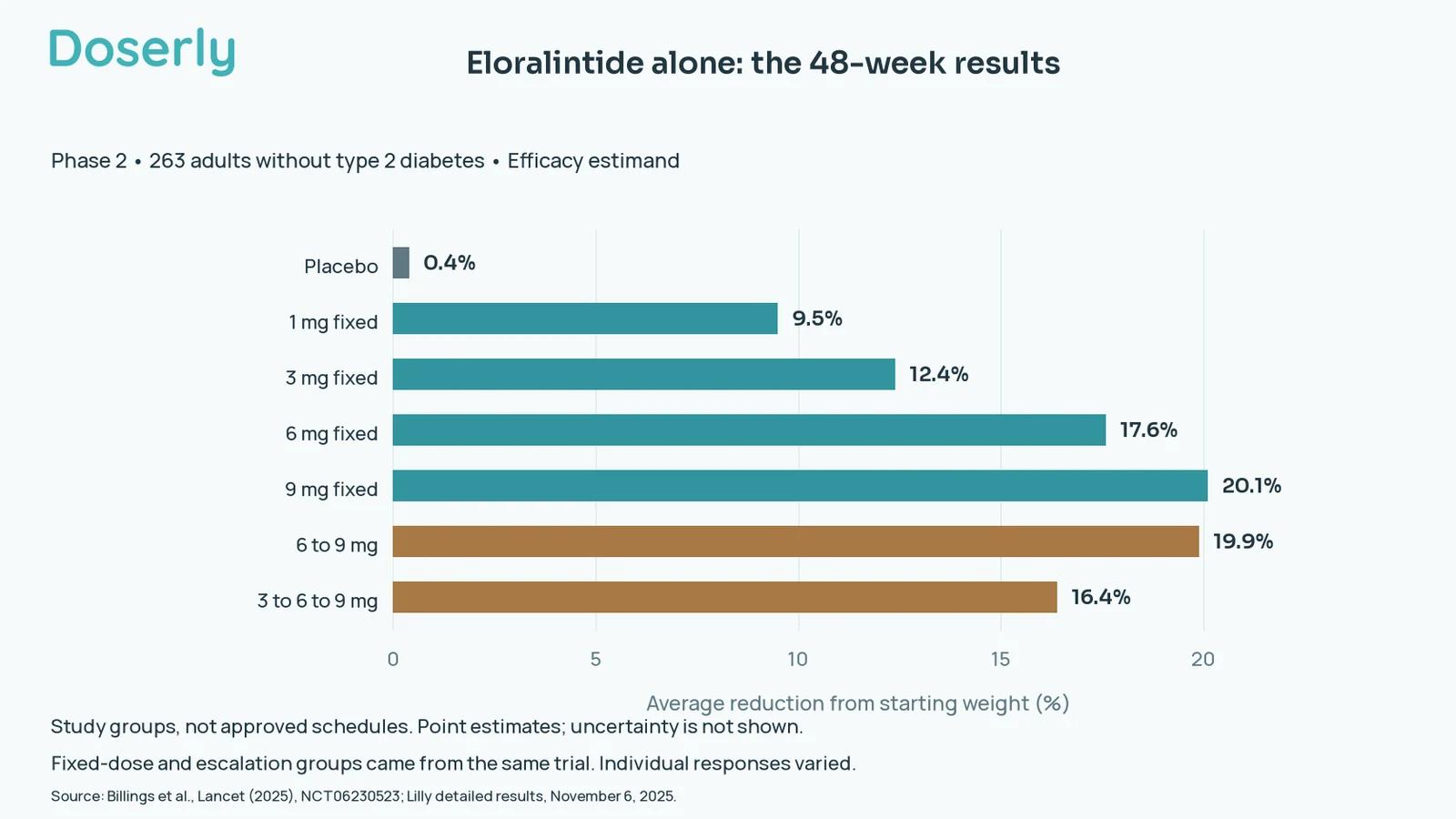
For perspective, a 20% change would be 20 kg from a 100 kg starting weight. That is only an arithmetic example: the trial's average does not promise that result to someone who starts treatment. Averages combine people with different responses, and an investigational drug's eventual use can differ from the schedules tested during development.
The study population matters, too. Most participants were women and most were White. A trial does not need to represent every possible patient to be informative, but those characteristics should temper broad claims about how everyone will respond. Trial population and methods
What does “efficacy estimand” actually mean?
An estimand defines the treatment question that an analysis is trying to answer. Here, the efficacy estimand asks about benefit under a scenario in which participants remain on the assigned intervention. The study's statistical methods address missing observations; the result is not simply the average of every person who started, regardless of what happened afterward. Registered phase 2 results
This distinction is especially useful when people stop because treatment is difficult to tolerate. An on-treatment-oriented estimate can tell us about the drug's potential when it is taken. A treatment-policy or treatment-regimen analysis asks a broader question about what happens after assignment, including discontinuation under its specified rules.
Neither question is inherently wrong. They serve different purposes. Trouble starts when a social post presents the first as though it answers the second, or compares it with a different drug's result calculated another way.
When you see a striking percentage, look for four details beside it: who was studied, how long treatment lasted, what the comparator was, and how discontinuation was handled. Without those details, a precise-looking number can still give an incomplete impression.
The latest developments: August through October 2026
August: more attention to why amylin drugs cause nausea
A review by Sophia Fischer and Tito Borner, published online on August 12, 2026, examined amylin-based treatment and tolerability. It discussed receptor pharmacology, brain circuitry, species differences and drug exposure. Its October journal issue date refers to the same review, not a separate October trial. Review record and abstract
The useful implication is that nausea cannot be reduced to a single receptor label. A selective molecule can still cause symptoms, and the amount reaching the body over time matters. This publication helps explain the research questions; it does not add a new randomized efficacy result.
September: combination evidence becomes the major news
On September 30, 2026, Lilly reported a 48-week phase 2b study involving 367 adults with overweight or obesity and type 2 diabetes. Its highest-dose eloralintide–tirzepatide combination averaged 23.3% weight reduction, versus 14.8% with tirzepatide 15 mg and 3.0% with placebo, using the efficacy estimand. September announcement
That comparison is more informative than lining up percentages from unrelated studies: the treatments were tested within the same randomized trial. It still needs to be interpreted alongside the sample sizes, analysis method and safety findings.
The findings were presented at EASD, the European Association for the Study of Diabetes meeting. The original presentation by investigator Liana Billings is available through Lilly's congress library. As reviewed here, these are conference and sponsor-reported results; they should not be described as a newly verified full peer-reviewed combination paper. EASD presentation and slides
October: phase 3 development, not phase 3 proof
The October 8 updates to the ENLIGHTEN-2, -3 and -4 registry records show ongoing recruitment and estimated primary completion dates in 2028. The questions include diabetes, obstructive sleep apnea and knee osteoarthritis pain. A registry update is evidence of study activity, not evidence that treatment improved those conditions. ENLIGHTEN-2, ENLIGHTEN-3, ENLIGHTEN-4
Lilly also described plans to begin the AMPLIFY phase 3 program for a co-formulated EloraTZP product in late 2026, with an optimized escalation schedule. A plan to start is not a completed trial or an approval date. EASD development presentation
What the new combination study adds, and what it costs in tolerability
The difference between 23.3% and 14.8% is 8.5 percentage points. That is the within-study difference between the reported weight-change estimates, not an 8.5% relative improvement. The high combination also lowered HbA1c, a measure of longer-term glucose exposure, by about 2.9 percentage points, compared with 2.4 for tirzepatide alone. Sponsor's September results table
The adverse-event findings deserve equal attention. In the high combination group, 10 of 37 participants, or 27.0%, discontinued because of adverse events, compared with 1 of 35, or 2.9%, receiving tirzepatide alone. Nausea was reported by 48.6% and 25.7%, respectively. The placebo group's adverse-event discontinuation rate was also substantial, 6 of 36 participants, which cautions against interpreting every dropout as a specific drug effect. Original conference safety tables
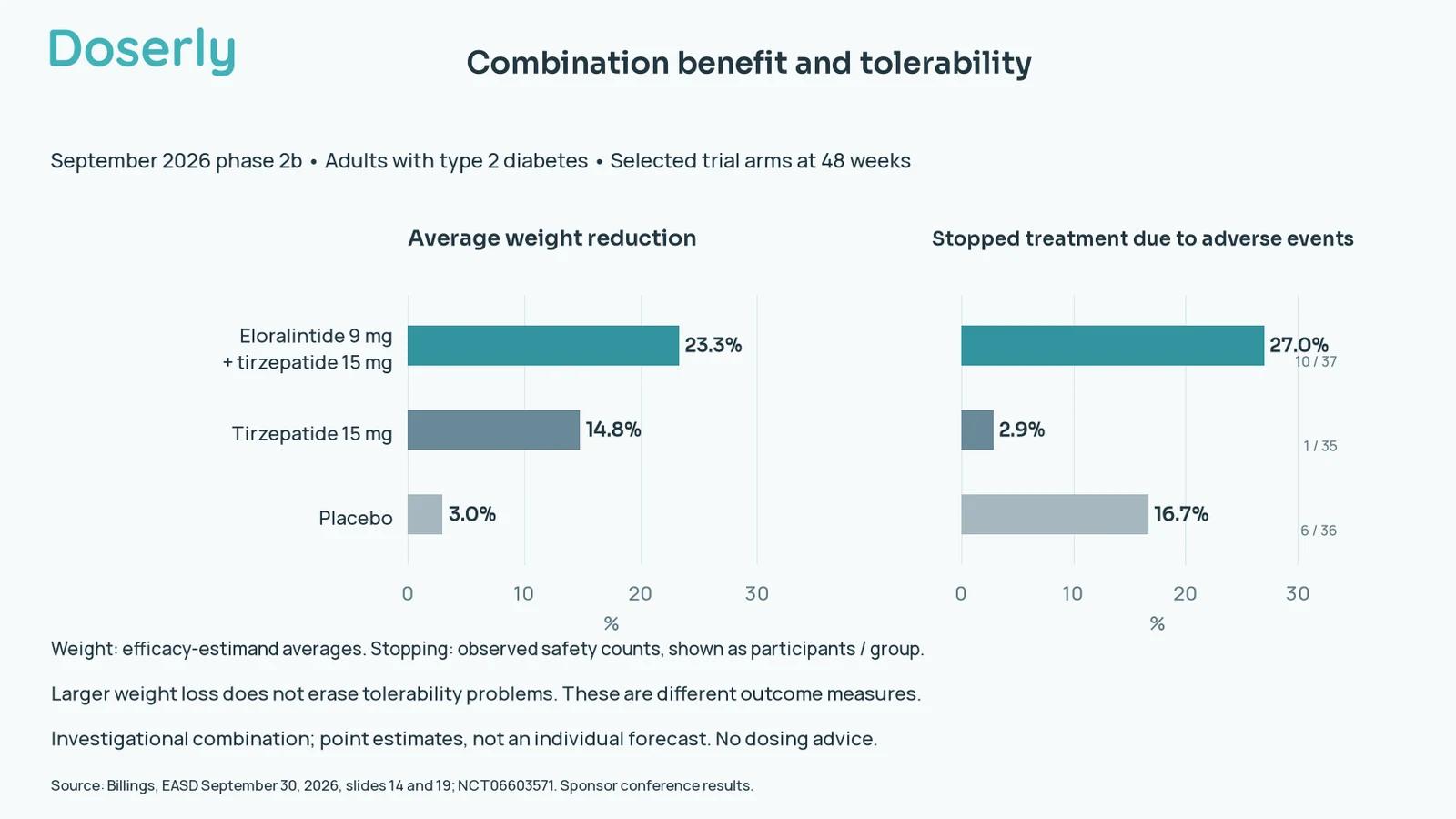
This is why “better weight loss” and “better treatment” are different judgments. Someone who cannot continue a medicine may never experience the benefit suggested by an on-treatment estimate. Conversely, a higher side-effect rate does not erase a meaningful efficacy signal. It tells developers what must improve and clinicians what would need careful evaluation if the treatment becomes available.
Another important detail: the phase 2b trial used separate injections. The planned co-formulation is a subsequent development step. Trial evidence for a specified product and monitored schedule does not validate mixing research products or creating a personal combination. Registered study
Why a two-week half-life matters
Early human research found slow absorption and a terminal half-life of approximately 13–15 days. Half-life means the time for the measured drug concentration to decrease by about half during the relevant elimination phase. It does not mean the drug disappears after that interval. Discovery and pharmacokinetic study
With repeated administration, some exposure from earlier doses remains when another dose is given. That is normal pharmacology, not necessarily a problem, but it makes the timing of dose changes important. Symptoms and benefits may not reflect only the most recent injection.
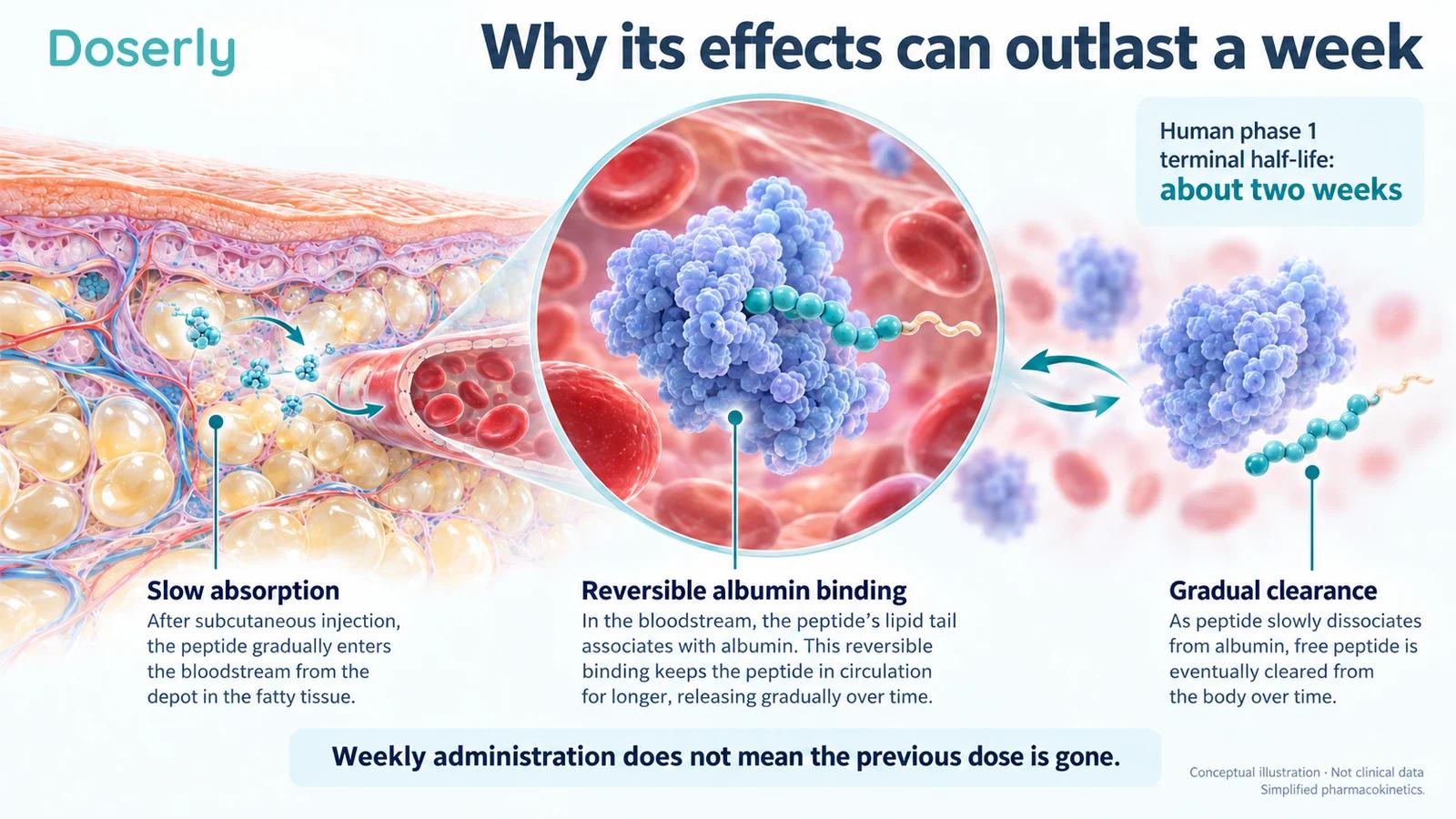
In a simple constant-dose model, approaching a stable exposure pattern generally takes several half-lives. That is a teaching principle, not an exact eloralintide prediction: absorption, dose escalation and individual variation also matter. It would be misleading to turn the half-life into a home dosing schedule or a guaranteed date when symptoms will resolve.
The early multiple-dose paper reported relatively flat concentrations across the weekly interval. That supports the rationale for weekly investigation, but it does not establish that more frequent injections would be safer or that an unstudied schedule would improve results. Published phase 1 proof-of-concept study
Does it work mainly by slowing the stomach?
Amylin biology includes effects on gastric emptying, the movement of food from the stomach into the small intestine. But it would be too simple to explain eloralintide's weight-loss effect as food sitting in the stomach for longer. Appetite-related brain signaling is also central to the rationale. Amylin physiology
The multiple-dose phase 1 study used acetaminophen absorption as an indirect measure of gastric emptying. It found an initial mild effect that diminished with repeated treatment. That measurement does not capture every aspect of digestion, but it argues against assuming that the initial stomach effect stays unchanged throughout treatment. Phase 1 gastric-emptying assessment
This helps explain why a symptom is an unreliable guide to efficacy. Feeling nauseated is not a measurement of fat loss, and having fewer digestive symptoms does not prove a drug has stopped working. Researchers need repeated weight measurements, glucose measures where relevant, and patient-reported outcomes rather than relying on a sensation alone.
Is it gentler than GLP-1 treatment?
There is a reasonable hypothesis here, but no universal answer. Eloralintide was designed for selective amylin activity, and some early groups had relatively few gastrointestinal events. In the larger phase 2 monotherapy study, gastrointestinal symptoms and fatigue were more frequent at higher doses; slower escalation appeared more tolerable. Phase 2 sponsor report
The public registry's safety results also show that nausea was not rare in every group. For example, it affected 18 of 28 participants receiving fixed 6 mg, compared with 7 of 53 placebo recipients in the registry table. That is incompatible with a blanket claim that a selective amylin drug causes no nausea. Registered adverse-event tables
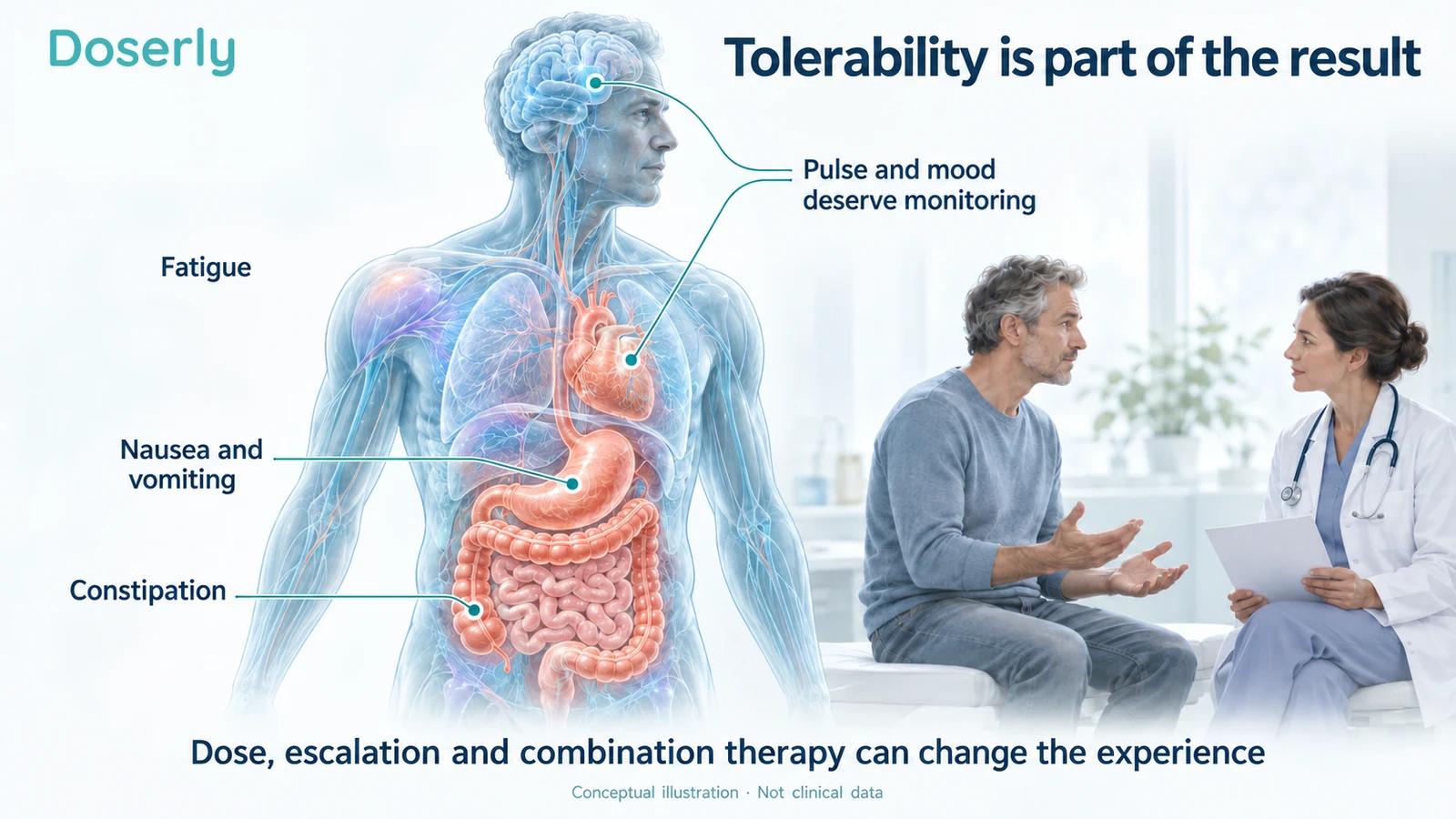
The phase 1 multiple-dose report described pulse reductions and a small number of mood-related events at higher doses. There were four participants with mood-related reports; the study was too small to establish how often this would occur in wider use or whether every event was caused by treatment. Such signals belong in follow-up research rather than being ignored or presented as settled causal risks. Phase 1 safety findings
For readers following a prescribed weight-management treatment now, the practical lesson is to record more than weight. Appetite, bowel symptoms, energy, hydration concerns and changes in functioning can help a clinician understand whether a plan is tolerable. Persistent or severe symptoms need clinical assessment rather than repeated unsupervised adjustments.
Can we rank it against semaglutide or tirzepatide yet?
The original monotherapy trial compared eloralintide with placebo, not semaglutide. Its highest average cannot establish superiority over a medicine studied for a different duration, in a different population, with a different estimand.
The importance of direct comparison is illustrated by SURMOUNT-5, which randomized adults without diabetes to tirzepatide or semaglutide for 72 weeks. That trial directly addressed a specific comparison between those treatments. It did not include eloralintide, so its conclusions cannot be extended to rank all three. Original head-to-head trial
The September combination study does provide direct evidence against tirzepatide within its own population. But that population had type 2 diabetes, and the experimental intervention included both drugs. “EloraTZP outperformed tirzepatide on this weight endpoint” does not mean “eloralintide alone outperforms tirzepatide.”
A useful comparison asks about the whole treatment: weight change, glucose control, ability to stay on treatment, longer-term outcomes, convenience and access. No single percentage answers all of those questions.
What remains to be demonstrated?
The phase 3 program separates several clinically important questions:
- ENLIGHTEN-1: weight management without type 2 diabetes, with an estimated 1,980 participants. Trial record
- ENLIGHTEN-2: weight management with type 2 diabetes. Trial record
- ENLIGHTEN-3 and -4: sleep apnea and knee osteoarthritis pain, alongside weight outcomes. Sleep apnea study, knee study
- ENLIGHTEN-6: persistent obesity during weekly incretin treatment, testing eloralintide as an add-on against placebo. Add-on study
These records were checked on October 18, 2026. Their estimated dates can change, and recruitment at a particular clinic can differ from the overall registry status.
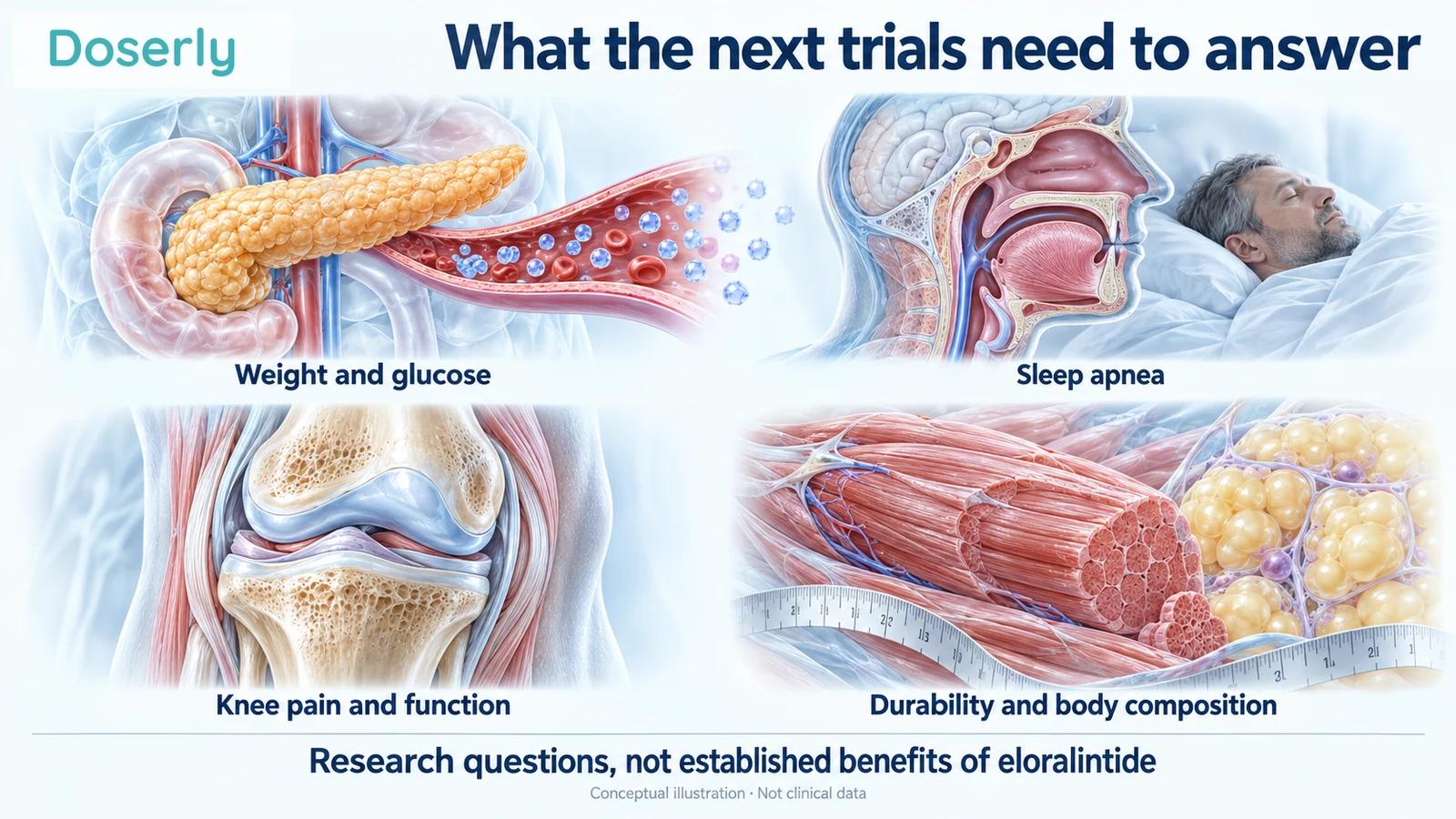
Beyond the scale, readers should watch for durable benefit, physical function and the composition of weight lost. Losing weight is not the same measurement as preserving muscle. Encouraging body-composition findings in experimental models cannot settle the human question. The discovery publication contains both laboratory and human work, which need to be kept distinct. Original translational research
Long-term safety also requires larger exposure and follow-up. A few hundred participants followed for months cannot reliably identify every uncommon adverse effect. Nor do improved risk markers automatically prove fewer heart attacks, strokes or deaths. Those outcomes need their own evidence.
Following the news without turning each headline into a treatment change
A September 28, 2026 review of newer amylin-based agents provides helpful context, but its literature search ended in June. It therefore cannot replace the September 30 combination results. Publication date and evidence cutoff are different dates. Recent review
For future updates, look for the original paper, conference presentation or registry record. Ask whether it reports new patients and results, or simply explains existing work. A press release can be a useful primary source for an announcement, while still selecting the findings a sponsor wants to emphasize.
For eloralintide specifically, the next useful developments will be fuller combination reporting, confirmation of the planned phase 3 program, and eventual ENLIGHTEN results. An estimated study completion date should not be treated as a promised pharmacy launch. Until approval, clinical-trial participation is a separate decision from ordinary prescribing, with eligibility and monitoring determined by the study team.
Keep your current treatment history clear with Doserly
Following new research is easier when you also have a clear record of the treatment you are actually using. If a clinician has prescribed a GLP-1 or related medicine, Doserly can help organize medication schedules, reminders and dose history. Bring that record, together with your questions and relevant symptom notes, to appointments instead of relying on memory.
Tracking supports a conversation; it does not decide which medicine to take, diagnose a side effect or make an investigational peptide appropriate for self-treatment. The useful goal is continuity: knowing what was taken, when it was taken and what needs discussing before a clinician changes the plan.
For more depth on the underlying peptide, continue to the eloralintide guide. The current research gives good reasons to follow its development: a different target, meaningful human weight-loss findings and a promising combination signal. Its eventual place in treatment will depend on whether those benefits remain convincing alongside tolerability, durability and larger safety studies.