
Peptides
October 16, 2026
Does more growth hormone explain better sleep with ipamorelin?
On this page
Sleep and growth hormone are connected. In people, a substantial GH release can occur around the onset of deep sleep, and sleep timing can influence when that release happens. It is understandable to wonder whether a peptide that raises GH might therefore help someone sleep better.
For ipamorelin, however, that treatment question remains unanswered by the main human studies reviewed here. The published human pharmacology work measured hormone responses. The clinical trial investigated bowel recovery after surgery. Neither was a trial showing that ipamorelin treats insomnia or improves next-day functioning. Hormone study; postoperative trial.
There is a small sleep study involving MK-677, also called ibutamoren, that is frequently drawn into this discussion. It is relevant to the wider pathway, but MK-677 is a different compound. Looking closely at that distinction helps explain both the biological interest and the limits of the claim.
Why GH and deep sleep are discussed together
Growth hormone is released in pulses rather than at a steady rate all day. A classic physiology study measured hormones and sleep recordings over 38 nights in eight young adults. In seven participants, a GH peak appeared with the onset of deep sleep. Delaying sleep onset also delayed the GH peak. Takahashi and colleagues.
The researchers were observing the relationship between sleep and hormone secretion. Their work supports the idea that sleep state and endocrine timing are linked. It does not show that administering a GH secretagogue reverses insomnia.
The direction matters. If sleep onset helps organize a hormone pulse, increasing that hormone by another route need not reproduce the brain processes that allow sleep to begin. Two biological events can share regulatory mechanisms without one being a dependable treatment for the other.
A useful everyday comparison is the difference between measuring a response and treating a problem. A blood sample can show that a peptide has affected the pituitary. It cannot tell you whether someone lay awake for an hour, woke repeatedly, or struggled to stay alert the next morning. Those experiences require their own measurements.
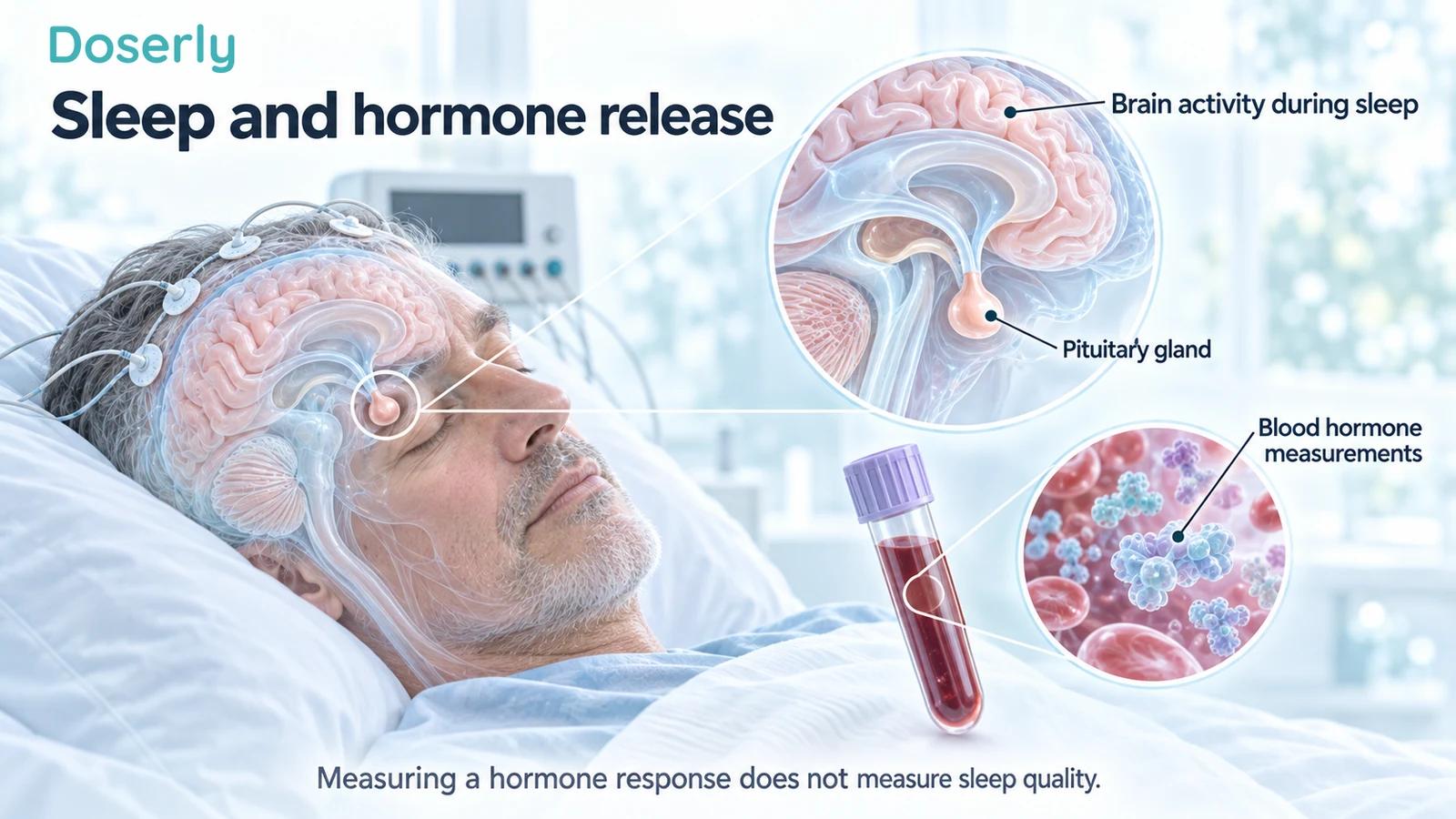
What did the ipamorelin hormone study establish?
The 1999 study gave intravenous ipamorelin at five dose levels to healthy male volunteers, with eight men at each level. Researchers measured the drug's blood concentrations and GH release. A GH peak occurred at about 0.67 hours, and the estimated terminal half-life of ipamorelin was approximately two hours. Original pharmacology study.
That is evidence of a biological response in people. It is not evidence that the response was timed to improve sleep, or that a larger response produced a better night. The study's main purpose was to model how drug exposure and GH secretion related to one another.
It also used intravenous infusion. Translating those measurements into a bedtime injection schedule under the skin would require information about absorption, formulation, repeated exposure and sleep outcomes. The published half-life alone does not supply that information.
This distinction is especially relevant when someone describes a “natural pulse.” A pulse can resemble one feature of normal endocrine physiology while differing in timing, amplitude or context. Whether it improves a symptom is still a clinical question.
The often-cited sleep study used MK-677
A 1997 study examined an orally active GH secretagogue, MK-677, in small groups of younger and older adults. In the younger group, eight participants aged 18–30 completed three seven-day treatment periods in a randomized, blinded, placebo-controlled crossover design. Each person received the different conditions at separate times.
At the higher studied dose, the investigators reported more stage IV sleep and more rapid eye movement, or REM, sleep than with placebo. Stage IV is terminology from the sleep-scoring system used at the time; it should not be casually equated with a modern watch's “deep sleep” score.
The older group consisted of six adults aged 65–71. They received two active-dose periods, with baseline measurements before treatment. This was not the same placebo-controlled crossover comparison used in the younger participants. Reported REM changes in that group therefore need to be interpreted against a different design. MK-677 sleep study.
These findings made further sleep research reasonable. They do not establish a durable treatment for chronic insomnia, and they do not establish an ipamorelin effect. Small studies can also be sensitive to individual participants and to which of several sleep measurements is emphasized.
Why a shared receptor pathway is not enough
MK-677 and ipamorelin are both discussed in relation to ghrelin-receptor signaling and GH release, but they are not interchangeable medicines. One is an orally active nonpeptide compound; the other is a synthetic peptide investigated through intravenous administration in the human papers above. Their exposure patterns and pharmacology differ.
For sleep, those differences may be particularly important. A compound present through much of the night could behave differently from a brief exposure. Effects might depend on when the brain encounters the signal, the person's baseline sleep pattern, age or other medicines. A related-drug study cannot resolve those possibilities for ipamorelin.
Nor does the MK-677 study establish that GH itself caused every sleep change. A drug can influence several processes through its signaling pathway. Demonstrating mediation would require more than showing that sleep measurements and GH both changed during treatment.
The practical point is not to dismiss related research. It is to keep its role clear: it can provide a reason to test ipamorelin directly, rather than serve as the completed test.
What would count as better sleep?
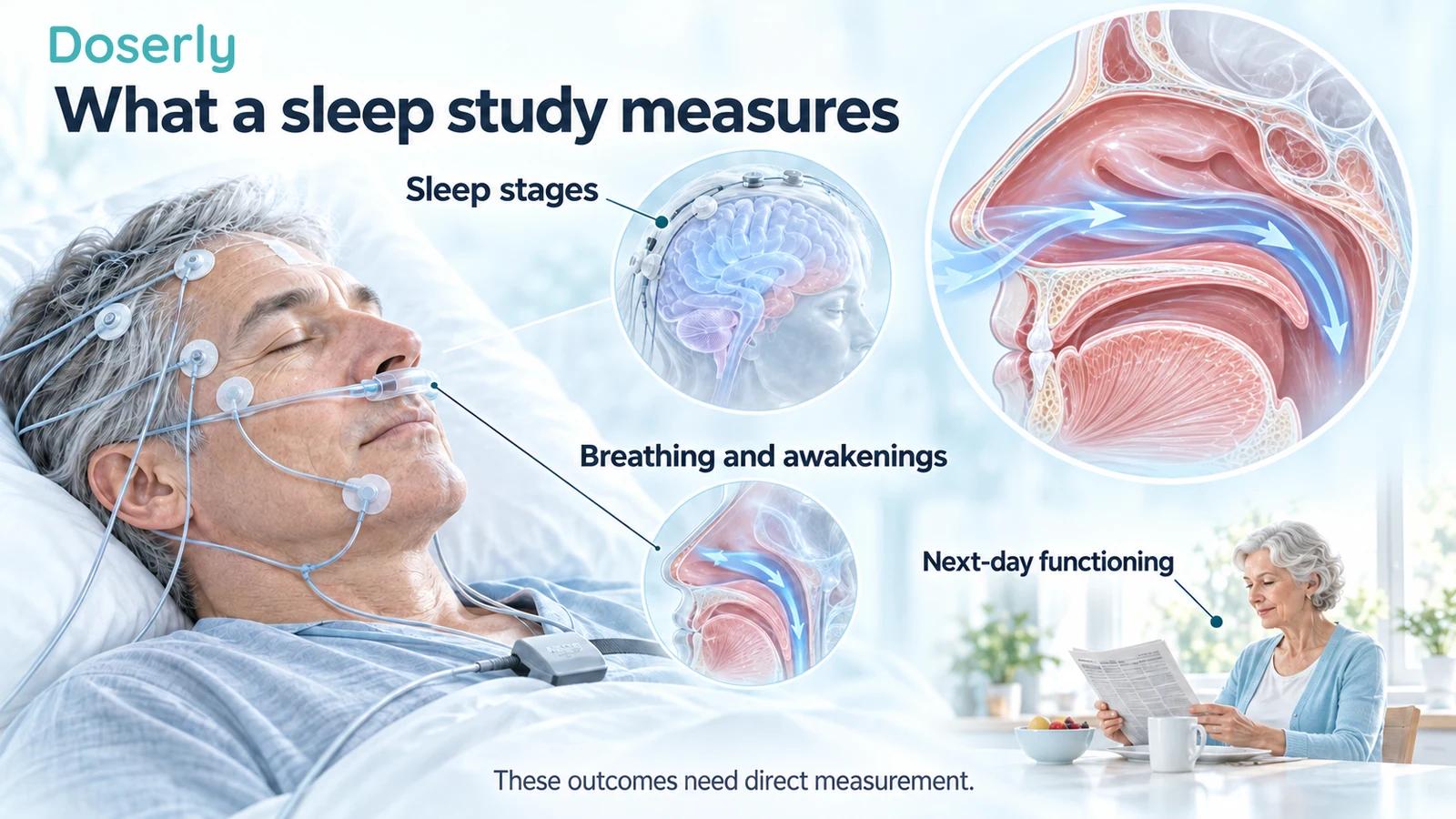
“Better sleep” can mean several things. Someone with difficulty falling asleep may care most about sleep-onset latency: the time it takes to fall asleep. Someone who wakes repeatedly may care about time awake after first falling asleep. Another person may sleep for many hours yet remain unrefreshed.
Sleep architecture describes how time is distributed across stages and how those stages unfold during the night. It is usually assessed using recordings that include brain electrical activity. An increase in one stage does not by itself tell us whether the person feels better or functions better.
Breathing is another dimension. A person may have repeated breathing interruptions, even if they believe they slept through the night. Sleep studies can help identify the type and severity of sleep apnea, while a diary can document perceived sleep, timing and daytime sleepiness. NHLBI diagnostic guidance.
A convincing treatment study would connect these measures to the problem being treated. For chronic insomnia, improved symptoms and daytime functioning would matter alongside laboratory sleep recordings. It would also report unwanted effects and whether any improvement persisted.
The surgical trial does not fill the sleep-evidence gap
The ipamorelin bowel-recovery trial involved hospitalized adults after intestinal surgery. Treatment lasted up to seven days or discharge. Its central efficacy question concerned tolerance of a solid meal, not sleep. Surgery, pain, hospital routines and other treatments create a very different setting from ordinary insomnia care. Trial report.
FDA's review lists insomnia among reported adverse events: 10.7% in the ipamorelin group and 5.2% with placebo. These small numbers do not prove that ipamorelin causes insomnia, and the trial was not designed to make a precise sleep comparison. They do show why it would be inappropriate to treat that study as evidence of a reliable sleep benefit. FDA review.
Likewise, the authors' description of short-term tolerability does not establish that repeated bedtime use is safe. The setting, route and duration remain part of the evidence. Moving from a monitored postoperative infusion to ongoing outpatient use changes several things at once.
What if someone genuinely feels that their sleep improved?
A person's experience can be real without identifying the mechanism. Starting a new treatment often coincides with changes in bedtime, meal timing, exercise, alcohol use or other medications. Sleep also varies from night to night. An improvement after starting ipamorelin does not, by itself, show that a GH increase caused it.
This does not mean that the person should be told they imagined the improvement. It means that describing the improvement carefully is more useful than assigning a mechanism too quickly. Did falling asleep become easier? Were there fewer awakenings? Was daytime sleepiness reduced? Did the change persist?
A record can help distinguish these experiences. Note approximate bed and wake times, awakenings, naps, relevant medicines and how you felt during the day. Do not convert a wearable's stage estimate into proof of a GH-mediated treatment effect. The claim would require a validated measurement and an appropriate comparison.
If several compounds were started together, identifying the contribution of one becomes harder. A combination anecdote cannot establish an ipamorelin-specific benefit or reveal whether one component added adverse effects.
Persistent poor sleep deserves a specific clinical assessment
The most useful next step depends on the problem. Loud snoring, witnessed breathing pauses, gasping or marked daytime sleepiness are reasons to discuss sleep apnea with a clinician. These features are not diagnosed by a hormone result. NHLBI symptom guidance.
For chronic insomnia, the American Academy of Sleep Medicine recommends multicomponent cognitive behavioral therapy for insomnia, or CBT-I. It combines structured approaches to sleep behavior and sleep-related thinking. The guideline does not treat simple sleep-hygiene advice as an adequate stand-alone treatment. AASM guideline.
This offers a more useful clinical starting point than assuming a low hormone response explains every poor night. A clinician can consider the sleep pattern, breathing symptoms, pain, mood, schedule and medicines, then choose an assessment or treatment that addresses the actual problem.
Someone who is already using ipamorelin should include it in that discussion, along with the product source and any other peptides or hormones. An accurate list helps the clinician assess the whole situation.
What should you ask about a proposed sleep benefit?
Ask whether the supporting study administered ipamorelin itself. Then ask whether participants had the same sleep problem you do and whether improvement was measured directly. A study of healthy volunteers is not automatically a treatment trial for chronic insomnia.
The duration and comparator matter too. A few nights of laboratory sleep are different from sustained improvement over months. A comparison with a person's own baseline is more vulnerable to normal fluctuation and expectations than an appropriate blinded control.
Finally, ask what result would count as meaningful improvement and what would prompt reassessment. “A higher GH reading” is not an adequate definition if your goal is to wake refreshed and function well during the day.
The present evidence supports a relationship between sleep and the GH system, plus limited sleep findings for a different secretagogue. It does not establish ipamorelin as a sleep treatment. Our ipamorelin guide explains the wider pharmacology and safety questions, while a specific sleep assessment can help identify what is most likely to improve your nights.
Explore the research
- Growth hormone secretion during sleep (1968): Physiology study, not ipamorelin treatment or proof that raising GH treats insomnia.
- Pharmacokinetic-pharmacodynamic modeling of ipamorelin, a growth hormone releasing peptide, in human volunteers (1999): Acute intravenous study; no chronic sleep or muscle efficacy endpoints.
- Prolonged oral treatment with MK-677, a novel growth hormone secretagogue, improves sleep quality in man (1997): MK-677 is not ipamorelin; small, short studies with different designs by age.
- Prospective, randomized, controlled, proof-of-concept study of the Ghrelin mimetic ipamorelin for the management of postoperative ileus in bowel resection patients (2014): Abstract via Europe PMC freshly reviewed; full safety details cross-checked against FDA; small heterogeneous surgical sample.
- FDA Briefing Document: Ipamorelin-Related Bulk Drug Substances, October 29, 2024 (2024): Advisory briefing, not itself a final legal determination; safety events do not prove causality.
- Behavioral and psychological treatments for chronic insomnia disorder in adults: an American Academy of Sleep Medicine clinical practice guideline (2021): Clinical guideline for diagnosed chronic insomnia, not a peptide trial.
- Sleep Apnea — Symptoms (2025): Symptoms are not diagnostic by themselves.
- Sleep Apnea — Diagnosis (2025): Does not validate consumer sleep-stage estimates or endocrine treatment.