
Supplements
October 16, 2026
Does an athlete need a different multivitamin—or a clearer nutrition assessment?
On this page
The word “sport” on a multivitamin suggests that training creates a special nutritional problem and that the bottle has already solved it. It is an appealing shortcut when sessions get harder, recovery feels slower or a competition approaches.
But athletes do not all arrive at the same starting point. Someone eating enough varied food, someone avoiding all animal products without a reliable vitamin B12 source, and someone with iron deficiency are facing different questions. A formula marketed to all three cannot diagnose those differences.
The useful first question is not whether athletes deserve a stronger multivitamin. It is what, specifically, is missing—and whether a supplement is the right way to address it. That distinction makes room for appropriate supplementation without turning every difficult training week into a reason to take more.
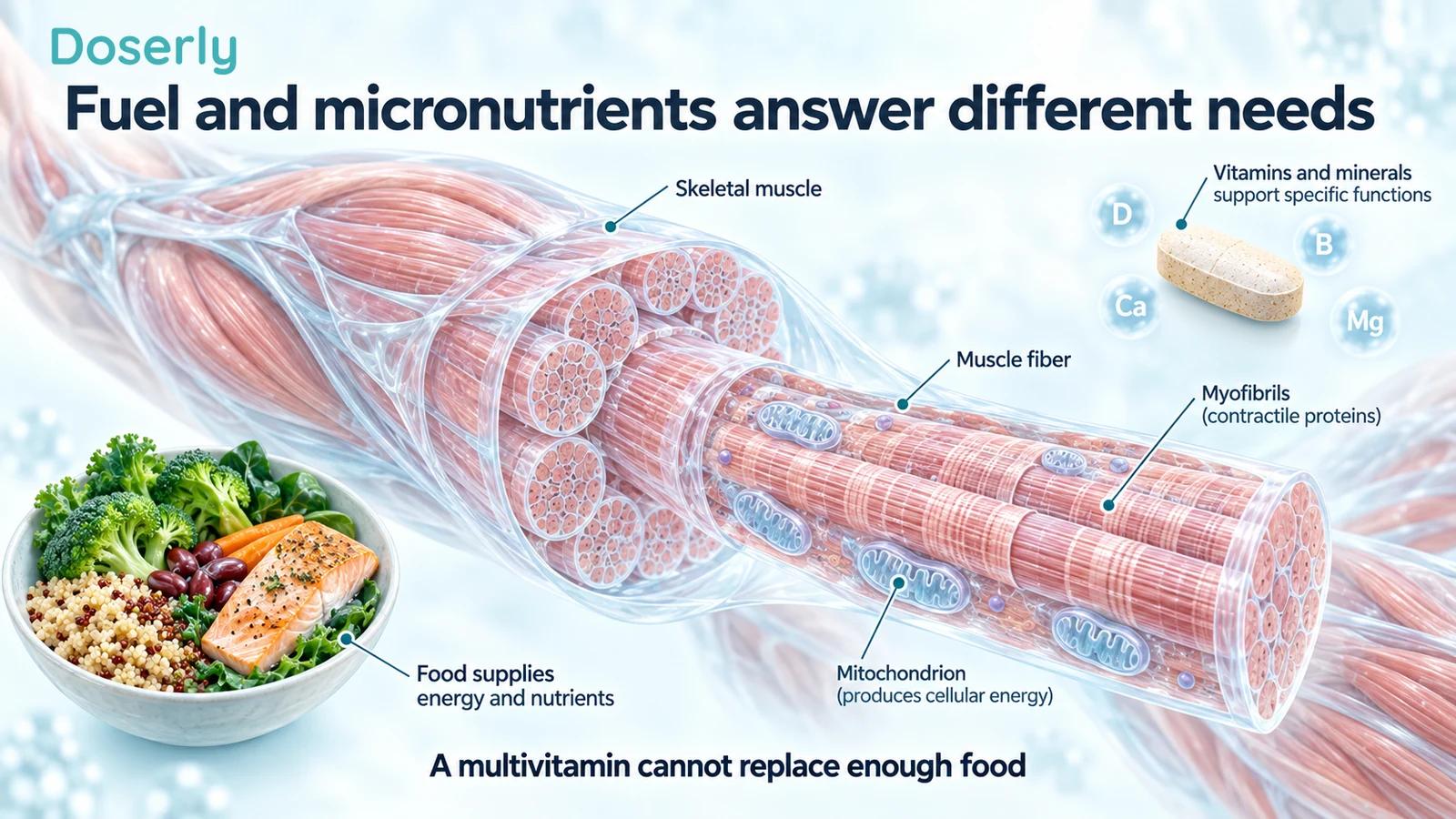
“Multivitamin” does not describe one standard intervention
The NIH Office of Dietary Supplements notes that multivitamin and multivitamin/mineral products have no standard composition. Manufacturers choose which ingredients to include and in what amounts. Specialty products marketed for athletic performance may add botanicals or other compounds, and some provide nutrient amounts well above ordinary daily reference values. NIH multivitamin/mineral reference.
That makes the category difficult to evaluate as though it were one treatment. Two bottles can share the same marketing language while differing substantially in iron, vitamin D, B vitamins and additional ingredients.
It also changes what a study can establish. Research on one preparation is evidence about that preparation and population. A trial in older adults studying cognition, for example, does not directly answer whether a different product improves sprint performance in well-nourished young athletes.
Before comparing claims, identify the actual product: its full ingredient list, serving size and purpose. “Supports energy metabolism” describes a biological role. It does not tell you whether extra intake improves your training when that nutrient is already adequate.
What happened when athletes already met dietary recommendations?
A double-blind study published in 1992 followed 82 athletes from basketball, gymnastics, rowing and swimming through seven to eight months of training and competition. Matched subgroups received a vitamin/mineral supplement or placebo, and investigators monitored diets to ensure recommended vitamin and mineral intakes were provided by food.
The broad result offered little evidence of improved athletic performance. There was a subgroup exception: female basketball players receiving supplements showed increased jumping ability alongside changes in weight and skinfold measurements. The overall findings therefore should not be summarized as literally no differences anywhere, but they did not establish a general performance advantage. Read the athlete study.
This is an old study of a particular preparation, not the final word on every modern formula. Its enduring value is the question it asked: what happens when a broad supplement is added after dietary needs are already being met?
That question differs from treating a deficiency. If a nutrient is limiting a physiological function, correcting it may help. Once adequacy is established, extra intake needs its own evidence; the importance of the nutrient alone cannot supply that evidence.
Targeted iron research illustrates the other situation
In a 2002 randomized trial, 41 previously untrained women with depleted iron stores but without anemia received iron or placebo for six weeks. Both groups also undertook aerobic training during the final four weeks. The iron group showed greater improvement in maximal oxygen uptake, with the beneficial pattern concentrated among participants who had poorer iron status at baseline. Read the primary iron trial.
This supports taking iron status seriously. It does not support routine iron for every athlete. The participants were selected for depletion, were not already trained athletes, and received a targeted intervention rather than a general multivitamin.
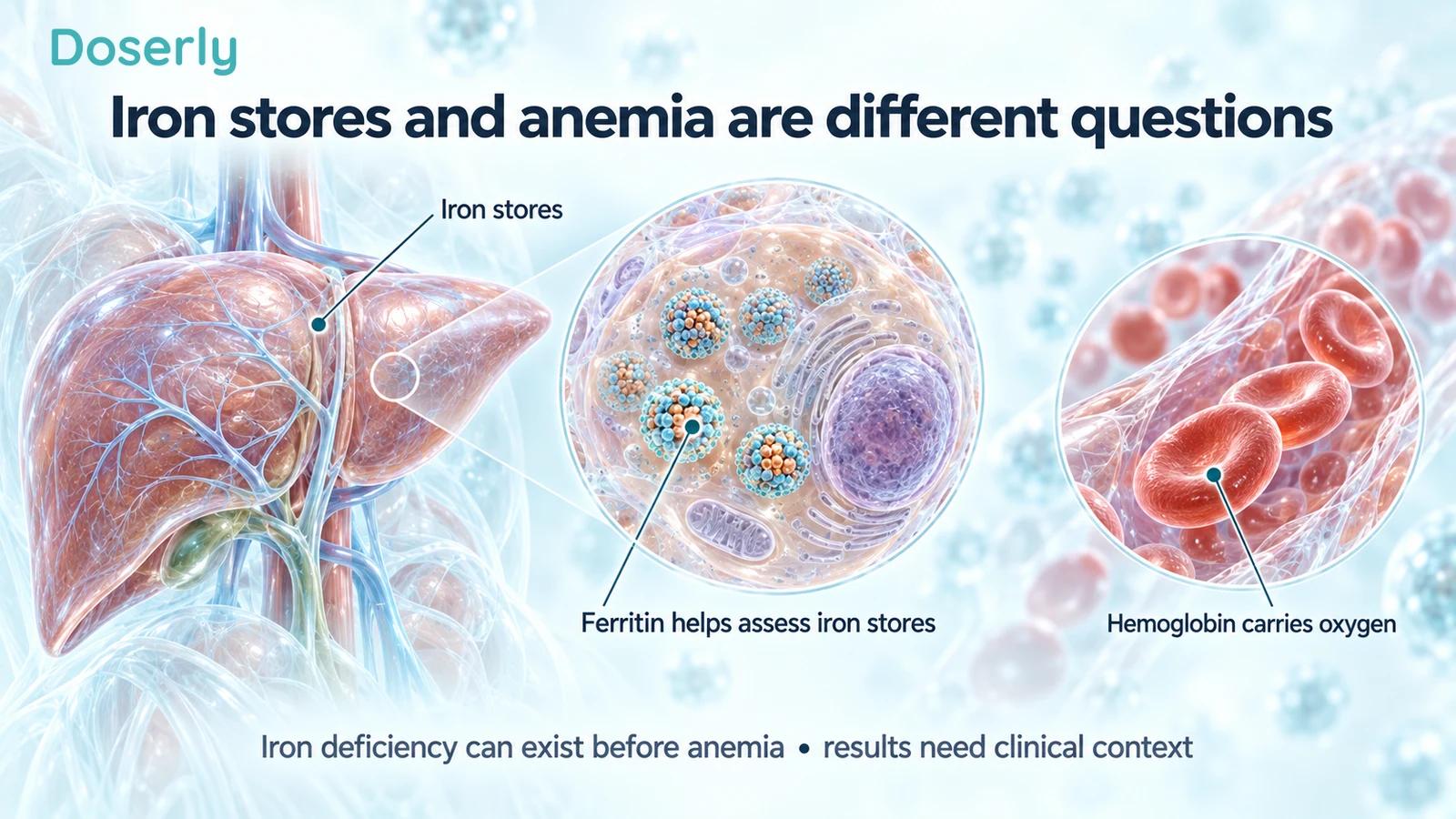
The distinction between iron depletion and anemia also matters. Iron stores can fall before hemoglobin becomes low. Ferritin can help assess stores, but inflammation affects its interpretation, so clinicians may consider several measurements and the person's history together. NIH iron reference.
A normal hemoglobin result therefore cannot answer every iron question. Equally, fatigue alone cannot diagnose iron deficiency. The appropriate response is an assessment that can connect symptoms, diet, blood loss, training and laboratory findings.
This is why the presence of iron on a sports label is not automatically an advantage. For one person it may be unnecessary; for another, a standard multivitamin may not be the right treatment for the diagnosed problem. More iron is not a substitute for knowing which situation applies.
A nutrient gap and inadequate food intake are not interchangeable
Training also raises a question that a vitamin label cannot answer: is enough food available to support both exercise and the rest of the body's functions?
The International Olympic Committee describes Relative Energy Deficiency in Sport, or REDs, as a syndrome of harmful health and performance effects associated with problematic low energy availability. It can affect male and female athletes. The concept involves energy intake relative to exercise demands, not simply whether someone took a complete-looking supplement. Clinical assessment is needed; an occasional low-intake day does not by itself establish the syndrome. IOC consensus statement.
The REFUEL randomized trial provides a concrete example of why the distinction matters. It studied 76 exercising women with infrequent or absent menstrual periods. Over twelve months, those assigned to increase energy intake were more likely to experience menses than those assigned to maintain intake. The trial had substantial dropout, and its definition of recovery did not establish the quality of every recovered cycle. Read the REFUEL trial.
This was a food-energy intervention, not a comparison between multivitamins. It does not yield a universal calorie prescription. It does show why adding micronutrients cannot be assumed to address the underlying problem when insufficient energy availability is involved.
If the concern is persistent fatigue, recurrent injuries or menstrual changes, a stronger supplement should not become the endpoint of the conversation. Those patterns deserve attention to the broader training and health context.
What a useful nutrition assessment actually asks
Start with an ordinary week, including demanding training days, lighter days and travel. The goal is to understand the routine you really follow, not to assemble a perfect-looking sample menu.
Consider access as well as intention. A person may understand nutrition yet regularly miss meals because of an early shift, an evening session or limited food options on the road. Another may remove whole food groups for ethical, gastrointestinal or practical reasons. These situations suggest different solutions.
For someone following a vegan diet, vitamin B12 is a specific planning issue. Naturally occurring food sources are largely animal-derived; appropriately fortified foods and supplements can provide reliable alternatives. Absorption problems can create a different B12 issue even when intake appears adequate. NIH vitamin B12 reference.
A sports dietitian can help translate the food pattern into likely gaps. A clinician can decide when symptoms, medical history or other findings justify laboratory testing. The two roles complement each other: a food record cannot measure a blood concentration, and a laboratory panel cannot show why meals keep getting missed.
The outcome of the assessment should be more specific than “athletes need more.” It might identify a reliable food source, a targeted supplement, a practical meal change or a medical issue requiring further evaluation. It may also show that a broad supplement adds little to an already adequate routine.
How to read a label after the need is clear
Once a purpose is identified, the ingredient list becomes easier to interpret. Check the amounts per actual serving, including whether the serving requires several tablets. A daily-value percentage is a reference for interpreting intake; it is not an athlete performance score.
For example, a fictional label with a very large B-vitamin percentage and a modest amount of iron is not necessarily “stronger” for the person whose relevant issue is iron depletion. Another formula might omit iron entirely. The correct comparison depends on the identified need and the plan for addressing it.
Look beyond the vitamins and minerals. Added caffeine, herbal extracts or a proprietary performance blend can turn a simple nutrition supplement into a more complicated combination. Those ingredients need their own rationale and interaction review.
The Doserly sport/performance multivitamin guide offers broader context for the category. When reviewing an actual product, keep the full label available rather than relying on the front-of-bottle promise. The back panel is where a general claim becomes a concrete exposure.
Add up overlapping products
A multivitamin may be only one source of a nutrient. Separate vitamin D, iron, zinc, magnesium, fortified drinks and other products can overlap. The NIH reference warns that multivitamin use can increase the chance of exceeding upper intake levels for some nutrients, especially when combined with other sources. NIH multivitamin/mineral reference.
A practical review lists each product, the amount actually taken and how often it is used. It should include items taken only on training days, because “occasionally” can still mean several times a week.
Keep units intact. Milligrams and micrograms are not interchangeable, and the number of tablets may not equal the number of servings. When a treatment plan already specifies a nutrient, bring the multivitamin label into that discussion before adding it.
Iron deserves particular care because unnecessary high intake can cause harm, and supplements should be kept away from children. The reason to document it is to make an accurate assessment possible, not to encourage self-directed treatment from a fatigue checklist. NIH iron safety information.
Product quality is a separate decision
An athlete can have a sound nutritional reason for supplementation and still need to consider contamination or labeling risk. That is particularly important in tested sport.
USADA recommends NSF Certified for Sport as a way to reduce supplement risk while making clear that it cannot remove all risk. Certification applies to specific products and the program's scope; it is not a guarantee that every product from a familiar brand has the same verification. USADA Supplement Connect.
Quality testing and efficacy are different questions. A verified label helps establish what is in the product. It does not establish that you need those ingredients or that they improve performance. Conversely, evidence that a nutrient treats a deficiency does not guarantee the contents of every bottle carrying its name.
This distinction can prevent an expensive mistake: paying for an impressive certification or a long ingredient list without first identifying a useful purpose. Both nutritional fit and product quality matter, but one cannot stand in for the other.
Set a reason to review the decision
A supplement plan should include a way to revisit it. If it was chosen for a temporary food-access problem, review whether that problem still exists. If it was prescribed for a deficiency, follow the clinician's plan for response and reassessment. If the purpose was vague performance enhancement, ask what evidence or outcome would justify continuing.
A simple record can preserve the exact product, start date, reason for use and relevant follow-up. It is also useful to note changes in training, food intake and symptoms so that several simultaneous changes are not automatically credited to one tablet.
An athlete may reasonably need targeted supplementation, a broader supplement in a particular dietary situation, or no new product at all. The decision becomes clearer when it starts with the person's nutrition and health rather than the bottle's audience. “Designed for athletes” describes who is being marketed to; a careful assessment identifies what that athlete actually needs.
Sources
- Multivitamin/mineral Supplements: Health Professional Fact Sheet
- The effect of 7 to 8 months of vitamin/mineral supplementation on athletic performance (1992)
- Marginal iron deficiency without anemia impairs aerobic adaptation among previously untrained women (2002)
- Randomised controlled trial of the effects of increased energy intake on menstrual recovery in exercising women with menstrual disturbances: the REFUEL study (2021)
- 2023 International Olympic Committee consensus statement on Relative Energy Deficiency in Sport (2023)
- Iron: Health Professional Fact Sheet
- Vitamin B12: Health Professional Fact Sheet
- Supplement Connect