
Supplements
October 16, 2026
Does a better magnesium label mean better sleep?
On this page
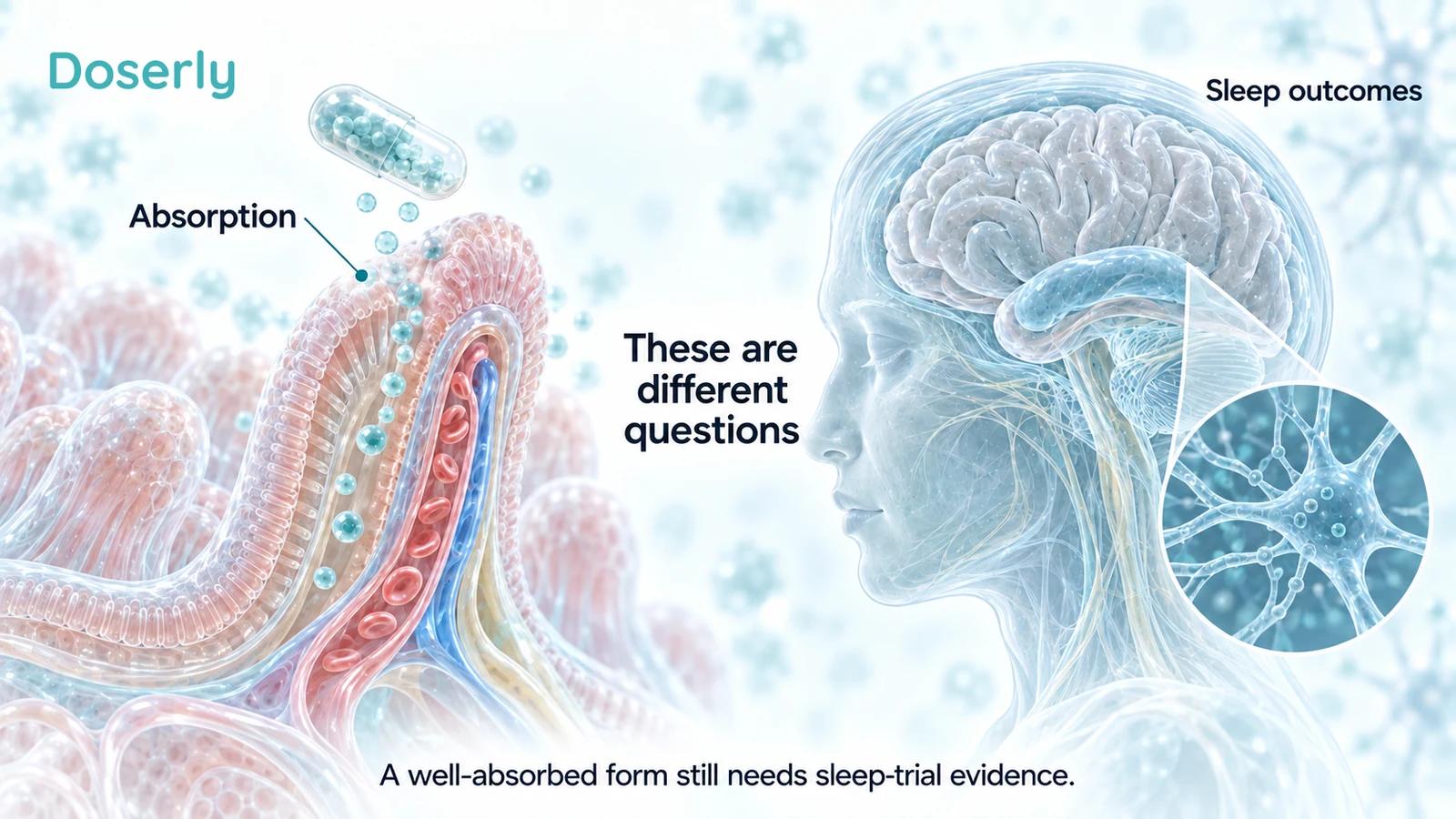
A magnesium bottle can make two very different promises sound like one: this form is absorbed well, and this form will help you sleep. The first concerns what happens to a mineral after you swallow it. The second concerns whether nights and days improve in people who take the product. A plausible connection between them is a reason to run a sleep trial, not a substitute for one.
The newer human evidence is more useful than an argument over which chemical name sounds most advanced. A 2025 trial of magnesium bisglycinate found a small average advantage over placebo on an insomnia questionnaire. A separate magnesium L-threonate trial reported selected benefits over three weeks, including wearable-derived outcomes. Neither established that its form is the best sleep supplement, and neither makes persistent insomnia a simple magnesium-deficiency problem.
For background on forms, dietary sources, and routine tracking, see the Doserly magnesium guide. Here, the question is narrower: what would justify believing that a particular magnesium product improves sleep?
Absorption is a starting point
Magnesium supports normal nerve and muscle function and participates in many enzyme reactions. Different magnesium salts have different solubility and absorption characteristics. The NIH magnesium fact sheet describes evidence that several soluble forms are absorbed more completely than oxide. It does not turn that distinction into a ranking of treatments for insomnia.
There are several steps between swallowing a capsule and sleeping better. The product must deliver the stated ingredient; some must be absorbed; the additional amount must matter in the person's circumstances; and that change must improve an outcome they value. Better absorption can help with one step while leaving the rest unanswered.
This matters especially when a product uses terms such as “brain available.” Even a credible finding about tissue exposure would not tell us how much faster someone falls asleep, whether they wake less often, or whether they function better the next day. Those require relevant human measurements. A mechanism also cannot establish that one commercial product beats another unless the comparison is actually tested.
What the 2025 bisglycinate trial tested
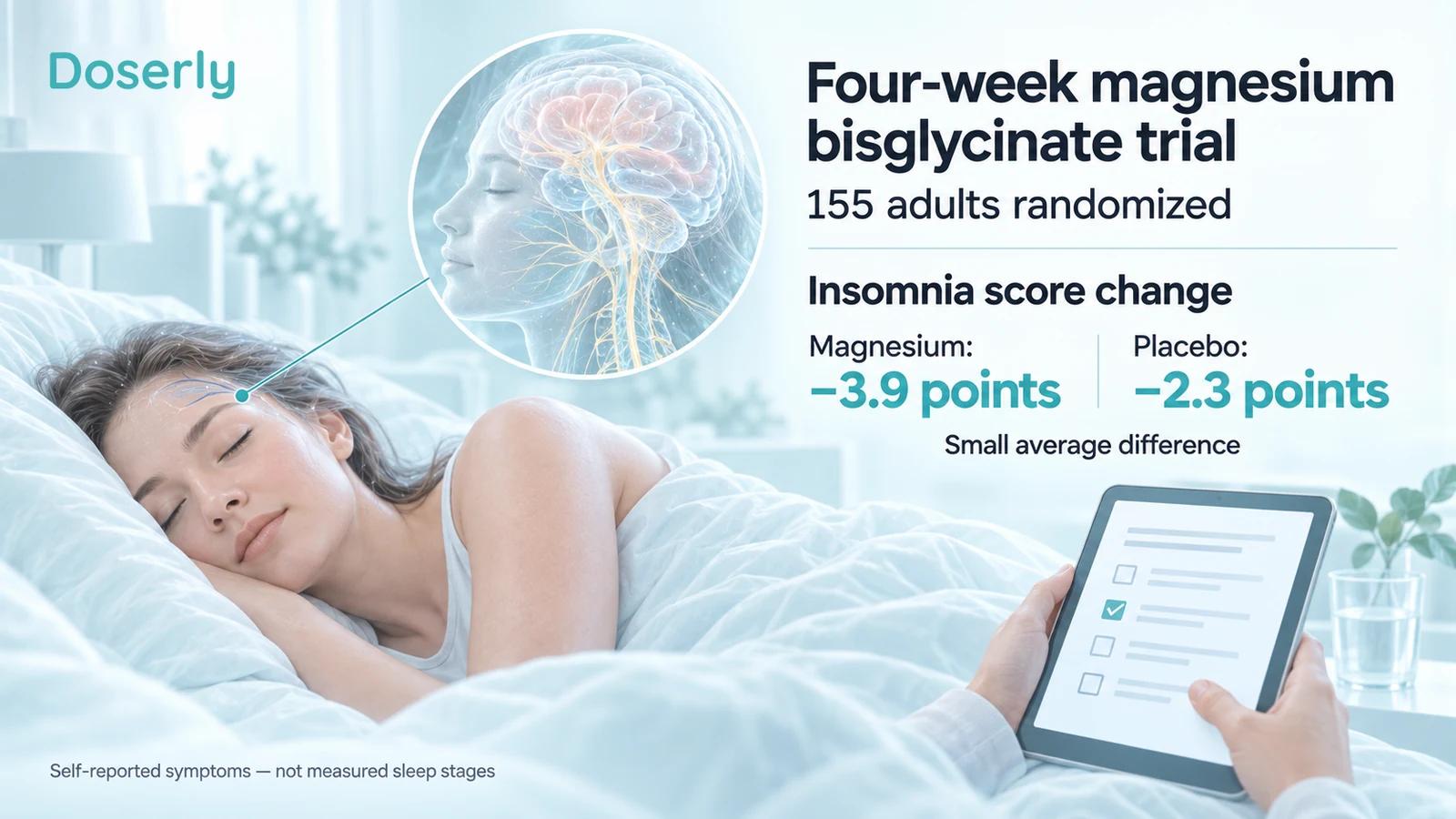
The randomized bisglycinate study enrolled 155 adults aged 18–65 who reported poor sleep. Participants received magnesium bisglycinate or placebo for four weeks. The intervention provided 250 mg of elemental magnesium each day and approximately 1.5 g of glycine as part of the formulation.
The primary outcome was change in the Insomnia Severity Index, or ISI. The magnesium group improved by an estimated 3.9 points, compared with 2.3 points in the placebo group. The approximately 1.6-point between-group difference was statistically significant, narrowly, with a reported P value of 0.049. The standardized effect size was small: Cohen's d of 0.2.
Both groups improved. That is not a reason to dismiss the trial; it is why a placebo comparison was useful. A person who began the supplement and later felt better might attribute the entire change to magnesium. The controlled comparison suggests that much of the average change also occurred without the active formulation.
The trial did not find a broad pattern of significant improvement across its other psychological outcomes. Measures of stress and fatigue, for example, did not establish additional benefits. Its result is best described as a small advantage on the primary self-reported insomnia measure over four weeks, rather than a general improvement in recovery, mood, or nervous-system health.
The study randomized 155 people, included 153 in its baseline analysis, and had 134 complete the intervention. Those denominators describe different stages; using the largest number as though everyone supplied complete follow-up would obscure attrition.
A questionnaire score is not extra deep sleep
The ISI is a useful clinical research instrument. It covers difficulty falling asleep, staying asleep, early waking, satisfaction, and the perceived effects of sleep problems. Validation research supports its reliability and sensitivity to treatment response.
It is not a stopwatch, however. A 1.6-point difference cannot be translated into 1.6 additional hours of sleep, a percentage increase in deep sleep, or a specific number of fewer awakenings. It also does not mean that every participant noticed a 1.6-point benefit. Group averages can combine people who improved substantially, changed little, or worsened.
The 2025 study did not use polysomnography to determine sleep stages. Consequently, a headline about improved “deep sleep” would describe an outcome the study did not establish. Self-reported improvement can still matter: how someone experiences their nights is part of sleep health. The limitation is about identifying what improved, not declaring subjective experiences unimportant.
A statistically detectable difference and a worthwhile difference are also separate judgments. The small effect, short follow-up, and uncertainty around the estimate make it sensible to ask for replication and longer trials. They do not justify either “magnesium cures insomnia” or “magnesium can never help anyone.”
Was the benefit really about magnesium deficiency?
The bisglycinate researchers explored whether people reporting lower dietary magnesium intake appeared to respond differently. That is an interesting hypothesis. It is weaker evidence than a trial designed to enroll people with a clearly defined deficiency and test its correction.
The dietary assessment was a simple, nonvalidated rating of magnesium-rich foods and water. It was not a measurement of magnesium stores. A response pattern involving that rating cannot establish that participants were deficient or that deficiency explained the treatment effect.
Magnesium status itself is not captured perfectly by a single number. NIH notes that most magnesium is inside cells or bone, and serum measurements do not closely represent all tissue stores. That does not mean a normal blood result proves “hidden deficiency,” either. Clinical context, diet, medications, and relevant testing need to be considered together.
For someone eating little magnesium-containing food, improving dietary adequacy is a reasonable nutrition discussion. It is a different claim from saying that most insomnia is caused by a mineral deficit. The trial does not support that diagnosis, and a favorable response to a supplement would not establish it retrospectively.
Why the form comparison is still unresolved
Bisglycinate includes glycine. Because the study tested the combined formulation, it cannot cleanly separate magnesium's contribution from the accompanying glycine or other formulation characteristics. Nor did it compare bisglycinate directly with citrate, oxide, or threonate.
A 2024 magnesium L-threonate trial studied 80 adults aged 35–55 with self-reported sleep problems. Participants took 1 g of the magnesium L-threonate compound daily for 21 days. That supplied about 75 mg of elemental magnesium—not 1,000 mg of magnesium itself.
The researchers used questionnaires and an Oura ring. They reported benefits on selected wearable scores and daytime measures, including energy and productivity. Some contrasts reflected maintenance of scores in the active group while the placebo group declined. It is therefore too simple to describe every positive comparison as a large improvement from baseline.
Wearable data add information, but a consumer device's estimated sleep stages are not interchangeable with laboratory polysomnography. The trial also tested numerous outcomes over a short period, involved a branded ingredient, and had commercial involvement. These features make independent replication particularly helpful. They do not automatically invalidate the measurements.
Most importantly, the threonate and bisglycinate trials enrolled different people, used different amounts, lasted different lengths of time, and measured different outcomes. Comparing their headlines cannot determine a winner. A convincing superiority claim would require a well-designed direct comparison with comparable elemental doses and prespecified sleep outcomes.
The older evidence adds context, not certainty
An earlier placebo-controlled study included 46 older adults with insomnia and tested magnesium for eight weeks. It reported improvements in selected subjective measures, including insomnia severity and sleep-onset latency. It did not show a significant between-group difference in total sleep time.
This is a useful reminder that “sleep improved” can conceal a mixed result. Falling asleep more easily, spending a greater proportion of time in bed asleep, and sleeping longer are related but distinct outcomes. One can change without the others.
The older study also cannot settle which formulation a younger person should buy. Its population, duration, and regimen differ from the newer studies. Taken together, the trials support continued investigation and a cautious possibility of benefit for some people. They do not establish a universal magnesium sleep protocol or a reliable ranking of supplement labels.
Read the amount that actually matters
A large number on the front of a bottle may refer to the weight of an entire compound. The Supplement Facts amount for magnesium identifies elemental magnesium. Confusing the two makes comparisons between products almost meaningless.
The threonate study illustrates this clearly: 1 g of compound delivered approximately 75 mg elemental magnesium. The bisglycinate study delivered 250 mg elemental magnesium using a larger mass of its compound. Those are descriptions of research interventions, not instructions to reproduce either regimen.
Also count magnesium already present in multivitamins, antacids, laxatives, and other products. Taking several preparations can obscure the total supplemental exposure. NIH sets the adult tolerable upper intake level from supplements and medications at 350 mg daily; magnesium naturally present in food is excluded from that limit. A clinician may use different amounts for a specific reason, but the research dose on a website is not an individualized safety assessment.
Common dose-related problems include diarrhea and abdominal symptoms. Impaired kidney function increases the risk from excess magnesium. Magnesium can also interfere with absorption of some medicines, including certain antibiotics and bisphosphonates. A pharmacist can check the actual products and timing rather than relying on a generic “take at night” rule.
Keep the sleep problem in view
A better label cannot identify why someone is waking repeatedly or struggling through the day. The newer bisglycinate trial excluded several conditions and treatments, including sleep apnea requiring treatment and important kidney or liver disease. Its reassuring short-term tolerability therefore cannot be generalized to everyone with disturbed sleep.
For persistent insomnia, the American Academy of Sleep Medicine's patient guidance recommends cognitive behavioral therapy for insomnia, or CBT-I, for most patients. This is a structured treatment, not simply advice to avoid screens or buy a more comfortable mattress. The guidance also emphasizes evaluating other possible sleep disorders.
If a clinician considers a magnesium trial appropriate, a simple record can make the experience more interpretable: note the exact product, elemental amount, start date, gastrointestinal effects, bedtime and wake time, and daytime functioning. Avoid changing several supplements and sleep habits simultaneously if the aim is to understand what helped.
The useful question is whether nights and days improve enough to justify continuing, with an acceptable burden and safety profile. Absorption language may help explain a formulation. Human sleep outcomes should decide how much confidence to place in its promise.
Explore the research
- 2025 magnesium bisglycinate randomized trial — primary symptom outcome, formulation, attrition, and limitations.
- 2024 magnesium L-threonate randomized trial — compound versus elemental amount and questionnaire/wearable outcomes.
- 2012 magnesium insomnia trial in older adults — earlier small randomized evidence.
- Insomnia Severity Index validation study — what the questionnaire measures.
- NIH magnesium fact sheet — absorption, labeling, interactions, and safety.
- AASM patient guide to behavioral insomnia treatments — treatment context.