
TRT
October 16, 2026
Can TRT prevent diabetes? Why T4DM and TRAVERSE tell different stories
On this page
Testosterone, body composition and glucose regulation are connected, which makes diabetes prevention an understandable question for men with low testosterone and excess weight. But treating a hormone deficiency and preventing type 2 diabetes are different treatment goals. Evidence that supports one does not automatically support the other.
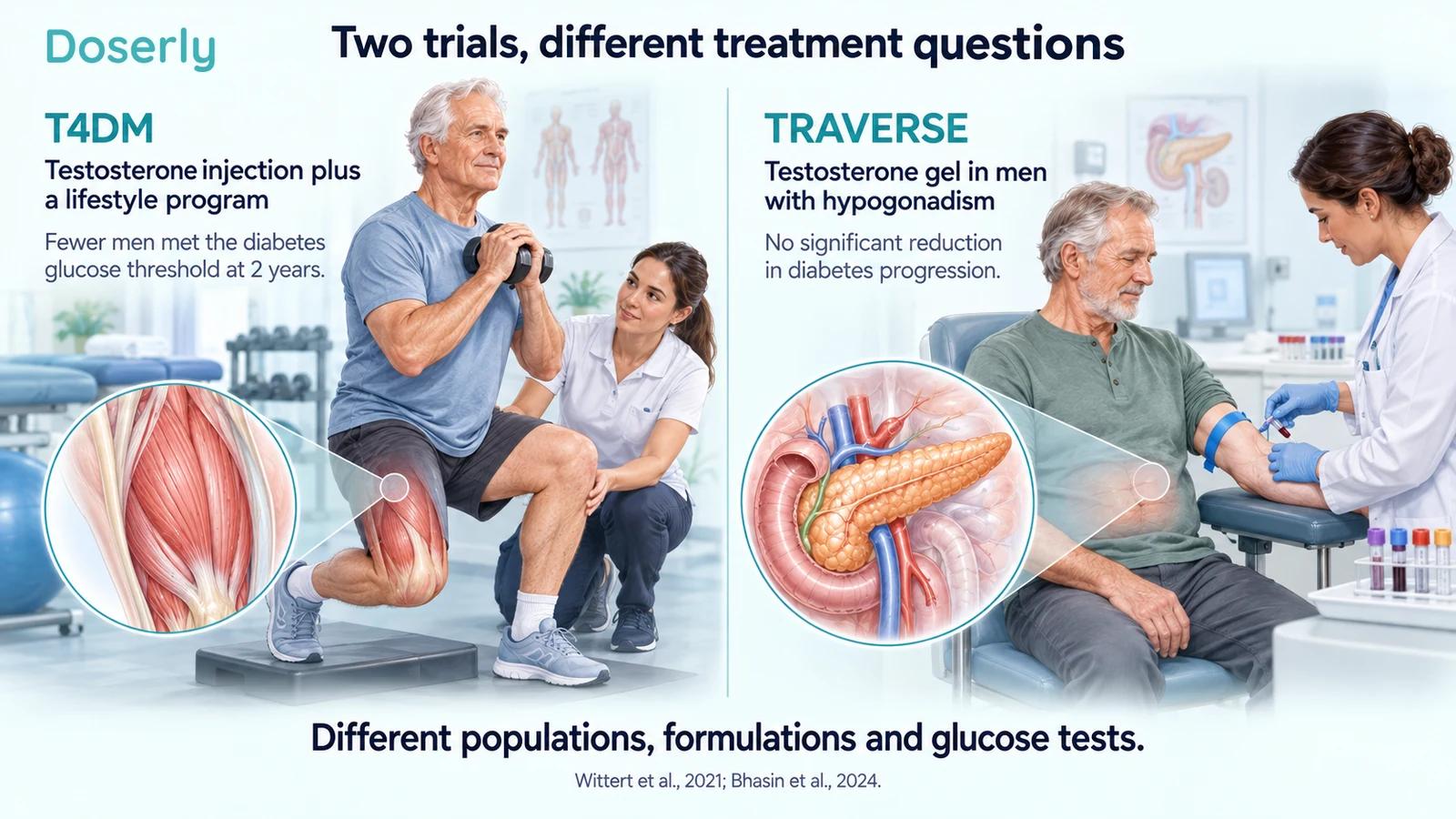
Two large trials illustrate why. T4DM found that adding injectable testosterone to a lifestyle program reduced the proportion of men meeting its diabetes glucose criterion after two years. The TRAVERSE diabetes analysis did not find a significant reduction in progression from prediabetes to diabetes with testosterone gel. These studies enrolled different populations and measured different aspects of glucose regulation. T4DM and TRAVERSE diabetes analysis
For someone trying to reduce diabetes risk, the useful question is what each trial actually tested—and whether its benefits, limitations and safety findings support the treatment being proposed.
Prediabetes and diabetes are measured in several ways
Prediabetes describes glucose results above the normal range but below the diagnostic range for diabetes. It signals increased risk, not a guarantee of progression. Clinicians can assess glucose using fasting blood tests, an oral glucose tolerance test or hemoglobin A1C. The tests are related but do not measure exactly the same thing. NIDDK diabetes testing
An oral glucose tolerance test, or OGTT, checks how the body handles a glucose drink. A fasting sample is followed by a later blood sample, commonly at two hours in the nonpregnant adult test. A fasting plasma glucose result instead describes the level after an overnight fast.
A1C measures the proportion of hemoglobin with glucose attached and reflects average glucose over roughly three months. Because hemoglobin is inside red blood cells, conditions affecting those cells can influence interpretation. NIDDK A1C explanation
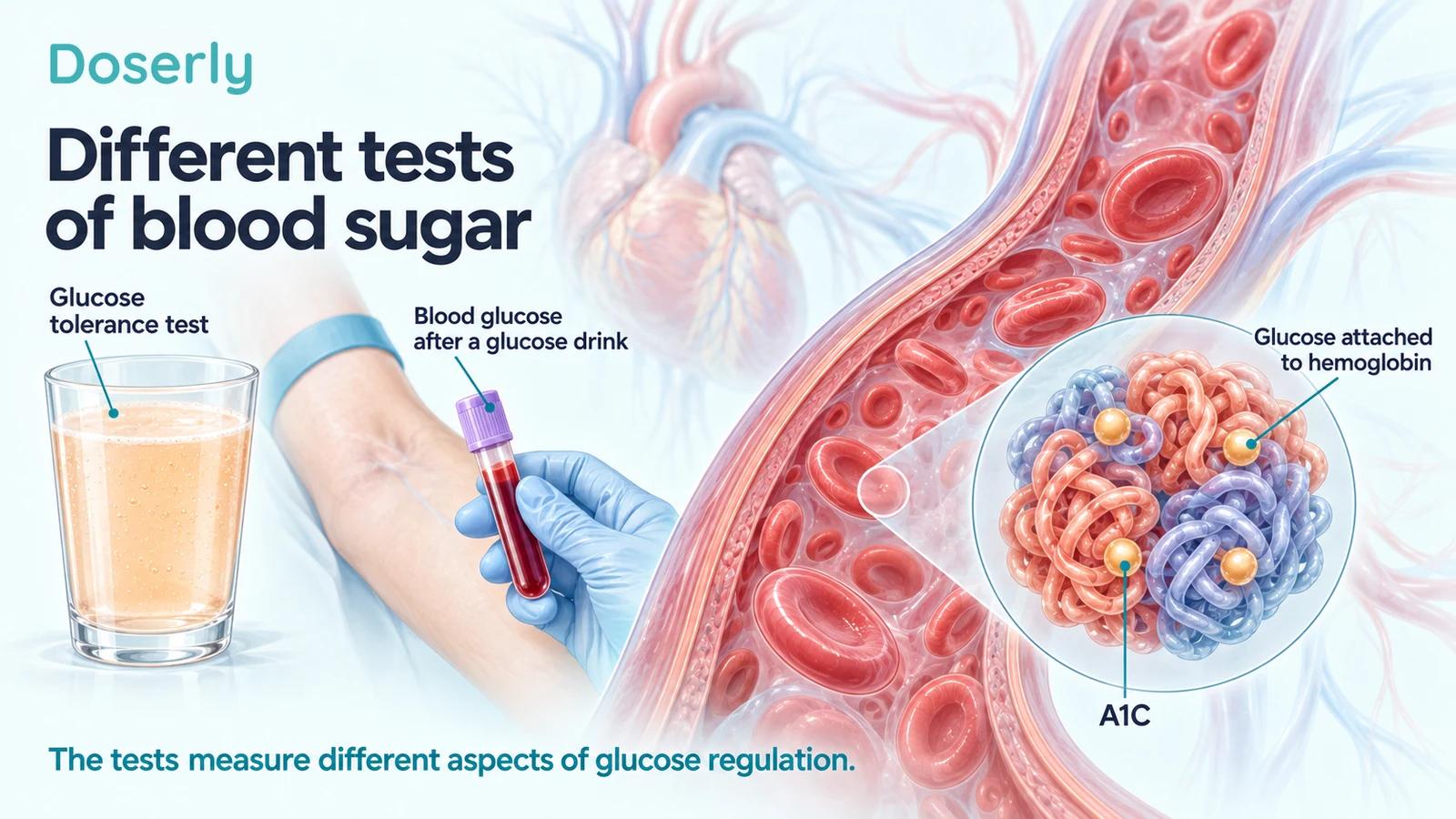
A person can meet a criterion on one test before another crosses its threshold. This matters when comparing trials: “diabetes” in a headline may refer to different prespecified measurements. It does not mean researchers are using arbitrary definitions, but it does mean the definitions need to be read.
What T4DM was designed to answer
T4DM enrolled 1,007 Australian men aged 50–74 with a waist circumference of at least 95 cm, testosterone at or below 14 nmol/L, and impaired glucose tolerance or newly diagnosed type 2 diabetes within the study's eligibility range. They did not have pathological hypogonadism. All entered a lifestyle program and were randomized to long-acting testosterone undecanoate injections or placebo injections for two years. T4DM primary report
The study therefore asked whether testosterone added a benefit beyond a shared lifestyle intervention. It did not compare testosterone alone against doing nothing, and it was not confined to men with a conventional diagnosis of testosterone deficiency requiring replacement.
At two years, the diabetes-range two-hour glucose criterion was present in 55 of 443 men with available data receiving testosterone, versus 87 of 413 receiving placebo. The paper rounded these to 12% and 21%; the reported relative risk was 0.59, with a 95% confidence interval of 0.43–0.80. T4DM results
Calculated directly from those counts, the proportions are about 12.4% and 21.1%, a difference of roughly 8.6 percentage points. The available-data denominators are smaller than the randomized groups, an important distinction when communicating the result.
Why “prevented diabetes” needs qualification here
T4DM included some men who already had newly diagnosed diabetes at entry, as well as men with impaired glucose tolerance. Its two-year finding therefore combines questions about progression and reversion below the study's glucose threshold. Describing every favorable outcome as prevention of a new case would erase that distinction.
The outcome also describes glucose status during a two-year treatment strategy. It does not establish a permanent cure after treatment stops, nor does it measure every complication that matters to someone with diabetes. A glucose threshold, kidney failure, a heart attack and a person's daily function are separate outcomes.
This does not diminish the result. It makes the claim more accurate: the testosterone-plus-lifestyle strategy improved the measured glucose outcome in this selected population over the period studied. Whether that strategy should become routine prevention depends on more than the favorable number.
The T4DM safety finding belongs beside the benefit
A hematocrit safety trigger above 54% occurred in 106 of 491 testosterone participants (22%) and six of 484 placebo participants (1%) in the reported safety analysis. Hematocrit is the fraction of blood volume occupied by red cells. The trial also reported prespecified serious adverse events in 10.9% and 7.4% of the randomized groups, respectively. These are observed safety data, not proof that every event was caused by treatment. T4DM safety results
A preventive medicine is given to people in the hope of avoiding a future problem. That makes the balance between benefit, monitoring burden and adverse effects especially important. A treatment that improves a glucose endpoint but frequently triggers a blood-count concern needs a more careful discussion than a headline about “reversing diabetes.”
It would also be inappropriate to copy the trial's injection schedule into a personal prevention plan. Trial dosing describes what researchers tested; it is not an instruction for someone whose diagnosis, risk and follow-up differ.
What TRAVERSE asked instead
TRAVERSE's diabetes analysis included 1,175 men with prediabetes and 3,880 with diabetes from a trial of men aged 45–80 with symptomatic hypogonadism and cardiovascular disease or increased cardiovascular risk. Participants received testosterone gel or placebo gel. Unlike T4DM, the comparison did not pair treatment with the same structured lifestyle-program intervention. TRAVERSE diabetes study
Progression from prediabetes to diabetes did not differ significantly between the groups. Testosterone also did not significantly improve glycemic control in the participants with prediabetes or diabetes. The investigators used fasting glucose and A1C, rather than a two-hour OGTT, to assess the relevant outcomes. Mean follow-up in the prediabetes groups was about 32 months. Primary analysis
The overall repeated-measures test had P=0.49. A supportive time-to-event analysis gave a hazard ratio of 0.78, with a 95% confidence interval of 0.58–1.06. Although the point estimate favored testosterone, the interval included no difference. The study therefore did not establish a preventive effect; it also did not prove that the true effect must be exactly zero. TRAVERSE statistical results
This is directly relevant to a common clinical question: if a man already has hypogonadism and prediabetes, can he assume TRT will reduce progression? TRAVERSE does not support that assumption under its tested treatment conditions.
It does not establish that testosterone has no metabolic effects in any circumstance. It establishes that the desired clinical glucose benefit was not demonstrated in this population with this strategy.
Can we explain the difference by injection versus gel?
Not from these studies alone. Formulation is one difference, but so are the eligibility criteria, testosterone levels, metabolic status, accompanying intervention and outcome tests. Several variables changed together.
To establish that one route is better for diabetes prevention, researchers would need an appropriate direct comparison with otherwise comparable care and eligibility. Selecting the positive injection study and the negative gel study does not isolate the route as the cause.
The same caution applies to claims that lifestyle support “activates” testosterone's benefit. T4DM tested an addition to lifestyle treatment, but it was not designed to separate every possible interaction between the two. The result makes the combined strategy worth understanding; it does not prove a particular biological explanation for the difference from TRAVERSE.
For a patient choosing a formulation for diagnosed hypogonadism, these diabetes headlines are therefore insufficient grounds to switch routes. The choice needs to consider the actual treatment indication, preferences, exposure, tolerability and monitoring with the prescriber.
Could changing red cells distort A1C?
A1C depends partly on the life history of circulating red cells. NIDDK notes that blood loss, transfusion, some anemias and other conditions can make it disagree with measured glucose. When results conflict, clinicians may need to investigate the reason rather than assuming one number tells the whole story. NIDDK A1C guidance
That general principle is relevant when a treatment affects blood counts, but it should not be used as a convenient explanation for whichever trial result someone dislikes. TRAVERSE reported that sensitivity analyses using fasting glucose alone supported its main findings. The negative result cannot simply be dismissed as an A1C artifact. TRAVERSE analysis
If your A1C falls while other glucose measurements do not, show the full set of results to the clinician. A changed number can be useful, but the goal is to understand glucose regulation accurately, not to obtain the lowest isolated laboratory value.
What established diabetes-prevention evidence offers
The Diabetes Prevention Program randomized 3,234 adults at high diabetes risk to intensive lifestyle intervention, metformin or placebo. Over average follow-up of 2.8 years, diabetes incidence was 4.8, 7.8 and 11.0 cases per 100 person-years in the lifestyle, metformin and placebo groups, respectively. Relative incidence reductions versus placebo were 58% with lifestyle intervention and 31% with metformin. DPP primary report
This was a different population and intervention, so its percentages should not be ranked directly against T4DM's. It does show that there is substantial prevention evidence directed at the metabolic problem itself. The decision about a prevention program or medication should be based on the individual's risk and eligibility, not on a presumed need to raise testosterone.
The Endocrine Society guideline recommends against testosterone therapy specifically as a way to improve glycemic control in men with type 2 diabetes and low testosterone. That recommendation is distinct from treating appropriately diagnosed hypogonadism for its established clinical indications. Testosterone guideline
A man can therefore have a reasonable indication for TRT and still need a separate diabetes-prevention or diabetes-treatment plan. The two plans should be coordinated rather than allowing one to displace the other.
What to discuss with your clinician
Start with the diagnosis you actually have: an isolated abnormal test, confirmed prediabetes, established diabetes, or symptomatic testosterone deficiency. Ask which measurements support each diagnosis and whether any result needs confirmation. That makes the purpose of each treatment clearer.
Then identify the intended outcome. Preventing progression, reducing glucose, treating low libido and addressing fatigue are different goals. If TRT is proposed, ask which goal it is expected to improve and what evidence supports that expectation in someone like you.
Discuss the metabolic care that continues regardless of the hormone decision: the agreed nutrition and activity approach, weight-management support when appropriate, relevant medication decisions and scheduled glucose reassessment. A useful plan also specifies how blood pressure and blood counts will be followed if testosterone is used.
Our TRT introduction explains the diagnosis and treatment framework, while the blood-work guide covers monitoring. A dated record of glucose tests, medicines and symptoms can help different clinicians understand the same course of care.
T4DM provides a positive result for a particular testosterone-plus-lifestyle strategy. TRAVERSE does not show diabetes prevention from monitored gel therapy in men with hypogonadism. Together they argue for a specific, evidence-based metabolic plan rather than treating TRT as a general diabetes-prevention treatment.
Sources
- Wittert and colleagues, T4DM, 2021.
- Bhasin and colleagues, TRAVERSE diabetes substudy, 2024.
- NIDDK, diabetes tests and diagnosis.
- NIDDK, A1C test and diabetes.
- Knowler and colleagues, Diabetes Prevention Program, 2002.
- Endocrine Society, testosterone guideline.