
Supplements
October 16, 2026
Magnesium for sleep: start with the problem, then the evidence
On this page
Magnesium is an essential mineral involved in nerve and muscle function and many chemical reactions in the body. That biological importance helps explain interest in using it for sleep. But needing magnesium for normal function is different from showing that taking more will improve a particular sleep problem.
Some human trials suggest modest benefits for selected sleep symptoms. They do not establish that everyone who sleeps poorly needs magnesium, that all forms work alike or that a supplement can address an underlying breathing disorder. The most useful starting point is to describe what is going wrong at night and during the next day.
Huberman Lab’s conversation with Matthew Walker covers many aspects of sleep and includes a magnesium section. It provides a useful route into the topic, but a public discussion is not a personalized treatment assessment. This article examines the clinical question rather than assembling a bedtime stack from an episode. Original episode.
“Poor sleep” describes several different experiences
You may struggle to fall asleep even when you have enough time. You may wake repeatedly, wake earlier than intended or sleep through the night and still feel unrefreshed. Another person may simply have too little opportunity for sleep because of work or caregiving.
Duration, timing and quality all matter. The effects of sleep deficiency extend beyond feeling tired and can affect attention, mood and daily function. NHLBI sleep overview.
These distinctions help determine what a study can tell you. A trial recruiting people who rate their sleep poorly is not automatically a trial in diagnosed chronic insomnia, shift-work disorder or obstructive sleep apnea. A positive average result may be useful without covering every reason someone feels exhausted.
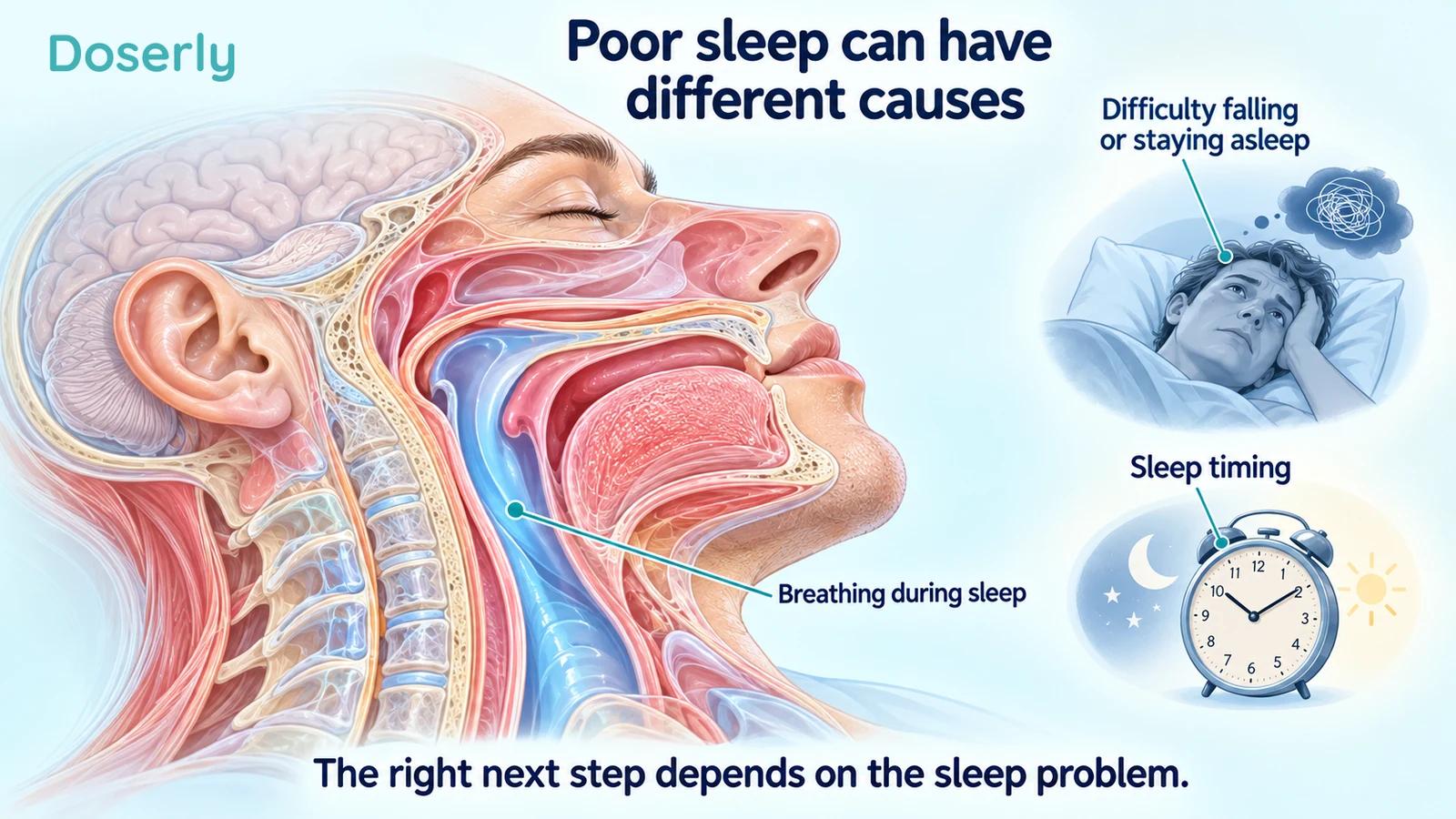
For an appointment, a concrete description helps: “I have time to sleep, but lie awake for a long time,” or “My partner notices pauses in my breathing.” Those statements are more informative than saying you need something stronger for sleep.
What the 2025 bisglycinate trial found
A randomized, blinded, placebo-controlled study enrolled 155 adults aged 18–65 who reported poor sleep. For four weeks, the intervention supplied 250 mg of elemental magnesium daily as bisglycinate, together with about 1.5 grams of glycine. The primary outcome was the Insomnia Severity Index, or ISI, a questionnaire about symptoms and their impact. 2025 trial.
Average ISI scores fell by 3.9 points with the supplement and 2.3 with placebo. The between-group comparison reached p=0.049, and the reported effect size was small, d=0.2.
Subtracting the average changes gives a difference of about 1.6 questionnaire points. It does not mean 1.6 more hours of sleep or a 1.6-point improvement for every participant. Both groups improved, which is why the placebo comparison matters.
The study supports a modest short-term symptom effect for this preparation in this population. It did not establish a universal treatment for insomnia or show that magnesium alone accounted for the result; the preparation also supplied glycine.
What a symptom score can and cannot tell you
Questionnaires are valuable because the person’s experience matters. If someone worries less about sleep, functions better during the day or finds awakenings less disruptive, that can be meaningful even when a laboratory measurement changes little.
However, a questionnaire does not directly measure the time spent in particular sleep stages. It also cannot show that nighttime breathing has normalized. Those are separate physiological questions.
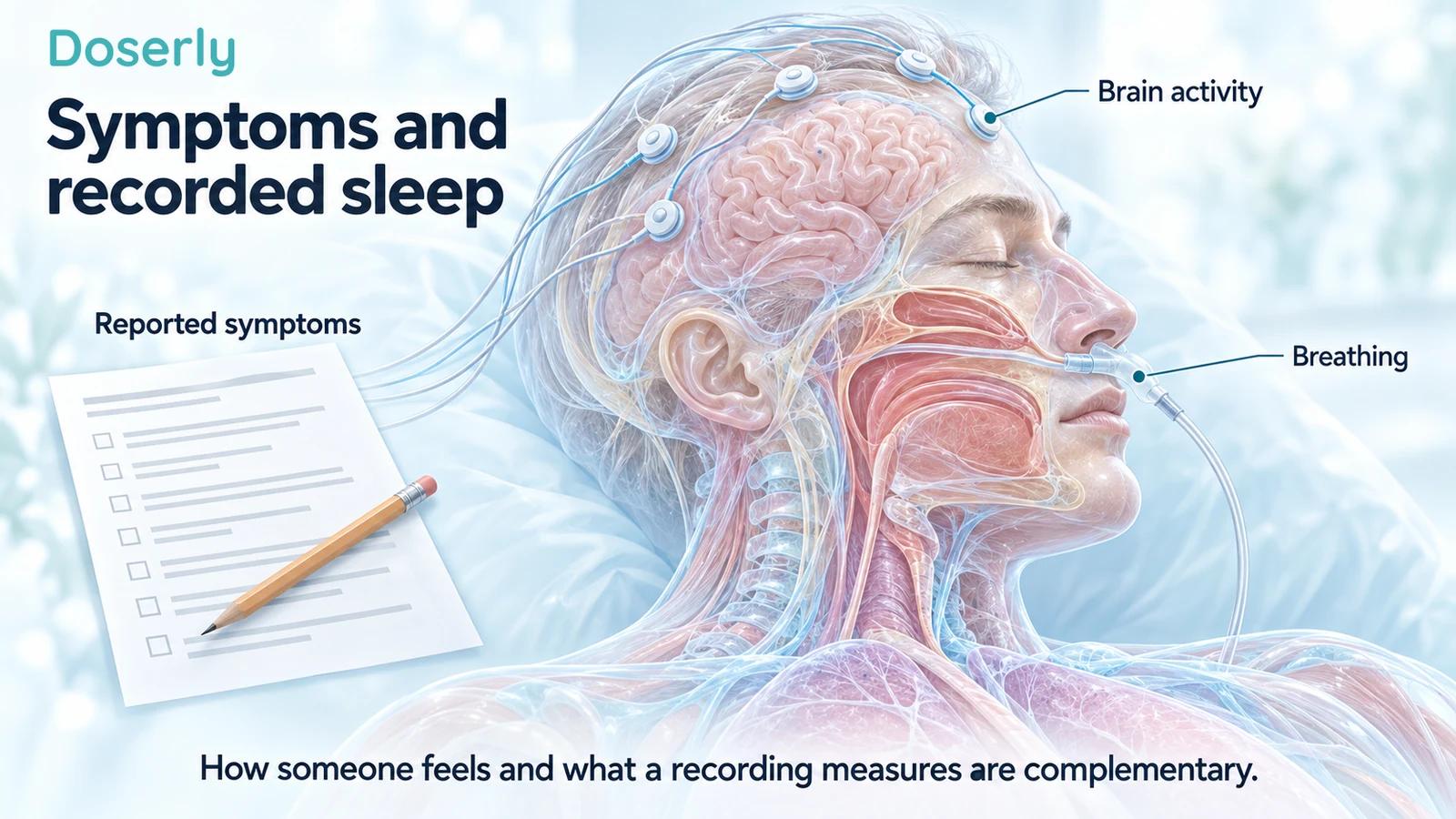
A clinician may use a sleep history, diary and selected tests depending on the suspected problem. Sleep studies are not required for every person with insomnia, but can be useful when another sleep disorder is suspected. NHLBI diagnosis information.
This is why a headline promising “deeper sleep” needs more than a lower insomnia questionnaire score. It should identify how depth was measured, whether the comparison was convincing and whether the difference relates to how people feel or function.
Is magnesium L-threonate better?
A 2024 trial studied 80 adults with self-reported sleep problems using magnesium L-threonate or placebo for 21 days. It reported changes in selected subjective outcomes and sleep-related measurements from an Oura ring. The research was funded by AIDP, a company involved with the ingredient. Primary report.
The wearable is important to the interpretation. Its sleep scores are not interchangeable with full overnight laboratory recording. A favorable change in a device-derived score should be described as that measurement, rather than converted into a claim that a specific amount of restorative sleep has been proven.
This study also did not compare L-threonate directly with bisglycinate. Comparing the size of results from two separate trials cannot establish which form is better because the people, duration and measures differ.
For now, formulation-specific trials are reasons to keep the exact product attached to the finding. They are not a ranking of all magnesium salts. The magnesium guide provides broader background on common forms and nutritional uses.
Elemental magnesium is the amount to compare
A compound’s total weight is not necessarily the weight of magnesium it contains. Elemental magnesium refers to the magnesium itself; the rest of a magnesium salt contributes to the total compound weight. Supplement labels generally identify the elemental amount in the Supplement Facts panel. ODS magnesium reference.
That distinction matters when comparing a trial with a bottle. A product advertised with a large number on the front may be describing the whole compound. It is easy to believe two products contain similar amounts when they do not.
Check the serving size as well. The amount may apply to several capsules rather than one. A combination sleep product may add magnesium to an existing multivitamin or another magnesium-containing product.
The trial amount describes an experimental exposure, not a target for everyone with poor sleep. Your current intake, medical history, other products and the purpose of supplementation all affect the discussion.
Could low intake explain the problem?
Magnesium-rich foods include legumes, nuts, seeds, whole grains and leafy green vegetables. A diet review can reveal whether the question is nutritional adequacy rather than a need for a specialized sleep formulation. ODS food sources.
But a symptom such as poor sleep does not diagnose magnesium deficiency. Nor does noticing improvement after starting a product establish that you were deficient beforehand. Sleep varies, and a change may coincide with altered stress, caffeine use or bedtime routines.
A useful assessment asks about the overall pattern: food intake, restrictive diets, gastrointestinal problems, medicines and relevant laboratory information. It avoids turning every symptom into a nutrient test or treating one normal result as a complete explanation.
There is a practical advantage to asking this question before choosing a product. If the goal is correcting inadequate intake, a sensible nutritional plan can be evaluated on that basis. If the goal is treating chronic insomnia, the treatment evidence needs to address insomnia.
When another sleep problem needs attention
Loud habitual snoring, witnessed pauses in breathing or gasping during sleep can point toward sleep apnea. Daytime sleepiness and difficulty concentrating may also occur. These symptoms deserve assessment rather than repeated changes to a bedtime supplement. NHLBI sleep-apnea symptoms.
Not everyone with a breathing disorder recognizes what happens overnight. A partner’s observations can therefore be useful. Describe what was noticed and how often, without assuming that a wearable score has ruled the problem out.
The magnesium trials discussed here do not establish treatment for upper-airway obstruction. Even if a person feels calmer at bedtime, that would not demonstrate that breathing pauses have resolved.
If sleepiness is making driving or other safety-sensitive tasks difficult, treat the impairment seriously. The immediate goal is safe functioning and appropriate evaluation, not finding a supplement that makes the symptom easier to ignore.
What has stronger support for chronic insomnia?
The American Academy of Sleep Medicine strongly recommends multicomponent cognitive behavioral therapy for insomnia, or CBT-I, for adults with chronic insomnia. This is a structured treatment that addresses behaviors and thoughts maintaining sleep difficulty. It is more than a list of general sleep tips. AASM guideline.
The same guideline advises against using sleep hygiene alone as the sole treatment for chronic insomnia. Advice about a comfortable room or a consistent schedule may be useful, but persistent insomnia can require a more complete approach.
This changes the practical comparison. It is not simply magnesium versus doing nothing. Someone with a long-standing problem can ask about access to CBT-I and whether other conditions or medicines are contributing.
Behavioral treatment also deserves tailoring. Some components temporarily affect sleepiness and require attention to a person’s circumstances. A trained clinician can help choose and adjust the approach instead of having the person improvise a restrictive sleep schedule.
Safety belongs in the decision
Supplemental magnesium can cause gastrointestinal problems, and the risk of excessive accumulation is higher when kidney function is impaired. It can also interfere with absorption of some medicines, including certain antibiotics and bisphosphonates. A pharmacist can check the exact products and timing requirements. ODS safety and interactions.
Bring the full product label to that review. A “sleep blend” may contain several active ingredients, and checking magnesium alone can miss the rest of the formulation.
If a clinician agrees that trying a supplement is reasonable, decide what would count as useful improvement and when to reassess. A short diary can record bedtime, awakenings, estimated sleep, daytime function and adverse effects without turning every night into a performance test.
The evidence leaves room for modest benefit from particular magnesium preparations. It also gives a clear reason to avoid a universal bedtime formula: the sleep problem, nutritional context and outcome matter more than the popularity of an ingredient.
Sources
- Dr. Matt Walker: The Science & Practice of Perfecting Your Sleep (2021)
- Magnesium Bisglycinate Supplementation in Healthy Adults Reporting Poor Sleep: A Randomized, Placebo-Controlled Trial (2025)
- Magnesium-L-threonate improves sleep quality and daytime functioning in adults with self-reported sleep problems (2024)
- Magnesium: Fact Sheet for Health Professionals
- Behavioral and psychological treatments for chronic insomnia disorder in adults: an American Academy of Sleep Medicine clinical practice guideline (2021)
- Insomnia: Diagnosis
- Sleep Apnea: Symptoms
- Sleep Deprivation and Deficiency