
Papain: The Complete Supplement Guide
On this page
Quick Reference Card
Attribute
Common Name
- Detail
- Papain
Attribute
Other Names / Aliases
- Detail
- Papaya enzyme, papaya peptidase I, papayotin, papaya protease, EC 3.4.22.2
Attribute
Category
- Detail
- Plant-derived proteolytic enzyme (cysteine endopeptidase)
Attribute
Primary Forms & Variants
- Detail
- Stand-alone papain capsules or chewables; papaya-enzyme chewables; mixed digestive-enzyme blends containing papain; topical papain products exist but are not equivalent to oral supplements
Attribute
Typical Dose Range
- Detail
- Not standardized by clinical consensus. Stand-alone products commonly provide roughly 17.75-100 mg or labeled activity-unit equivalents per serving with meals [10]
Attribute
RDA / AI / UL
- Detail
- None established. Papain is an enzyme ingredient, not an essential nutrient [1][7]
Attribute
Common Delivery Forms
- Detail
- Chewable tablets, capsules, powders, mixed-enzyme formulas
Attribute
Best Taken With / Without Food
- Detail
- Usually with or immediately after meals for digestive use. Empty-stomach systemic use is not well established for papain-only supplements [3][10]
Attribute
Key Cofactors
- Detail
- No essential cofactors established. Common companion ingredients in formulas include bromelain, amylase, lipase, and other digestive enzymes [2][10]
Attribute
Storage Notes
- Detail
- Store tightly closed in a cool, dry place away from heat and humidity. Enzyme activity and chewable-tablet quality can degrade with moisture exposure [1][10]
Overview
The Basics
Papain is a protein-digesting enzyme that comes from papaya latex, especially from unripe fruit. If you have ever seen papaya marketed as a "papaya enzyme" digestive aid, papain is the main reason. Its core job is simple: it cuts large protein chains into smaller fragments that are easier to break down and use [1][3].
Think of papain like a pair of kitchen shears for protein. With a meal, that can mean easier breakdown of dense or heavy foods. Outside of digestion, researchers are also interested in papain because the same protein-cutting activity can influence inflammation, damaged tissue, and clot-related proteins. That sounds impressive, but most of that work is still preclinical, not established supplement care for humans [4][5][6].
One important reality check: papain is much better documented as a food enzyme, industrial protease, and ingredient in mixed enzyme products than as a stand-alone oral supplement with strong human clinical data. If you are using papain, the most evidence-aligned reason is still meal-time digestive support, not broad systemic health claims [1][2][3].
The Science
Papain is a cysteine endopeptidase classified as EC 3.4.22.2 and sourced from the latex of unripe Carica papaya fruit [1]. FDA dietary-supplement guidance also places enzymes within the kinds of ingestible ingredients that can appear in dietary supplements, which is why papain is sold in chewables, capsules, and digestive blends in the U.S. market [7].
From a product perspective, papain is used in several contexts: food processing, protein hydrolysate manufacturing, digestive-enzyme supplements, and non-oral pharmaceutical or wound-care applications [1][6]. In the supplement market, papain is frequently paired with bromelain and other proteases rather than used alone, which complicates attribution when people report benefits from "papaya enzyme" products [2][10].
The strongest current evidence base for papain is fragmented across food-safety evaluation, preclinical digestion models, and mixed-enzyme clinical literature rather than papain-only oral trials [1][2][3]. That fragmented evidence profile should shape how aggressively any benefits are framed.
Chemical & Nutritional Identity
Property
Chemical Class
- Value
- Cysteine endopeptidase
Property
EC Number
- Value
- EC 3.4.22.2
Property
CAS Number
- Value
- 9001-73-4
Property
Synonyms
- Value
- Papayotin, papaya peptidase I
Property
Source Organism
- Value
- Carica papaya L.
Property
Source Material
- Value
- Latex of unripe papaya fruit
Property
Molecular Context
- Value
- Mature enzyme is a roughly 23 kDa protease within papaya latex-derived enzyme preparations [1]
Property
Category
- Value
- Proteolytic enzyme / digestive-aid ingredient
Property
Standardization
- Value
- Commonly expressed in activity units rather than nutrition-based daily values [1][10]
Property
RDA / AI / UL
- Value
- Not established [1][7]
Papain is not a vitamin, mineral, or amino acid. It is an enzyme ingredient whose value depends on catalytic activity, formulation, and context of use rather than on meeting a daily nutritional requirement [1][7]. Commercial papain products may use milligrams, USP units, or other activity-based expressions, which makes one bottle difficult to compare directly with another unless the labeling is unusually transparent [1][10].
Papaya latex naturally contains multiple proteolytic components beyond papain, which is part of the reason papaya-derived products can vary so much in behavior and tolerability [1]. For supplement users, this means that "papaya enzyme" and "papain" are related but not always identical product categories.
Mechanism of Action
The Basics
Papain works by cutting proteins at specific peptide bonds. In practical terms, that means it helps break a steak, burger, or protein-heavy meal into smaller fragments before your body finishes the rest of the digestive process. That is the main reason it is sold as a digestive aid [3][10].
Beyond digestion, papain may do more than just cut food proteins. Researchers are studying whether it also changes inflammatory signaling, oxidative stress, and even clot-related proteins in ways that could matter for skin inflammation, obesity-related inflammation, and circulation. Those ideas are interesting, but they are still mostly living in animal and cell studies, not in proven human supplement protocols [4][5][6].
In other words, papain has a simple headline mechanism and a much more speculative second layer. The headline is digestion. The second layer is systemic biology that still needs stronger human confirmation.
The Science
Papain catalyzes protein hydrolysis through cysteine-protease activity, giving it broad usefulness in breaking proteins into peptides and amino acids [1][3]. In the 2022 gut-digestion model, oral papain exposure increased pancreatic trypsin activity in mice, suggesting that papain may complement protein digestion both directly and indirectly through effects on digestive physiology [3].
Outside the digestive lumen, papain has shown pathway-level effects in preclinical models. In obesity-related work, papain downregulated adipogenic transcription factors including PPAR-gamma, C/EBP-alpha, and SREBP-1 while increasing AMPK-related signaling, which was associated with lower lipid accumulation in high-fat-diet models [4]. In the atopic-dermatitis model, papain reduced inflammatory mediators while modulating MAPK and STAT signaling and improving antioxidant-enzyme expression [5].
Papain also has proteolytic effects on clot-related proteins. In vitro and animal thrombosis work showed fibrinogen cleavage, prolonged PT and aPTT, and dose-dependent clot-lysis activity, which helps explain both speculative cardiovascular interest and practical bleeding-risk caution [6]. Taken together, papain's known biology is broader than digestion, but the confidence attached to those non-digestive effects remains much lower than the mechanism itself.
Absorption & Bioavailability
The Basics
Papain does not need to reach your bloodstream to do its main job. For digestive use, it works right where the food is, inside the gastrointestinal tract. That makes it very different from supplements like magnesium or vitamin D, which need to be absorbed systemically to matter [3].
At the same time, stronger exposure is not automatically better. The most relevant mechanistic paper in this dossier found that high enzyme concentrations could disrupt barrier integrity in a human reconstructed intestinal tissue model. That does not prove normal supplement use is harmful, but it does support a cautious view that very aggressive dosing may backfire in sensitive guts [3].
The honest summary is that papain has plausible digestive utility, but it does not yet have the kind of human pharmacokinetic story that would justify strong claims about intact absorption, long half-life, or predictable systemic exposure.
The Science
Direct human pharmacokinetic data for isolated oral papain are sparse in the current dossier. The best digestion-focused source is a murine model combined with a reconstructed human intestinal 3D tissue model, not a formal human absorption study [3]. In that work, oral papain in mice increased pancreatic trypsin activity and shifted gut-microbiota patterns, while the highest tested enzyme concentrations in the tissue model increased paracellular permeability and reduced epithelial integrity [3].
That pattern matters for supplement interpretation. It supports papain as a luminal digestive enzyme and suggests dose-dependent interaction with the gut barrier, but it does not establish a validated human oral-bioavailability profile or a clinically useful systemic concentration range [3]. By contrast, some proteolytic enzymes such as bromelain have stronger published claims for intact systemic absorption; that evidence should not be casually borrowed and applied to papain [2][3].
Commercial papain products also vary widely in expression of potency, using milligrams, USPU-like activity references, or blended enzyme panels [10]. In practice, formulation quality and labeling clarity may be more important for users than any abstract bioavailability claim.
Research & Clinical Evidence
Digestive Support
The Basics
This is the most defensible reason people take papain. The supplement market treats papain as a meal-time digestive helper, and the best available mechanistic evidence points in the same direction. People mainly use it when heavy, protein-rich meals leave them feeling overly full, bloated, or slow to digest [3][9][10][11].
What is missing is strong human papain-only trial evidence. That gap matters. It means papain is reasonable to discuss as a digestive aid, but not as a proven treatment for GERD, IBS, gastroparesis, or pancreatic insufficiency [2][3].
The Science
The 2022 mouse and intestinal-tissue study provides the strongest papain-specific digestion evidence in this dossier. Oral papain increased pancreatic trypsin activity and was associated with favorable microbiota changes, especially involving Akkermansia muciniphila [3]. These findings support the plausibility of papain as a digestive-support ingredient but remain preclinical.
Human community data align with that digestive framing. Reddit reports cluster around post-meal comfort, sluggish digestion, gastroparesis-like symptoms, and occasional help with constipation, while iHerb product reviews strongly emphasize reduced bloating and easier digestion after heavy meals [9][10][11]. Those data are useful for expectation-setting, but they are not substitutes for controlled trials.
Inflammation and Metabolic Signaling
The Basics
Papain has an emerging anti-inflammatory story, but it is still mostly a laboratory story. In animal and cell work, papain looks capable of reducing inflammatory signaling and affecting fat-cell biology. That is enough to make the topic worth watching, but not enough to sell papain as an evidence-based inflammation or weight-management supplement [4].
The practical takeaway is simple: papain may have broader biological activity than digestion alone, but the current human proof is thin.
The Science
In the 2021 high-fat-diet model, oral papain reduced body, liver, and adipose-tissue weight and lowered hepatic lipid accumulation, while cell experiments showed reduced adipocyte differentiation and downregulation of PPAR-gamma, C/EBP-alpha, and SREBP-1 signaling [4]. The same paper linked these effects to AMPK activation and lower obesity-associated inflammation [4].
These findings are mechanistically coherent and interesting for metabolic research, but they remain preclinical. The authors themselves noted the need for stronger insulin-resistance and human models before meaningful translation [4].
Skin and Barrier Signaling
The Basics
Papain is sometimes associated with skin and wound care, but those discussions often mix topical papain, papaya extracts, and oral papain into one vague story. Based on the current papain dossier, the clearest evidence is still preclinical and focused on inflammatory skin signaling, not on proven cosmetic or dermatologic benefits in supplement users [5].
The Science
In a 2024 atopic-dermatitis-like model, oral papain lowered dermatitis severity, transepidermal water loss, serum IgE, epidermal thickening, and mast-cell infiltration [5]. Keratinocyte experiments also showed reduced ROS production and improved antioxidant-enzyme expression, with MAPK and STAT pathway involvement [5]. These findings support low-confidence skin-health and inflammation scoring, but they do not establish a clinically validated oral papain dermatology use.
Coagulation and Circulation
The Basics
Papain has a double-edged circulation story. On one hand, preclinical work suggests it can break down clot-related proteins. On the other hand, that same property is a reason for caution if you are already taking blood thinners or have a bleeding-sensitive condition [6].
This is not good evidence that papain is a natural anticoagulant you should use therapeutically. It is better understood as a signal that papain can interact with clotting biology and should be treated respectfully in safety planning.
The Science
The 2023 thrombosis paper showed dose-dependent clot-lysis activity, fibrinogen-chain cleavage, prolonged PT and aPTT, and reduced thrombus length in a rat tail-thrombosis model [6]. These results support real proteolytic interaction with coagulation biology, but the translation to routine human oral supplementation is uncertain and not established by clinical trials [6].
Mixed-Enzyme Clinical Context
The Basics
If you look for human papain evidence, you quickly run into a recurring problem: many studies are really about mixed proteolytic-enzyme products, not papain alone. That makes those papers directionally interesting but only partly transferable to a stand-alone papain supplement [2].
The Science
MSKCC summarizes clinical and preclinical work on oral proteolytic-enzyme combinations used in inflammation, osteoarthritis, and supportive care, with papain listed among the common components [2]. Some combination studies report improved pain or function, especially in osteoarthritis contexts, but those results cannot be cleanly assigned to isolated papain [2]. This is the strongest reason to keep the papain draft conservative whenever human efficacy is discussed.
Evidence & Effectiveness Matrix
Category
Digestive Comfort
- Evidence Strength
- 4/10
- Community-Reported Effectiveness
- 6/10
- Summary
- Mechanistic and preclinical support exist for protein digestion, and community discussion consistently centers on after-meal comfort. Human papain-only trials are still limited [3][9][10][11].
Category
Gut Health
- Evidence Strength
- 4/10
- Community-Reported Effectiveness
- 5/10
- Summary
- Mouse and tissue-model work suggest microbiota and digestion effects, but community claims about "gut health" are broader than the evidence can support [3][10][11].
Category
Nausea & GI Tolerance
- Evidence Strength
- 3/10
- Community-Reported Effectiveness
- 5/10
- Summary
- Some users report gentler digestion or less reflux-prone eating, while others report stomach irritation or gastritis flares. Evidence is practical rather than clinical [9][10][11].
Category
Inflammation
- Evidence Strength
- 4/10
- Community-Reported Effectiveness
- N/A
- Summary
- Anti-inflammatory signaling appears in obesity and skin models, but controlled human papain-only data are missing [4][5].
Category
Skin Health
- Evidence Strength
- 4/10
- Community-Reported Effectiveness
- N/A
- Summary
- The best support comes from animal and cell work in atopic-dermatitis-like inflammation, not from oral human trials [5].
Category
Heart Health
- Evidence Strength
- 3/10
- Community-Reported Effectiveness
- N/A
- Summary
- Coagulation and thrombus findings are preclinical and better suited to safety caution than to benefit claims [6].
Category
Side Effect Burden
- Evidence Strength
- 5/10
- Community-Reported Effectiveness
- 4/10
- Summary
- Food-enzyme safety evaluation is generally reassuring, but allergy, GI irritation, and bleeding-related caution remain important [1][6][9][11].
Category
Treatment Adherence
- Evidence Strength
- 2/10
- Community-Reported Effectiveness
- 7/10
- Summary
- There is little formal adherence research, but chewable and after-meal formats appear easy for users to maintain in everyday life [10][11].
Categories scored: 8Categories with community data: 5Categories not scored (insufficient data): Fat Loss, Muscle Growth, Weight Management, Appetite & Satiety, Food Noise, Energy Levels, Sleep Quality, Focus & Mental Clarity, Memory & Cognition, Mood & Wellbeing, Anxiety, Stress Tolerance, Motivation & Drive, Emotional Aliveness, Emotional Regulation, Libido, Sexual Function, Joint Health, Pain Management, Recovery & Healing, Physical Performance, Hair Health, Blood Pressure, Heart Rate & Palpitations, Hormonal Symptoms, Temperature Regulation, Fluid Retention, Body Image, Immune Function, Bone Health, Longevity & Neuroprotection, Cravings & Impulse Control, Social Connection, Withdrawal Symptoms, Daily Functioning, Other
Benefits & Potential Effects
The Basics
The most realistic benefit to expect from papain is digestive support around meals. People usually reach for it after rich dinners, protein-heavy meals, or periods when digestion feels sluggish. If papain helps, the change is usually practical rather than dramatic: less post-meal heaviness, easier digestion, or less bloated discomfort [9][10][11].
Beyond digestion, papain has a "maybe, but not proven" profile. Animal studies suggest anti-inflammatory, metabolic, skin-barrier, and clot-related effects, but those are not the same as proven supplement benefits in humans [4][5][6]. This is where many supplement writeups become too enthusiastic. The current evidence does not justify that.
That does not make papain useless. It just means the strongest version of the papain story is narrower than the marketing usually implies.
The Science
Papain's clearest supplement-facing benefit is its proteolytic activity in digestion, supported by animal and mechanistic work plus a coherent pattern of real-world user reports [3][9][10]. In preclinical settings, papain has also demonstrated lower lipid accumulation and inflammatory signaling in obesity-related models [4], reduced dermatitis-like inflammatory markers in skin models [5], and fibrino(geno)lytic activity in thrombosis models [6].
The main limitation is translation. For most non-digestive endpoints, the evidence base remains preclinical. Even the more human-facing clinical context for proteolytic enzymes tends to involve combination products rather than isolated papain [2]. As a result, the benefit profile is best presented as: plausible digestive aid, speculative systemic adjunct.
Side Effects & Safety
The Basics
Papain is not automatically harsh, but it is not risk-free either. The most common practical issues are digestive irritation, reflux aggravation, bloating, or stomach discomfort in people with already sensitive stomach lining. Community reports make it clear that papain can help some people and clearly aggravate others [9][11].
The more important safety theme is allergy. Because papain comes from papaya latex, people with papaya or latex sensitivity deserve extra caution. Cross-reactivity with pineapple or kiwi is also plausible in some users [1].
There is also a clotting-related caution. Preclinical data suggest papain can affect fibrin and coagulation pathways, which is one more reason not to treat it casually if you are using anticoagulants, antiplatelet drugs, or preparing for surgery [6].
The Science
EFSA's 2026 food-enzyme assessment concluded that papain did not raise a general safety concern under intended food-use conditions, but it explicitly preserved allergenicity caution [1]. The same assessment noted sequence homology and clinical concern involving papaya, pineapple, kiwi, soy, fig, ragweed, and dust-mite related allergens, with prior occupational asthma and rhinitis reports in papain-exposed workers [1].
MSKCC's proteolytic-enzyme page identifies gastrointestinal disturbance as a recurrent adverse-effect class for oral proteolytic-enzyme products and emphasizes caution in clotting-related contexts for mixed enzyme products [2]. Papain's own thrombosis-model data, showing PT and aPTT prolongation plus fibrinogen degradation, reinforce the logic of conservative interaction screening even if direct human anticoagulant risk quantification remains unavailable [6].
Community signal adds an important nuance: users with gastritis, reflux, or already irritated upper GI tissue appear more likely to report worsening symptoms than the average product reviewer [9][11]. For practical use, that means starting low, using it with meals, and abandoning the trial if it reliably increases burning, reflux, cramping, or chest discomfort.
Capture changes while they are still fresh.
Log symptoms, energy, sleep, mood, and other observations alongside protocol events so patterns do not live only in memory.
Trend view
Symptom timeline
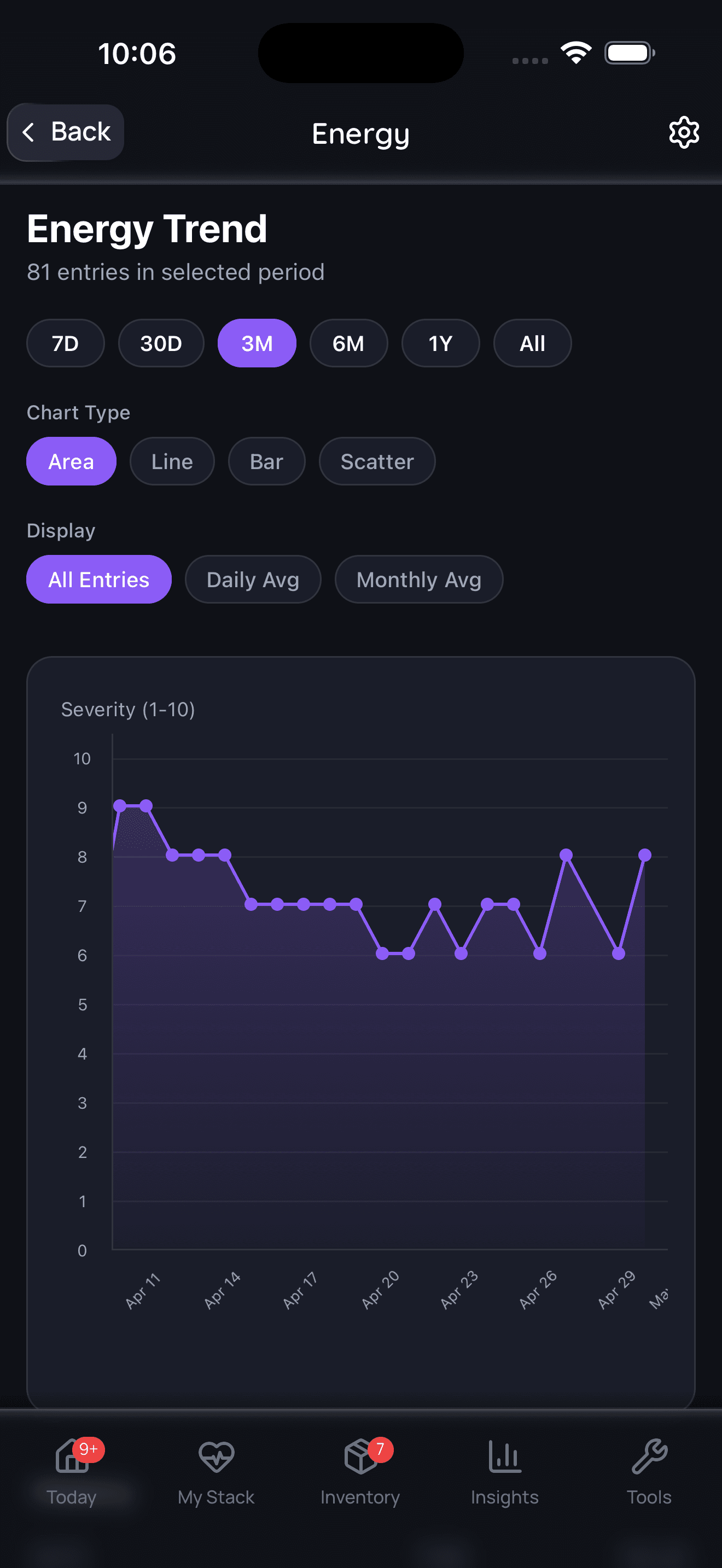
Symptom tracking is informational and should be interpreted with a qualified clinician.
Dosing & Usage Protocols
The Basics
There is no single evidence-based papain-only protocol that everyone agrees on. That is the core dosing problem. What exists instead is a commercial pattern: papain is usually taken with meals, especially protein-heavy meals, and products commonly provide one chewable serving or one capsule at a time [10].
If you are experimenting with papain for digestion, the most reasonable approach is to start with the label dose on one substantial meal per day and judge the result honestly. If it helps, you can decide whether it is only useful for certain meals or worth broader routine use. If it irritates your stomach, higher dosing is unlikely to fix that [9][10][11].
The more aggressive empty-stomach or systemic-enzyme-style protocols are not well established for papain alone. That is an area where marketing often outruns the evidence.
The Science
Commercial papain products reviewed in this pipeline show wide variation in expression of dose. Examples include stand-alone papain capsules labeled at 100 mg per serving, chewable products listing 45 mg papain with 90,000 USP activity, and lower-mass chewables expressing 17.75 mg papain with 300,000 USPU-style activity labeling [10]. This makes direct mg-to-mg comparison unreliable without activity context.
Preclinical studies are not meaningfully translatable into everyday supplement dosing. The gut-digestion model used 1 mg per mouse per day for three days [3], the skin-inflammation model used oral papain at 2.5 or 5 mg/kg [5], and the antithrombotic work used enzymatic units in animal models [6]. Those designs help with mechanism, not consumer self-dosing.
Context
Meal-time digestive trial
- Practical Approach
- Start with one labeled serving with the first bites of a protein-containing meal
- Evidence Quality
- Commercial convention and community feedback [9][10][11]
Context
Chewable papaya-enzyme products
- Practical Approach
- Use exactly as labeled and avoid treating candy-like tablets as harmless snacks
- Evidence Quality
- Commercial convention only [10]
Context
Multi-enzyme blends containing papain
- Practical Approach
- Follow the full product directions rather than assuming papain content tells the whole story
- Evidence Quality
- Low direct papain attribution [2][10]
Context
Empty-stomach systemic use
- Practical Approach
- No standardized human papain-only protocol established
- Evidence Quality
- Insufficient evidence [2][3][4][5][6]
If dosing language on the label is vague, the best sign of quality is not a higher number. It is a clear source, clear activity labeling, and directions that match how digestive enzymes are supposed to be used: around meals, not as a random high-dose experiment.
Track injection timing, draw notes, and site rotation.
Doserly helps keep syringe-related notes, injection site history, reminders, and reconstitution context together for easier review.
Injection log
Site rotation
Injection logs support record-keeping; follow clinician instructions for administration.
What to Expect (Timeline)
If papain helps you, the most noticeable effect is usually immediate and meal-linked. You are not waiting six weeks for a dramatic systemic shift. Instead, you are watching whether the meals that usually leave you heavy, bloated, or slow to digest feel easier within the same day [9][10][11].
During the first week, the main question is tolerability. Some users learn quickly that papain suits them. Others notice reflux, upper-stomach burning, or no meaningful change at all. If the pattern is clearly negative, there is usually little value in pushing through [9][11].
Over two to four weeks, the useful pattern is specificity. You may find papain helps only with larger meals, with higher-protein meals, or when digestion is slower than usual. That kind of targeted use is more realistic than expecting papain to transform your entire digestive system [9][10].
Long-term expectations should stay modest. The current evidence does not support promising broad anti-inflammatory, metabolic, or body-composition changes from routine papain use in humans [4][5][6]. If you keep taking it, the best reason should be that your own meal-time experience supports it.
Interactions & Compatibility
Synergistic
- Digestive Enzyme Blends: Broader formulas can cover fats, carbohydrates, and fiber alongside papain's protein-digesting role when a meal is mixed rather than protein-dominant.
- Bromelain: Frequently paired with papain in proteolytic-enzyme products to broaden protease coverage, though combination effects should not be assumed to equal papain-alone effects [2].
- Ox Bile: Sometimes used in the same meal-time protocols when symptoms are more related to rich or fatty foods than to protein digestion alone.
- Ginger Root: May complement digestive comfort through motility and upper-GI symptom support rather than through direct proteolysis.
Caution / Avoid
- Anticoagulants and antiplatelet drugs: Papain has preclinical anticoagulant and fibrino(geno)lytic activity, so combine only with clinician oversight [6].
- Papaya or latex allergy: Papain is sourced from papaya latex and carries real sensitization potential [1].
- Pineapple, kiwi, soy, fig, ragweed, or dust-mite allergy history: Cross-reactivity risk is plausible based on EFSA's allergenicity review [1].
- Active gastritis, reflux, or ulcer-prone stomach lining: Community reports suggest these users are more likely to flare rather than improve [9][11].
- Planned surgery or bleeding disorders: Conservative avoidance is reasonable because clotting interaction risk is not fully quantified in humans [6].
How to Take / Administration Guide
For digestive use, papain makes the most sense with the meal it is supposed to help. Capsules are usually best taken with the first bites of a meal. Chewables are often taken during or just after eating, especially in "after meal" digestive-aid products [10].
Start by matching papain to the type of meal most likely to challenge you. If protein-heavy dinners are the problem, test papain there first instead of taking it with every meal immediately. That makes the cause-and-effect picture cleaner and reduces the chance that you misread random day-to-day variation as supplement success.
If you already use a broader digestive-enzyme product, do not automatically add extra stand-alone papain on top. Many formulations already contain papain or bromelain, and stacking multiple protease products increases uncertainty without necessarily improving results [2][10].
For sensitive users, taking papain on a completely empty stomach is usually the wrong first experiment. Even if you are curious about systemic-enzyme claims, the current papain evidence base is not strong enough to justify starting there [2][3].
Keep multi-step protocols organized from start to finish.
Use Doserly to map compounds, timing, cycle windows, notes, and review points so complex protocols stay readable in one place.
Plan view
Protocol schedule
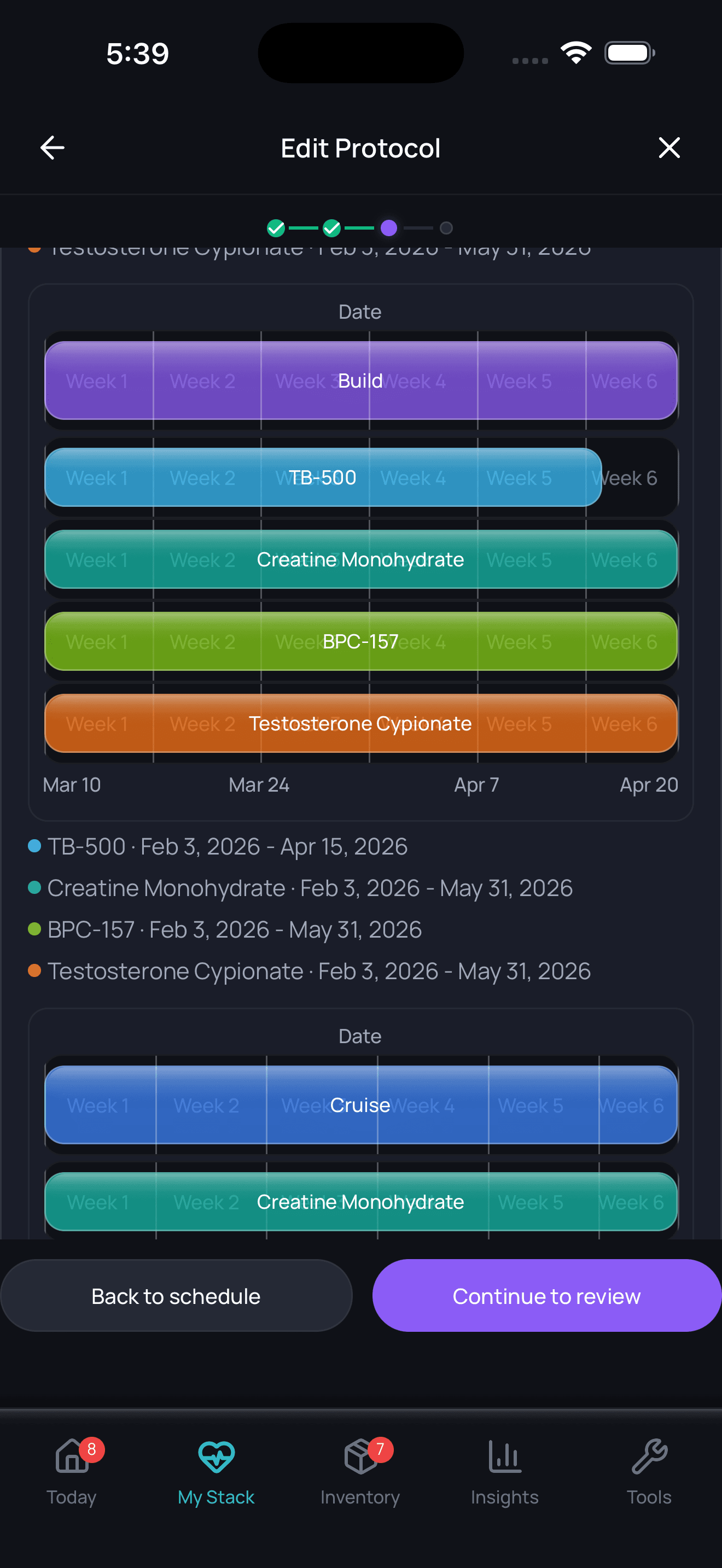
Planning views are organizational and should be aligned with professional guidance.
Choosing a Quality Product
A good papain product does not hide what it is. Look for clear identification of papain as the active enzyme, transparent source information, and labeling that includes activity units or at least meaningful potency detail rather than vague "enzyme blend" marketing [1][10].
Chewable papaya-enzyme products are popular because they are easy to use, but that convenience comes with tradeoffs. Some are effectively candy-like, which makes overuse more likely and active-dose comparison harder. If you plan to use papain regularly, a simpler capsule with cleaner labeling may be easier to evaluate honestly [10][11].
For digestive blends, decide whether you actually want papain only or a broader formula. If your symptoms are clearly protein-related, papain or papain-plus-bromelain may be enough. If meals rich in fat or starch are the real issue, a broader enzyme panel may make more sense than chasing papain dose alone [2][10].
Athletes should raise the bar further. Papain itself is not specifically named on the 2026 WADA Prohibited List, but USADA remains explicit that supplements can still create anti-doping risk through contamination and mislabeling. Third-party sport certification, especially NSF Certified for Sport, is the strongest practical quality filter in this context [8].
Storage & Handling
Papain products should be stored as you would most enzyme supplements: cool, dry, tightly closed, and away from repeated heat or bathroom humidity [1][10]. Enzymes are proteins, and proteins are sensitive to harsh storage conditions.
Chewable products deserve extra attention because they are more likely to absorb moisture, clump, soften, or discolor over time. If a chewable bottle starts sticking together or feels damp, it is reasonable to question whether potency and product quality are still where they should be [10].
Travel use is usually simple if the bottle stays sealed and dry. The main mistake is leaving enzymes in a hot car, gym bag, or steamy bathroom cabinet for weeks. If you only use papain occasionally, smaller bottles may preserve quality better than oversized containers that remain half-open for months.
Lifestyle & Supporting Factors
Papain works best when it is supporting a sensible eating pattern, not trying to rescue chaotic digestion on its own. Slowing down at meals, chewing thoroughly, and noticing whether symptoms are tied to portion size, meal composition, or eating speed often matters as much as the supplement itself.
Hydration, meal timing, and food choice all influence the experience. If papain seems helpful only when a meal is unusually large or protein-dense, that tells you something useful about the underlying pattern. If digestive symptoms persist regardless of food choice or enzyme use, that is a reason to look beyond supplements rather than doubling down on them.
It is also important to know what papain is not. It is not a replacement for medical evaluation of persistent reflux, unexplained weight loss, severe bloating, chronic diarrhea, pancreatic insufficiency, or bleeding-sensitive conditions. In those settings, papain should sit behind real diagnosis, not in front of it.
Regulatory Status & Standards
In the United States, papain products sold as ingestible supplements fall under the dietary-supplement framework created by DSHEA. FDA does not pre-approve these products for safety or effectiveness before sale, and manufacturers are responsible for labeling and safety compliance before the product reaches market [7].
That is different from papain's food-enzyme context in Europe. EFSA's 2026 assessment concluded that papain extracted from unripe papaya latex did not raise a general safety concern under intended food-enzyme use, while still preserving explicit allergenicity caution [1]. That finding helps with regulatory context, but it does not validate papain as an evidence-based disease treatment.
For athletes, the current official reference point is the WADA Prohibited List that took effect on January 1, 2026. Papain is not specifically named on that list, but WADA also notes that the list is not exhaustive and USADA is clear that contaminated or mislabeled supplements can still create anti-doping problems. If you compete under anti-doping rules, the safer standard is not "papain is probably fine." It is "use the fewest supplements possible and prefer third-party certified products if you choose to use one" [8].
FAQ
Is papain the same thing as papaya fruit?
No. Papaya fruit contains papain, but a papain supplement is a concentrated enzyme ingredient or papaya-enzyme product, not the same thing as eating the fruit itself [1][10].
What is papain most likely to help with?
Based on the current dossier, the strongest use case is meal-time digestive support, especially for protein-heavy meals or post-meal heaviness [3][9][10][11].
Does papain reduce inflammation in humans?
It may influence inflammatory pathways, but the strongest evidence in this pipeline is still preclinical. Human claims should stay cautious [4][5][6].
Can papain make reflux or gastritis worse?
Yes, it can for some people. Community reports show a mixed picture, with some users improving and others clearly flaring [9][11].
Should papain be taken every day?
Not necessarily. Many people use it situationally with meals that are hardest to digest rather than as a mandatory daily supplement [9][10][11].
Is papain safe for athletes?
Papain itself is not specifically named on the 2026 WADA Prohibited List, but athlete risk comes from supplement contamination and labeling quality as much as from the named ingredient [8].
Is more papain always better?
No. Stronger exposure is not automatically better, and higher concentration can increase irritation risk without guaranteeing better digestion [3][9][11].
Myth vs. Fact
Myth: Papain is a proven all-purpose anti-inflammatory supplement.
Fact: Papain does affect inflammatory pathways in animal and cell models, but papain-only human evidence is still limited. Digestive support is the more defensible use case today [4][5][6].
Myth: If papain is natural, it cannot irritate the stomach.
Fact: Some users report the opposite. Natural origin does not prevent reflux, burning, or gastritis flares in sensitive people [9][11].
Myth: Papain and papaya are interchangeable.
Fact: They are related, but not identical. Whole papaya, papaya-enzyme products, and isolated papain supplements are different exposures with different formulation issues [1][10].
Myth: Papain is automatically safe if you have food allergies.
Fact: Papain deserves extra caution in people with papaya or latex allergy, and possible cross-reactivity extends beyond papaya alone [1].
Myth: Papain is a natural blood thinner you can use casually.
Fact: Preclinical clotting effects are real enough to justify caution, not casual self-experimentation in bleeding-sensitive situations [6].
Myth: A higher papain number on the label means the better product.
Fact: Activity units, formulation, product clarity, and overall quality matter more than a big number without context [1][10].
Sources & References
Regulatory and Safety Sources
[1] EFSA Journal. "Safety evaluation of the food enzyme papain from the latex of Carica papaya L." docs/supplement-guides/kb/papain/sources/efsa-papain-safety-2026-03-25.md[7] U.S. Food and Drug Administration. "Information for Consumers on Using Dietary Supplements" and related dietary-supplement guidance. docs/supplement-guides/kb/papain/sources/fda-dietary-supplements-2026-03-25.md[8] WADA and USADA. 2026 Prohibited List page and Supplement Connect guidance. docs/supplement-guides/kb/papain/sources/wada-usada-2026-03-25.md
KB Research Sources
[2] Memorial Sloan Kettering Cancer Center. "Proteolytic Enzymes." docs/supplement-guides/kb/papain/sources/mskcc-proteolytic-enzymes-2026-03-25.md[3] PubMed Central. "Effects of Proteases from Pineapple and Papaya on Protein Digestive Capacity and Gut Microbiota in Healthy C57BL/6 Mice and Dose-Manner Response on Mucosal Permeability in Human Reconstructed Intestinal 3D Tissue Model." docs/supplement-guides/kb/papain/sources/pmc-gut-microbiota-2026-03-25.md[4] PubMed Central. "Papain Ameliorates Lipid Accumulation and Inflammation in High-Fat Diet-Induced Obesity Mice and 3T3-L1 Adipocytes." docs/supplement-guides/kb/papain/sources/pmc-obesity-inflammation-2026-03-25.md[5] PubMed Central. "Papain Suppresses Atopic Skin Inflammation through Anti-Inflammatory Activities Using In Vitro and In Vivo Models." docs/supplement-guides/kb/papain/sources/pmc-skin-inflammation-2026-03-25.md[6] PubMed Central. "Unveiling the Potent Fibrino(geno)lytic, Anticoagulant, and Antithrombotic Effects of Papain." docs/supplement-guides/kb/papain/sources/pmc-antithrombotic-2026-03-25.md
Community Sources
[9] Reddit mixed papain discussion extract. docs/supplement-guides/kb/papain/community/reddit-mixed-2026-03-25.md[10] iHerb papain product-review snapshot. docs/supplement-guides/kb/papain/community/iherb-reviews-2026-03-25.md[11] Papain sentiment synthesis. docs/supplement-guides/kb/papain/community/sentiment-analysis.md