
Supplements
October 16, 2026
Zinc and copper: the interaction that gets lost in immune-support stacks
On this page
Zinc and copper are both essential minerals, but taking more of one can interfere with the other. Zinc helps support normal immune function and many enzymes. Copper contributes to energy production, iron handling and nervous-system function. A supplement routine built around “immune support” can therefore affect something well beyond the goal printed on the bottle.
The interaction becomes especially relevant when zinc appears in several products: a multivitamin, a daily mineral capsule and repeated cold remedies, for example. The total amount and duration matter more than whether each individual product looks reasonable. Adding copper automatically is not a reliable way to make an excessive zinc routine safe.
This article explains the intestinal mechanism, what actual patients have experienced and how to review overlapping products without diagnosing a deficiency yourself. Our zinc guide and copper guide cover the two minerals more broadly.
What each mineral normally does
Zinc participates in immune activity, protein and DNA synthesis, wound healing and cell signaling. Adult recommended dietary allowances are 11 mg daily for men and 8 mg for women, with different requirements in pregnancy and lactation. These are total dietary intake targets, not recommended supplement amounts for everyone. NIH zinc fact sheet.
Copper is required in much smaller quantities: the adult recommended allowance is 900 micrograms daily, equivalent to 0.9 mg. It works as part of enzymes involved in energy production, connective tissue and iron metabolism. Foods such as shellfish, nuts, seeds, whole grains and organ meats can contribute copper. A nutritious diet can contain both minerals without requiring a deliberately calculated supplement ratio. NIH copper fact sheet.
“Essential” means the body needs an adequate supply. It does not mean that raising intake indefinitely improves the functions the mineral supports. If the purpose is preventing deficiency, the relevant question is whether intake or absorption is inadequate, not how many physiological processes use the nutrient.
How excess zinc interferes with copper
The interaction occurs partly in cells lining the intestine. Zinc stimulates production of a metal-binding protein called metallothionein. That protein binds copper strongly, holding more of it inside intestinal cells instead of allowing it to reach the circulation. When those cells are shed, the retained copper can be lost.
This is more specific than saying the minerals “compete.” The effect involves changes in the intestinal lining, which is why simply taking zinc at breakfast and copper at dinner cannot be assumed to remove the problem. The mechanism is described in the clinical literature on zinc-associated copper deficiency. 2026 clinical report.
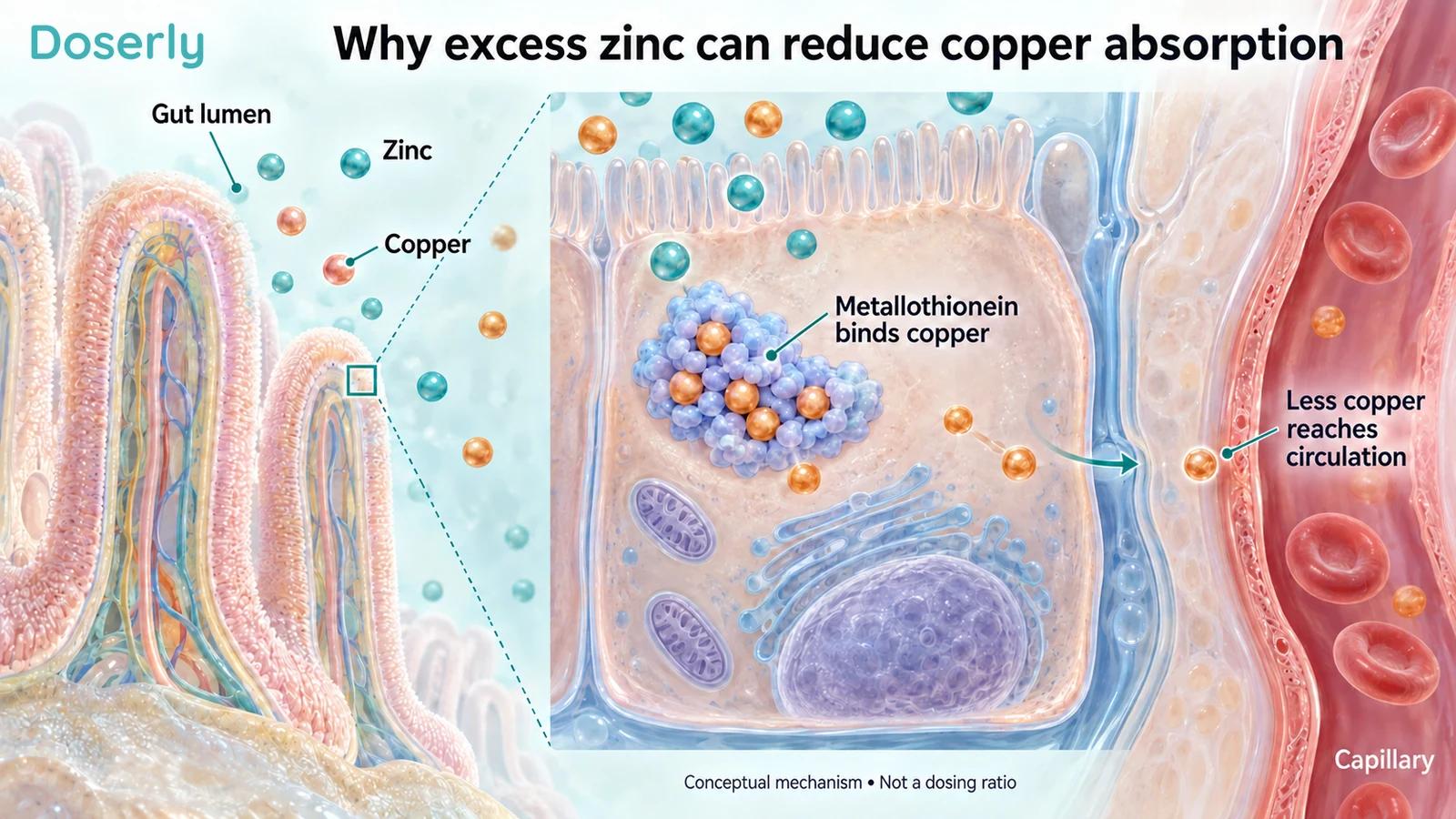
The amount absorbed also depends on the person’s overall health. Previous gastrointestinal surgery, malabsorption and other nutritional problems can change the picture. A product label cannot capture those differences. They help explain why two people taking apparently similar supplements may not have the same laboratory results or symptoms.
What do human cases actually show?
A 2026 report described a 70-year-old woman taking a zinc-containing eye-health supplement long term. She developed progressive tingling, walking instability and falls over six months. Testing found undetectable serum copper, mildly elevated zinc, anemia and additional abnormalities, including thiamine deficiency.
After the zinc-containing product was stopped and copper and thiamine were replaced, her copper level normalized and walking improved substantially over two months. Several things changed together, so the case cannot identify zinc as the sole cause or copper as the sole reason for recovery. Original case report.
The report is relevant to an immune-support stack because it demonstrates why total zinc exposure belongs in a clinical history. It was not a trial of immune supplements, however. Nor does it establish the risk of an eye formula for every person prescribed one. If a clinician recommended a specific preparation for a diagnosed condition, discuss concerns with that clinician instead of changing the formulation yourself.
Why neurological symptoms deserve attention
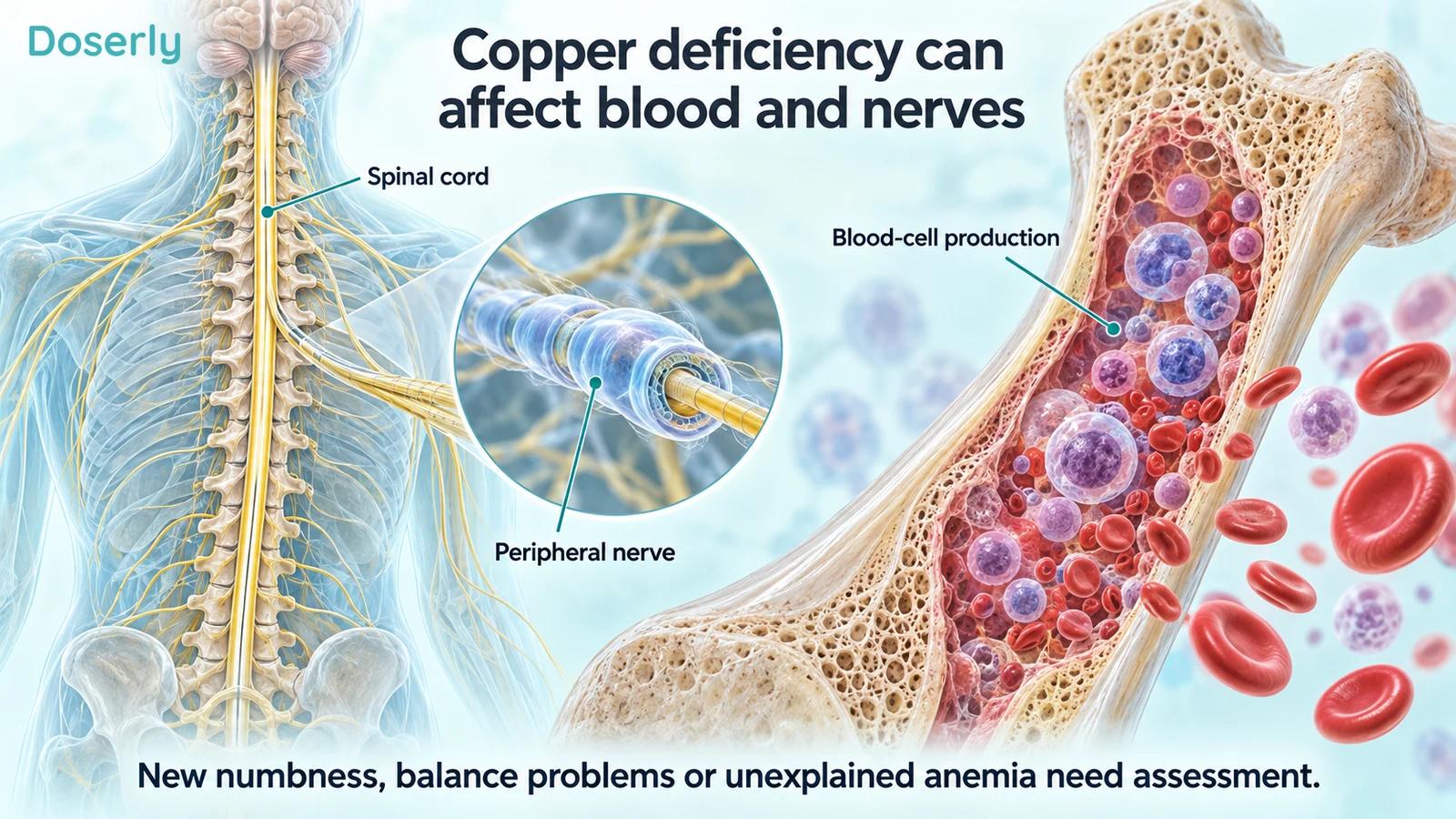
Myelopathy means dysfunction of the spinal cord. Peripheral neuropathy affects nerves outside the brain and spinal cord. Copper deficiency can involve both, producing symptoms such as altered sensation and difficulty coordinating walking. These symptoms overlap with other conditions, including vitamin B12 deficiency.
In a 2004 series of 13 patients with copper-deficiency myelopathy, all had prominent gait difficulty and polyneuropathy. Copper replacement prevented further deterioration, but actual improvement varied. The cause of deficiency remained unexplained in many patients. This was a selected clinical series, not a survey estimating how often supplements cause nerve disease. Kumar and colleagues.
The practical lesson is that restoring a blood level does not guarantee complete neurological recovery. New progressive numbness, loss of balance, repeated falls or weakness should be assessed promptly. Do not wait for an online mineral-ratio calculation or try several additional products before seeking care.
Zinc exposure can come from unexpected places
The supplement shelf is not the only place to look. A 2008 report described four patients with neurological abnormalities, low copper and high zinc who chronically used very large amounts of denture cream. Researchers tested the products and identified substantial zinc content. Some patients improved after stopping the exposure and receiving copper, but neurological improvement was limited. Nations and colleagues.
That historical finding should not be generalized to every current denture adhesive. Formulations differ, including zinc-free options. FDA advises following product directions and consulting a dentist when more adhesive is needed because dentures fit poorly. Excessive use can make exposure different from what the manufacturer intended. FDA denture-adhesive guidance.
A useful clinical inventory therefore includes oral-care products as well as pills, powders and lozenges. The question is what enters the body repeatedly, not which aisle it came from. Record actual use rather than assuming the labeled serving matches your routine.
How much zinc is too much?
For generally healthy adults, the US tolerable upper intake level is 40 mg daily from food and supplements combined. The upper limit is a risk-management value, not a target. NIH notes that 50 mg or more daily for weeks can interfere with copper absorption and can have other adverse effects. Medical use above the upper limit requires clinical supervision. NIH zinc safety guidance.
These figures do not mean 39 mg is guaranteed safe for every person or that one day above 40 mg inevitably causes deficiency. Duration, baseline nutrition and absorption matter. The point is to recognize repeated high exposure and have a reason for it.
For an illustrative label check, suppose a daily product provides 15 mg and a separate tablet provides 25 mg. Together they already provide 40 mg before food or occasional lozenges are counted. Those are hypothetical labels, not a recommended combination. The arithmetic is simple; the clinical interpretation requires more than arithmetic.
Check the number of tablets per serving. Some packages list the amount for two capsules, while others list one. Also distinguish elemental zinc from the weight of zinc gluconate or another compound. The Supplement Facts panel reports the elemental amount relevant to comparing intakes.
Why adding copper is not a universal fix
A zinc-to-copper ratio does not tell you whether either mineral is appropriate in the first place. A seemingly balanced pair can still provide unnecessarily high amounts, and a ratio cannot diagnose impaired absorption or explain neurological symptoms.
Copper itself can be harmful in excess. NIH describes gastrointestinal symptoms and liver damage with excessive exposure, and particular concern in disorders of copper handling such as Wilson disease. Buying an additional mineral to offset another should therefore start with a review of the original zinc indication. NIH copper safety information.
There are medically designed formulations that contain both minerals. Their existence does not establish a universal ratio for an independently assembled stack. The relevant question is whether the actual formula is appropriate for the specific condition and person. If a treatment was prescribed, keep its purpose visible during the review.
Separating doses by a few hours also should not be represented as a proven safeguard against long-term zinc-associated copper deficiency. The intestinal response to exposure is not simply a one-time collision between two tablets.
What testing can and cannot tell you
A clinician investigating suspected deficiency may consider serum copper, ceruloplasmin, zinc and a blood count, alongside the history and examination. Ceruloplasmin is a copper-carrying protein involved in iron metabolism. Low values can support the diagnosis, but neither copper nor ceruloplasmin is a perfect stand-alone measure of nutritional status.
Inflammation, infection, estrogen status and pregnancy can affect these measurements. Interpreting one result without context can therefore mislead. The NIH copper fact sheet emphasizes the limitations of available biomarkers. NIH assessment of copper status.
Anemia also has many possible causes. “Low blood count” does not automatically mean iron deficiency, and a normal blood count does not explain away progressive neurological symptoms. The 2004 clinical series illustrates why examination and a broader differential diagnosis matter. Copper-deficiency myelopathy series.
If testing identifies a problem, follow-up should address both the cause and the response to treatment. Changing a number is only one part of the goal; improving function and preventing further harm are also important.
Build a supplement history that a clinician can use
Start with every zinc-containing product and why you use it. Include cold remedies used intermittently, eye-health formulas, multivitamins and oral-care products. Record the start date as accurately as possible, even if the answer is only an approximate month.
Next, describe symptoms in ordinary language. “My feet began feeling numb in June and I started stumbling in August” is more useful than diagnosing yourself with a mineral imbalance. Include gastrointestinal surgery, persistent diarrhea or major dietary restrictions, because these may alter the investigation.
A dated Doserly record can help connect product changes with the timeline you report. It cannot establish that zinc caused a symptom, and a coincidental improvement after stopping a product is not definitive proof either. The record’s value is making the history complete enough to assess.
Finally, review medicines. Zinc can interfere with absorption of certain antibiotics and penicillamine; the appropriate timing depends on the drug. Ask a pharmacist about the actual prescription rather than using a universal spacing rule. NIH zinc interactions.
The aim is a routine with a clear purpose and an appropriate total exposure. For more background before that conversation, the copper guide explains its physiological roles, while the zinc guide covers uses, formulations and interactions.
Sources
- NIH Office of Dietary Supplements: zinc.
- NIH Office of Dietary Supplements: copper.
- Zinc-associated Copper Deficiency Myelopathy, 2026.
- Kumar et al., 2004: 13-patient myelopathy series.
- Nations et al., 2008: denture cream and excess zinc.
- FDA: denture adhesives.