
Peptides
October 16, 2026
What would a modern DSIP insomnia trial need to measure?
On this page
A worthwhile insomnia treatment should help people sleep in a way that improves their lives. Falling asleep sooner can matter. So can spending less of the night awake, feeling less impaired the next day and being able to continue treatment without troublesome adverse effects. A favorable brain-wave finding alone cannot answer all of those questions.
DSIP, or delta sleep-inducing peptide, has been tested in small human sleep studies, but those studies did not establish a consistent, substantial treatment benefit. A modern trial would need to address the gaps directly rather than repeat a short experiment and report whichever sleep variable happened to improve.
What follows is a proposed evidence framework, not an announced DSIP trial, a treatment protocol or a recommendation to experiment. It explains what patients should be able to learn from a convincing future study. For background on the compound, see our DSIP guide.
Start with the problem the patient wants treated
“Better sleep” is too broad to be a complete trial question. Difficulty falling asleep, repeated prolonged awakenings and persistent daytime impairment can require different outcome measures. A study should define the clinical problem before selecting the instrument that will measure it.
The population matters just as much. Adults with chronic insomnia are not interchangeable with healthy volunteers invited to nap in a laboratory. Sleep disruption during withdrawal, narcolepsy or another medical condition presents a different question again. A positive result in one group would not automatically support all the others.
A useful DSIP trial would explain how insomnia was established, how long symptoms had been present and how they affected daytime life. It would describe relevant coexisting conditions and medicines so that readers could judge who the result applies to. Excluding every common complexity might make a study easier to run, but would narrow its usefulness to everyday patients.
What the older studies leave unresolved
Monti and colleagues' 1987 blinded crossover study used sleep recordings in people with chronic insomnia. Some measures moved favorably, but several key differences were not significant against baseline or placebo. Slow-wave and REM sleep did not change, and stage 2 findings were complicated by baseline differences. The authors judged the clinical improvement limited. Monti study
A 1992 double-blind study enrolled 16 people, with DSIP or placebo given before the final three nights of a five-night laboratory stay. Some objective measures favored DSIP, but effects were weak and subjective sleep quality did not improve. The investigators did not expect major short-term therapeutic benefit. Bes and colleagues
These reports identify concrete design needs: adequate group size, comparable starting points, outcomes that matter to patients and observation beyond a few nights. Their age is not the main defect. Their limited ability to answer a sustained clinical treatment question is.
Identify the exact intervention before testing it
A trial needs a defined formulation, route and quality standard. “DSIP” as a general label is not enough to establish that every participant receives a consistent intervention or that the result applies to a different product.
FDA's 2026 emideltide review found no supporting effectiveness studies for the nominated subcutaneous route and described limitations in the intravenous literature. It also identified gaps in pharmacokinetic information for the proposed route. FDA emideltide briefing
That makes product characterization and exposure research important prerequisites for a meaningful efficacy trial. Researchers need a defensible reason for the selected regimen and a way to verify what was administered. A dose should not be chosen solely because it is common on a protocol website.
The purpose of this requirement is interpretability as well as safety. If the study is negative, researchers need to know what exposure was tested. If it is positive, another team needs enough information to reproduce the intervention. Neither result is useful if the formulation remains ambiguous.
Choose a main outcome before seeing the results
The primary outcome is the main measurement the trial is designed to test. Choosing it in advance prevents researchers from measuring many things and later presenting the most favorable one as though it had always been the central question.
For a study focused on sleep maintenance, time awake after initially falling asleep might be a relevant measure. For a study focused on sleep initiation, time to fall asleep might be more appropriate. A broader insomnia-severity measure can capture aspects that a single night-time variable misses. The choice should follow the clinical aim, not the ease of obtaining an attractive graph.
Other outcomes can still be valuable. They should be identified as secondary or exploratory and interpreted accordingly. If the main outcome is negative but one of many additional measures is positive, that may generate a new hypothesis. It does not automatically establish a successful treatment.
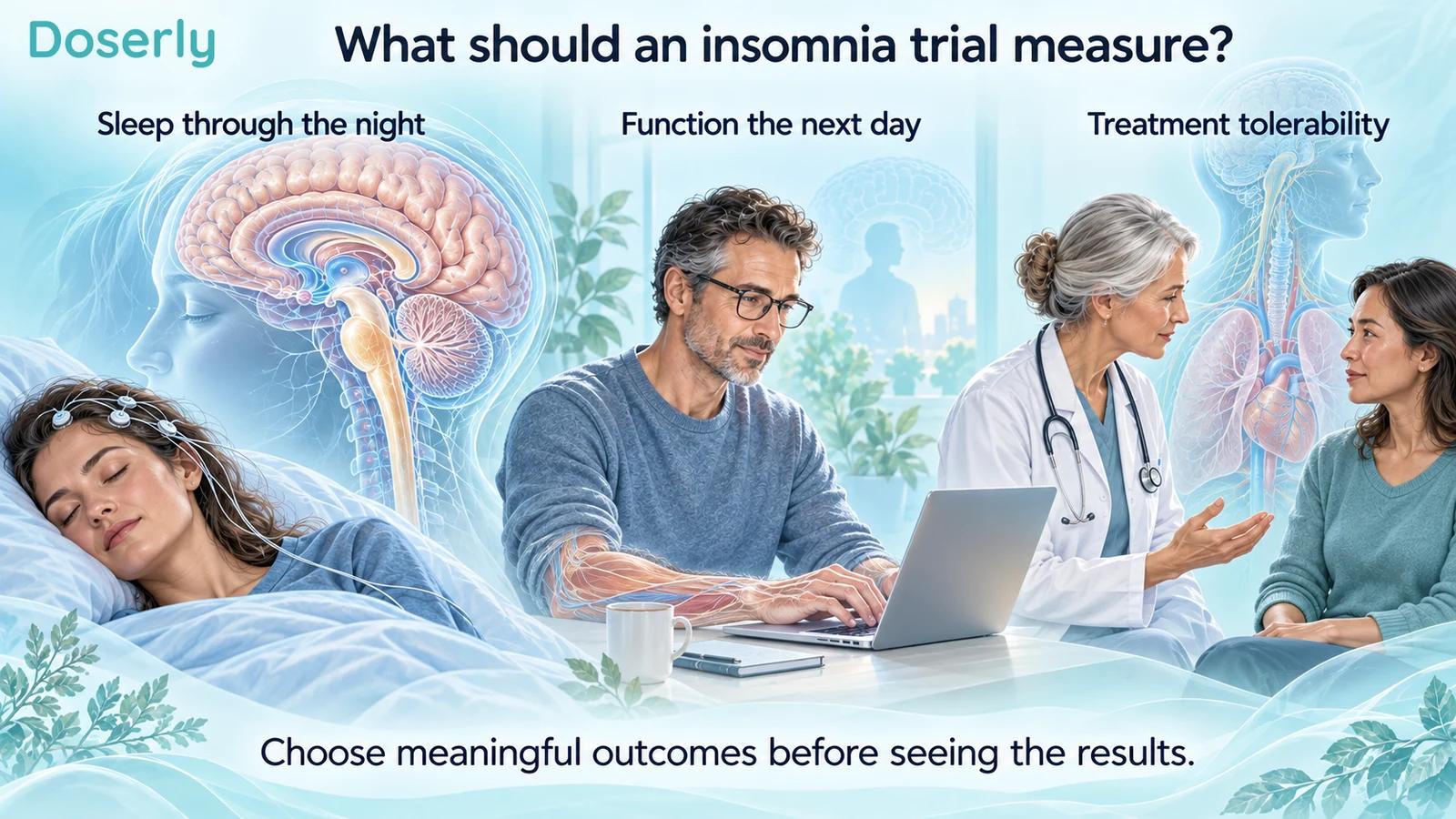
Measure the experience of insomnia, not only its timing
A patient-reported instrument can systematically capture symptoms and their impact. The Insomnia Severity Index, or ISI, is one such measure. A 2011 validation study examined it in a community sample of 959 people and a clinical sample including 183 people assessed for insomnia treatment and 62 controls. It found evidence that the instrument could detect insomnia-related problems and respond to treatment-related change. ISI validation study
That does not make a questionnaire an infallible diagnosis or replace clinical assessment. It provides a standardized way to measure a person's experience and compare change across participants. A future DSIP trial could use an appropriately justified instrument alongside specific sleep measures.
The difference between a statistically detectable change and a meaningful change should also be planned. A very small average improvement may be unlikely to occur by chance in a large sample yet still be unimportant to patients. Researchers should explain how they chose a threshold for worthwhile improvement and whether that threshold fits the population being studied.
Combine diaries with appropriate physiological measurements
The Consensus Sleep Diary was developed to standardize prospective reports of sleep through expert review and feedback from potential users. That kind of instrument can help record the experience of multiple nights consistently. Consensus Sleep Diary
A diary and a laboratory recording provide different information. Polysomnography measures brain activity and other physiological signals, including breathing and oxygenation. It can characterize sleep stages and help investigate other sleep disorders. NHLBI sleep studies
A modern trial should explain why each measurement is included. If the claim specifically concerns deep sleep, researchers need a suitable method for measuring it. If the claim concerns less distress and better daily function, those outcomes should be measured directly rather than inferred from a stage percentage.
Repeated observations are useful because one night can be atypical. The study should also specify how it handles missing diary entries, failed recordings and nights affected by unusual events. Selectively retaining the cleanest or best nights could distort the result.
Give daytime function its own assessment
An insomnia treatment can appear successful overnight while leaving someone sleepy or impaired the following morning. Conversely, a person may feel more capable during the day even when a laboratory measure changes only modestly. Both patterns deserve attention.
A trial should distinguish fatigue, sleepiness and the ability to perform ordinary activities rather than combining them into an undefined “energy” claim. The appropriate instruments and tests depend on the intended benefit. Their assessment times should be specified so one group is not measured under systematically different conditions.
Daytime assessment also helps interpret harms. If people fall asleep faster but have difficulty staying alert the next morning, the net benefit may be smaller than the nighttime result suggests. This is not a prediction about DSIP; it is a question the trial must be able to answer.
Use a comparison that separates treatment from participation
Random assignment helps make treatment groups comparable. Blinding helps reduce differences in expectations and assessment. A suitable placebo comparison can help account for improvement associated with participating in a study and receiving consistent attention.
The surrounding care should also be described. If one group receives more behavioral support, medication adjustment or contact with clinicians, a difference cannot be attributed solely to the peptide. Rescue treatments used for difficult nights need a clear policy and transparent reporting.
Established care should not disappear from the design discussion. AASM strongly recommends multicomponent cognitive behavioral therapy for insomnia for adults with chronic insomnia. A future trial would need to explain how it relates to that care—whether participants receive it, have already tried it or are being studied under some other justified design. AASM guideline
A placebo comparison could establish benefit over placebo under the trial's conditions. It would not establish superiority to CBT-I or another active treatment unless that treatment was actually compared appropriately.
Follow participants after treatment ends
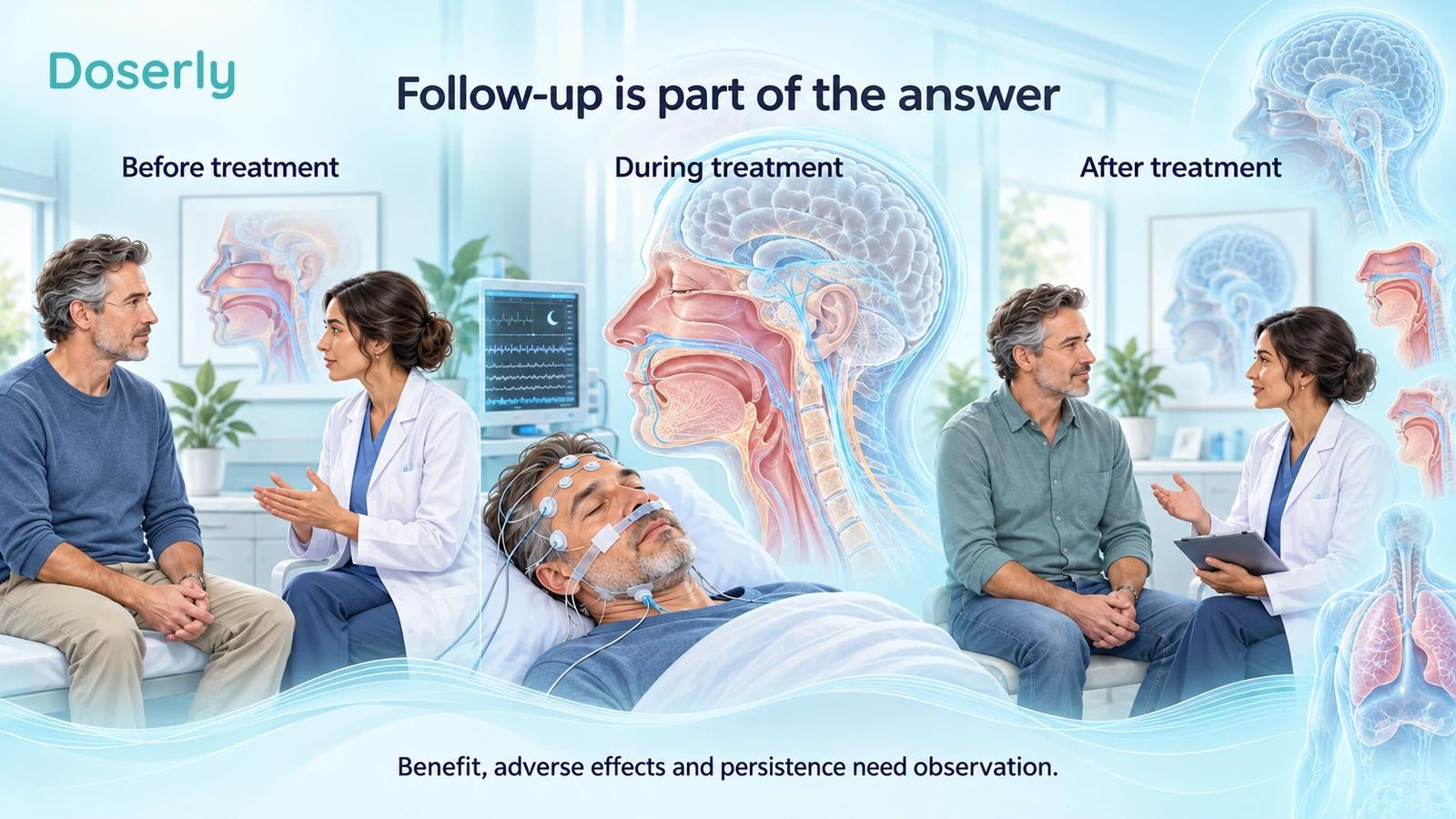
A few nights cannot show whether a benefit persists, fades or requires continued exposure. Follow-up after stopping can also identify whether symptoms return, become worse than baseline or change in another clinically relevant way.
These are different outcomes. Return of the original insomnia is not automatically rebound insomnia, and either is distinct from a withdrawal syndrome. A trial should define these terms and collect the information needed to distinguish them rather than using one broad label for every post-treatment symptom.
The appropriate duration depends on the claim. An investigation of immediate physiological response can be brief. A claim of sustained insomnia relief requires a longer observation period and a clear assessment of continued benefit. There is no scientifically justified shortcut from a short trial to a lifetime safety or efficacy claim.
Count adverse effects and discontinuations honestly
Safety reporting should include what happened, how severe it was, when it occurred and whether it led to stopping treatment. A summary that says only “well tolerated” leaves out information patients need.
People who stop because of poor response or adverse effects should not simply disappear from the analysis. A result calculated only among enthusiastic completers can overstate benefit and understate burden. Researchers should prespecify how missing outcomes and treatment discontinuation will be handled and show the flow of participants through the study.
Small studies also have limited ability to identify uncommon harms. Even a carefully conducted efficacy trial will not answer every safety question. The report should describe the amount and duration of exposure actually observed rather than interpreting an absence of detected events as proof of no risk.
Make the result interpretable, including if it is negative
Sample size should be based on a clinically relevant difference and plausible variability, with allowance for attrition. A study too small to exclude a meaningful benefit or harm may leave the main question unanswered even when its statistical test is negative.
Confidence intervals help readers see that uncertainty. Reporting an estimated difference with its interval is more informative than only reporting whether a P value crossed a threshold. The same applies to prespecified subgroups: an apparent difference in a small subgroup should not become a treatment recommendation without adequate support.
Registration and a prespecified analysis plan make the intended question visible before results are known. A registration is not a result, however. A useful report must eventually show what happened to all the relevant outcomes, including unfavorable or inconclusive findings, and explain departures from the planned methods.
What patients should be able to learn
A convincing modern DSIP study should let a reader answer practical questions: Who benefited, by how much, on which outcomes, for how long and with what adverse effects? It should identify the tested product and make clear how much uncertainty remains.
It would also distinguish a mechanism finding from a treatment finding. A change in sleep-stage physiology may help explain an effect, but patients need evidence that the treatment improves the problem they sought help for. A positive result would apply first to the studied population and intervention; a negative result would still need interpretation within those same boundaries.
The older DSIP literature leaves enough uncertainty that these design choices matter. A modern trial should resolve a patient question rather than simply produce another promising-looking measurement. Until such evidence is available, the framework describes what remains to be learned, not a proven way to use DSIP for insomnia.
Sources
- Monti and colleagues, short-term DSIP insomnia study, 1987.
- Bes and colleagues, double-blind DSIP study, 1992.
- FDA, emideltide evidence and formulation review, 2026.
- Morin and colleagues, Insomnia Severity Index validation, 2011.
- Consensus Sleep Diary development, 2012.
- NHLBI, sleep studies.
- AASM, behavioral insomnia treatment guideline, 2021.