
TRT
October 18, 2026
TRT and tendon injuries: what the newer research can tell us
On this page
A new tendon-injury headline can be unsettling if testosterone treatment has helped you regain energy or strength. It is also easy to misunderstand. “More tendon injuries in people prescribed testosterone” is a finding worth taking seriously. It is not the same finding as “testosterone caused this person's torn tendon,” and it does not tell us which prescription or activity change would prevent an injury.
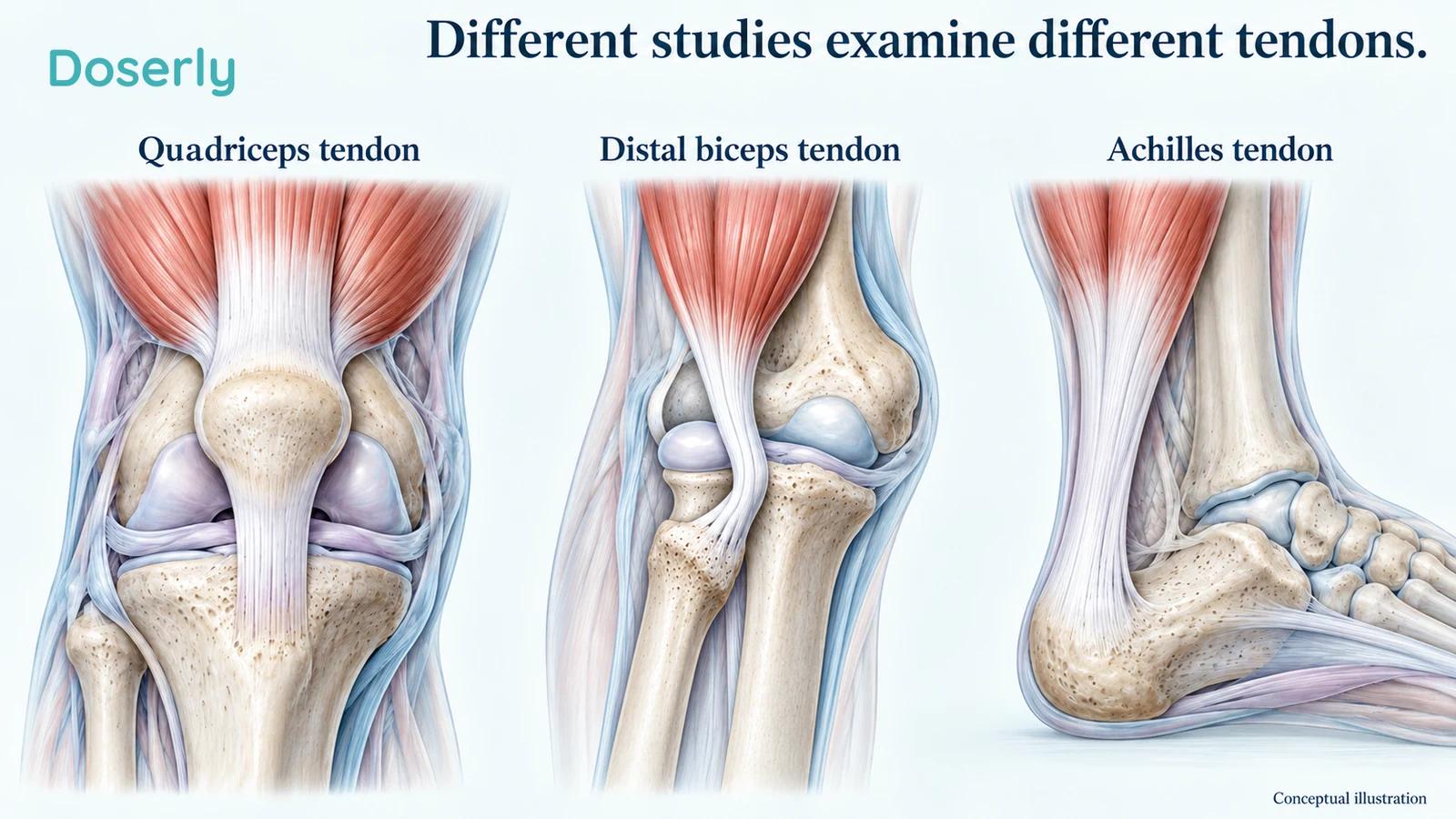
The evidence has expanded beyond reports involving bodybuilding drugs. Several large retrospective studies now connect prescription testosterone with diagnosed injuries at the Achilles, quadriceps, distal biceps and shoulder. Research published in 2025 and 2026 adds both supporting signals and useful inconsistencies.
As of October 17, 2026, the association is credible enough to discuss during care, but its size and cause remain uncertain for men receiving well-monitored replacement for confirmed hypogonadism. The practical response is to review the treatment indication, activity changes, other risks and new symptoms. It is not to assume stronger muscles mean protected tendons, or that every sore joint requires stopping TRT.
What a tendon does, and why the outcome needs a name
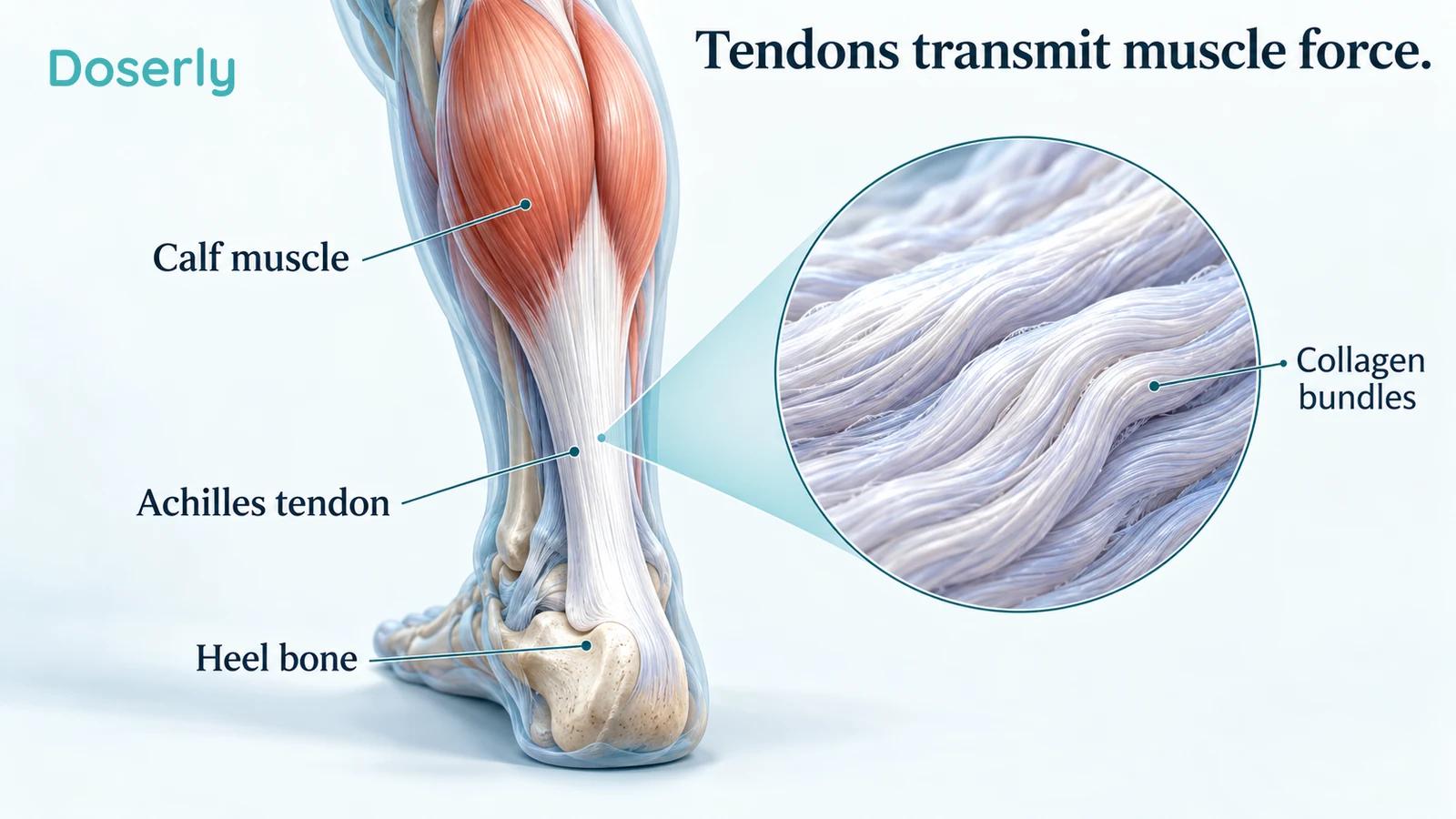
A tendon is connective tissue that transmits force from muscle to bone. The Achilles connects the calf muscles to the heel and participates in walking, running and pushing onto the toes. A partial tear leaves some fibers intact; a complete rupture interrupts the tendon more fully. Clinical examination and, when needed, imaging help establish the injury. MedlinePlus Achilles information
Pain around a tendon, a coded “injury,” an imaging-confirmed tear and an operation are not interchangeable. That matters when comparing papers. One database may group muscle and tendon injuries under available billing codes. Another may focus on a particular tear diagnosis or on surgery after the diagnosis. The resulting percentages answer different questions.
For a reader, the first useful question is therefore very concrete: what happened? A person with weeks of gradually increasing heel pain has a different immediate problem from someone who heard a pop and suddenly lost push-off strength. Neither situation can be diagnosed by whether testosterone appears on the medication list.
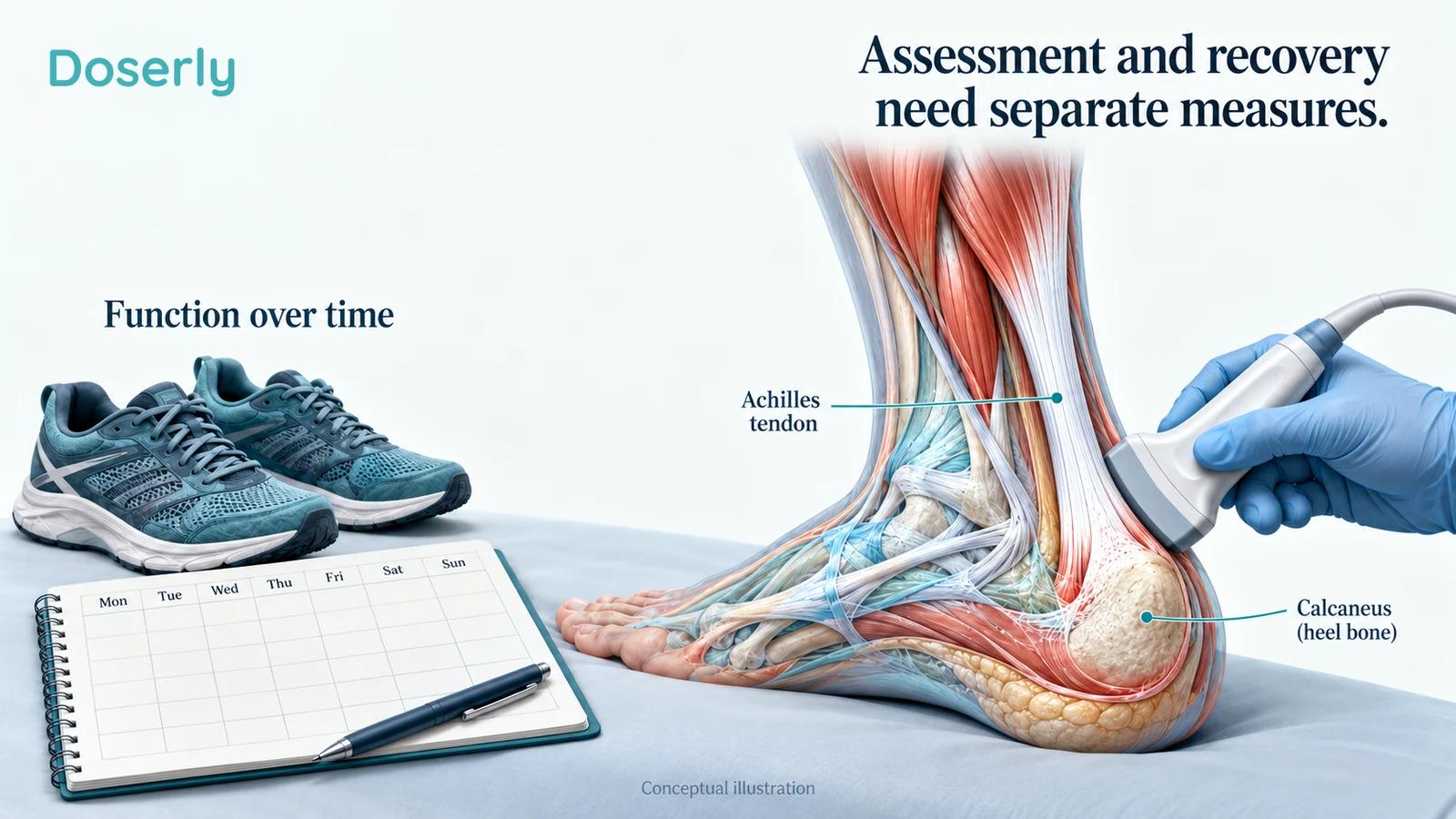
The same distinction applies to recovery. A rehabilitation plan should address the injured structure and function. A blood testosterone concentration cannot establish that a tendon has healed enough for a particular movement, and an improvement in general energy does not measure tissue integrity.
Bodybuilding evidence started the concern, but does not define replacement risk
A 2015 study obtained histories from 142 experienced male bodybuilders: 88 with substantial lifetime anabolic-androgenic steroid exposure and 54 without such use. At least one lifetime tendon rupture was reported by 19 users, or 22%, versus three nonusers, or 6%. Upper-body ruptures occurred only in the exposed group; the lower-body comparison was not statistically significant. Kanayama and colleagues
This was an observational study of long-term anabolic-steroid use, not randomized physiological replacement. Lifetime exposure, intense training and the selection of experienced bodybuilders all limit its application to a patient treating documented deficiency. It provides a reason to investigate tendon outcomes, not a numerical forecast for ordinary TRT.
Keeping the exposure clear is especially important because the word “steroids” can hide different medicines and purposes. Testosterone prescribed to replace deficiency, supraphysiological anabolic regimens and anti-inflammatory glucocorticoids are different clinical contexts. A result from one should not silently become a result for the others.
When discussing your own history, include all relevant exposures accurately. A prescription record alone may not describe what someone actually used, and research cannot correct for information that was never recorded.
The Achilles study: a signal with a small absolute event rate
A 2023 matched claims study compared 423,278 patients prescribed at least three consecutive months of testosterone with controls. Over the two-year observation window, diagnosed Achilles injuries occurred at rates of 377.8 versus 245.8 per 100,000 person-years. The adjusted odds ratio was 1.24, with a 95% confidence interval of 1.15–1.33. Albright and colleagues
Those incidence rates differ by about 132 diagnoses per 100,000 person-years, a calculation from the reported figures. They are rates over accumulated follow-up time, not percentages of patients who ruptured a tendon. The adjusted odds ratio is a separate statistical estimate and should not be presented as the raw rate ratio.
Among people diagnosed with an Achilles injury, surgery was recorded in 9.0% of the testosterone group and 6.4% of controls. The study used billing codes and could not establish whether the drug caused the injury. It also did not provide a blood testosterone threshold at which injury becomes likely.
The practical message is neither “nothing to worry about” nor “a rupture is likely.” It is that a large dataset detected an association, while most patients did not have the recorded event during the studied interval. Both parts belong in the conversation.
Quadriceps and biceps findings show why denominators matter
A separate matched study examined quadriceps muscle or tendon injuries. Within one year, there were 97 recorded injuries among 151,797 testosterone users and 18 among an equal number of controls. The reported odds ratio was 5.4, but the absolute proportions were approximately 0.064% and 0.012%. The difference was about 52 injuries per 100,000 people over that year, calculated from the published counts. Quadriceps study
That is a large relative association for an uncommon recorded outcome. The coding definition matters: it was broader than a perfectly verified set of isolated quadriceps tendon ruptures. The result does not mean five out of every ten treated patients will be injured.
A 2023 distal-biceps analysis matched 291,610 testosterone users with the same number of controls. There were 650 versus 159 injuries within a year, corresponding to about 0.223% versus 0.055%, calculated from the counts; the reported odds ratio was 4.10. This was another retrospective prescription-and-claims comparison, not a randomized trial. Rebello and colleagues
Seeing signals at different sites adds reason for attention. It does not allow the percentages to be added together. Cohorts may overlap, observation periods differ, and the same person can contribute to more than one diagnostic category. Combining the numbers casually would create a risk estimate no study actually measured.
What the 2025 study adds, including a negative finding
Waters and colleagues studied 112,242 men starting testosterone near a primary-care visit, matched to 448,968 controls. The selected population lacked the documented diagnoses used as treatment indications in the study. Any tendon tear was more frequently recorded at one and two years, with odds ratios of 1.33 and 1.31; several site-specific outcomes were also elevated. 2025 study
The Achilles comparison was not significant: its one-year odds ratio was 0.93, with a confidence interval of 0.66–1.31, and the two-year estimate also included no difference. That does not prove protection, but it prevents a claim that every study finds increased injuries at every site. Original Achilles table
The title's phrase “without indication” needs care. Missing diagnoses or documented testing in a database are not equivalent to proving that every participant had normal testosterone. The cohort is nevertheless different from a carefully characterized group with confirmed symptomatic hypogonadism. The paper disclosed consulting, speaking or royalty relationships involving several authors and orthopaedic companies.
For patients and clinicians, that distinction reinforces the value of a documented indication. It does not establish that appropriate prescribing eliminates a tendon association, because the study was not designed to make that comparison directly.
The 2026 institutional study complicates the surgical story
An April 2026 study examined records from a single academic institution between 2015 and 2023. Men using testosterone had recorded tendon-rupture proportions of 3.6% versus 1.3% among nonusers, an odds ratio of 2.88. The female comparison was not statistically significant. These are institutional cohort proportions, not annual risks applicable to everyone. Dajani and colleagues
Its shoulder subanalysis included 78 testosterone users and 355 matched controls with rotator-cuff tears. Testosterone users received nonoperative care more often, 74.4% versus 46.7%. Tear severity and revision rates did not differ significantly. This diverges from a simple narrative in which testosterone exposure always predicts more surgery and worse repair outcomes.
The authors could not adequately characterize blood levels, treatment changes or dose relationships. Exercise and chronic tears presenting with new symptoms could still confound the findings, while the small repair subgroup limited uncommon-outcome estimates. The publication disclosed VA and NIH-related support.
This study improves the clinical detail available beyond billing codes, but it remains observational. The important addition is the combination of an injury association and different treatment patterns, not proof of a universal biological effect or a reason to assume that surgery is inappropriate for testosterone users.
Why surgery is not a direct measure of tendon damage
Surgery depends on more than whether an injury exists. A patient's functional needs, tear characteristics, medical suitability, access to treatment and preferences can all influence the decision. A higher repair rate may reflect more severe injuries, but it can also reflect who presents, which injuries are recognized and how treatment is offered.
This is why the differing surgical findings matter clinically. A count of operations cannot automatically serve as a count of tissue failures caused by a drug. Likewise, fewer operations cannot establish that a treatment protects tendons. Both interpretations skip the decision process between diagnosis and operation.
Imagine two people with similar imaging findings: one needs overhead strength for work, while the other has different demands and chooses nonoperative management. Their treatment records diverge even if the anatomy is comparable. This example does not explain away the research; it shows why a surgical endpoint needs information about patient selection.
If you already have a tear, the relevant discussion is about your examination, imaging, goals and treatment choices. The population association should be part of the medication history, rather than a substitute for an individualized orthopaedic assessment.
What the databases cannot separate
Matching and statistical adjustment make comparison groups more alike on recorded characteristics. They do not create random assignment. A person prescribed testosterone may differ from a control in exercise intensity, prior injuries, healthcare contact, underlying illness or reasons for seeking treatment. Some of those differences are poorly recorded in claims data.
There are at least two clinically different possibilities behind an association. Testosterone could affect tendon biology directly. Alternatively, treatment might accompany changes in strength, activity or loading that alter injury exposure. Both could operate together, and other differences could contribute. The available observational results cannot assign a precise share to each explanation.
A third issue is detection. Someone who sees clinicians regularly may have more opportunities for a painful shoulder to be investigated and coded. A condition can also predate its first recorded diagnosis. These possibilities are particularly relevant to chronic tendon problems that become symptomatic at a later date.
None of this makes a repeated association meaningless. It defines what we would need to know before choosing a prevention strategy. If loading changes are important, training history matters. If exposure is important, accurate formulation and blood-level data matter. If pre-existing disease explains part of the signal, baseline tendon status matters.
Other medicines deserve a place in the review
The medication history should include more than testosterone. A population-based case-control study of Achilles or biceps rupture found an association with oral glucocorticoid exposure that varied with dose and timing; inhaled exposure did not show the same association in that study. This is a separate medication class and a separate body of evidence. Spoendlin and colleagues
Fluoroquinolone antibiotics are another relevant exposure. A UK database study found higher tendon-rupture risk with current fluoroquinolone use, particularly alongside oral corticosteroids. Its absolute effects varied with age and co-exposure. Those findings do not establish a quantified interaction between fluoroquinolones and TRT. Morales and colleagues
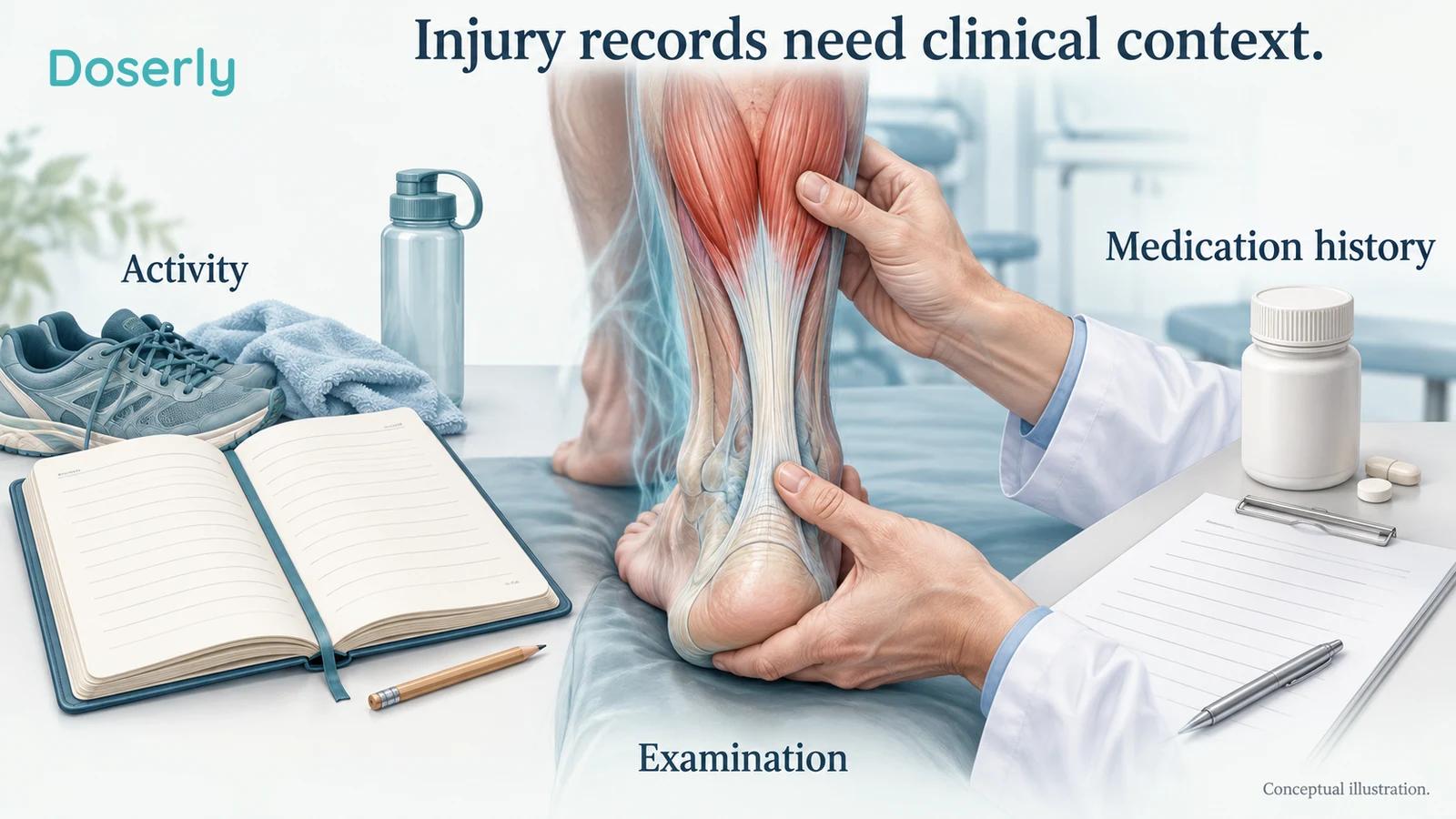
The practical action is to bring the actual medication names and dates to the clinician assessing the injury. “I took an antibiotic recently” is less informative than knowing which one and when. Similarly, a short oral steroid course, a long-term prescription and an inhaler should not be collapsed into one undifferentiated exposure.
This review can identify questions the testosterone studies cannot answer. It also keeps a familiar prescription from absorbing all the blame while a more relevant recent change is overlooked.
What to do with new pain or a sudden loss of function
A sudden snap or pop, bruising, swelling or a new inability to push off or perform a previously easy movement deserves prompt assessment. Do not keep testing a suspected rupture with repeated heavy efforts while trying to decide which medicine caused it. Diagnosis and protection of the injured structure come first. Achilles injury symptoms
For a gradual problem, describe the activity that provokes it, how function has changed and whether it is worsening. Include recent changes in training volume, intensity, sport or physical work. A rehabilitation professional can assess what the tissue currently tolerates and plan progression around the diagnosed problem.
The newer studies do not provide a validated “safe TRT lifting limit,” a universal waiting period after initiation or a hormone level below which tendon injury cannot occur. They also do not establish that abruptly stopping prescribed testosterone improves a current tear. Medication decisions should be coordinated with the prescriber and the clinician treating the injury.
Similarly, an improvement in pain after rest does not by itself establish readiness for maximal loading. Agree on the functional milestones that matter for your activity. A return-to-sport decision involves more information than either a hormone result or a single comfortable workout.
Keep the treatment indication and recovery goals visible
The Endocrine Society recommends diagnosing hypogonadism from compatible symptoms and consistently low testosterone, and assessing response and adverse effects after treatment begins. That provides a framework for considering a possible tendon concern alongside the reason treatment was prescribed. Endocrine Society guideline
A person treating established deficiency is making a different benefit-risk decision from someone seeking an unproven performance advantage. The tendon findings add to that decision; they do not replace it. Ask what benefit has actually occurred and whether the current exposure remains appropriate.
If you are already rehabilitating an injury, keep the goals specific: comfortable walking, a required work task, restored range of movement or return to a particular sport. Recording these alongside activity and symptoms can help the care team distinguish general wellbeing from recovery of the injured structure.
The questions worth bringing to an appointment
The newer research supports a focused conversation rather than a blanket rule. Ask whether your symptoms suggest tendinopathy, a tear or another problem; whether a recent activity or medication change is relevant; and whether your TRT indication and monitoring remain clear.
If a treatment change is proposed, ask what outcome it is intended to improve and what evidence supports that expectation. If rehabilitation is recommended, ask how progression will be judged. If surgery is discussed, ask how the tear, your goals and medical history shape the choice.
Better future studies need confirmed indications, actual testosterone exposure, activity measurements and clinically verified injuries. Until then, the responsible interpretation is that prescription testosterone has been associated with several tendon outcomes, with meaningful variation between studies. Paying attention to that signal can improve care without pretending it predicts any one person's future.
For more background on diagnosis, treatment options and monitoring, explore the Doserly TRT guides.