
Longevity
October 17, 2026
Sleep regularity and healthy aging: why timing deserves attention
On this page
Two people can average the same amount of sleep while having very different nights. One usually sleeps within a familiar window. The other alternates short work nights, late evenings and long recovery mornings. A weekly average conceals that difference, which is one reason researchers increasingly study the regularity of sleep as well as its duration.
The findings are interesting, but they can easily become another source of bedtime pressure. A study linking irregular sleep with mortality does not mean that an occasional late night shortens your life, or that a perfect tracker score protects you from illness. It means that patterns across many people deserve investigation.
Sleep regularity is a useful part of healthy aging when it helps us understand a routine, identify a sleep disorder or reduce avoidable disruption. It becomes less useful when it turns sleep into a nightly performance test. The evidence supports attention to timing, with enough room for work, illness, caregiving and the ordinary variability of being human.
Regularity is not the same as an early bedtime
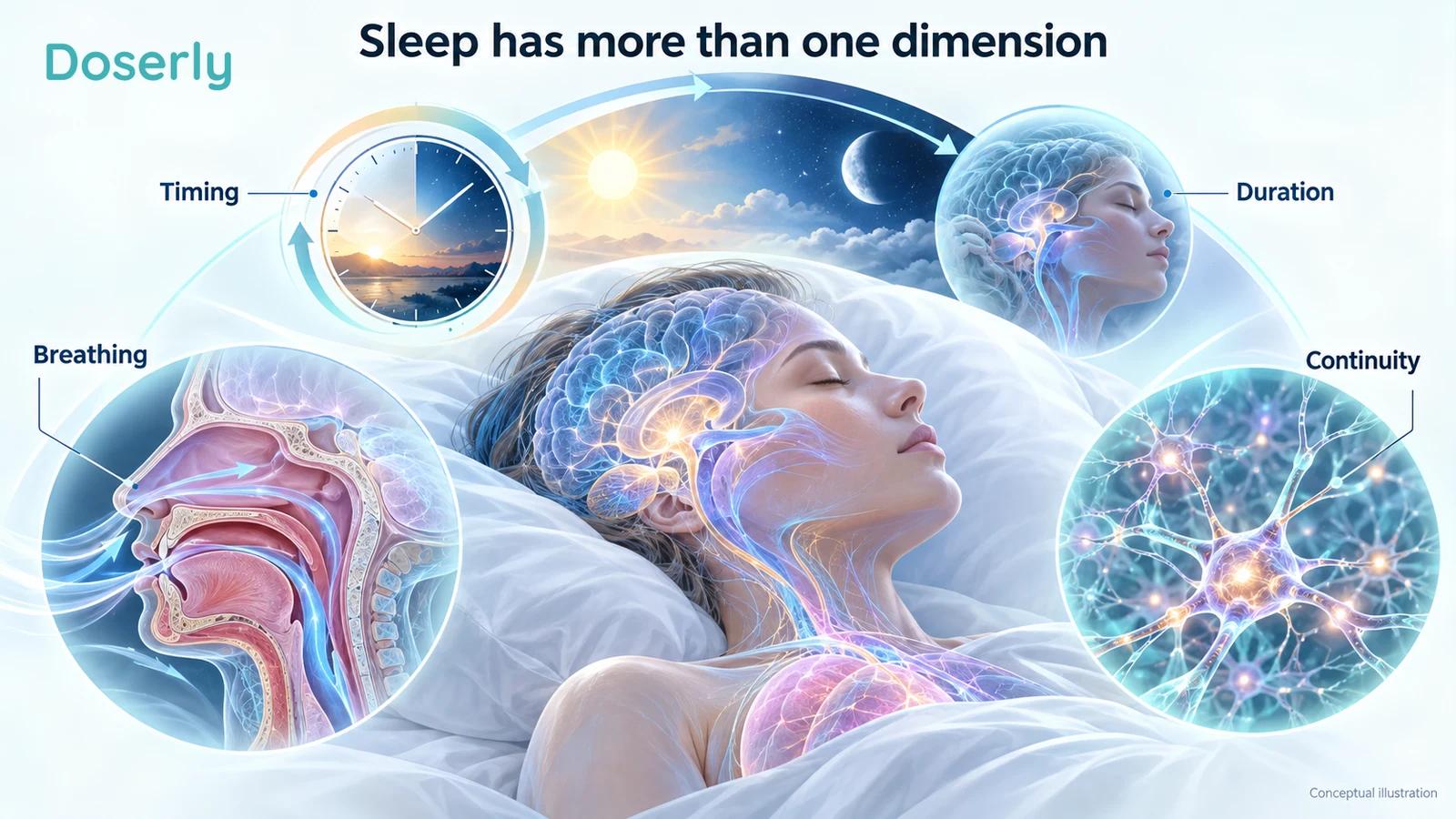
Regularity describes consistency from day to day. Timing describes when sleep occurs. Duration describes how much sleep occurs. Continuity describes how interrupted it is. A person can have a regular schedule that is too short, a later schedule that is stable, or a long sleep opportunity repeatedly disrupted by breathing problems.
Researchers use several measures. Variation in bedtime, wake time or sleep duration summarizes how widely those values move across nights. The Sleep Regularity Index takes a different approach: it compares whether someone is in the same sleep or wake state at times separated by 24 hours. Its information is not identical to the variation in bedtime alone. Windred and colleagues
That distinction matters when a wearable displays a score called consistency or regularity. The label may resemble a research measure without using the same calculation. A proprietary score cannot automatically inherit the risk estimates from a published study.
It also means there is no universal moral hierarchy in which the earliest sleeper is the healthiest. Someone who naturally sleeps later may have difficulty with an imposed early schedule. The useful goal is adequate, restorative sleep that fits biological timing and daily responsibilities as well as possible, rather than simply moving every clock earlier.
What the large mortality study found
A UK Biobank analysis calculated sleep regularity from one week of accelerometer data in 60,977 adults. Greater regularity was associated with lower mortality over subsequent follow-up and was a stronger statistical predictor than sleep duration in the investigators' models. Across the more regular groups, reported all-cause mortality associations ranged from 20% to 48% lower than the least regular group. Primary cohort report
Those are relative associations between groups, not the effect of a treatment. Researchers adjusted for demographic, lifestyle and health characteristics, but adjustment cannot remove every difference between people with stable and unstable schedules. Employment, illness, stress, household conditions and ability to recover after a poor night can all influence sleep.
The measurement window is another limitation. A week can reveal a habitual pattern, but it can also capture an unusual period. Someone's schedule may change over years of follow-up, while a baseline measure remains the exposure used in the analysis.
The study therefore supports sleep regularity as a potentially informative health marker. It does not demonstrate that changing the marker produces the full observed reduction in mortality. Nor does the phrase stronger predictor mean that duration can be sacrificed. A variable can improve prediction without replacing other basic requirements for sleep health.
Cardiovascular studies add context
The Multi-Ethnic Study of Atherosclerosis examined 1,992 participants without cardiovascular disease who completed seven days of wrist actigraphy. Greater variation in sleep duration and timing was associated with subsequent cardiovascular events. For the most variable duration category, the adjusted hazard ratio was 2.14 compared with the most regular category, with a wide confidence interval of 1.24 to 3.68. MESA prospective study
This is a different cohort and an outcome closer to specific disease than a general wellness score. It strengthens the reason to investigate irregularity. It still does not randomize sleep schedules, and the wide interval tells us not to treat the point estimate as a personal forecast.
A 2026 Northern Finland Birth Cohort analysis followed 3,231 middle-aged adults. Greater variability in bedtime and sleep midpoint was associated with major cardiovascular events particularly among participants with shorter sleep periods. There were 128 events over follow-up. Nauha and colleagues, 2026
The interaction with sleep duration is useful. It argues against interpreting regularity as a stand-alone target. Timing and adequate sleep opportunity belong in the same discussion. The Finnish analysis also used its own definitions and population, so its categories should not be turned into a new universal bedtime threshold.
The body keeps time in more than one place
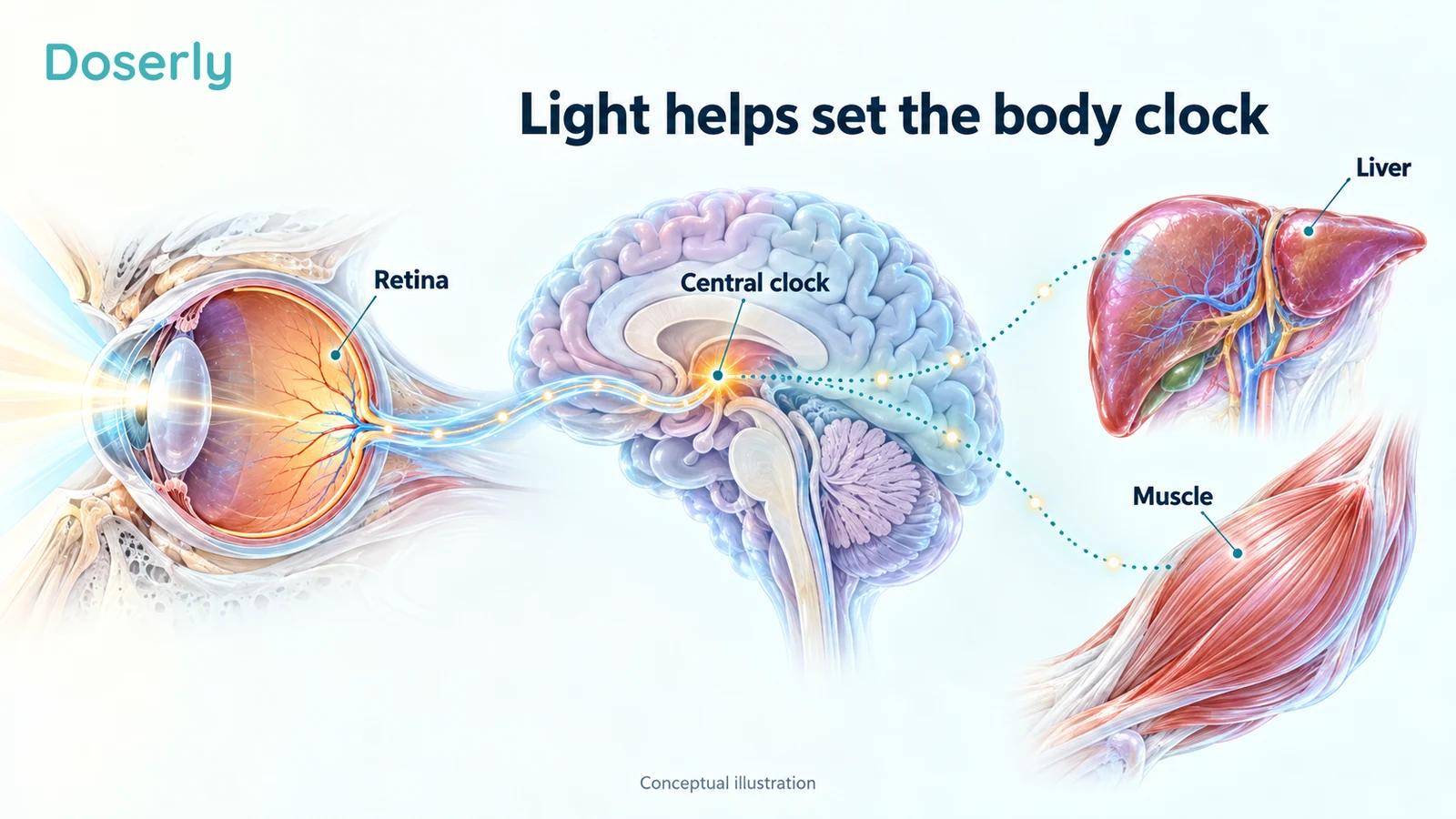
Circadian rhythms are approximately daily patterns in physiology and behavior. A central clock in the brain's suprachiasmatic nucleus helps coordinate them, while tissues and organs also contain timing systems. Light reaching the eyes is a major environmental signal, and food timing and other cues can influence the broader network. National Institute of General Medical Sciences
This organization helps explain why timing could matter even when total sleep is unchanged. The body does not respond identically to the same behavior at every biological hour. Sleeping, eating and being active interact with rhythms in alertness, hormone secretion and metabolism.
There is also a separate pressure to sleep that builds with time awake. Feeling exhausted does not mean the circadian system has instantly shifted to match a new schedule. That mismatch is familiar after travel: a person may be tired at an inconvenient hour yet struggle to sleep at the locally expected bedtime.
The term body clock can make the system sound more exact than it is. It is responsive to cues, not a fragile device ruined by one unusual evening. Repeated patterns are more informative than treating every deviation as biological damage.
Laboratory experiments show plausible pathways
In a controlled experiment, ten adults lived through a laboratory schedule that shifted sleep and eating across their internal circadian cycle. When behavior was substantially misaligned, glucose increased despite higher insulin, blood pressure rose and sleep efficiency fell. The protocol was deliberately unusual, using a recurring 28-hour day. Scheer and colleagues, PNAS
That experiment gives stronger causal evidence for short-term physiological effects of misalignment than a cohort can provide. It does not tell us that a modest weekend shift causes the same changes, or that the laboratory changes translate into a particular number of future heart attacks.
The two kinds of evidence complement each other. Cohorts observe people living ordinary lives over years, with all the accompanying differences between them. Laboratory studies can control exposure more tightly but usually involve fewer people and much shorter periods. Neither design alone supplies the entire story about healthy aging.
A practical implication follows without exaggeration: repeated conflict between required schedules and biological timing is worth taking seriously. That can mean discussing shift patterns and recovery opportunities, rather than buying a product advertised as repairing a circadian pathway.
What light experiments do, and do not, establish
A randomized crossover experiment comparing evening reading on a light-emitting device with a printed book found later circadian timing, reduced melatonin secretion and poorer next-morning alertness in the device condition. Participants also took longer to fall asleep. Chang and colleagues, PNAS
The result supports a real biological effect of evening light under the study's conditions. It does not mean every screen exposure has the same effect. Brightness, duration, distance, spectral content and the rest of the day's light exposure can change the situation.
A separate small experiment illustrates that context. After substantial daytime bright-light exposure, 14 participants read on a tablet or a printed book for two hours in the evening; the study did not find altered sleep from the tablet condition. Rångtell and colleagues
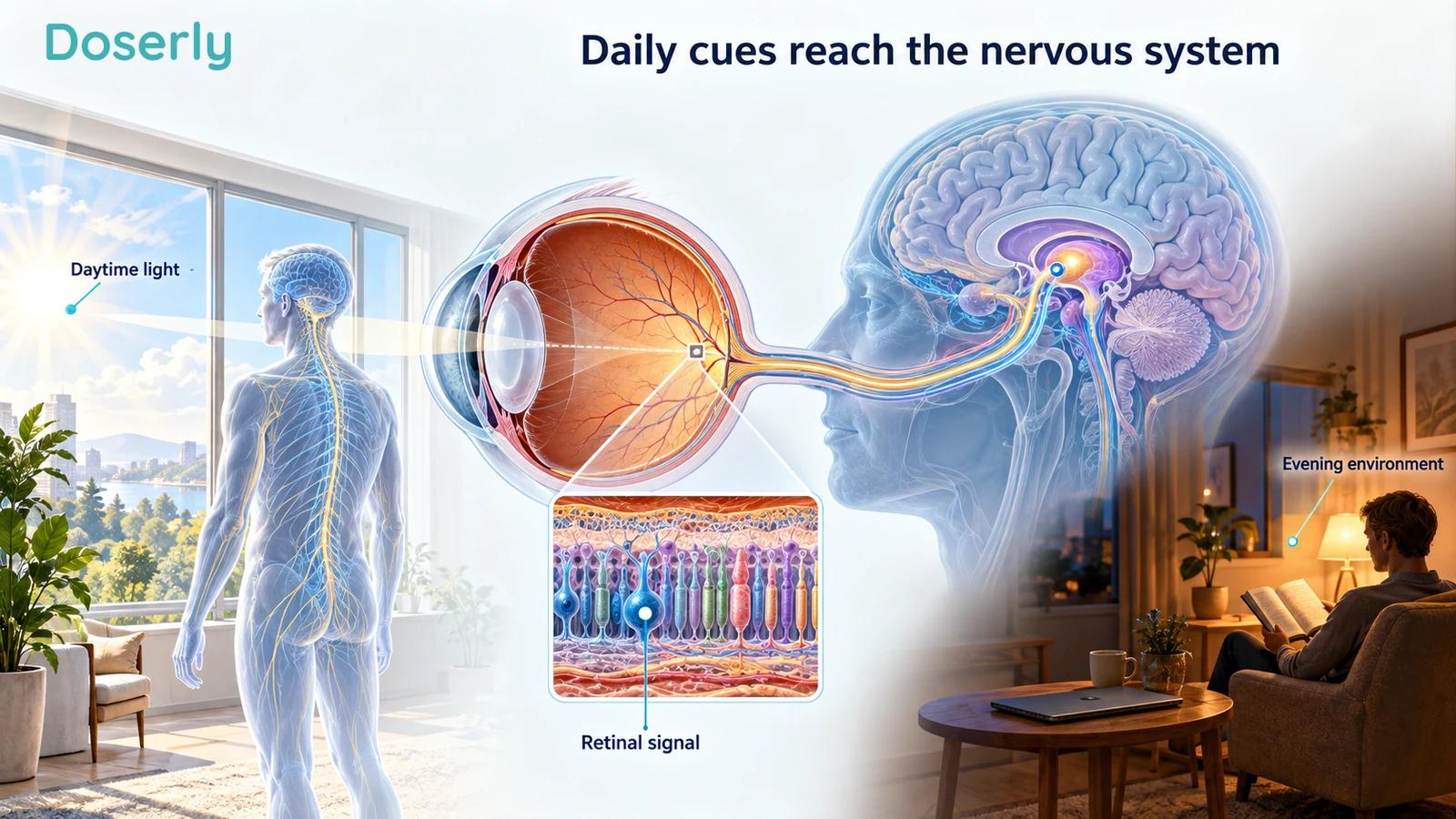
These findings are more useful together than as competing slogans. The relevant exposure is not simply whether an object has a screen. It is how light reaches the visual system within a larger day-night pattern. A dim evening environment and daytime light exposure are reasonable subjects for a sleep conversation, while an exact therapeutic light schedule belongs to the particular circadian problem being treated.
The newer geriatric trial was small and mixed
A daylight intervention published in European Geriatric Medicine in 2025 tested morning light in hospitalized older patients. Thirty-six people entered the randomized crossover study, 18 completed it and 15 were included in the analysis. The investigators measured hormonal rhythms and objective and subjective sleep outcomes. Primary daylight trial
The results were not a simple demonstration that morning light fixes older adults' sleep. The hormonal and objective-sleep changes were not statistically significant, and subjective sleep quality did not improve. Illness, the hospital environment, participant burden and attrition complicated interpretation. The authors discussed how actual light reaching the eye and individual circadian timing could affect response.
That is valuable information for care environments. Installing a light source is not the same as ensuring the intended exposure is received or that sleep improves. Noise, nighttime care, pain and daytime inactivity can remain important even when lighting changes.
The trial also shows why a laboratory mechanism should not become a broad longevity claim. Hormonal timing is a meaningful physiological measurement, but it is not a direct measure of independence, cardiovascular events or lifespan. Older patients deserve interventions judged by the outcomes they experience as well as by signals measured in a sample.
A stable schedule cannot rule out sleep apnea
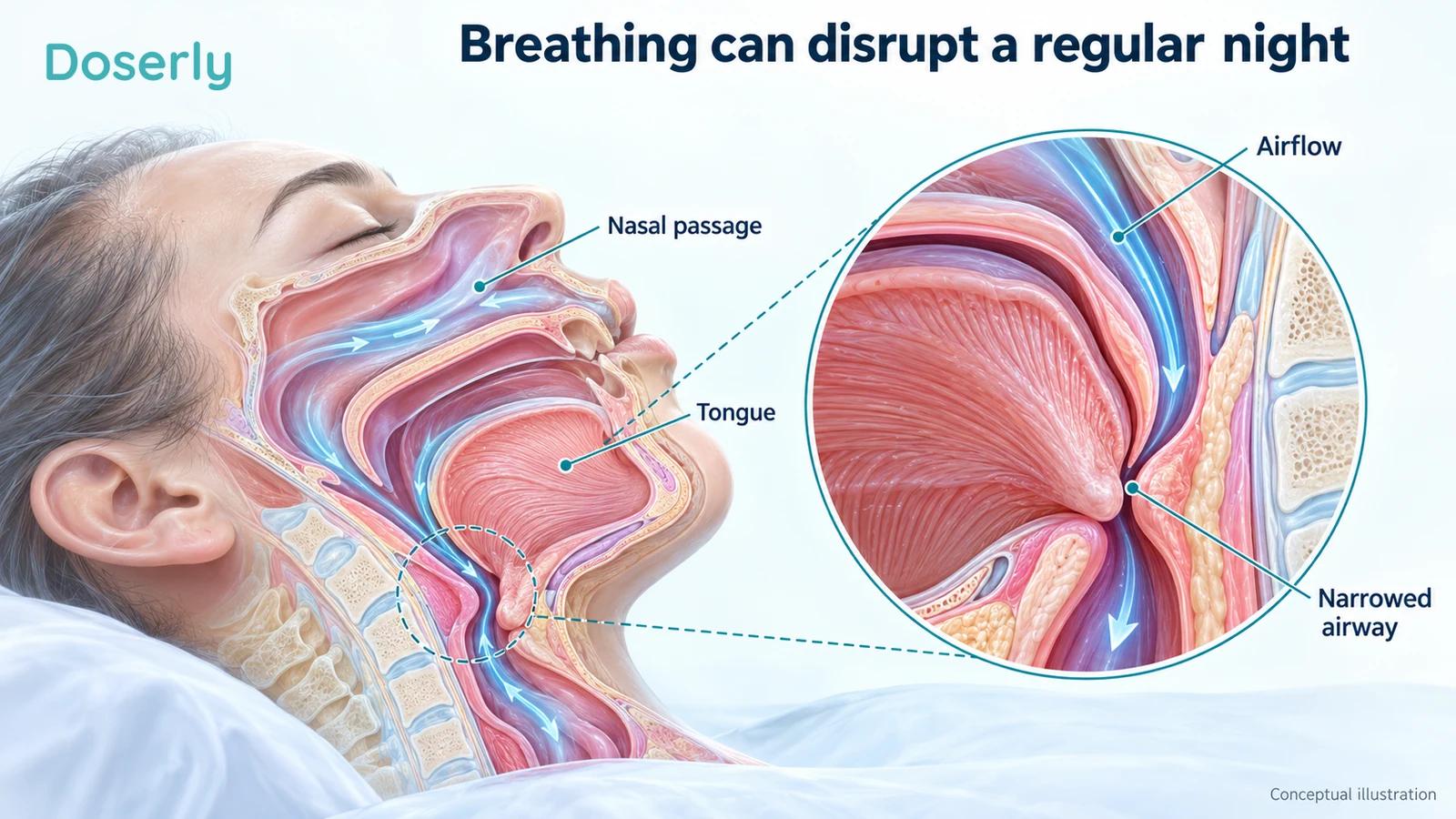
Obstructive sleep apnea involves repeated narrowing or closure of the upper airway during sleep. A person may go to bed and rise at consistent times while still having disrupted breathing and fragmented sleep. Regularity alone cannot detect that problem.
Loud snoring, witnessed breathing pauses, gasping and daytime sleepiness are reasons to discuss assessment. Other presentations can include fatigue, headaches, insomnia or frequent nighttime urination. The National Heart, Lung, and Blood Institute notes that people may not recognize the nighttime symptoms themselves. NHLBI sleep-apnea symptoms
That creates a common trap: a person tries progressively stricter sleep routines or more supplements while the underlying breathing problem remains unexamined. A partner's observation may be more informative than a favorable overall sleep score.
Diagnosis depends on appropriate clinical evaluation and, when indicated, a sleep study. A device that estimates sleep duration or reports a few oxygen readings is not automatically equivalent to that evaluation. After diagnosis, treatment and follow-up address the breathing disorder itself; they are not replaced by improving bedtime consistency. NHLBI diagnostic information
Insomnia needs more than a stricter routine
Chronic insomnia is not simply a failure to follow sleep hygiene advice. Someone may provide ample opportunity for sleep, go to bed consistently and still struggle with wakefulness and daytime consequences. Becoming increasingly vigilant about every variable can make the experience more distressing.
The American Academy of Sleep Medicine recommends multicomponent cognitive behavioral therapy for insomnia, or CBT-I, for adults with chronic insomnia. Its guideline does not support sleep hygiene alone as sufficient treatment. CBT-I addresses patterns of behavior and thinking around sleep within an organized treatment approach. AASM clinical guideline
That distinction changes what help to seek. A list of tips may be useful background, but persistent difficulty warrants a conversation about assessment and access to treatment. Specific components, including changes to time in bed, need to fit the person's circumstances rather than being copied from a social-media challenge.
The goal is improved sleep and daytime function, not flawless adherence to a ritual. Someone who becomes anxious whenever a tracker awards a poor score may benefit from discussing the tracking itself. More data are helpful only when they improve understanding or care.
What a wearable can contribute
A wearable can make broad patterns visible: a large shift between workdays and days off, a gradually later schedule or repeated short nights. Those observations can support a useful history. They do not require believing that every sleep-stage label is exact.
Consumer devices infer sleep from signals such as movement and optical pulse measurements; they usually do not measure the full set of signals used in a laboratory sleep study. Quiet wakefulness and fragmented sleep can be difficult to classify. Validation depends on the device, algorithm, population and outcome being measured. AASM consumer sleep technology statement
The practical question is whether a measurement changes the next step. A week showing late nights caused by work may point to a scheduling problem. A report of poor sleep despite enough time in bed may support a clinical discussion. A single unusual deep-sleep estimate, without symptoms or a consistent pattern, usually provides much less direction.
Device changes complicate comparisons. Switching models or receiving an algorithm update can alter a score even if sleep is unchanged. Keeping a short narrative alongside the numbers, such as illness, travel or an overnight shift, can prevent a technical difference from becoming an imagined biological decline.
Melatonin is a timing signal, not a longevity shortcut
Melatonin helps communicate biological night. Supplemental melatonin has evidence for selected timing-related problems, but that does not make it a general repair treatment for irregular sleep or a proven anti-aging intervention. Product quality, interactions and the reason for use matter. NCCIH melatonin information
The Doserly melatonin guide explains the distinction between a body-clock signal and a general sleep aid, including product and timing considerations.
Timing is part of its biological action. Taking a larger amount does not simply compensate for a poorly matched schedule. Nor does feeling sleepy establish that the circadian system has been shifted in the desired direction.
The same boundary applies to other supplements promoted for relaxation or deep sleep. A small trial showing a symptom improvement is not a trial of regularity, cardiovascular events or mortality. It is worth identifying the actual sleep problem before interpreting a supplement's mechanism as the answer.
Building regularity without sacrificing sleep
A useful first step is to describe the current pattern rather than immediately impose a new one. A brief record can include bedtime, approximate sleep onset, wake time, naps, work shifts and how the person feels during the day. The point is to find repeated constraints, not to reconstruct every minute of the night.
If work demands very early waking, an unchanged late bedtime creates short sleep even if the wake time is perfectly consistent. If a caregiver is repeatedly interrupted, a rigid rule against recovery sleep may add strain. The schedule needs to protect sleep opportunity as well as predictability.
A plan can focus on a realistic daily anchor and the cues that support it, while allowing adjustment after unusual nights. Daytime activity, light exposure, evening demands and household responsibilities all belong in that discussion. The exact arrangement should reflect the person's needs rather than a universal online timetable.
For shift workers, the challenge is often structural. An unpredictable roster, a long commute and family responsibilities cannot be corrected solely by motivation. Occupational or sleep-medicine advice can help identify feasible protections and assess excessive sleepiness. A longevity message that ignores those constraints risks blaming people for a schedule they do not control.
Reading a pattern without overreacting to one night
Consider a person whose sleep is fairly stable until Thursday, then becomes later and longer over the weekend. The first question is what changed. Was Thursday a social evening, an overnight work demand, a pain flare or the beginning of an illness? Those explanations point to different responses even when a tracker produces the same numerical penalty.
Another person may spend consistent hours in bed but record repeated awakenings and worsening daytime concentration. In that case, refining the bedtime window may be less helpful than evaluating the interruptions. A third person may feel well but become preoccupied with a device's changing stage estimates. For them, the way information is being used deserves attention too.
These examples show why a useful sleep record includes context and daytime experience. A clinician can compare the pattern with symptoms and responsibilities, identify a likely problem and decide whether further testing is needed. The record does not have to diagnose the condition itself. Its purpose is to make the conversation more accurate, not to deliver a nightly verdict on future health.
What would stronger evidence look like?
To establish a longevity benefit, researchers would need more than a relationship between a baseline sleep score and later death. They would need interventions that reliably change regularity, preserve adequate sleep, and then improve meaningful outcomes compared with an appropriate control. Trials would also need to report tolerability and who can realistically follow the program.
Shorter studies can still answer useful questions: whether a schedule improves alertness, whether a lighting change improves sleep, or whether treating a disorder reduces symptoms. Those results should be judged on their own terms instead of being stretched into promises about lifespan.
For now, sleep regularity deserves attention as part of a broader picture. The useful outcome is a person who sleeps adequately, functions better and receives care for a problem that needs treatment. A consistent routine can support that outcome; a perfect score is not required to pursue it.