
Longevity
October 17, 2026
Can clearing senescent cells improve health as we age?
On this page
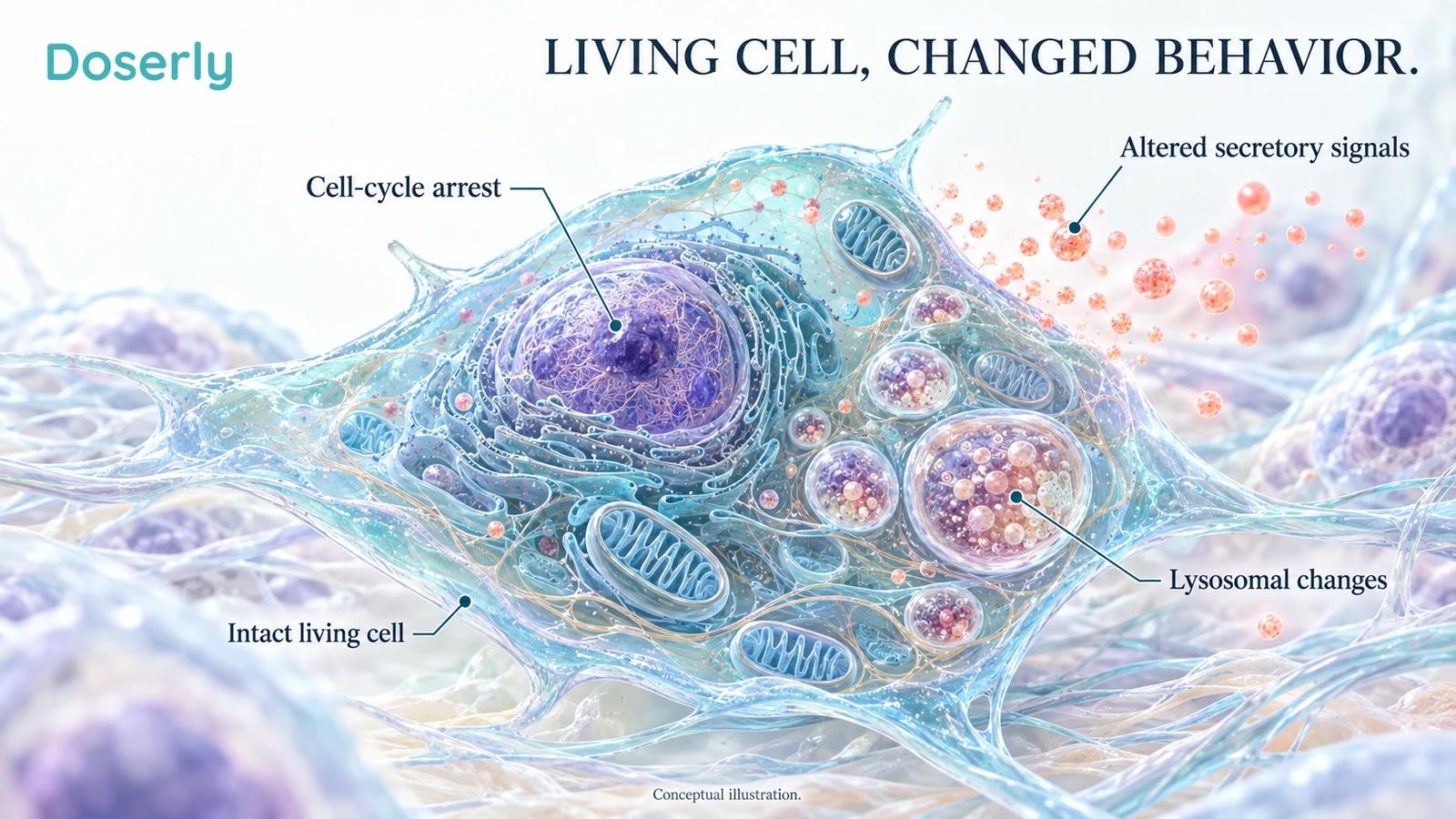
A cell can stop dividing without dying. Sometimes that pause protects us: a damaged cell is prevented from copying itself, or a temporary repair response helps close a wound. Sometimes the cell remains active long after the original problem has passed, changing its surroundings through inflammatory signals and tissue-remodeling molecules. That second possibility explains much of the interest in senolytics, treatments intended to remove particular senescent cells.
The idea is attractive because it addresses a process associated with aging across several organs. The practical question is harder: which cells should be removed, in which person, and does removing them produce a benefit that matters? Human research now includes small studies in kidney disease, pulmonary fibrosis, bone health and Alzheimer's disease. A randomized liver-disease study published in October 2026 adds a particularly interesting result, although it remains a small, disease-specific experiment.
These studies do not establish that periodic senolytic treatment extends human life. They do provide a more useful conversation than either dismissing the field or describing it as an available rejuvenation treatment. The evidence is beginning to tell us where the biology might translate, where it has disappointed, and what researchers still need to measure.
A protective response can become a persistent problem
Cellular senescence is a biological state involving a durable withdrawal from the cell cycle together with other changes in cell function. DNA damage, repeated cell division and stresses within tissues can contribute. The cell is metabolically active, and its characteristics depend partly on its original identity and the circumstances that brought it into this state.
Calling these cells “zombie cells” makes the concept memorable but loses important detail. A senescent connective-tissue cell is not interchangeable with a senescent immune cell. Nor does an older tissue consist of healthy cells on one side and a clearly separable pile of defective cells on the other. Cell states overlap, signals vary and the local environment matters.
The secretory activity often discussed in this field is called the senescence-associated secretory phenotype, or SASP. It can include inflammatory mediators, growth factors and enzymes involved in tissue remodeling. Researchers investigate whether persistent signaling disrupts neighboring cells, attracts immune cells or contributes to fibrosis. Its composition is not a fixed chemical signature shared by every senescent cell.
Senescence also has useful roles. A 2014 experimental study of wound healing found that transient senescent cells supported optimal repair in mice through signaling that included PDGF-AA. That does not demonstrate that a particular human senolytic regimen impairs wound healing. It does explain why “remove every senescent cell” would be a poor biological objective. Timing and cellular context are central to the treatment hypothesis.
An effective therapy would need to distinguish harmful persistence from a useful temporary response. It would also need an acceptable balance between benefits in one tissue and effects elsewhere. Those demands are familiar in medicine, but they are easily obscured when the intervention is presented as general maintenance for aging.
What a senolytic actually tries to do
Senolysis means killing susceptible senescent cells. It differs from reducing their inflammatory signaling without killing them, an approach sometimes called senomorphic treatment. Exercise, medicines and dietary compounds can affect overlapping pathways without being demonstrated senolytics in people. A reduction in an inflammatory blood marker therefore cannot, by itself, establish that senescent cells were cleared.
The combination studied most often in early human work is dasatinib plus quercetin, usually abbreviated D+Q. Dasatinib is a prescription kinase inhibitor used in cancer treatment. Quercetin is a plant-derived flavonoid also sold as a supplement. Their pairing arose from laboratory observations about the survival pathways different senescent cells rely on. A familiar supplement ingredient does not make the combination equivalent to ordinary food exposure.
Fisetin is another flavonoid being investigated. Its presence in fruit is often used to make senolytic claims sound intuitive, but eating a food and delivering an experimental compound exposure are different questions. Our fisetin guide and quercetin guide discuss those compounds individually. The broader issue here is whether a treatment has demonstrated selective cell removal and a meaningful clinical benefit in the population considering it.
The mouse experiments remain important foundations. Baker and colleagues' 2011 study used a genetic system to remove p16-expressing cells in a model of accelerated aging and delayed several age-associated disorders. That is evidence for a biological hypothesis, not a test of a supplement. Later work reported in 2018 linked senescent-cell transplantation with impaired function in mice and investigated D+Q in aged animals. Human fat tissue studied outside the body did not turn that experiment into a human longevity trial.
How would researchers know cells were cleared?
The measurement problem is substantial. Researchers may examine proteins associated with cell-cycle arrest, such as p16 or p21, an enzyme assay often called senescence-associated beta-galactosidase, and patterns of secreted molecules. They may also assess cell shape, tissue location and more detailed molecular profiles. Each observation contributes information; none is a universal counter of senescent cells throughout the body.
A marker can be elevated in one tissue while a blood sample reflects several other processes. A change in immune-cell composition can alter a blood measurement even if the relevant cells in a joint or lung have not changed. Biopsies provide local evidence but sample only a small area. A second biopsy also needs consistent collection and analysis if the comparison is to be useful.
That is why target engagement and clinical benefit belong on separate lines of a study report. Target engagement asks whether the intervention affected the intended biology. Clinical benefit asks whether someone breathes better, avoids a fracture, maintains independence or experiences fewer disease complications. One can occur without the other, and both can be missed by an insensitive measurement.
In a 2019 preliminary study in diabetic kidney disease, nine participants received a short course of D+Q. Researchers compared fat and skin biopsies and blood measurements before treatment and afterward. Several tissue markers associated with senescence and some circulating inflammatory factors decreased. The study was open label and had no placebo group. It supported further investigation of biological effects; it did not show prevention of kidney failure or establish a healthier lifespan.
A small mechanistic study is useful when it answers a focused question. The mistake is asking it to carry a much larger claim. For a person with kidney disease, preserving kidney function and reducing treatment burden remain the outcomes that need demonstration.
Pulmonary fibrosis: early function signals met a controlled test
Idiopathic pulmonary fibrosis involves progressive scarring in the lungs. Thickened, remodeled tissue makes gas exchange more difficult, while breathlessness can limit walking and other activities. It is a plausible setting for investigating persistent cellular stress and fibrosis, but plausibility does not tell us whether an intervention will restore lung architecture.

An initial open-label study published in 2019 enrolled 14 people with idiopathic pulmonary fibrosis. Some physical-function measurements improved after intermittent D+Q treatment. Without a concurrent control group, improvement could reflect several influences, including test familiarity and changes unrelated to the medicine. The study helped establish feasibility rather than proving a new treatment for pulmonary fibrosis.
A subsequent randomized pilot reported in 2023 assigned 12 participants to D+Q or placebo. Its main purpose was feasibility and tolerability. Participants completed the planned treatment and assessments, but nonserious adverse events were more frequent with D+Q: 65 events versus 22 with placebo. There were no treatment-related serious adverse events reported. Exploratory pulmonary and physical-function measures did not show meaningful between-group differences.
Six people per group cannot resolve modest benefits or uncommon harms. It can, however, challenge the impression that the earlier uncontrolled improvements already established efficacy. For patients, the important distinction is between a research program worth pursuing and a treatment whose effects on breathing, hospitalizations or survival are known.
Walking performance also deserves careful interpretation. A walking test involves lungs, circulation, muscles, balance and motivation. A better result would matter, but it would not automatically demonstrate that lung scar tissue had been removed. Measuring both organ disease and whole-person function helps researchers understand what actually changed.
Bone health: the main result was negative
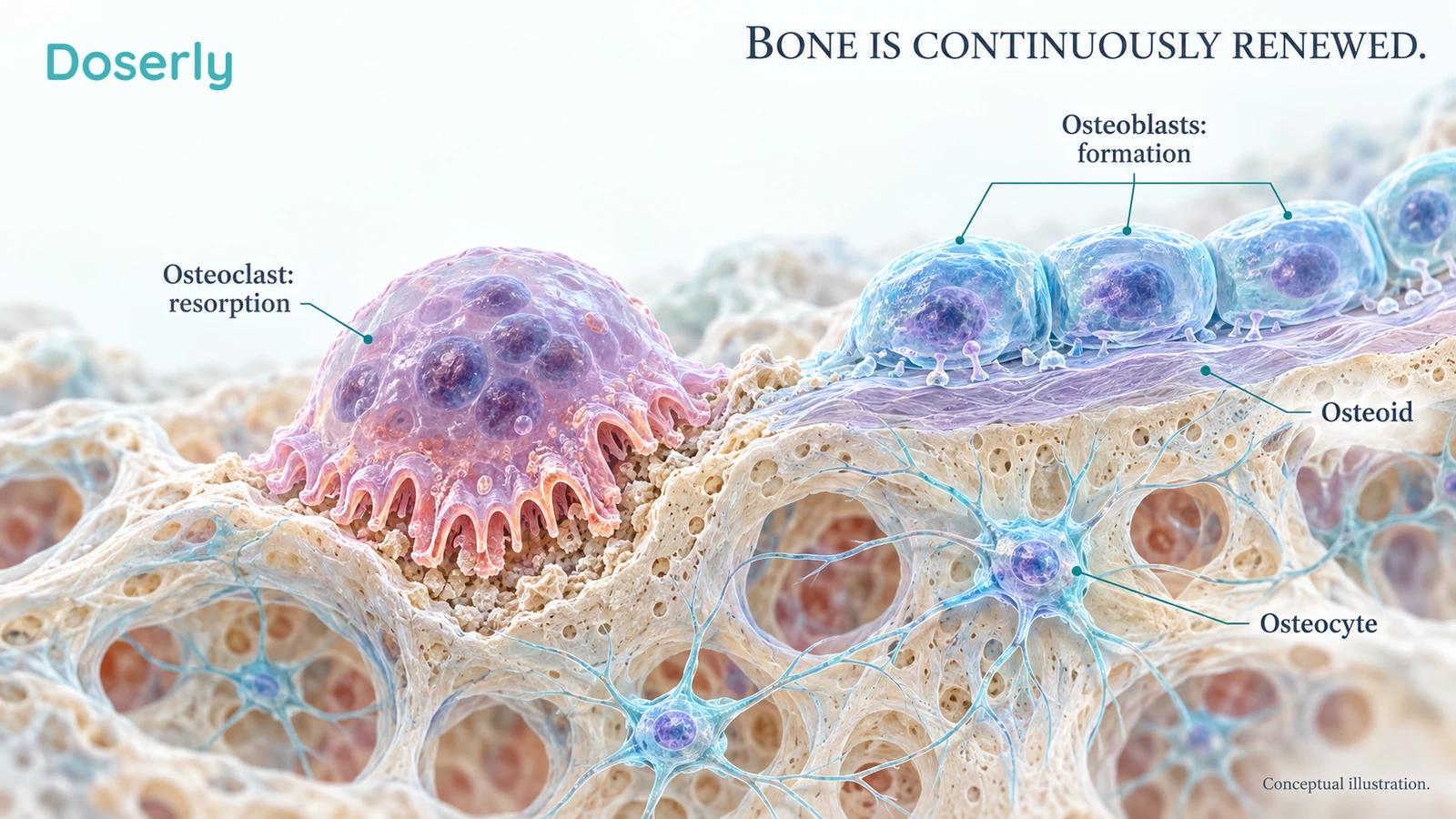
Bone is constantly renewed. Osteoclasts resorb existing bone, while osteoblasts build new material. With aging and after menopause, the balance between those activities can shift, weakening skeletal structure. Senescence research asks whether changing the local cell environment can improve that balance.
A 2024 randomized phase 2 study enrolled 60 postmenopausal women and compared intermittent D+Q with an untreated control group. It was open label. The primary outcome, change in the bone-resorption marker CTx at 20 weeks, did not differ significantly between groups. The median changes were −4.1% with D+Q and −7.7% in controls, with a P value of 0.611.
There were more encouraging secondary and exploratory observations. The bone-formation marker P1NP increased early but not at the final 20-week assessment. An exploratory subgroup with higher baseline T-cell p16 expression showed a radius bone-density signal. Those findings may help refine future trial selection; they do not overturn the negative primary result or establish fracture prevention.
This distinction matters because osteoporosis treatment is ultimately about maintaining skeletal strength and preventing fractures. A short-lived blood-marker movement is not equivalent to rebuilding a vulnerable hip. Nor does a favorable result in a selected subgroup automatically tell clinicians how to identify the right patient prospectively.
A useful next study would specify its selection rule in advance and test it in a new group. It would also need enough follow-up to distinguish a transient remodeling response from a durable skeletal change. Established bone-health assessment should not be displaced by an experimental senescence marker simply because that marker sounds closer to the biology of aging.
A new liver trial provides a stronger disease-specific signal
Metabolic dysfunction-associated steatohepatitis, or MASH, combines liver inflammation and injury with metabolic disease. Fibrosis stage describes the extent of scarring. A therapy that improves fibrosis could be valuable, but a biopsy endpoint and prevention of liver failure are different levels of evidence.
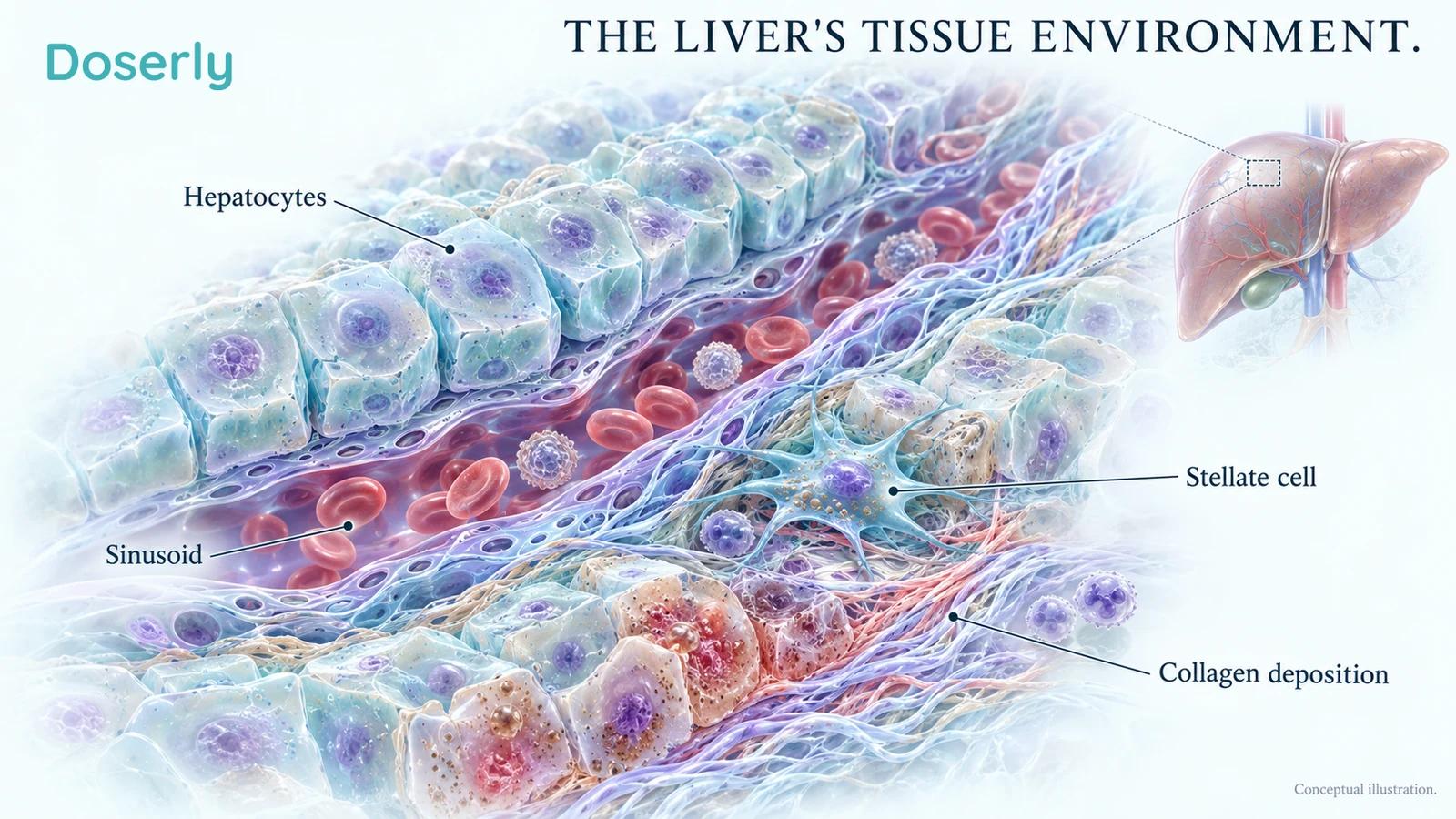
An October 2026 randomized, placebo-controlled proof-of-principle trial enrolled 31 people with MASH and F2–F3 fibrosis. At 21 weeks, improvement of at least one fibrosis stage without worsening MASH occurred in 8 of 17 D+Q participants, compared with 1 of 14 receiving placebo. This was the primary endpoint; the absolute difference was about 40 percentage points, with a wide confidence interval of 8.2–64.5 points.
Adverse events affected 14 of 17 D+Q participants and 6 of 14 placebo participants, mostly mild or moderate. One person withdrew because of gastrointestinal symptoms. The small groups differed at baseline, including diabetes prevalence, and the trial did not establish reduced liver failure or improved survival. Several investigators disclosed relevant intellectual-property or industry interests. The result is a substantial reason for larger trials, not evidence for treating healthy adults to slow aging.
There is another interpretive layer: a medicine can improve a disease endpoint through more than one biological pathway. Even an encouraging biopsy result does not prove that every part of the benefit came from selective removal of senescent cells. Replication and accompanying mechanistic work can help connect the clinical result to the proposed mechanism.
For people with liver disease, this study also illustrates why disease stage matters. Results in biopsy-confirmed inflammatory disease with established fibrosis cannot simply be transferred to uncomplicated fatty liver, cirrhosis or a person with normal liver tests. Those are different clinical questions with different risks and possible benefits.
Fisetin and brain studies remain much earlier
Fisetin is sometimes discussed as if clinical senolysis were already demonstrated across healthy older adults. Registered studies, including the AFFIRM program, show that researchers are testing the question. Registration itself does not supply a favorable outcome, and a trial's planned endpoints should not be rewritten as completed findings.
A 2026 conference abstract reported a randomized pilot in ten adults with common variable immunodeficiency and an associated inflammatory lung condition. It described numerical changes in gas-transfer measurements with fisetin and no reported adverse events. The groups were tiny, baseline measurements differed and the report was a meeting abstract. It does not establish a general aging benefit or directly demonstrate clearance of senescent cells throughout the body.
Neurological research faces an additional delivery problem: a compound must reach the relevant compartment at a useful exposure. A phase 1 study in early symptomatic Alzheimer's disease included only five participants and principally examined safety and central nervous system penetration. It was not an efficacy trial capable of determining whether D+Q slows cognitive decline. Biomarker analyses from the same small trial should not be mistaken for independent replication.
These settings are scientifically interesting precisely because they ask different questions. A tissue-penetration result, a numerical lung-function change and a randomized fibrosis endpoint should not be pooled into a single verdict that senolytics “work.” Each has a different relationship to clinical practice.
Why a successful treatment would need a careful follow-up plan
The body is not a static container from which a fixed amount of unwanted material can be removed. Cells continue to encounter damage, tissues continue to repair themselves and immune activity changes with illness and recovery. Even if a treatment reduces a particular population of senescent cells, researchers still need to learn how long that change lasts and what happens afterward.
This creates several distinct questions for follow-up. Does the original tissue signal return? Does function remain improved after the drug exposure ends? Does repeated treatment preserve the same effect, or change tolerability? A short study cannot answer those questions simply by showing that participants completed the first treatment period.
Patient experience should also be measured directly. A treatment that improves a laboratory marker while causing fatigue or breathlessness may have an unattractive overall tradeoff. Conversely, a meaningful functional improvement deserves attention even when the mechanism is incompletely resolved. The study should tell readers which of those situations occurred rather than collapsing everything into a statement about biological age.
Independent replication is especially useful in a field where some investigators also hold patents related to the experimental approach. Those interests do not invalidate their findings. They make transparent protocols, prespecified analyses, complete adverse-event reporting and confirmation by other groups particularly valuable. Several early D+Q publications disclose such interests, allowing readers to consider them alongside the study design.
Follow-up also needs to preserve the distinction between a change in the sampled tissue and a whole-body effect. Improving one organ could be clinically important without establishing a universal aging treatment. Building the evidence organ by organ may ultimately produce useful medicines, even if the broadest rejuvenation claims never become true.
What would make the evidence useful for an individual?
The first question is the condition being treated. “Aging” covers changes in many systems, but a trial needs a population and a measurable outcome. A person with progressive fibrosis has a different potential benefit-risk calculation from someone who feels well and wants to reduce a distant future risk.
The second question is the treatment itself. D+Q is not interchangeable with quercetin alone, fisetin or a commercial mixture. Supplement labels and laboratory activity do not establish equivalent exposure, tissue delivery or biological effects. Adding multiple products also makes symptoms and interactions harder to interpret.
Dasatinib's prescribing information includes risks such as low blood-cell counts, bleeding and fluid retention, as well as interaction considerations. Rates observed during cancer treatment should not be copied directly onto experimental intermittent regimens. Equally, a short pilot with few serious events cannot establish long-term safety for otherwise healthy users.
For a research consultation, useful questions include whether the study has a comparator, whether its primary outcome reflects a meaningful disease or functional benefit, and how adverse events are monitored. If a biomarker is used to select participants, ask whether that selection strategy has been validated prospectively. If a benefit is described only in a subgroup, ask whether that subgroup was specified before the results were known.
There is room for optimism without treating uncertainty as a minor technicality. Human trials have moved beyond a purely mouse-based story, and the liver result gives the field a concrete finding to replicate. Other studies show how quickly an appealing hypothesis can become less clear when a control group or a clinically relevant endpoint is introduced.
For now, clearing senescent cells is a developing therapeutic strategy with some disease-specific signals. It is not an established program for extending healthy human life. The most useful progress will be the kind a patient can recognize: better function, fewer complications and benefits that remain worthwhile after the harms and practical burden are counted.