
Red Light Therapy
October 17, 2026
Red light therapy and sleep: treatment effects, evening lighting and body clocks
On this page
Sleep is an especially persuasive reason to try something new. When nights feel unreliable, a quiet device that promises to help the brain settle down can sound much more appealing than another complicated routine. Red light adds an intuitive story: it looks like sunset, seems gentler than a bright screen, and is often described as supporting cellular energy.
Those ideas involve different kinds of evidence. A dim bedroom lamp changes the light reaching your eyes. A transcranial photobiomodulation device delivers a particular light exposure over the head. A clinical bright-light treatment tries to influence circadian timing. The devices, biological targets, and treatment questions are different, even when advertising places them together under better sleep.
Human photobiomodulation studies now include encouraging results, including small trials published in 2025 and 2026. They also include null results and improvements in questionnaires without corresponding changes in movement-based sleep estimates. The practical question is whether a particular intervention improves the sleep problem you actually have, for long enough to matter, with acceptable burdens and risks.
First identify which part of sleep needs help
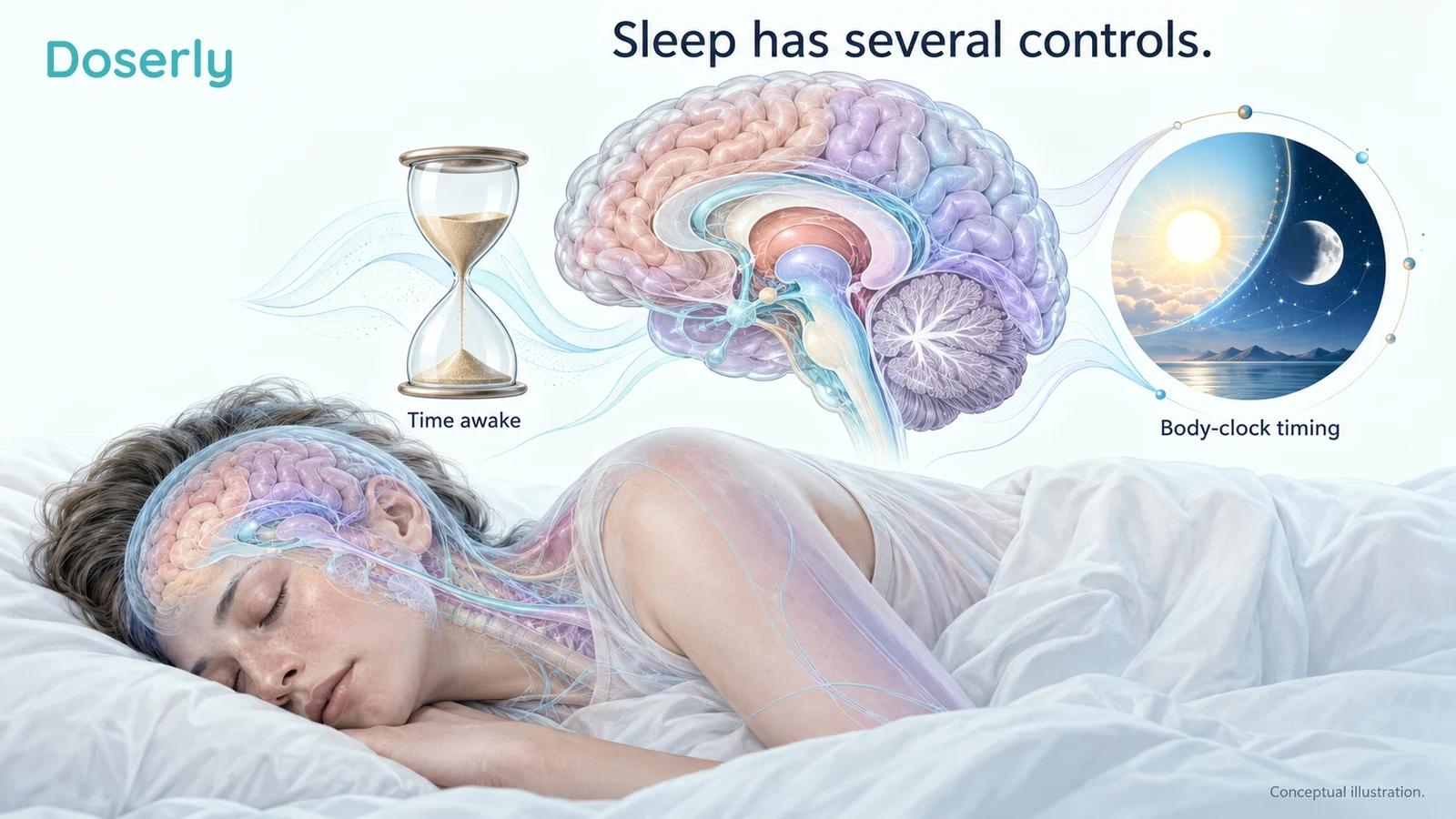
Sleep has more than one control. The pressure to sleep builds during time awake, while the body clock helps organize when alertness and sleepiness occur. Adenosine is one molecule involved in sleep pressure. Environmental light helps synchronize circadian timing. These processes interact, but they are not interchangeable switches. NHLBI explains these two influences on sleep.
That distinction changes the question someone should bring to a clinician. A person who sleeps comfortably on a late schedule but struggles with an early work start may have a different problem from someone who lies awake despite adequate opportunity to sleep. Another person may fall asleep easily but wake repeatedly because breathing is disrupted. A general promise to improve sleep quality does not tell us which of these situations a device can address.
Clinical assessment includes timing, awakenings, daytime consequences, medicines, and relevant health conditions. Testing may help identify another sleep disorder rather than assuming every difficult night is insomnia. A brief diary can make this conversation more concrete. NHLBI’s insomnia assessment guidance is a useful starting point for that distinction.
Frequent loud snoring, observed pauses in breathing, or waking while gasping deserve particular attention. Daytime sleepiness can accompany sleep apnea, and insomnia symptoms can occur as well. A light device has not established itself as a substitute for investigating those symptoms. NHLBI describes the symptoms that can prompt a sleep-apnea evaluation.
This is not a demand to solve every sleep problem before reading about a new treatment. It is a way to make the research useful. The closer a study population is to your own situation, the more informative its results become. Healthy athletes, adults with depression, and people with diagnosed chronic insomnia cannot automatically stand in for one another.
What the newer insomnia studies actually found
A small sham-controlled study in chronic insomnia
A 2025 randomized trial enrolled 30 people with chronic insomnia, assigning 15 to active transcranial treatment and 15 to sham. The investigators used a frontal near-infrared intervention on three consecutive days and assessed outcomes one week later. They reported better Pittsburgh Sleep Quality Index scores with active treatment, with a between-group mean difference of 4.6 points favoring treatment, and lower daytime-sleepiness scores. No serious adverse events were reported. The trial abstract describes the design and results.
This is encouraging controlled evidence, but the time horizon is short and the sample small. The reported electrical-brain findings concerned frontal delta activity during wakefulness. They should not be translated into a claim that treatment increased overnight deep sleep. A wake EEG measurement and an all-night sleep-stage recording answer different questions.
The study supports further testing in chronic insomnia. It does not establish the best treatment course, maintenance schedule, long-term safety, or equivalence between the research device and a home panel. Those are separate questions that a short trial cannot settle.
A 2026 translational study brings a new mechanism into the discussion
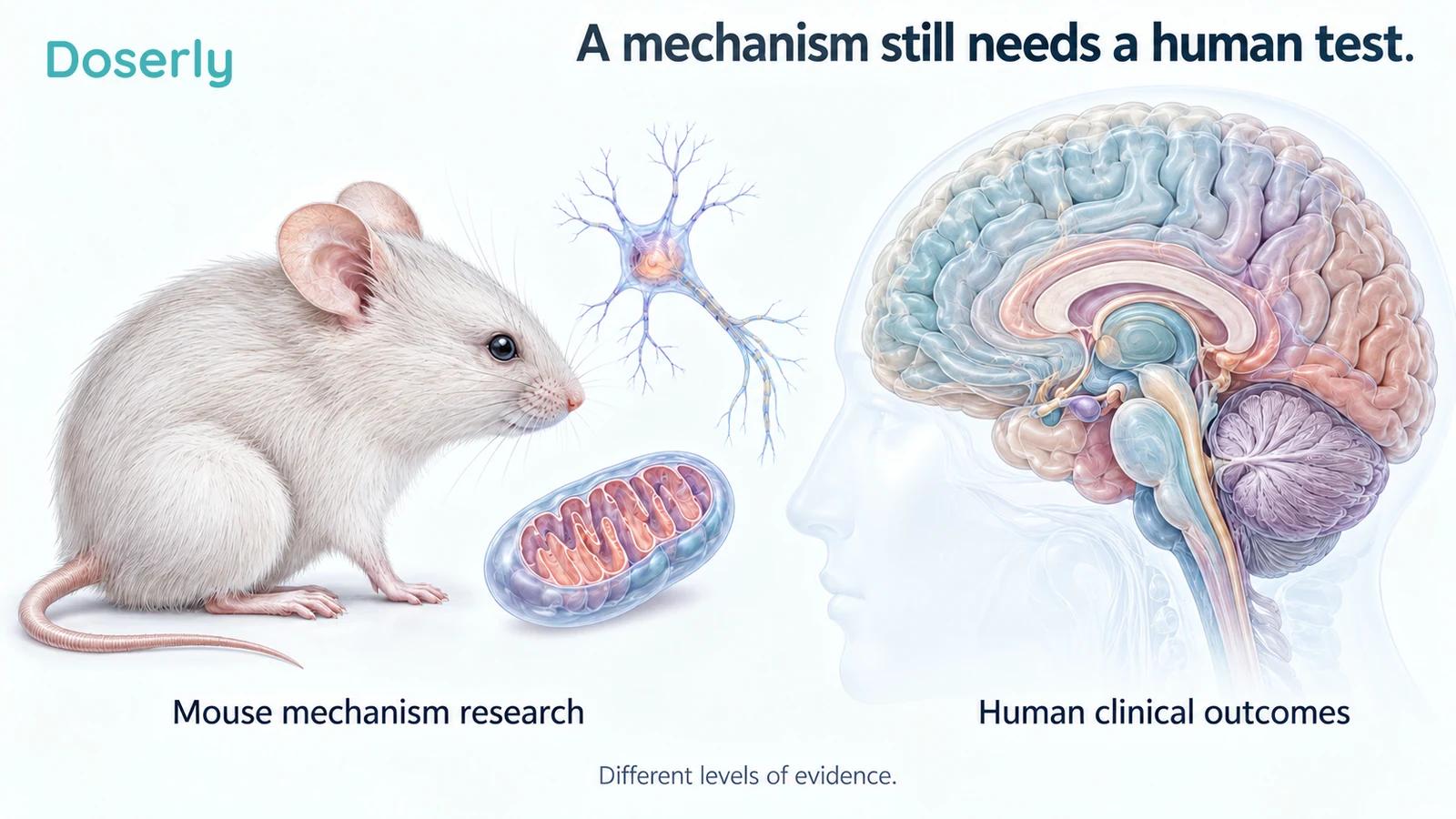
A September 2026 paper combined experiments in mice, laboratory work, and a separate double-blind randomized clinical study involving 40 people. The human component reported reductions in insomnia severity, sleep disturbance, and time taken to fall asleep. In mice, the investigators examined non-REM sleep, delta activity, and adenosine signaling. The original study’s abstract reports these findings.
The accessible abstract and publisher preview did not provide enough detail to independently describe all absolute clinical changes, the complete treatment schedule, or longer-term outcomes. Its human results should therefore be described at that level of precision. The mouse mechanism is not evidence that the same adenosine pathway mediated the human improvements. The publisher disclosure also identifies company relationships involving two investigators and the provider of the prototype device. These details make independent replication valuable without invalidating the findings.
Together, the small recent trials make this an active research area. They do not yet provide a dependable answer to how much benefit a person purchasing an unrelated device should expect.
Other human studies give a less uniform picture
A neck device improved some impressions of sleep, not actigraphy
A randomized sham-controlled trial published in 2023 studied 30 adults with self-reported sleep complaints who did not have a diagnosed sleep disorder. Following a baseline period, participants used an active or sham near-infrared collar for three weeks. Some perceived sleep and daytime outcomes favored active treatment, but actigraphy did not show significant between-group sleep differences. Insomnia Severity Index scores improved in both groups. The full study explains this mixed pattern.
The researchers discussed possible contributions from the wind-down routine, warmth, and other aspects of participation. CeraZ Technologies funded the study; the authors reported no conflicts of interest. Feeling more relaxed is a potentially useful outcome, but it should be reported as such. It does not demonstrate that the device increased objectively estimated sleep or treated chronic insomnia.
A study of mild complaints found no clear sleep or circadian effect
Another double-blind placebo-controlled investigation tested different near-infrared exposures in people with mild sleep-related complaints. It included summer and winter cohorts and a four-week home intervention. The researchers did not find significant improvements in the sleep and circadian outcomes they evaluated, although some other measures, including aspects of wellbeing in the winter cohort, showed signals. The original report describes both the negative sleep results and other findings.
A positive wellbeing result cannot quietly replace a negative sleep result in the interpretation. Equally, this study cannot rule out every other photobiomodulation device or patient group. Its useful contribution is narrower: plausible biological effects did not reliably translate into better sleep in this particular setting.
Older adults: improvement without an inactive comparison
A 2026 trial enrolled 59 community-dwelling older adults with sleep-maintenance or early-waking complaints. It compared near-infrared treatment, white-light treatment, and their combination over two weeks. Subjective sleep duration improved, while actigraphy and the measured circadian indicators did not show corresponding changes. The original abstract describes the three treatment groups.
There was no inactive or sham group. That matters because improvement over time could include expectation, attention, changes in routine, or natural variation. The combined intervention also cannot be treated as evidence that an ordinary red lamp reproduces either treatment. Exploratory observations about chronotype may help researchers design another trial; they do not establish a personalized treatment schedule for home use.
Athletes and people with depression add context
An often-cited 2012 controlled study involved 20 female basketball players. After a two-week intervention, the active red-light group showed improvements in reported sleep quality, serum melatonin, and a running performance measure. Changes in sleep scores correlated with melatonin changes. The original study reports these observations.
A correlation does not show that melatonin caused the sleep improvement. This small athletic population also differs from a clinic population with persistent insomnia, and the reported sleep outcome was a questionnaire rather than overnight sleep staging. The study is a reason to investigate further, not a basis for prescribing a consumer exposure.
A separate 2025 sham-controlled study in 48 adults with major depression found a favorable sleep-quality signal during a wearable photobiomodulation trial, while the between-group depression result was not significant. The depression trial’s abstract separates those outcomes. Sleep improvement in that setting is interesting, but it should not be relabeled as proof of a primary insomnia treatment or an antidepressant effect.
These different populations help explain why collecting all positive findings into one headline is misleading. A treatment might help a particular symptom in one setting and have no detectable effect in another. Understanding that pattern requires studies that are sufficiently large and specific to distinguish it from chance.
Evening illumination is a separate research question
A room can feel calming under a warm-colored lamp without that lamp delivering a photobiomodulation treatment. Here, the relevant pathway begins with light reaching the retina and influencing alertness and circadian signaling. This is about the visual environment, not an instruction to direct a treatment device toward the eyes.
In a laboratory study of 116 young adults, ordinary room-light exposure before bedtime was associated with later melatonin onset and a shorter melatonin secretion interval than dim-light conditions. The original room-light study describes the comparison. This helps explain why the evening environment matters. It does not establish that changing a bulb treats chronic insomnia, and its prolonged laboratory exposure should not be turned into a claim about every brief encounter with a light.
Another human study found substantial differences in sensitivity to evening light. Among 55 young adults, the light levels associated with a given degree of melatonin suppression varied widely. The original individual-sensitivity study reports that variation. A universal promise that a particular apparent brightness cannot affect anyone’s body clock is therefore too strong. Color alone is an incomplete description of an exposure; timing, duration, and the actual light reaching the eyes also matter.
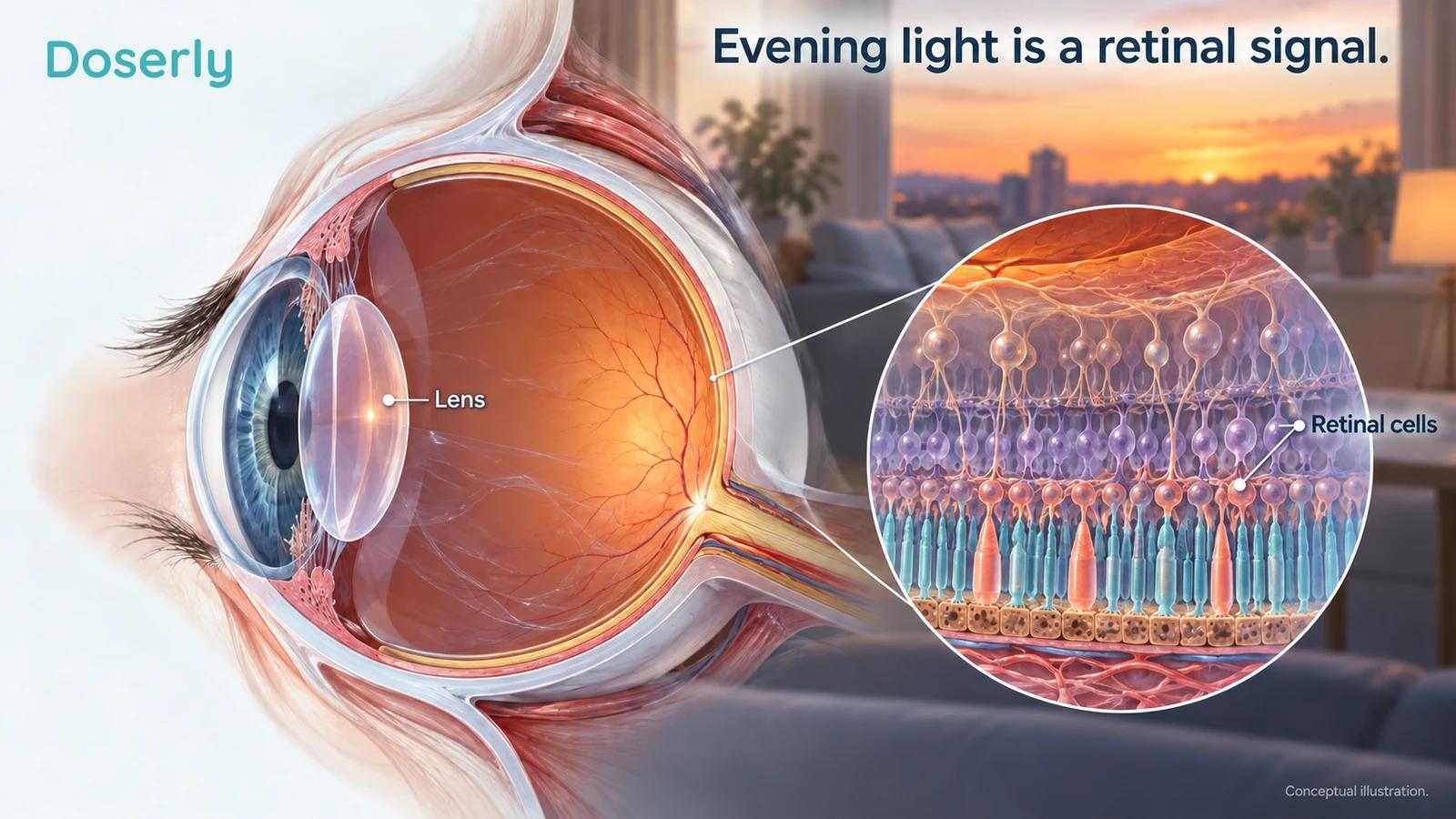
A randomized crossover experiment comparing evening reading on a light-emitting electronic reader with reading a printed book found differences in melatonin, circadian timing, sleep initiation, and next-morning alertness. The original e-reader experiment supports treating evening light as a meaningful environmental exposure. It does not show that all screen use has the same effect, nor that a red-light panel reverses it.
An especially useful distinction comes from a study of spectrally altered evening lighting in 16 healthy adults. Reducing the short-wavelength component reduced melatonin suppression and alerting effects compared with conventional lighting, but did not produce significant improvements in total sleep time, sleep efficiency, or slow-wave activity. The original spectral-lighting experiment reports those separate outcomes.
That result makes an important point concrete: a change in a circadian marker does not guarantee better sleep that night. A more comfortable evening environment may still be worthwhile. The honest claim is about the environment and the outcomes actually measured, rather than a broad statement that red light creates deep sleep.
Melatonin is a timing signal, not a complete sleep score
Melatonin appears in both the lighting literature and some photobiomodulation studies, which makes it easy to imagine that all the results describe one pathway. They do not. A blood or saliva sample can be used to study a hormone’s level or timing; a sleep questionnaire asks about lived experience; a brain recording captures electrical activity. Agreement among these measures would strengthen a story, but disagreement is informative too.
The older-adult trial is a good example of why the hormone story needs restraint: reported sleep changed without corresponding changes in the measured circadian outcomes. The athlete study, meanwhile, reported a correlation rather than a demonstrated causal chain. Neither finding justifies treating melatonin as a universal explanation for photobiomodulation.
For readers already using or considering the supplement, Doserly’s melatonin guide offers separate background. Adding melatonin to a light intervention would introduce another treatment variable. These studies do not establish that combining the two is necessary, superior, or appropriate for an individual person.
It can help to ask a simple question when encountering a claim about hormone optimization: what changed in the person’s nights or days? A laboratory value may be useful for understanding timing, but people usually seek treatment because they want to fall asleep more comfortably, function better, or stop dreading bedtime. Those outcomes deserve direct measurement.
What counts as a convincing improvement?
Sleep research uses several kinds of outcome because no single measure describes the whole experience. A person may feel more rested while a movement monitor shows little change. Someone else may spend more time apparently asleep but still feel exhausted. These observations need interpretation rather than a contest over which measurement is always right.
The Pittsburgh Sleep Quality Index was developed as a self-reported measure covering the previous month and several dimensions of sleep. Its original validation paper describes that purpose. When a short intervention reports a change in this score, the questionnaire’s recall window and the way it was administered deserve attention. It is reasonable to ask how a one-week follow-up relates to a month-based instrument; it is not reasonable to invent a flaw without checking the study methods.
Actigraphy estimates sleep and wakefulness from movement. It can be practical for observing patterns over multiple nights, but it is not the same as a full sleep study. A brain recording during wakefulness is also different from an overnight recording used to classify sleep stages. NHLBI explains sleep phases and stages, which helps clarify why a claim about delta activity needs its recording context attached.
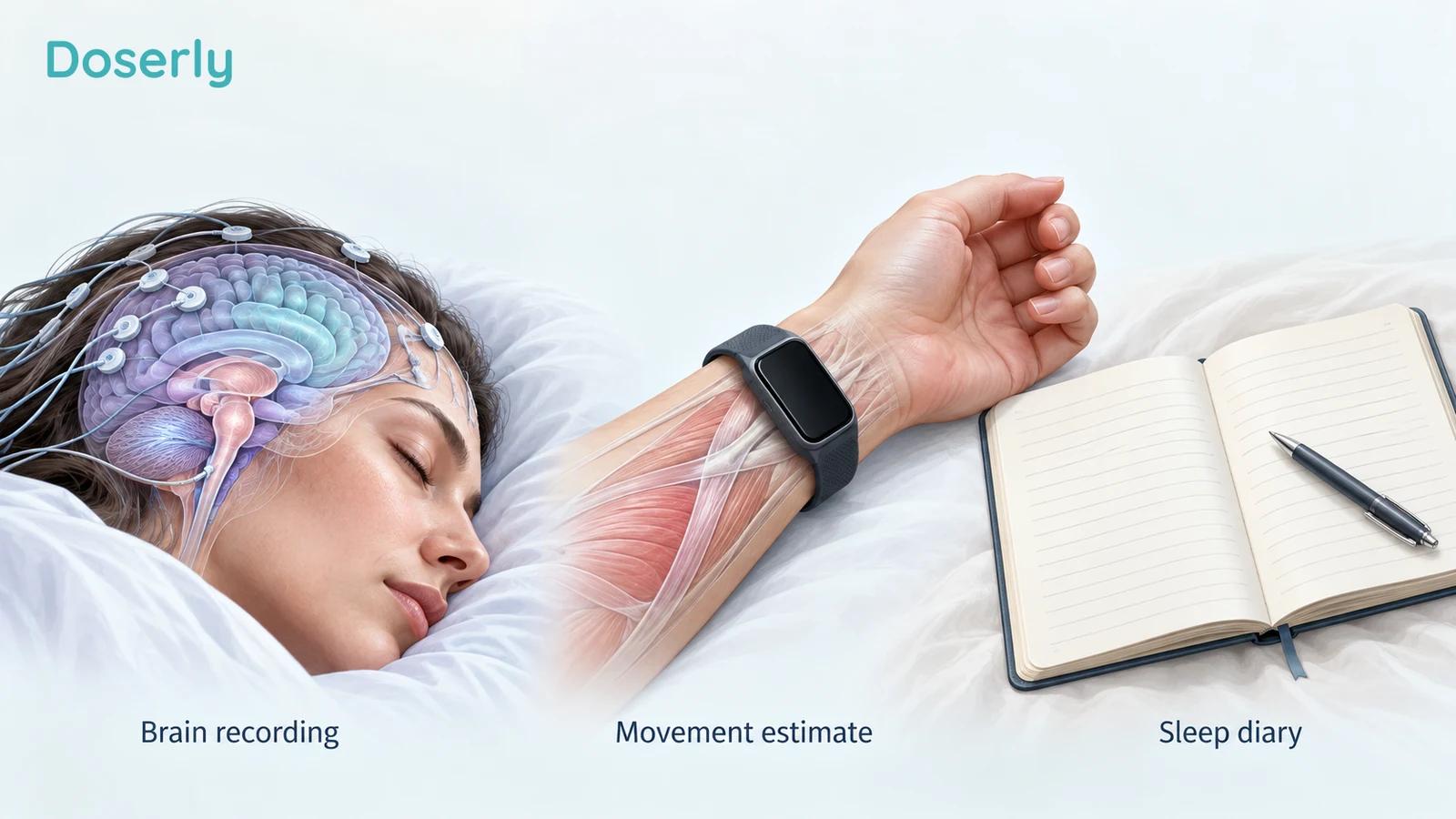
For a future trial, the most useful outcomes would match the enrolled problem. A chronic-insomnia study could assess insomnia severity, daytime functioning, and persistence of benefit after treatment ends. A circadian-timing study could measure whether the sleep schedule becomes better aligned with the person’s needs. An intervention aimed at daytime sleepiness would need to establish whether that symptom improves, rather than relying on a different sleep score.
The amount of change matters as much as whether a statistical threshold is crossed. A treatment can produce a measurable average difference without helping every participant, and an average can conceal both large improvements and no benefit. Larger trials can report how many people achieve meaningful improvement and how many discontinue because the intervention is uncomfortable or impractical.
Established insomnia care is an important comparison
A new device should be considered alongside care that already has a stronger evidence base. The American Academy of Sleep Medicine recommends multicomponent cognitive behavioral therapy for insomnia, or CBT-I, for chronic insomnia in adults. The guideline does not recommend sleep hygiene alone as an adequate standalone treatment. The original clinical practice guideline explains that distinction.
CBT-I is more structured than receiving a list of bedtime tips. It addresses patterns of thinking and behavior that can maintain insomnia and is commonly delivered over several weeks. NHLBI describes the components and treatment format. The appropriate approach depends on the person’s situation and should not be improvised from a device advertisement or a generic checklist.
A large randomized trial of digital CBT-I enrolled 1,711 adults and compared it with sleep-hygiene education, with usual treatment available in both groups. It found improvements in functional health, psychological wellbeing, and sleep-related quality of life through 24 weeks. The sample was predominantly female and White, which limits how completely it represents every population. The original digital-treatment trial reports the outcomes.
That study was not a head-to-head comparison with photobiomodulation. Its relevance is the scale and kind of evidence available for an established treatment: a large sample, an active comparison, meaningful daytime outcomes, and follow-up extending beyond the treatment period. Those features provide a useful benchmark for the developing light-device literature.
For someone who has been offered only general sleep advice, learning that structured insomnia treatment exists may be more immediately useful than choosing among devices. Exploring a new technology should not obscure that option.
A practical way to discuss a device without building a home protocol
Start with the desired outcome in ordinary language. “I want fewer long awakenings” is more useful than “I want better cellular energy.” “I want to feel alert enough for my morning responsibilities” gives a clinician something concrete to assess. This also makes it easier to notice whether an intervention is improving the issue that mattered in the first place.
Then ask whether the device has been studied in people with the same problem, against a credible sham, using outcomes that fit that goal. Request the actual paper rather than accepting a list of unrelated light studies. A forehead device, a neck collar, and a room lamp should not borrow one another’s evidence simply because their marketing uses the same color word.
A short record of bedtime, waking, perceived sleep, and daytime functioning can support a clinical conversation. Keep it manageable. The purpose is to reveal patterns, not to make every night into a performance test. If a treatment is being assessed, record other meaningful changes as well, including medication changes, illness, travel, or a new work schedule. Otherwise, a better week may be attributed to the newest purchase by default.
The published research does not support converting trial descriptions into a universal exposure schedule, using an ordinary panel overnight, or directing a device into the eyes. The relevant questions include the exact device, whether it was used under research supervision, what adverse effects were tracked, and whether its findings apply to the intended use.
Photobiomodulation for sleep has become more interesting as human trials accumulate. Its strongest current promise is that specific interventions may help specific sleep outcomes, a possibility that deserves careful testing. For today’s decisions, keep the three questions separate: whether an experimental treatment improves insomnia, whether the evening environment supports sleep timing, and whether an underlying sleep disorder needs established care.