
Red Light Therapy
October 17, 2026
Red light therapy for fibromyalgia: what whole-body trials can tell us
On this page
Fibromyalgia can make an ordinary day feel like a series of negotiations. A shower uses energy you wanted for a walk. Pain interrupts sleep, and poor sleep makes the next morning harder. When a treatment promises to help pain, fatigue and recovery at once, it is understandable to want a closer look.
Whole-body red light therapy has reached that point. Small human studies have reported encouraging results, including a sham-controlled trial with follow-up after treatment ended. There are also important gaps: few independent whole-body trials, limited participant diversity, commercial involvement and uncertainty about which symptoms improve reliably.
The most useful question is whether a particular treatment helps people live better with fibromyalgia, compared with a credible alternative. Claims about recharging every cell or correcting a universal mitochondrial problem go much further than the clinical evidence. Here is how to separate the promising findings from the promises, using research available through October 2026.
Why a whole-body treatment attracts interest
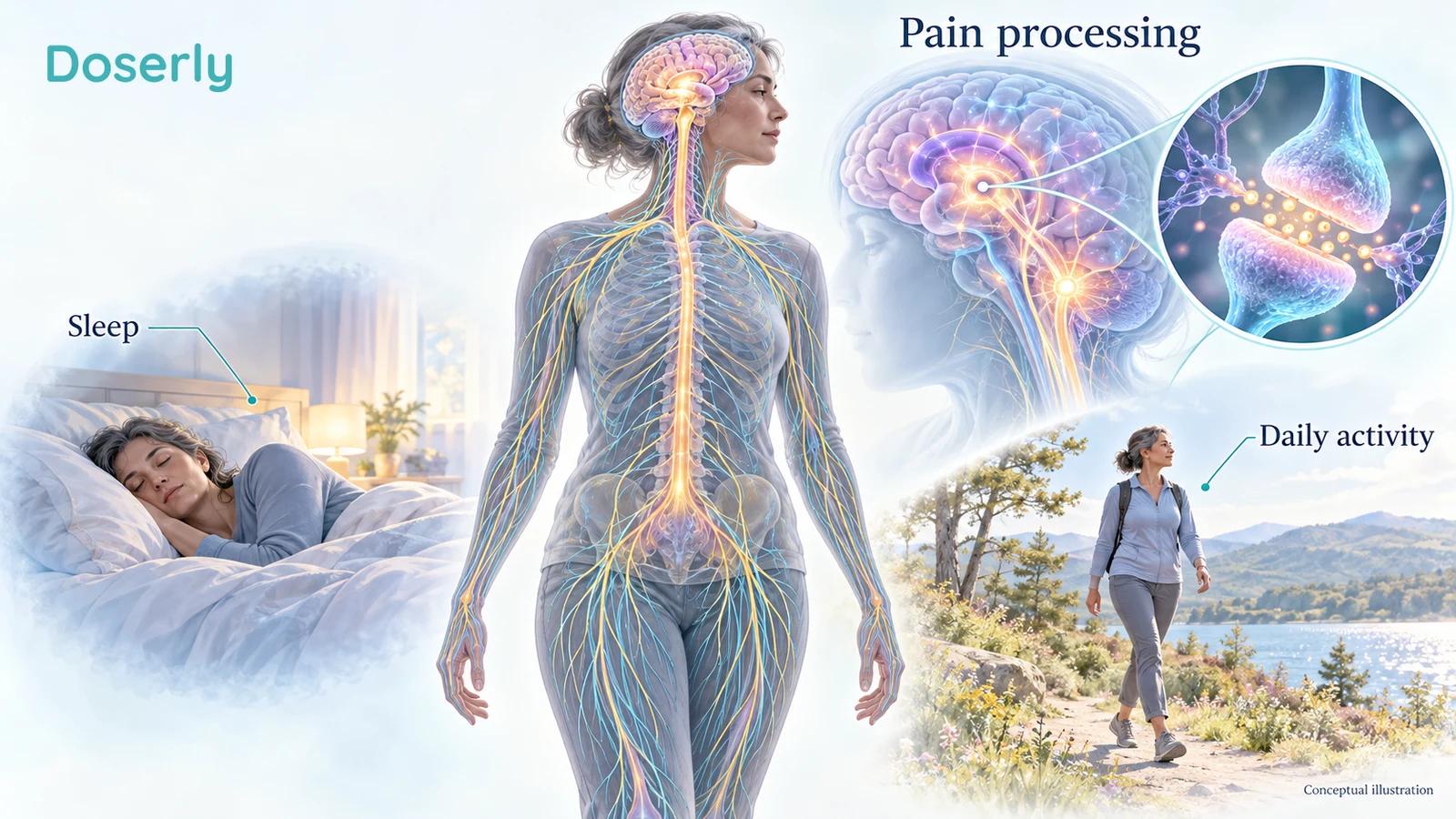
Fibromyalgia involves widespread pain together with symptoms that can include fatigue, unrefreshing sleep and difficulty concentrating. The exact cause is not established, and changes in how the nervous system processes pain are part of the current understanding. A normal routine scan or blood test does not make someone's symptoms imaginary. It does mean that fibromyalgia cannot be reduced to a single visibly damaged muscle. NIAMS overview
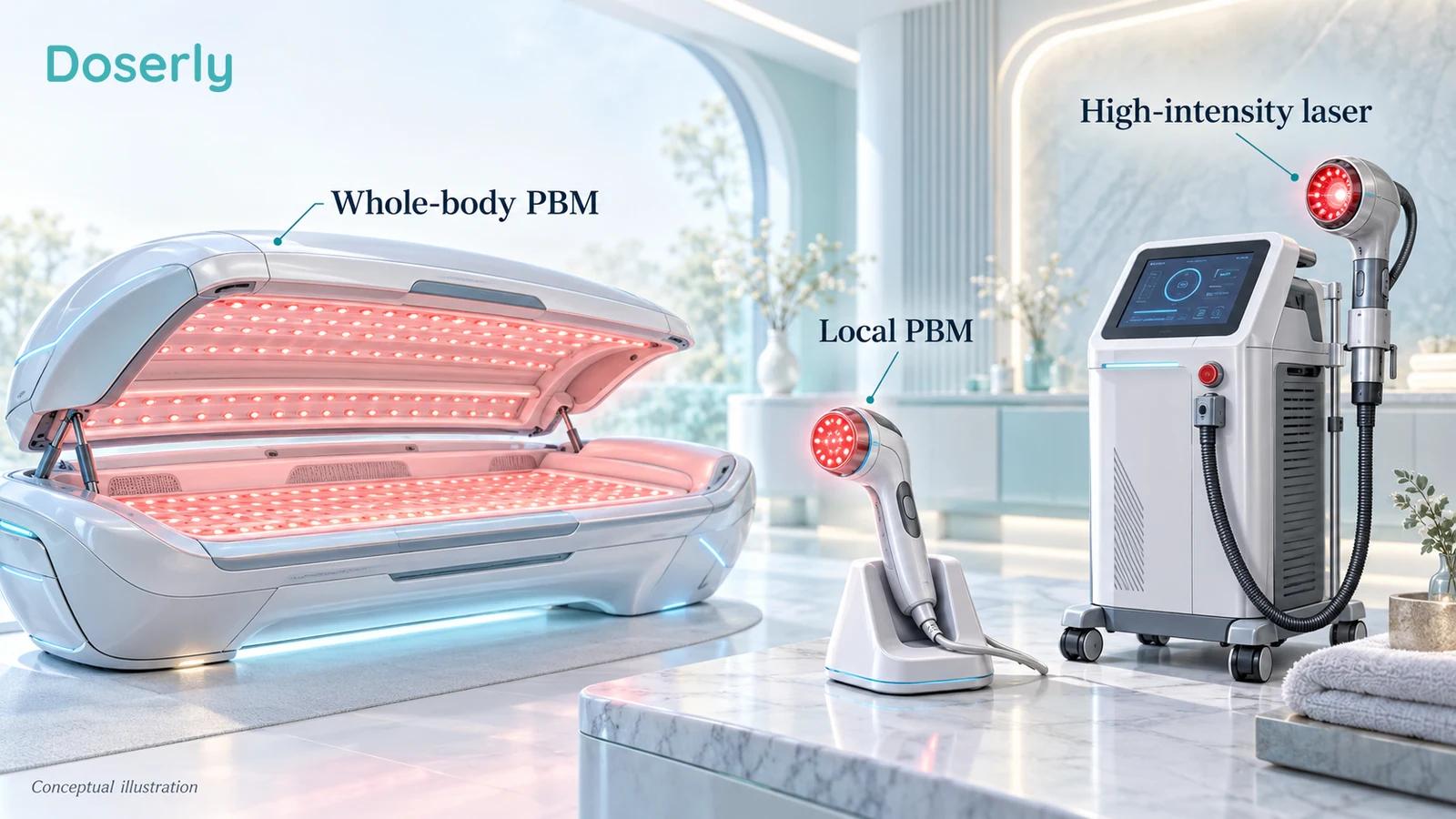
That distinction matters when considering light. A clinician treating one painful tendon can aim a device at a local structure. Fibromyalgia affects a person's experience across many body regions and daily activities. Whole-body systems attempt to expose a much larger skin surface, commonly using red and near-infrared light. The physical size of that exposure does not, by itself, establish a whole-body clinical benefit.
Photobiomodulation, or PBM, is the term used for attempts to influence biological activity with light without relying on destructive heating. It is different from ultraviolet tanning, bright-light treatment timed to influence the sleep-wake cycle, and high-intensity laser procedures. Those categories can share words such as light, laser or energy while asking different clinical questions.
Someone may therefore hear that “laser therapy works for fibromyalgia” and imagine a home red panel, even though the cited experiment used a handheld device over selected tender points. Another study may combine light with a static magnetic field. Still another may use a high-intensity laser alongside exercise. Each is worth evaluating on its own terms; none automatically validates every other device.
What the controlled whole-body study found
The most directly relevant early whole-body study recruited 42 people at a private clinic in Málaga, Spain. Participants received active treatment or a sham procedure over four weeks. The system used red and near-infrared LEDs, with 12 treatment visits. The investigators reported advantages for pain and several patient-reported outcomes shortly after treatment. Short-term randomized trial
The researchers made a serious effort to create a believable sham. Goggles reproduced a red-light experience, while heating elements helped mimic the treatment environment. That is more informative than simply comparing a glowing treatment bed with doing nothing. The study was described as triple-blinded, although a blinding label alone cannot establish that nobody guessed their allocation correctly. Trial methods
This study gives a reason to keep investigating whole-body PBM. Its size also leaves uncertainty about how consistently the findings would reproduce across clinics, symptom patterns and treatment histories. A few dozen participants can detect a useful signal without supplying a dependable estimate for everyone who might buy a treatment course.
The practical interpretation is encouraging but bounded: one particular whole-body procedure outperformed its sham for selected outcomes in a small study. It did not establish the best device, prove that more exposure is better, or show that a home panel reproduces the same experience.
Six-month follow-up is valuable, but it is the same cohort
A 2024 publication followed the Spanish participants for longer. It reported an approximately two-point advantage on a ten-point pain scale at six months. However, the between-group pain difference was not statistically significant at three months. Quality of life and several psychological or activity-related measures favored treatment at selected follow-ups. Six-month follow-up
This was follow-up of the same 42-person trial, not a second independent replication. The researchers also disclosed manufacturer employment among authors and study funding connected with an author. These relationships do not erase the results, but they strengthen the case for independent replication. Baseline imbalance in fear of movement and the many outcomes examined add interpretive uncertainty.
The timing pattern deserves attention. A favorable six-month result is interesting; a nonsignificant three-month comparison means the story is not simply a steadily maintained benefit at every checkpoint. Neither result should disappear from a balanced account. The study's quality-of-life rating and self-reported leisure activity also should not be described as objective proof that physical capacity recovered.
If several articles cite the short-term paper, its protocol and its follow-up, a reader may encounter what looks like a large collection of studies. Counting publications is easy. Counting independent groups of participants is more informative. Here, several publications expand the description of one experiment.
What the UK feasibility work adds
A separate UK feasibility study began treatment with 21 participants, of whom 19 completed it. It investigated a course of whole-body PBM and reported improvements across several symptoms and fibromyalgia impact measures, with some follow-up extending to 24 weeks. There was no sham or untreated comparison group. Whole-body feasibility study
That design is useful for learning whether recruitment, attendance and outcome collection are workable. It is much less able to determine how much improvement the light itself caused. Symptoms fluctuate, people may enter a study during a difficult period, and the clinical encounter can change expectations or routines. At longer follow-up, participants did not all describe the same experience: some reported no change, and one reported feeling worse.
Those observations are not an argument for dismissing participant reports. They help define what the study can answer. It shows that a larger controlled trial is feasible and that participants noticed changes worth studying. It cannot tell a prospective patient the probability that light will outperform an equally credible sham experience.
This matters financially as well as scientifically. A promising feasibility result can justify funding a definitive trial. It is a thinner basis for a claim that everyone with fibromyalgia should purchase a lengthy treatment package.
The experience around treatment can matter too
Researchers interviewed 16 participants from the UK project. People described aspects of the experience such as relaxation, warmth, changes in activity and renewed hope. The work also identified practical details, including difficulty getting into or out of the equipment for some participants. Qualitative study
These interviews came from the feasibility project, so they are not another controlled efficacy trial. They answer a different question: what was the treatment like for the people who received it? That is important when an intervention requires repeated visits, travel and physical access to an enclosed bed.
A calm, predictable appointment may be valuable even when its benefit cannot be assigned specifically to photons. For someone whose days are crowded with pain and demands, protected rest may change the experience of symptoms. A good controlled study tries to preserve those surrounding features in both groups so that the added contribution of active light can be estimated.
This also helps interpret a personal success story. “I felt better after this course” can be a completely honest account. It contains less information than “the active treatment produced more improvement than an indistinguishable sham in a large independent trial.” The first deserves respect; the second is needed to make a confident treatment recommendation.
Local light studies have a longer, mixed history
Whole-body PBM did not begin the fibromyalgia literature. A 2002 placebo-controlled trial studied 40 women receiving local low-power laser treatment. It reported advantages for outcomes including pain, tender points and morning stiffness. It was small and single-blinded, and its local treatment cannot establish the effectiveness of a modern whole-body bed. Early local-laser trial
A later trial randomized 20 people to local laser or placebo over selected tender points. It reported favorable pain and fibromyalgia impact findings after a short treatment course. With ten participants per group, it provides an exploratory signal rather than a stable estimate of long-term benefit. Small placebo-controlled trial
These studies help explain why researchers continued to investigate PBM. They also show why the broad statement “many trials prove red light works” needs unpacking. Different wavelengths, treatment locations, comparison procedures and outcome measures may be grouped under the same label. A positive result in one setting does not tell us which of those differences matter.
The question becomes especially practical when PBM is added to rehabilitation. A person usually wants to know whether the additional appointments improve outcomes beyond the care they were already receiving. That requires a comparison in which both groups receive the same exercise or rehabilitation support.
Adding light to exercise has not consistently helped
In a 2018 trial, 22 women received functional exercise with either active low-level laser or sham treatment. Both groups improved across several measures, but adding active laser did not produce a significant between-group advantage. That is different from saying that nobody improved. It means the improvements did not demonstrate an additional benefit from the light. Exercise plus active or sham laser
A 2024 trial studied 51 women across four groups, including aerobic exercise with active or sham PBM. It likewise reported no significant differences between groups, despite improvements within treated groups. Its small groups limit precision, but the null comparisons belong in the evidence alongside positive studies. Aerobic exercise and PBM trial
A systematic review published in August 2026 found no significant additional benefit from PBM plus exercise for the outcomes it pooled. The authors rated the certainty very low, with substantial variation between studies. This does not prove that every possible PBM approach is ineffective; it does mean that a dependable extra benefit over exercise has not been established. 2026 exercise-combination review
For a patient, that distinction can simplify a decision. If a clinic's proposed package includes exercise, coaching and light, improvement after the package will not reveal which component helped. Ask what evidence supports the additional light component, and whether access to rehabilitation depends on purchasing it.
Combination devices and high-intensity lasers need separate labels
A 90-woman placebo-controlled trial found benefits from PBM combined with a static magnetic field. Tender-point count was the primary outcome; pain and fibromyalgia impact measures also favored the combination. Follow-up after treatment was relatively short. The paper disclosed manufacturer-related financial relationships among investigators. PBM plus magnetic-field trial
This is a real clinical result, but it tests the combined intervention. It does not isolate the effect of light, and it does not test a whole-body consumer panel. Reporting it simply as evidence that red light alone works loses an essential part of the experiment.
A 2025 trial of 52 women reported improved pain, health status and quality of life when high-intensity laser was added to exercise. The comparison group received exercise alone, rather than a sham laser procedure. The study therefore leaves expectation and treatment-attention differences less well controlled. High-intensity laser also belongs in a separate discussion from nonthermal whole-body LED PBM. High-intensity laser trial
These distinctions are not technical obstacles placed between patients and relief. They protect the meaning of a result. If a seller cites either paper, the useful next question is whether the proposed treatment actually matches the intervention studied.
Pain, fatigue, sleep and function are different outcomes
Fibromyalgia is unusually vulnerable to being compressed into a single success score. A person may have less pain but remain exhausted. Another may sleep better without increasing walking tolerance. A third may become more active while reporting much the same pain. Each change can matter, but they should be described accurately.
Pain intensity usually reflects a person's rating over a specified period. A lower rating can be worthwhile without demonstrating that an underlying tissue abnormality has been repaired. Tender-point counts add information about sensitivity at examined locations; they are not a direct measurement of the entire nervous system.
Fibromyalgia impact questionnaires combine several aspects of daily life and symptoms. An improved total score is useful, but it does not mean every component improved equally. If fatigue is the main reason for seeking treatment, a total score should not substitute for a clearly reported fatigue outcome.
Sleep deserves similar care. Feeling more refreshed is valuable. It is different from measuring sleep architecture, diagnosing sleep apnea or showing that circadian timing changed. A red-light session can feel relaxing without establishing a specific sleep mechanism.
The same applies to activity. Reporting more leisure activity is not identical to completing a longer walking test or showing a sustained change on a wearable device. The best outcome is the one that matches the person's actual problem. Being able to prepare dinner without a prolonged flare may matter more than a small change in a laboratory measure.

Mitochondrial explanations do not diagnose the individual
PBM discussions often begin with mitochondria, the cellular structures involved in energy metabolism. That can be a useful starting point for a biological hypothesis. It becomes misleading when it is used to tell every person with fibromyalgia that their cells have a known light-correctable energy defect.
The American College of Rheumatology describes fibromyalgia as a condition involving altered pain processing, with no single routine laboratory or imaging test that establishes it. This does not exclude biological differences in subgroups. It does rule out treating a marketing explanation as an individualized diagnosis. ACR patient information
To connect a proposed cellular mechanism to a treatment claim, researchers would need several kinds of evidence: a relevant abnormality in the people being treated, a reliable change in that abnormality, and meaningful clinical improvement linked to the intervention. A symptom improvement alone does not identify the mechanism. A laboratory change alone does not establish that the person feels or functions better.
This is particularly important with fatigue. The everyday word “energy” can refer to alertness, physical endurance, motivation, sleepiness or the effort required to complete a task. Cellular energy metabolism is not interchangeable with all those experiences. A useful consultation clarifies which difficulty is being targeted before choosing an intervention.
Keep the rest of care visible
Fibromyalgia care is individualized and may include physical activity, attention to sleep, psychological therapies and medication when appropriate. NIAMS emphasizes working with clinicians to find a manageable combination. That approach leaves room for discussing a new treatment without making it the center of every decision. Treatment and daily care
Exercise also need not mean forcing through an unsuitable gym program. In a 226-participant randomized trial, tai chi produced similar or greater improvements than aerobic exercise on several measures, with better attendance. The primary comparison favored tai chi at 24 weeks, although one missing-data sensitivity analysis weakened that finding. The study illustrates why the type of activity and its acceptability matter. Tai chi versus aerobic exercise
For someone considering PBM, the practical issue is opportunity cost. Repeated travel, appointment time and expense can compete with rest, rehabilitation or other care. A treatment that produces a modest symptom benefit may still be worthwhile for one person and burdensome for another. That judgment should include the entire treatment experience, not just the minutes under a device.
New or changing symptoms also deserve their own assessment. Having fibromyalgia does not mean every later problem has the same explanation. A clinician can help distinguish a familiar fluctuation from something that calls for a different investigation. Light therapy should not become a reason to stop asking those questions.
A useful discussion before paying for treatment
The people enrolled in these trials also matter. Several local-light studies enrolled women only, and the whole-body studies were small clinic-based samples. That makes the evidence less informative for men, people with substantial coexisting illness, or people whose mobility prevents them from using the equipment. It does not establish that treatment cannot help those groups. It means a confident estimate of benefit for them is missing.
Even among people with the same diagnosis, the dominant problem may differ. Someone whose main limitation is unrefreshing sleep may need a different assessment from someone whose walking is restricted by a separate joint problem. If a clinic offers the same explanation and package regardless of those differences, ask how the treatment goal was chosen. A diagnosis creates a starting point for care, not a guarantee that every symptom shares one mechanism.
It is also worth asking what happens after the initial course. The published follow-up is interesting, but it does not establish a universal maintenance schedule. A suggestion to keep attending should have its own rationale, costs and review point. Longer participation should not be presented as necessary merely because the initial response was uncertain.
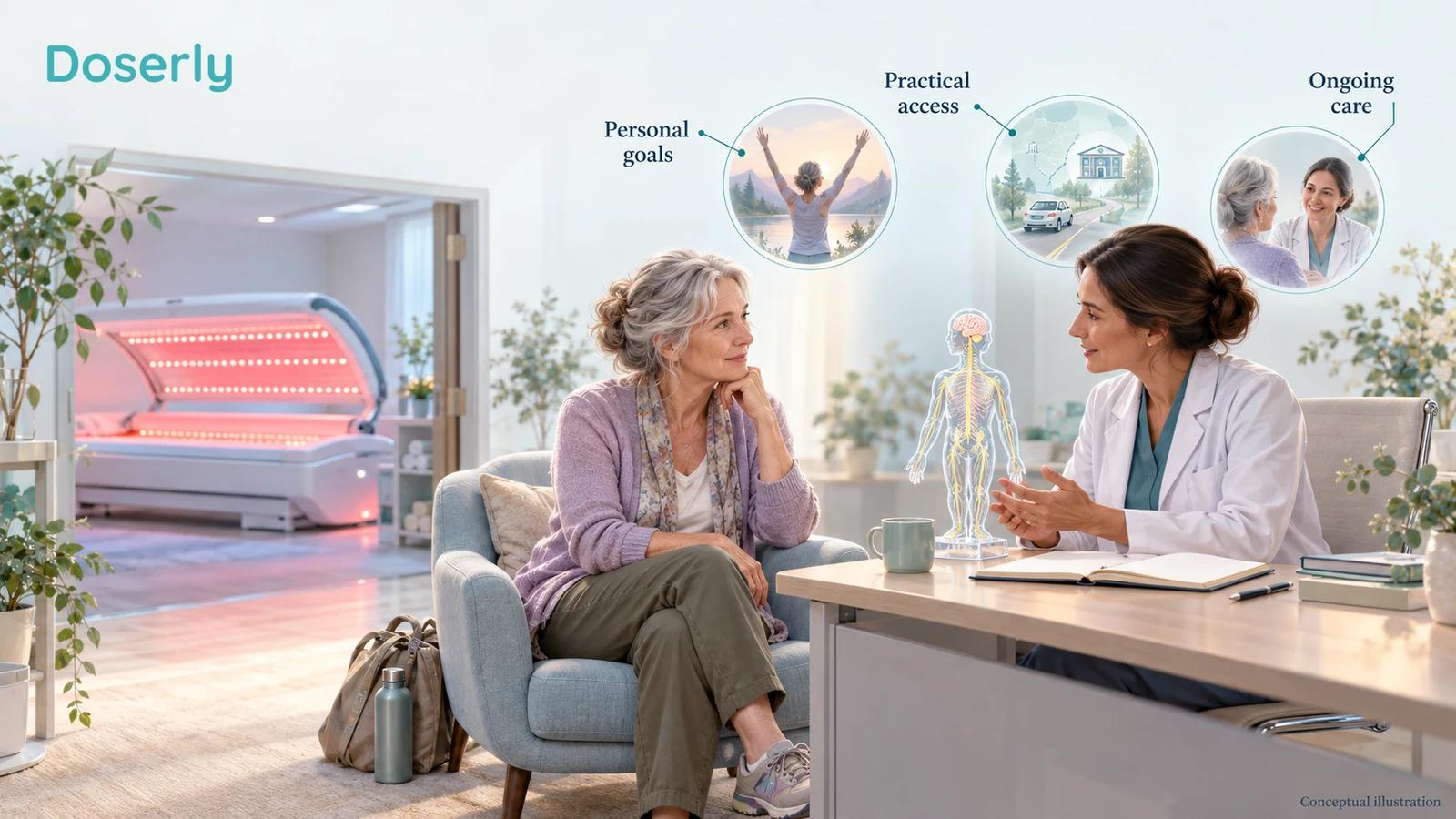
Start with a concrete goal. “I want to feel better” is understandable, but “I want to manage a short grocery trip with less recovery time” gives treatment a clearer purpose. Decide how that goal will be observed and when the result will be reviewed. This is a way to make the decision more useful, not a validated home experiment.
Ask which study supports the proposed device and whether it used a sham comparison. Check whether it involved whole-body exposure, local treatment, a magnetic-field combination or a high-intensity laser. Ask whether the claimed benefit concerns pain, fatigue, sleep or function, and whether it persisted after treatment stopped.
Practical access matters too. Can you enter and leave the equipment comfortably? How does the service manage eye protection, heat sensitivity, medications and relevant medical history? What happens if a session aggravates symptoms? A small trial with few reported adverse events cannot answer every safety question for every patient or device.
Finally, discuss a stopping point. If the agreed goal does not improve enough to justify the burden, continuing indefinitely should not be the default. Avoid changing several other treatments simultaneously merely to make a light course appear successful. Keeping a simple record of symptoms, activity and major treatment changes can make the follow-up conversation clearer.
Where the evidence leaves the decision
Whole-body PBM for fibromyalgia has a credible early signal and an important need for larger independent sham-controlled trials. The Spanish study provides more than a testimonial, but its follow-up publications remain one small cohort. The UK work adds feasibility and patient-experience information, not independent proof of efficacy.
The broader light literature is mixed. Some local and combination-device trials are positive; exercise-addition trials include clear null findings. Those results should guide a measured discussion rather than a universal promise. For now, the strongest personal decision starts with a specific symptom or activity goal, a treatment that actually matches the evidence being cited, and a clear understanding of what remains uncertain.