
Red Light Therapy
October 17, 2026
Red light therapy for depression and anxiety: how brain stimulation differs from a lamp
On this page
When depression or anxiety makes daily life harder, the appeal of a treatment that involves sitting quietly with a device is easy to understand. There may be no appointment to travel to, no new tablet to remember, and no obvious discomfort. But the phrase light therapy can describe several very different interventions, and that ambiguity can make the evidence sound stronger than it is.
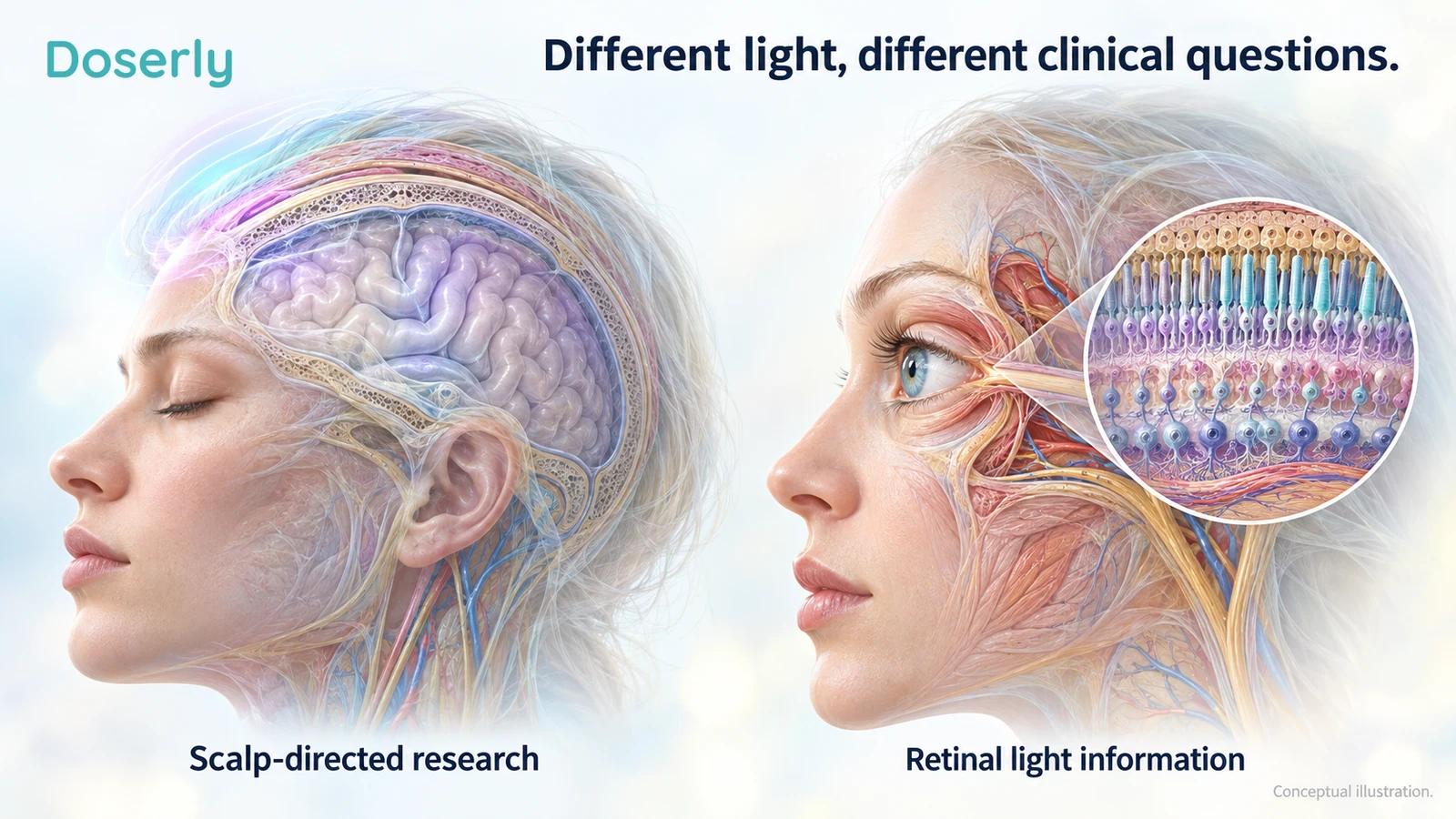
Transcranial photobiomodulation uses red or near-infrared light directed at the head. Researchers are investigating whether it can influence brain processes relevant to mood. Bright-light therapy, familiar from seasonal depression, uses visible light and has a different clinical history. A red bedroom lamp is another thing again. These approaches are not interchangeable simply because each involves light.
Human photobiomodulation studies have produced early positive signals, but controlled depression trials have also been negative. A 2025 wearable-device trial found a sleep-quality benefit without an antidepressant advantage over sham. A 2026 imaging study found changes in a brain blood-oxygen signal without an acute improvement in depression severity. Those distinctions are the center of this article, not details to hide at the end.
Here is what the research available through October 17, 2026 can tell us, and how to keep it connected to the outcomes that matter: feeling better, functioning better, and staying well.
Three things people may mean by light therapy
Transcranial photobiomodulation, often abbreviated tPBM, places a light source near the scalp with the intention of affecting underlying brain tissue. Studies use particular wavelengths, exposure patterns, and devices. The proposed effects concern cellular metabolism and other biological processes. Demonstrating a biological response is an early research step; demonstrating a reliable antidepressant effect is a separate task.
Bright-light treatment for winter seasonal affective disorder has a different rationale and evidence base. Seasonal changes in daylight can affect daily rhythms and mood. The National Institute of Mental Health describes bright-light therapy as one established treatment option for winter-pattern seasonal depression, alongside psychotherapy and medication. This involves a purpose-designed visible-light intervention, not illuminating the forehead with a red or near-infrared device.
Ambient red lighting is different from both. A room can feel less harsh or more comfortable without delivering the intervention studied in a depression trial. Comfort may be worthwhile, but it should not be described as proof that a lamp treats major depressive disorder or generalized anxiety disorder.
A practical first question is therefore very simple: which intervention is being discussed? A paper about a bright white light box cannot validate a near-infrared headband. A headband study cannot validate a full-body panel. And a product described as relaxing does not automatically have evidence for treating a diagnosed psychiatric condition.
This distinction also matters for eye safety. Bright-light treatment has its own device specifications and clinical precautions. Its evidence does not justify looking into a red or near-infrared therapy panel, and a forehead-directed research study is not an instruction to expose the eyes.
Why the brain-stimulation idea is plausible but unfinished
The brain requires a continuous supply of energy and blood. Researchers are interested in whether light can influence processes associated with those needs. That is a reasonable scientific question, particularly when symptoms remain despite treatment. It does not reduce depression to a battery that needs charging.
Depression involves mood, motivation, sleep, thought patterns, physical symptoms, and daily functioning. Different people can meet diagnostic criteria while having quite different symptom profiles. A person who sleeps excessively and loses interest in everything may need a different clinical discussion from someone whose depression includes agitation and severe insomnia. An intervention aimed at one biological process still needs to show that it helps the relevant person.
There is an additional physical problem between the device and the proposed target. Light first encounters scalp, bone, and other tissues. Surface exposure does not directly specify the amount reaching a particular brain region. A wavelength or power figure in a study is only one part of that intervention. It cannot establish that a device with a similar label reproduces the same exposure.
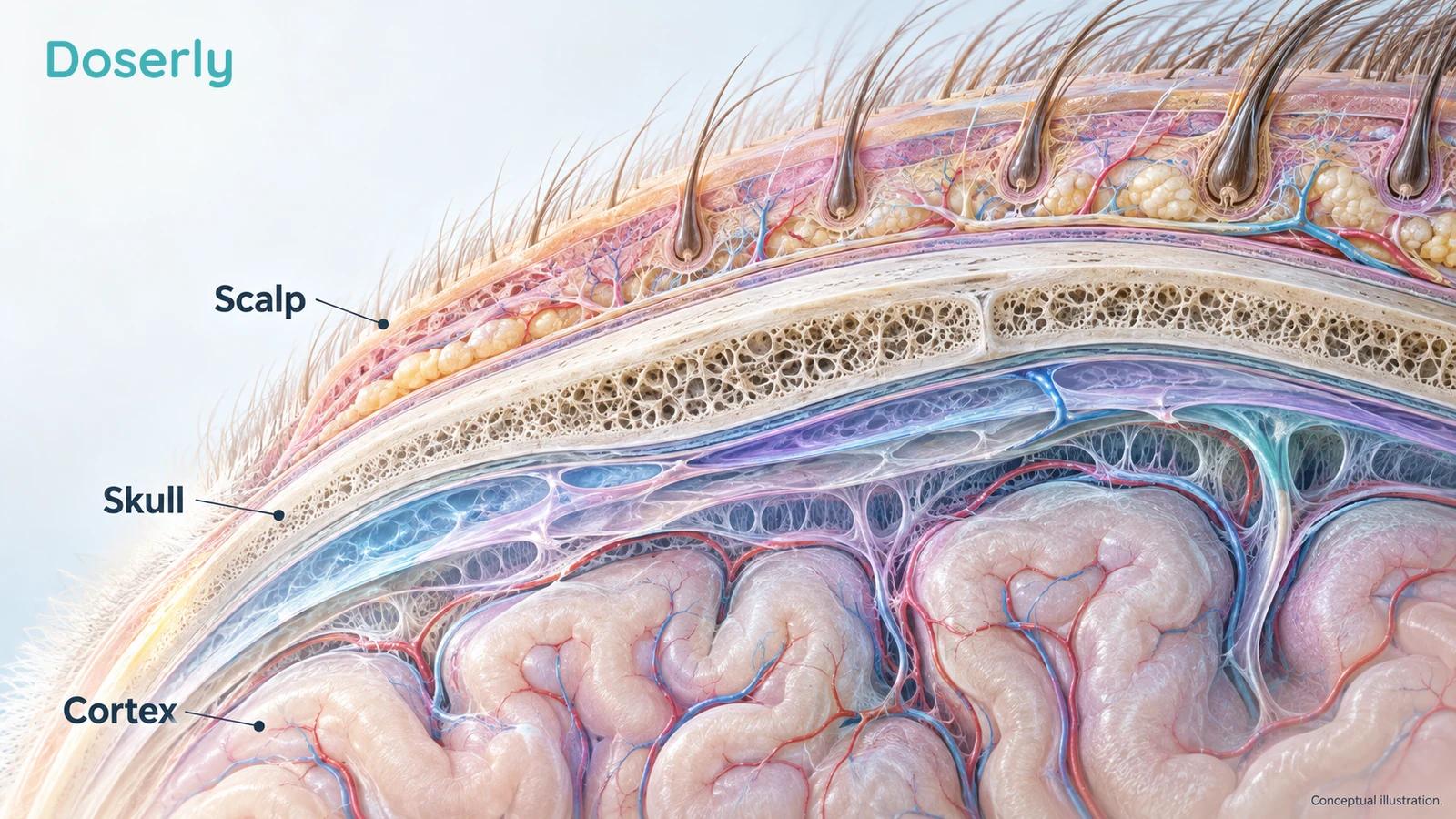
The clinical question is consequently more demanding than whether light can interact with tissue. It is whether a particular treatment produces meaningful benefits beyond an appropriate sham, with acceptable risks and a useful duration of effect. That is where the human trials become essential.
The early pilot studies created a reason to investigate
A 2009 pilot study involved 10 people with major depression, most of whom also had anxiety. Participants received both active and inactive exposures during the experimental visit, and the investigators assessed mood afterward and at follow-up. The report described encouraging psychological changes and called for larger controlled trials.
It was not a parallel-group study in which one group received a complete active treatment course and another received a complete sham course. The longer-term observations therefore cannot provide a clean estimate of sustained benefit over sham. The study is useful as an early feasibility signal, but its small size and design prevent a dependable prediction for someone choosing treatment today.
The 2018 ELATED-2 pilot provided a more direct comparison. Twenty-one people with major depressive disorder were randomized to active or sham treatment over eight weeks. The clinician-rated depression score favored active treatment in some analyses. With baseline observations carried forward for missing data, the average reduction was 10.8 points with active treatment and 4.4 with sham.
There were important qualifications. Only 13 participants completed the study, and the result did not reach significance under the last-observation-carried-forward analysis. Response and remission comparisons were also not statistically significant. Some authors disclosed industry relationships. The study supported further investigation, but it was a small pilot with results sensitive to how missing observations were handled.
ELATED-3 did not reproduce an antidepressant advantage
The 2022 ELATED-3 trial was a two-site, double-blind, sham-controlled study of adjunctive near-infrared treatment. Of 54 people recruited, 49 were included in the analysis. The design included a second phase in which some initial sham nonresponders were randomized again.
The study found no significant advantage for active treatment on either of its principal depression-rating measures. That is the clinically relevant result. The authors suggested that the tested combination of exposure parameters and treatment frequency might have been insufficient, but an explanation for a negative result is not proof that a stronger exposure works.
This distinction matters when someone hears that the treatment failed only because the dose was too low. That may be a hypothesis worth testing. It does not give a patient or seller a validated rule for escalating power, time, or session frequency. The trial tested one approach and did not demonstrate benefit. Other approaches require their own evidence.
A negative controlled trial also does not mean that every participant felt no improvement. Symptoms can change in both groups. The question is whether the active intervention added benefit beyond the comparison condition, because that is what a treatment claim needs to establish.
The 2025 wearable trial separated sleep from depression
A 2025 randomized, double-blind trial studied a self-administered wearable headband in 48 outpatients with major depressive disorder. Participants received active or sham treatment for eight weeks, with assessments continuing through week 12. The study measured clinician-rated depression, self-reported depression, and sleep quality.
Both groups improved on the depression scales, but there was no significant between-group antidepressant difference. Sleep quality did show a between-group advantage for the active intervention, persisting through the reported follow-up. Adverse effects were described as minimal and transient, and adherence was feasible.
This is an informative mixed result. It supports further study of the sleep finding while leaving the depression claim unproven for that device and schedule. Better sleep can matter greatly to someone living with depression, but it is not interchangeable with remission of the depressive episode. The small sample and short follow-up also limit what can be concluded about durable benefit and uncommon harms.
What the 2025 and 2026 brain-measurement studies add
A 2025 magnetic-resonance spectroscopy study examined 33 adults with major depressive disorder under several active exposure conditions and sham. It measured compounds associated with brain metabolism, including N-acetylaspartate, choline, and creatine. Although N-acetylaspartate increased over measurements, the change was not specific to an active treatment condition. The authors concluded that the findings did not demonstrate a specific photobiomodulation effect.
Some correlations between metabolite measurements and symptom scales were observed. A correlation does not establish that changing the metabolite caused an antidepressant response. The study was a short experimental investigation with exploratory measurements, and its methods specified that outcome assessors were not blinded to treatment order. These details make it unsuitable as proof that light corrects a metabolic cause of depression.
A 2026 study of 31 people with major depressive disorder examined blood-oxygenation-level-dependent, or BOLD, signal power during different light exposures and sham. One active condition increased this signal, another decreased it, and the higher pulsed condition did not show a significant change. Single administrations did not significantly improve depression severity compared with sham.
The 2025 and 2026 papers share the trial registration NCT04366258. They should be read as related investigations from a research program, not two independent demonstrations of clinical efficacy. The newer paper disclosed commercial relationships, including near-infrared technology consulting, equity, and patents. Its bidirectional imaging findings are useful for designing subsequent studies; they do not identify a home treatment setting or an antidepressant benefit.
Why changing a brain signal does not settle the mood question
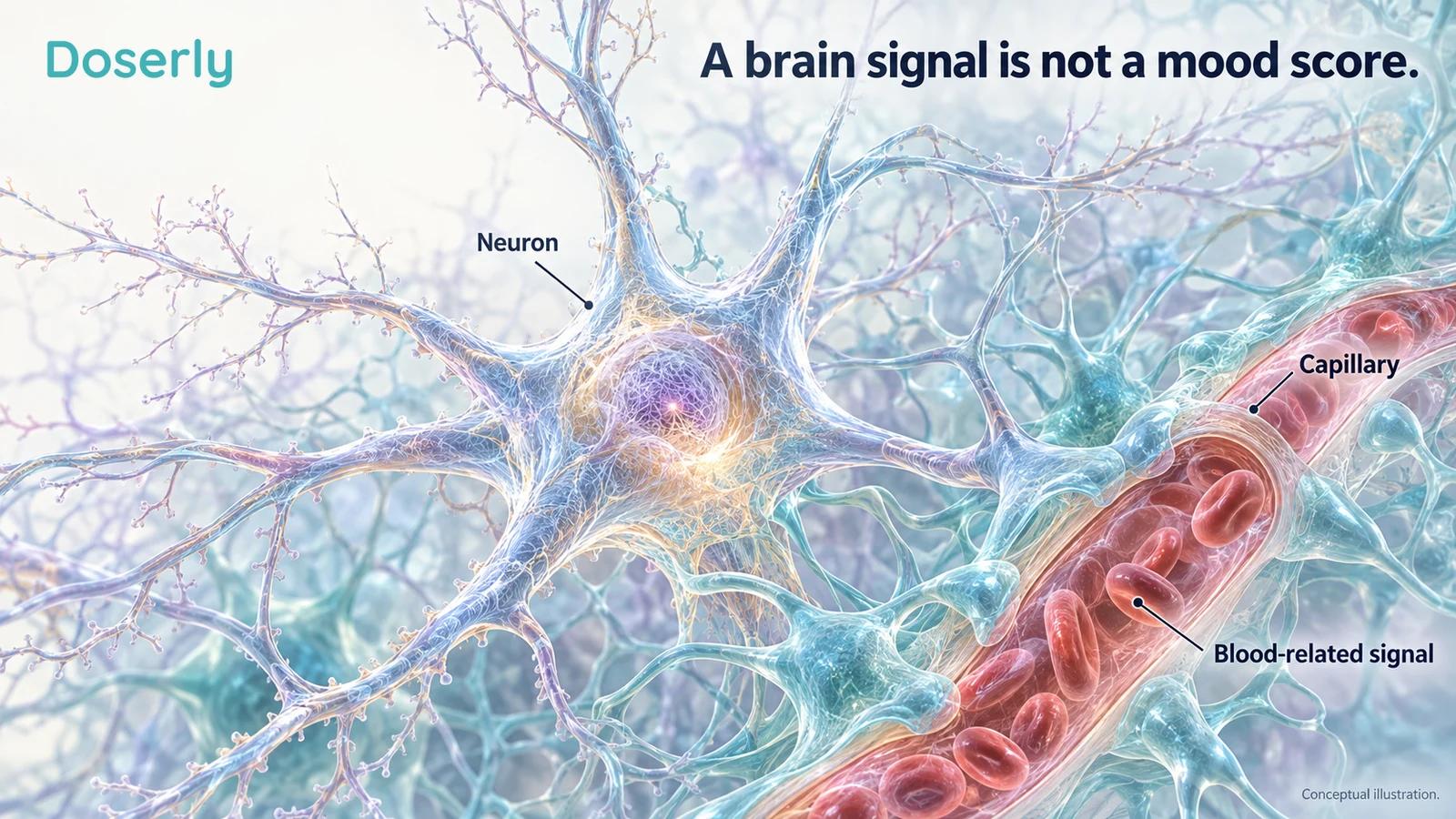
A person does not experience a percentage change in an imaging metric. They experience whether they can get out of bed, concentrate, enjoy a conversation, complete responsibilities, or feel less overwhelmed. Brain measurements can help researchers understand an intervention, but those measurements need a demonstrated relationship with meaningful outcomes.
It is tempting to interpret an increase in a signal as better and a decrease as worse. That is not a safe general rule. A measurement may reflect several biological processes, and its meaning depends on context. The recent dose-comparison findings are a useful reminder that a larger device setting does not necessarily create a larger version of the same brain response.
For the same reason, a biological explanation cannot rescue every disappointing clinical result. If a treatment changes a measurement but symptoms do not improve beyond sham, the clinical evidence remains negative for that outcome. The observation may still help investigators refine their next experiment, but the patient's question has not been answered positively.
A persuasive future study would connect the proposed intervention with symptom improvement, daily functioning, tolerability, and persistence of benefit. Those outcomes should be defined before looking at the results, so that an unexpected favorable measurement does not quietly replace the original clinical goal.
Anxiety has a smaller direct evidence base
The 2019 generalized-anxiety pilot recruited 15 people for an eight-week open-label study, and 12 completed it. The average clinician-rated anxiety score fell from approximately 17.3 to 8.5, with reported improvements in sleep and overall clinical severity. No serious adverse events were reported.
Those changes are encouraging, but there was no sham group. The study cannot determine how much improvement was caused specifically by light rather than expectation, repeated contact, concurrent care, or changes over time. The authors called for larger randomized, double-blind, sham-controlled trials. A large within-person effect size in an uncontrolled pilot is not the same as a large treatment effect established against placebo.
Anxiety also needs to be defined rather than treated as one interchangeable outcome. Everyday stress, generalized anxiety disorder, panic disorder, trauma-related symptoms, and anxiety occurring within depression involve different clinical questions. A favorable anxiety score in a depression study does not automatically validate treatment for each of those conditions.
For generalized anxiety disorder, the NIMH describes psychotherapy and medication as established treatment approaches. Cognitive behavioral therapy is one important option. A discussion of experimental light treatment should preserve access to effective care rather than create a false choice between a device and doing nothing.
Bright-light evidence belongs to its own category
A 2016 randomized trial in 122 adults compared bright light, fluoxetine, their combination, and a placebo condition for nonseasonal major depressive disorder. Bright light alone and the combination improved the main depression score more than placebo, with the combination showing the most consistent findings. This supports a clinical discussion of visible-light treatment in selected circumstances.
It does not validate transcranial near-infrared treatment. The exposure, route, and treatment concept were different. Nor should the finding be simplified into a claim that light generally outperforms medication. This was one trial of particular interventions, and treatment decisions depend on a larger body of evidence and the individual clinical situation.
Bright-light results are not uniformly positive either. A 2022 adjunctive trial in 43 people with nonseasonal depression found no significant reduction in depressive symptoms beyond placebo light over four weeks. Participants were receiving antidepressant regimens, and the investigators discussed factors such as sample size, treatment duration, and local daylight. Keeping this result visible helps avoid replacing one oversimplified light-therapy story with another.
For seasonal depression, long-term planning matters. A follow-up of a randomized trial involving 177 adults compared cognitive behavioral therapy tailored to seasonal depression with light therapy. Outcomes did not differ in the first follow-up winter. By the second winter, recurrence was lower after the psychotherapy approach, 27.3% versus 45.6%. This is a useful reminder that short-term symptom relief and staying well across later seasons are separate questions.
Bipolar depression requires its own assessment
A history of unusually elevated or irritable mood, reduced need for sleep, increased activity, or impulsive behavior changes the clinical context. The NIMH describes bipolar disorder as involving episodes of depression and mania or hypomania, and emphasizes diagnosis and ongoing treatment. A person may seek help during depression without immediately recognizing the importance of earlier activated periods.
There is research on bright-light treatment in bipolar depression, but the safeguards are part of the evidence. A 2018 randomized trial enrolled 46 depressed adults already receiving stable antimanic medication. It excluded people with current mania or hypomania, mixed symptoms, or rapid cycling. The bright-light group had a higher remission rate than the dim-red-light comparison group, and no mood switches were observed during the trial.
That result does not establish that unsupervised light treatment is appropriate for every person with bipolar disorder. It also does not establish the safety or efficacy of a different near-infrared device. The population, concurrent medication, exclusions, and monitoring cannot be separated from the favorable outcome and then discarded.
What improvement should look like in a treatment plan
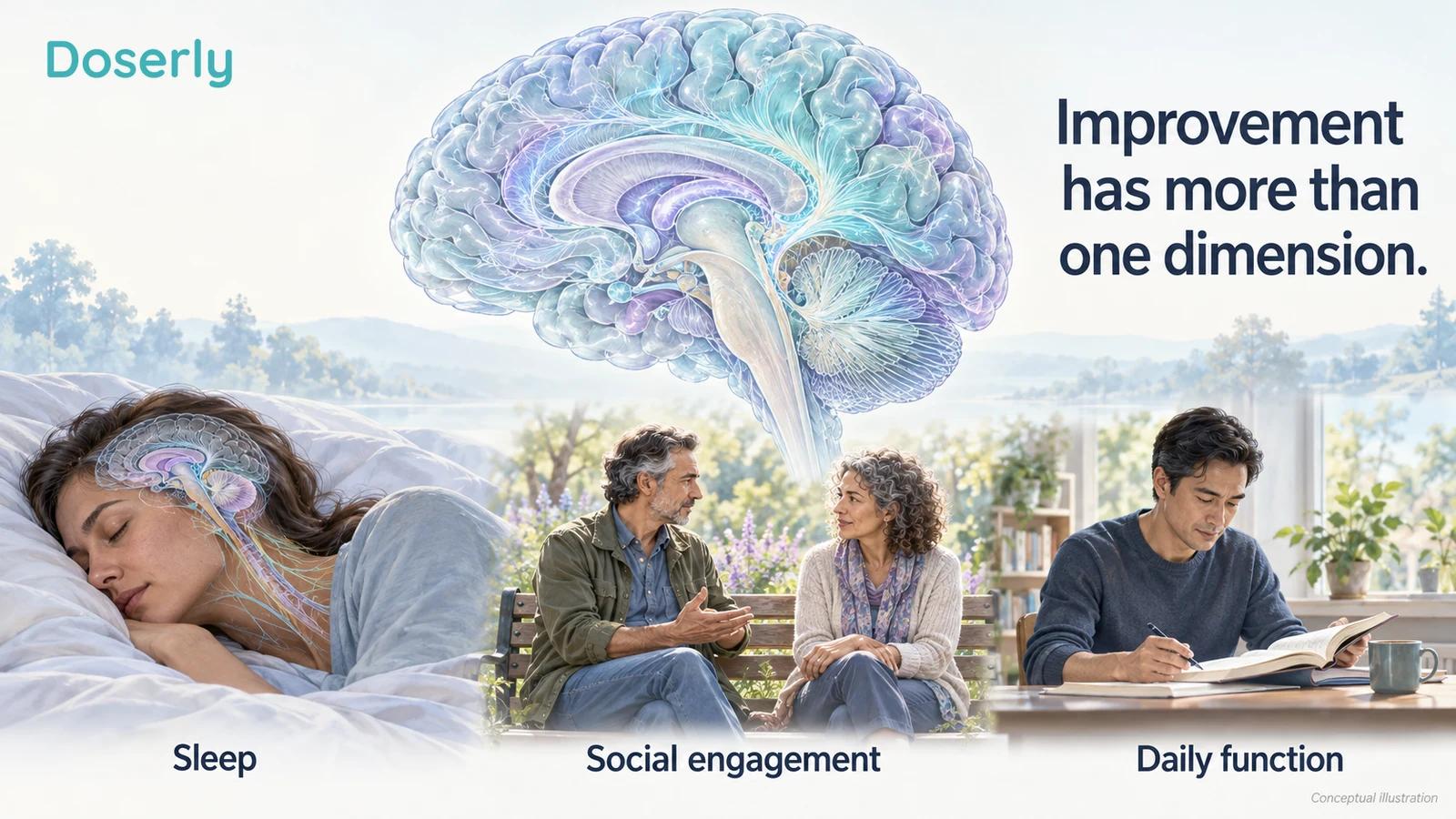
A useful plan begins with the problems the person wants help with. Lowering a depression score is valuable, but so are being able to manage meals, attend work, reconnect socially, and take part in ordinary life. Sleep quality deserves its own place without becoming a substitute for the overall mood assessment.
The NIMH's depression guidance describes treatment with psychotherapy, medication, or both, with other approaches considered according to need. It also emphasizes working with a healthcare professional rather than stopping prescribed treatment independently. An experimental device should not become a reason to abruptly discontinue care that is helping or to postpone reassessment when symptoms are worsening.
A record can support that conversation without becoming another burden. Note changes in sleep, energy, mood, and one or two everyday activities that matter. Record new medication or supplement use and major changes in routine. This gives context to improvement or deterioration and helps avoid attributing every fluctuation to the most recently added product.
If sleep timing is part of the discussion, our melatonin guide explains a separate circadian topic. It should not be read as a recommendation to add melatonin to a light device or as proof that a sleep intervention treats depression. Combining several changes at once can make it difficult to understand which change helped, which caused a problem, or whether the overall plan needs adjustment.
If someone is thinking about suicide, cannot stay safe, or is becoming severely agitated or disconnected from reality, waiting to see whether a device helps is not appropriate. Urgent local mental-health or emergency support takes priority. That is a different situation from comparing elective treatment options during a stable outpatient appointment.
Response, remission, and staying well are different outcomes
Depression trials often report a change in a rating-scale score, a response rate, and a remission rate. These answer related but different questions. In the bright-light and fluoxetine trial, response meant at least a 50% reduction on the study's depression scale, while remission meant reaching a specified low score. A person can improve substantially and still have symptoms that need treatment.
The distinction also changes how percentages should be read. A response percentage describes how many participants crossed a defined threshold, not the percentage by which every person's depression improved. An average score change describes the group, not the likely experience of every individual. Both can be useful, but neither should be presented as a guaranteed personal result.
Durability adds another question. A study ending shortly after a treatment course cannot determine how often symptoms return later or which maintenance approach is useful. For someone considering a device, that uncertainty affects time, cost, and expectations. It also makes a planned review date more useful than assuming that a favorable early week proves lasting success.
Personal goals can sit alongside standardized measures. Being able to attend a family meal or finish a manageable work task may matter more to a particular person than a small numerical change. The strongest assessment considers both, while keeping safety and the overall clinical picture in view.
Reading an offer for home treatment
A treatment offer should state what has actually been studied. Ask whether the evidence comes from people with the same diagnosis, whether the exact device was tested, and whether it beat sham on the outcome being advertised. A list of brain-imaging papers does not answer a claim about remission. A sleep benefit does not answer a claim about generalized anxiety disorder.
Ask about the comparison condition as well. A credible sham helps account for the experience of using a device, expectations, and participation in a study. Blinding can be difficult if warmth, visible light, or other sensations differ. That does not automatically invalidate a trial, but it is a reason to look closely at the methods and at whether assessors and participants could guess their assignment.
Follow-up is another practical question. An eight-week result cannot establish years of benefit, an ideal maintenance schedule, or uncommon long-term harms. A clinician or research team should be able to explain how adverse effects and worsening symptoms will be handled, what progress would count as worthwhile, and when the plan would be reconsidered.
Commercial involvement also deserves a straightforward reading. Researchers can have legitimate expertise and financial relationships at the same time. Disclosure does not make a result false. It does strengthen the case for independent replication, clear prespecified outcomes, and careful separation of measured findings from promotional conclusions.
The present evidence supports continued research into transcranial photobiomodulation for mood and anxiety. It does not support treating every red-light product as an established antidepressant. The clearest decisions begin by naming the intervention, keeping the negative trials in view, and judging progress through the person's symptoms and functioning rather than through the appeal of a mechanism alone.