
TRT
October 16, 2026
Nasal testosterone and fertility: a small-study signal is not a guarantee
On this page
Someone with low testosterone who also wants children faces a difficult question. Testosterone treatment may improve an appropriately diagnosed deficiency, yet testosterone supplied from outside the body can suppress the hormonal signals that support sperm production. A formulation promising to preserve both can sound like the obvious answer.
Nasal testosterone has attracted that interest for a reason. Its short exposure pattern differs from a long-lasting injection or implant, and small studies have reported preserved semen parameters in many participants. Those findings deserve attention. They do not establish that every user will retain fertility, or that switching products is a reliable substitute for reproductive care.
The central distinction is between a promising biological signal and a family-building outcome. Blood hormones, sperm measurements, pregnancy and live birth are different endpoints. A useful reading of the research keeps each endpoint attached to the people and duration actually studied.
Why a normal testosterone result does not establish sperm production
The testes respond to signals from the hypothalamus and pituitary. Luteinizing hormone, or LH, stimulates testicular testosterone production. Follicle-stimulating hormone, or FSH, works within the reproductive system to support spermatogenesis, the production of sperm.
When testosterone is supplied externally, feedback can reduce those signals. A person's blood testosterone can look satisfactory while the testicular environment needed for sperm production is suppressed. That is why using testosterone to raise a serum result is not equivalent to treating infertility.
The Endocrine Society guideline recommends against testosterone therapy for men planning fertility in the near term. The concern is not resolved simply by achieving a result in the laboratory reference interval or by feeling an improvement in sexual desire.
Sexual function also needs to be distinguished from sperm production. Better libido may matter greatly to a person's quality of life and relationship, but it does not measure sperm concentration or motility. Conversely, a semen result does not fully describe sexual function. Both can be important, and they need separate assessment rather than one being used as evidence for the other.
What makes nasal delivery a research question?
Natesto is testosterone gel applied inside the nose. Its prescribing information describes rapid absorption, with a maximum concentration at approximately 40 minutes and a short reported half-life. The labeled schedule involves three daily administrations.
This has prompted a hypothesis: intervals between short exposures might allow more activity in the reproductive signaling system than sustained exposure from a longer-acting formulation. A hypothesis about feedback is a reason to investigate. It is not proof that nasal testosterone reproduces a person's natural hormone pattern or preserves their fertility indefinitely.
The label continues to warn about adverse effects on spermatogenesis. Delivery through the nose does not transform exogenous testosterone into a fertility treatment or remove the need for monitoring.
Doserly's Natesto guide explains the formulation more broadly. The question here is narrower: how much reproductive reassurance can the available human evidence support?
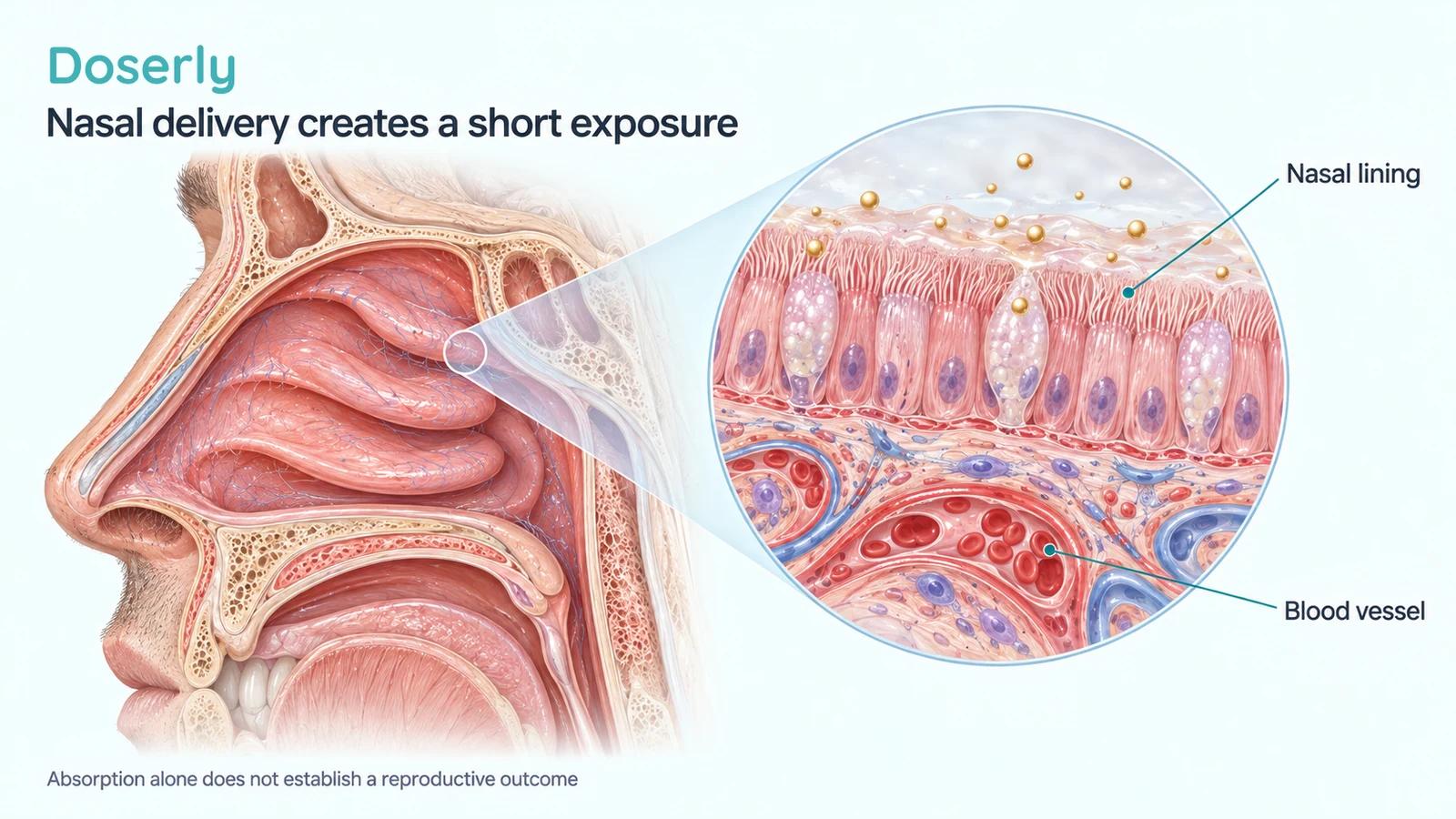
The six-month study was encouraging, but selected
A 2020 single-center trial enrolled 60 men aged 18–55 with symptomatic hypogonadism. It excluded men with azoospermia, a vasectomy or a total motile sperm count below five million. The study therefore began with a selected group who already had measurable reproductive potential.
It was open label and single arm: participants knew what they received, and there was no randomized comparison treatment. Forty-four men were evaluated for testosterone at three months and 33 at six months. The authors reported total motile sperm count above five million in 93.9% of the six-month analysis, alongside improvements in some sexual-function measures.
That is not a 93.9% pregnancy rate, nor a result established for all 60 originally enrolled men. It is a semen endpoint in a smaller follow-up group. The paper itself called for longer study before confident fertility-related prescribing.
The authors disclosed industry support. That does not negate the findings, but the small, uncontrolled design, selected starting population and reduced follow-up group make independent confirmation especially valuable.
What a sperm-count threshold can and cannot tell you
Total motile sperm count combines the number of sperm in the sample with how many are moving. It is not the same measurement as sperm concentration, which is expressed per unit of semen. A report should identify which was measured rather than using “sperm count” loosely for either.
A threshold used in a study is also not a sharp boundary between being fertile and infertile. A man can remain above that threshold without the research having established his chance of conception, the time it might take or whether assisted reproduction will be needed.
The World Health Organization's explanation of semen testing makes the broader point: semen analysis helps assess reproductive potential, but it cannot by itself confirm an individual's fertility. Reproductive history and the partner's circumstances also matter.
A claim that a drug “preserves fertility” therefore needs more than a favorable average laboratory value. Ideally, it would include relevant reproductive outcomes, adequate follow-up and a population resembling the person considering treatment. The available nasal-testosterone signal is narrower.
This distinction does not make semen testing unhelpful. It makes the test useful for the right purpose: identifying changes and informing reproductive care, rather than issuing a guarantee.
A conversion study asked whether sperm could return
A 2022 retrospective report followed 27 men who changed directly from longer-acting testosterone treatment to Natesto. Semen was assessed three months after the change. Sperm were found in all 27, and one couple achieved a pregnancy four months after conversion.
A crucial qualification is that only 10 men had documented azoospermia while taking the previous treatment. Severe suppression in the others was presumed, and semen results before their original testosterone treatment were unavailable. The study therefore did not document the same starting condition in every participant.
The finding supports the possibility of sperm production while using nasal testosterone after longer-acting treatment. It does not demonstrate that every participant recovered from proven azoospermia or that switching will work for every patient.
There was also no group that simply stopped the longer-acting product without starting Natesto. Recovery after withdrawing the earlier exposure is an alternative explanation that the design cannot separate from effects of the nasal regimen. One pregnancy is encouraging clinical experience, but it cannot establish a dependable pregnancy rate.
Hormone-surrogate studies add context, not a fertility guarantee
A later analysis using data from two single-center trials compared nasal, intramuscular and pellet testosterone in 75 men, with 25 in each treatment cohort. It evaluated serum 17-hydroxyprogesterone, or 17-OHP, as a proposed surrogate for testosterone inside the testes.
The nasal group did not show the same significant decline in that marker reported with the longer-acting preparations. That is biologically relevant to the hypothesis that formulations may differ in reproductive suppression. However, a serum surrogate is not a direct measurement of testicular testosterone, and neither measurement is itself a live-birth outcome.
The cohorts came from two trials rather than one simple three-arm fertility trial. Treatment and sampling circumstances also differed. These design features limit how confidently the comparison can be turned into a clinical ranking.
A useful evidence chain would connect exposure pattern, reproductive signaling, sperm production and eventual reproductive outcomes. Each link adds information. Skipping the later links because an earlier marker looks reassuring overstates what has been demonstrated.
Current guidance has not turned the signal into a promise
The AUA/ASRM male-infertility guideline, amended in 2024, advises clinicians against prescribing exogenous testosterone for men interested in current or future fertility. Its discussion acknowledges the small nasal-testosterone studies and the need for longer-term reproductive evidence.
The same discussion recognizes that counseling differs when parenthood is a distant possibility rather than an immediate goal. That nuance supports an individualized reproductive conversation; it does not make nasal testosterone a proven fertility-preserving exception.
For someone actively trying to conceive, a reproductive urologist can assess the cause of testosterone deficiency and the reproductive problem together. Depending on the diagnosis, treatment approaches that stimulate endogenous hormone production may be considered. Those approaches have their own indications and limitations and should not be improvised as add-ons to a testosterone prescription.
The relevant distinction is between replacing testosterone in the bloodstream and supporting the reproductive system's own function. The right treatment question depends on the underlying problem, not just which delivery route is most convenient.
Recovery after testosterone can take time
A person who has already used testosterone may understandably want a definite recovery date. The evidence does not provide one for every patient.
An integrated analysis of hormonal male-contraception studies included 1,549 healthy men with normal baseline gonadal function. The median time to recover a sperm concentration of 20 million per milliliter was about 3.4 months after treatment. Recovery varied with factors including treatment duration and baseline sperm concentration.
Those were selected healthy research participants in contraceptive regimens. They were not a representative sample of everyone with hypogonadism, years of testosterone exposure or pre-existing infertility. Their recovery distribution should not be converted into a personal deadline or a guarantee that three months is enough.
The clinical implication is to plan before a deadline becomes urgent. If a person hopes to conceive soon, the timeline deserves explicit discussion now. Waiting for a routine hormone follow-up while assuming that fertility will automatically return can leave important information undiscovered.
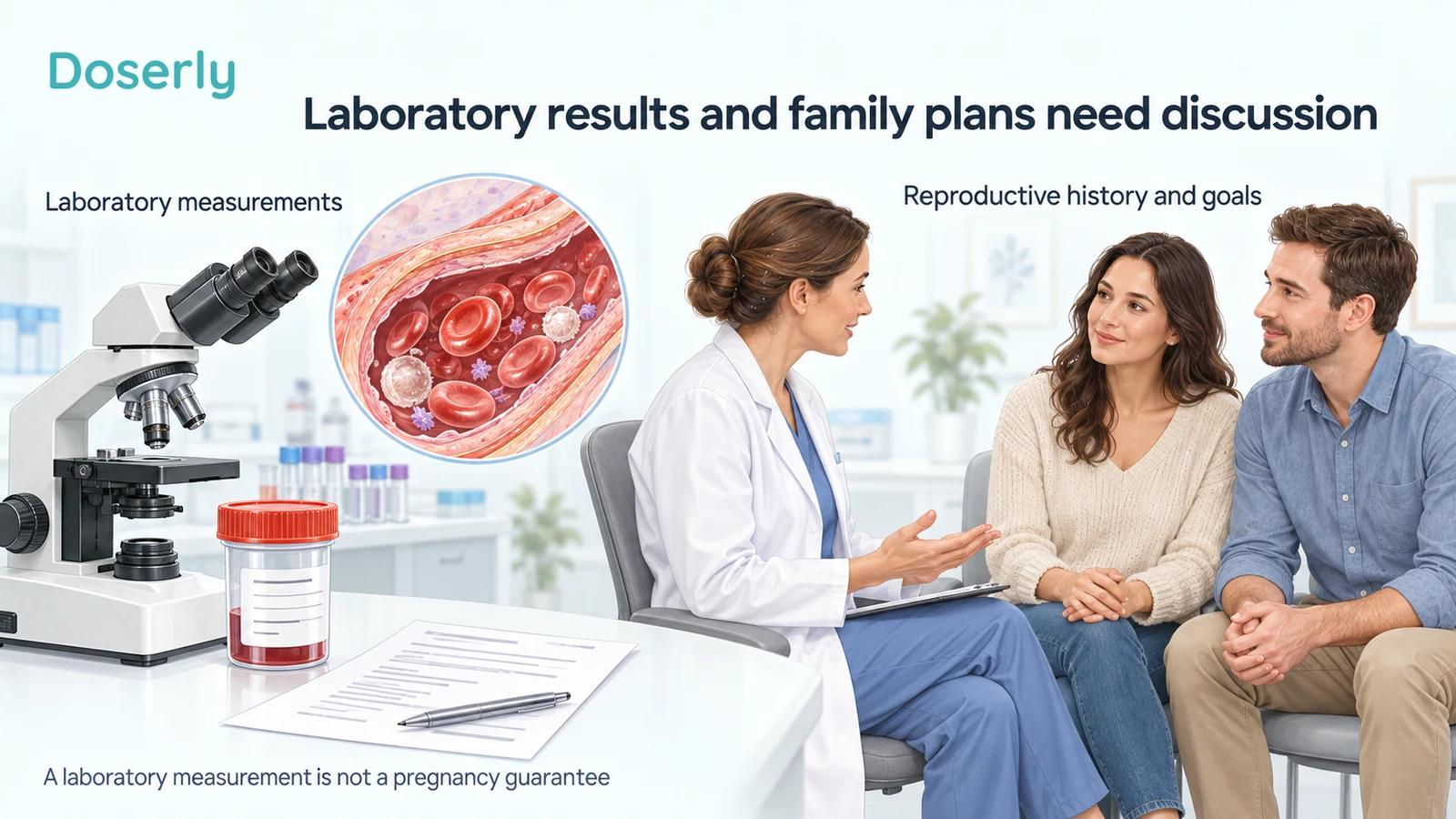
A clinician may recommend baseline and follow-up semen assessment or discuss sperm cryopreservation where appropriate. Whether those steps are useful depends on current sperm production, reproductive goals and the broader clinical picture.
The daily routine and ordinary safety checks still matter
A fertility discussion can overshadow the practical requirements of treatment. Nasal administration happens repeatedly during the day, and the formulation can cause local problems such as nasal discomfort, bleeding or irritation. A person with nasal symptoms or other intranasal medicines needs product-specific advice about use.
Changing the prescribed schedule independently to create more “recovery time” between doses is not a validated fertility strategy. It would create a different exposure pattern from the one being evaluated and could make both hormone and symptom results harder to interpret.
Systemic monitoring remains relevant too. A short-acting product still requires assessment of testosterone exposure, clinical benefit and adverse effects. A reassuring semen result does not answer whether blood pressure or hematocrit is acceptable, just as a reassuring blood count does not establish fertility.
It helps to keep three records clear: what treatment was actually used, when hormone measurements were collected, and when semen was assessed. Those dates let the clinician connect results to exposure rather than relying on a general memory that things looked normal sometime after a switch.
A more useful conversation than “Is it fertility safe?”
The practical questions are specific. Is the aim to conceive now, preserve options for later or investigate infertility that already exists? Was sperm production measured before treatment? Does the proposed plan rely on a hormone result, a semen result or an established reproductive outcome?
It is also reasonable to ask what would trigger reconsideration: an unfavorable semen trend, difficulty tolerating the nasal routine, inadequate symptom benefit or a change in the family-building timeline. Agreeing on that response plan is more useful than attaching the word “safe” to a formulation.
Nasal testosterone research offers a meaningful signal that short-acting delivery may affect reproductive function differently from longer-acting treatment. The evidence supports further study and careful specialist discussion. It does not support a guarantee that fertility will be preserved for the person holding the prescription.
Sources
- Testosterone Therapy in Men With Hypogonadism: An Endocrine Society Clinical Practice Guideline
- Natesto prescribing information
- Effect of Natesto on Reproductive Hormones, Semen Parameters and Hypogonadal Symptoms: A Single Center, Open Label, Single Arm Trial
- WHO launches updated manual to ensure high quality testing of human semen in clinical and research settings
- Direct conversion from long-acting testosterone replacement therapy to Natesto allows for spermatogenesis resumption: Proof of concept
- Comparison of Intratesticular Testosterone between Men Receiving Nasal, Intramuscular, and Subcutaneous Pellet Testosterone Therapy: Evaluation of Data from Two Single-Center Randomized Clinical Trials
- Diagnosis and Treatment of Infertility in Men: AUA/ASRM Guideline, amended 2024
- Rate, extent, and modifiers of spermatogenic recovery after hormonal male contraception: an integrated analysis